Reputational laundering
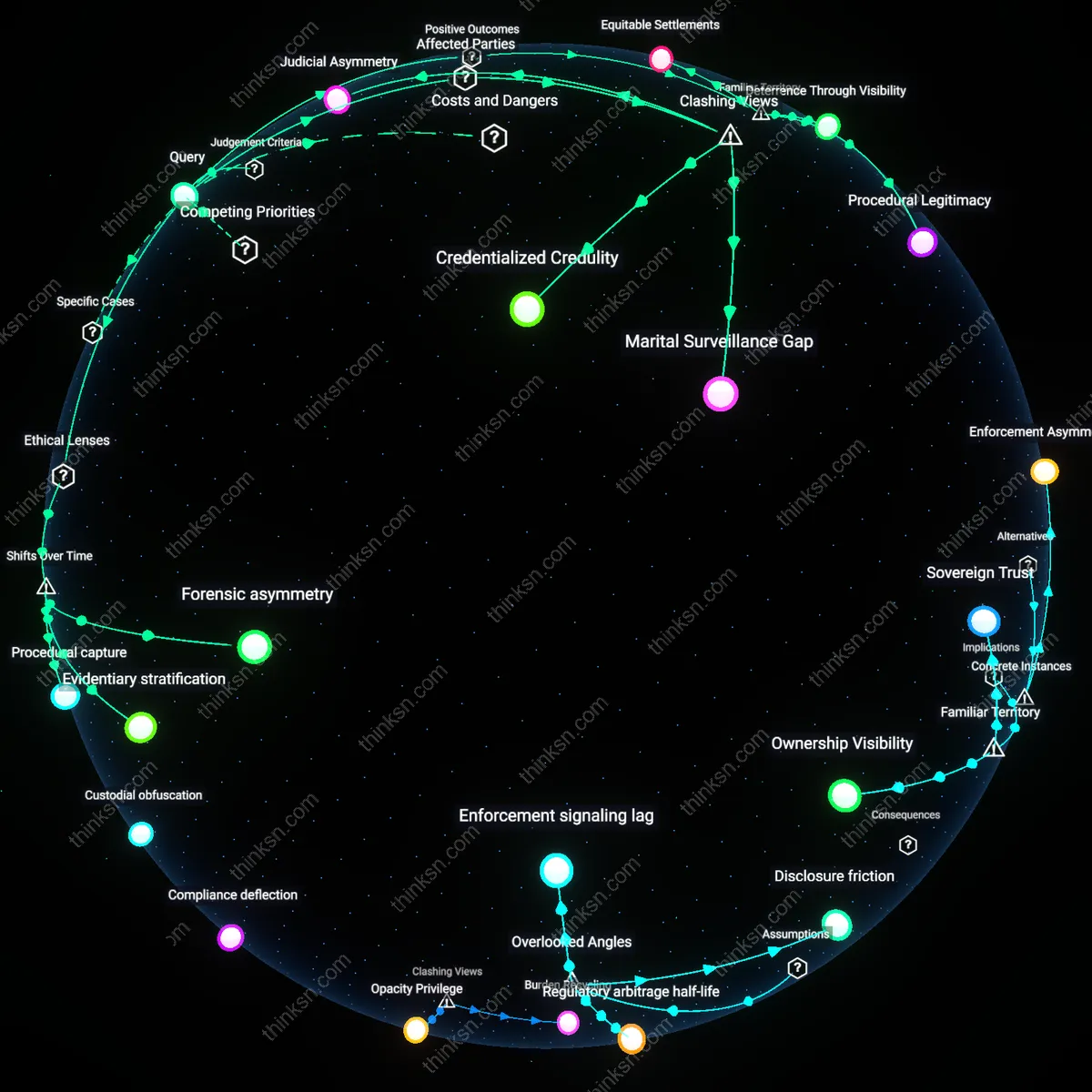
Controversial causes frequently reroute payments not through decentralized systems but by embedding within legitimate-seeming intermediaries, such as religious nonprofits or medical advocacy groups, which absorb reputational risk and maintain processor relationships. For example, anti-LGBTQ+ conversion therapy programs in the U.S. have shifted funding through multi-issue family values coalitions that qualify as public health entities, thus retaining access to ACH transfers and credit card processing. This undermines the idea that deplatforming enforces ideological accountability, instead showing how moral contestability can be obfuscated via institutional camouflage. The overlooked dynamic is that processor policies incentivize deception over transparency, rewarding causes skilled in narrative reframing rather than those with broader public support.
Settlement asymmetry
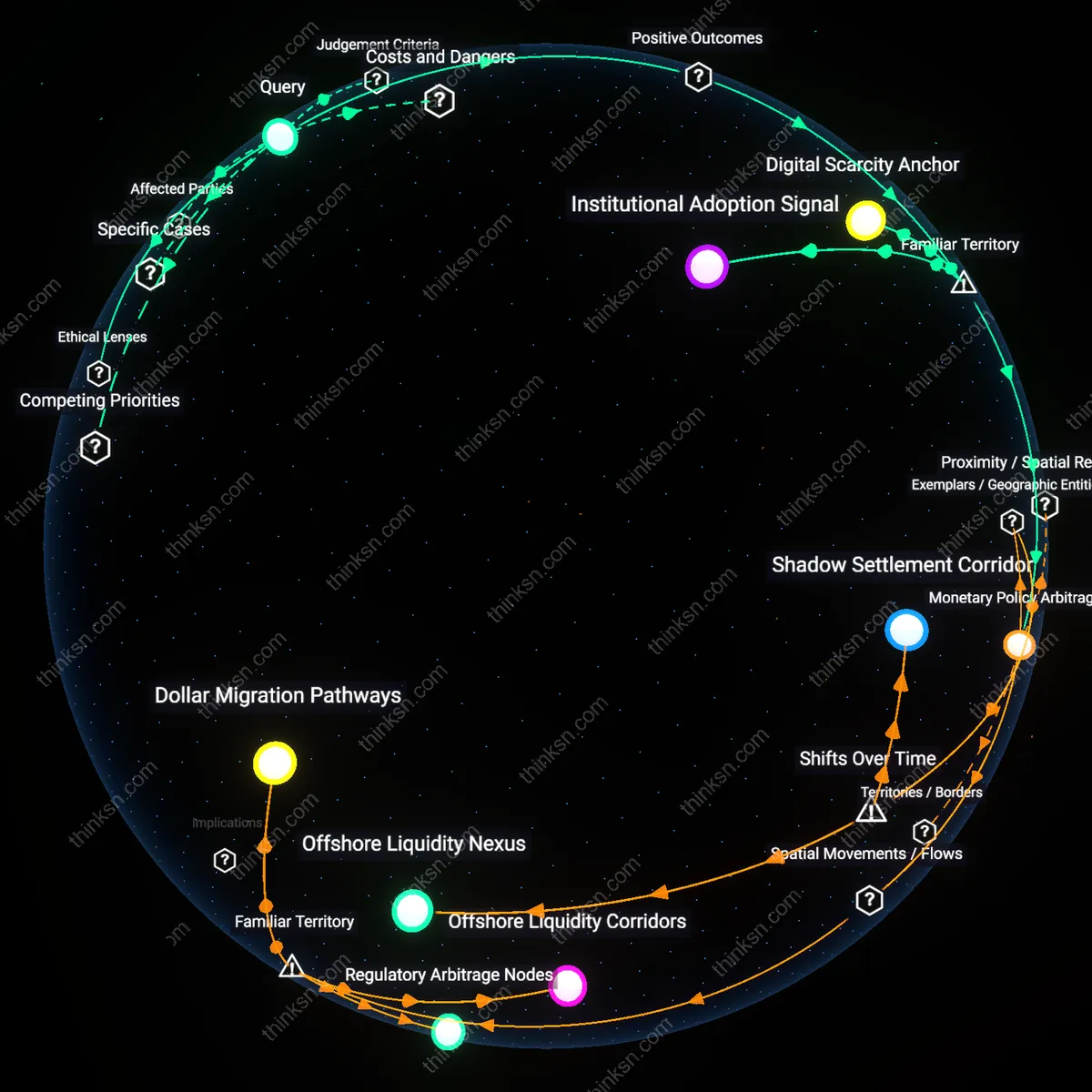
The ability of controversial causes to find alternative financial routes depends not on ideological valence but on their position within global settlement hierarchies—movements aligned with state-backed currencies or jurisdictions under Western financial influence face total blackout, while those backed by rival monetary systems (e.g., ruble- or yuan-denominated channels) exploit geopolitical fissures to reroute funds. Ukrainian far-right militias, for instance, were frozen out of PayPal and Stripe but rapidly integrated into Russian donation platforms tied to Sberbank and UnionPay, which operate beyond U.S. extraterritorial sanctions reach. This contradicts the assumption that financial exclusion targets 'extremism' generically, exposing instead a geoeconomic selection bias where ideological opposition becomes enforceable only within dollar-dominated networks. The overlooked reality is that deplatforming functions as a tool of monetary jurisdiction, not moral curation.
Infrastructural Gatekeepers
Payment processors like PayPal and Stripe blocked donations to WikiLeaks in 2010, but the organization sustained operations through direct cryptocurrency donations and alternative platforms like BitPay—revealing that technical workarounds exist but favor groups with tech-savvy support networks. This demonstrates that financial silencing does not stem from lack of alternatives but from control over mainstream transactional infrastructure by a narrow set of private intermediaries who enforce normative political thresholds. The non-obvious insight is that deplatforming efficacy depends not on total payment blockade but on marginalizing adversaries from user-friendly, high-volume financial rails.
Settlement opacity
Payment processors block controversial causes not primarily by refusing transactions but by delaying or obscuring settlement terms, which forces smaller movements to collapse from operational cash-flow failure before seeking alternatives. This mechanism exploits the gap between transaction-level visibility and back-end liquidity processing—where non-disclosure agreements, tiered reserve requirements, and unexplained rolling holds hide the true cost of onboarding risk, especially for organizations without legal or accounting infrastructure to anticipate these traps. Unlike public denials, which prompt immediate workaround mobilization, creeping settlement opacity drains momentum silently, making it a preferred but invisible enforcement lever in deplatforming campaigns that rarely appear in transparency reports. The non-obvious insight is that financial silencing operates less through outright refusal than through procedural obscurity in post-transaction clearing layers, which are inaccessible to public scrutiny and legal challenge.
Jurisdictional misalignment
Controversial causes that appear financially silenced in one country often sustain operations through settlement hubs in jurisdictions where payment processor subsidiaries operate under divergent compliance mandates, revealing that fragmentation in global fintech regulation enables arbitrage not by legal cause but by corporate structure. For example, a group blocked by PayPal US may receive near-seamless support via PayPal Germany processing donations routed through EU-based non-profits with overlapping membership, exploiting gaps between regional AML interpretations rather than technological workarounds. This dependency on regulatory fissures within single-platform global footprints is typically ignored in debates about censorship resilience, which focus on alternative platforms rather than intra-platform jurisdictional drift—uncovering a silent reliance on multinational corporate incompleteness as a survival vector.
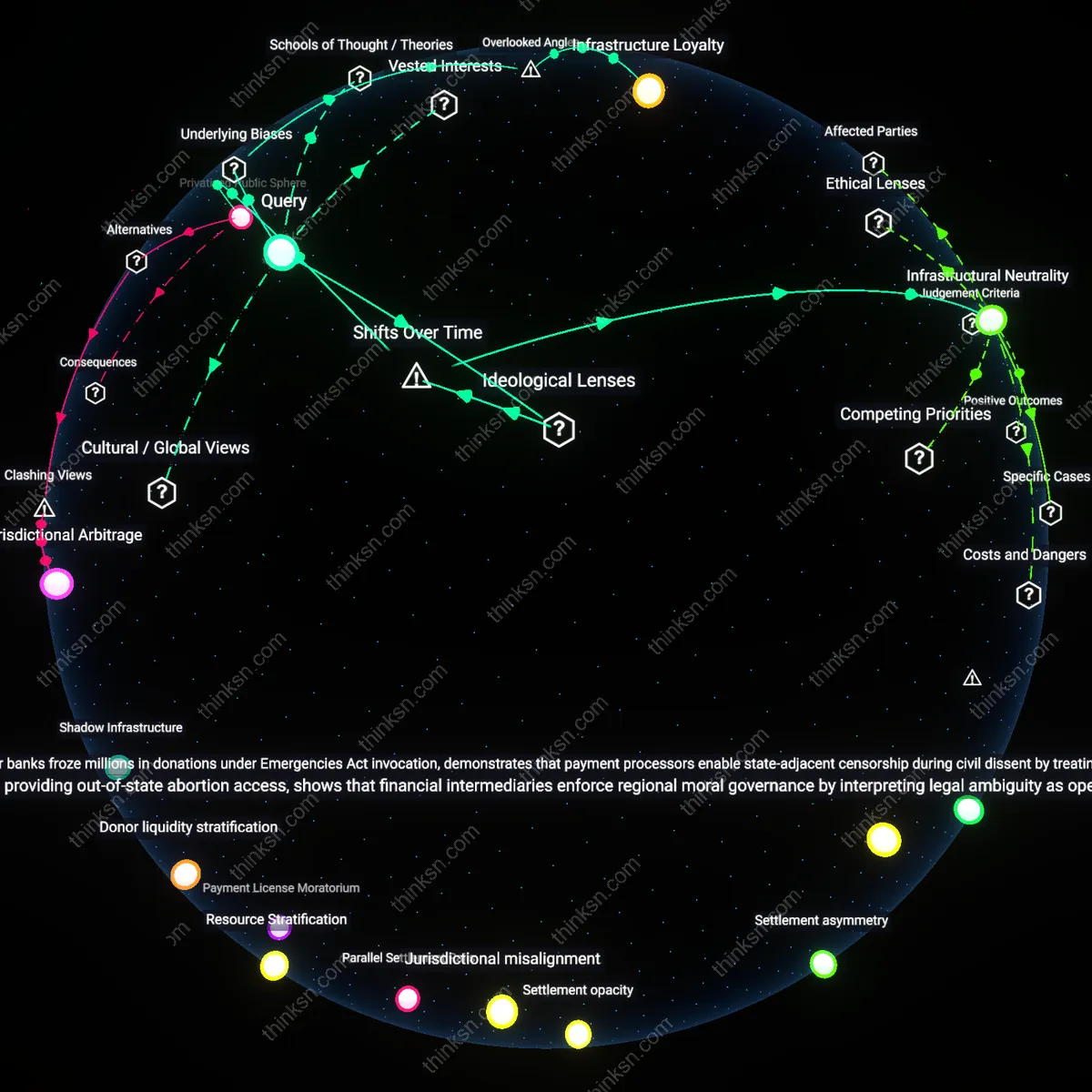
Donor liquidity stratification
The success of controversial causes in finding alternative financial routes depends more on the wealth distribution of their donor base than on the availability of alternative processors, because high-net-worth donors can deploy private payment rails—such as donor-advised funds, LLC-based giving, or direct securities transfers—that bypass commercial processors entirely, while grassroots movements reliant on micro-donations lack equivalent off-ramp options. This stratification means that causes with elite financial backing survive processor blockades invisibly, not through public fintech alternatives but through pre-existing private financial architecture, rendering the 'silenced' label inaccurate for structurally privileged movements masked as persecuted. The overlooked reality is that financial censorship resistance is already deeply class-divided, with access to non-commercial liquidity determining survival more than public platform access.
Merchant Risk Threshold
Set standardized risk tolerance tiers for payment processors that categorically permit transactions based on legal compliance rather than reputational exposure. Financial intermediaries like Stripe or PayPal routinely terminate accounts tied to polarizing speech—such as abortion advocacy or gun rights—under broad acceptable use policies; by adopting regulated risk bands tied to lawful activity, not cultural alignment, platforms would be obligated to process payments for legally operating entities until a court imposes restrictions. This shift replaces ad hoc, PR-driven deplatforming with procedural predictability, exposing how conventional reliance on private compliance systems—familiar from social media content moderation—silences not illegal acts but ideologically inconvenient ones.
Parallel Settlement Rails
Deploy interoperable micropayment networks outside traditional banking rails to absorb censored transaction flows, such as integrating Lightning Network endpoints directly into donor platforms used by organizations like WikiLeaks or independent journalists. When mainstream processors like Visa or Mastercard cut off controversial recipients—such as far-right media or anti-surveillance activists—usage spikes on decentralized protocols reveal an underground liquidity layer that most users don’t know exists until access is revoked upstream. This bypass mechanism underscores how familiar narratives about financial exclusion overlook the latent resilience built through preexisting technical workarounds, which only become visible when central chokepoints fail.
Payment License Moratorium
Suspend the renewal of financial institution licenses that engage in politically asymmetric de-risking, enforced by a public utility oversight board modeled after telecom regulators. When firms like PayPal or Bank of America deny services to causes associated with marginalized ideologies—say, Black Lives Matter chapters or climate direct-action groups—under the guise of fraud prevention, regulatory bodies can treat these actions as discriminatory service denials analogous to redlining. This remedy leverages the familiar public expectation that essential infrastructure should be neutral, revealing that the real silencing occurs not through overt censorship but through unregulated discretion in institutions we already treat as public-facing utilities.
Structural Dependency
Payment processors block controversial causes because these causes rely on commercially dominant financial rails like Visa and Stripe, which enforce de facto speech boundaries through terms-of-service enforcement; even when alternatives like cryptocurrency or independent processors exist, most movements lack the technical capacity or donor base to migrate, binding them to systems governed by corporate risk calculus rather than legal necessity. This reveals that the silenced are not just ideologically marginalized but structurally locked into platforms that weaponize interoperability and scale to exclude without state mandate. The non-obvious insight is that financial speech suppression emerges from reliance on shared infrastructure, not outright prohibition.
Shadow Infrastructure
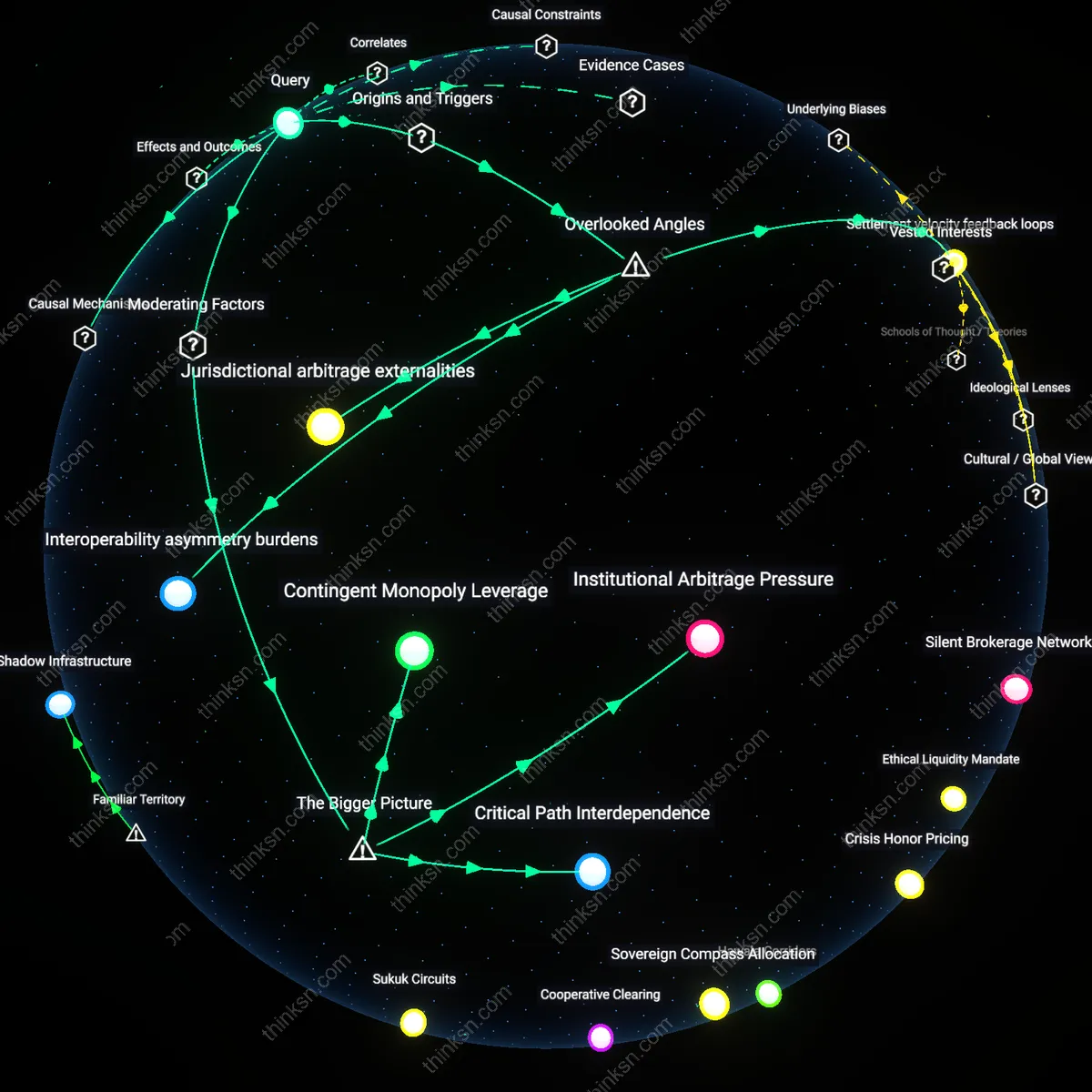
Controversial causes frequently survive payment blacklisting by tapping into decentralized or politically aligned financial networks—such as alt-tech hosting cooperatives, crypto donation channels, or diaspora remittance systems—especially when they operate transnationally or draw support from regimes hostile to Western financial oversight. This shift exposes a bifurcated financial ecosystem where ideological survivability depends on access to parallel systems sustained by geopolitical dissent or technological niche adoption, not public legitimacy. The overlooked reality is that repression triggers networked adaptation among ideologically extreme actors with transnational backing, reinforcing resilience through isolation.
Resource Stratification
The ability of controversial causes to find alternative financial routes depends overwhelmingly on pre-existing donor resources and organizational bandwidth, meaning well-funded extremist movements can rapidly reconstitute payment flows via offshore registrars or private banking networks, while smaller or grassroots movements dissolve under monetary strangulation. This disparity reveals that silencing is less about controversy *per se* and more about economic stratification within dissent, where the financially fragile are culled regardless of moral standing. The critical but hidden mechanism is that financial censorship functions as a market filter, privileging ideologically toxic but monetized actors over under-resourced ones.