IVF Clinics Liability When Crossing State Lines for Treatment?
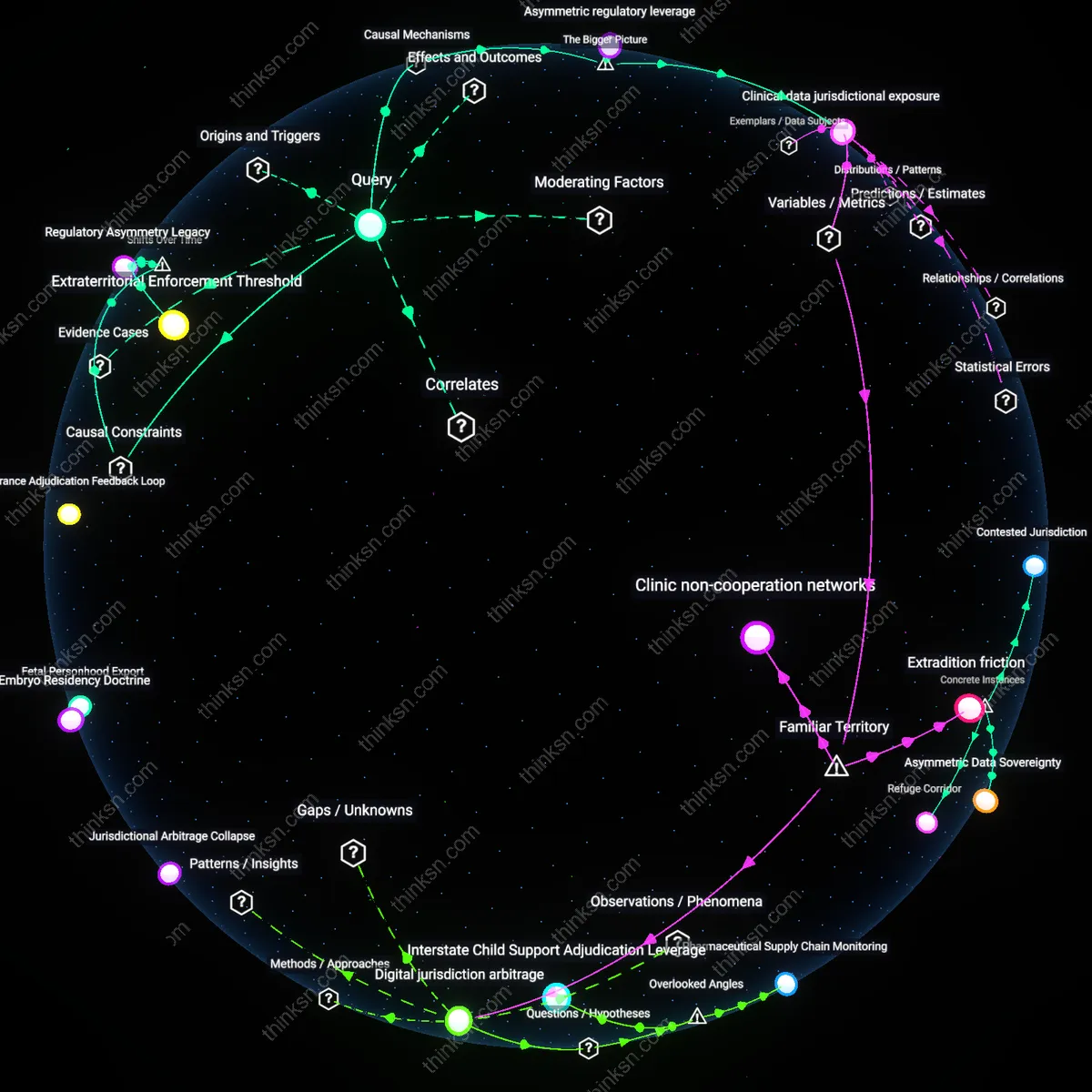
Analysis reveals 6 key thematic connections.
Key Findings
Extraterritorial enforcement friction
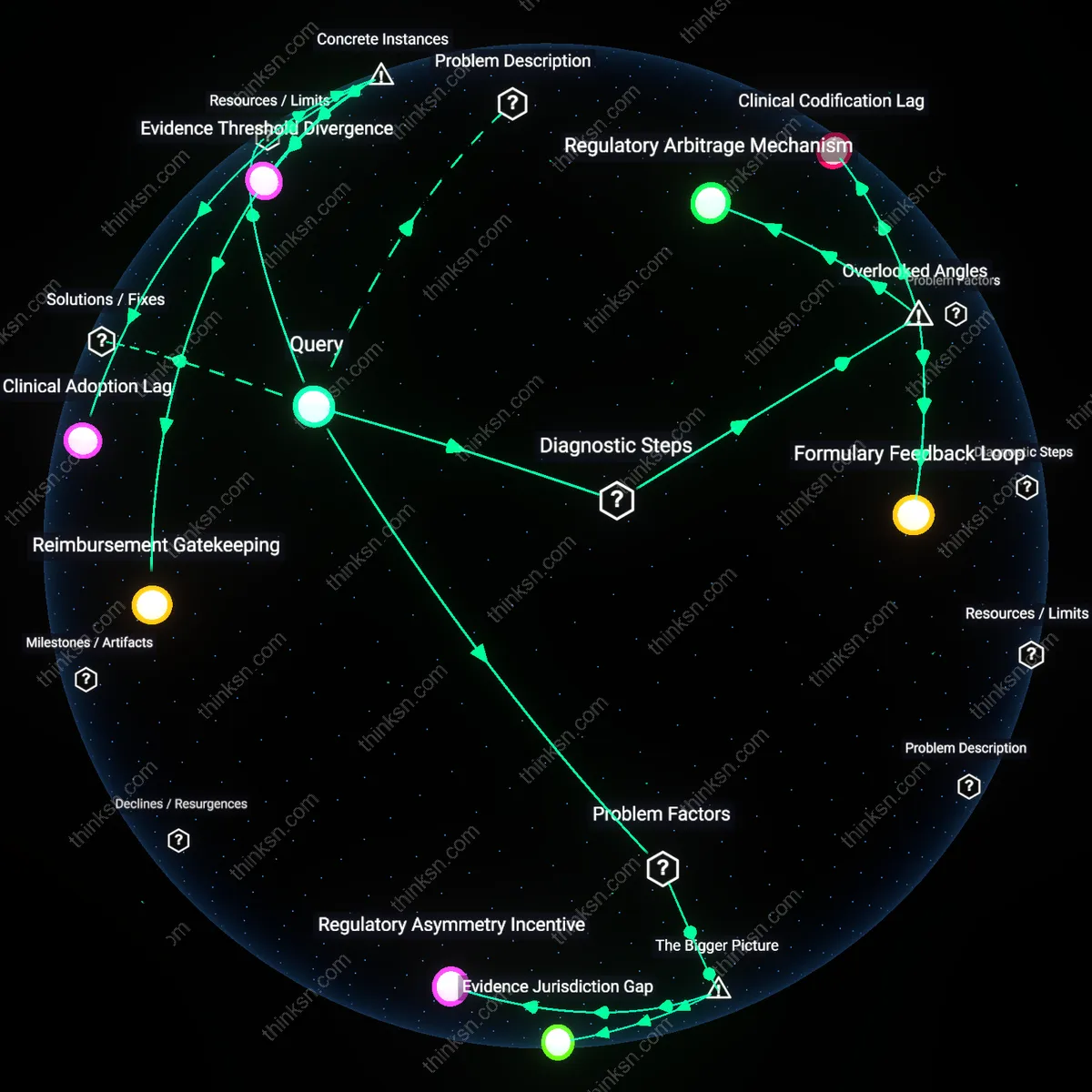
An out-of-state fertility clinic can be exposed to legal risk when prosecutors from restrictive states attempt to apply their abortion or embryo personhood laws across state lines, triggering jurisdictional conflict. This mechanism unfolds as prosecutors in restrictive states assert authority over medical acts performed extraterritorially, relying on expansive statutory interpretations that treat the initiation of treatment (e.g., embryo creation) as occurring within their borders due to patient residency. The judiciary becomes a mediating arena where federalism principles buffer clinics, yet the mere threat of litigation disrupts cross-state medical access, revealing how local moral legislation strains national medical mobility. The non-obvious systemic feature is that prosecutorial ambition, not patient or clinician intent, becomes the catalyst for inter-state legal friction.
Asymmetric regulatory leverage
Home-state authorities can indirectly pressure out-of-state clinics by targeting patients or referral physicians rather than the clinic itself, circumventing direct jurisdictional limits. This works because restrictive states retain licensing power over local medical providers who refer patients or assist in treatment coordination, enabling regulatory bodies to sanction physicians through loss of license or audits based on aiding out-of-state care. The mechanism operates through vertical control within hierarchical medical systems, where local oversight bodies serve as enforcers for state moral policy beyond their geographic reach. The underappreciated dynamic is that indirect disciplinary channels allow restrictive states to project regulatory power without formal jurisdiction over external clinics.
Clinical data jurisdictional exposure
Fertility clinics face legal vulnerability when electronic health records or telehealth consultations create digital footprints accessible to home-state investigators seeking evidence of prohibited conduct. This occurs because cloud-hosted medical data platforms often store or route information across state lines, enabling prosecutors to subpoena records under federal health privacy laws or mutual legal assistance agreements, even if treatment occurred elsewhere. The transmission mechanism is infrastructural—data localization and interoperability standards embed clinics within shared legal ecosystems that transcend state boundaries. The overlooked risk is that technical systems designed for care coordination become conduits for regulatory overreach.
Extraterritorial Enforcement Threshold
An out-of-state fertility clinic faces minimal legal risk only if the restrictive home state cannot assert extraterritorial jurisdiction, a bottleneck that emerged as a systemic constraint after the 2022 Dobbs decision intensified state-level reproductive fragmentation; this mechanism operates through constitutional limits on state power under the Due Process and Full Faith and Credit Clauses, which historically prevented states from enforcing criminal bans beyond their borders—what has changed is not the law itself but the scale of attempted overreach, revealing that prior assumptions about jurisdictional immobility in medical regulation were underpinned by a now-eroding consensus about federalism in health care.
Medical Mobility Inversion
Fertility clinics in permissive states now face reputational and regulatory exposure because patients' cross-state travel has shifted from a fringe workaround to a normalized reproductive strategy, a transformation crystallized between 2017 and 2023 as IVF became politically securitized in conservative legislatures; the causal bottleneck—clinic liability—depends on whether home states can criminalize intent rather than action, but the deeper shift is that medical tourism, once unregulated and invisible, now triggers legal retroactivity attempts, exposing a reversal in which mobility no longer insulates providers because the act of leaving has itself become evidence of proscribed intent.
Regulatory Asymmetry Legacy
Out-of-state clinics remain shielded only as long as federal regulatory frameworks like CLIA continue to preempt state-level criminalization of clinical standards, a constraint rooted in the 1988 Clinical Laboratory Improvement Amendments that established a national floor for lab practices; the non-obvious shift since the 1990s is that while states historically deferred to federal oversight in reproductive technology, post-Dobbs legislative strategies now weaponize criminal codes rather than licensing boards—revealing that the legacy of fragmented reproductive governance was not a temporary phase but a latent structural fault now being activated through prosecutions framed as moral jurisdiction rather than medical regulation.