Do Transparent Lobbying Registers Actually Reduce Corporate Influence?
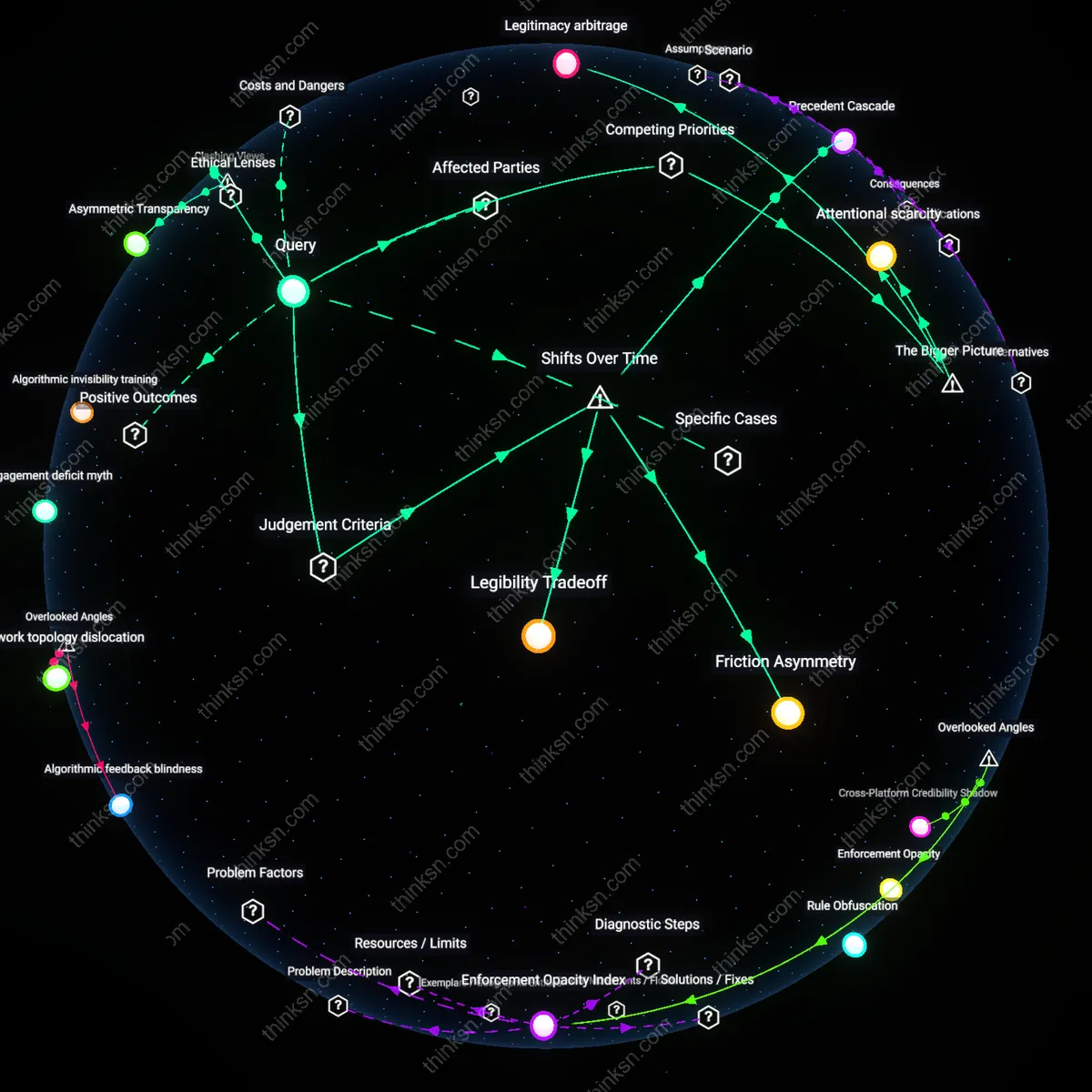
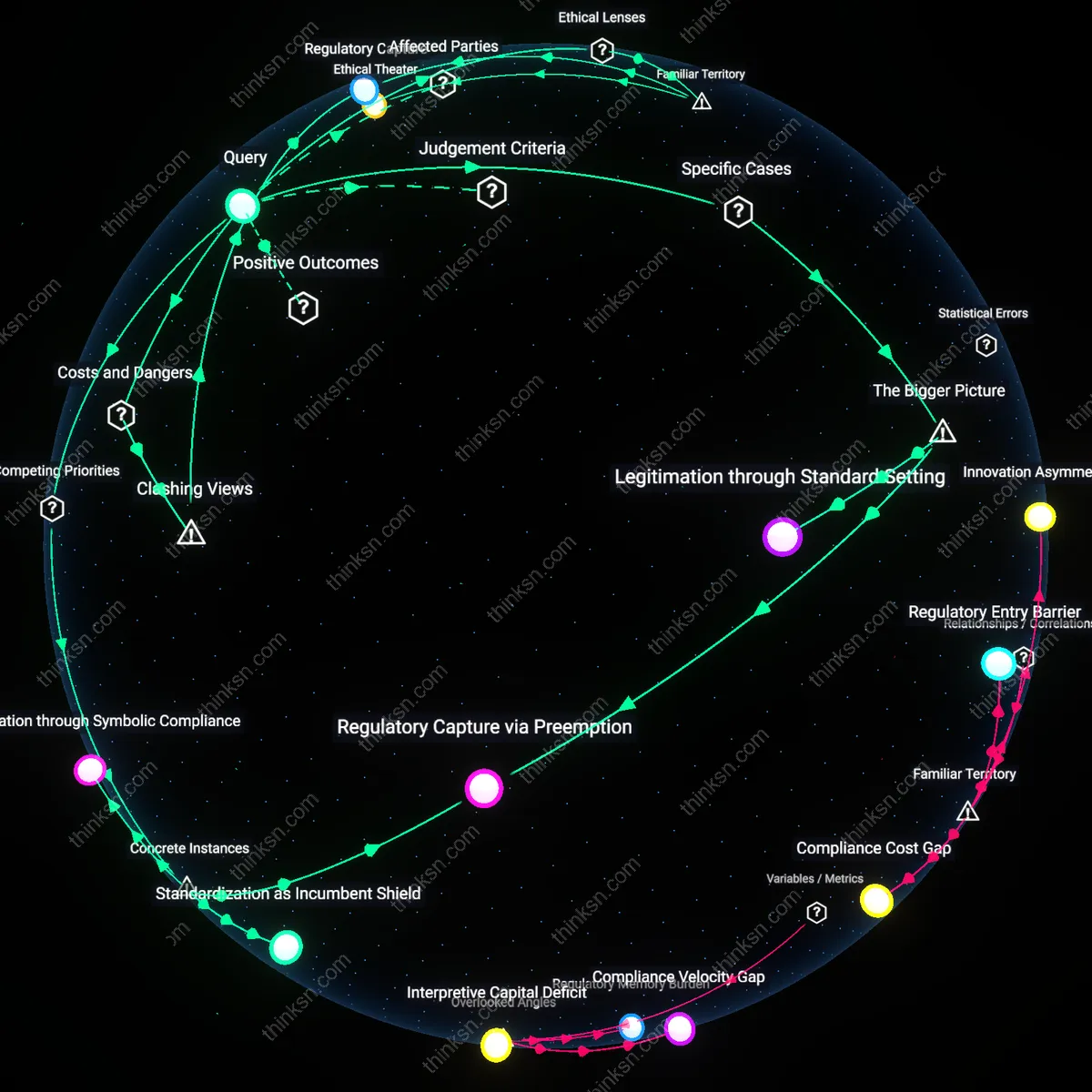
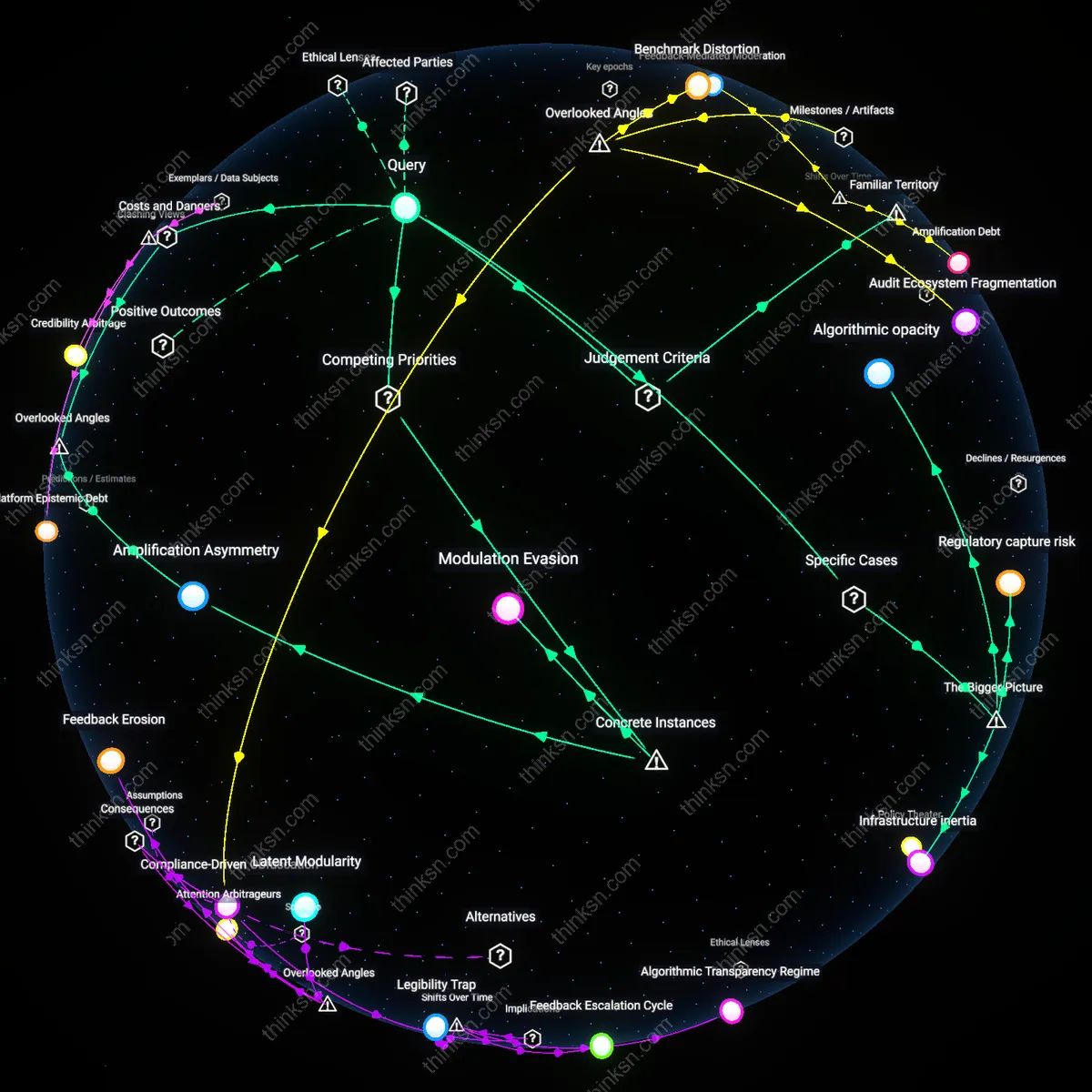
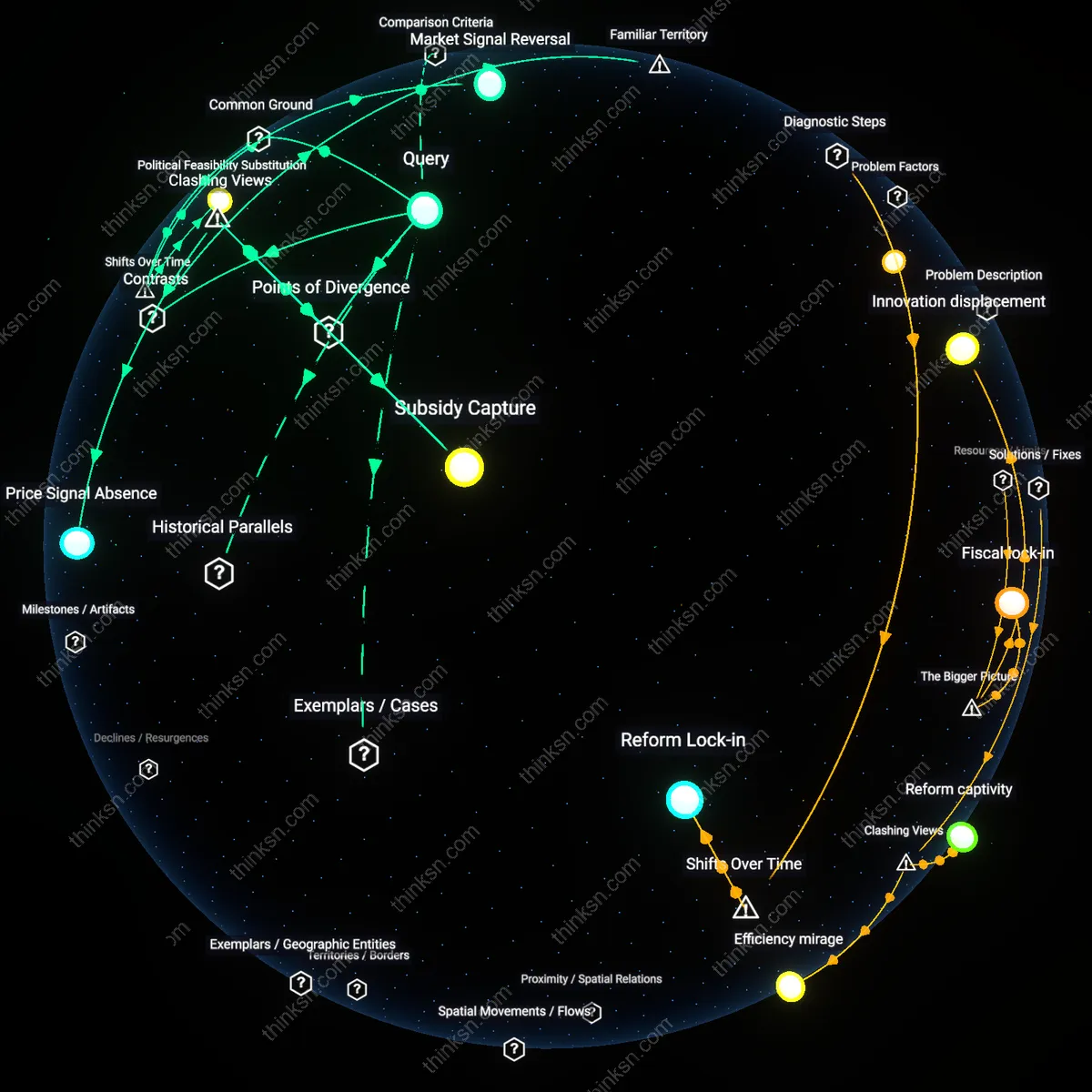
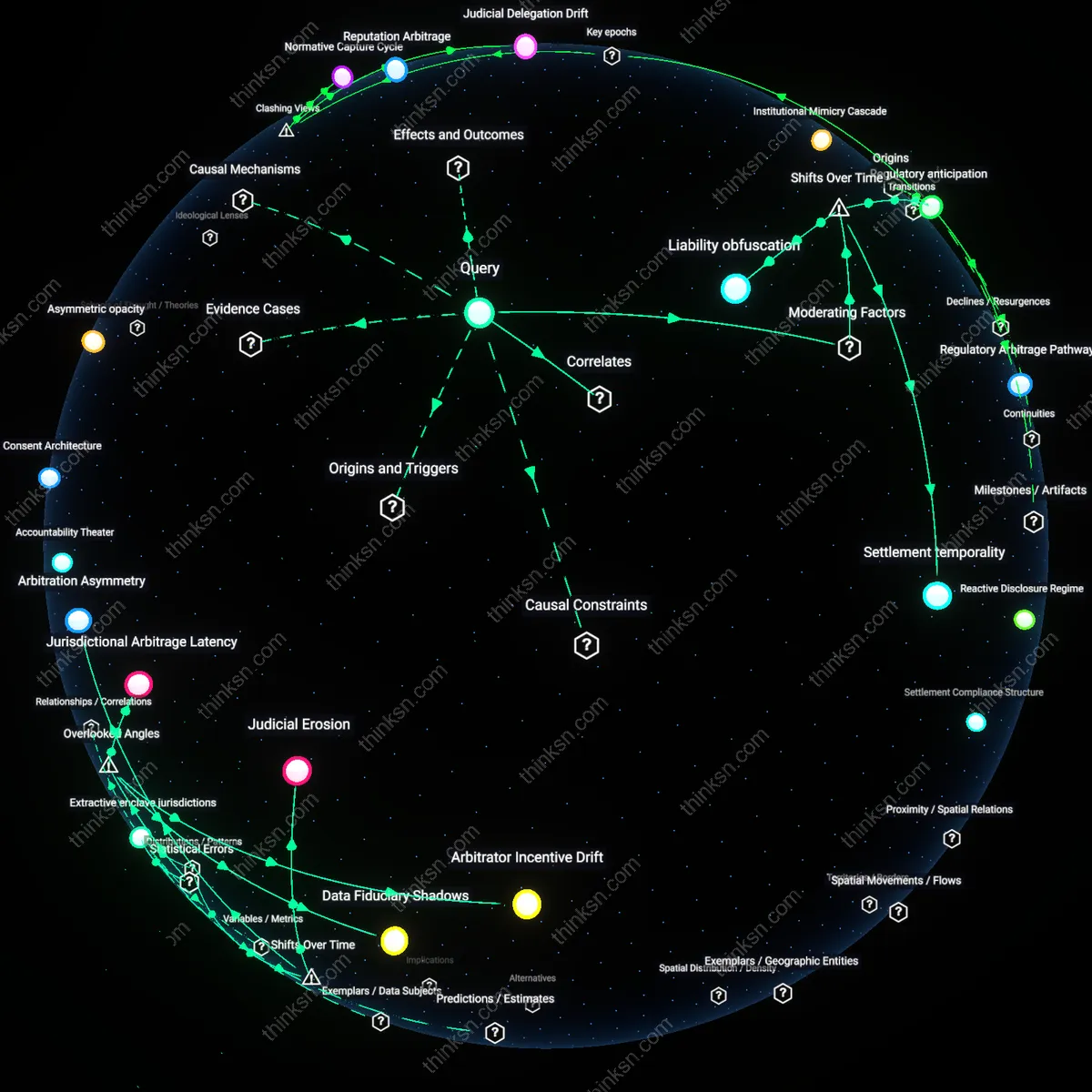
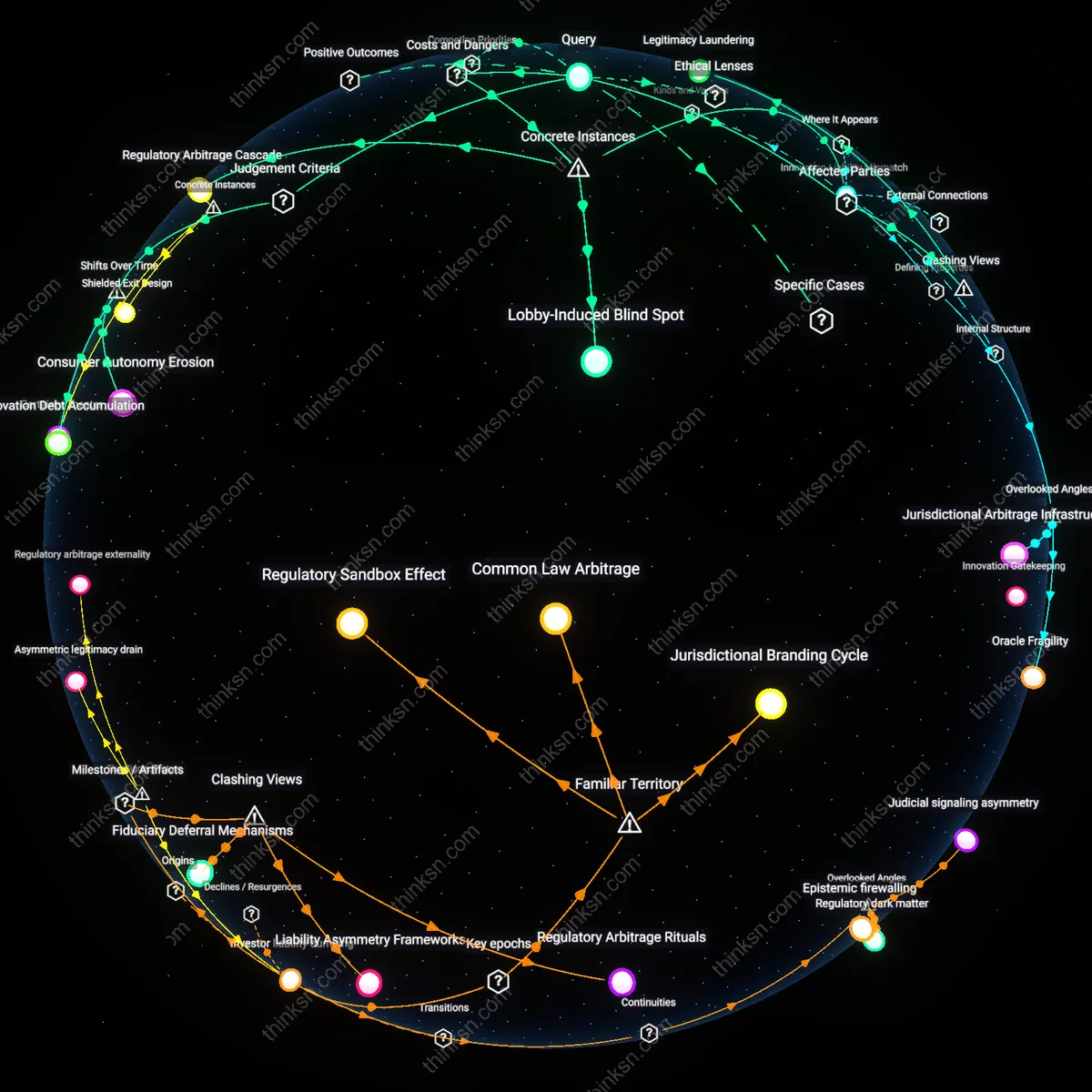
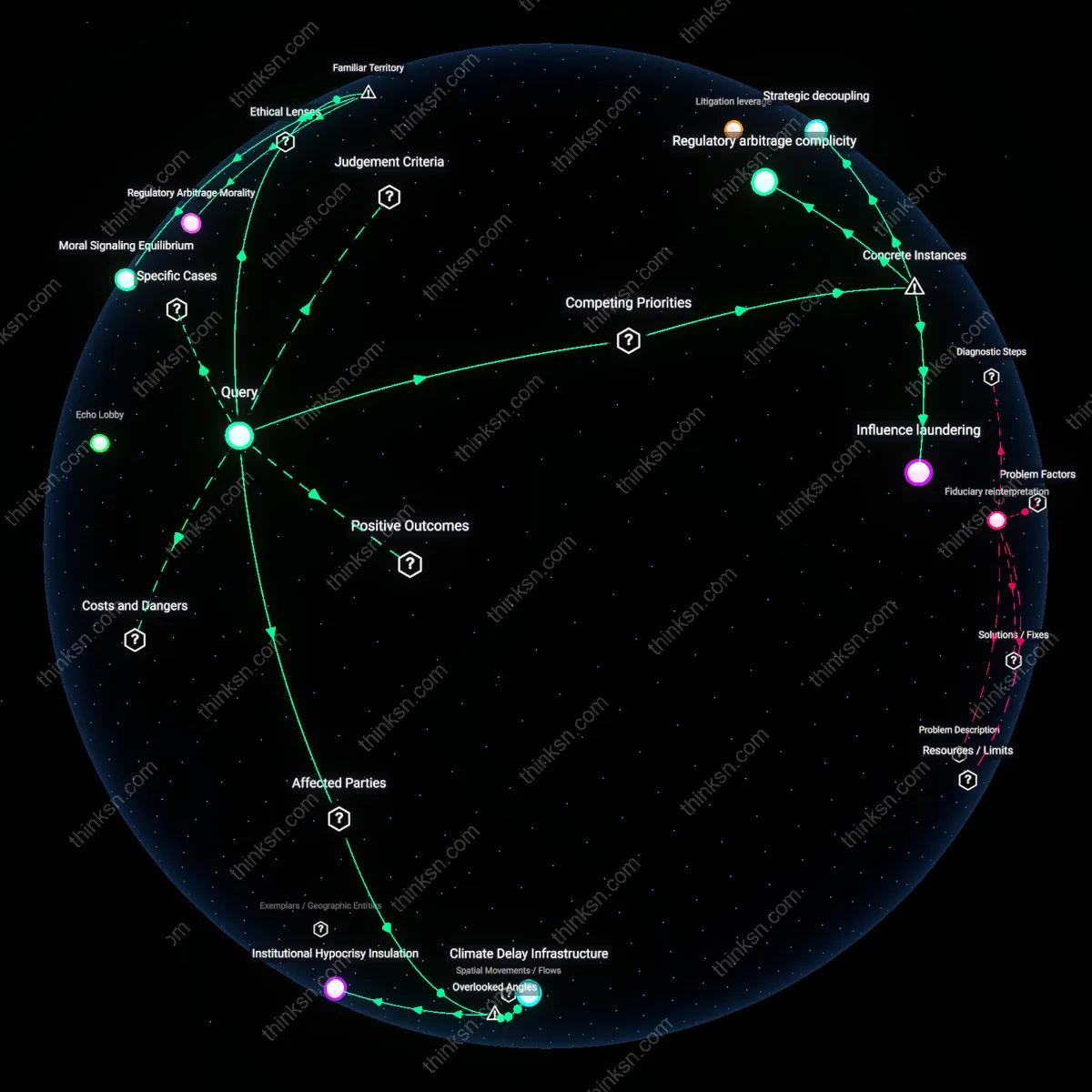
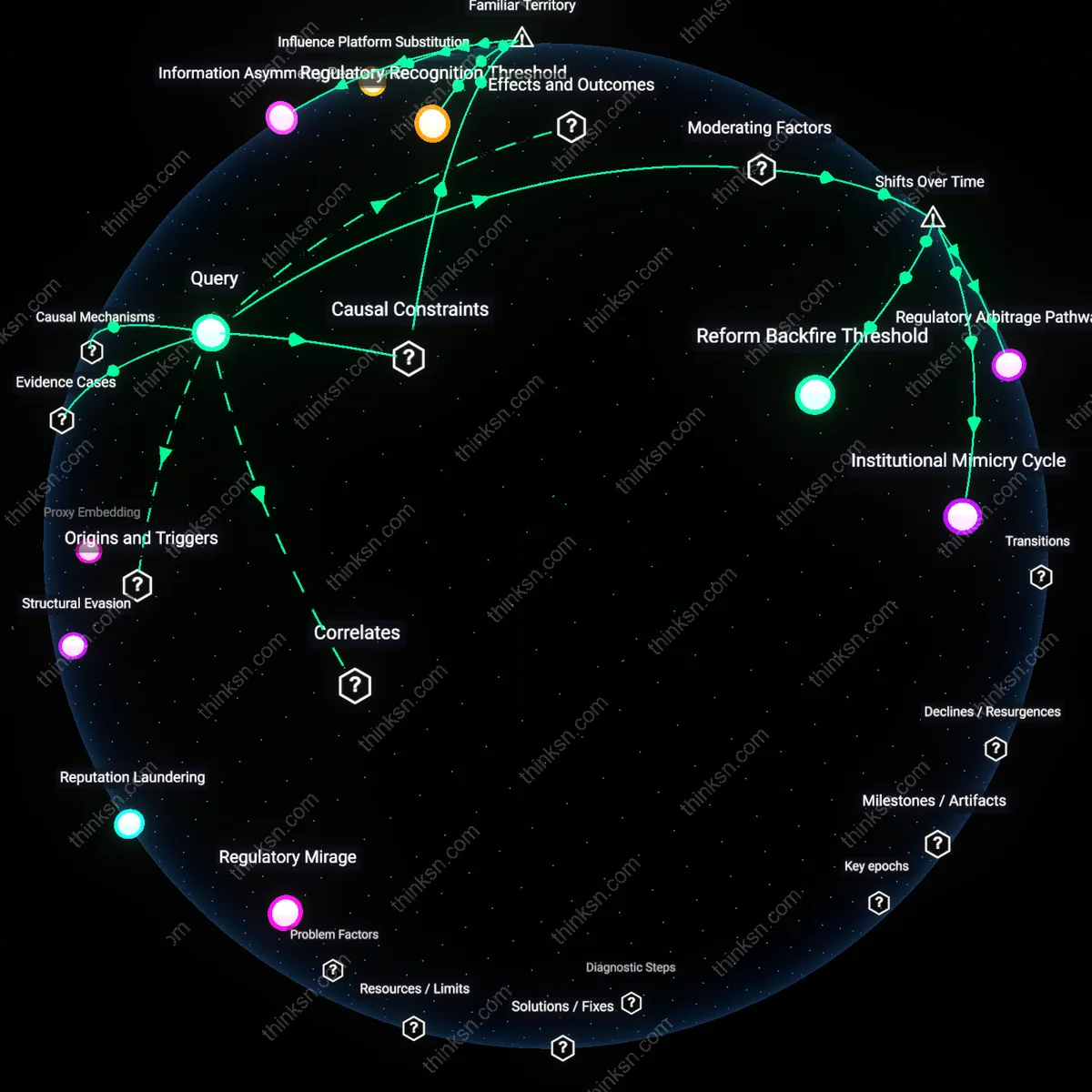
Analysis reveals 11 key thematic connections.
Key Findings
Regulatory Mirage
Transparency in lobbying registers does not reduce political capture because firms bypass disclosure requirements by channeling influence through third-party coalitions and trade associations that obscure corporate sponsorship. These intermediaries exploit loopholes in registration laws—such as in the EU Transparency Register, where membership fees from firms fund advocacy campaigns without itemizing specific policy asks—enabling covert agenda-setting. This mechanism reveals that visibility into direct lobbying creates a false sense of accountability, as the locus of influence migrates to structurally opaque collective actors, undermining the core premise that disclosure deters undue access.
Institutional Mimicry
Transparency mandates inadvertently incentivize firms to adopt state-like strategic behaviors by pushing influence operations into think tanks and pseudo-civic organizations that mimic independent research bodies. In the U.S., fossil fuel companies have funded climate skepticism through networks like the State Policy Network, which produces policy blueprints indistinguishable from grassroots legislation while shielding corporate authorship. This subversion works because public scrutiny targets individual lobbyist registrations, not the epistemic authority of seemingly neutral knowledge producers—demonstrating that transparency regimes fail when they do not account for ideological production as a form of political capture.
Reputation Laundering
Firms use compliant participation in lobbying registers to build reputational legitimacy, which they then leverage to gain access for off-the-record influence activities that remain unmonitored. For example, financial institutions in the UK register routine meetings with Treasury officials while concurrently engaging in elite social circuits—such as City dinner clubs or advisory panels—where regulatory outcomes are informally shaped. The mechanism hinges on the state’s tendency to equate procedural transparency with ethical conduct, allowing actors to convert visible compliance into covert capital, exposing transparency not as a constraint but as a credential for deeper systemic entrenchment.
Regulatory Arbitrage Pathways
Transparency in lobbying registers intensified indirect influence by displacing corporate lobbying from formal channels to informal policy coalitions after the 2010s EU transparency reforms, where firms bypassed registration requirements by funding third-party business associations and sustainability platforms; this shift reveals how regulatory pressure can rechannel rather than eliminate political capture, transforming visibility into a structural loophole exploitable by networked capital.
Institutional Mimicry Cycle
The post-2008 expansion of U.S. lobbying disclosure rules led firms to adopt think tank affiliates and academic partnerships as influence vehicles, institutionalizing indirect access through epistemic authority rather than direct advocacy; this evolution shows that transparency pressures do not erode capture but prompt mimicry of legitimate knowledge-producing entities, thereby embedding corporate preferences more deeply within policy justification systems.
Reform Backfire Threshold
Following the 2014 UK mandatory lobbying register, centralized transparency made targeted evasion more efficient—firms shifted from individual lobbying to collective business council engagement, where opacity scaled with coordination; this tipping point demonstrates that at a certain level of regulatory visibility, the act of reducing one mode of capture actively increases systemic vulnerability to harder-to-track, aggregate influence strategies.
Information Asymmetry Persistence
Transparency in lobbying registers fails to reduce political capture because obligated disclosure only covers direct firm-to-legislator interactions, leaving undisclosed the strategic funding of third-party advocacy groups that shape regulatory narratives. Regulators and the public lack visibility into corporate sponsorship of think tanks or grassroots campaigns in jurisdictions like the EU and U.S., where ‘dark money’ channels bypass registration requirements, maintaining informational advantage for firms. This bottleneck—the absence of mandatory tracing for indirect influence spending—preserves asymmetric access even under transparent regimes, a gap rarely acknowledged in reform debates focused solely on direct contact disclosure.
Influence Platform Substitution
Mandatory lobbying transparency accelerates corporate migration from registered lobbying to indirect influence platforms such as industry coalitions and standard-setting bodies where disclosure is unenforced. Firms like pharmaceutical or tech conglomerates shift lobbying effort to ASTM or ISO working groups or national advisory committees, where informal consensus-building precedes legislation, rendering public register data obsolete. The causal chain breaks because transparency applies only to state-registered actors, not to technical or epistemic communities where policy blueprints are first codified—an institutional blind spot that replicates capture under a different procedural guise.
Regulatory Recognition Threshold
Public lobbying registers reduce political capture only when journalists, watchdogs, or opposition parties actively monitor and interpret disclosed data to trigger accountability, but most civic actors lack the resources or incentives to analyze registration logs in real time. In countries like Canada or Germany, even fully accurate registers remain inert because media attention concentrates on scandal-driven narratives rather than routine access patterns, allowing firms to exploit the latency between disclosure and public recognition. The bottleneck is not data collection but the delayed or absent activation of democratic feedback loops, revealing that transparency assumes a vigilant epistemic infrastructure that often doesn’t exist.
Structural Evasion
Transparency in the EU lobbying register fails to prevent political capture because fossil fuel firms like ExxonMobil shift influence through third-party climate denial networks, such as the Cooler Heads Coalition, which operate outside formal registration; this mechanism—where regulatory scrutiny on direct access triggers substitution into unregulated advocacy channels—reveals that transparency regimes can intensify covert coordination when enforcement lacks jurisdictional reach, a dynamic often overlooked because audits focus on registered entities rather than network topology.
Proxy Embedding
In the U.S. tax reform debates of 2017, pharmaceutical firms such as PhRMA avoided direct lobbying disclosures by funding ostensibly independent coalitions like Patients Rising Now, which then advanced favorable policy narratives; this strategy exploited gaps in lobbying definitions by channeling corporate objectives through grassroots-appearing organizations, demonstrating how transparency regimes that ignore messaging provenance enable firms to achieve political capture through identity laundering—a pattern underappreciated because disclosure compliance is often measured procedurally, not discursively.