Do Stricter Lobbying Rules Hide Influence from View?
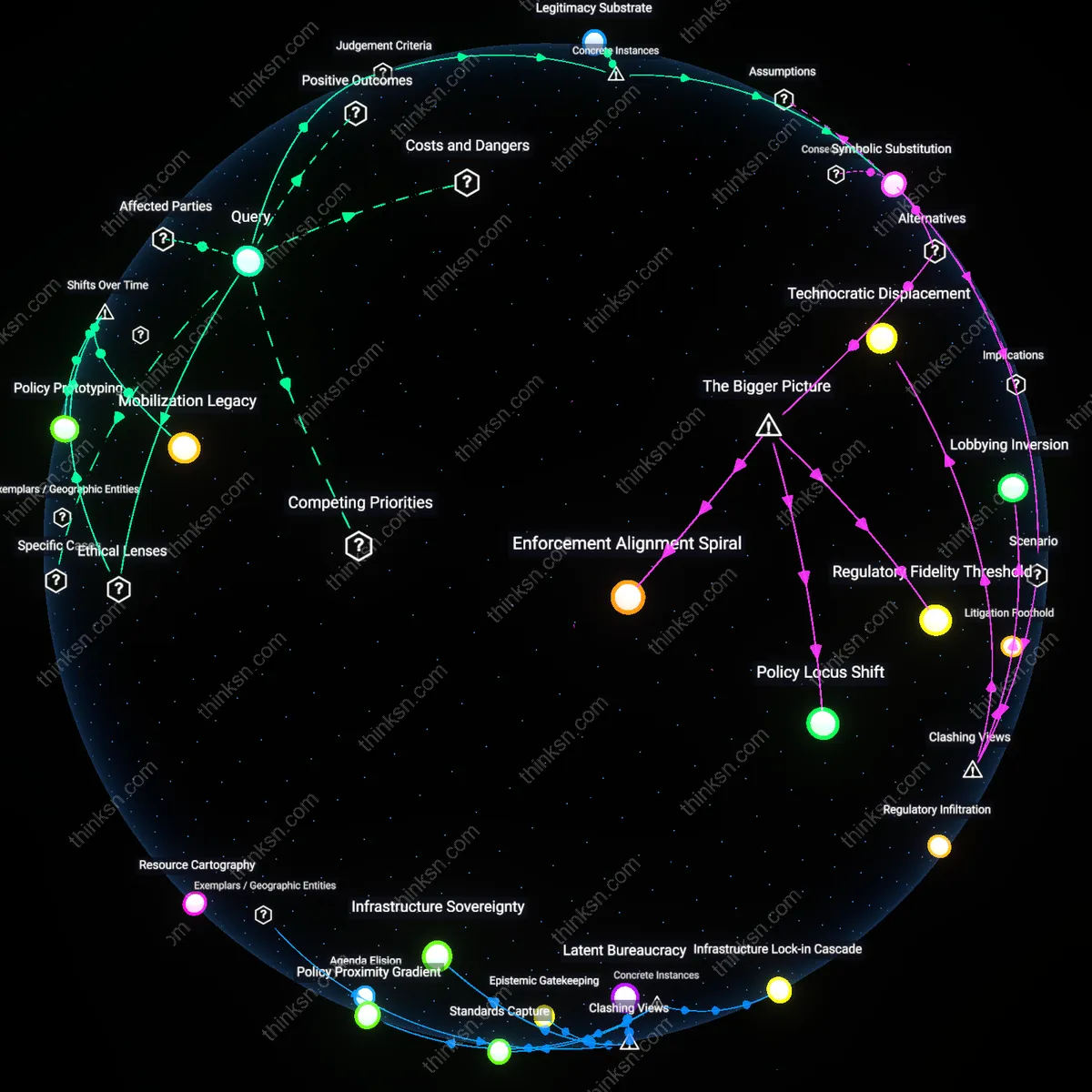
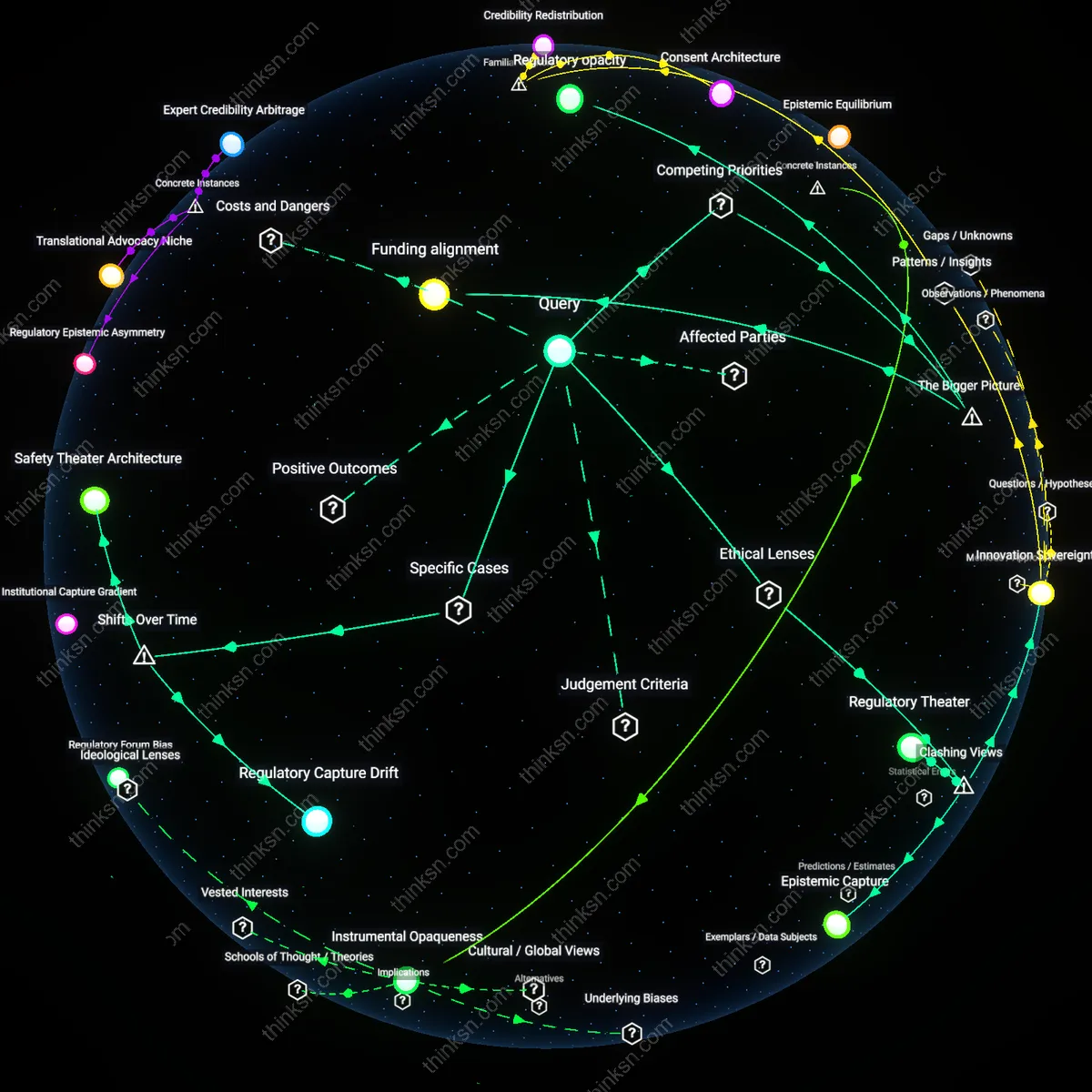
Analysis reveals 10 key thematic connections.
Key Findings
Legislative Backchannels
Advocating for stricter corporate lobbying disclosure rules remains rational because it forces shadow influence into legislative staff networks that operate without public scrutiny, where power brokers such as congressional aides and agency fellows act as informal conduits for corporate agendas. These intermediaries, though unelected and often transient, accumulate disproportionate sway by controlling access and framing policy options, a dynamic rarely captured in transparency regimes focused on formal registrations or expenditures. The overlooked angle is that disclosure laws displace opacity rather than eliminate it, relocating influence from visible lobbying firms to insulated, meritocratic-seeming subsystems within the legislative branch itself—this shift actually makes accountability harder because these actors are perceived as neutral and are thus granted deference, not suspicion.
Civic Data Rituals
Stricter lobbying disclosure is rational despite informal channel risks because the ritualized act of public filing fosters a normative shift among civic intermediaries—local journalists, watchdog groups, and municipal law clerks—who begin treating disclosure data as a baseline for legitimacy, even when incomplete. These actors, operating outside federal influence circuits, use filings as a symbolic trigger for oversight actions, such as editorial probes or community alerts, transforming bureaucratic records into moral benchmarks. The overlooked dynamic is that transparency laws function not only as regulatory tools but as performative events that recruit peripheral civic agents into accountability networks, making the very act of filing a catalyst for decentralized scrutiny that persists even when lobbying goes underground.
Discursive Accountability
Advocating for stricter corporate lobbying disclosure rules is rational because it institutionalizes a discursive norm that recalibrates power even when compliance is incomplete, as seen in the EU’s Lobby Transparency Register, where public naming pressures corporations to self-censor aggressive positioning. This mechanism operates through media amplification and civil society monitoring, transforming disclosure into a performative act that alters behavior regardless of evasion attempts. The non-obvious insight is that transparency’s value is not solely in revealed data but in sustaining a legitimacy contest over whose influence is socially acceptable.
Regulatory Fissure Exploitation
Stricter corporate lobbying disclosure rules are counterproductive because they create a legitimacy hierarchy that pushes strategic influence into unregulated adjacent domains like trade associations and philanthropy, as occurred post-Dodd-Frank when financial firms shifted advocacy to opaque ‘policy partnerships’ under 501(c)(3) and (c)(6) structures. The regulatory boundary defines what counts as lobbying, inducing actors to reclassify influence as consultation or research, thereby increasing overall opacity. The overlooked reality is that formal transparency regimes can deepen systemic evasion by narrowing the definition of reportable conduct.
Illegitimacy Arbitrage
Pushing for stricter disclosure remains rational precisely because it forces elite actors to choose between visibility and legitimacy, as demonstrated by the backlash against pharmaceutical firms that avoided the U.S. Senate lobbying database only to face Senate Finance Committee investigations into ‘dark advocacy’. This dynamic creates a frictional cost where invisibility becomes politically hazardous, incentivizing even wary firms to register to avoid scrutiny escalation. The underappreciated mechanism is that mandatory disclosure regimes function not as information channels but as legitimacy gateways, where noncompliance triggers disproportionate reputational penalties.
Transparency Tradeoff
Advocating for stricter corporate lobbying disclosure rules is rational because it forces influence into formal reporting systems where at least some accountability exists, even if it risks informal spillover—this operates through congressional oversight mechanisms and FEC enforcement structures, which, despite their weaknesses, create auditable paper trails that informal channels inherently lack; what’s underappreciated is that the public’s belief in transparency as a safeguard reinforces political pressure on lawmakers, making full opacity politically costly.
Lobbying Substitution
Pursuing stricter disclosure rules becomes self-undermining when corporate actors shift influence operations to personal networks, think tanks, or social events—settings like donor dinners or alumni connections in Washington D.C. that evade regulatory capture—because the formal system’s rigidity incentivizes strategic relocation of access, revealing that the most visible forms of influence are often not the most decisive, a reality obscured by public fixation on official registries.
Disclosure Floor Effect
Stricter disclosure rules remain rational because they establish a minimum baseline of visibility that shapes public discourse and media scrutiny, even if backchannel influence persists—this is mediated through news organizations and watchdog groups that rely on filed records to trigger investigations, meaning that while elites may circumvent formal channels, the disclosure floor sets the starting point for democratic contestation, a function rarely acknowledged in debates over loopholes.
Legibility trap
Advocating for stricter corporate lobbying disclosure rules remains rational because formal oversight mechanisms emerged after the Progressive Era's backlash against Gilded Age corruption, which redefined transparency as a public right rather than a procedural convenience. This shift institutionalized legibility as a core function of democratic accountability, particularly through laws like the Federal Regulation of Lobbying Act (1946) and its successor, the Lobbying Disclosure Act (1995), embedding disclosure within a broader normative framework of constitutional liberalism. The non-obvious consequence of this trajectory is that even if influence migrates to informal channels, the demand for visibility itself performs an ethical function by sustaining public skepticism and pressuring institutions to justify their neutrality.
Regulatory displacement
Stricter disclosure rules became rational only after the neoliberal turn of the 1980s transformed lobbying from a localized barter economy among bureaucrats and firms into a marketized, professionalized industry dependent on legal visibility for credibility. As lobbying firms began branding transparency as compliance capital to attract corporate clients, the risk of pushing influence into informal channels was partially offset by the new economic incentives to remain visible. The underappreciated dynamic here is that regulatory pressure didn’t just constrain actors—it reshaped their identities, making formal disclosure a competitive asset rather than merely a constraint, thus altering the pre-1980 logic of concealment.