Undocumented Parents Dilemma: Health or Safety?
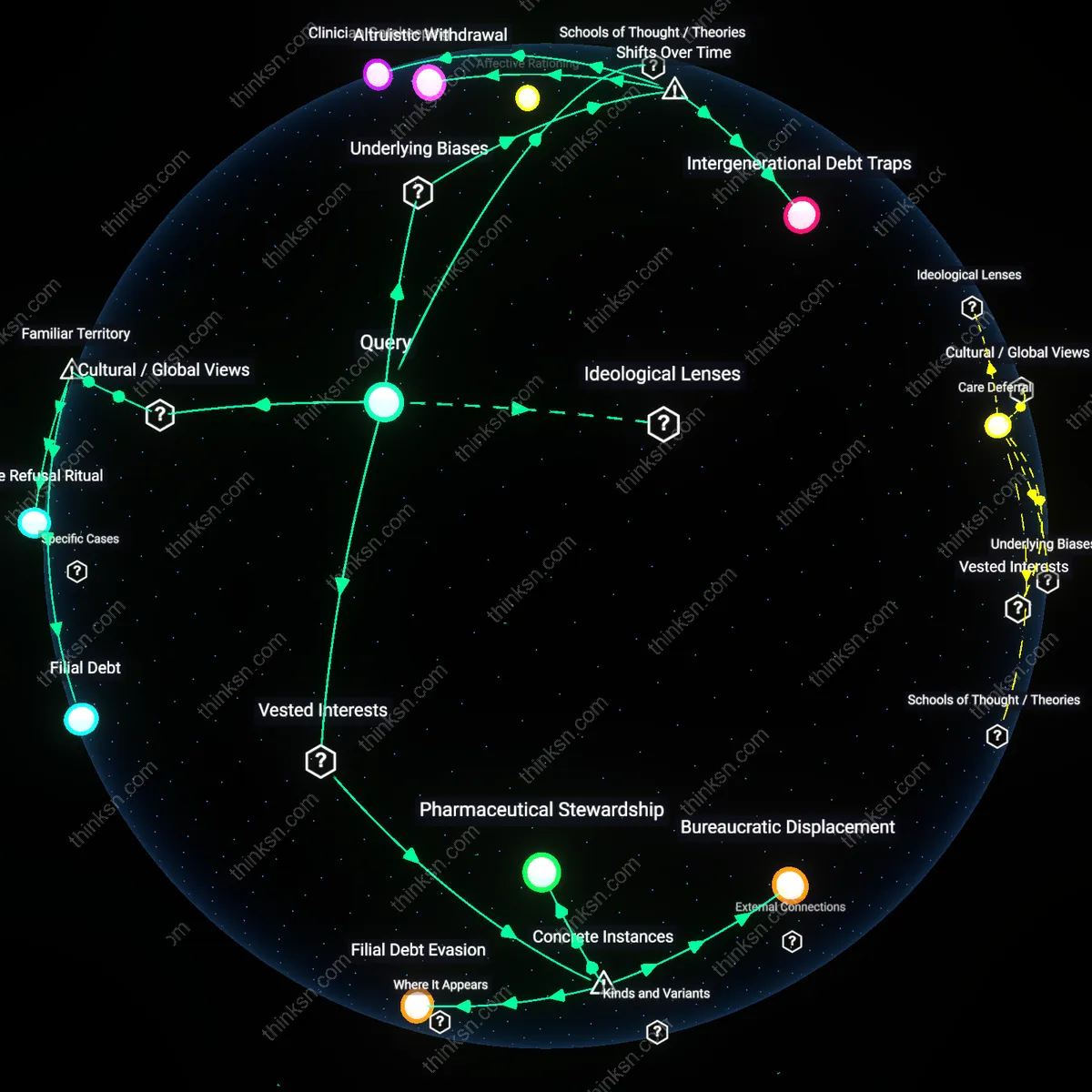
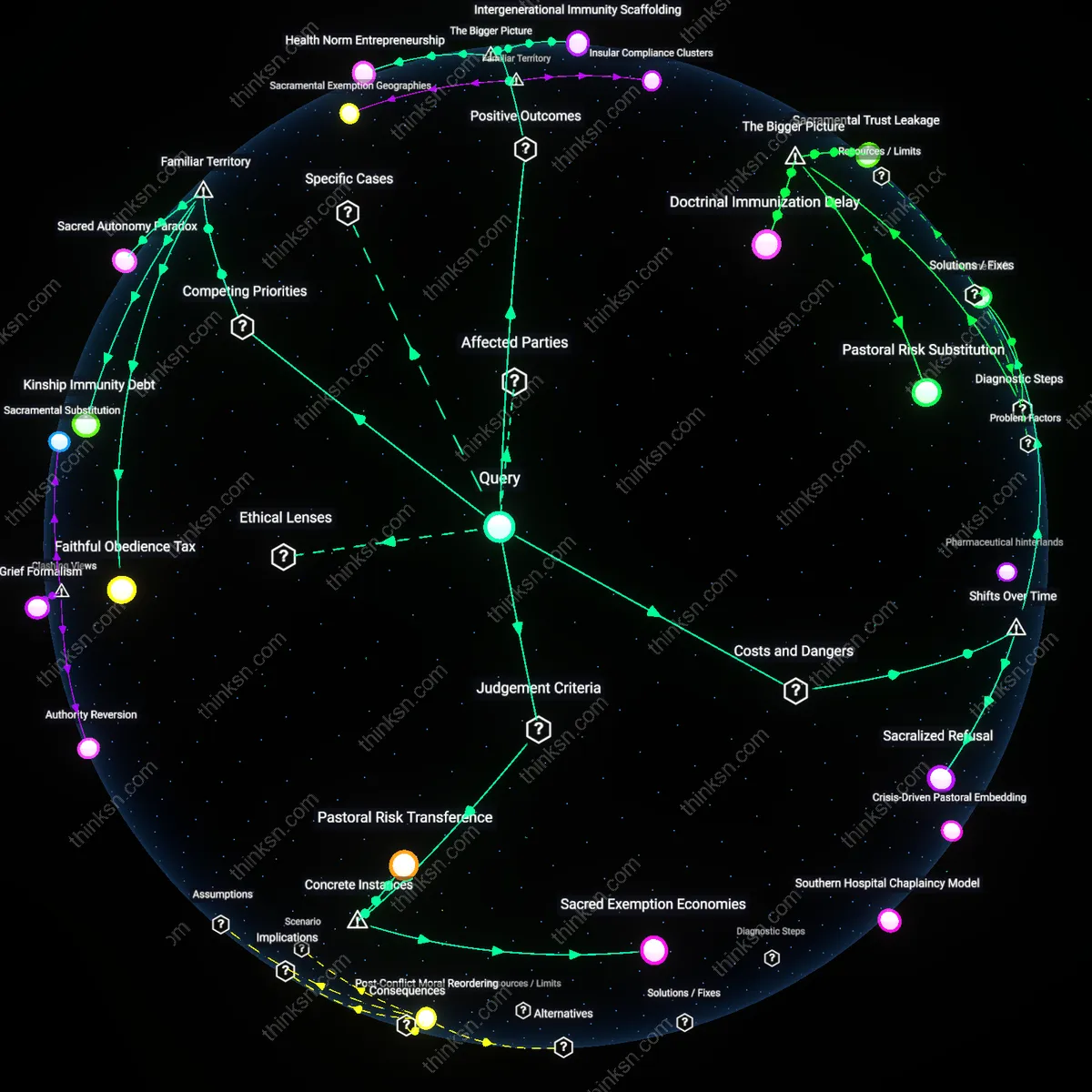
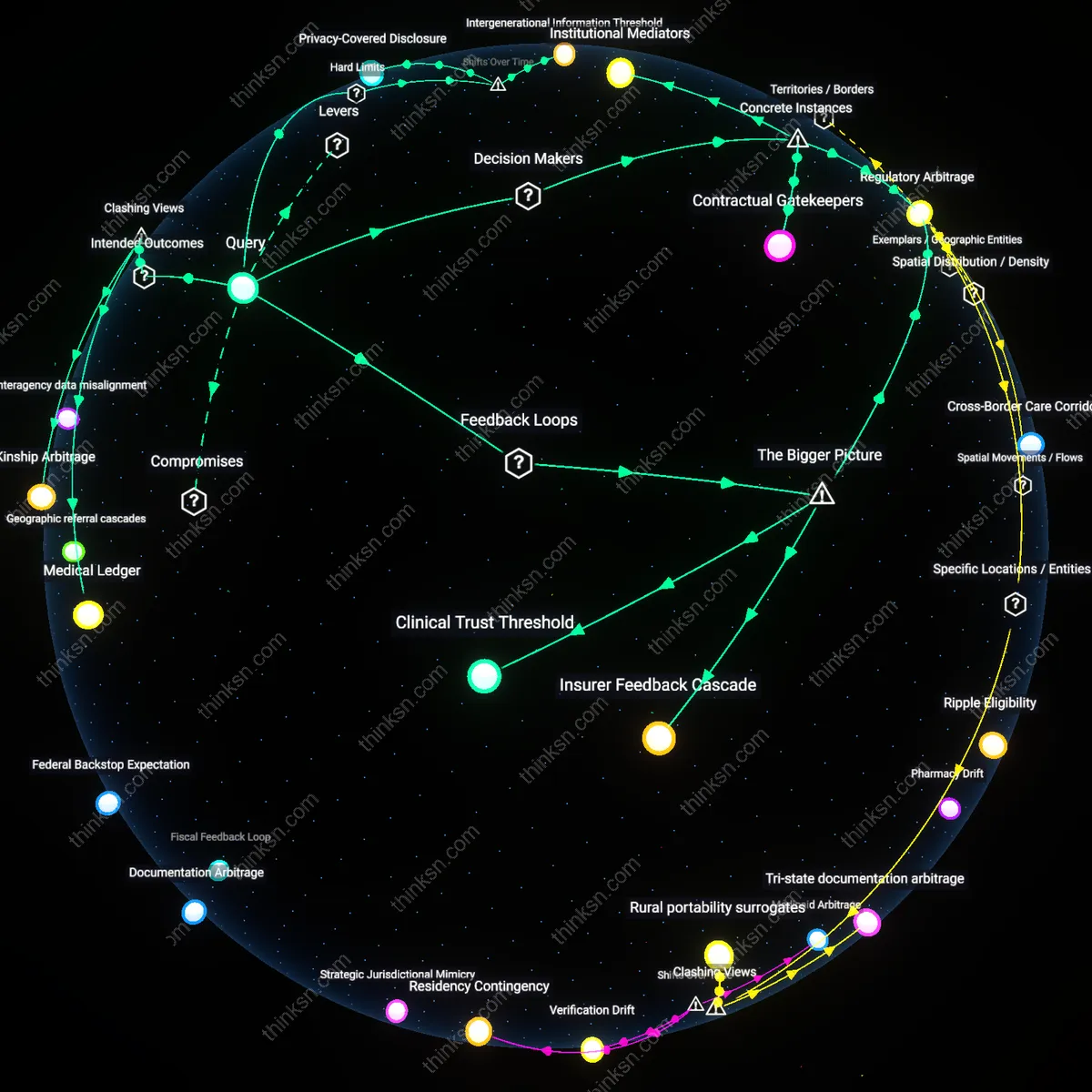
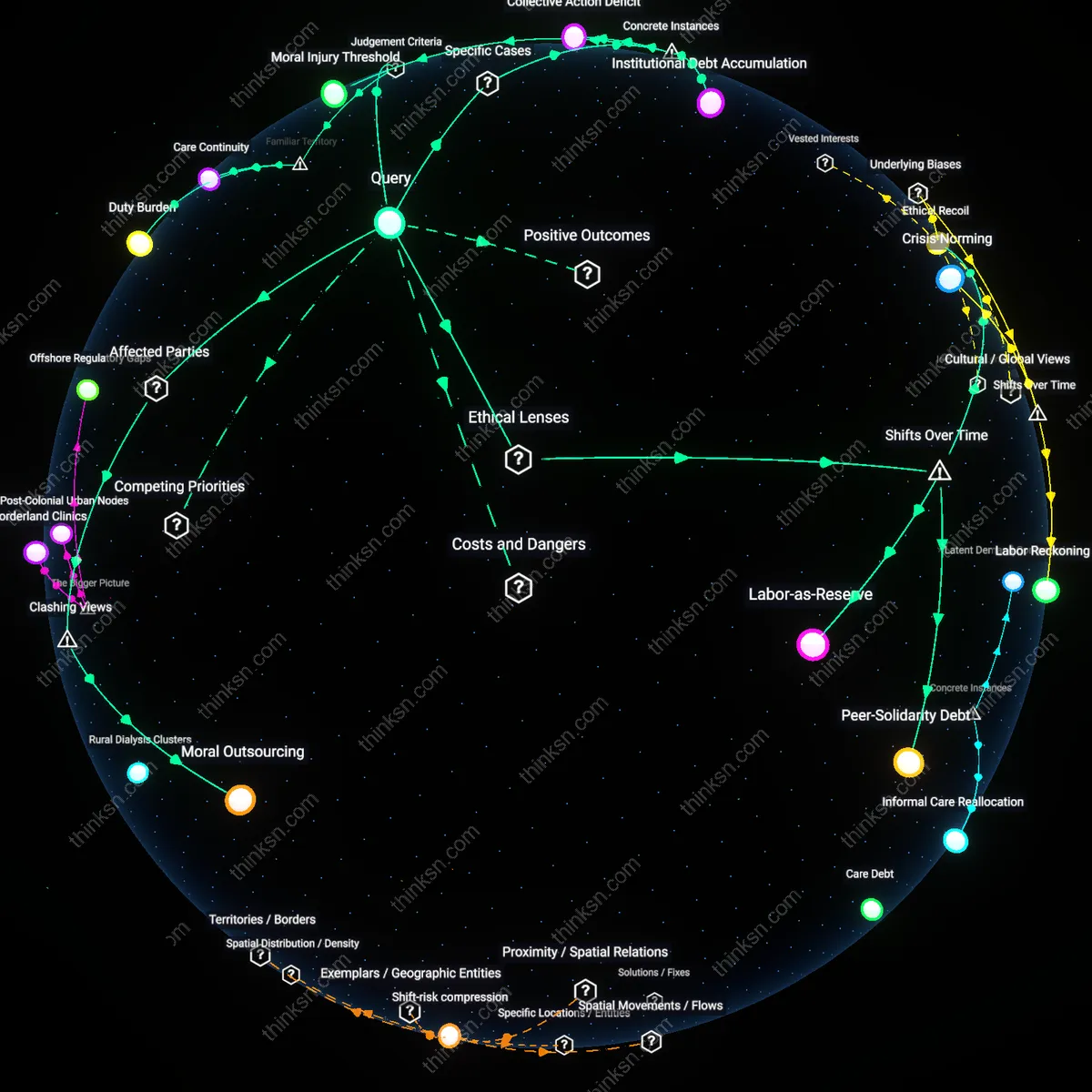
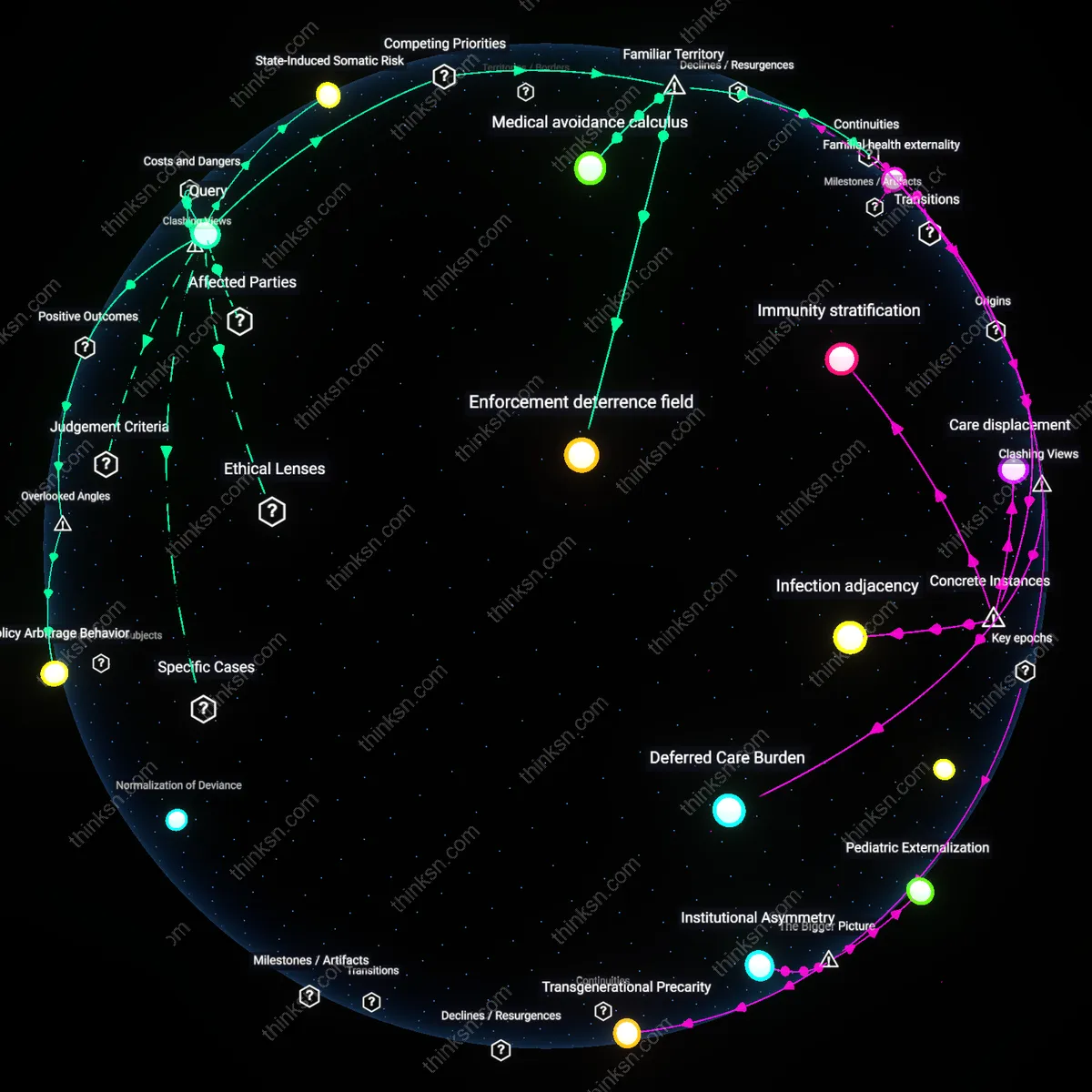
Analysis reveals 7 key thematic connections.
Key Findings
Informal Trust Networks
Avoiding medical care strengthens tight-knit, informal trust networks among undocumented families that become critical for sharing vetted health resources. These clandestine systems—such as word-of-mouth referrals to sympathetic providers or home-based care collectives—emerge because institutional channels are perceived as dangerous, and they sustain community resilience by operating outside surveillance-prone infrastructure. This shift to hyper-local, reputation-based care dissemination is overlooked because public health analysis focuses on formal utilization rates, not the sociological substitution of institutional trust with kinship-verified alternatives, which in fact preserves community well-being in ways invisible to standard epidemiological metrics. The non-obvious benefit lies in how these networks reinforce cultural continuity and reduce dependency on adversarial systems, enhancing long-term cohesion.
Policy Arbitrage Behavior
An undocumented parent’s decision to avoid medical care inadvertently triggers policy arbitrage behavior in local clinics, prompting providers to creatively route patients through non-reporting pathways such as charity programs or sliding-scale private pay to maintain revenue and ethical compliance. This adaptive response—from safety-net hospitals in border counties to Federally Qualified Health Centers in agricultural regions—exploits ambiguities in funding rules to deliver care without triggering immigration enforcement, effectively creating shadow systems of access. The overlooked dynamic is that patient avoidance does not reduce care demand but redirects it into legal gray zones, revealing a latent elasticity in public health financing that can be harnessed to lower community transmission risks even in restrictive political climates.
Enforced Medical Avoidance
It is rational for undocumented parents to avoid medical care because immigration enforcement operates through public benefit restrictions like the public charge rule, which link healthcare use to deportation risk, thereby making non-engagement a calculated survival strategy; this behavior is rational within a system where accessing care can trigger familial separation, yet it silently fuels community transmission of treatable conditions in urban centers like Los Angeles and Houston, where safety-net hospitals face overload. The non-obvious truth is that rational individual action, when universally adopted under duress, becomes a hidden engine of public health collapse—one not driven by ignorance but by enforced invisibility.
State-Induced Somatic Risk
Avoiding medical care is rational because the U.S. immigration apparatus deputizes healthcare settings through ICE’s access to administrative data and biometric databases, turning clinics into potential surveillance nodes; in cities like New York and Chicago, this creates a chilling effect where undocumented Salvadoran or Guatemalan parents forgo prenatal or pediatric care not due to cultural distrust but because hospital records can indirectly enable workplace raids. The dissonance lies in recognizing that the body itself becomes a site of immigration control, where somatic well-being is compromised not by lack of access, but by the weaponization of care infrastructure against civil belonging.
Medical avoidance calculus
It is rational for an undocumented parent to avoid medical care because the immediate risk of immigration enforcement during healthcare encounters outweighs the long-term benefit of treatment, particularly in jurisdictions with entanglement between public services and Immigration and Customs Enforcement (ICE). This calculation emerges from real-world conditions such as the public charge rule, hospital data sharing with federal authorities, and ICE presence near clinics, which make healthcare access a potential trigger for deportation. What is underappreciated is that this rationality is not rooted in ignorance or distrust alone, but in a precise, adaptive response to observable institutional linkages that punish vulnerability—turning medical systems into zones of legal peril.
Familial health externality
An undocumented parent’s avoidance of medical care harms community health by enabling the silent spread of treatable conditions like tuberculosis or influenza within households and schools, where U.S.-citizen children often serve as hidden vectors. This occurs because asymptomatic or undertreated illnesses in parents circulate through intimate, everyday contact with children who then enter public spaces insulated by citizenship but not biology. The non-obvious insight is that individual risk mitigation by parents produces collective exposure downstream—transforming family protection into an unintended public health liability rooted in structural exclusion.
Enforcement deterrence field
Immigration enforcement creates a deterrence field that extends far beyond those directly targeted, chilling medical engagement across entire ethnic or linguistic communities even among legal residents and citizens who resemble enforcement profiles. This field operates through spatial and symbolic cues—such as federal immigration raids near medical facilities or multilingual notices warning of status checks—that generalize fear regardless of individual legal standing. What remains underrecognized is that this deterrence is functionally indistinguishable from official policy, producing population-level health disengagement without requiring universal enforcement—only the credible threat of it.