Vaccines vs Faith: Protecting Health When Community Disapproves?
Analysis reveals 11 key thematic connections.
Key Findings
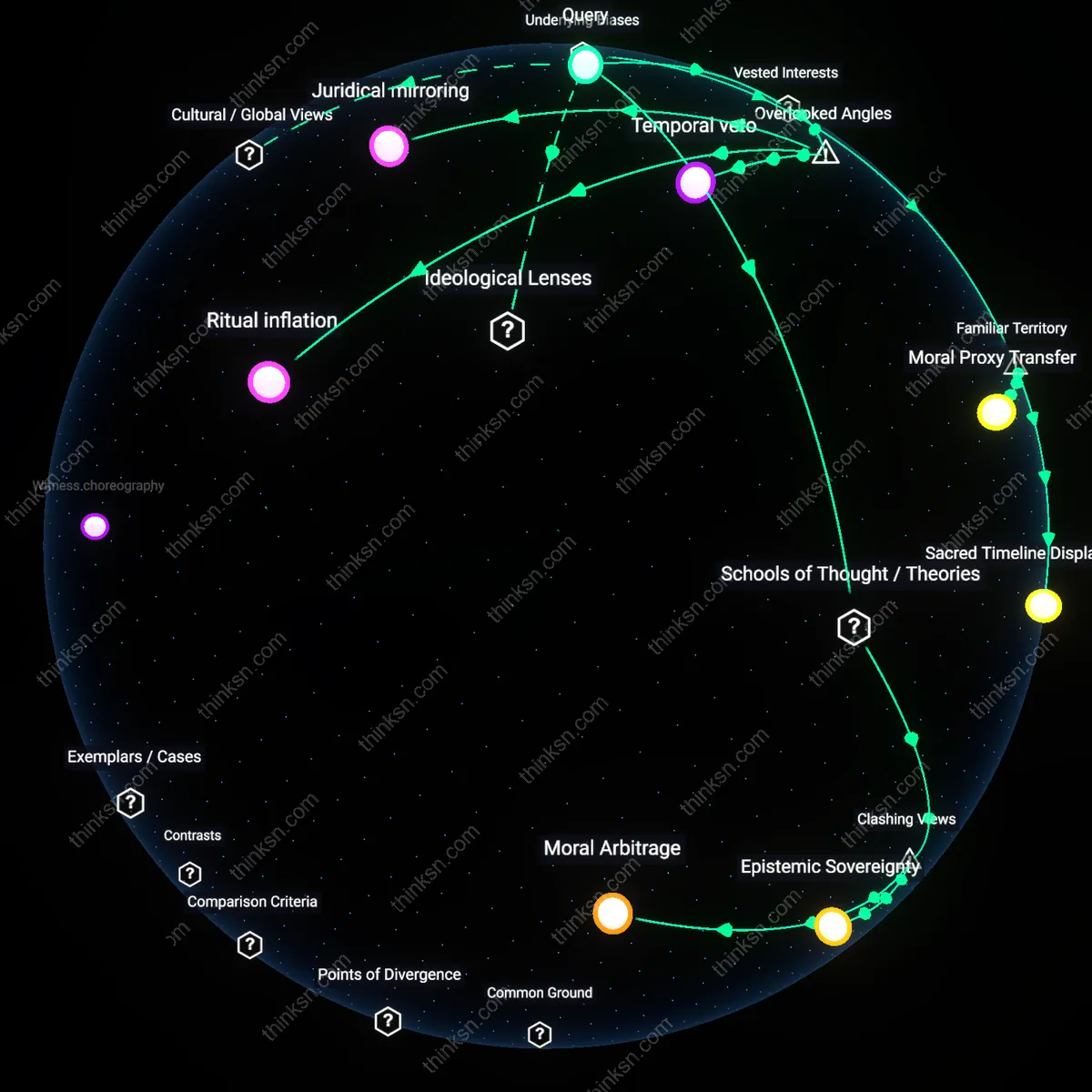
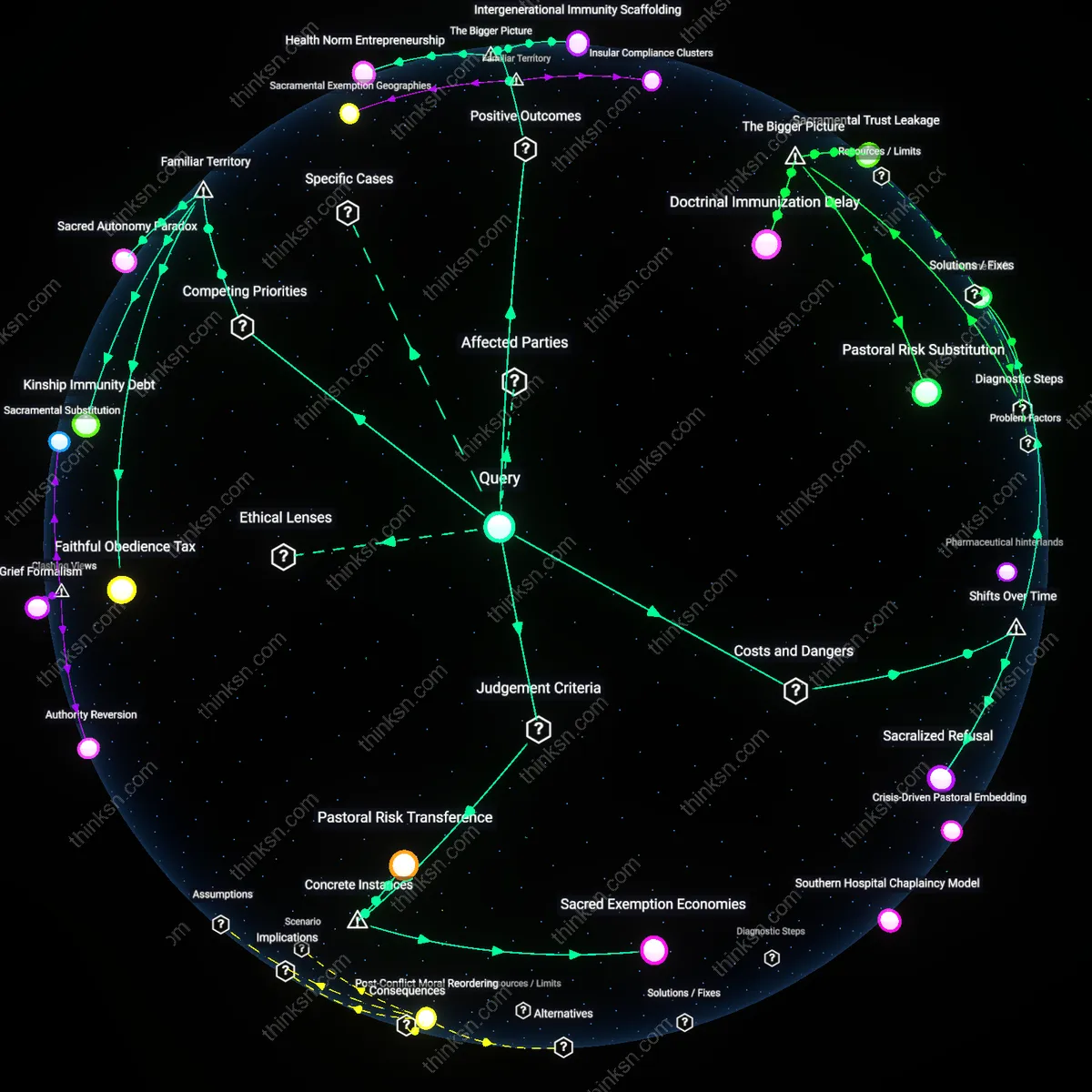
Sacred Exemption Economies
In Kiryas Joel, New York, where a Satmar Hasidic community opposed polio and measles vaccination on religious grounds, leaders leveraged state-provided religious exemptions to maintain communal autonomy, effectively transforming legal accommodation into a system of informal health governance that prioritized spiritual cohesion over herd immunity, revealing how state-sanctioned religious exceptions can institutionalize public health risk when enclaved communities weaponize pluralism as a buffer against biomedical mandates.
Kinship Immunization Penalty
During the 2019 Samoa measles outbreak, extended families who adhered to traditional Congregational Christian teachings rejecting vaccination to preserve spiritual purity experienced disproportionate mortality among infants and young children, illustrating how religiously motivated vaccine refusal imposes a biologically enforced cost on the most vulnerable kin members, where the moral imperative of familial protection is structurally undermined by the very practices meant to sustain group identity.
Pastoral Risk Transference
In northern Nigeria, polio vaccine boycotts led by Muslim clerics in the early 2000s who claimed immunization was a Western plot to sterilize Muslims resulted in localized resurgence and international spread of the virus, demonstrating how religious authorities can shift epidemiological risk onto lay congregants by redefining medical decisions as acts of faith, thereby insulating doctrinal leadership from accountability while distributing harm downward through household networks.
Health Norm Entrepreneurship
Families who quietly adopt vaccination despite religious community opposition create covert demand signals that enable health providers to pilot discreet outreach programs in resistant regions. Local clinics in areas like upstate New York Hasidic communities have leveraged anonymized vaccination records to design culturally tailored education campaigns, revealing a hidden feedback loop where private household health decisions seed public health innovation. This mechanism is non-obvious because it positions familial nonconformity not as social deviance but as a source of normative experimentation that public health systems can harness without direct confrontation. The systemic trigger is the misalignment between private health behaviors and public religious posturing, which generates actionable data under the radar of communal scrutiny.
Doctrinal Elasticity Threshold
When a critical mass of families vaccinate in secret, it reduces the perceived risk of doctrinal reinterpretation, allowing trusted religious intermediaries like rural Mennonite deacons or Somali imams to gradually reframe vaccine acceptance as compatible with faith. This shift becomes possible when health outcomes in vaccinated kin networks become visible yet attributable to divine favor, enabling religious authorities to absorb biomedical norms without overtly challenging communal identity. The underappreciated dynamic is that health preservation behaviors can precede and condition theological adaptation, rather than follow it—making household-level health choices a de facto engine of religious modernization within tightly bound doctrinal systems.
Intergenerational Immunity Scaffolding
Parents who vaccinate children despite communal opposition invest in a form of embodied capital that protects not only their immediate offspring but also future grandchildren, especially through matriarchal caregiving lines common in Appalachian Pentecostal communities. This creates a long-term health scaffold where immunized daughters become mothers who implicitly normalize vaccination in new households, subtly shifting kinship networks over decades. The overlooked systemic feature is that health-preserving deviance operates on a delayed return horizon, leveraging biological inheritance to outlast ideological resistance—making vaccination a form of stealth intergenerational investment that reconfigures community health from within.
Sacralized Refusal
The erosion of communal vaccination compliance since the late 20th century has transformed religious vaccine opposition from isolated family dissent into organized, theologically justified refusal, where maintaining familial harmony now requires accepting health risks that were previously mitigated by broader social adherence to medical norms. This shift became pronounced after the 1998 MMR-autism controversy, which, though widely retracted, catalyzed a new era in which religious communities absorbed and repurposed scientific skepticism into moral identity, embedding non-compliance within spiritual authenticity. The mechanism operates through kinship networks that punish deviation not as medical nonconformity but as apostasy, thereby raising the cost of health protection to include social expulsion—a dynamic rare before the fusion of evangelical individualism and anti-institutional biomedicine in the 1990s–2000s. What is underappreciated is that this is not a resurgence of traditional doctrine but a novel synthesis of religious identity and post-trust science politics, giving refusal a sacred permanence it previously lacked.
Doctrine Drift
Beginning in the 1970s, certain religious groups began reinterpreting historically neutral or pro-health doctrines to frame vaccination as bodily violation or governmental overreach, marking a shift from viewing medicine as compatible with faith to treating it as a spiritual threshold issue—thus raising the cost of health protection to include identity disintegration. This doctrinal transformation emerged most clearly among fundamentalist Christian and isolated Hasidic communities during polio and measles eradication campaigns, when state-mandated immunization laws clashed with growing separatist theology, recasting compliance as submission to secular authority rather than care for neighbor. The mechanism operates through generational reinforcement in homeschooled or parochial education systems, where medical decisions are filtered through interpretive religious frameworks that have drifted significantly from mid-century norms. What remains unseen is that this is not static belief but evolved dogma—where the social danger lies not in enduring tradition but in the quiet, incremental redefinition of religious duty in response to modernity, turning health-protective acts into acts of spiritual compromise.
Faithful Obedience Tax
Adhering to religious doctrines that prohibit vaccination extracts a health risk premium from family members, particularly children, because communal authority enforces doctrinal purity over medical consensus. This occurs through tight-knit social monitoring in communities like certain Amish or Orthodox Jewish enclaves, where opting into state-recommended immunization programs triggers social censure or expulsion. The underappreciated reality is that obedience functions not just as spiritual duty but as a coercive economic and relational toll—one pays in health to retain belonging.
Kinship Immunity Debt
When unvaccinated family members serve as communal proxies for religious resistance, they accumulate biological risk that is redistributed across household contacts, including non-consenting relatives such as infants or immunocompromised elders. This operates through intrafamilial pathogen transmission networks, especially evident during regional outbreaks in vaccine-hesitant Mormon or Christian Scientist clusters. What's rarely acknowledged is that familial love and caregiving routines—like sharing bedrooms or preparing meals—become vectors, turning domestic intimacy into a stealth public health liability.
Sacred Autonomy Paradox
Defending religious freedom to reject vaccination ultimately constrains individual household agency by binding personal health decisions to institutional dogma, as seen in legal accommodations for faith-based vaccine exemptions in U.S. public schools. This unfolds through state-sanctioned deference to religious institutions, which converts theological objections into enforceable family policy. The overlooked irony is that protections meant to expand liberty end up centralizing doctrinal control over bodies, making emancipation from communal health risks as fraught as apostasy.