Do Annual Renewal Fees Undermine Professional Certification ROI?
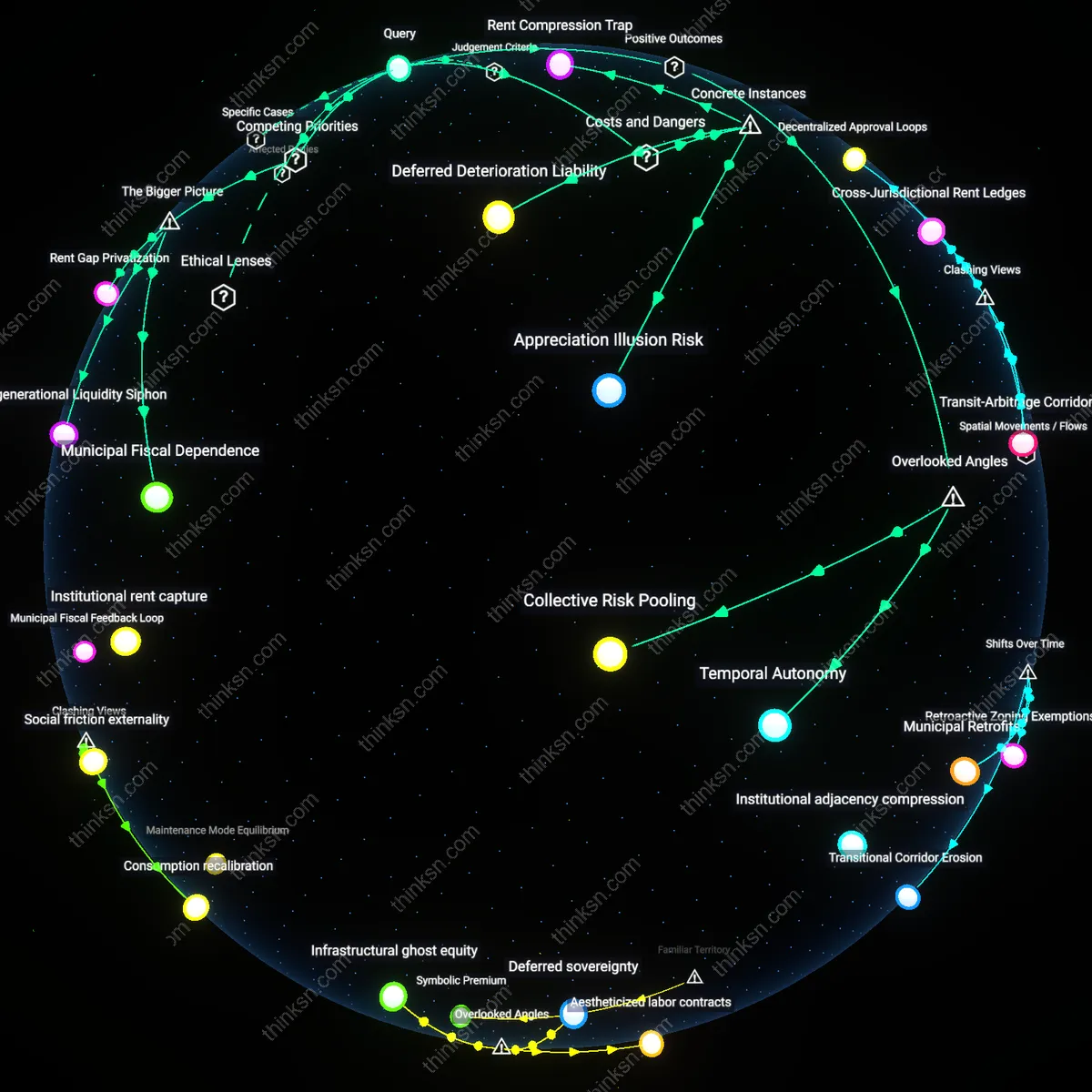
Analysis reveals 11 key thematic connections.
Key Findings
Certification Erosion
Recurring renewal fees reduce the long-term return on investment of professional certifications by imposing ongoing costs that erode net financial gains, particularly for mid-career professionals in fields like IT, project management, or healthcare who must maintain credentials from bodies such as CompTIA or PMI. These fees, often tied to continuing education and membership, transform what appears to be a one-time career investment into a perpetual expense stream, which many individuals underestimate when initially pursuing certification. The non-obvious insight is that the psychological appeal of immediate credentialing often overshadows the compounding burden of renewal—creating a hidden tax on career advancement that disproportionately affects those without employer reimbursement.
Gatekeeper Inflation
Professional certification boards and licensing institutions, such as state medical boards or the American Institute of CPAs, use renewal fees to reinforce their authority and stabilize revenue, ensuring ongoing control over professional access and standards. These organizations benefit financially and structurally from recurring payments, which incentivize them to maintain or increase fee levels regardless of inflation or actual administrative cost, effectively monetizing legitimacy. The underappreciated dynamic is that what the public views as a routine maintenance cost is, in practice, a mechanism of institutional self-preservation that quietly raises the economic barrier to professional participation—especially for independent practitioners or career-changers without organizational backing.
Employer Subsidy Bias
Individuals who rely on employer-sponsored certification renewals, such as engineers at large firms or nurses in hospital systems, experience a distorted perception of ROI because the true cost is obscured by third-party payment. This creates a dependency where professionals may pursue or retain credentials not based on personal career benefit but on organizational incentives, leading to misaligned investment decisions when they change jobs or enter freelance work. The overlooked consequence is that the widespread expectation of employer support—common in sectors like consulting or defense contracting—skews market behavior and inflates the perceived value of certifications, masking their individual economic burden until financial responsibility shifts.
Certification Inflation
Recurring renewal fees have progressively shifted the value proposition of professional certifications from one-time competence signals to sustained revenue streams for credentialing bodies, particularly since the 2000s as industries like IT and project management scaled global certification programs. This transition, driven by organizations such as PMI and (ISC)² institutionalizing mandatory Continuing Professional Education (CPE) credits and annual dues, reframes certification as a perpetually monetized identity rather than a fixed achievement—revealing how the professional’s long-term cost of compliance becomes a hidden driver of certification selection, overshadowing initial training investment in ROI calculations.
Credential Temporalization
The introduction of recurring fees since the late 1990s has redefined certification validity as a time-bound, revocable status rather than a permanent qualification, exemplified by shifts in healthcare licensing and cybersecurity credentials where lapses result in immediate de-certification. This mechanism—operated through centralized registries and automated renewal reminders—embeds ongoing financial and administrative obligations into professional identity, making the certification’s utility contingent on continuous personal investment, thus transforming how individuals assess career planning not as a series of milestones but as a sustained financial trajectory.
Certification Rent Extraction
Recurring renewal fees function as a form of rent extraction by certifying bodies, not as a mechanism to ensure competence, thereby eroding the long-term ROI for holders who continue paying without proportional career advancement. Professional organizations like PMI or (ISC)² structure certification maintenance around mandatory payments for continuing education and audits, which disproportionately burden mid-career professionals in mid-income countries where salary growth lags behind fee inflation—this dynamic reveals that the certification system increasingly serves institutional revenue goals rather than skill validation, a shift that undermines its original legitimacy.
Competency Theater
Renewal fees sustain a performance of currency that masks stagnation in actual skill development, incentivizing box-checking behaviors like completing superficial CPE courses instead of engaging in meaningful learning. Entities such as cybersecurity or project management professionals often fulfill renewal requirements through low-effort webinars or vendor-provided content, creating a false equivalence between compliance and expertise—this reveals how the certification ecosystem has shifted from measuring capability to enforcing ritualized participation, weakening the signal quality of the credential itself.
Path Dependency Traps
Once certified, individuals face escalating personal costs to abandon the credential due to sunk investment and reputational reliance, making renewal fees a coercive mechanism that locks professionals into lifelong financial obligations regardless of changing market value. For example, architects maintaining AIA credentials or nurses with specialty certifications may continue paying fees even after their roles shift away from clinical practice, not because the credential aids their work but because dropping it risks perceived professional devaluation—this exposes how certification systems manufacture irreversible commitments that override rational economic recalibration.
Certification Debt Trap
Recurring renewal fees for AWS Certified Solutions Architect certifications force mid-career cloud engineers to choose between maintaining credential validity and funding other professional development, revealing that certification bodies extract long-term value by embedding financial obligations that compound over time through mandatory training purchases, a dynamic often overlooked because the initial certification cost appears minimal compared to salary premiums.
Opportunity Cost Lock-in
Cisco’s requirement for continuing education and recertification every three years to maintain CCIE status compels network architects to allocate fixed training budgets toward compliance rather than emerging domains like cybersecurity or automation, illustrating how renewal structures prioritize institutional loyalty over adaptive skill acquisition, a trade-off rarely acknowledged during the initial ROI calculation.
Credential Inflation Spiral
The Project Management Institute’s annual maintenance fee for PMP certification incentivizes certification mills and supplemental credential stacking, as project managers in firms like Deloitte must sustain multiple overlapping credentials to remain competitive, exposing how renewal economies amplify credential inflation, a systemic distortion where the cost of maintaining status displaces investment in substantive expertise.