Should You Report Anecdotal Harassment When HR Track Record Is Mixed?
Analysis reveals 8 key thematic connections.
Key Findings
Testimonial Inflation
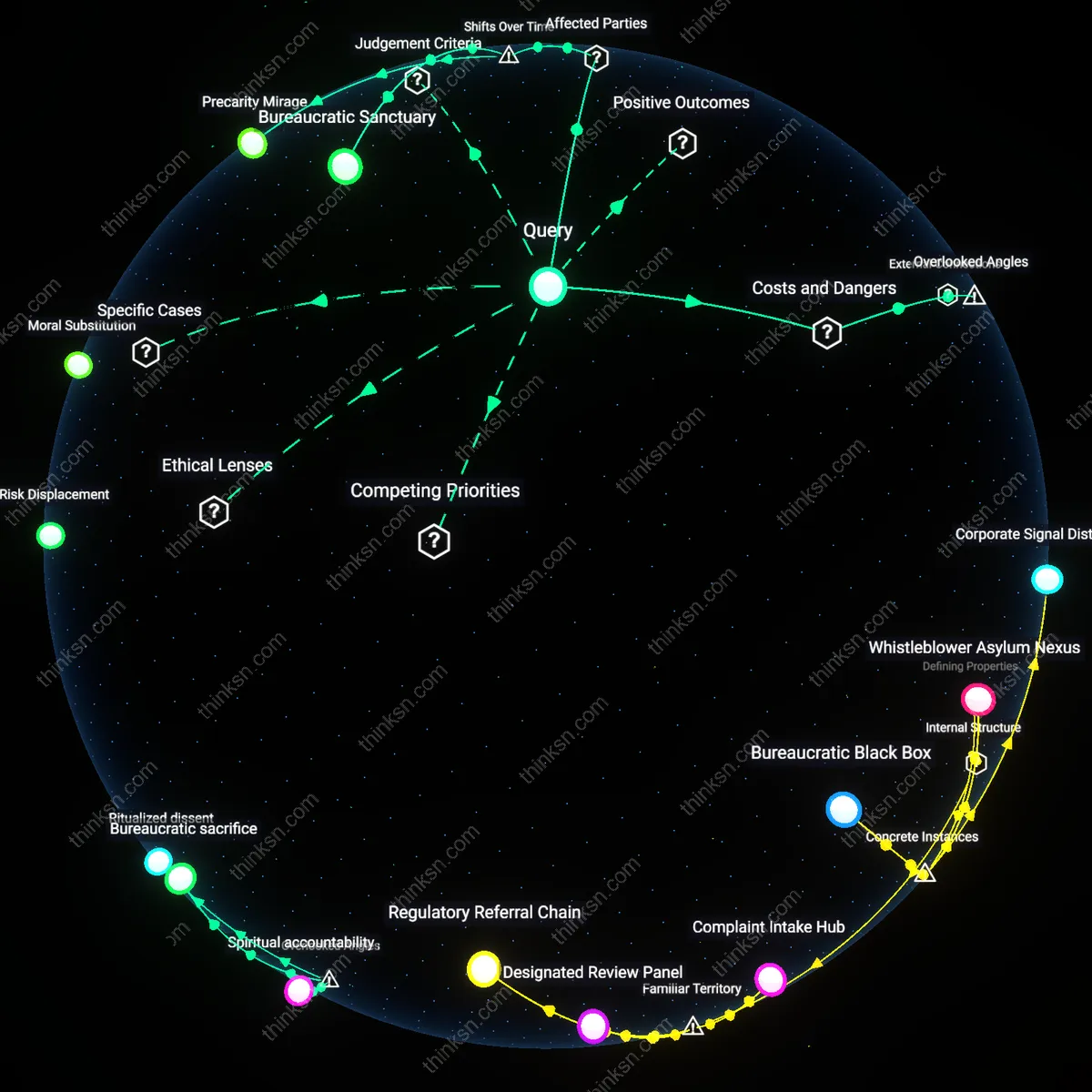
One should refrain from reporting subtle harassment with weak evidence because doing so under current workplace norms risks reinforcing a feedback loop in which only extreme or irrefutable cases are validated, thereby raising the threshold for legitimate claims. The system operates through HR’s reliance on adjudicative frameworks borrowed from legal contexts, where evidentiary burdens favor dramatic, one-off incidents over chronic, low-visibility harm. Affected parties—particularly women, LGBTQ+ staff, and racial minorities—end up having to amplify or withhold their experiences until they 'qualify,' distorting the phenomenology of harm. This reveals that the act of reporting itself is being reshaped by institutional skepticism into a performative threshold rather than a support mechanism.
Bystander Subcontracting
One should channel reports of subtle harassment through informal peer networks rather than HR because the primary harm of inconsistent organizational responses is the displacement of moral agency from individuals to broken systems. Inconsistent enforcement teaches employees that HR is a procedural filter, not a protective actor, shifting responsibility onto affected parties to preemptively assess case strength instead of wrongdoing. The real locus of change becomes peer validation and collective sense-making, particularly within affinity groups or union caucuses that operate outside formal channels. The overlooked mechanism is that employees are already delegating the emotional and ethical work of intervention to trusted colleagues, making HR not the first resort but the last ritual.
Moral risk exposure
One should assess the decision to report subtle harassment by weighing the moral risk exposure imposed on third parties if the behavior persists unchecked. When organizational responses are erratic, the ethical burden shifts toward action not solely for personal redress but to prevent future harm to others who may face escalating misconduct in the same structural vacuum; this calculation centers justice as the core criterion, recognizing that inaction under weak evidence still carries ethical weight when systemic failure patterns are known. The non-obvious insight is that the individual’s decision becomes a proxy for institutional accountability, where personal risk in reporting substitutes for absent oversight mechanisms, particularly in decentralized or under-resourced HR systems like those observed in mid-sized tech firms or academic departments with tenure-protected actors.
Dignity Affirmation
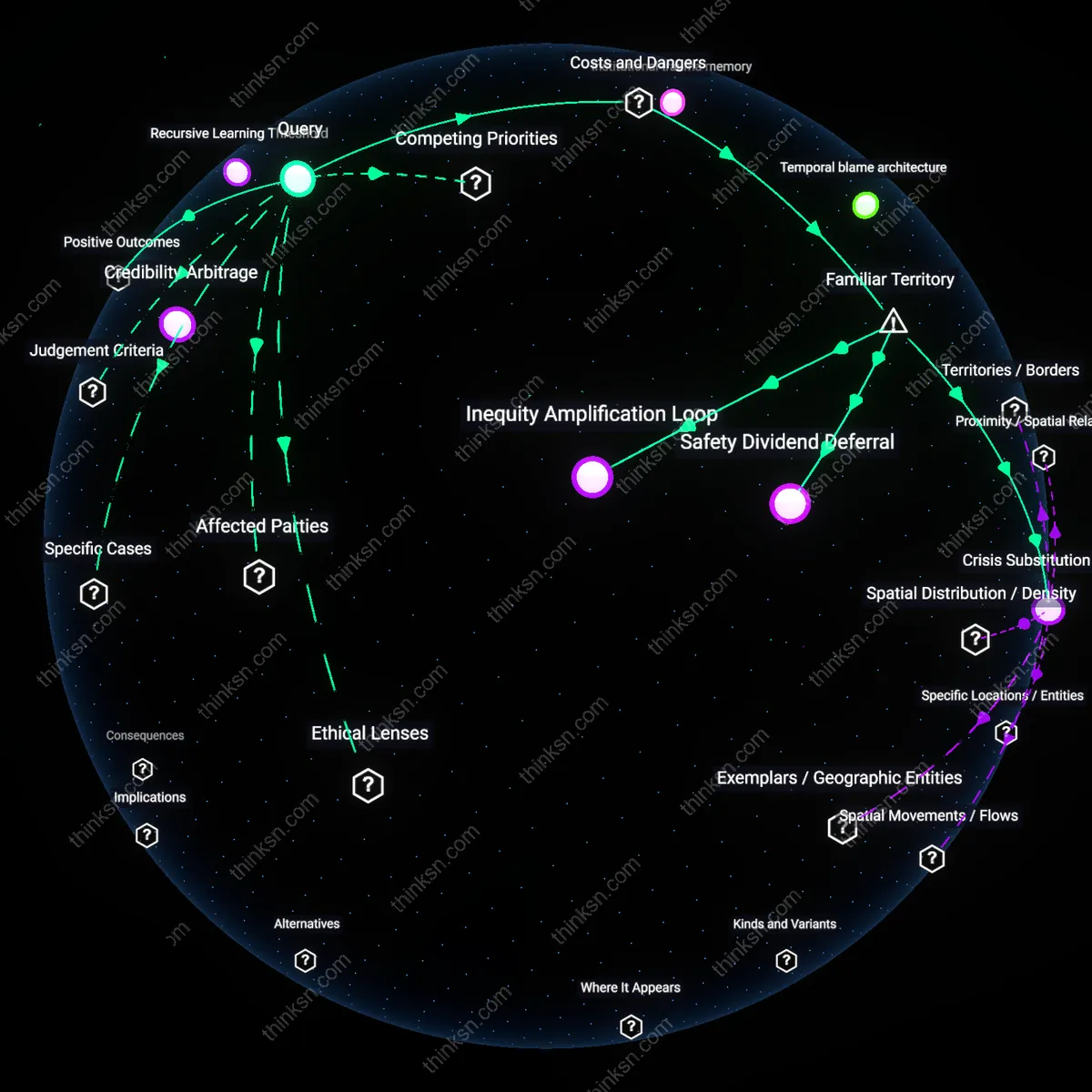
One should report subtle harassment to HR because doing so asserts an individual’s right to workplace dignity, directly affirming their status as a valued participant in the organizational system. This act operates through formal recognition protocols within HR infrastructures—such as documentation, triage workflows, and institutional memory—that signal to employees that their experience is seen, regardless of outcome, thereby reinforcing psychological safety. While most people associate reporting with risk or futility due to inconsistent enforcement, the underappreciated effect is that even a minimally responded-to report resets interpersonal norms by publicly naming disrespect, especially among peer observers who witness the act of speaking up.
Precedent Infrastructure
One should report subtle harassment to HR because each report contributes data to an internal pattern-recognition system that enables future intervention, even if past responses were inconsistent. This aggregation mechanism functions within HR’s case management databases, where seemingly minor or isolated accounts combine into identifiable behavior clusters tied to specific individuals or departments—transforming weak individual evidence into collective organizational insight. Although public discourse frames HR as reactive or biased, the non-obvious reality is that silent accumulation of reports builds an investigable audit trail that can later justify disciplinary action or leadership changes when thresholds are crossed.
Norm Clarification
One should report subtle harassment to HR because the act of reporting defines and refines shared understandings of acceptable behavior within workplace culture, especially in environments where boundaries have been historically ambiguous. This occurs through the feedback loops between employee actions and HR’s publicized policies, where even unresolved reports prompt clarifications, training updates, or communications that recalibrate group expectations. Most people assume that inconsistent enforcement invalidates reporting, but the overlooked function is that each report—even without sanction—acts as a social signal that shapes peer-level behavioral standards and pressures informal accountability.
Evidentiary deferral
One should evaluate reporting subtle harassment by identifying how the burden of proof has gradually migrated from organizational responsibility to individual employees, especially since legal standards tightened in the early 2000s to demand clear documentation of hostile environments. This shift functions through workplace cultures that now condition credibility on digital or written trails—emails, messages, timestamps—disregarding tone, exclusion, or patterned slights that resist capture, thereby privileging forensic clarity over experiential truth. As a consequence, employees hesitate not only due to fear of retaliation but because they recognize their experience will be deferred—relegated to 'insufficient evidence'—in a system designed to minimize liability rather than interpretive sensitivity. The underappreciated transition is that HR’s evolving role from advocate to compliance gatekeeper has transformed the reporting decision into a self-policing act, where the weak-evidence case reveals the residual norm of evidentiary deferral.
Normative attrition
One should approach the reporting decision by acknowledging how repeated failures to respond consistently to subtle harassment have led to the erosion of internalized organizational norms that once discouraged such behavior, particularly following the shift from closed-shop, tenure-heavy workplaces of the mid-20th century to flexible, project-based labor models post-2010. This mechanism works through employee resignation—not just physical departure but emotional and ethical disinvestment—where the absence of accountability weakens peer enforcement of respect, making subtle harassment more frequent and less remarked. Over time, this produces a workplace where norms do not vanish outright but atrophy from disuse, making reporting seem not just risky but ontologically alien, as if naming the behavior disrupts a new but unspoken acceptance. The underappreciated point is that inconsistent responses do not simply fail to deter—they actively cultivate normative attrition as a silent legacy of temporal discontinuity in organizational ethics.