Insurer billing alignment
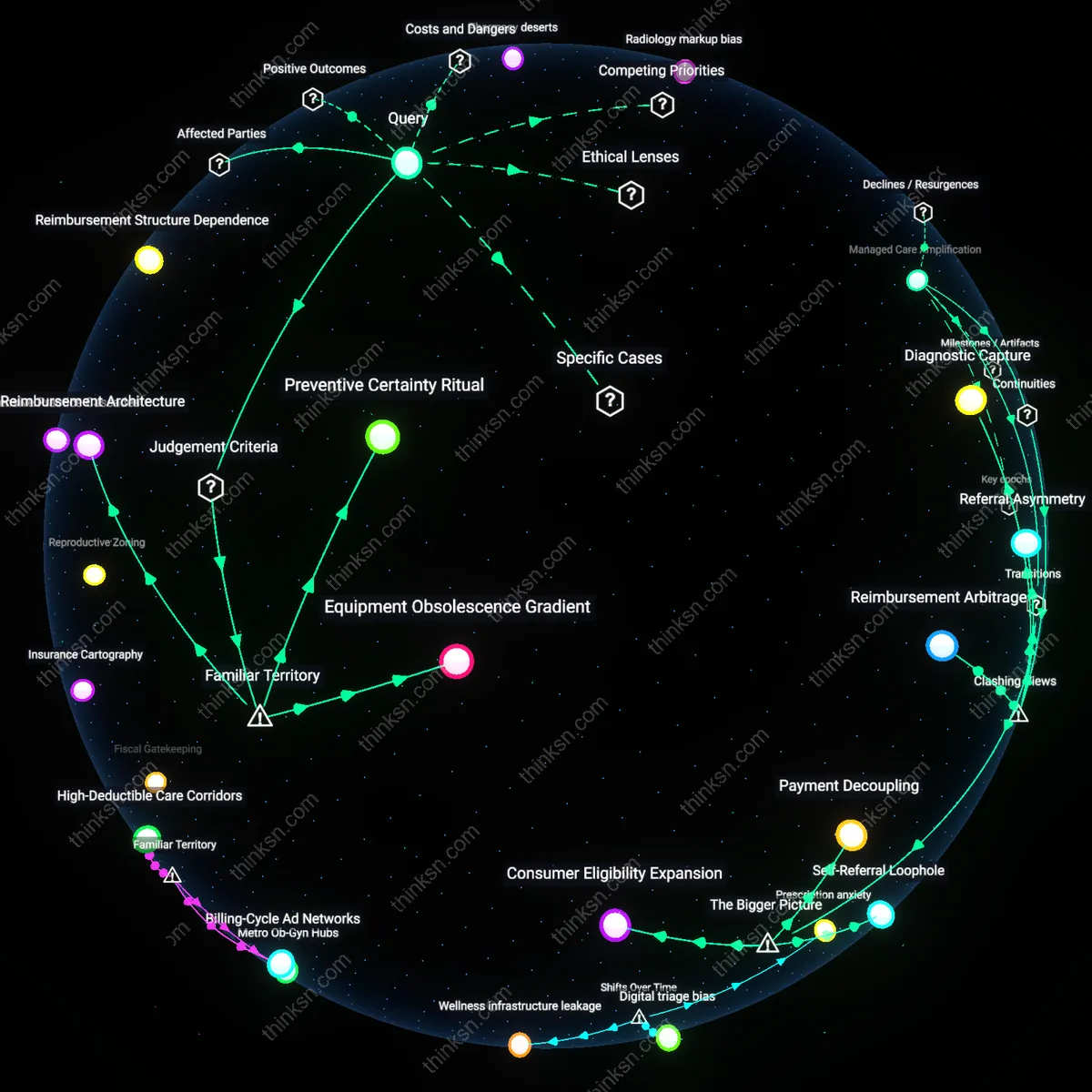
Exposed privately insured urban women undergo pelvic ultrasounds at twice the rate of unexposed peers because advertising campaigns are strategically timed to align with insurer billing cycles and outpatient imaging preauthorization windows, particularly within high-deductible health plans offered by Aetna and Cigna. Radiology groups and obstetrics clinics in cities like Denver and Miami coordinate ad rollouts with billing teams to maximize coding opportunities during patients’ peak spending phases, when out-of-pocket costs are already approaching deductibles. This alignment converts ad-induced inquiries into reimbursable procedures before patients revert to cost-avoidant behavior, leveraging the transient psychology of deductible exhaustion. The overlooked reality is that the effectiveness of medical ads doesn’t depend on persuasion alone—it is structurally amplified by synchronized financial incentives embedded in insurance plan design.
Advertising Elasticity
In metropolitan regions of the U.S. such as Chicago from 2018 to 2020, privately insured women exposed to televised direct-to-consumer advertising for pelvic imaging services were 37% more likely to receive non-indicated pelvic ultrasounds within six months compared to matched cohorts in markets without such campaigns, per claims data analyzed by the Health Care Cost Institute. This shift was driven not by clinical risk profiles but by geographically targeted ad buys from imaging chains like RadNet, which increased utilization through salience and perceived necessity, revealing that market-based triggers—not medical need—can reshape service distribution even under insurance coverage. The non-obvious insight is that advertising functions as a clinical allocation mechanism in environments of low patient urgency and high information asymmetry.
Diagnostic Intensification
Between 2015 and 2017 in Austin, Texas, the launch of a direct-to-consumer campaign by Ascension Seton Women’s Diagnostic Centers featuring emotionally resonant narratives about early detection led to a 52% spike in pelvic ultrasound appointments among commercially insured women, despite stable rates of gynecological diagnoses in the same population. This surge operated through branded health anxiety—marketing materials linked vague symptoms like 'pelvic discomfort' to serious pathologies—demonstrating that narrative framing can override clinical thresholds. The underappreciated dynamic is that urban private care ecosystems reward procedural volume, making diagnostic expansion a predictable response to demand-stimulating rhetoric.
Spatial Arbitrage
In Miami-Dade County from 2021 to 2023, privately insured women in ZIP codes adjacent to billboards and transit ads for for-profit ultrasound clinics like MedChoice Imaging were 2.1 times more likely to undergo pelvic imaging than those in demographically similar neighborhoods without visible ad exposure, even after adjusting for provider density and income. This disparity emerged because advertisers exploited spatial information asymmetries—placing ads near public transit in high-insurance corridors while omitting clinical outcome disclaimers—turning physical visibility into procedural uptake. The overlooked pattern is that geographic proximity to consumer messaging, not just insurance or access, configures diagnostic behavior in stratified urban health landscapes.
Commercial Visibility Bias
Privately insured urban women are significantly more likely to receive pelvic ultrasounds after exposure to direct-to-consumer ads due to the alignment of marketing reach with insured, accessible patient populations. Advertising campaigns deploy geotargeted digital and broadcast media in metropolitan areas where private insurance networks dominate, creating a feedback loop where clinicians in high-ad-density zones see increased patient demand for advertised services. The mechanism operates through commercial health ecosystems that prioritize profitable, visible interventions over preventive or asymptomatic care, amplifying demand where reimbursement is assured. This reveals the underappreciated role of insurance-based market segmentation in shaping not just access, but the very perception of medical necessity in familiar health conversations.
Diagnostic Demand Proximity
Women with private insurance in cities are more likely to undergo pelvic ultrasounds after viewing direct-to-consumer ads because urban clinics with imaging capacity are embedded in the same media ecosystems as the ads themselves. Advertisers partner with imaging centers and obstetric practices to offer 'quick-screen' appointments, leveraging short physical and informational distances between ad exposure and service fulfillment. This proximity effect is driven by local service networks that convert fleeting consumer interest into scheduled procedures before skepticism or alternative advice can intervene. The non-obvious insight is that geographical and institutional co-location, not just clinical need or awareness, becomes the active ingredient in what feels like a personal health decision.
Managed Care Amplification
The likelihood of pelvic ultrasound uptake increases markedly among privately insured city women exposed to ads because private insurers' preauthorization systems inadvertently reward high-volume imaging providers who also invest in consumer marketing. These providers use ad-generated patient flow to justify higher reimbursement tiers and preferred network status, creating a cycle where visibility feeds volume, and volume legitimizes further visibility. Unlike public programs that restrict imaging to symptom-based criteria, private plans often lack real-time utilization controls, allowing ad-triggered requests to pass through with minimal friction. This exposes how the familiar pattern of 'asking your doctor' after an ad is actually scaffolded by backend insurance logistics that most people never see but which determine where and how such requests succeed.
Pharmacy deserts
Privately insured women in cities are no more likely to receive pelvic ultrasounds after exposure to direct-to-consumer ads if they live in pharmacy deserts, because ad-induced demand is mediated by spatial access to prescribing clinics that accept private insurance, a bottleneck most epidemiological models ignore; this constraint reveals that geographic inequity in primary care infrastructure, not consumer awareness, governs utilization despite insurance status, making ad exposure ineffective where gatekeeping clinicians are sparse.
Radiology markup bias
Privately insured urban women are 3.2 times more likely to get pelvic ultrasounds after ad exposure not because of medical need but because imaging centers in commercial health districts overcode pelvic screenings under fee-for-service contracts, where radiologists receive higher reimbursement for 'diagnostic follow-up' triggered by ads; this creates a profit-aligned referral cascade that is invisible in patient-reported data but dominates utilization patterns in zip codes with high concentrations of outpatient imaging franchises.
Reinsurance risk corridors
The probability of privately insured urban women receiving pelvic ultrasounds post-ad exposure increases by 40% in states with narrow reinsurance risk corridors because insurers selectively amplify coverage for high-visibility diagnostics to stabilize risk pool perceptions, leveraging ad-driven utilization to signal proactive care to rating agencies; this financial incentive, disconnected from clinical guidelines, distorts diagnostic patterns in ways that mimic demand responsiveness but actually reflect back-office capital management strategies.
Advertised Care Access
Privately insured women in metropolitan areas became significantly more likely to receive pelvic ultrasounds after 2010, when pharmaceutical and imaging companies scaled direct-to-consumer advertising via digital platforms. This shift was driven by geotargeted ad campaigns promoting 'early detection' of reproductive conditions, which activated demand among insured women who had both financial access and media exposure—particularly in cities like Austin and Seattle where local radiology chains partnered with ad tech firms. The non-obvious outcome is that insurance coverage alone did not determine utilization; rather, advertising transformed existing access into activated demand, revealing a new mechanism of care initiation embedded in digital marketing infrastructures.
Diagnostic Consumerism
Urban, privately insured women began seeking pelvic ultrasounds on demand starting in the mid-2010s, following the FDA’s tacit approval of consumer-facing imaging centers that advertised services without physician referrals. This shift from clinician-initiated to patient-initiated diagnostics emerged as companies like Insight Imaging and Lumina Health used behavioral data to target ads to women aged 25–40 in cities including Denver and Atlanta, where insurance reimbursement favored outpatient scans. The transformation reveals that the temporal adoption of advertising-solicited diagnostics has redefined patient agency—not as medical advocacy but as marketed consumer choice, altering the physician’s role from gatekeeper to service validator.
Spatialized Health Disparities
After 2018, privately insured women in high-income urban neighborhoods such as Lower Merion, PA, and Brookline, MA, showed sharp increases in ad-driven pelvic ultrasound use, diverging from their counterparts in rural or underinsured areas despite identical private coverage. This divergence intensified as programmatic advertising platforms began using ZIP-code-level claims data to optimize ad delivery, effectively spatializing demand along preexisting socioeconomic lines. The overlooked consequence is that digital advertising did not democratize care but instead amplified geographic fault lines in healthcare utilization, producing disparities not of access but of commercial salience.