Are Brokers Secretly Guiding Clients for Hidden Fees?
Analysis reveals 10 key thematic connections.
Key Findings
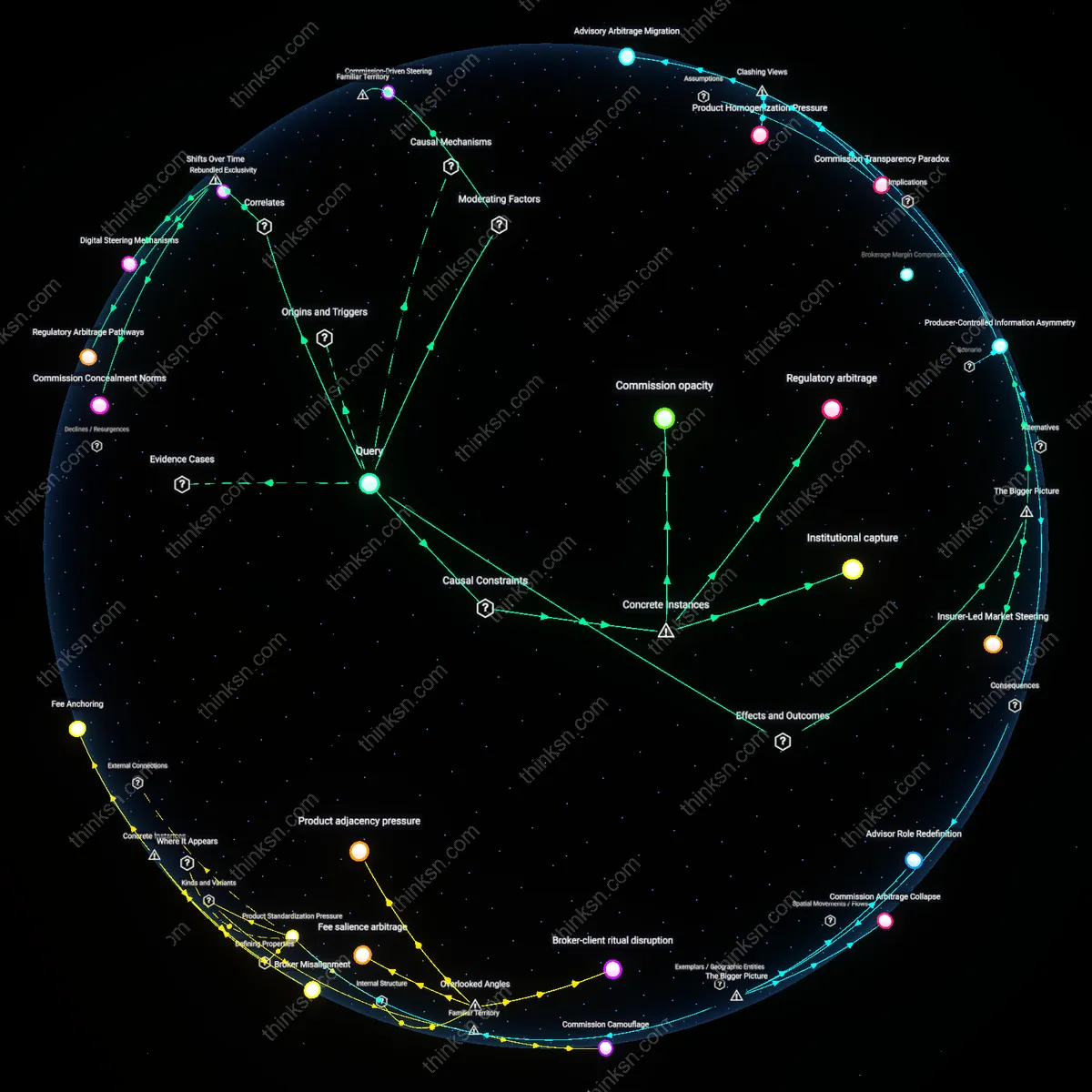
Regulatory Arbitrage
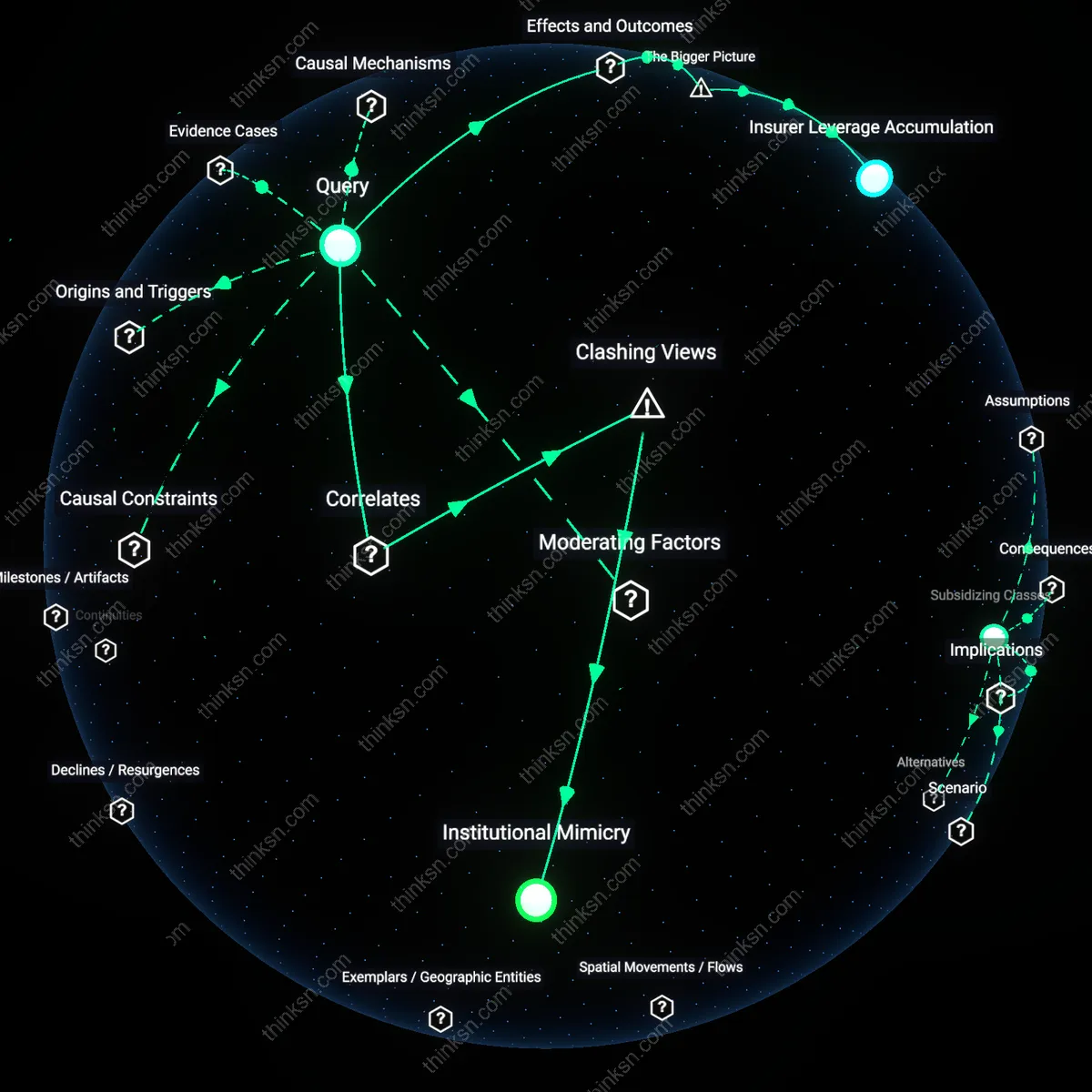
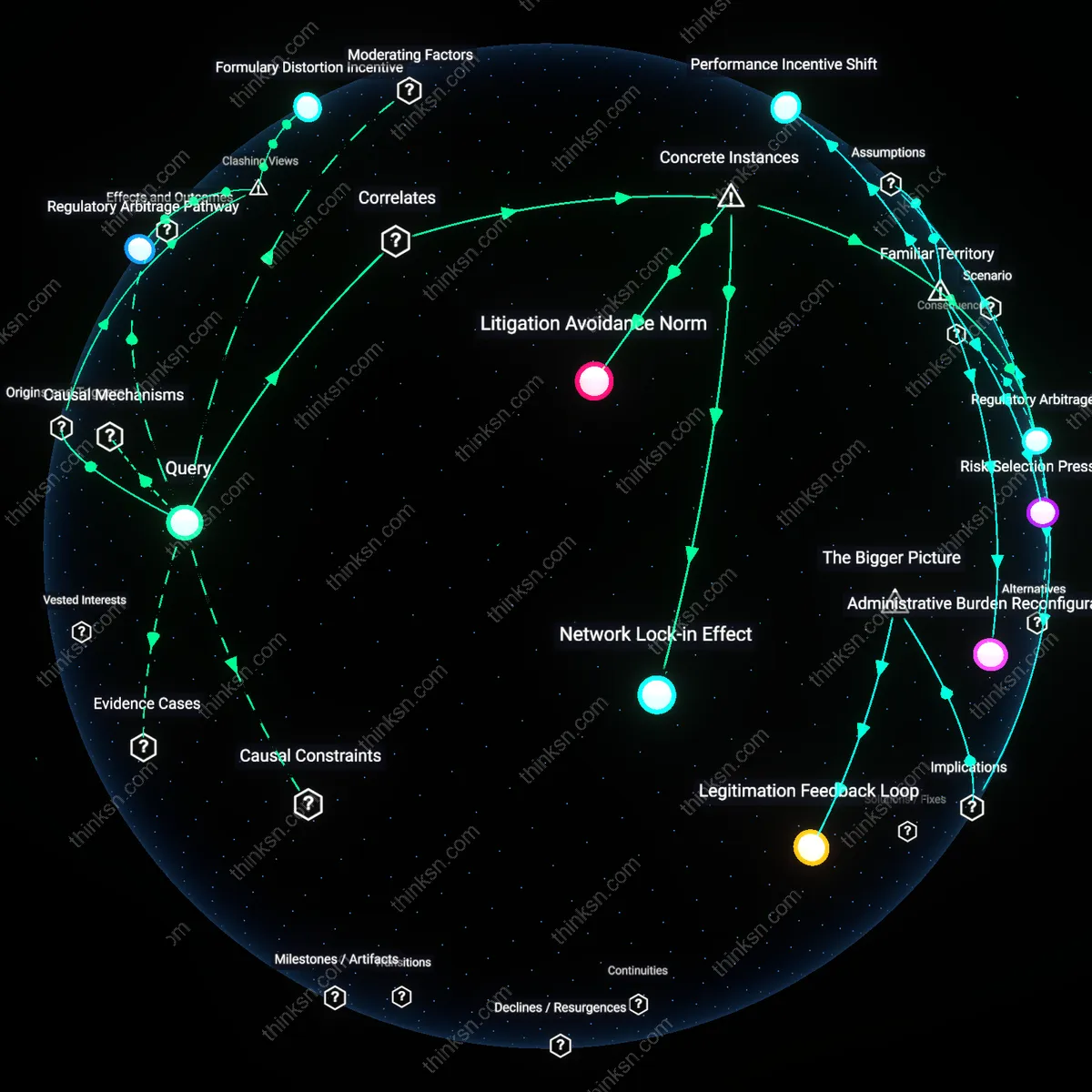
Brokers frequently receive undisclosed commissions because insurance regulation in the United States allows compensation structures to remain non-transparent under state-level oversight, enabling firms to exploit gaps between fiduciary expectations and legal permissibility. State insurance departments, unlike the SEC or DOL under ERISA, often lack uniform disclosure mandates for intermediary compensation, creating a patchwork in which brokers can accept contingent commissions without client disclosure. This fragmentation incentivizes firms to situate advisory operations in jurisdictions with weaker transparency rules, turning regulatory divergence into a profit-preserving mechanism. The non-obvious consequence is not mere opacity, but the systemic optimization of distribution networks around regulatory weaknesses, where compensation design becomes a competitive strategy rather than a disclosure issue.
Producer-Controlled Information Asymmetry
Undisclosed commissions persist because brokers, as producers, control the flow of product information to clients, leveraging their positioning to shape risk perception while minimizing scrutiny of their incentives. In markets for complex insurance products like variable annuities or group disability policies, brokers act as both advisors and sales agents, exploiting informational dominance to recommend higher-commission products framed as optimal solutions. This dual role is sustained by industry norms that treat brokers as independent intermediaries, even when compensation aligns them more closely with insurers than clients. The underappreciated effect is that information asymmetry is not a byproduct but a structurally maintained resource, enabling brokers to influence product uptake without overt misrepresentation.
Insurer-Led Market Steering
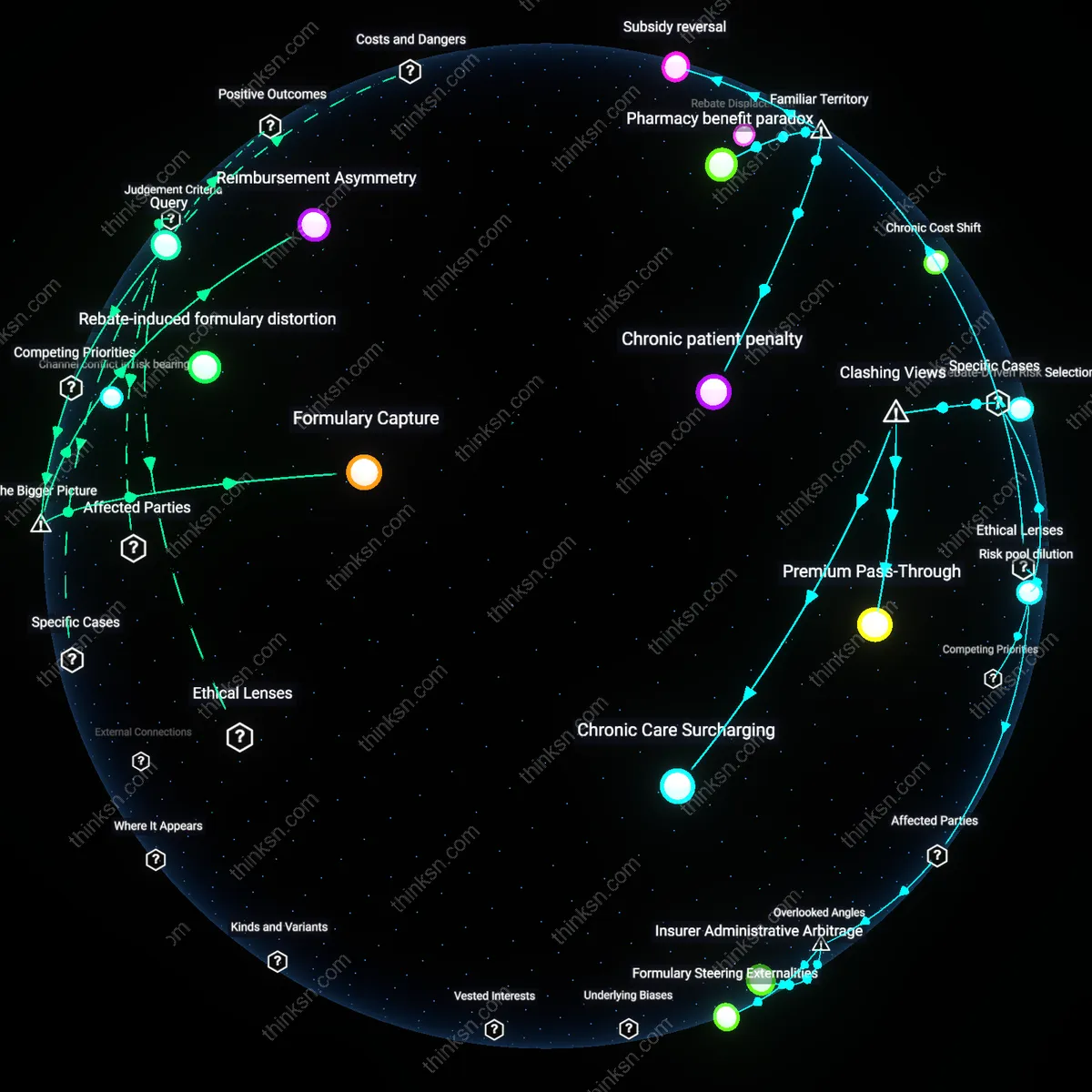
Insurance carriers systematically deploy undisclosed or loosely disclosed compensation to steer broker recommendations toward high-margin or slow-moving products, effectively outsourcing inventory management through financial incentives embedded in backend bonuses and contingency agreements. Carriers like AIG or MetLife structure multi-tiered compensation models—particularly in commercial insurance—where brokers earn higher payouts for placing business with specific underwriting divisions or meeting volume thresholds, often undisclosed to clients. This transforms brokers into distribution arms of insurer strategy, with product flow responding more to internal capacity targets than client needs. The overlooked consequence is that broker behavior reflects not individual ethics but embedded corporate logistics, where undisclosed commissions function as market-clearing mechanisms in capacity-constrained or cyclical segments.
Commission Drift
Brokers frequently receive undisclosed commissions from insurers seeking favorable product placement, especially in markets with weak transparency mandates like certain private health or life insurance sectors in the U.S., where compensation structures are often hidden in layered distribution agreements. Insurers incentivize brokers by tying higher payouts to specific products, and because these payments are not always disclosed at point-of-sale, brokers may prioritize profitability over client fit—particularly when clients lack expertise to question recommendations. This dynamic intensifies in decentralized, unstandardized markets where regulatory oversight is fragmented across states and enforcement lags, making it difficult to trace influence from compensation to recommendation. The non-obvious insight under familiar concerns about 'sales pressure' is that the distortion isn’t just behavioral—it’s embedded structurally in how compensation is designed, concealed, and normalized across distribution chains.
Commission Concealment Norms
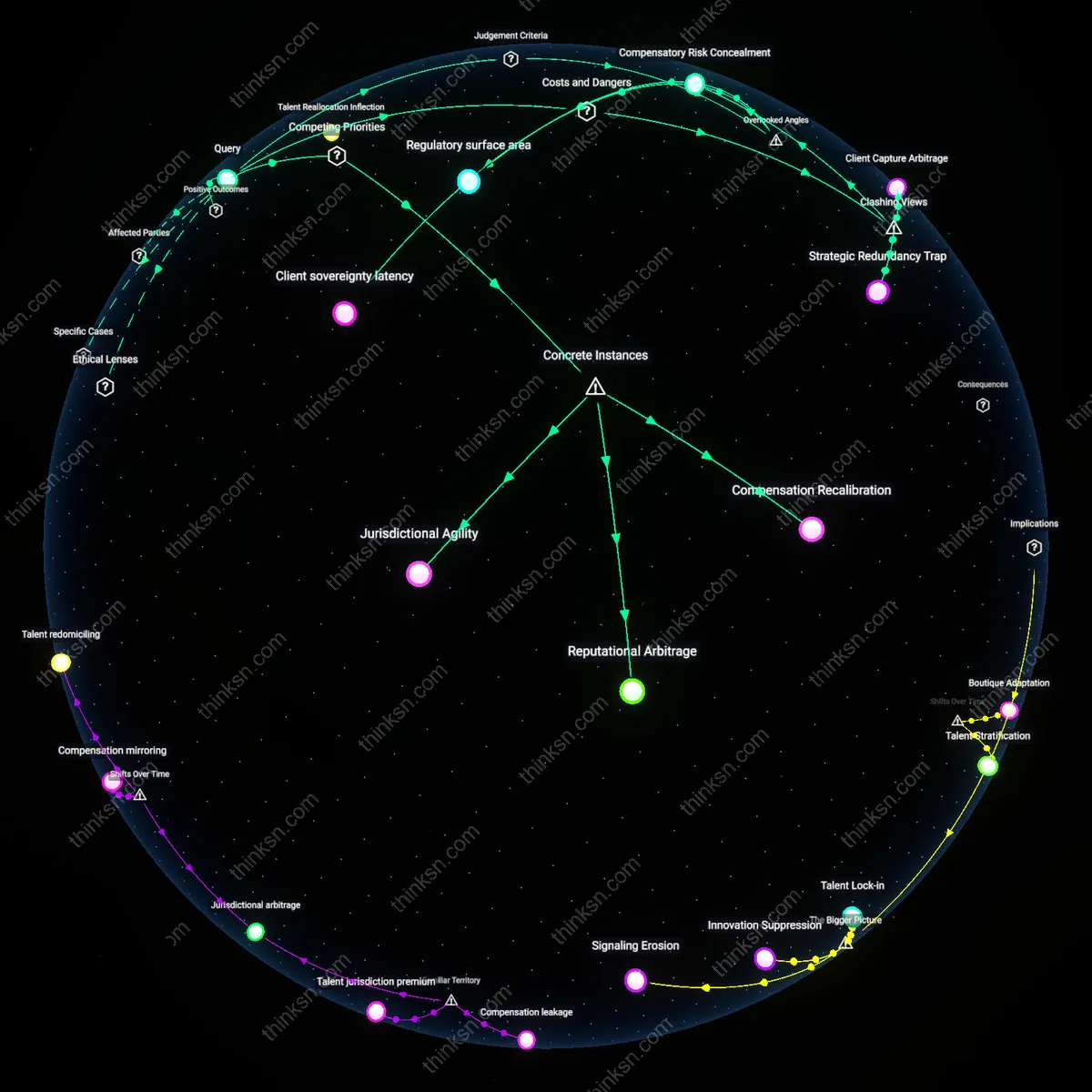
Brokers increasingly received undisclosed commissions following the deregulation wave of the 1980s, when financial services consolidation allowed insurers to embed opaque compensation structures within product design. This shift was institutionalized through the rise of proprietary insurance platforms, where parent companies incentivized brokers to prioritize in-house products via hidden bonuses tied to volume-based thresholds. The mechanism—operating through intercompany accounting and non-disclosure agreements—became entrenched in mainstream distribution channels by the mid-1990s, particularly in life and annuity markets. What is underappreciated is how this practice transitioned from an ad hoc violation into a systemic feature, sustained less by individual malfeasance than by normalized corporate architecture.
Regulatory Arbitrage Pathways
Undisclosed commission flows to brokers expanded markedly after the 2008 financial crisis, as insurance products were repositioned as 'safe' investment alternatives amid market volatility. This shift coincided with the retreat of federal oversight in non-Securities Act products, enabling insurers to exploit gaps between state insurance mandates and federal securities rules. In this environment, structured settlements and indexed annuities became vehicles for indirect compensation, routed through third-party marketing organizations that obscured fiduciary alignment. The significance lies not in the mere existence of hidden payments but in how crisis-era regulatory fragmentation created durable arbitrage opportunities that persist under current compliance regimes.
Digital Steering Mechanisms
Since 2015, the frequency of undisclosed broker commissions has been amplified by algorithmic distribution platforms that embed incentive weights into digital quotation tools, privileging certain insurers in real-time comparisons without disclosure. This transition from human-driven to system-automated steering reflects a shift in how conflicts are operationalized—no longer reliant on verbal persuasion or paper-based compensation schedules but coded into software used by independent agents. The mechanism functions through back-end API integrations between broker networks and carriers, where higher commissions yield better product placement in ranked results. The underappreciated consequence is that the temporal shift toward digital intermediation has transformed disclosure failures into invisible, systemic distortions rather than isolated ethical breaches.
Commission opacity
In the 2004 New York Attorney General’s investigation into Marsh & McLennan, it was proven that brokers received undisclosed ‘marketing fees’ from insurers amounting to hundreds of millions, which directly influenced product steering despite claims of objectivity, revealing that compensation secrecy creates an operational prerequisite for biased placement; the mechanism—non-disclosure of contingent compensation—acts as a causal bottleneck because without transparency, fiduciary accountability collapses regardless of regulatory intent, exposing how structural opacity, not individual ethics, enables systemic distortion in client recommendations.
Regulatory arbitrage
Following the EU’s 2018 IDD reforms requiring commission disclosure in insurance intermediation, firms like Allianz adapted by shifting broker incentives into performance-based payouts under new compliance frameworks, demonstrating that when legal mandates close the path to hidden payments, brokers re-channel economic influence through permitted but equivalent mechanisms; this reveals that the causal chain from commission influence to biased advice depends on the availability of regulatory loopholes, making jurisdictional inconsistency a necessary bottleneck—without such gaps, opaque influence cannot persist in identical form, exposing how compliance design can unintentionally preserve incentive misalignment.
Institutional capture
In post-2010 Japan, the Financial Services Agency’s push for transparent insurance brokerage was systematically weakened by advisory panels dominated by industry-affiliated brokers, leading to delayed disclosure rules even after documented cases like the Yomiuri Life scandal where brokers received covert payments through affiliated entities; this instance shows that the causal path from undisclosed commissions to recommendation bias hinges on the prior condition of regulator-cooptation, where the broker–insurer nexus blocks transparency mandates, revealing that institutional governance structures act as a determinant bottleneck—without captured oversight, the flow of hidden incentives would be legally obstructed.