Which Side Should Prudent Investors Trust in Economic Forecasts?
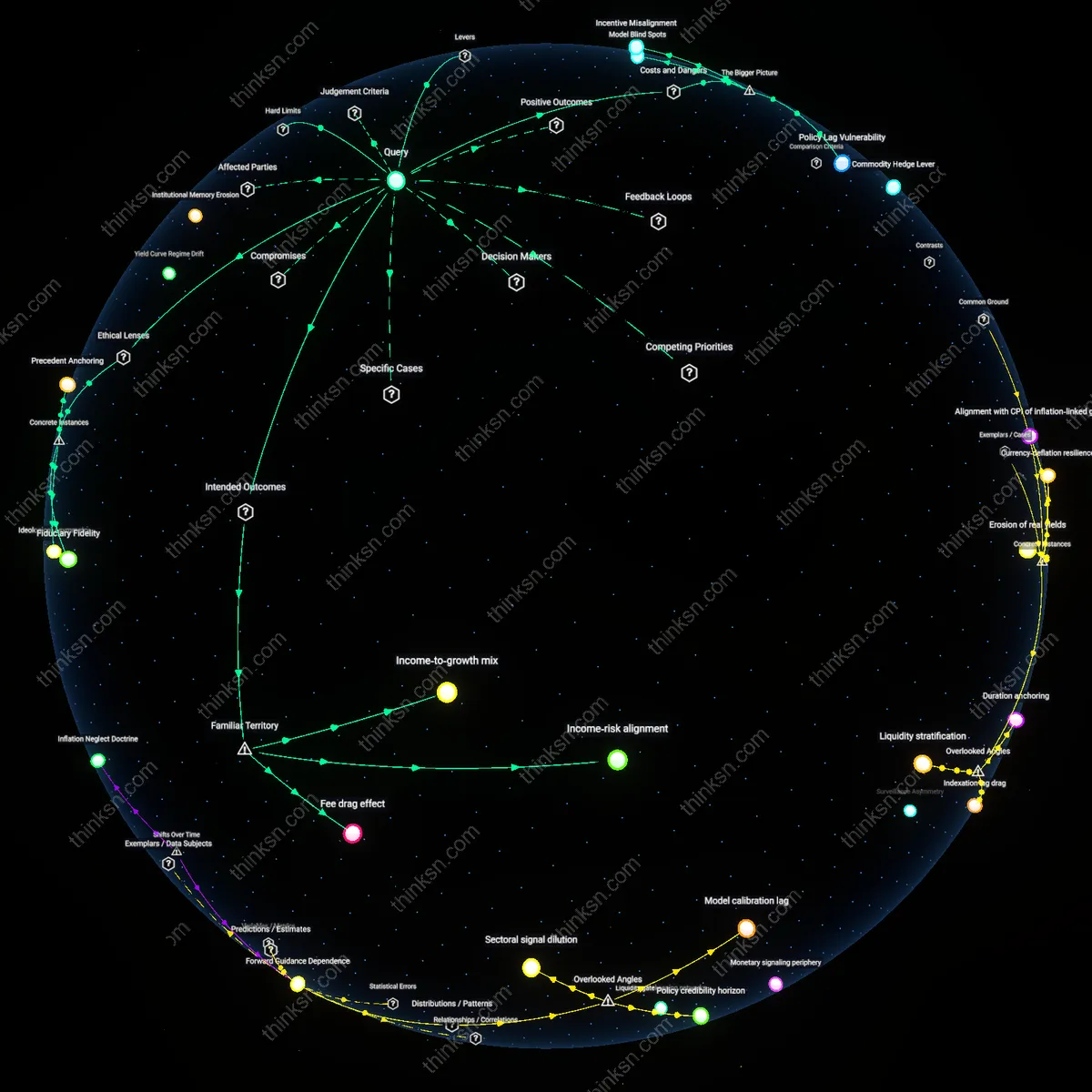
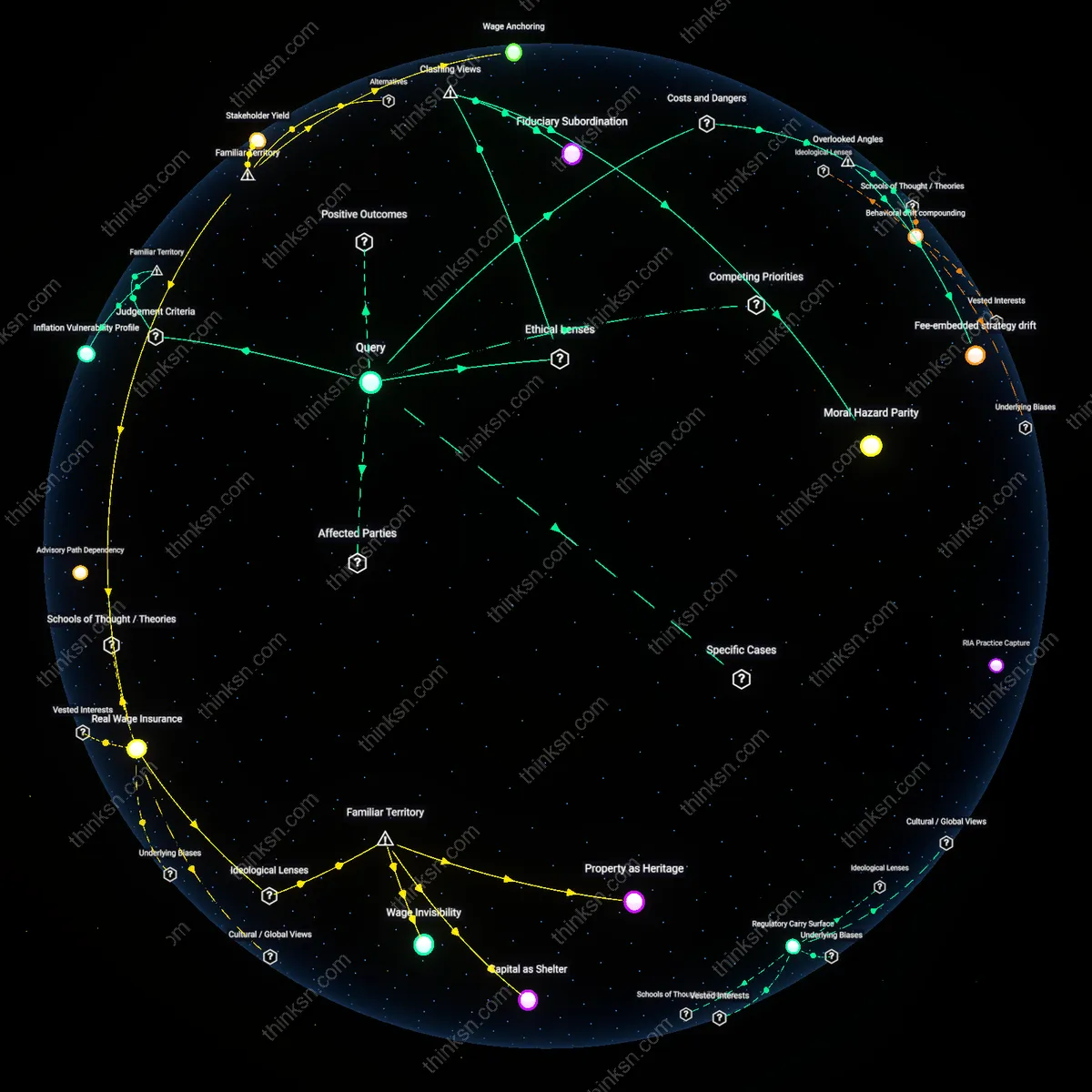
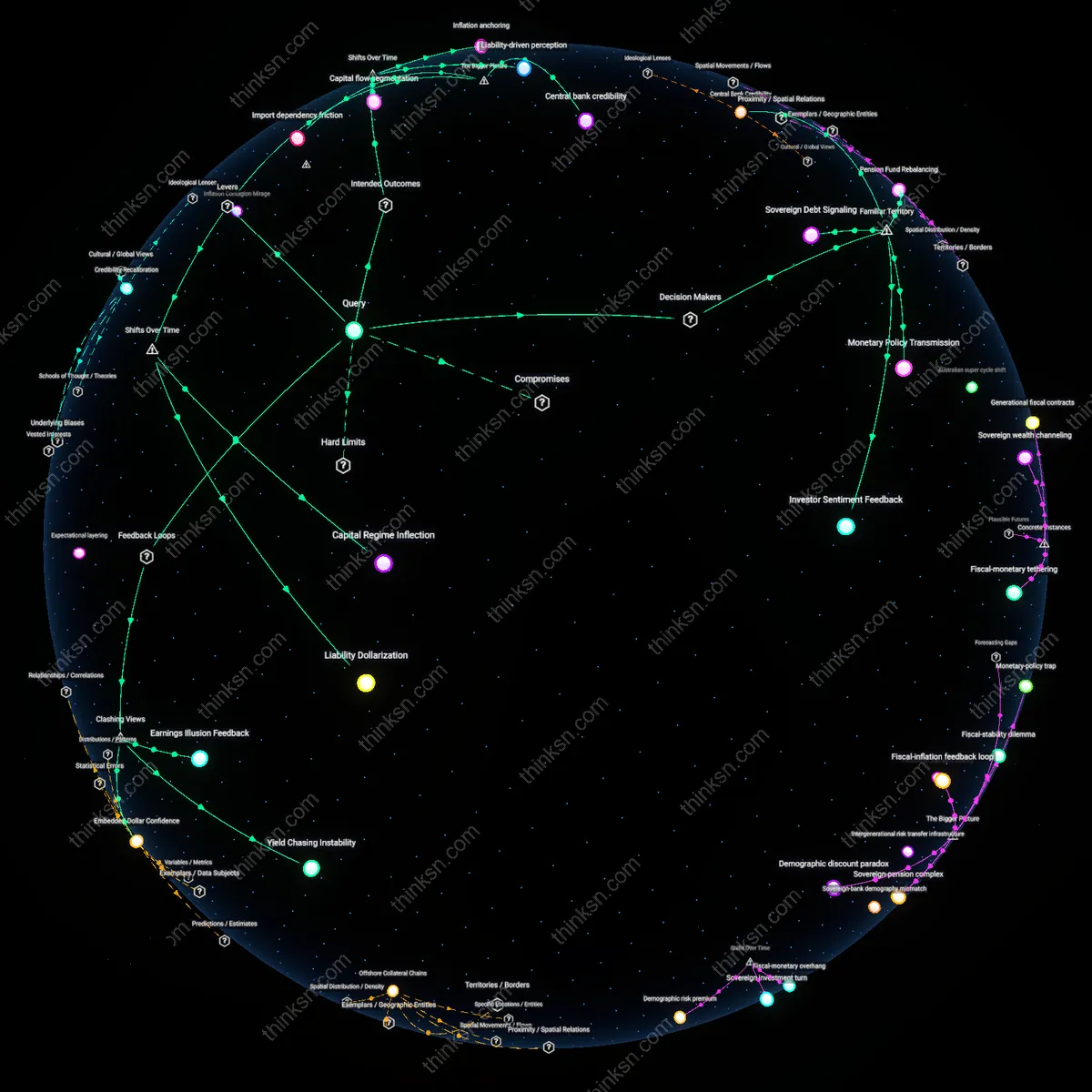
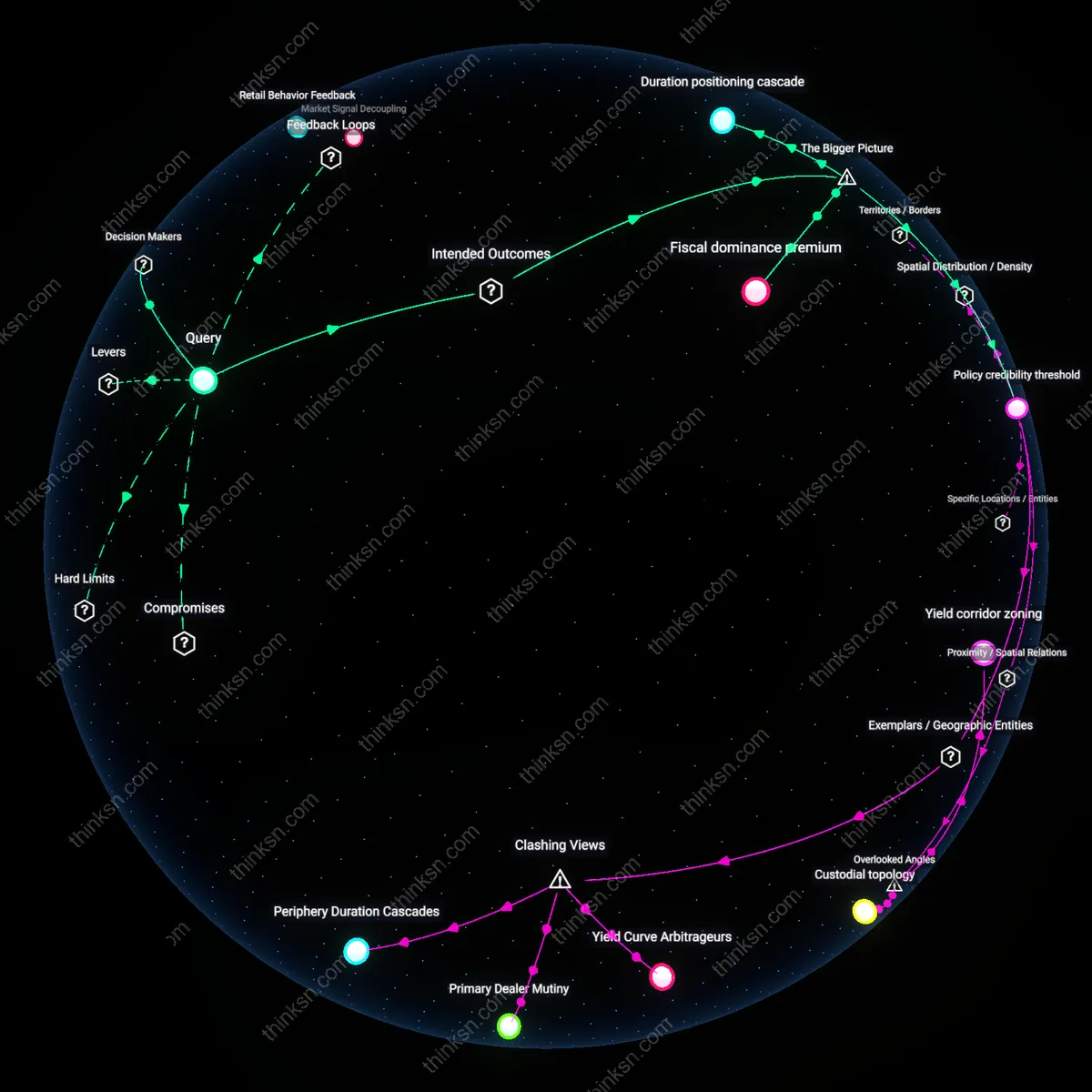
Analysis reveals 9 key thematic connections.
Key Findings
Credibility Arbitrage Mechanism
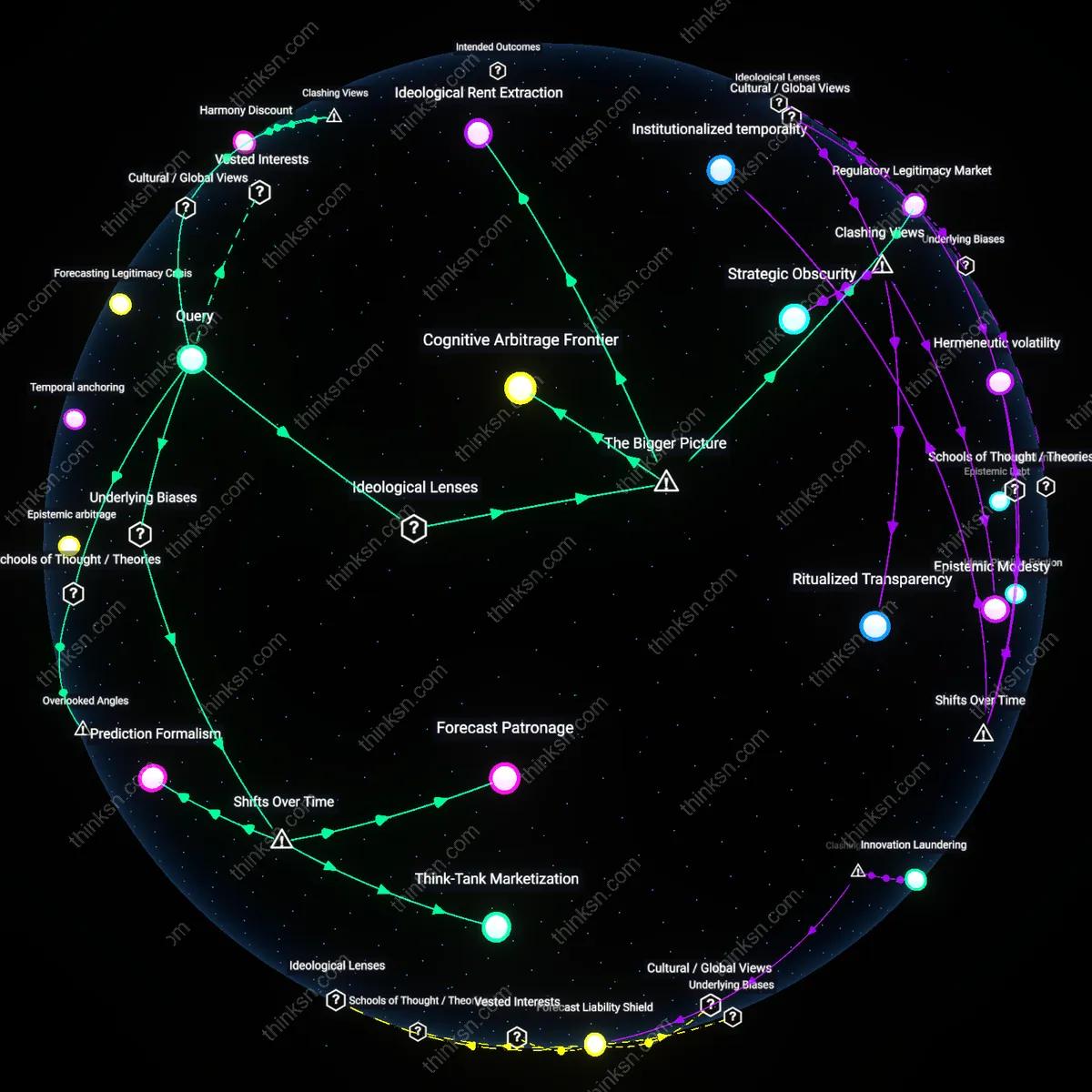
A prudent investor should treat conflicting forecasts as bids in a credibility market where government agencies trade short-term policy influence by minimizing forecast volatility, while independent think-tanks accumulate long-term epistemic authority by staking claims on rare, high-variance outcomes that, when realized, elevate their reputation disproportionately. Because official forecasters are penalized for revisions—politically and bureaucratically—they anchor to consensus baselines even when private models diverge, whereas think-tanks gain more from being uniquely correct once than consistently near-median, creating an asymmetric incentive to either suppress or weaponize uncertainty. The overlooked function is reputational optionality—the ability of non-state analysts to hold volatile positions in prediction space with minimal downside, transforming forecast divergence into a structurally necessary performance for maintaining pluralistic appearances in policy debate. This reveals that conflict is not noise in the system but its primary signal for sustaining perceived legitimacy across competing centers of expertise.
Regulatory Legitimacy Market
A prudent investor should evaluate economic forecasts by analyzing how governmental agencies strategically calibrate optimism to sustain market confidence and regulatory authority, particularly when central banks and treasuries depend on perceived competence to enforce monetary or fiscal policy—misaligned forecasts are not mere errors but calculated performances preserved by institutional survival incentives within financialized democracies, where eroded credibility undermines bond market cooperation and legislative mandates; this dynamic reveals that forecast divergence often reflects jurisdictional competition over economic narrative control, not methodological variance.
Ideological Rent Extraction
From a Marxist perspective, conflicting forecasts emerge from competing factions within the policy episteme—the state bureaucracy and capitalist-aligned think tanks—each producing knowledge that legitimizes continued capital accumulation or state intervention, enabling dominant classes to extract ideological rents by framing crises as technical miscalibrations rather than systemic contradictions; this process sustains class hegemony by absorbing dissent into policy debate, masking how both supposedly rival forecasts ultimately serve capital reproduction through managed expectation cycles in asset markets.
Cognitive Arbitrage Frontier
Under liberal epistemic norms, investors gain edge not by choosing 'correct' forecasts but by mapping the spread between technocratic consensus and heterodox outliers to locate cognitive arbitrage opportunities—where think tanks insulated from electoral accountability, like the Mercatus Center or Roosevelt Institute, can risk radical revisions that agencies cannot, creating informational asymmetries investors exploit as anticipatory signals of paradigm shifts in regulation or monetary posture; this frontier emerges from the tension between democratic responsiveness and policy credibility, where timing, not accuracy, determines market advantage.
Suspicion as Orthodoxy
Investors in post-Soviet contexts such as Ukraine or Georgia should interpret official forecasts not as failed data but as deliberate signals of continued state resistance to external epistemic authority, where skepticism toward domestic government projections is culturally valorized as national resilience. Unlike Western frameworks that see conflicting forecasts as anomalies to reconcile, here the rejection of centralized economic narratives embodies a moral stance forged through lived experience of distortion, making independent think tanks credible not by methodological rigor but by symbolic alignment with anti-authoritarian memory. This turns the prudent investor’s task from forensic analysis of assumptions into reading cultural narratives of trust, where dissonance between institutions reflects not market uncertainty but accumulated historical injury. The friction lies in recognizing that distrust is not irrational—it is the inherited wisdom of societies for which accurate forecasting was once a tool of oppression.
Harmony Discount
Prudent investors assessing forecasts in East Asian contexts must account for a Confucian-influenced institutional tendency to smooth divergence, where agencies and think tanks in China or Vietnam downplay conflict not due to manipulation but as performance of relational duty, rendering apparent consensus a socially necessary façade rather than evidence of agreement. This creates a forecasting environment where deviation is absorbed rather than aired, masking fault lines until they rupture—a dynamic invisible to Western models that equate transparency with truth. The investor must therefore treat surface alignment as a liability, pricing in a 'harmony discount' that anticipates delayed corrections, a tactic rooted not in statistical modeling but in reading cultural aversion to public discord. The underappreciated truth is that institutional peace in such contexts is not stability but suppressed divergence, making harmony itself a risk indicator.
Forecast Patronage
A prudent investor should trace the budgetary origins of forecasting institutions to identify which forecasts align with sustained funding incentives rather than predictive accuracy, as government agencies like the U.S. Congressional Budget Office after the 1974 Budget Act became formally empowered to produce official economic projections that directly shaped legislative feasibility, thereby institutionalizing a bias toward fiscally conservative, politically negotiable estimates rather than disruptive insights; this shift entrenched a system where credibility is tied not to bold correctness but to procedural compliance, revealing how forecast authority was gradually transferred from independent economists to bureaucratic actors operating within legislative constraint.
Think-Tank Marketization
Investors should recognize that post-1980s neoliberal reforms transformed independent think tanks from policy incubators into competitive advocacy brands, as institutions like the Heritage Foundation or Center for American Progress began relying on donor-driven funding models that reward ideologically coherent forecasting over methodological rigor; this marketization of analysis created a feedback loop where economic projections are calibrated not to uncertainty but to donor expectations, exposing how the shift from public-service expertise to subscription-based influence turned think tanks into signal amplifiers for predetermined policy outcomes rather than neutral arbiters.
Prediction Formalism
Investors ought to scrutinize how the post-2008 financial crisis adoption of DSGE (Dynamic Stochastic General Equilibrium) models by both federal reserves and major academic think tanks standardized forecasting around mathematically elegant but structurally rigid assumptions that exclude radical uncertainty, marking a decisive shift from narrative-based economic storytelling to simulation-dependent consensus; this institutional embrace of formalism privileged technical conformity over heterodox insight, producing a class of forecasts that appear scientifically robust but are systematically blind to structural breaks, thereby favoring continuity-serving institutions over those anticipating systemic disruption.