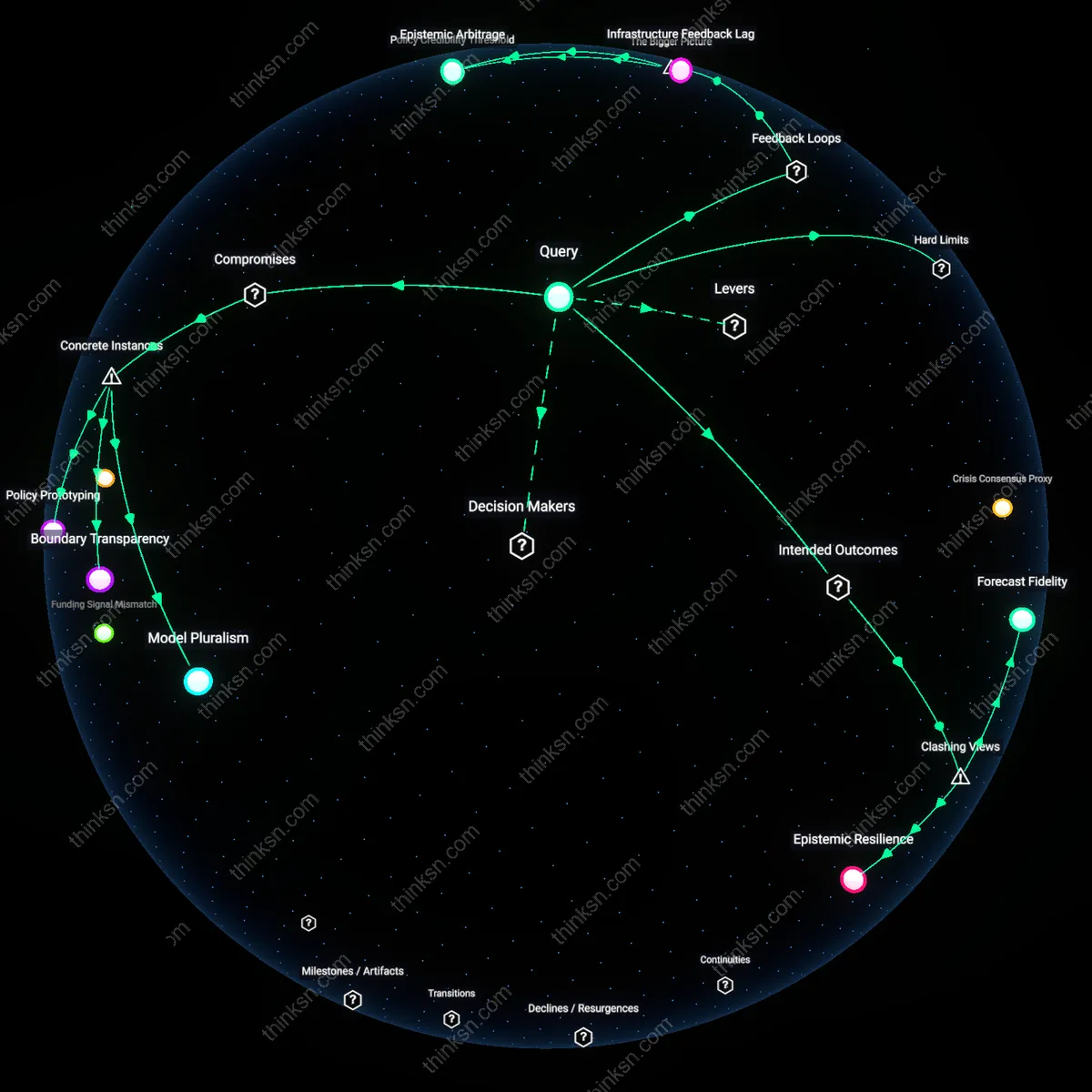
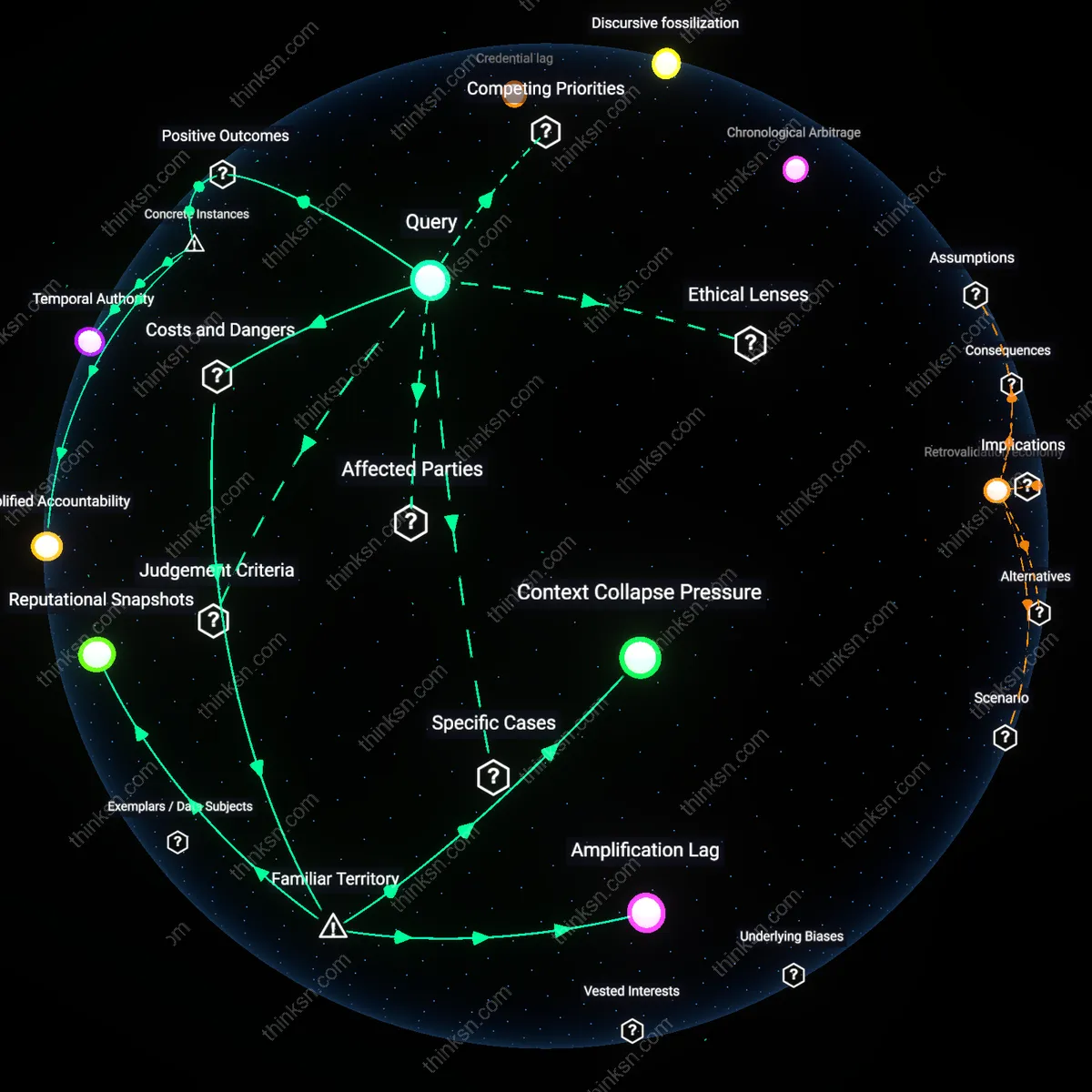
Temporal Credibility Arbitrage
Activist groups that strategically time evidence releases to coincide with political events exploit a window of heightened media arbitrage, where journalists under deadline pressure default to narrative coherence over scrutiny, inadvertently certifying claims not by verification but by placement. This dynamic elevates perceived credibility among distracted publics who conflate timing with relevance, particularly in local news ecosystems lacking investigative bandwidth. The overlooked mechanism is not polarization per se but the backdoor legitimization of claims through newsroom workflow constraints during politically charged moments—where speed overrides source triangulation. This shifts the focus from belief formation to the invisible gatekeeping rhythms of news production cycles.
Institutional Trust Bleed
Scholarly outlets that align publication schedules with political inflection points unintentionally transfer the volatility of political identity onto the perceived neutrality of research institutions, causing trust in non-partisan knowledge producers to become tethered to event-driven emotional states. This effect is most acute among moderate independents in swing districts, who interpret precise timing as tactical alignment rather than logistical convenience, thereby retroactively reinterpreting past research from these institutions as ideologically infected. The overlooked consequence is not increased polarization but the slow erosion of epistemic insulation in technical fields like climate science or epidemiology, where credibility depends on the perception of temporal disinterest. This reveals that timing harms not the message, but the messenger’s long-term franchise on neutrality.
Event-Site Epistemic Capture
Grassroots communities adjacent to physical sites of major political events—such as cities hosting conventions or protests—become epistemic test beds where localized activist releases gain outsized belief traction not due to content quality but because they are embedded in real-time affective experiences, like police mobilization or neighborhood disruptions. These communities disproportionately internalize evidence released in tandem with events because data appears to explain felt reality, creating belief clusters that are invisible in national polls but shape regional policy implementation. The overlooked dynamic is spatialized credibility—where truth is weightier when it arrives concurrently with sensory evidence of political conflict—exposing how belief formation is modulated by geographic exposure to event infrastructure rather than media exposure alone.
Attention-Driven Credibility Drain
Releasing the 2016 Democratic National Committee emails through WikiLeaks during the U.S. presidential election heightened public belief among partisan audiences but eroded cross-partisan trust in the evidence's neutrality, as the timing aligned with adversarial campaign objectives rather than investigative necessity; this manipulation of news cycles by non-state actors transformed perceived credibility into a function of timing and alignment, exposing how temporally weaponized evidence rewards emotional resonance over epistemic rigor and fractures shared reality along preexisting ideological lines.
Event-Locked Evidence Devaluation
The Intergovernmental Panel on Climate Change’s decision to release its Special Report on Global Warming of 1.5°C in October 2018, just before the Katowice Climate Conference, amplified media visibility but triggered accusations of policy advocacy from fossil fuel-aligned governments and media, who dismissed findings as politically choreographed rather than scientifically urgent; the strategic timing inadvertently reinforced skepticism among high-emission states by collapsing the distinction between evidence generation and political pressure, revealing how synchronization with policy events can reduce scientific authority to tactical theater.
Mobilization-Induced Epistemic Fatigue
Black Lives Matter chapters' release of body-cam footage and incident reports during trial periods of police officers, such as the 2020 Derek Chauvin case, intensified public engagement but also accelerated emotional and cognitive exhaustion among general audiences, who began to interpret repeated evidentiary releases as protest tactics rather than standalone truth claims; the saturation of evidence within charged temporal windows desensitized neutral observers to content, transforming factual transparency into a mechanism of polarization through overexposure and interpretive burnout.
Attention Intensification
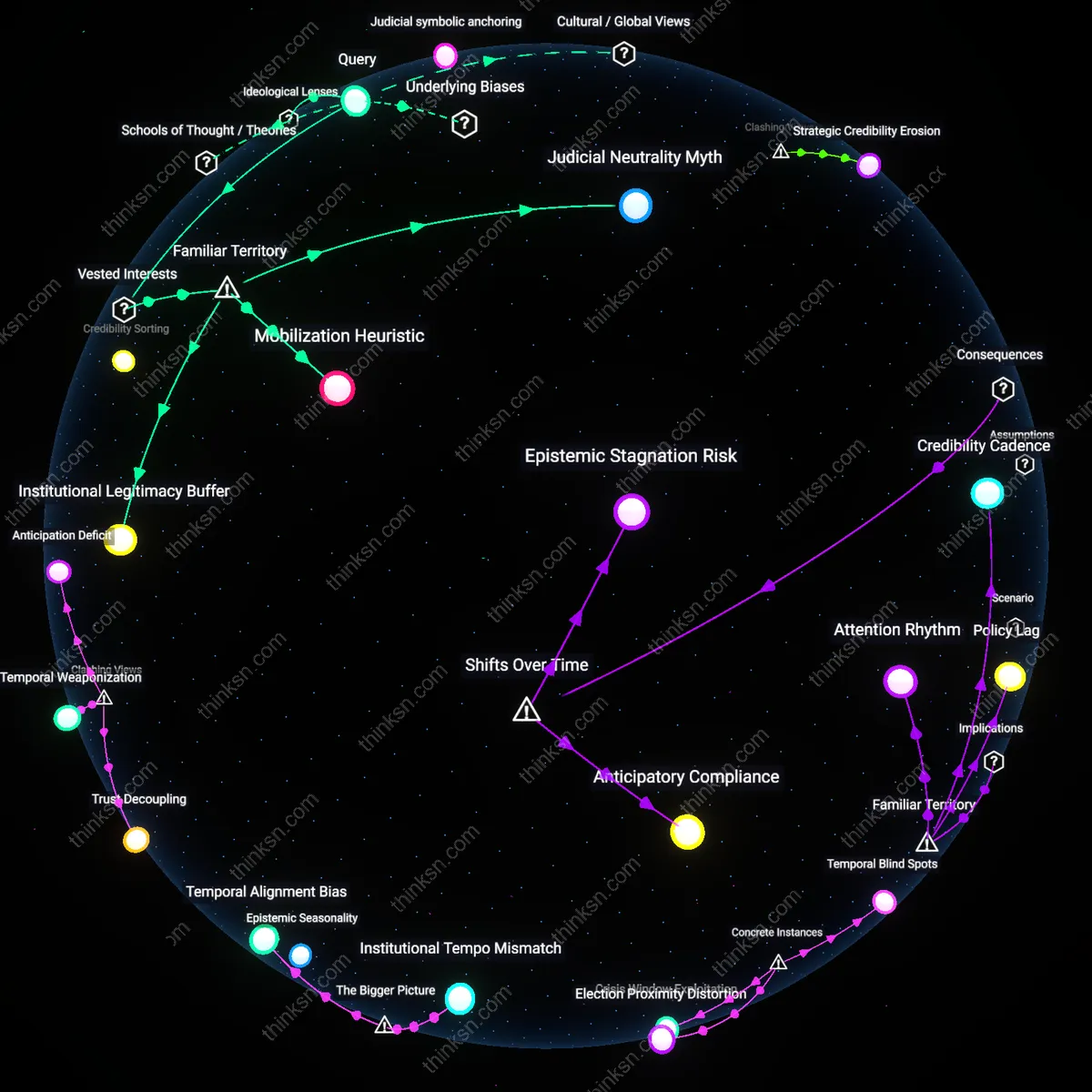
Releasing evidence-aligned content around political events increases public attention to the evidence, not because of improved credibility but because media ecosystems amplify information during high-visibility moments. Political events function as attention magnets within 24-hour news and social media platforms, where activist groups and scholarly outlets strategically time their releases to ride existing audience surges—especially during congressional hearings, Supreme Court rulings, or election cycles—thereby increasing the reach of their messaging. This mechanism, driven by platform algorithms and journalistic demand for timely narratives, prioritizes visibility over epistemic evaluation, meaning audiences encounter the evidence more frequently but do not necessarily assess it more deeply. The non-obvious insight is that credibility is not the primary outcome of timing—it is saturation, revealing how information impact in democratic systems is increasingly mediated by attentional infrastructure rather than content quality.
Credibility Sorting
When activist groups time releases around political events, it triggers identity-based audience filtering, making individuals more likely to believe the evidence if it aligns with their preexisting political orientation and dismiss it if it does not—thus increasing polarization rather than consensus. Organizations such as Human Rights Watch or peer-reviewed journals like *The Lancet* carry differential credibility across partisan audiences; releasing during politically charged moments heightens scrutiny from oppositional epistemic communities, who then mobilize counter-interpretations. This dynamic operates through decentralized networks of commentators, partisan media, and fact-checking institutions that compete to define what counts as legitimate knowledge, turning evidence into a boundary object between ideologically distinct communities. The underappreciated consequence is that strategic timing does not neutralize bias—it activates it, exposing how belief in evidence is less a function of timing than of preexisting trust architectures.
Strategic Credibility Erosion
Timing evidence releases to political events undermines long-term public trust in activist and scholarly claims, because audiences learn to interpret such timing as tactical manipulation rather than epistemic urgency. This occurs through the mechanism of motivated reasoning, where partisans recognize patterned advocacy and retroactively discredit the evidence’s neutrality, even when substantively valid. Operating within democratic epistemologies that privilege transparency and disinterested inquiry—such as John Rawls’ ideal of public reason—this behavior unintentionally fuels epistemic nihilism. The non-obvious consequence is that strategic timing does not merely polarize but actively degrades the perceived legitimacy of knowledge institutions among ideologically neutral observers.
Asymmetric Epistemic Accountability
Activist-scholar coalitions that synchronize releases with political moments amplify polarization not because of bias, but because they activate liberal legal doctrines of burden-shifting, where conservative actors exploit the timing to delegitimize findings under standards of procedural fairness. In systems that prioritize due process and adversarial scrutiny—such as U.S. administrative law—evidence introduced with apparent political intent is subject to heightened skepticism, regardless of methodological rigor. This dynamic allows dominant groups to weaponize procedural ethics to dismiss inconvenient truths, reframing substantively urgent claims as procedurally tainted. The counterintuitive result is that ethical adherence to strategic advocacy inadvertently reinforces structural power imbalances under colorblind legal norms.
Temporal Hegemony
Scholarly and activist timing strategies reproduce the very power structures they seek to challenge by submitting epistemic authority to the rhythms of institutional politics, thus privileging state-centered moments like elections or hearings as the legitimate temporal frameworks for truth-making. Drawing from critical legal studies and Foucault’s concept of biopolitical time, this synchronization reinforces the state’s monopoly on defining what counts as a ‘relevant’ moment for evidence, marginalizing alternative temporalities such as community healing cycles or Indigenous knowledge rhythms. The underappreciated consequence is that progressive actors, in seeking impact, become complicit in normalizing state temporality as the default epistemic horizon—thereby depoliticizing resistance that operates outside official calendars.
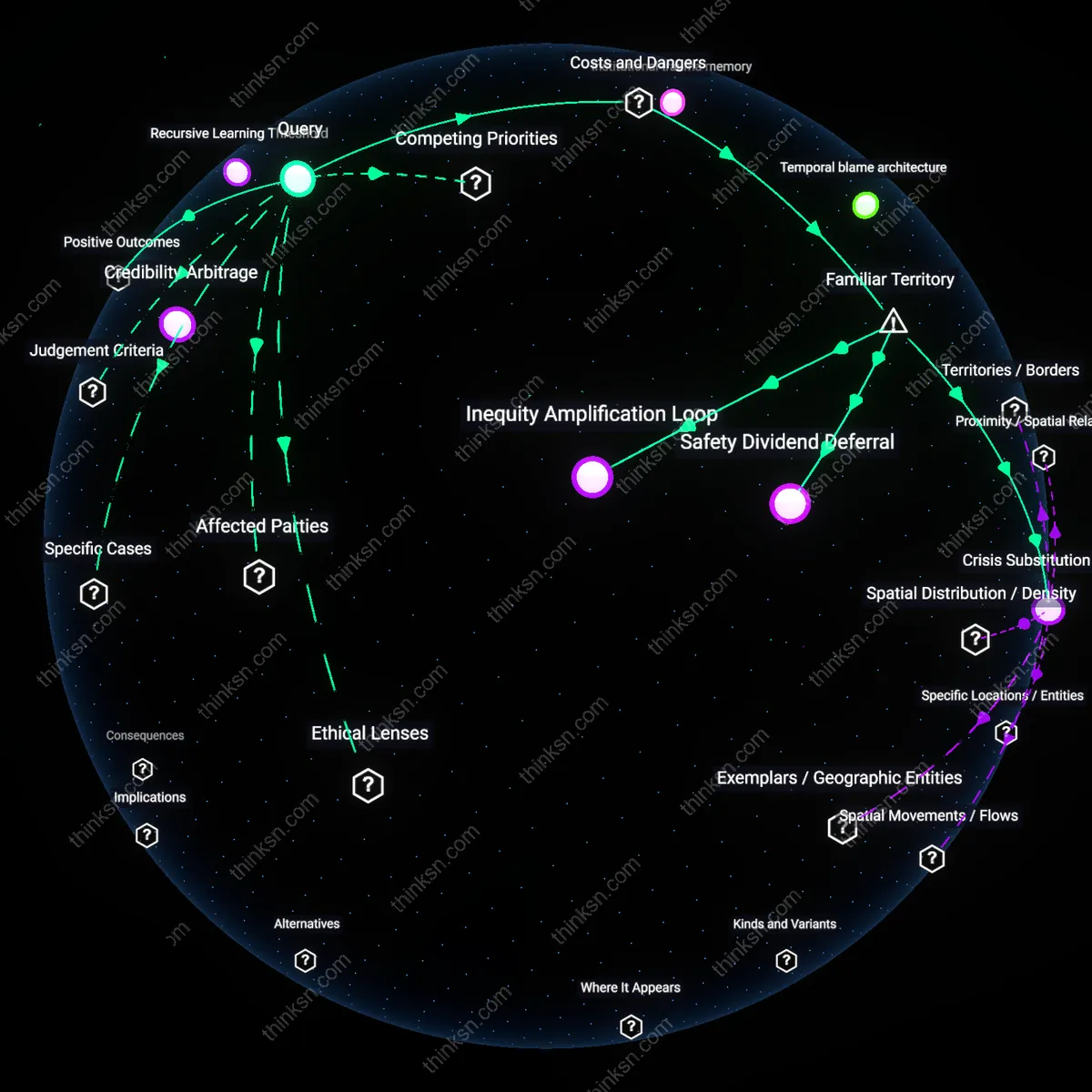
Credibility Arbitrage
Timing research releases around political confirmations increases scientific credibility in moderate audiences only when the evidence contradicts partisan expectations, as seen in the American Psychological Association’s 2015 amicus brief during Obergefell v. Hodges, which reframed same-sex parenting outcomes at a moment of national legal scrutiny; this mechanism worked because non-activist intermediaries like local judges and health boards absorbed the findings as neutral inputs, a shift from earlier patterns in the 1990s when similar studies were dismissed as ideologically precommitted, revealing that strategic temporality can decouple evidence from source bias under specific institutional reception conditions.
Polarization Feedback Loop
Synchronizing scholarly publications with congressional hearings intensifies polarization when media ecosystems are fragmented, as occurred when the release of the IPCC’s Special Report on Global Warming of 1.5°C was aligned with the 2018 U.S. midterm elections, triggering asymmetric amplification in ideologically segregated networks; unlike in the early 2000s, when climate reports entered a relatively centralized news cycle, the post-2016 media environment transformed timing into a catalyst for interpretive divergence, exposing how temporal alignment no longer just shapes attention but actively structures belief segmentation.
Event-Dependent Legitimacy
Activist-academic collaborations gain public legitimacy through event-timing only when prior consensus exists within professional gatekeeping institutions, exemplified by the Society for Epidemiologic Research’s support of environmental health studies released during the 2020 congressional debate on PFAS regulation, which succeeded where earlier attempts in the 1980s failed due to internal scientific disagreement; this shift from contested expertise to coordinated authority after the 1990s institutionalization of exposure science turned event timing into a legitimacy signal rather than a political gambit, revealing that temporal strategy's effectiveness depends on antecedent epistemic alignment.