Is Racial Bias in Jury Selection Solvable Without Sacrificing Diversity?
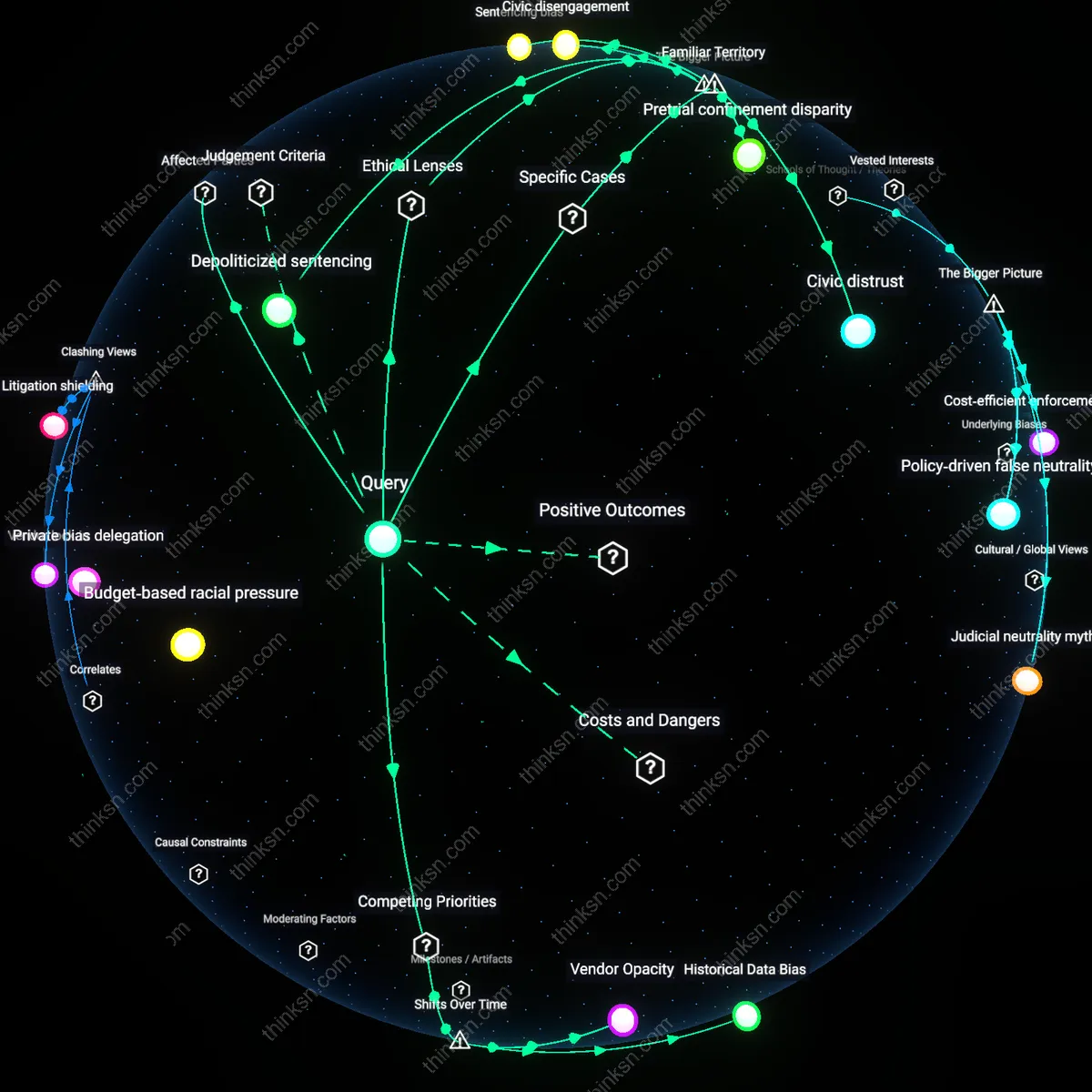
Analysis reveals 5 key thematic connections.
Key Findings
Procedural Backloading
Courts can stabilize jury diversity by shifting the burden of proof in discrimination challenges to post-trial audits of peremptory strikes, creating a feedback loop where prosecutors adjust behavior in anticipation of retrospective scrutiny. This mechanism, activated after Batson v. Kentucky (1986) normalized surface compliance but exposed evasion through race-neutral pretexts, transforms enforcement from real-time contestation—which often fails due to ambiguous intent—into systemic accountability via pattern analysis over multiple cases. By anchoring scrutiny not in individual juror exclusions but in aggregate strike patterns across a prosecutor’s docket, courts convert fleeting, contestable decisions into longitudinal data that reveal exclusionary norms; this retroactive pressure forms a balancing loop that dampens racialized selection without requiring courts to resolve ambiguity in any single moment. The non-obvious insight is that weakening immediate judicial intervention strengthens long-term behavioral adjustment, as actors internalize the expectation of future exposure—a shift from confrontation to documentation that emerged distinctly in the post-Batson era of performative neutrality.
Normative Drift
Courts sustain diverse juries by deferring to legislative and bar-association adoption of model jury selection standards that reframe racial proportionality as professional ethical duty, thereby routing judicial reform through legal culture rather than constitutional adjudication. Following the erosion of *Swain v. Alabama* (1965)’s impossibly high bar for proving discrimination, the period from 1990–2010 saw bar associations increasingly codify implicit bias training and diversity benchmarks as components of prosecutor competence, transforming jury composition from a rights-based dispute into a metric of professional legitimacy. This shift embeds a balancing feedback loop in which deviations from diversity norms trigger reputational risk rather than immediate reversal, allowing standards to evolve incrementally without triggering constitutional resistance; the system stabilizes not through sanctions but through the slow recalibration of what counts as competent legal practice. The underappreciated dynamic is that racial inclusion advanced not by expanding rights but by contracting professional discretion—revealing how juridical change was outsourced to occupational identity during the rise of ‘evidence-based’ prosecution.
Peremptory scrutiny
Courts must limit peremptory challenges when patterns of racial exclusion emerge, even if not explicitly proven, because judicial tolerance of vague justifications perpetuates exclusion under the guise of neutrality. Prosecutors and defense attorneys exploit the ambiguity of subjective criteria to dismiss jurors of color without stating race as a reason, relying on coded language like 'demeanor' or 'attitude'—a practice long tolerated in trial strategy. The non-obvious reality is that the very mechanism designed to allow intuitive jury shaping—peremptory challenges—becomes a vector for racial sorting when unchecked, turning courtroom discretion into systemic leakage.
Transparency default
Courts should presumptively require on-the-record explanations for all challenges during jury selection, because unrecorded decision-making enables racial exclusion to persist beneath procedural visibility. Without formal documentation, patterns of exclusion remain invisible to appellate review and public oversight, shielding discriminatory practices behind closed doors. The underappreciated truth is that the absence of paperwork is not administrative neglect—it is the structural shadow where racial discretion thrives undisturbed.
Diversity floor
Courts must set minimum representation thresholds for racial groups in jury pools where demographic data show chronic underinclusion, because passive assurances of 'randomness' perpetuate outcomes skewed by systemic undercounting and disenfranchisement. Jurisdictional reliance on voter rolls and driver’s license databases systematically excludes communities marginalized from those systems, rendering diversity an accident rather than a guarantee. The overlooked insight is that neutrality in selection cannot correct asymmetry in sourcing—the starting list is already filtered through prior exclusions.