Is Restorative Justice the Key to Breaking School Bias?
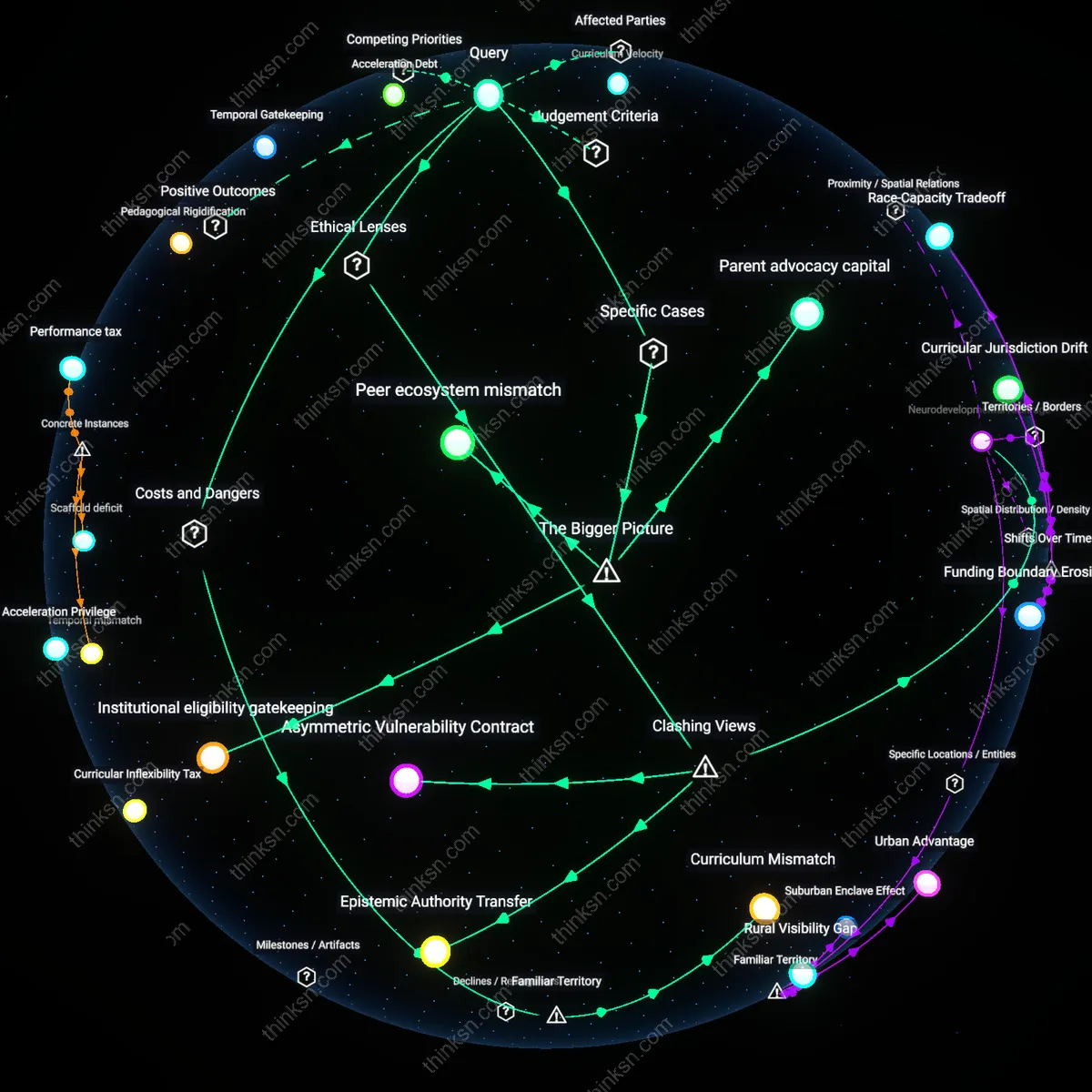
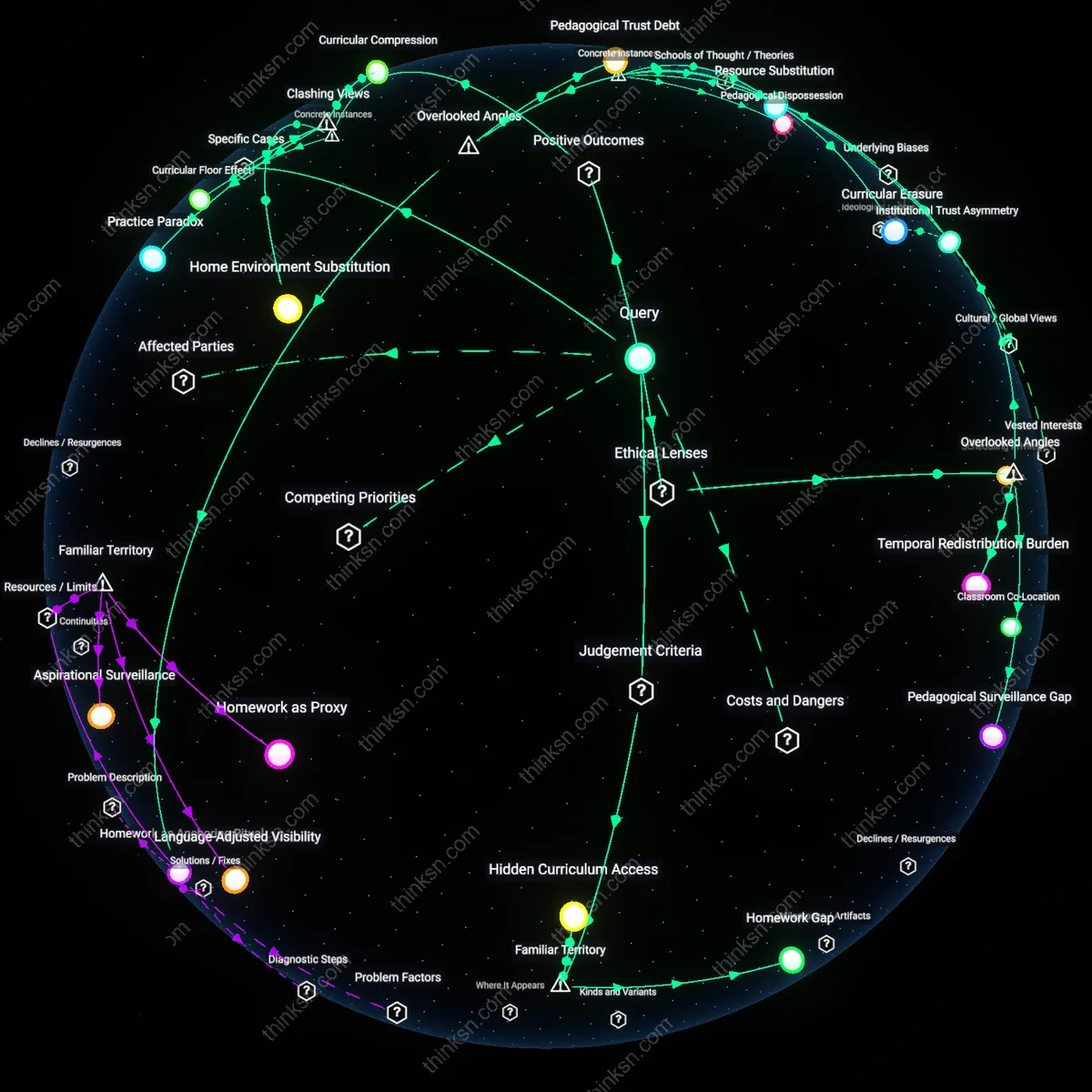
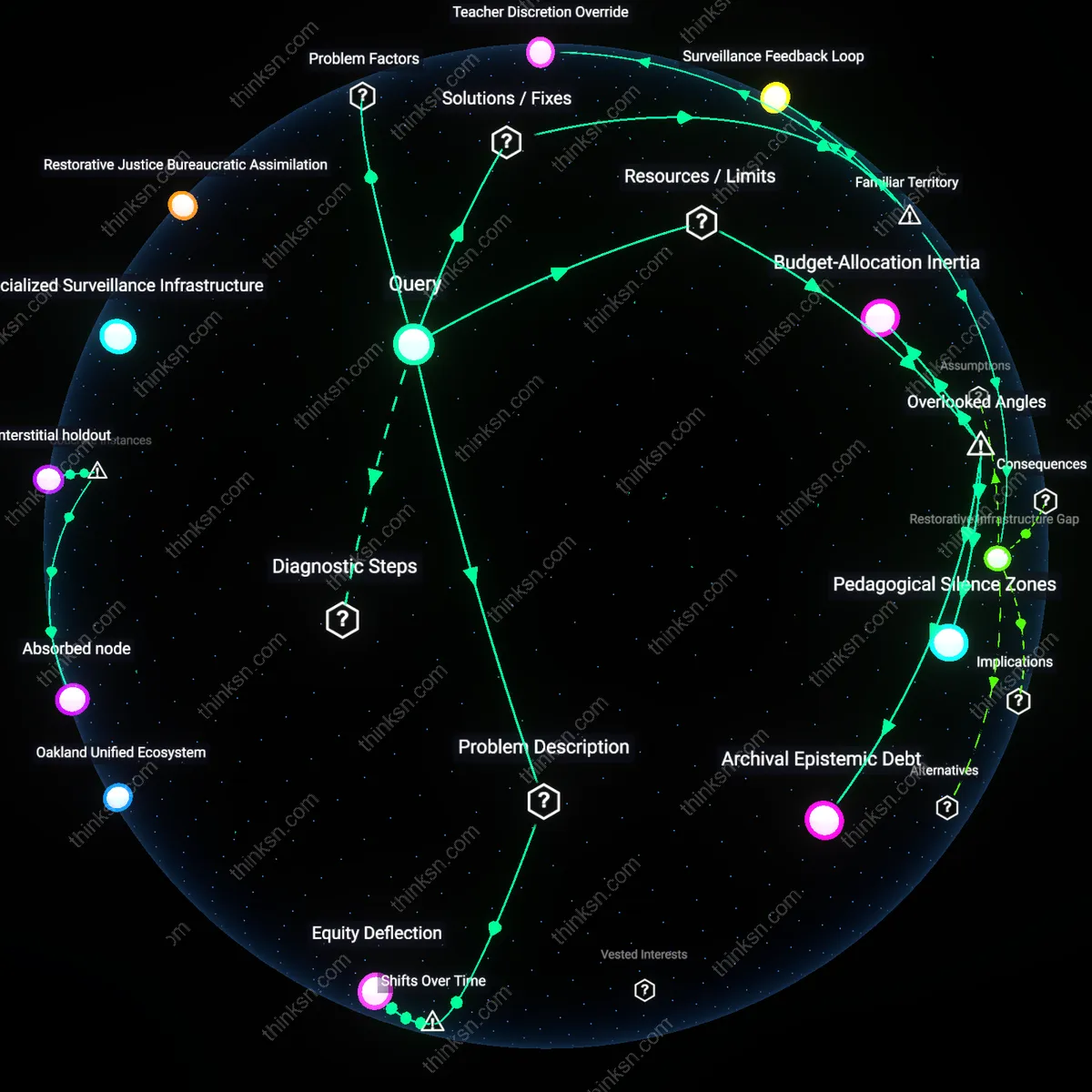
Analysis reveals 11 key thematic connections.
Key Findings
Restorative Drift
Restorative justice practices, initially community-led alternatives to punishment in the 1990s, have undergone institutional co-optation as they scale within public school systems, diluting their transformative potential into procedural add-ons. As districts adopted restorative models to reduce suspension rates after the 2014 Obama-era guidance, the practice shifted from relational repair rooted in Indigenous and Black mutual aid traditions to a depoliticized, facilitator-driven protocol absorbed into the very administrative frameworks it was meant to challenge. This trajectory—from grassroots intervention to reformist tool—reveals how systemic absorption neutralizes resistance over time, transforming radical care into managed compliance and producing a new form of justice that appears responsive without redistributing power.
Equity Deflection
The framing of racial disparities in school discipline as a 'restorative justice implementation problem' emerged prominently after 2010, shifting responsibility from structural reform to cultural training and localized mediation. This rhetorical turn—where the presence of bias is acknowledged but treated as correctable through interpersonal processes rather than dismantling disciplinary infrastructures—allowed districts to appear progressive while preserving surveillance architectures like school policing and exclusionary coding of behavior. By locating the solution in scalable programming rather than historical redress, this shift obscures how the expansion of restorative rhetoric coincided with the entrenchment of data-driven disciplinary monitoring, producing a managed illusion of equity that operationalizes reform as containment.
Racialized Surveillance Infrastructure
Disproportionate disciplinary actions against Black students in the Tuscaloosa City Schools (2015–2020) were driven by the integration of municipal police surveillance protocols into school safety policies, where 'suspicious behavior' was operationally defined through patterns derived from high-crime ZIP codes—overwhelmingly populated by Black residents—thereby funneling student conduct into law enforcement channels before internal interventions were attempted; this reveals that the mechanisms of urban policing, not individual teacher bias, became encoded into school discipline systems, normalizing differential treatment through ostensibly neutral risk algorithms.
Pedagogical Invisibility Loop
In the 2018 Chicago Public Schools consent decree review, it was found that special education identification processes systematically overlooked Black boys with learning disabilities, who were instead flagged for behavioral interventions due to misattributed 'defiance'—a classification reinforced by curriculum pacing standards that assumed cultural familiarity with authoritative negotiation styles common among white middle-class students; this uncovers how academic expectations become disciplinary triggers when pedagogical designs fail to recognize diverse cognitive expression as legitimate engagement.
Restorative Justice Bureaucratic Assimilation
The implementation of restorative justice in Oakland Unified School District (2010–2019) was compromised when state-mandated attendance tracking systems continued to log mediation meetings as unexcused absences, effectively penalizing students who participated in restorative processes while preserving truancy-based funding penalties, thus subordinating relational repair to compliance metrics; this demonstrates how reform initiatives are structurally undermined when adjacent administrative systems retain punitive logics, converting restorative acts into data points for exclusion.
Teacher Discretion Override
Mandate standardized behavioral rubrics in all public school classrooms to eliminate subjective interpretation in student discipline. School districts must adopt state-approved, scenario-based response protocols that lock disciplinary actions to specific, observed behaviors—removing teacher discretion in real-time judgment calls—because variability in interpretation disproportionately penalizes Black students under the same infractions. This is significant because the familiar narrative of 'implicit bias' distracts from the structural permissiveness of moment-to-moment adult discretion, which is the actual conduit through which bias scales into systemic outcomes. The underappreciated reality is that bias doesn't require prejudice—only unchecked leeway.
Restorative Infrastructure Gap
Deploy district-level restorative justice coordination teams with authority over disciplinary appeals and intervention scheduling to prevent restorative programs from being ad hoc or under-resourced. These teams—embedded in urban school districts with documented racial discipline gaps—manage caseloads, track reconciliation outcomes, and interface with counselors and families, ensuring that restorative justice operates as a parallel system rather than a discretionary add-on. This is analytically significant because public discourse treats restorative justice as a cultural shift when, in practice, it fails due to logistical fragmentation; the non-obvious barrier is not resistance to philosophy but the absence of reliable machinery to scale relational repair.
Surveillance Feedback Loop
Replace reactive discipline data collection with proactive auditors who monitor and report classroom-level referral patterns in real time to district equity officers. These auditors, stationed in schools with high suspension rates, do not intervene directly but generate public monthly profiles of teacher referral imbalances by student race—triggering automatic reviews when thresholds are exceeded. This mechanism works because the familiar focus on student 'behavior' obscures the institutional habit of normalizing referrals as routine classroom management; the unspoken driver is not individual acts but cumulative referral volume, which sustains systemic bias through invisible, unchallenged routines.
Budget-Allocation Inertia
Redirecting school disciplinary funds to restorative justice coordinators fails because district budget cycles lock allocations into existing security infrastructure. School districts like Chicago Public Schools must submit fixed budgets 18 months in advance, prioritizing uniformed personnel over newly proposed cultural mediators, making rapid reinvestment impossible even when misconduct disparities are acknowledged. This exposes how fiscal path dependency—rarely discussed in equity debates—structurally preserves punitive systems despite policy intent, revealing that financial rhythms, not just attitudes, reproduce racial discipline gaps.
Pedagogical Silence Zones
Teachers in high-discipline schools receive scripted behavior intervention protocols that omit contextual judgment, rendering them unable to pause or probe student actions before escalating. In Broward County, Florida, educators using mandated response checklists default to suspensions for 'defiance' because training materials contain no prompts for situational inquiry, effectively disabling restorative instincts. This mechanical compliance—an invisible instructional design flaw—means reform fails not from resistance but from absent cognitive scaffolding, shifting accountability from individual bias to embedded curricular omissions in teacher toolkits.
Archival Epistemic Debt
District risk-assessment algorithms used to flag 'high-discipline' students rely on historical suspension data that encode past racial bias, causing restorative programs to selectively target Black students who appear 'chronically disruptive' in flawed datasets. In Maryland’s Prince George’s County, such predictive models funnel Black youth into restorative trackings not as healing interventions but as surveillance redirects, replicating stigma under a rehabilitative guise. This covert data inheritance—where past inequity becomes the blueprint for future programming—reveals that technical neutrality in reform scaling can deepen stratification by legitimizing biased patterns as objective need.