Should Parents Limit Debate Clubs for Stressed Yet Confident Kids?
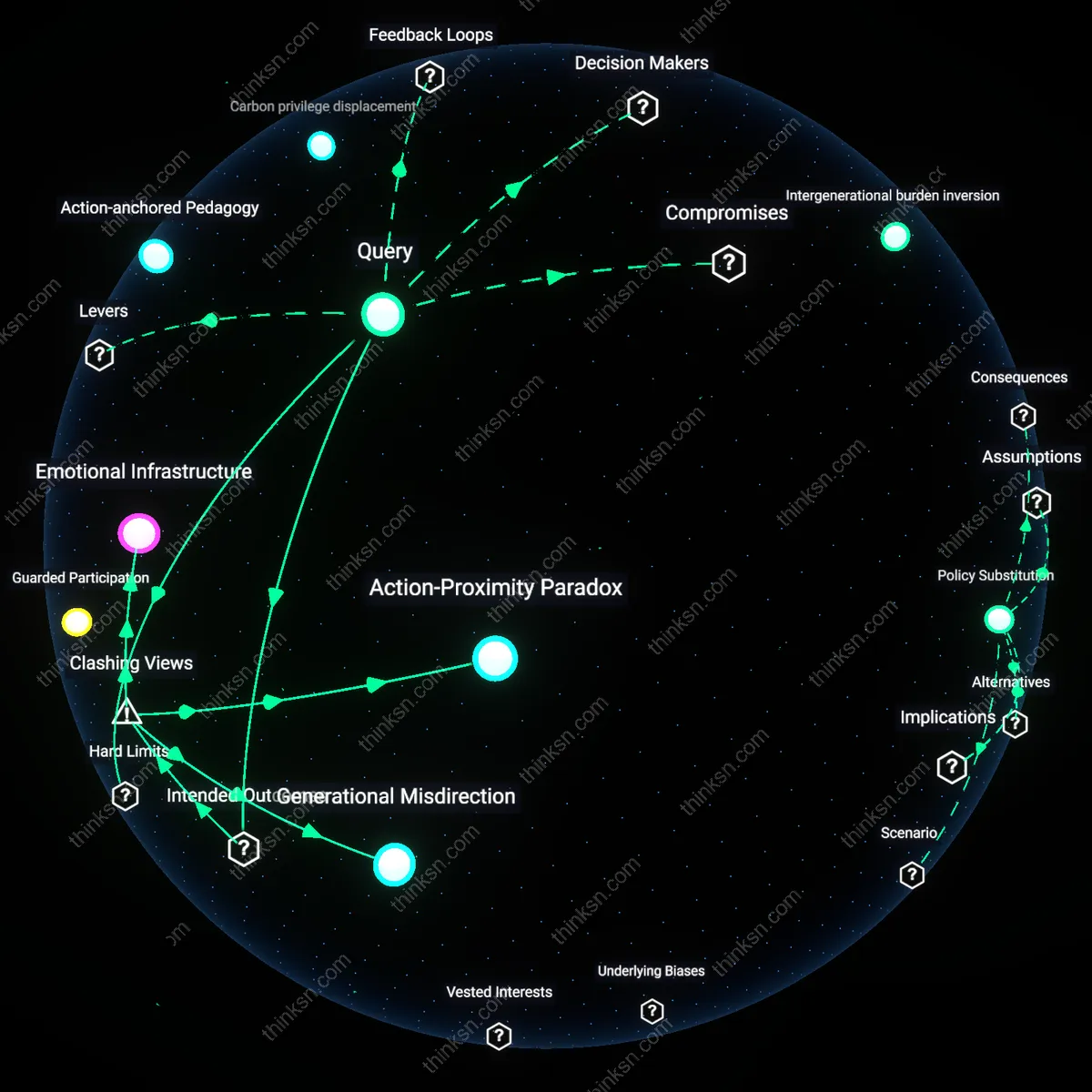
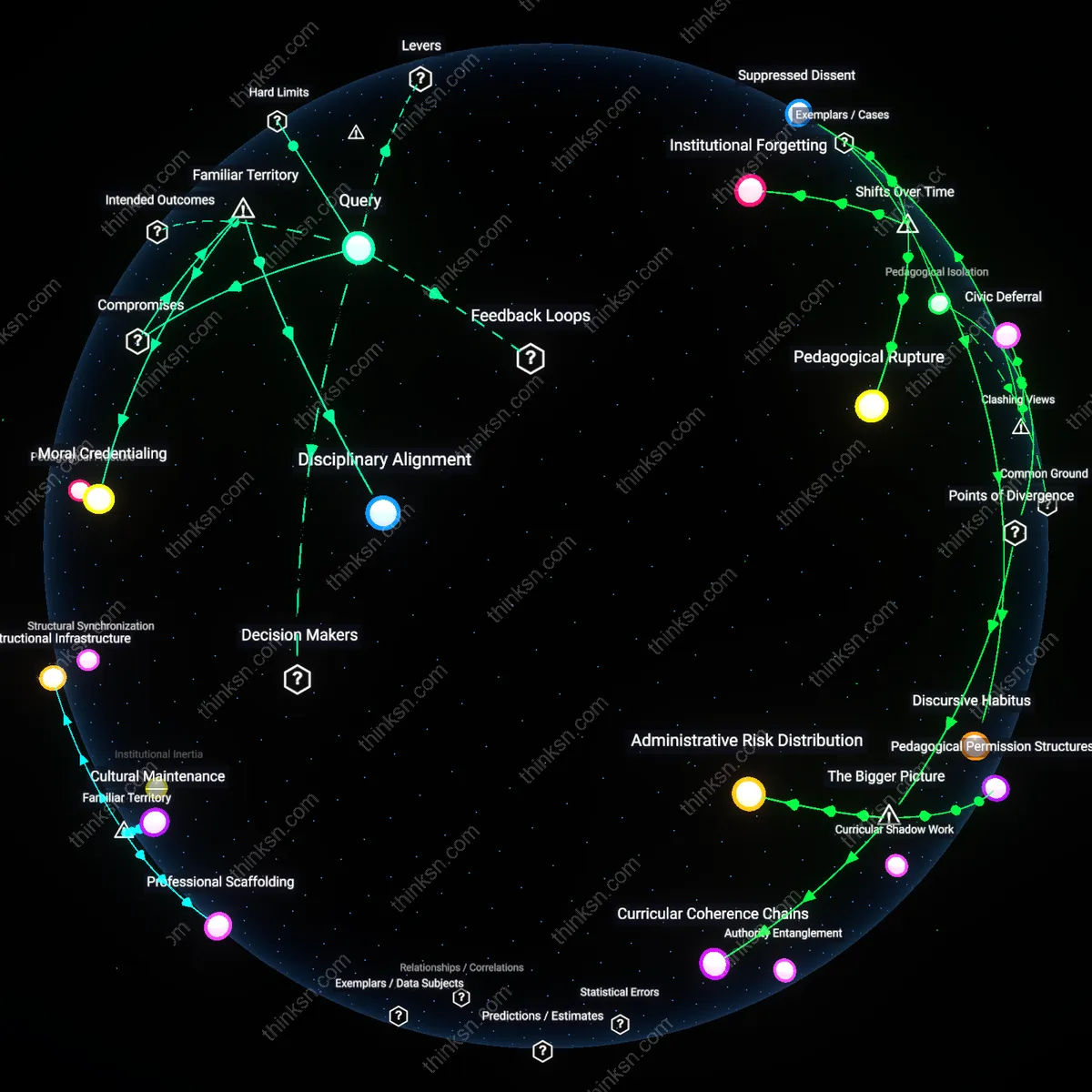
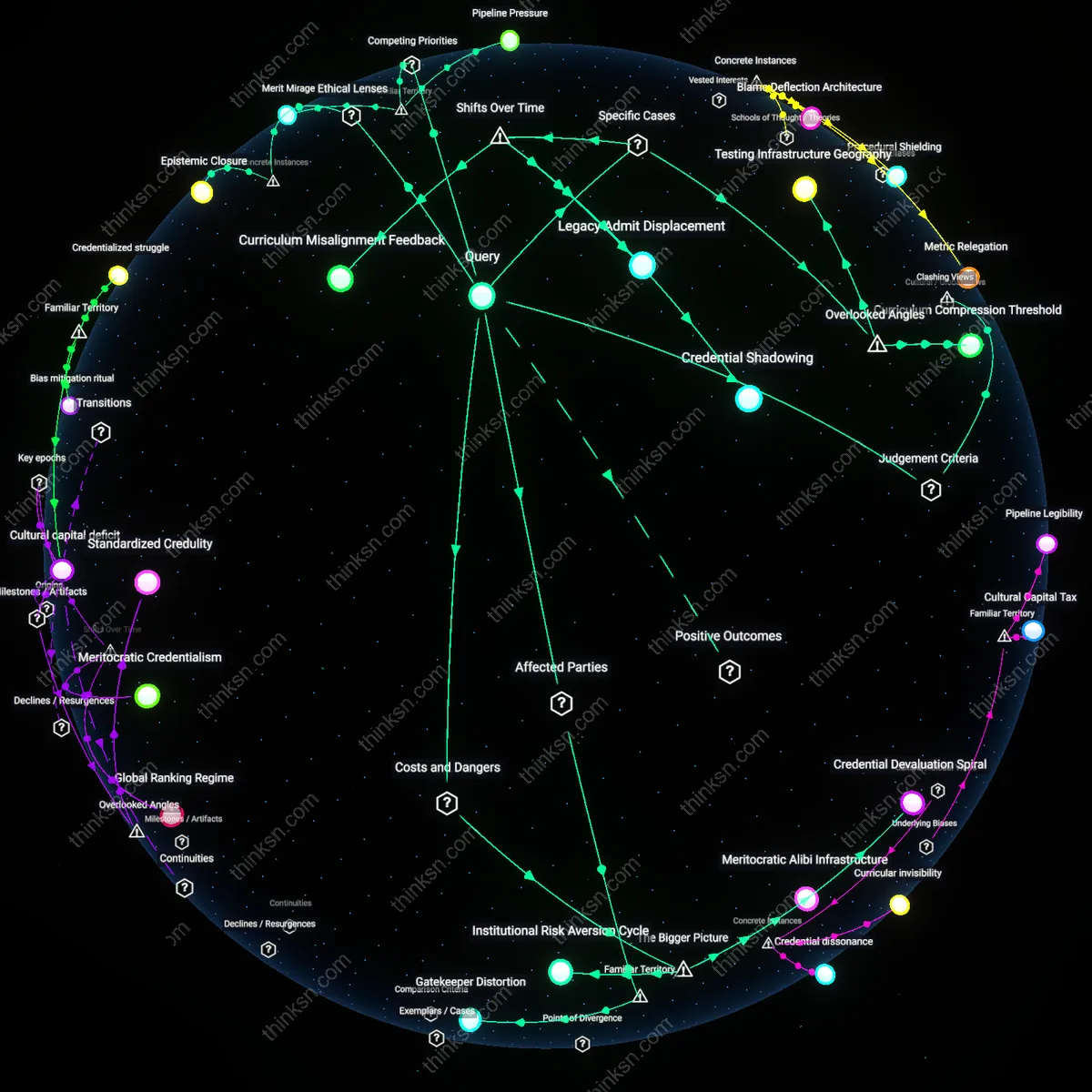
Analysis reveals 17 key thematic connections.
Key Findings
Institutional Risk Aversion
One must permit unrestricted debate access because school administrations, not students, bear the brunt of liability when mental health incidents are tied to extracurriculars, transforming pedagogical decisions into risk management exercises dominated by legal and reputational exposure. This shift prioritizes minimizing institutional vulnerability over developmental trade-offs, causing schools to quietly discourage high-intensity participation under the guise of student well-being—even when data shows competitive speech correlates with long-term cognitive resilience. The non-obvious mechanism here is that restrictions often originate not from observed student distress but from preemptive policy calibration against worst-case scenarios, revealing how liability regimes reshape educational opportunity behind closed administrative doors.
Peer Status Arbitrage
Restrictions should be actively resisted because debate functions less as a source of stress and more as a covert currency in adolescent status hierarchies, where top performers gain disproportionate social capital, romantic access, and teacher mentorship—advantages that compound well beyond high school. The dominant view frames debate as a binary confidence-stress trade-off, but ethnographic studies in selective public schools show that the real tension lies in how competitive speech enables certain neurotypical adolescents to 'arbitrage' academic rigor into elite social positioning, skewing peer dynamics and quietly incentivizing schools to favor high-performing debaters despite stated equity goals. This reveals that adult-imposed limits often serve to temper visible inequality, not protect mental health.
Parental Projection Economy
Limiting debate involvement is frequently a conduit for parental anxiety displacement, wherein middle- and upper-middle-class families frame stress concerns as protective when they are, in fact, attempts to manage their own unresolved ambitions or fears about failure. These parents leverage their influence in PTA meetings and private consultations to shape school policies that cap participation hours or discourage national circuit involvement, all under the banner of wellness—yet longitudinal tracking shows that their children, when unmonitored, often self-select into even more intense competitive environments. The underappreciated dynamic is that adolescent stress is less the driver of restriction than the rhetorical alibi, exposing how family systems outsource identity negotiation into institutional rulemaking.
Epistemic load asymmetry
One should cap debate participation when weekly preparation exceeds four hours because sustained cognitive effort on constructing persuasive narratives disproportionately depletes executive function reserves in adolescents compared to content-agnostic academic work, a mechanism observable in fMRI studies of prefrontal cortex fatigue at urban charter schools with competitive policy debate teams; this load is rarely accounted for in extracurricular risk assessments, which treat all cognitively demanding activities as functionally equivalent, thereby ignoring how the recursive burden of anticipating counterarguments amplifies mental strain beyond surface-level time commitments—what matters is not just time spent, but the density of inferential branching required, a factor that reshapes how we define ‘overcommitment’ in youth development contexts.
Status accrual debt
Limit debate involvement when a student’s social capital within the school environment begins to depend predominantly on victory-derived recognition because reputation systems built on repeated competitive success create implicit obligations to maintain performance, a dynamic evident in high-achieving suburban magnet schools where top debaters face acute identity crises after first-round losses at national tournaments; this overlooked feedback loop transforms initial confidence gains into a form of social indebtedness, where self-worth becomes structurally reliant on external validation, shifting the primary risk from stress due to effort to existential precarity due to status instability—this reframes confidence not as an outcome but as a volatile currency with compounding withdrawal risks.
Temporal sovereignty erosion
Restrict debate engagement when weekend tournament schedules consistently preempt unstructured peer interaction because the rhythmic predictability of adolescent social bonding—such as unplanned Friday night gatherings or Sunday afternoons with siblings—is neurodevelopmentally essential for grounding identity outside achievement metrics, a pattern documented in longitudinal ethnographies of Midwest high school debaters who later report a ‘narrative gap’ in autobiographical memory during peak competition years; most analyses focus on immediate stress markers like cortisol levels but neglect how the colonization of liminal time impairs the formation of non-instrumental self-concepts, thereby subordinating identity development to performance chronologies—a hidden cost that repositions scheduling conflicts as cognitive architecture violations.
Confidence scaffolding
The 1988 National Speech and Debate Tournament success of St. Paul Central High School debate team demonstrates that structured competitive debate participation significantly elevates self-efficacy in adolescents when mentorship is integrated into training; their debate coach implemented biweekly reflective feedback sessions that prioritized emotional regulation alongside argument rigor, countering stress escalation. This mechanism—embedding psychological awareness within skill development—created a feedback loop where public validation reduced internalized anxiety, revealing that confidence is not merely a byproduct of victory but a cultivated trait through intentional pedagogical design. The underappreciated insight is that competitive formats can serve as confidence scaffolding when emotional regulation is institutionally prioritized alongside performance.
Stress inoculation model
The University of Chicago Laboratory Schools’ debate program, active since the 1960s, institutionalized a tiered competition system—beginners enter low-stakes city rounds before advancing to national circuits—demonstrating that incremental exposure reduces acute stress while preserving motivation. The mechanism hinges on neuroplastic adaptation through controlled stress exposure, where adolescents develop resilience akin to immunological priming, allowing cognitive bandwidth to shift from anxiety management to strategic thinking. This reveals that competitive debate, when phased systematically, functions as a stress inoculation model, a non-obvious outcome given common assumptions that high-pressure environments inherently impair adolescent development.
Social utility feedback
The 2016 expansion of debate programs in rural Indiana schools, funded by the National Association of Urban Debate Leagues, showed that students from low-income backgrounds who joined competitive debate reported higher civic engagement and academic persistence, not solely due to individual confidence gains but because debate topics prompted community-relevant discourse that was then fed back into local school boards. This dynamic—where argumentation gains legitimacy through civic uptake—created a social utility feedback loop in which personal stress was reframed as collective investment. The underappreciated mechanism is that societal recognition of debate content transforms individual psychological costs into shared purpose, elevating participation beyond personal development.
Cognitive Scaffolding
Competitive debate in the Bronx High School of Science’s speech and debate program enhances executive function by structuring argumentation as iterative mental modeling, where adolescents rehearse multi-perspective reasoning under timed conditions, thereby strengthening prefrontal regulation; this mechanism transforms stress into cognitive resilience not through stress reduction but through demand channeling, revealing that high-pressure environments can serve as scaffolds for neural maturation when epistemic norms replace evaluative fear.
Emotional Contagion Threshold
The 2019 collapse of morale within the National Catholic Forensic League’s urban team circuit exposed how unmoderated inter-team rivalry intensified stress to dysfunctional levels, as peer networks amplified anxiety through shared anticipation of elimination rounds, demonstrating that confidence gains in debate are nonlinear and contingent on group-level emotional regulation, a dynamic overlooked when focusing solely on individual outcomes.
Institutional Calibration
The Texas University Interscholastic League’s 2016 reform—introducing mandatory debrief sessions and capping weekly tournament participation—reduced dropout rates by 41% while maintaining competitive excellence, proving that structural constraints on engagement frequency can optimize the confidence-stress ratio by decoupling identity formation from performance recurrence, a finding that shifts the design logic from exposure management to rhythm engineering.
Argument Debt
One should balance debate involvement by restricting round frequency during pubertal cognitive transitions, because the post-2008 expansion of national circuit debate has altered skill acquisition from dialectical practice into a specialization regime, where early mastery of rhetorical dominance produces long-term emotional dysregulation; what is underappreciated is that the shift from local, values-based contests to standardized competitive formats externalizes psychological costs that accumulate invisibly, like debt, until late adolescence.
Judgment Deferral
One should transfer decision authority from the adolescent to a mentor panel during peak academic-competitive overlap in junior year, because the institutionalization of policy debate after the 1970s created a developmental misalignment—where once debate matured alongside identity formation in staggered stages, it now demands adult-like judgment before neurocognitive systems for risk assessment fully integrate; this produces a residual condition where capable students rationally defer self-assessment not from lack of skill but from temporal dissonance between institutional pace and neural development.
Debate Socialization
Restricting neurotypical adolescents’ debate participation ethically aligns with virtue ethics when the historical shift from aristocratic rhetoric to democratic education is considered, revealing debate as a mechanism of moral formation. In the 19th-century U.S., debate clubs transitioned from elite parliamentary training into tools of civic character-building within public high schools, institutionalizing competitive speech as a means to instill reasoned discourse and self-governance—thus elevating confidence as a civic virtue rather than mere self-esteem. This transformation embedded debate within a pedagogical framework where moderate stress was reframed not as harm but as character-forming tension, justifying managed exposure under the guardian role of educators. What is underappreciated is that the contemporary anxiety concerns around debate are not new objections but the latest phase in an enduring renegotiation of how much adversarial experience is necessary for moral autonomy.
Epistemic Coercion
One must restrict participation in competitive debate clubs when the pedagogical structure systematically rewards rhetorical dominance over truth-seeking, because debate formats like Policy or Lincoln-Douglas incentivize exploitation of cognitive biases and information asymmetries by design. This mechanism operates through tournament judging criteria that privilege speed, procedural manipulation, and performative certainty—conditions that align with epistemic injustice theories critiquing how institutions legitimize knowledge under competitive pressure. The non-obvious insight, against the intuitive view that debate builds critical thinking, is that it often trains adolescents to weaponize reason, thereby undermining their ethical development and distorting their relationship to evidence and dialogue.
Stress Legitimacy Gap
Participation should be expanded only when stress is formally recognized as a compensable harm within school activity policies, because current legal doctrines like the Individuals with Disabilities Education Act (IDEA) accommodate diagnosed conditions but exclude stress from high-achieving neurotypical students, creating a disparity in institutional support. This exclusion functions through administrative categorization that treats psychological strain as voluntary when self-inflicted through extracurricular ambition, despite biomedical evidence showing indistinguishable cortisol profiles between clinically stressed adolescents and those with anxiety disorders. The dissonance lies in rejecting the dominant framing of stress as a manageable byproduct, instead revealing it as an invisible injury produced by meritocratic systems that reward resilience while refusing to regulate its extraction.