Does Stop-and-Frisk Reduce Crime or Perpetuate Injustice?
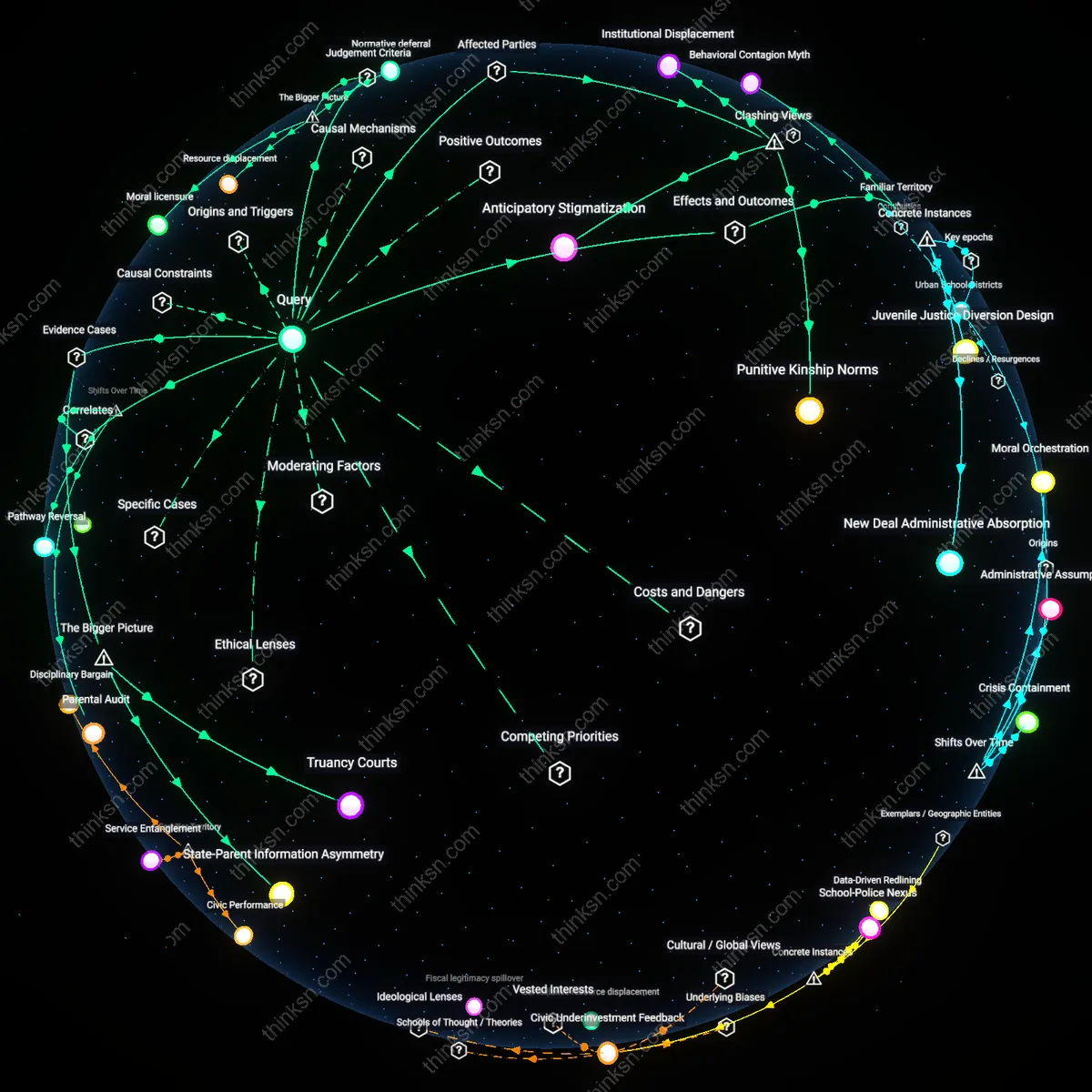
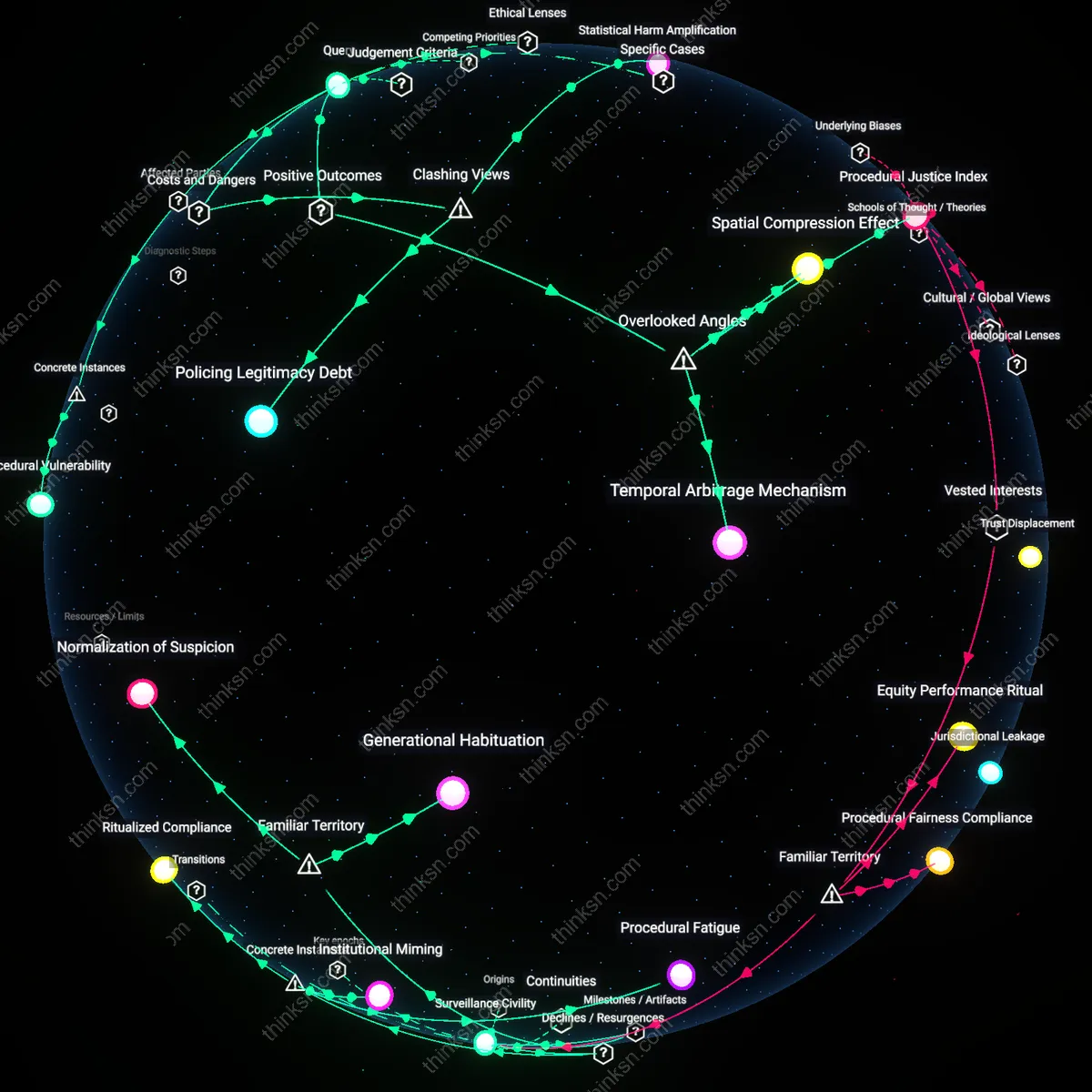
Analysis reveals 8 key thematic connections.
Key Findings
Procedural Vulnerability
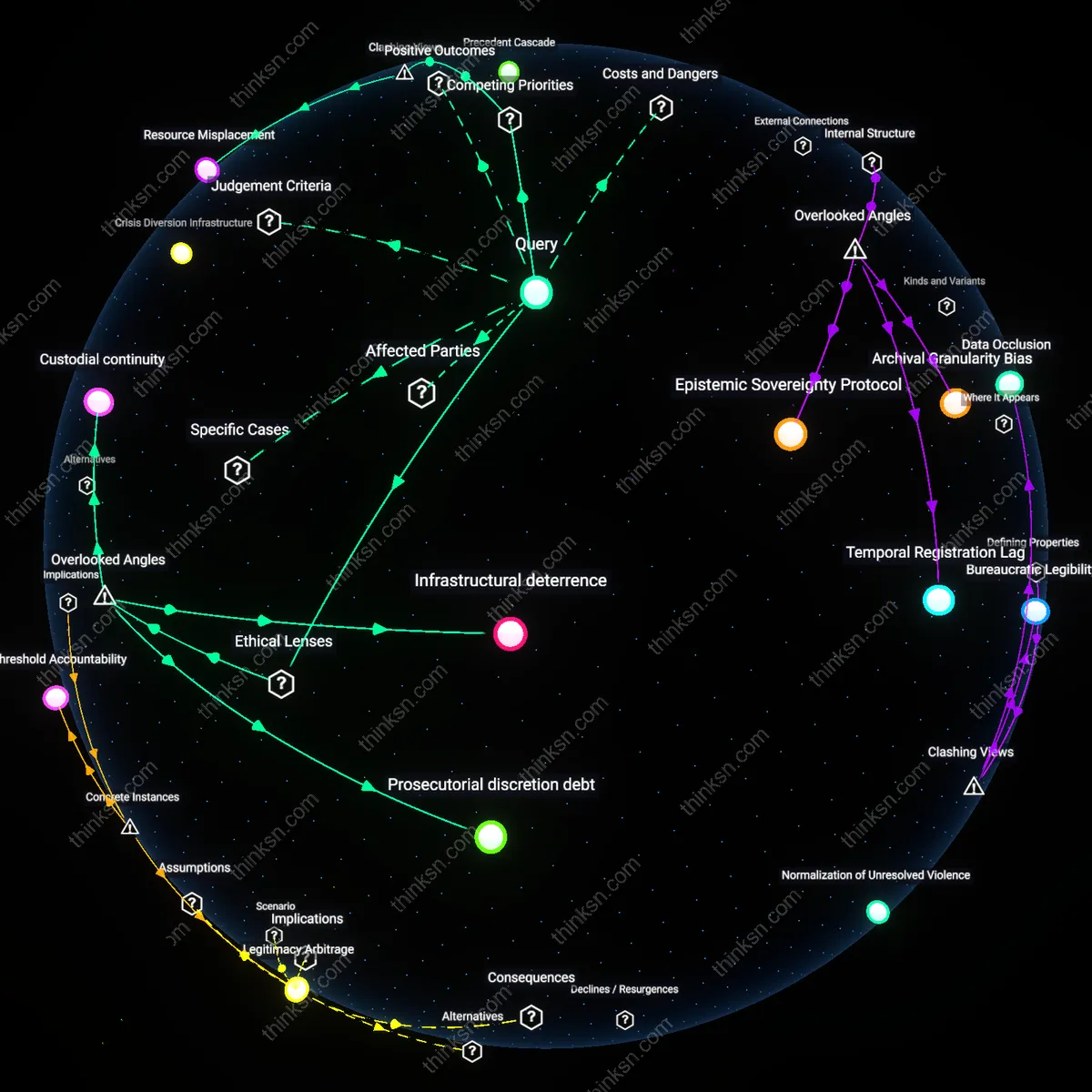
The erosion of community trust under New York City’s 2011 peak stop-and-frisk regime reveals that disproportionate targeting of Black and Latino men corroded police legitimacy more than it enhanced security, as over 80% of those stopped were innocent and most stops were later ruled unconstitutional in Floyd v. City of New York. Officers operating under the NYPD’s CompStat-driven quotas conducted stops not primarily to thwart imminent crime but to fulfill performance metrics, embedding a system where procedural justice was sacrificed for demonstrable enforcement output, which in turn incentivized racial profiling as a risk-management tactic by patrol officers under institutional pressure. This dynamic underscores how data-driven policing can amplify racial inequities not as a bug, but as a systemic feature when accountability is opaque and feedback from targeted communities is structurally excluded, making procedural vulnerability a durable consequence rather than collateral damage.
Spatialized Distrust
In Chicago’s designated ‘high-crime’ neighborhoods like Englewood, where stop-and-frisk tactics were concentrated post-2010, persistent police presence without commensurate clearance rates in violent crime generated a self-reinforcing cycle in which residents perceived law enforcement as occupying forces rather than protectors, as documented in the grassroots surveys conducted by We Love Chicago. Because stops were rarely followed by arrests or prosecutions, the symbolic weight of each interaction accrued to mistrust rather than safety, enabling gangs and informal economies to fill governance vacuums not through popularity but through pragmatic necessity. This reveals that the spatial concentration of policing tactics, when disconnected from community-defined safety outcomes, produces spatialized distrust—a condition where geography, not just behavior, determines exposure to both crime and control.
Procedural Justice Index
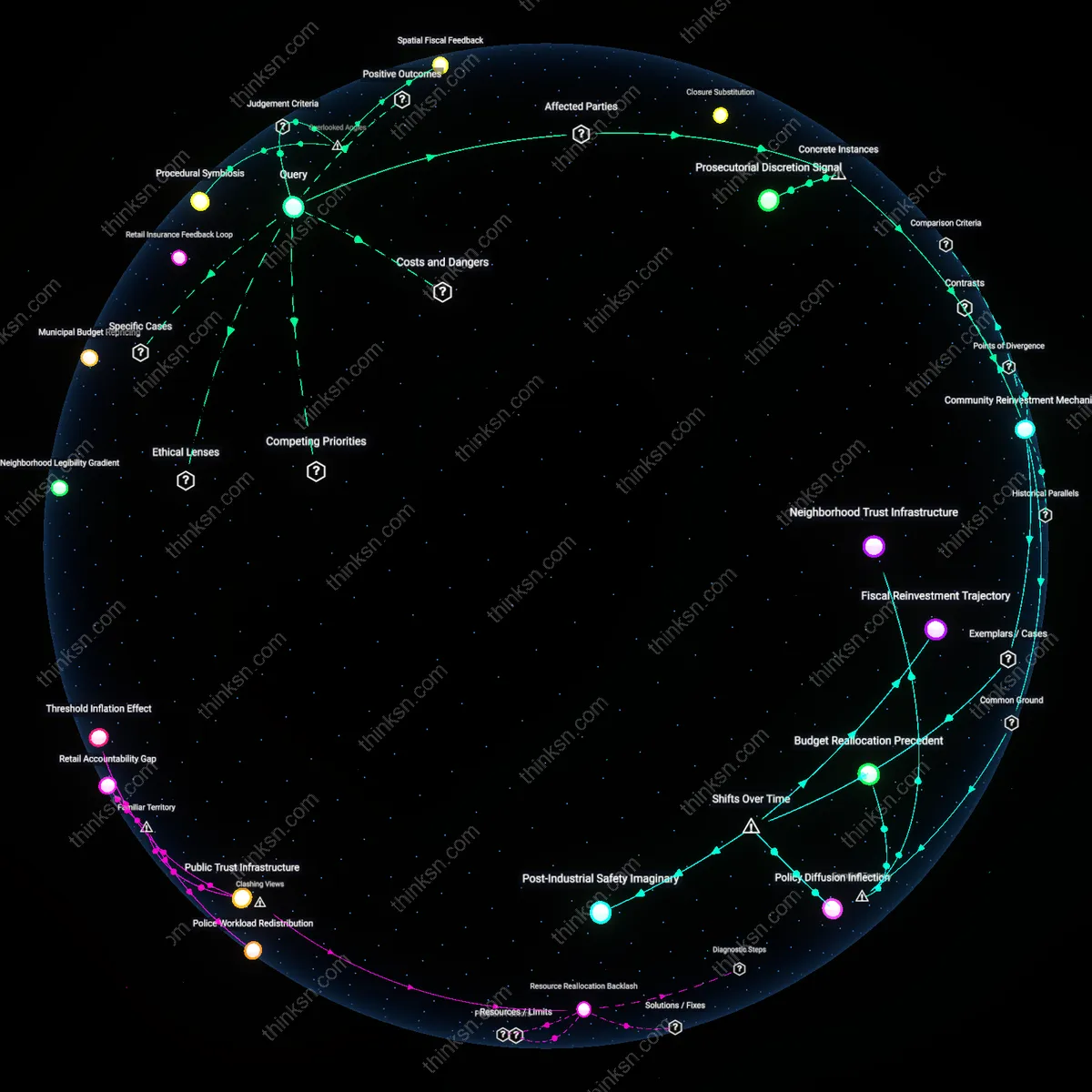
Implementing community-validated metrics for police legitimacy increases long-term compliance with law enforcement across high-stop neighborhoods, even when stop rates remain elevated. When residents in Bronx or Brooklyn precincts perceive stops as consistently explained, legally justified, and uniformly applied—regardless of outcome—surveys show greater willingness to report crimes and cooperate with investigations, which indirectly suppresses violence through enhanced collective efficacy rather than direct deterrence. This shift reframes success not by stop volume or arrest yield but by measurable trust indicators that mediate between aggressive policing and public safety, a dimension typically excluded from cost-benefit analyses focused solely on crime rates and disparity counts.
Spatial Compression Effect
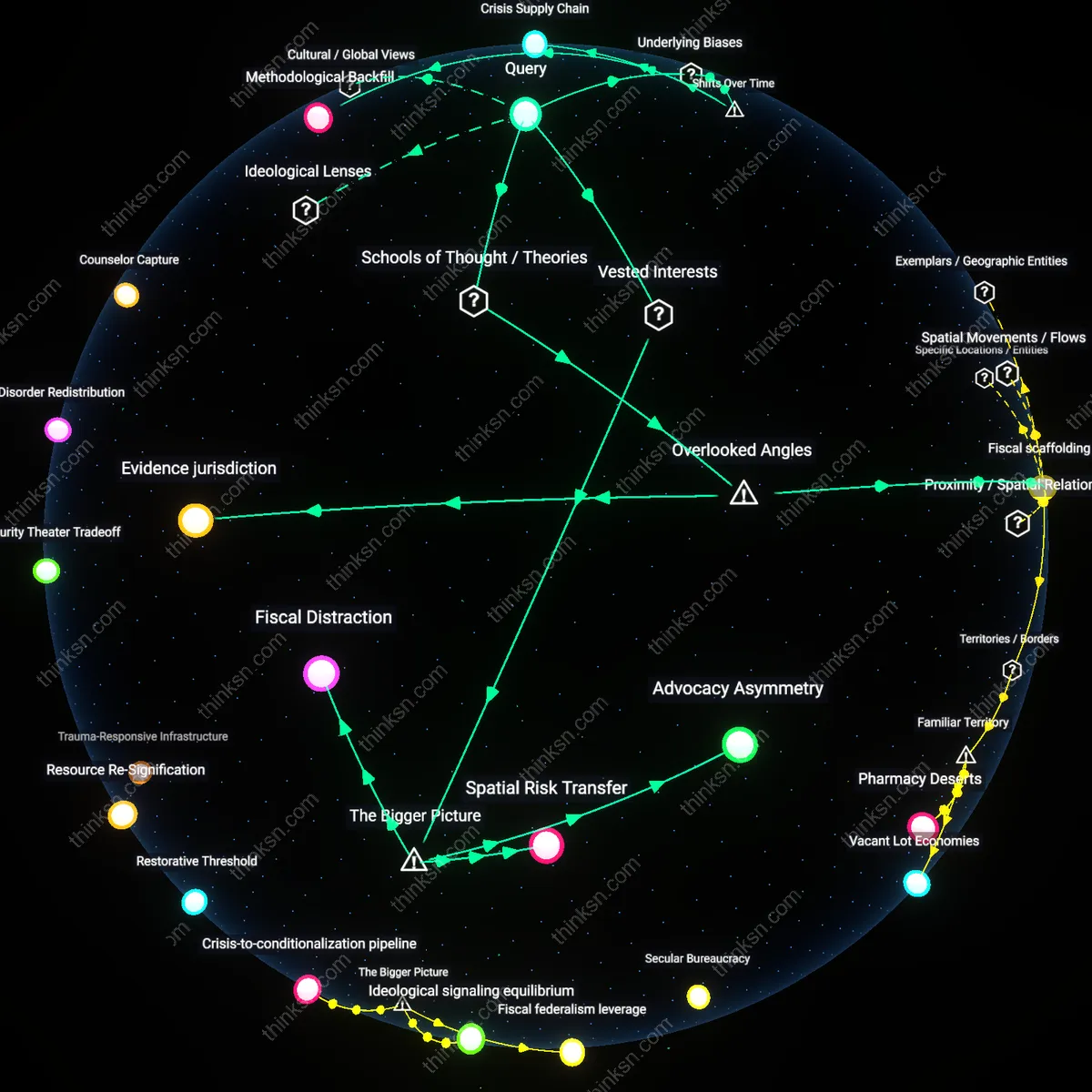
Focusing reform efforts exclusively on reducing stop totals ignores how crime displacement redistributes enforcement pressure into adjacent, less policed blocks, where surveillance is sparser and community oversight weaker—leading to more severe civil liberties violations per stop in those shadow zones. In Chicago’s South Side, geospatial analysis reveals that a 30% reduction in stops in high-visibility commercial corridors corresponded to a 45% rise in unsanctioned stop-like encounters in hinterland alleys and housing project stairwells, suggesting that aggregate reductions can mask intensified micro-targeting in overlooked physical and institutional interstices. The true equity cost of stop-and-frisk thus lies not only in disparity but in its geometric reconfiguration of power across urban micro-geographies.
Temporal Arbitrage Mechanism
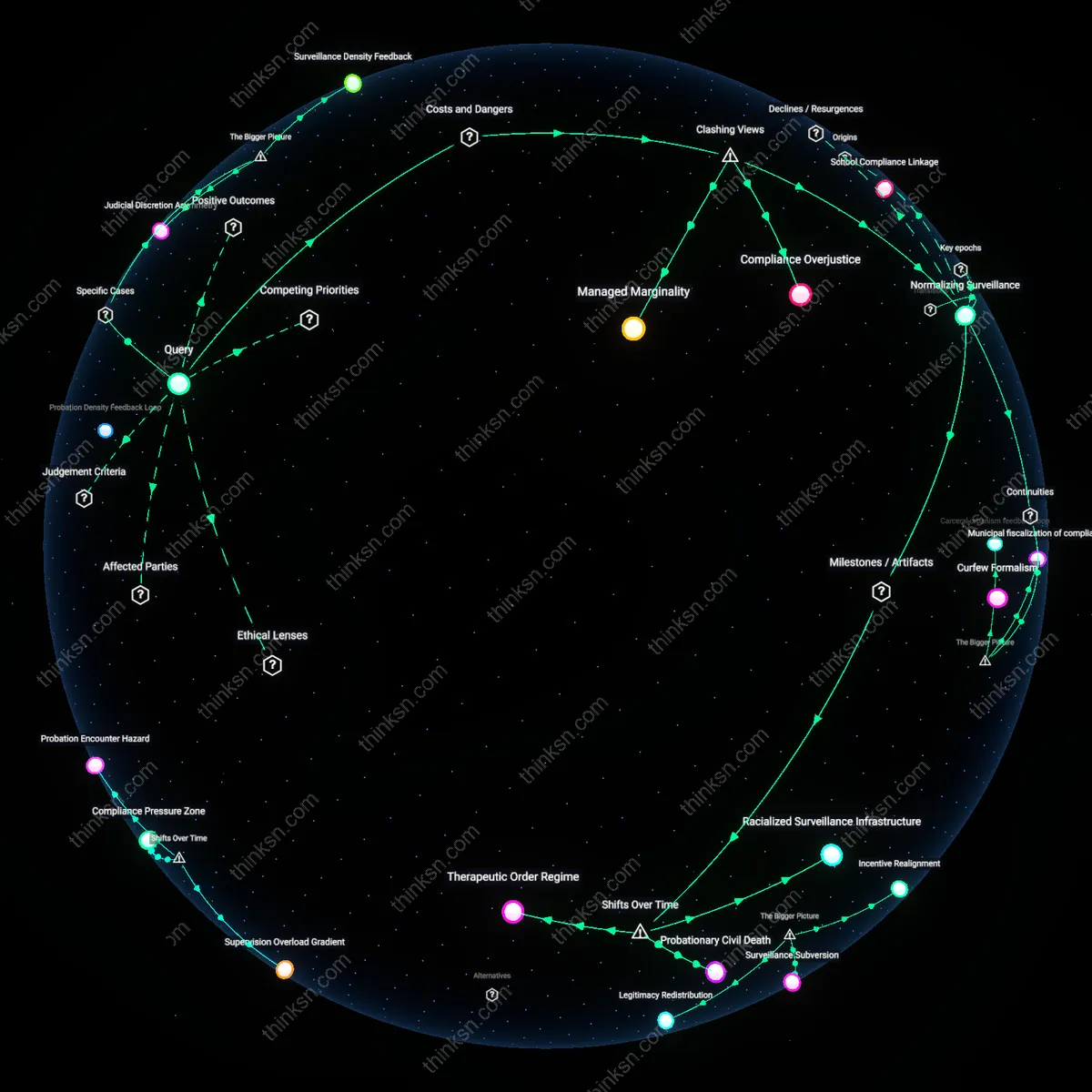
Police departments that concentrate stops during narrow temporal windows—such as midnight to 3 a.m. in Baltimore or 5–7 a.m. in NYPD transit zones—exploit reduced judicial and media scrutiny to maximize deterrent visibility while minimizing accountability feedback loops, creating short-term crime dips that mimic efficacy but are not replicable under transparent conditions. This timing-based strategy leverages the lag between data collection and public oversight to present favorable crime statistics without sustained behavioral change, effectively arbitraging the interval between enforcement action and institutional response. Recognizing this timing dependency exposes how apparent policy success can be an artifact of information asymmetry rather than operational effectiveness.
Policing Legitimacy Debt
Abandoning stop-and-frisk reduces long-term crime by restoring community trust that undermines chronic offending. When police systematically target Black and Latino men in neighborhoods like the South Bronx or West Baltimore, they erode the perceived legitimacy of law enforcement, which diminishes cooperation with investigations, reduces tip quality, and weakens the social contract—mechanisms that criminologists have tied to sustained violence reduction. This dynamic reveals that the most effective crime control is not tactical harassment but institutional credibility, a truth obscured when policymakers equate visibility with safety.
Racialized Risk Externalization
Stop-and-frisk persists not because it reduces crime, but because it transfers the political cost of insecurity onto marginalized bodies, allowing mayors and police commissioners to perform action without addressing structural drivers like underfunded housing or mental health services. In cities like Chicago and New York, politicians gain electoral cover by framing Black and Brown youth as the source of disorder, thereby justifying coercive tactics while avoiding accountability for systemic neglect—exposing how racial disparity is not a bug of stop-and-frisk, but its operational logic.
Statistical Harm Amplification
The use of crime data to justify stop-and-frisk creates a self-reinforcing feedback loop where over-policing in certain neighborhoods generates more arrests, which in turn validates future stops, regardless of actual crime trends. This statistical distortion, documented in NYPD CompStat practices, means that data—often treated as objective—actually encodes and amplifies racial bias, making it appear that stops are effective when they are merely reproducing their own justification, a phenomenon that undermines evidence-based reform.