LinkedIn: Networking Hub or Status Anxiety Trigger for New Professionals?
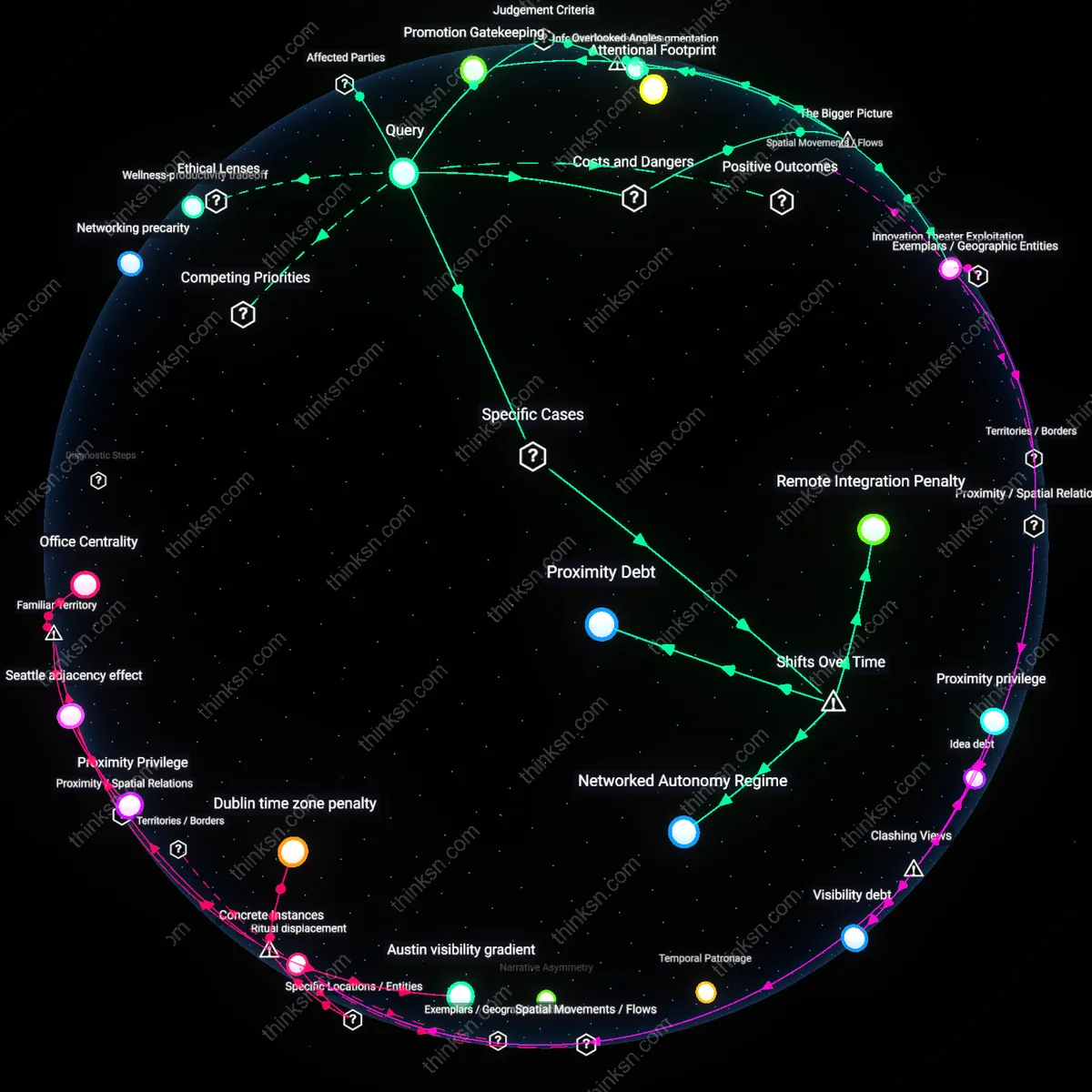
Analysis reveals 5 key thematic connections.
Key Findings
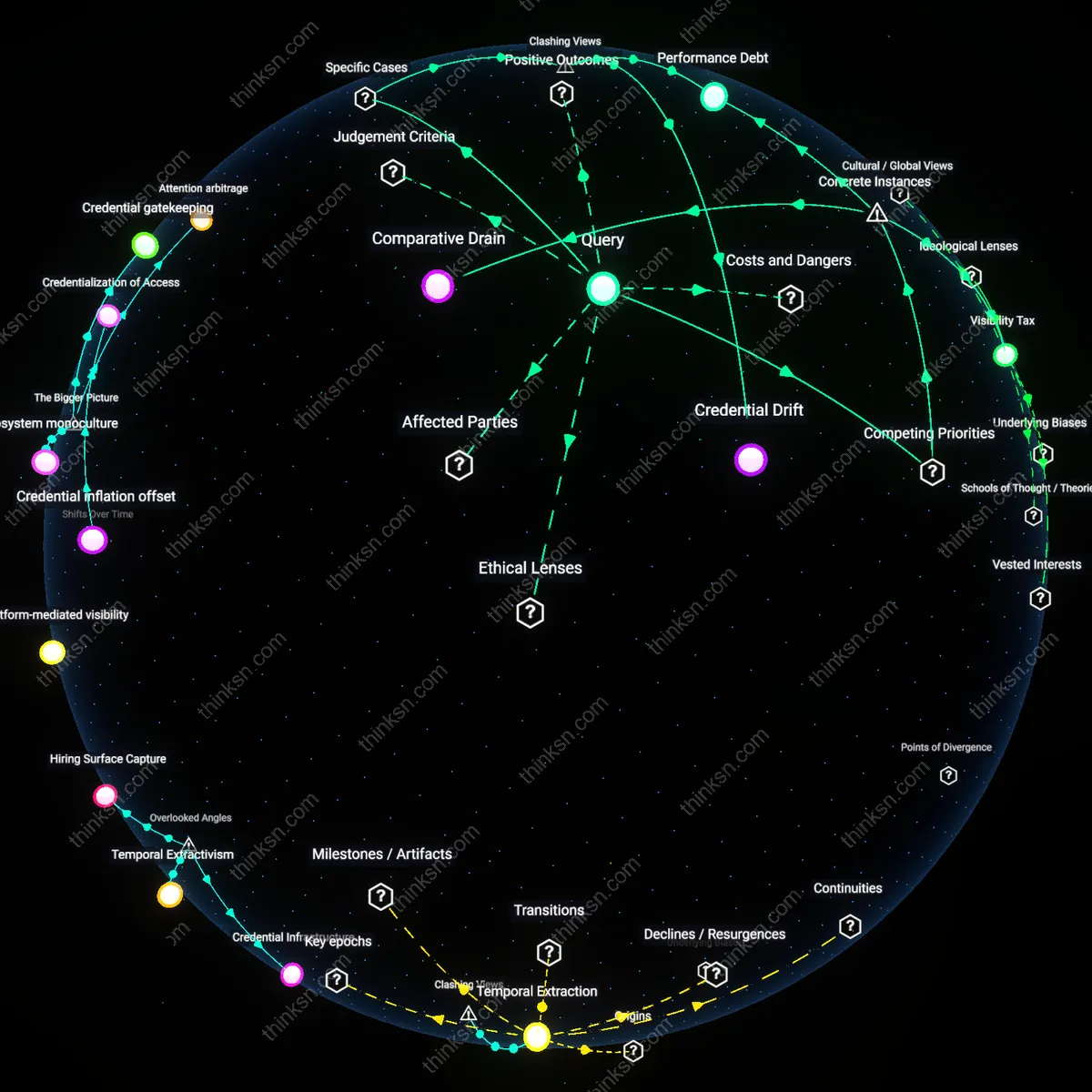
Performance Debt
LinkedIn’s endorsement system pressures early-career hires at McKinsey to accumulate visible validations—such as skill tags and recommendation posts—diverting hundreds of hours annually from client work to platform self-representation, because advancement now depends as much on algorithmic visibility as on project outcomes, revealing a zero-sum trade-off between authentic professional development and curated reputation performance.
Comparative Drain
Recent graduates at TechCrunch Disrupt startup accelerators report chronic anxiety after comparing their early milestones—first job titles, speaking engagements, funding rounds—against exaggerated LinkedIn feeds of peers, where idealized career arcs mask setbacks and attrition, illustrating how the platform’s affordance for celebrating ascent inherently undermines psychological security by institutionalizing upward social comparison as professional norm.
Visibility Tax
Entry-level engineers at Airbnb, during internal 2020 wellness audits, disclosed suppressing mental health struggles because visible burnout narratives on LinkedIn correlate with perceived weakness and reduced project assignments, exposing how the demand to signal resilience for career mobility forces workers to sacrifice personal authenticity and emotional transparency in exchange for professional legibility.
Meritocratic Mirage
LinkedIn reinforces the illusion of open-access meritocracy by showcasing outlier success stories—such as rapid promotions at consulting firms like McKinsey or engineering leaps at FAANG companies—while obscuring the structural advantages behind them, including alumni networks from elite universities. The platform’s content algorithm preferentially surfaces trajectories that appear self-made but are in fact underwritten by invisible institutional access, leading early-career users to internalize failure to replicate such paths as personal shortcoming rather than systemic exclusion. This undermines the intuitive view that LinkedIn democratizes opportunity, exposing instead how its visibility mechanics reify hierarchy under the guise of transparency.
Credential Drift
Early-career workers in competitive sectors like fintech and venture capital—particularly those based in New York and London—are increasingly pressured to accumulate micro-credentials such as LinkedIn Skill Assessments or online certificates not for their utility but for their display value, revealing that the platform has shifted the boundary of legitimacy from verified expertise to visible accumulation. This dynamic detaches credentialing from learning and attaches it to aesthetic signaling, where inboxes are treated as portfolios and profile completeness becomes a proxy for competence. Contrary to the assumption that LinkedIn facilitates authentic networking, its architecture fosters a race to aesthetic saturation, where professional identity is less about connection and more about impression management calibrated to algorithmic approval.
Deeper Analysis
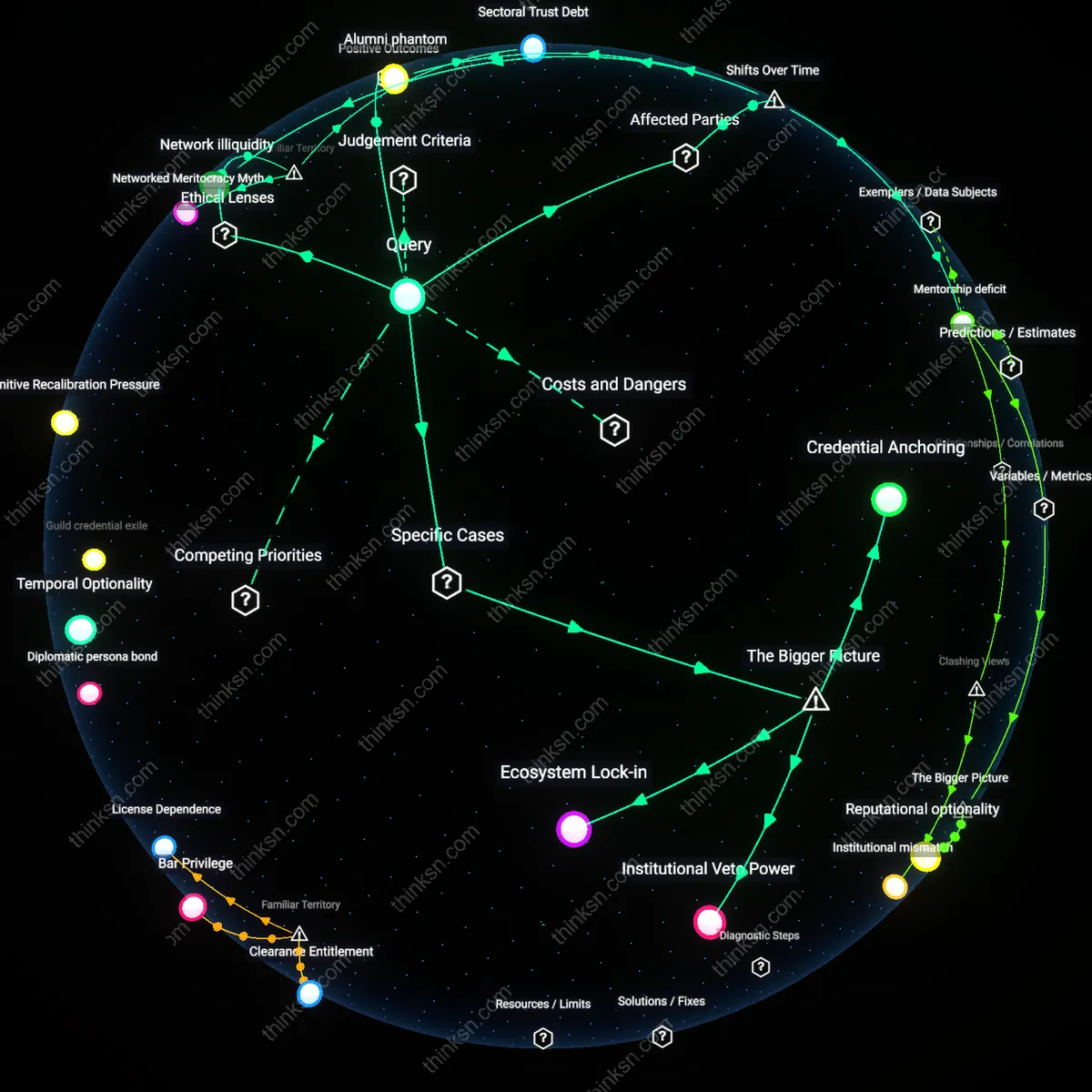
How do early-career workers in other tech companies navigate the pressure to appear resilient online when they're struggling personally?
Digital identity rents
Early-career tech workers comply with online resilience performativity because their professional viability depends on paying digital identity rents to informal peer networks that control access to mentorship and visibility. These networks, concentrated in private Slack communities and curated Twitter circles, treat vulnerability as a breach of informal conduct norms, effectively taxing emotional authenticity as a cost of admission. What is overlooked is that resilience signaling isn’t driven primarily by corporate policy or personal ambition, but by decentralized social landlords—mid-level influencers and cohort gatekeepers—who extract compliance in exchange for career-relevant social capital, reframing psychological strain as a transaction fee rather than a mental health issue.
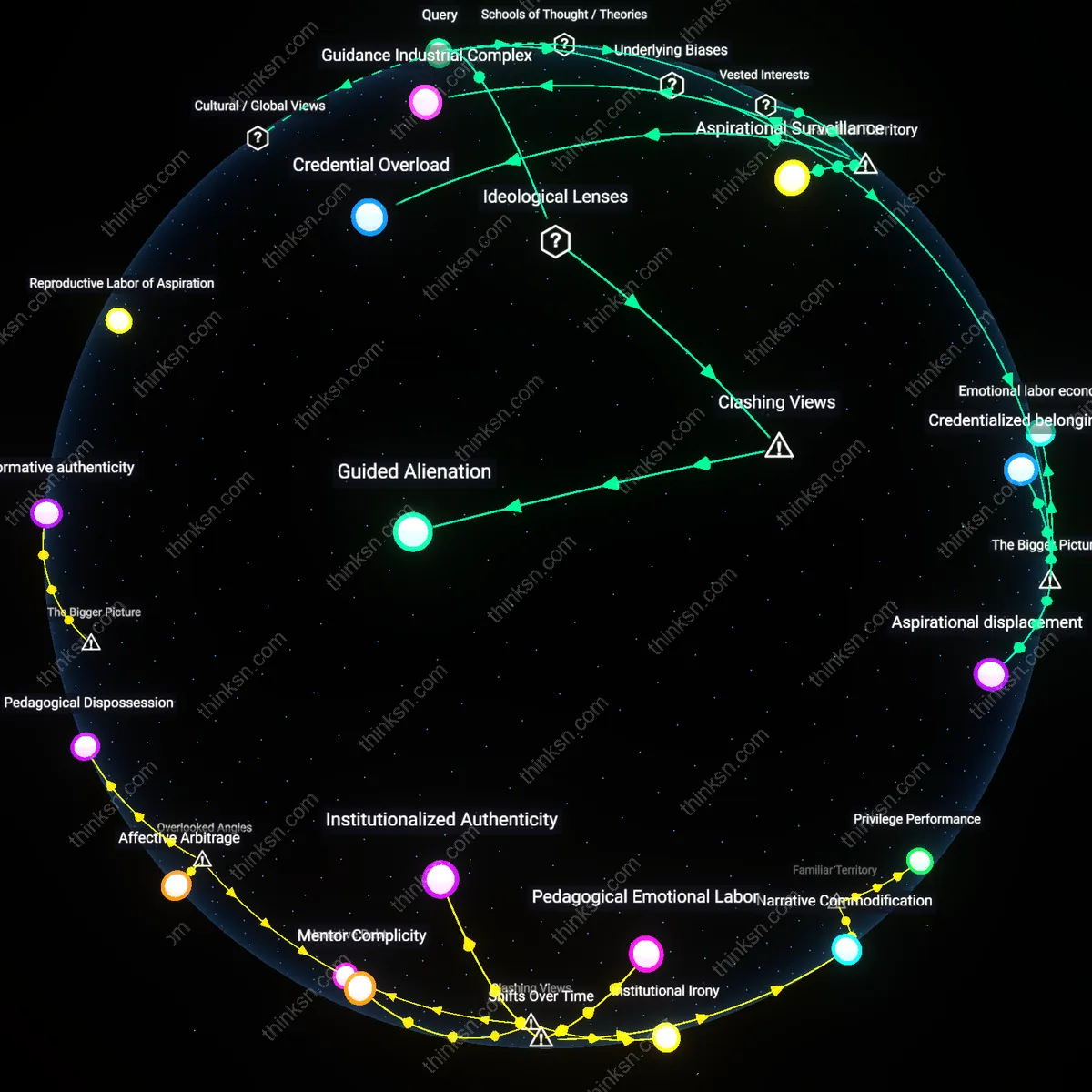
Where do early-career workers actually see themselves fitting in on LinkedIn compared to the success stories that dominate the platform?
Aspirational Displacement
Early-career workers in Lagos migrate from local tech internships to remote roles with Berlin-based startups, bypassing Nigeria’s saturated job market. These lateral relocations rely on digital infrastructure and freelance platforms like Andela, which re-route early-career talent along transnational skill corridors, revealing that visibility on LinkedIn often tracks geographic detachment rather than local advancement. The non-obvious insight is that career aspiration is being spatially outsourced, not upwardly mobile within national boundaries.
Credential Corridors
Recent graduates from the University of Buenos Aires increasingly enroll in online certifications offered by U.S. tech firms before applying to positions listed in São Paulo’s fintech hubs. This educational detour functions as a recognized passage through which regional talent gains legitimacy, showing that early-career workers perceive professional fit as contingent on traversing credentialing waypoints rather than direct entry. The underappreciated dynamic is that learning pathways have become formalized spatial conduits, not mere skill upgrades.
Shadow Networks
Entry-level data analysts from Manila join virtual coworking spaces hosted by Silicon Valley accelerators during off-peak hours, aligning their presence with U.S. West Coast rhythms to signal availability and cultural compatibility. These temporally shifted engagements form an invisible lattice of access, demonstrating that fitting in on LinkedIn often depends on mimicking the circadian geography of dominant tech hubs. The key insight is that belonging is choreographed through time-stretched adjacency, not just skill or content.
Aspirational mimicry
Early-career workers model their LinkedIn profiles after high-visibility tech evangelists at companies like Stripe and Shopify, adopting similar language around 'scaling impact' and 'growth hacking' despite working in entry-level operations roles. This mimicry is enabled by the platform’s algorithmic preference for content that signals rapid career acceleration and outsized influence, pressuring newcomers to align with dominant success archetypes to gain visibility. The non-obvious consequence is that identity formation on LinkedIn becomes less about actual job function and more about performing proximity to mythologized career trajectories, particularly within the San Francisco–Seattle tech corridor where such narratives originate and circulate. What sustains this is not individual ambition alone but the structural amplification of a narrow band of success stories as universally aspirational.
Narrative arbitrage
Entry-level employees in Indian IT firms like TCS and Infosys position themselves as 'digital transformation consultants' on LinkedIn, mirroring the self-branding of McKinsey or BCG analysts despite stark differences in autonomy and client access. This reframing exploits the platform’s weak contextual verification, allowing workers to leverage high-status terminology to compensate for organizational prestige gaps in a globally competitive job market. The key enabler is the decoupling of title from influence—a systemic feature of algorithmic visibility that rewards linguistic alignment with elite norms over factual accuracy. The underappreciated effect is that personal branding on LinkedIn operates not as self-representation but as strategic misdirection calibrated to Western hiring biases.
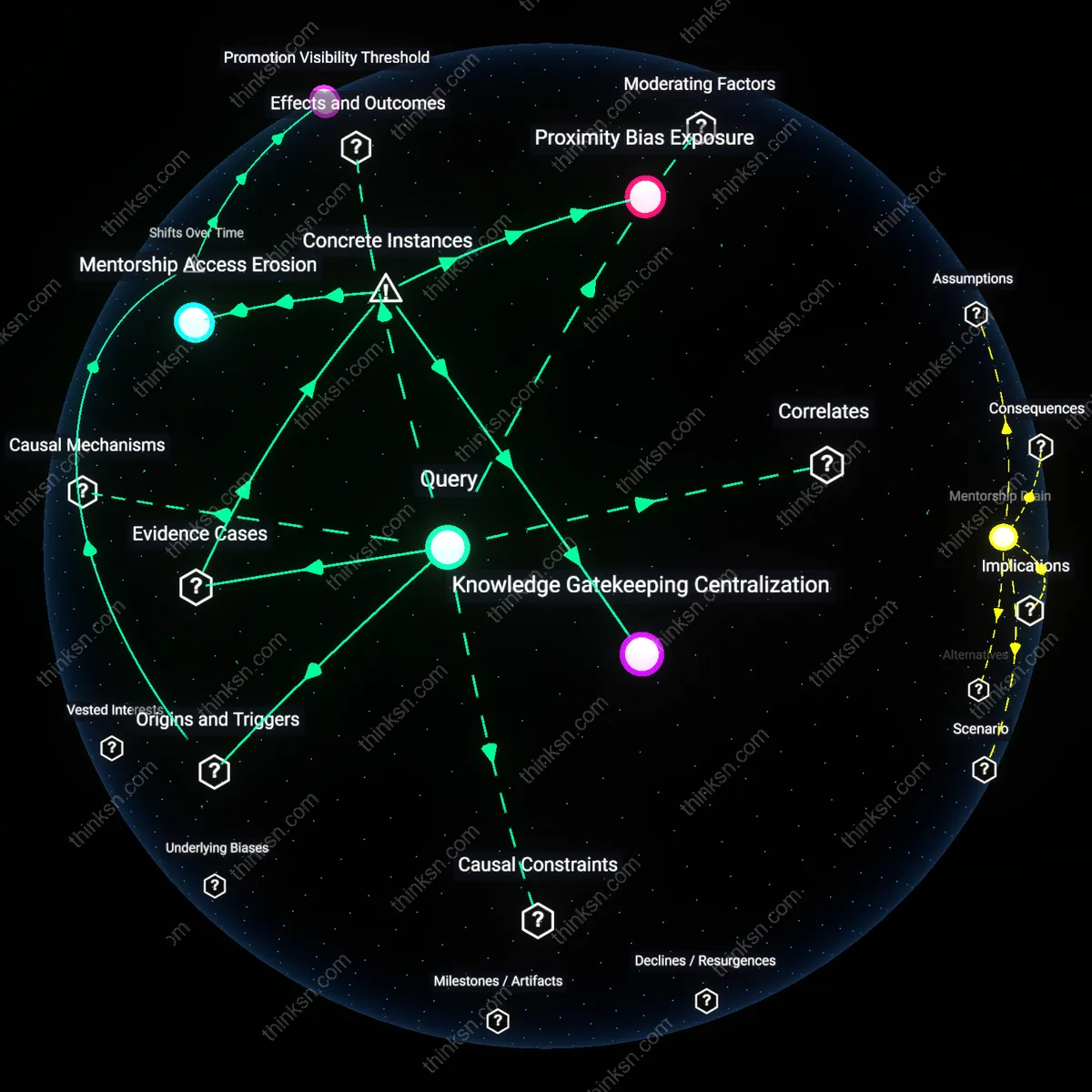
How did private online networks come to hold so much power over early-career workers' professional survival?
Platform-mediated visibility
Private online networks gained control over early-career workers’ professional survival by becoming the default gatekeepers of job-market visibility, centered on LinkedIn’s emergence in Silicon Valley around 2003–2005 when recruiters shifted from cold calling to algorithmic sourcing. Hiring managers began relying on profile completeness, connection counts, and endorsement signals as proxies for credibility, turning user activity into quantified professional identity; this mechanized screening reduced hiring friction but also embedded platform-specific behaviors—like regular posting and network grooming—into career maintenance. What remains underappreciated is that visibility itself became a performance metric shaped by platform design, not just market demand, making sustained self-exposure a survival tactic rather than a choice.
Credential inflation offset
Early-career workers turned to private online networks to compensate for the declining signaling power of traditional credentials, beginning in the mid-2010s when hiring saturation in college-educated labor markets rendered degrees insufficient for differentiation. Platforms like LinkedIn and AngelList allowed users to accumulate alternative validations—recommendations, viral posts, follower counts—that functioned as portable, visible merit proxies outside institutional control. The non-obvious consequence is that these networks didn’t just supplement credentials but actively devalued them by creating a parallel hierarchy where algorithmic amplification, not academic pedigree, determined access—shifting power to those who could perform cultural fluency within platform-specific norms.
Referral economy centralization
Private online networks monopolized access to unadvertised job opportunities by absorbing the referral economy, with LinkedIn and industry-specific Slack communities formalizing who sees openings between 2010 and 2018, particularly in tech and consulting sectors where 60–80% of roles were filled internally or through trusted networks. Because referrals reduced employer risk, workers had to maintain public affinity with influential nodes—managers, recruiters, alumni—whose endorsement could unlock invisible pipelines; failure to network continuously equated to professional isolation. The underrecognized shift is that referrals, once informal and localized, became systematized and platform-dependent, turning interpersonal trust into a quantified, surveilled asset controlled by private infrastructures.
Credential Gatekeeping
LinkedIn’s 2010 integration with HR databases at firms like IBM transformed profile completeness into a de facto hiring prerequisite, where unseen algorithms flagged candidates lacking endorsed skills or verified employment histories. By aligning platform norms with corporate recruitment pipelines, LinkedIn institutionalized a new form of credentialing—not through degrees or references, but through data traceability—effectively excluding early-career workers without digital footprints or elite university affiliations. This shift revealed how private networks quietly standardized employability criteria, making visibility on their platforms a survival requirement long before applicants reached formal interviews.
Affective Labor Extractors
Between 2013 and 2016, Behance—Adobe’s creative portfolio network—began promoting 'curated feeds' of 'top talent' selected by automated engagement metrics, pressuring young designers to constantly update work samples and interact with peers to maintain algorithmic favor. The platform's fusion of social visibility and job placement created an invisible demand for emotional and temporal investment, where early-career survival depended not just on skill, but on sustained performance of availability and enthusiasm. This demonstrates how private networks externalize psychological labor to users, converting professional precarity into continuous platform engagement.
Referral Monopolies
The 2018 rollout of Facebook’s “Jobs” feature in Buffalo, NY, integrated localized employer postings with employees’ real-name networks, privileging job seekers who could leverage existing connections for algorithmic amplification. This turned personal networks into hidden filters, where entry-level applicants without strong ties were systematically deprioritized by design, not discrimination. The case reveals how private networks commodify social capital at scale, converting relational proximity into algorithmic eligibility—and rendering early-career access contingent on preexisting embeddedness in digitally mapped communities.
Credential Substitution
Private online networks gained dominance over early-career workers' survival by replacing formal educational and institutional credentials with algorithmically curated visibility, where profile endorsements and viral engagement on platforms like LinkedIn and GitHub signal competence more reliably than diplomas in fast-moving tech and creative sectors. This shift occurred as hiring managers in Silicon Valley startups and venture-funded firms began treating public activity on these networks as real-time performance records, bypassing traditional HR pipelines; the non-obvious mechanism is not mere networking but the silent recalibration of what counts as evidence of skill, privileging demonstrable digital footprints over accredited training — a move that advantages those who can perform expertise online but destabilizes historically marginalized entrants who lack access to mentorship on platform self-presentation.
Opportunity Cartel
The power of private online networks stems not from accessibility but from their function as exclusionary conduits where early-career survival depends on invitation-only project collaborations, Discord channels, or private Slack communities curated by elite tech alumni from Stanford, MIT, or Y Combinator. These gated digital enclaves operate as modern talent cartels, concentrating referrals, investor intros, and freelance gigs among trusted peers while algorithmically obscuring such opportunities from public view; this contradicts the dominant narrative of democratization through connectivity, revealing instead how network architecture mimics old-boy networks in decentralized form — the real gatekeeping now happens through controlled virality and social encryption, not outright denials.
Temporal Extraction
Early-career professionals survive only by surrendering continuous real-time availability to private networks that demand constant content production, engagement tracking, and emotional labor disguised as 'personal branding'—a structural coercion that emerged when venture-backed career platforms began monetizing user activity through SaaS analytics sold to recruiters and HR tech firms. The pivotal transition occurred when platforms like AngelList or Behance shifted from passive portfolios to behavioral surveillance infrastructures, extracting temporal capital from job-seeking graduates who must now treat professional identity as an always-on performance; this reframes 'network power' not as access but as exploitation of pre-employment labor, complicating the view that online visibility is freely chosen self-promotion.
Credential gatekeeping
Private online networks gained decisive influence over early-career workers’ professional survival by supplanting institutionalized credential verification with algorithmically mediated social proximity, where access to jobs now depends on validated participation in proprietary platforms like LinkedIn or Slack communities. Hiring managers outsource trust to traceable digital footprints—endorsements, posted content, platform-verified employment histories—because formal education signals have become unreliable or insufficient in fast-moving sectors like tech and digital media. This shift transfers authority from accredited institutions to platform operators who control visibility, searchability, and connection affordances, making employability contingent on platform-specific reputation capital rather than standalone qualifications. The non-obvious consequence is that credentialing is no longer a public or neutral function but a privatized, behavioral economy where access is structurally biased toward those already fluent in the platform’s cultural and rhetorical norms.
Attention arbitrage
Early-career professionals became dependent on private online networks because their labor value is now determined by measurable engagement in visible knowledge circuits—such as commenting on internal wikis, posting on industry-specific Discords, or gaining upvotes on Blind—where attention functions as a proxy for competence and loyalty. Employers treat persistent digital presence as evidence of initiative and cultural fit, effectively turning continuous partial attention into an implicit job requirement enforced by networked peer surveillance. This mechanism privileges workers who can perform availability and ideological alignment in semi-public venues governed by opaque moderation and corporate data policies, rendering survival less about output quality and more about ritualized visibility. The overlooked dynamic is that these networks operate as attention markets where career advancement flows not from formal achievement but from the successful monetization of attentional labor within closed digital ecosystems.
Ecosystem monoculture
Private online networks dominate early-career professional survival because they function as the sole operational infrastructures for entire industry ecosystems—such as venture capital-funded startup pipelines centered on AngelList, Slack guilds, or Notion-based onboarding suites—where separation from these platforms means exclusion from hiring, mentorship, and project opportunities by default. Incubators, accelerators, and remote-first companies have fully embedded their workflows and talent scouting within these proprietary tools, making them de facto public utilities despite being privately owned and governed. This integration eliminates alternatives, as no parallel open or decentralized systems exist at scale to support credential portability, job matching, or industry communication, locking new entrants into network-specific behaviors and dependencies. The systemic consequence, rarely acknowledged, is that platform design choices—like algorithmic feed rankings or data ownership rules—now silently shape career trajectories as powerfully as labor policy or educational access.
Credentialization of Access
Private online networks gained decisive influence over early-career survival when professional gatekeeping shifted from institutional affiliation to algorithmically mediated visibility after 2010. As traditional apprenticeship pathways in law, media, and finance eroded, firms began using LinkedIn and sector-specific forums like GitHub or Behance not just for recruitment but as verification systems for skills and trustworthiness, effectively embedding credential logic into platform design. This recalibration turned profile completeness, connection count, and endorsement frequency into proxy metrics for employability—metrics that disproportionately penalize newcomers without alumni networks or digital literacies specific to self-branding. The non-obvious shift was not merely the rise of platforms but the quiet delegation of gatekeeping authority from HR departments to behavioral data patterns accumulated before job applications were even submitted.
Credential Infrastructure
Private online networks gained decisive influence over early-career workers’ professional survival by supplanting formal educational certification with algorithmic reputation systems that treat profile completeness, endorsement counts, and rapid response rates as proxies for competence. This shift was institutionally cemented when platforms like LinkedIn introduced Open Profiles in 2003, followed by Endorsements in 2013, which turned informal peer validation into measurable, network-owned metrics that recruiters began to rely on more than transcripts or degrees. The non-obvious dimension is that these platforms did not merely disseminate information but quietly assumed the sovereign function of credentialing—replacing state-recognized degrees with proprietary trust architectures that are controlled, monitored, and monetized by private firms.
Temporal Extractivism
The professional survival of early-career workers became contingent on private online networks due to the systematic extraction of unpaid temporal labor—specifically, the expectation that job seekers must continuously update profiles, solicit endorsements, and monitor algorithmic visibility metrics in real time. This dynamic was formalized with the integration of LinkedIn’s algorithmic feed in 2010, which rewarded users who posted frequently and engaged promptly, effectively converting career advancement into a form of background vigilance work invisible in labor statistics. The overlooked mechanism is that access to opportunity was no longer gated only by qualifications but by the capacity to perform constant digital maintenance—a hidden labor tax disproportionately affecting those without institutional support, reshaping professionalism as a form of real-time self-commodification.
Hiring Surface Capture
Private online networks achieved dominant control over early-career workers’ livelihoods by becoming the default infrastructure onto which hiring decisions were mapped, effectively reducing the operational surface of job markets to platform-mediated interfaces where visibility equaled viability. This transformation crystallized with the widespread adoption of LinkedIn Recruiter by Fortune 500 HR departments post-2012, which downgraded off-platform candidate evaluation and rendered unlisted or minimally active profiles practically non-existent in hiring pipelines. The underappreciated dependency is that power did not stem from content or connections alone, but from the platform’s status as a closed operational environment—where access, attention, and audit trails are all proprietary—making survival contingent on presence within a surveilled and non-portable digital terrain.
Explore further:
- How do early-career workers who can't access influential networks experience the pressure to appear socially connected on platforms like LinkedIn?
- How do the paths to visibility on LinkedIn compare to those on Behance for early-career workers trying to get noticed?
- How did professional networking shift from occasional check-ins to a 24/7 performance long before most early-career workers even landed their first job?