When to Seek Outside Help for a Denied Long-Term Care Claim?
Analysis reveals 9 key thematic connections.
Key Findings
Regulatory Lag
A consumer should seek an independent third-party review of a denied long-term care claim immediately after exhausting internal appeals when the insurer’s denial relies on outdated clinical criteria not aligned with current federal guidance. This step is critical because private long-term care insurers operate under state-based contracts that often incorporate assessment frameworks from the early 2000s, while the Department of Health and Human Services’ most recent functional capacity benchmarks were updated in 2022; legacy misalignment means that denials may reflect administrative inertia rather than medical justification. The systemic pressure to minimize payouts is amplified by weak enforcement of federal advisories, allowing insurers to delay adoption of modern standards without penalty. This reveals the underappreciated reality that lagged regulation creates a predictable window of contestability where third-party expertise can override embedded operational bias.
Claims Arbitrage
A consumer should seek an independent third-party review when the denial occurs in a state with asymmetric rate-setting authority, such as Florida or Pennsylvania, where insurers face minimal competitive pressure to justify underwriting decisions. In these markets, carriers exploit regulatory fragmentation by standardizing denials across broad risk pools, betting that most claimants will not challenge decisions due to high cognitive and procedural costs. Third-party reviews disrupt this economic calculation by introducing external verification that invalidates batch-processing logic, forcing case-specific re-evaluation. The non-obvious insight is that systematic denial patterns emerge not from individual bias but from profit-preserving arbitrage across uneven regulatory territories, making third-party intervention a countervailing market signal.
Diagnostic Anchoring
A consumer should seek an independent third-party review when the initial denial hinges on a single physician’s assessment conducted remotely or from limited records, particularly in telehealth-dependent plans like those administered by UnitedHealthcare’s OptumHealth. These assessments often reuse initial intake diagnoses as outcome determinants, creating path dependency in claims adjudication even when new evidence emerges. Independent reviewers counteract the systemic overvaluation of early diagnostic impressions, which insurers’ algorithms amplify through retroactive validation loops. The overlooked dynamic is that clinical continuity is often conflated with accuracy, allowing outdated or incomplete judgments to persist as organizational truth—third-party review breaks diagnostic anchoring by introducing temporal dissonance into automated decision pathways.
Adjudicative Arbitrage
A consumer should seek an independent third-party review of a denied long-term care claim when the initial adjudicator is embedded within a vertically integrated insurance-provider network, as occurred with UnitedHealthcare’s Optum subsidiary denying home health care extensions in Florida in 2019, because internal appeals in such systems are structurally designed to replicate initial determinations, making external review the first non-redundant intervention; this reveals that timing independence from the claims process is more critical than procedural sequence, a non-obvious insight given regulatory emphasis on exhausting internal remedies first.
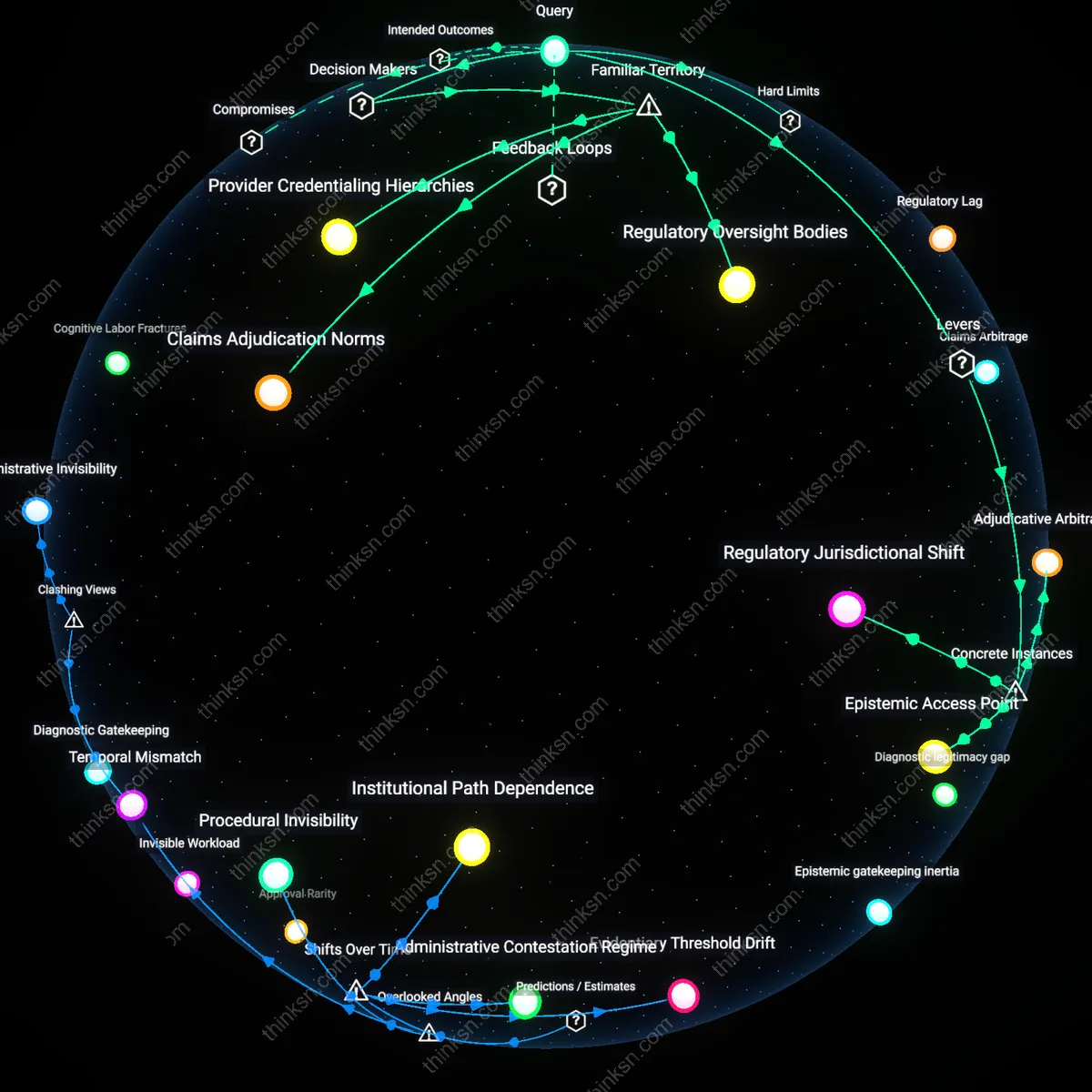
Epistemic Access Point
A consumer should seek independent review immediately after a denial based on algorithmic risk stratification, such as when Humana’s predictive model flagged low utilization in Texas in 2021 to justify termination of dementia-related care, because algorithmic justifications obscure clinical rationale and shift the burden of proof to the beneficiary, and only external experts can deconstruct the model’s operational logic; this highlights that technical illegibility, not medical disagreement, is the core barrier in data-driven denials.
Regulatory Jurisdictional Shift
A consumer should seek independent review when a long-term care denial originates in a state-run managed care organization, such as Michigan’s MLTC program under DMAS in 2017, where budget-driven eligibility tightening bypassed federal Medicaid comparability requirements because state-level fiscal pressure produces denials unreviewable under federal standards, making third-party assessment the only mechanism to trigger cross-jurisdictional scrutiny; this exposes how fiscal federalism creates blind spots in accountability that external actors can momentarily illuminate.
Regulatory Oversight Bodies
A consumer should seek an independent third-party review of a denied long-term care claim immediately after exhausting internal appeals, because oversight entities like state insurance departments and federal CMS review units have legal authority to re-evaluate denials grounded in inconsistent policy application. These agencies formalize review through structured grievance procedures, enabling binding reversals when claims reflect systemic underassessment of eligibility criteria. The non-obvious insight is that these bodies are not merely arbiters but active architects of coverage standards, shaping what counts as legitimate care need through precedent-setting decisions.
Claims Adjudication Norms
A consumer should seek independent review when initial denials align with cost-containment patterns typical of private insurers, because standardized claims processing systems prioritize speed and uniformity over individual clinical nuance. Insurers like UnitedHealthcare and Genworth embed actuarial logic into decision pipelines, where algorithmic triage often overrides physician documentation. The underappreciated reality is that consumers invoke normative challenges—demanding human re-evaluation—not just to reverse outcomes but to disrupt institutional routines that treat idiosyncratic care needs as exceptions.
Provider Credentialing Hierarchies
A consumer should seek independent review when the original claim relied on care recommendations from providers lacking insurer-recognized credentials, because adjudication systems automatically discount evaluations from non-contracted or alternative medicine practitioners. The denial often stems not from medical insufficiency but from embedded hierarchies that privilege certain professional designations over others, especially in mental health and chronic pain contexts. This reveals how third-party review becomes a de facto appeal against professional gatekeeping, not just financial gatekeeping.