How Legal Costs Expose Power Imbalance in Immigration Court?
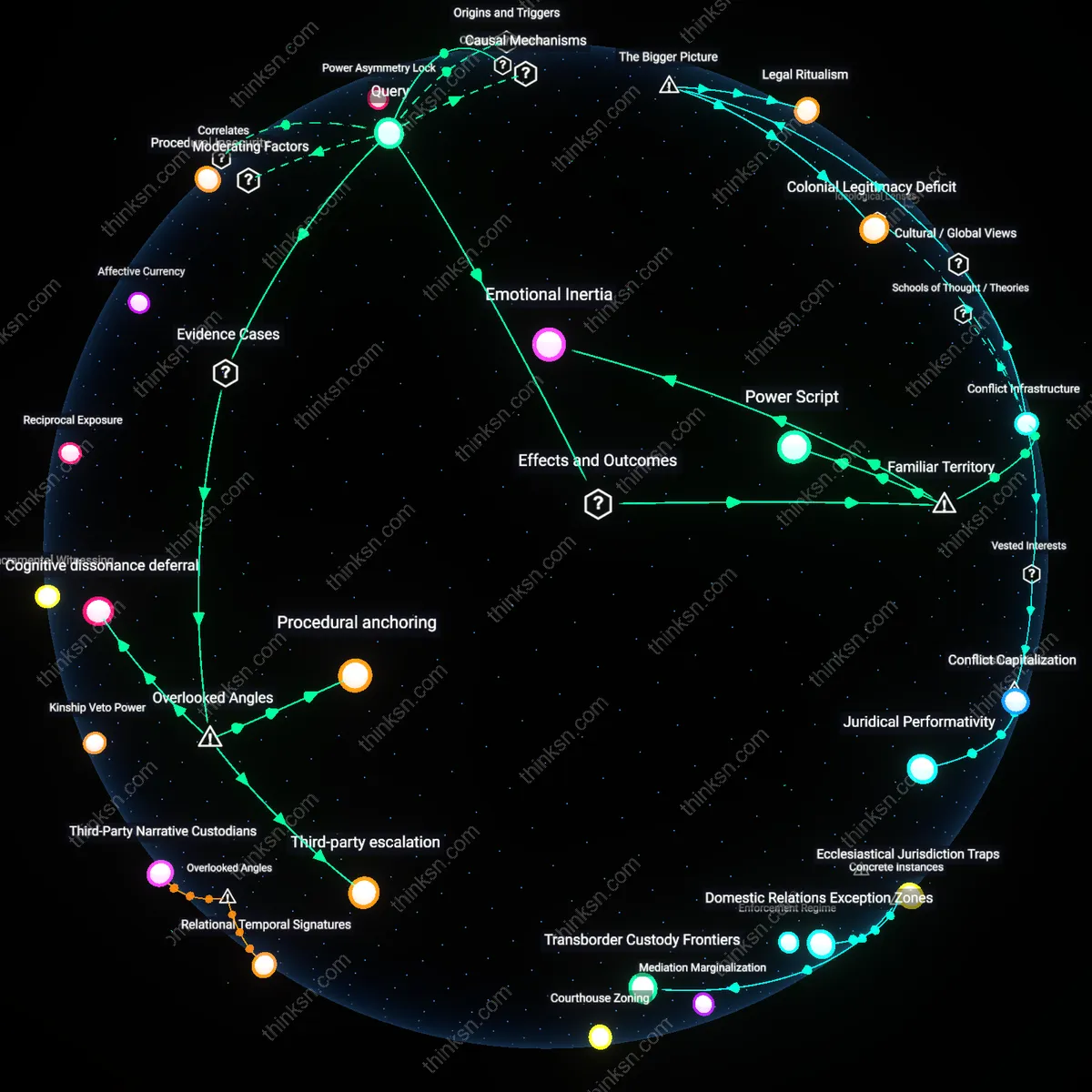
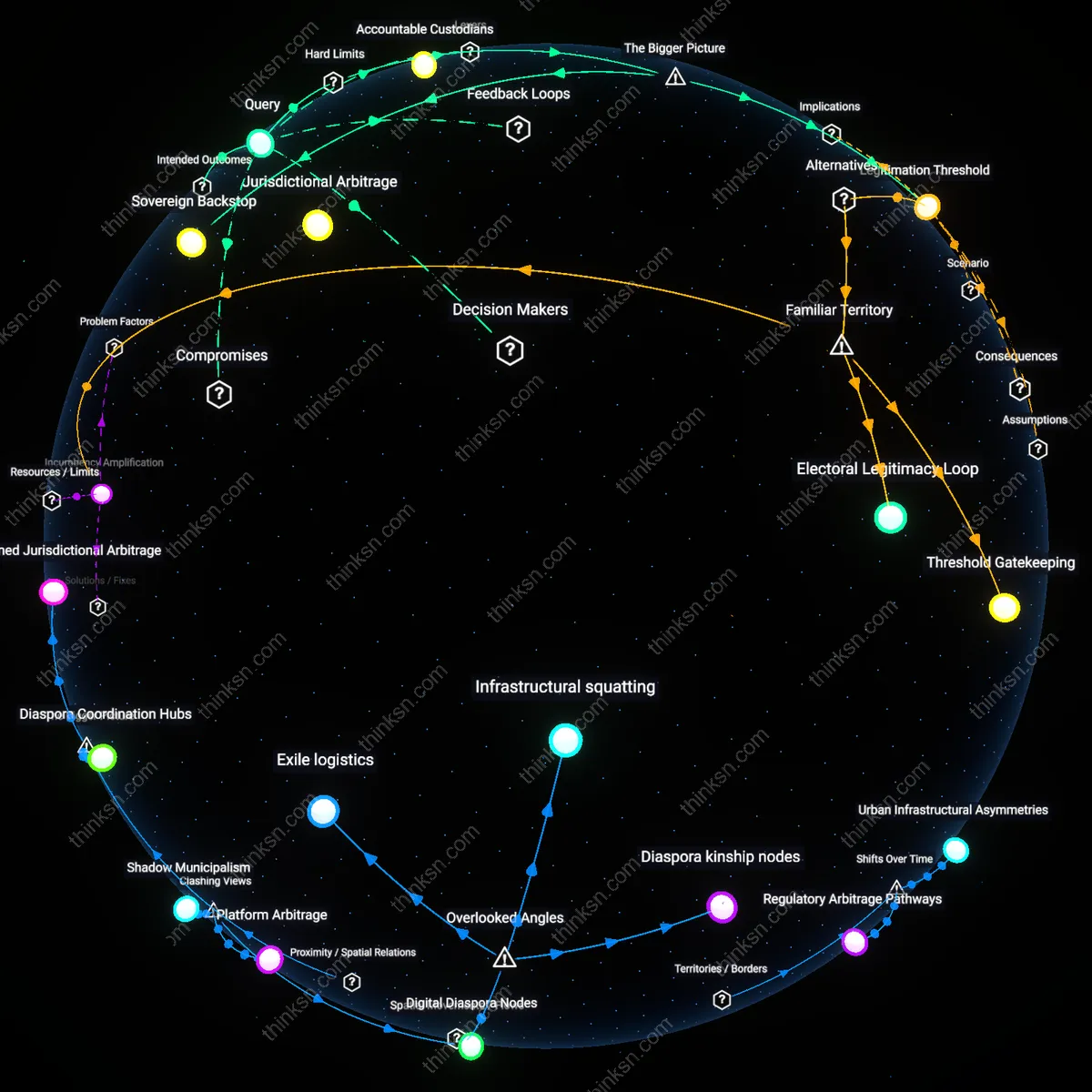
Analysis reveals 9 key thematic connections.
Key Findings
Procedural Erosion
The high cost of legal representation erodes the procedural integrity of immigration hearings by conditioning the quality of due process on financial capacity, thereby converting legal procedure into a transactional performance. Immigration judges, bound by minimal procedural standards and overwhelmed by caseloads, often rely on attorneys to construct a record that meets evidentiary and regulatory thresholds—tasks unrepresented respondents are structurally unable to fulfill, which normalizes substandard hearings as functionally acceptable. This dynamic is overlooked because legal access debates focus on equity or outcomes, not how representation shapes what counts as a 'valid' legal process; it changes the understanding of due process from a guaranteed right to a contingent, under-resourced performance. The non-obvious insight is that poverty doesn't just limit access—it degrades the very fabric of adjudicative legitimacy over time.
Judicial Resource Allocation
Wealth disparities in legal representation indirectly skew judicial time and administrative priority in immigration courts, because judges disproportionately allocate scarce attention and procedural latitude to cases where attorneys are present and able to leverage motions, deadlines, and legal citations. This creates a feedback loop where well-represented cases appear more 'manageable' and thus receive more calendar space and substantive engagement, while unrepresented cases are processed faster and with less scrutiny, reinforcing systemic neglect. This overlooked dependency—between attorney presence and judicial investment—reveals that power imbalance operates not only between individuals but through the redistribution of institutional attention, reshaping the speed and seriousness of adjudication based on classed legal capacity.
Pro Bono Incentive
The high cost of legal representation in immigration court strengthens the strategic value of pro bono work by elite law firms, who gain reputational capital and competitive advantage in corporate markets by selectively taking high-visibility immigration cases. Major U.S. law firms like those in the Am Law 100 increasingly deploy immigration litigation as a credentialing tool for junior associates and a public relations asset, leveraging the scarcity of affordable counsel to position themselves as indispensable interveners. This dynamic reframes unaffordability not as systemic failure but as a functional catalyst for professional distinction within the legal hierarchy, revealing how structural exclusion sustains institutional prestige.
Asylum Market Formation
The prohibitively high cost of immigration lawyers enables certain migrants with diaspora networks or future earning potential to treat legal representation as an investable asset, creating informal markets where community pooled funds or lenders finance defenses in exchange for future repayment or labor obligations. In cities like New York and Houston, rotating credit associations and faith-based collectives have emerged as shadow financiers of deportation defense, transforming legal access into a form of financialized social capital. This shifts the narrative from pure inequity to one where economic exclusion forces innovation in non-state financial intermediation, revealing how scarcity breeds parallel economies of survival.
Judicial Efficiency Feedback
The lack of affordable counsel in immigration courts increases procedural predictability for immigration judges and Department of Homeland Security attorneys, who face fewer motions, appeals, and discovery requests—resulting in faster case resolution and lower administrative backlog in overburdened courts like those in Arlington or Los Angeles. Without well-resourced challengers, systemic irregularities such as abbreviated hearings or patterned asylum denials go less contested, allowing the executive-branch-controlled system to operate with greater coherence and speed. This exposes how asymmetry in legal capability serves not just inequality but also institutional operational efficiency, making underrepresentation a feature in maintaining state procedural control.
Procedural Disenfranchisement
The mandatory detention of asylum seekers without appointed counsel at facilities like the Eloy Detention Center in Arizona systematically denies low-income migrants access to legal preparation, exposing how U.S. immigration law treats legal representation as a privilege rather than a right, which entrenches disadvantage through institutionalized procedural exclusion—despite constitutional due process norms applying selectively in immigration proceedings. This dynamic reflects a utilitarian legal doctrine that prioritizes state efficiency over individual rights, revealing how the absence of a Gideon v. Wainwright standard in civil immigration cases allows economic status to determine procedural survival, not merit of claim.
Litigation Stratification
In the 2018 Matter of J-E-C-M-, the Board of Immigration Appeals upheld restrictions on bond hearings for detained migrants, enabling private prison operators like GEO Group to profit from prolonged detention while wealthy individuals secure release and off-site legal coordination—demonstrating how neoliberal governance outsources immigration enforcement to for-profit entities that structurally incentivize the exclusion of low-income respondents. Rooted in libertarian legal thought that resists state-provided legal aid in civil matters, this system legally codifies a two-tiered forum where financial capital determines access to both liberty and legal strategy, a mechanism often obscured by formal claims of procedural neutrality.
Representation Apartheid
In New York City, where privately funded legal defense programs like The Legal Aid Society’s Immigration Law Unit operate alongside unregulated high-cost private firms, indigent migrants in Queens Criminal Court face deportation with overworked public advocates, while wealthier clients in Manhattan engage boutique immigration attorneys to delay and reframe cases—this geographic and resource bifurcation reveals a Rawlsian failure of fair equality of opportunity within a single jurisdiction. The coexistence of effective and ineffective representation within the same legal framework underscores a distributive injustice where market-driven access to counsel, not moral or legal desert, determines residency outcomes, a systemic contradiction normalized under liberal pluralism.
Status Timing Arbitrage
High-net-worth clients represented by firms such as Fragomen leverage premium processing and concurrent application strategies to maintain lawful status indefinitely while claims wind through courts in cities like Chicago and Washington, D.C. This legal temporality—extending eligibility for work permits, travel, and residence—grants functional stability that poor respondents, facing expedited dockets and no continuity of counsel, cannot replicate. The underappreciated point is that wealth does not just buy better arguments; it buys time, turning procedural delays into a privileged form of de facto permanence.