Why High-Conflict Couples Choose Court over Mediation?
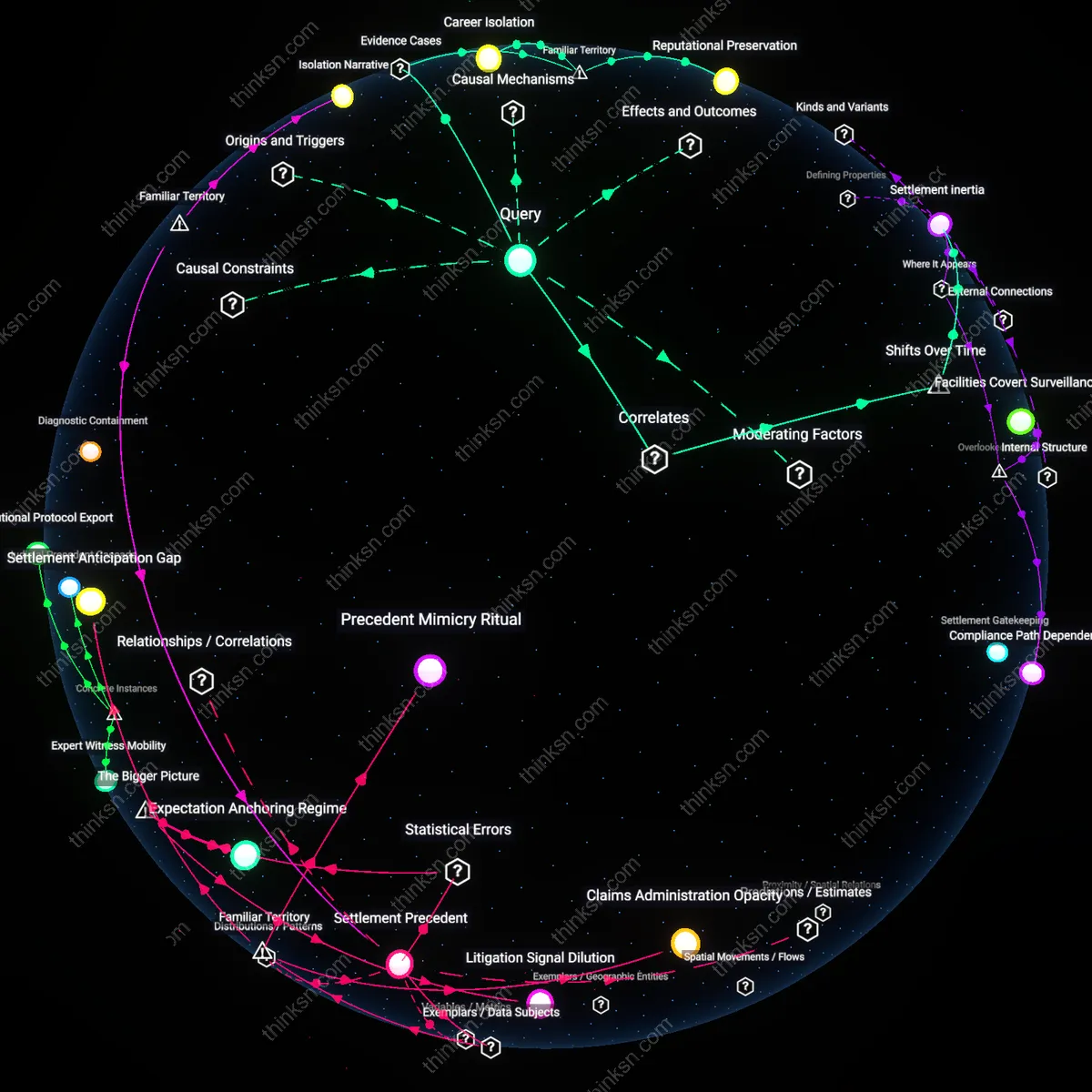
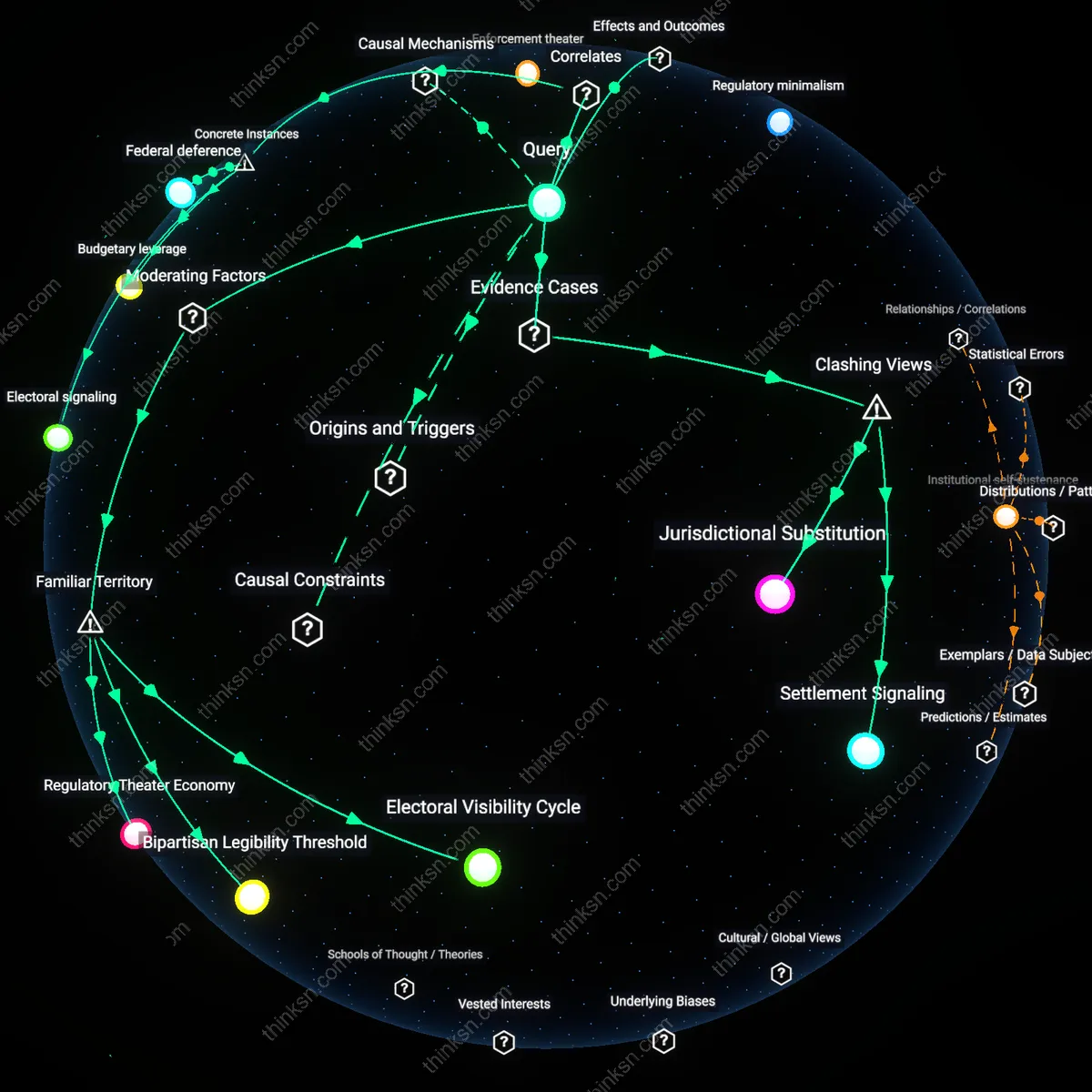
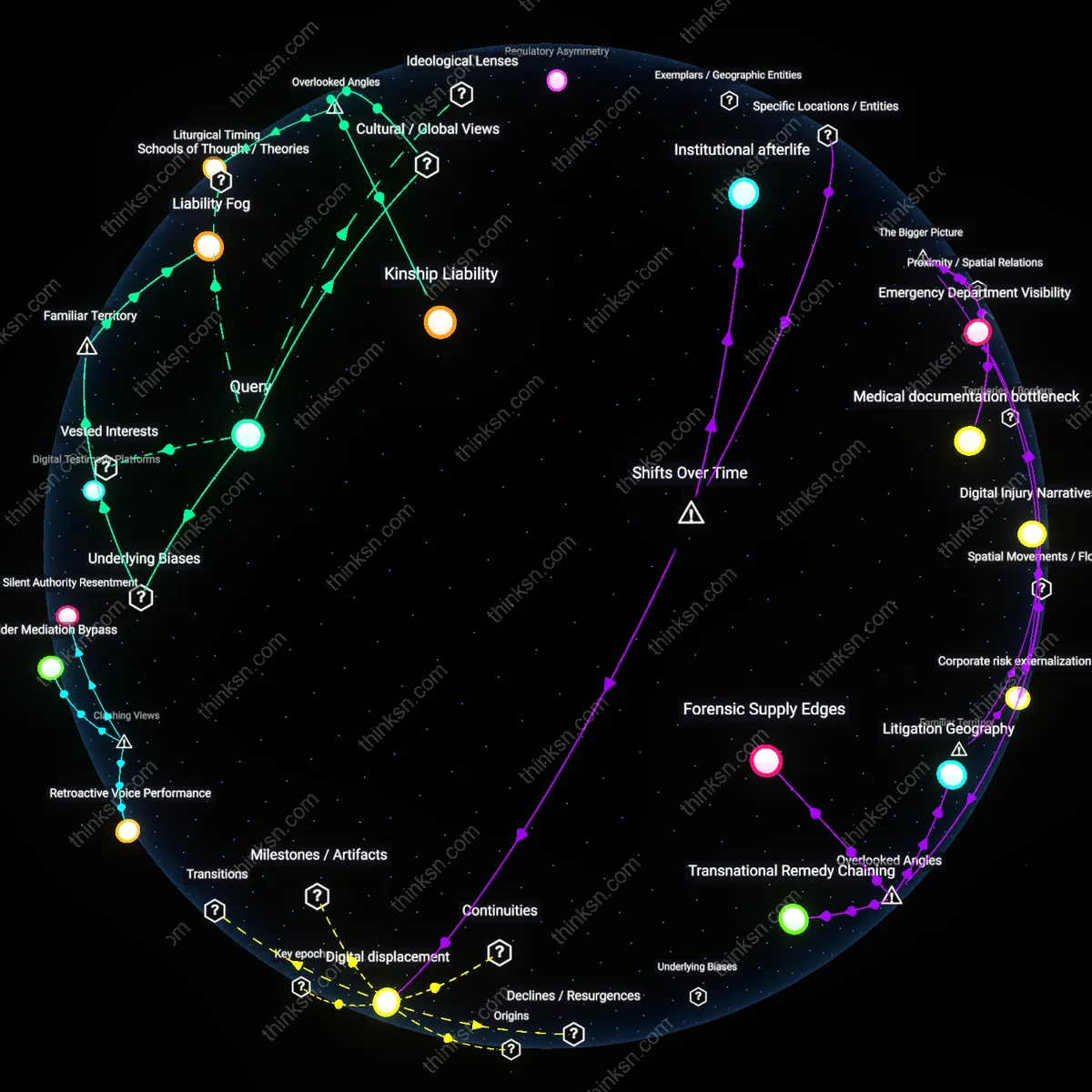
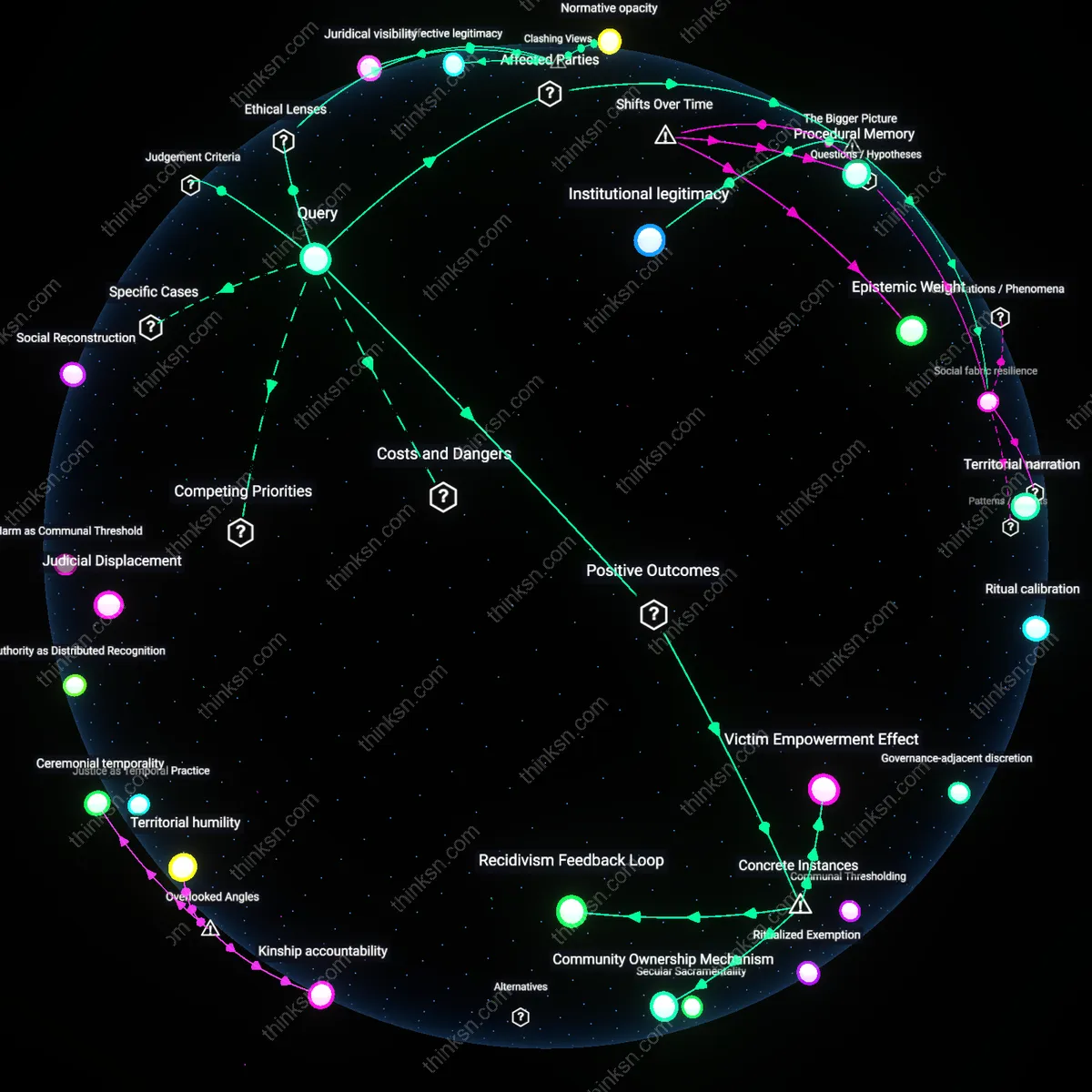
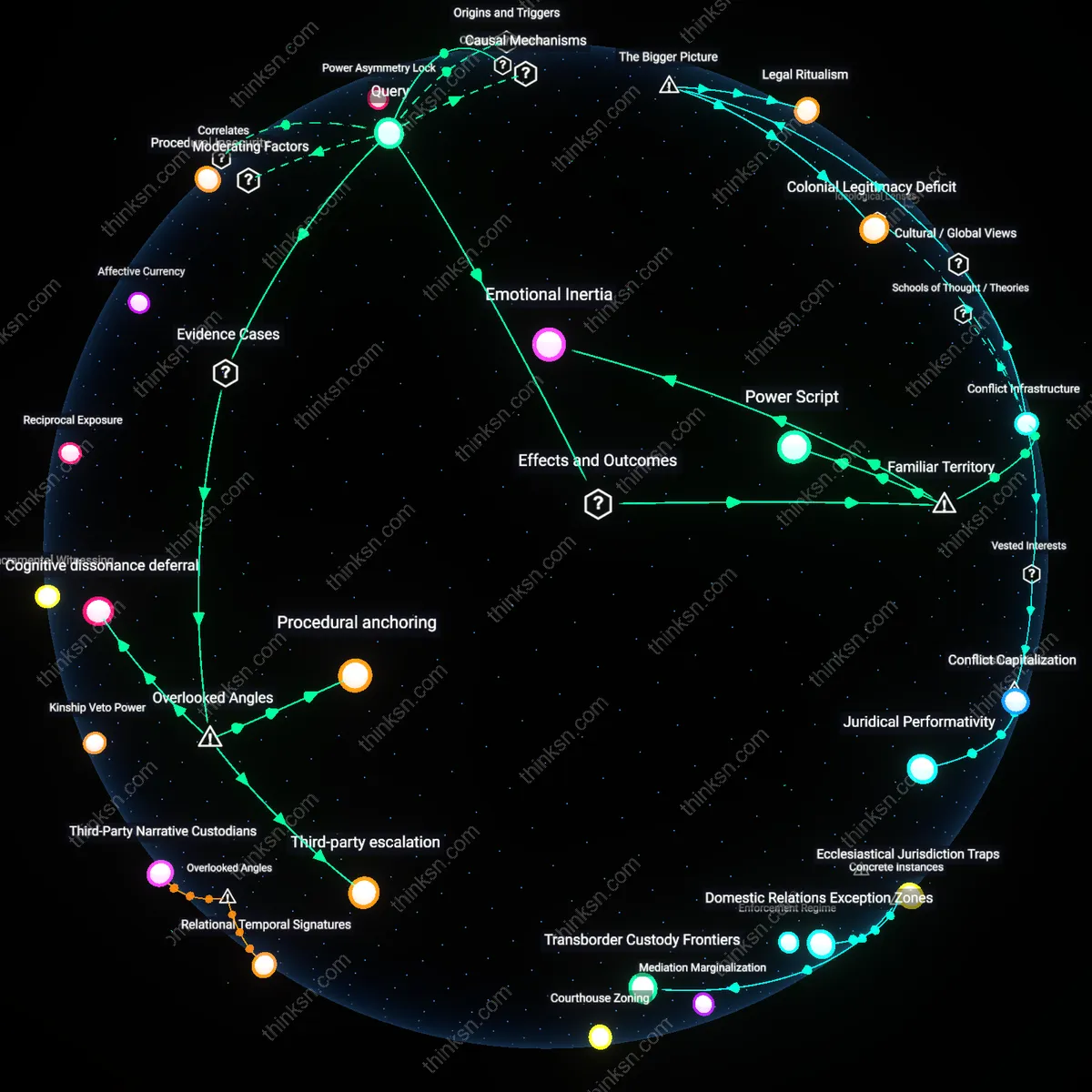
Analysis reveals 9 key thematic connections.
Key Findings
Emotional Inertia
High-conflict couples choose litigation because the adversarial structure mirrors their existing relational dynamics, allowing them to avoid the emotional reorientation mediation demands. The courtroom ritualizes blame, giving both parties an accepted venue to express grievances without requiring mutual accountability, which sustains their entrenched positions. This perpetuates conflict as a form of familiar emotional labor, where the real cost is not financial but the inability to access resolution that requires vulnerability. What's underappreciated in public discourse is that satisfaction with mediation often reflects post-settlement relief, not the process itself—people recall less pain from mediation not because it worked better emotionally, but because it ended sooner.
Power Script
Litigation remains the default preference for high-conflict couples because it preserves established hierarchies and control mechanisms visible in legal rulings, unlike mediation’s emphasis on consensus, which feels like capitulation to dominant personalities. Courts produce authoritative third-party validation, allowing individuals to frame outcomes as externally imposed rather than personally negotiated, protecting self-image even in loss. Mediation, by contrast, exposes the absence of unilateral victory, threatening identity narratives built on righteous opposition. In common experience, this is masked by the assumption that 'winning' is irrelevant—the real draw of court is the power to resist equals, a dynamic rarely acknowledged in discussions of dispute resolution.
Conflict Infrastructure
Litigation is sustained by a visible, institutional ecosystem—lawyers, court dates, filings—that gives high-conflict couples the tangible sensations of progress and action, whereas mediation’s minimalist framework feels inconsequential, even when more satisfying later. The legal process generates documents, deadlines, and drama that become markers of commitment, making abstention from litigation seem like surrender. People default to courts not because they distrust mediation’s outcomes, but because they need a socially legible performance of effort. What escapes common awareness is that satisfaction metrics in mediation often measure reduced stress after resolution, not engagement during it—the system is optimized for closure, not psychological engagement in motion.
Procedural Insecurity
High-conflict couples in Florida counties with mandatory mediation pilot programs often bypass mediation because the informal setting fails to validate their perception of injury, as seen in the 2004–2007 Miami-Dade Family Courthouse initiative where participants equated legal ritual with legitimacy; this mechanism reveals that procedural formality, not outcome satisfaction, becomes a non-negotiable prerequisite for engagement when identity is bound to grievance.
Power Asymmetry Lock
In high-conflict divorce cases involving coercive control, such as those documented in the 2016 Minnesota Restorative Court Experiment, dominant partners who derive authority from adversarial leverage refuse mediation because it disrupts their capacity to exploit procedural advantages in discovery and delays; this dynamic shows that mediation cannot proceed when one party relies on litigation’s structural opacity to maintain dominance.
Narrative Incompatibility
The 2009 British Columbia Civil Resolution Tribunal observed that high-conflict separating couples who had already constructed self-justifying narratives through online forums like ‘WrongedParents.ca’ rejected mediation because it required mutual recognition, which contradicted their entrenched identity as victims; this reveals that pre-litigation storytelling in digital echo chambers creates a causal bottleneck by foreclosing the epistemic humility necessary for mediated dialogue.
Procedural anchoring
High-conflict couples prefer litigation because court procedures validate their entrenched narratives through formal recognition, as seen in adversarial divorce cases in family courts in jurisdictions like Cook County, Illinois, where petitioners frequently describe the judicial process as affirming their victim status even when outcomes are unfavorable; this mechanism operates through institutional ritual rather than rational cost-benefit analysis, revealing that perceived legitimacy of conflict validation often outweighs satisfaction with resolution quality—a dimension typically ignored in mediation advocacy, which assumes parties seek efficient settlements rather than narrative confirmation.
Third-party escalation
In high-conflict separations such as those involving contested custody in the Toronto Family Court system, attorneys and forensic evaluators often benefit financially and professionally from prolonged disputes, creating covert incentives to sustain conflict; because mediators earn less and wield less authority, the ecosystem of experts around litigation actively resists mediation uptake, a dynamic rarely examined in policy discussions that focus only on the disputants—this exposes a hidden principal-agent distortion where professional intermediaries, not the couples themselves, functionally drive the preference for litigation.
Cognitive dissonance deferral
Parties in high-conflict relationships, such as those documented in longitudinal studies from the Harvard Negotiation Project, often avoid mediation because its collaborative format forces acknowledgment of mutual responsibility, threatening deeply held self-justifying beliefs; litigation, by contrast, outsources blame attribution to a judge, allowing individuals to maintain internal consistency without confronting their own role in the conflict—a psychological safety valve that standard models overlook when they treat dispute resolution mode choice as purely strategic or economic rather than as a mechanism of self-concept preservation.