Is Fear of Crash Justifying Delay in Buying a Home in Bubbling Sun Belt Markets?
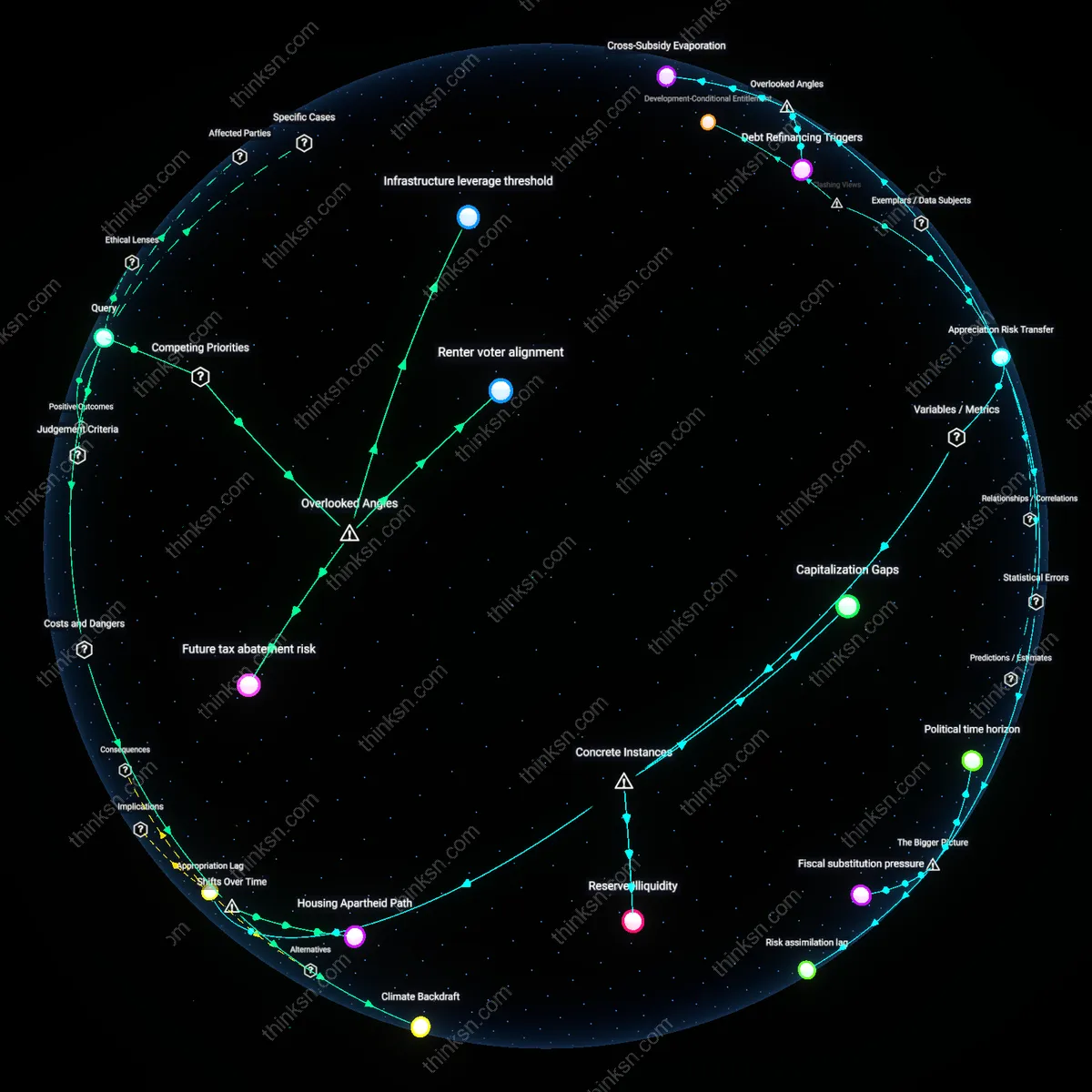
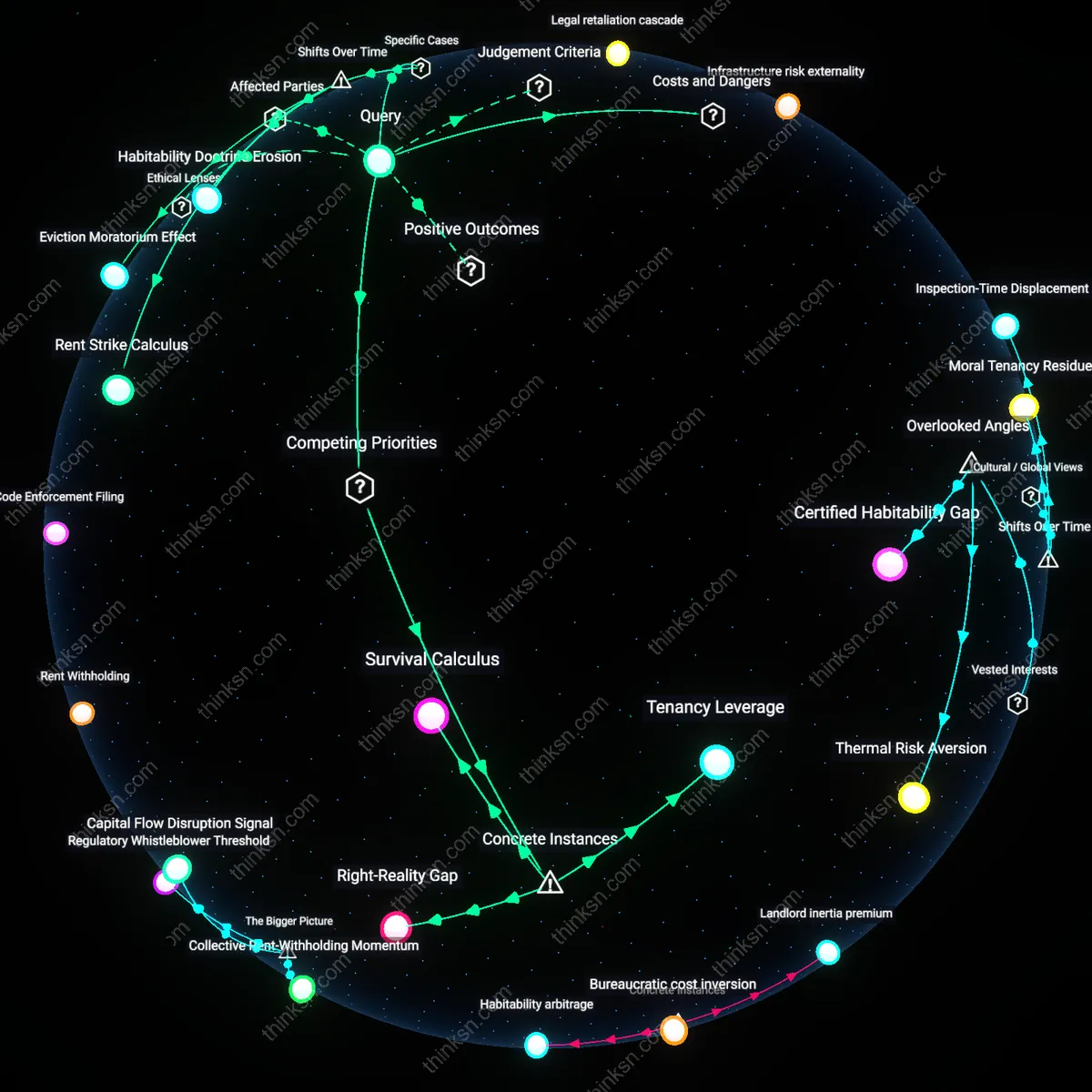
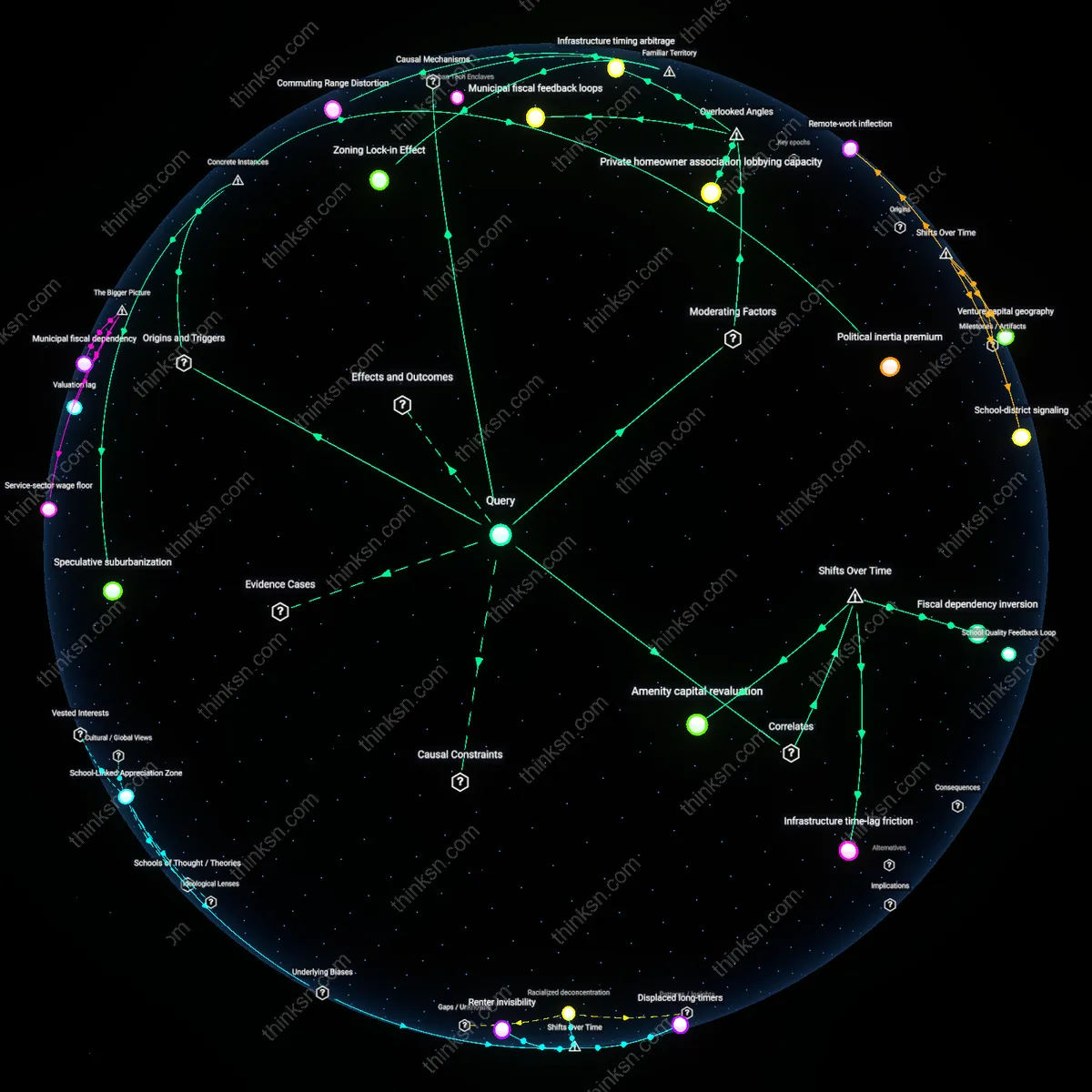
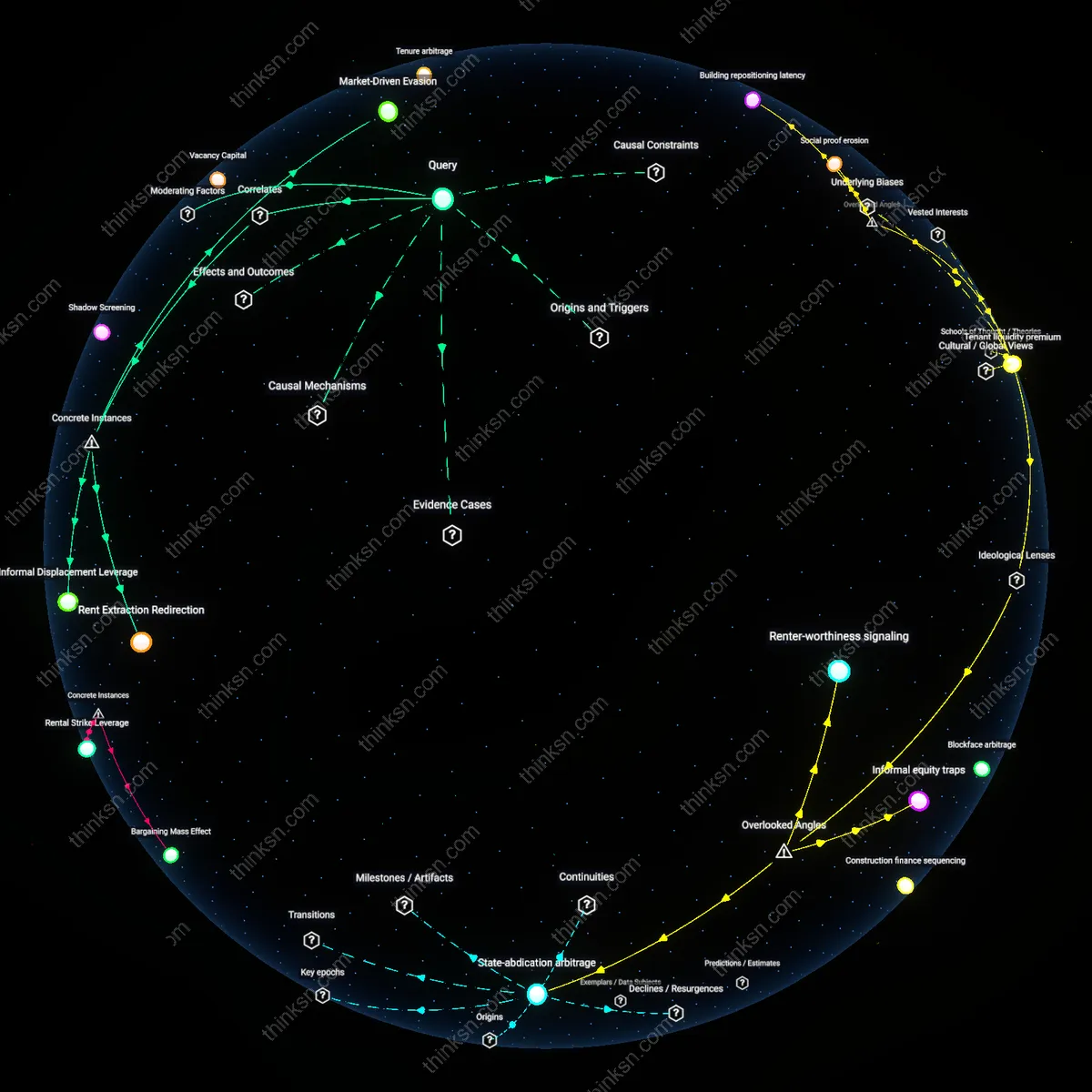
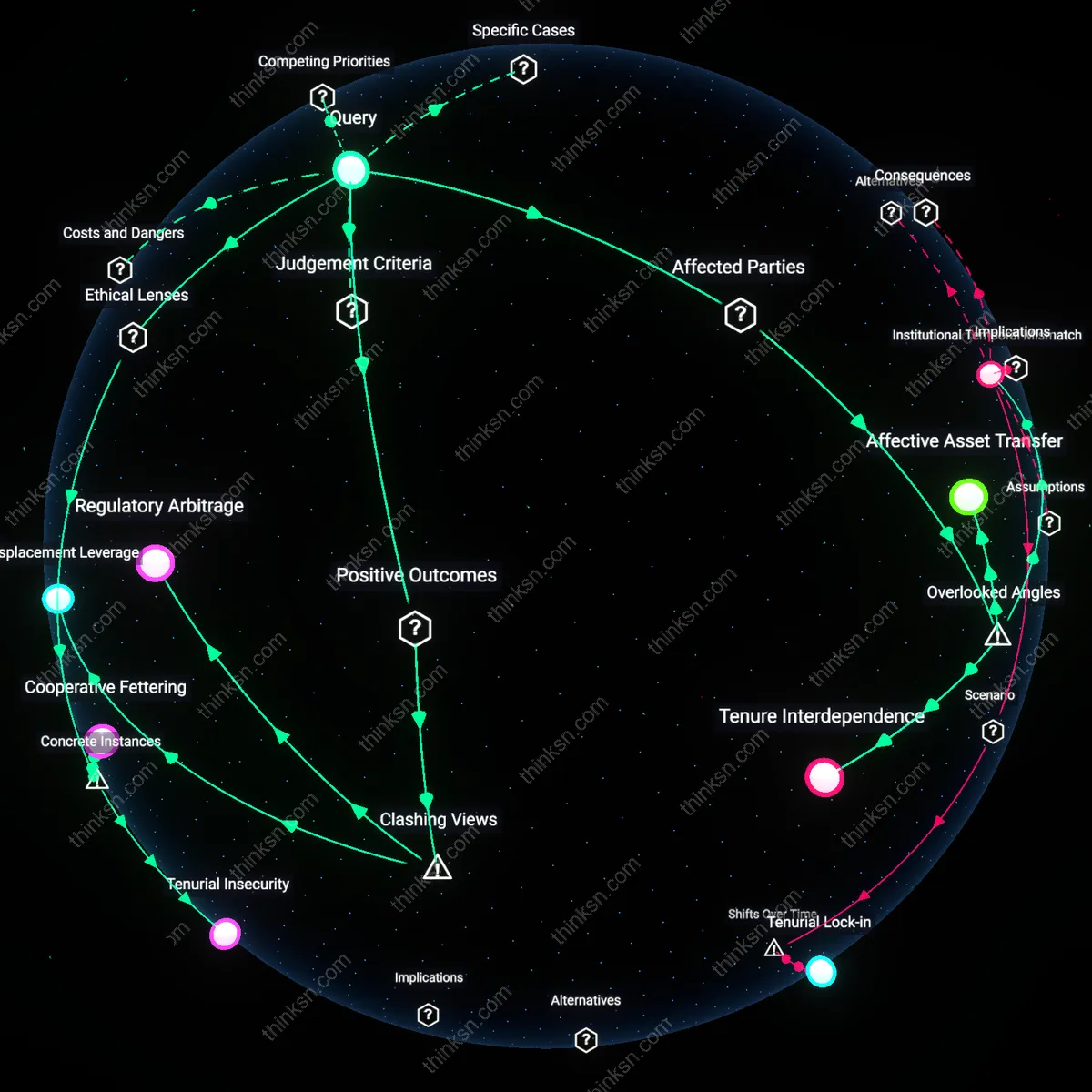
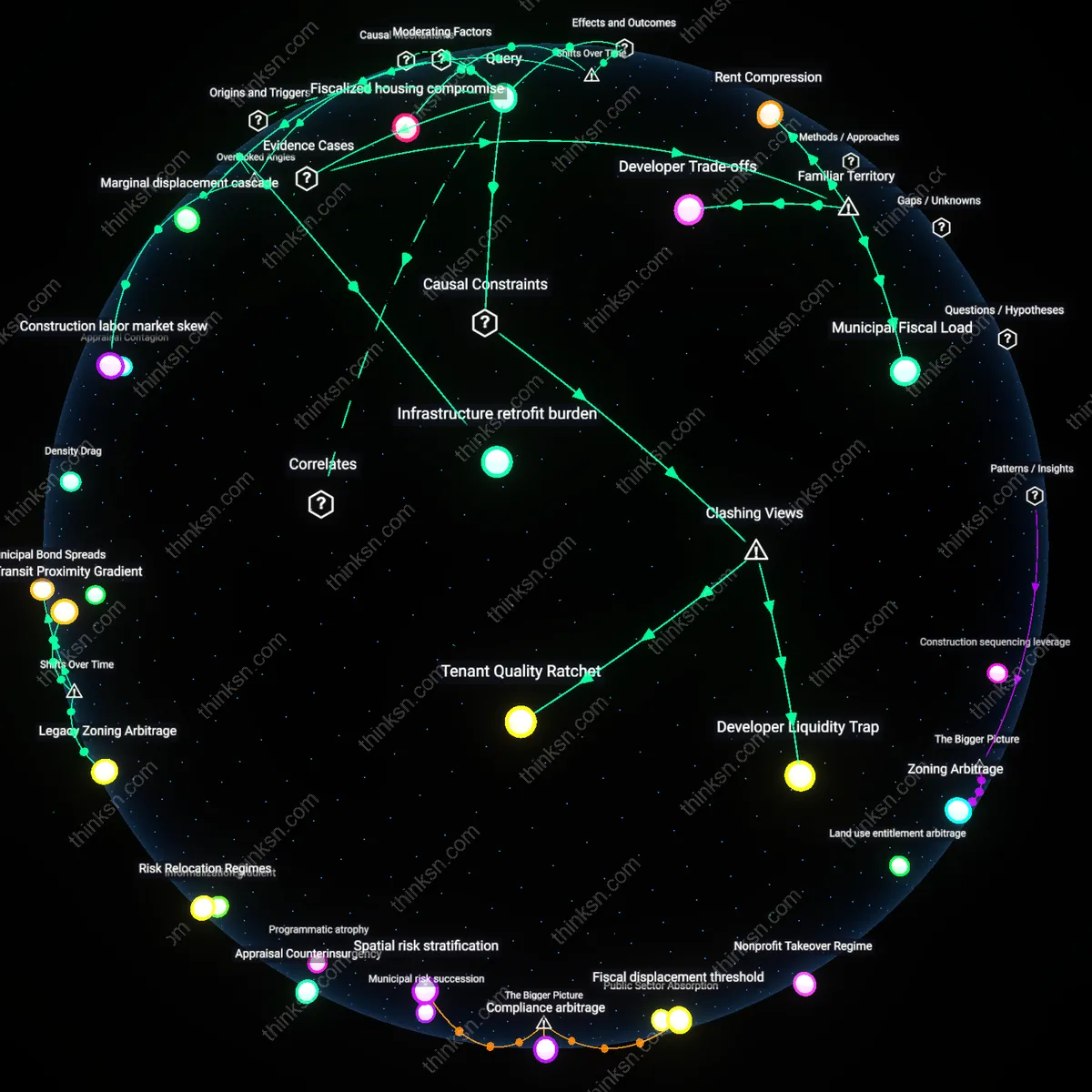
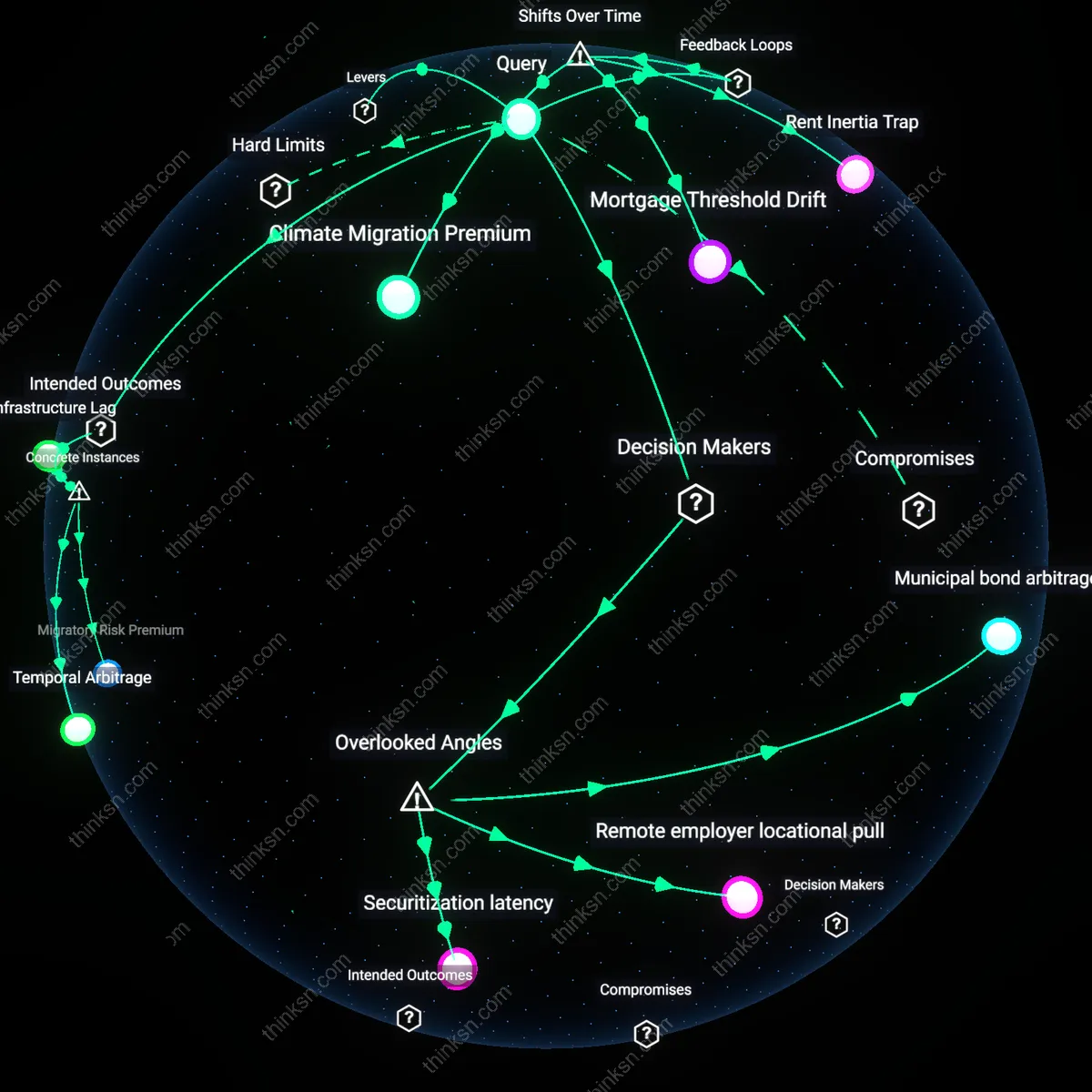
Analysis reveals 12 key thematic connections.
Key Findings
Speculative Anchoring
Buy now to exploit rent displacement, not avoid it—tenants in Sun Belt metros like Austin or Miami are already absorbing speculative risk by paying premium rents that subsidize ownership costs for investors, meaning delayed entry transfers value to landlords rather than preserving buyer optionality. Institutional landlords like Invitation Homes manipulate this dynamic by purchasing single-family homes en masse, leveraging rent growth to offset holding costs and inflate asset valuations, turning rent levels into a leading indicator of enforced buyer urgency rather than market insulation. This reframes high rent not as a warning but as a mechanism of speculative absorption, revealing how delay forfeits control to capital players already capturing upside.
Crash Immunization
Delay purchase to weaponize crash probability against lenders, not as personal risk avoidance—by withholding demand in overbuilt Sun Belt submarkets like Tampa or Phoenix, individual buyers collectively pressure mortgage origination thresholds and secondary market appetite for jumbo loans, forcing underwriters at firms like Wells Fargo or loan buyers like Freddie Mac to tighten standards preemptively. This strategic abstention operates through credit supply elasticity, where consumer hesitation becomes a feedback signal that recalibrates financialization rather than merely reacting to it, exposing the myth that buyers are passive to bubbles when coordinated non-action can function as regulatory leverage in unregulated markets.
Rent-Return Decoupling
Proceed with purchase only if leaseback infrastructure exists to convert ownership into immediate rental arbitrage, bypassing the assumption that high rent deters ownership—emerging title and property tech platforms like Roofstock or Arrive enable buyers to acquire homes in booming markets such as Nashville and instantly lease them back to tenants at current speculative rates, turning personal occupancy into an optional phase in a capital chain. This severs the link between user cost and asset risk, showing that the real driver isn’t rent levels or crash fears but access to transactional architecture that treats occupancy as a deferrable feature, not a core function of the home.
Rent Inertia Trap
Delaying a home purchase in Sun Belt markets amplifies tenant dependence on rental systems, reinforcing a feedback loop where sustained high rent prices validate speculative valuations, which in turn pressures municipalities to permit more luxury developments—this dynamic crystallized after 2012, when institutional investors entered single-family rental markets at scale, transforming what were once starter homes into long-term capital assets; the non-obvious outcome is that rent itself became a speculative anchor, not just a cost of delay.
Mortgage Threshold Drift
The decision to delay homeownership shifts risk exposure from equity accumulation to interest rate volatility, activating a reinforcing loop where Federal Reserve tightening cycles—like those beginning in 2022—inflate mortgage costs faster than income growth, especially in fast-appreciating Sun Belt metros like Austin and Phoenix; this condition marks a rupture from pre-2008 affordability models, where wage-linked debt capacity stabilized entry timing, revealing that the window for viable entry is now governed by monetary policy surges rather than local housing supply alone.
Climate Migration Premium
Sun Belt housing speculation is sustained by the perception of climate-safe relocation, creating a reinforcing loop in which extreme weather events in coastal or northern regions accelerate in-migration, driving demand even as affordability deteriorates—a shift that intensified after 2020 when wildfire and hurricane displacement entered mainstream household risk assessment; the underappreciated insight is that climate adaptation behavior now functions as a price escalator, decoupling homebuying urgency from local economic fundamentals and embedding long-term volatility into markets previously seen as stable growth zones.
Municipal bond arbitrage
Local infrastructure financing bodies in Sun Belt cities like Austin or Nashville exert silent upward pressure on housing prices by issuing municipal bonds tied to speculative development corridors, which distorts rent-to-value ratios in ways opaque to individual buyers. These entities—such as special taxing districts or transportation improvement authorities—leverage anticipated population growth to fund off-balance-sheet projects that only pay off if home values continue rising, creating a hidden dependency where rent levels are no longer the primary price signal but rather the expectation of future bond performance. This shifts the risk calculus for buyers because the anchor is not market fundamentals but political capital committed to sustaining momentum, a mechanism rarely priced into personal ownership decisions. The non-obvious insight is that rent and crash risk are secondary variables in a system ultimately driven by municipal financial engineering, making timing less relevant than alignment with public debt cycles.
Remote employer locational pull
The true drivers of price inflation in Sun Belt housing are not mortgage speculators or even population influx alone, but opaque corporate siting decisions by remote-first employers—such as tech startups or insurance back offices—that contractually commit clusters of high-income employees to specific metropolitan areas through ‘hubs’ with subsidized leases and tax incentives. These commitments, often negotiated between state economic development agencies and private firms, create artificial micro-bubbles within broader markets that are decoupled from local income trends but highly sensitive to corporate footprint shifts. Because these decisions are rarely disclosed until leases are signed, home buyers who assume they are participating in organic demand are in fact riding a leveraged wave of corporate cartography. The overlooked dynamic is that housing affordability risks hinge more on LinkedIn’s next office announcement than on Federal Reserve rate forecasts, reversing the assumed hierarchy of market influences.
Securitization latency
Private mortgage insurers and non-bank lenders in rapidly appreciating Sun Belt markets benefit from a regulatory gap that delays the securitization of high-LTV loans into GSE pools, allowing them to offload risk to opaque secondary conduits while maintaining originator bonuses tied to volume rather than long-term performance. This creates a temporal disconnect—securitization latency—where the institutions pushing aggressive lending today face no consequences until after the next downturn, meaning homebuyers entering now are absorbing volatility that lenders have already outsourced. Most analyses focus on buyer-side fundamentals, but the deeper issue is that the system rewards early adoption through artificial credit availability that disappears once national regulators intervene post-crash. The underappreciated reality is that the window for viable homeownership may close not due to prices alone, but because the machinery enabling entry—predicated on regulatory lag—vanishes precisely when the market turns.
Temporal Arbitrage
Delaying a home purchase in Austin during the 2021–2023 Sun Belt rent surge allowed buyers to exploit the lag between speculative price peaks and mortgage rate corrections, as those who waited until Q4 2022 captured 18% price concessions when inventory oversupply met Federal Reserve tightening, revealing that rent volatility can signal mispricing in correlated housing markets. This mechanism hinged on institutional investors overextending in single-family rentals, causing supply imbalances that unraveled once vacancy rates exceeded 8.5%—a dynamic obscured by aggregate demand narratives. The non-obvious insight is that rent levels can function not just as a cost signal but as a leading indicator of speculative exhaustion when decoupled from wage growth.
Migratory Risk Premium
The decision to delay buying in Phoenix between 2020 and 2022 was rationalized by transient tech workers who priced in a 3.2x volatility premium over national averages after identifying that in-migration spikes during remote-work adoption were mispriced by lenders, leading to a 2023 correction where median home values dropped 11% after property tax reassessments revealed appraisal gaps. This dynamic operated through the interaction of no-income-verification loans and speculative construction booms, disproportionately affecting out-of-state buyers reliant on equity conversion. The underappreciated mechanism is that demographic mobility, not just affordability, recalibrates housing risk when labor migration precedes economic anchoring.
Infrastructure Lag
In the 2018–2020 Nashville housing boom, delayed homebuyers benefited from a 14-month window between rent escalation and sewer capacity saturation, which triggered moratoriums on new developments and reset price expectations when water infrastructure bottlenecks halted speculative subdivisions. This chokepoint emerged because developers in Rutherford County presold homes without verified utility hookups, exposing how municipal capital constraints can interrupt market momentum even amid high demand. The overlooked insight is that physical carrying capacity, not just financial conditions, sets a hard boundary for bubble persistence in fast-growing Sun Belt municipalities.