Why Crisis Funds Favor Hotlines Over Community Counseling?
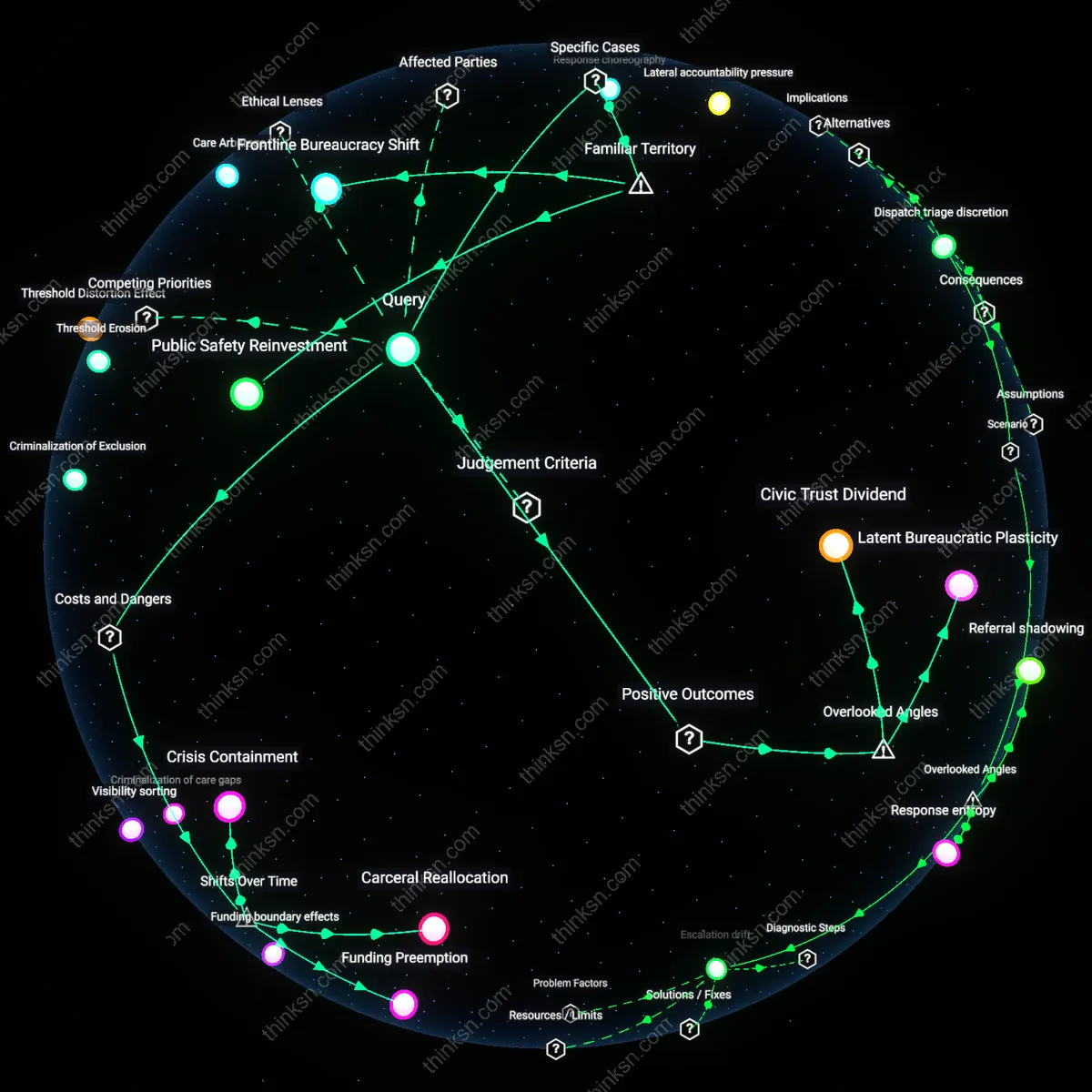
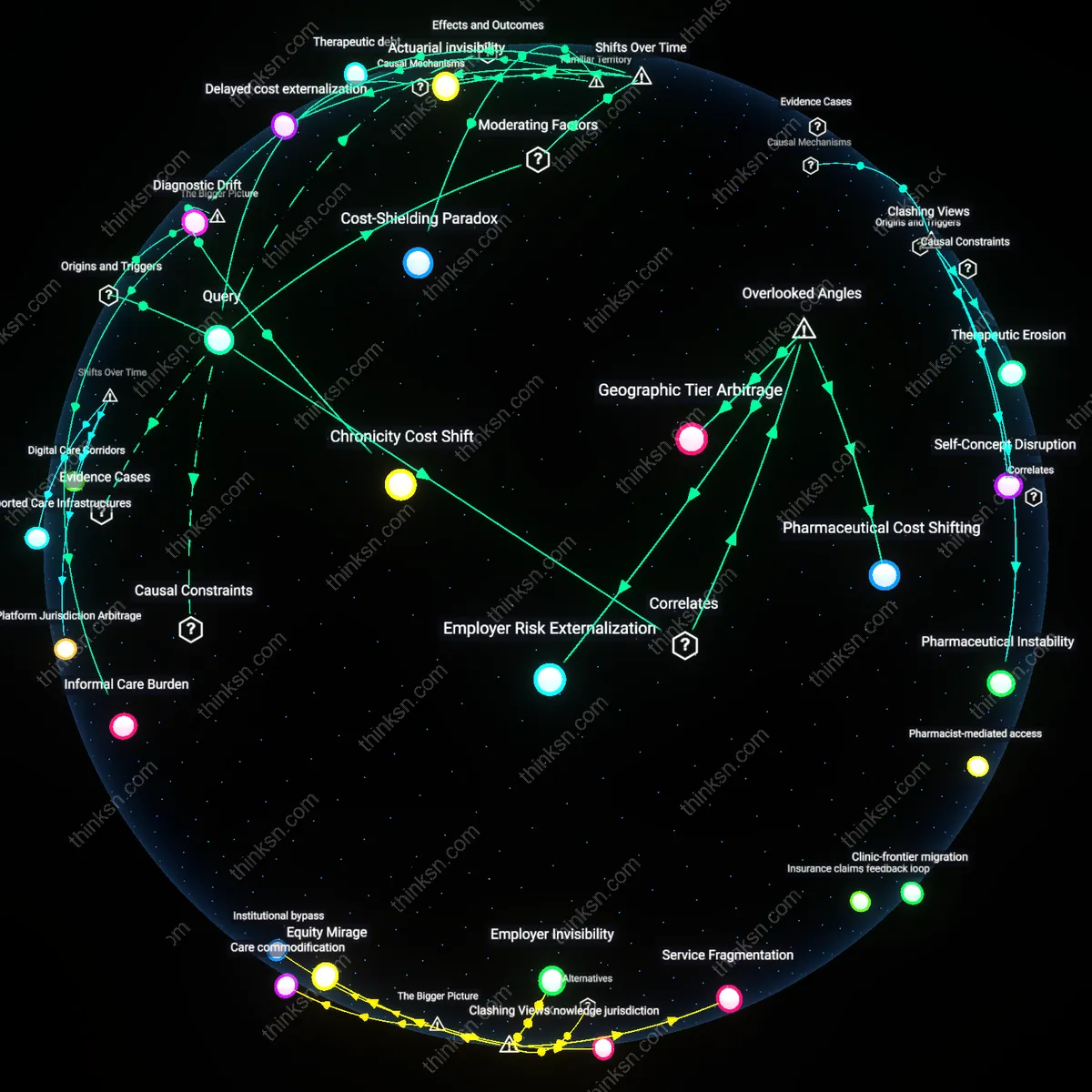
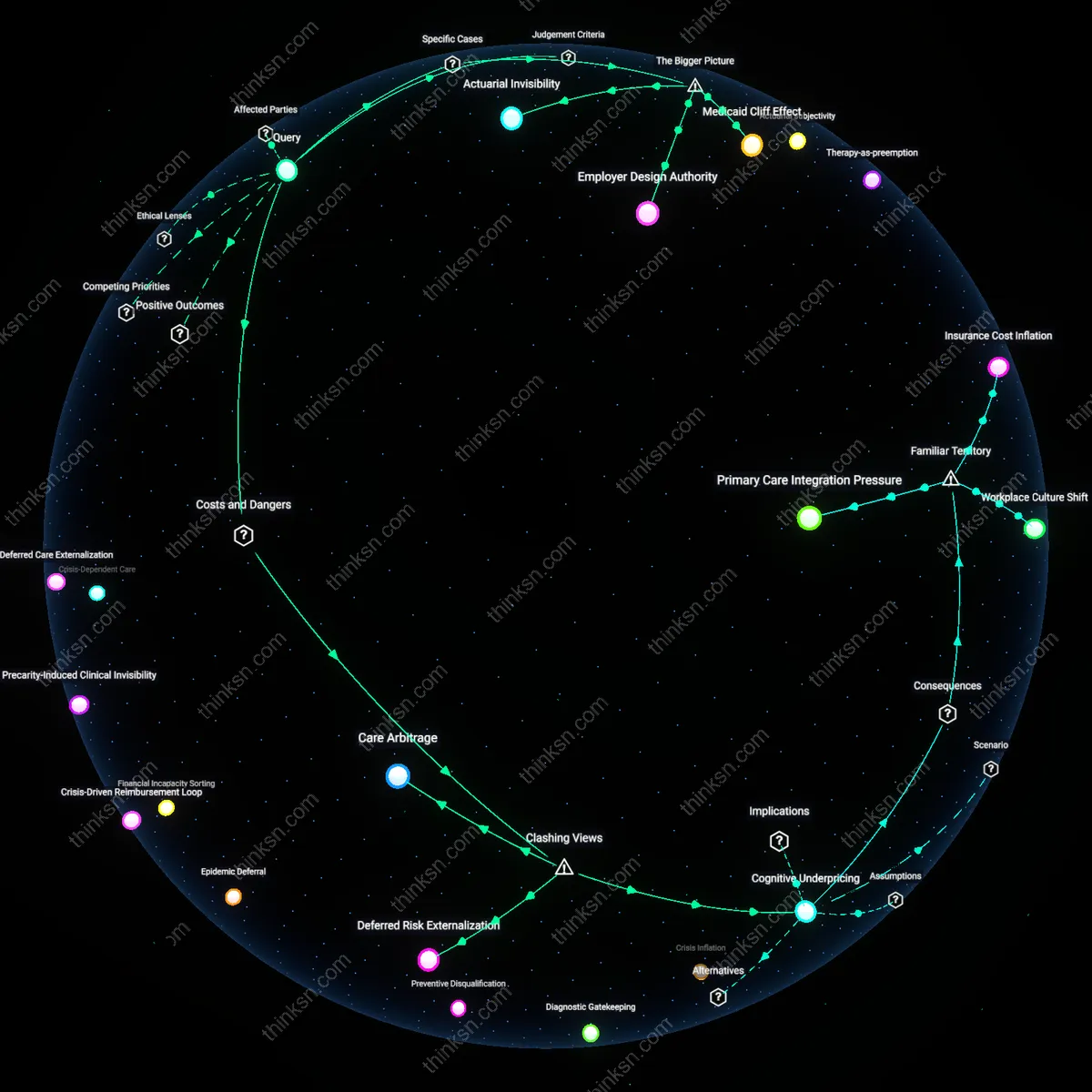
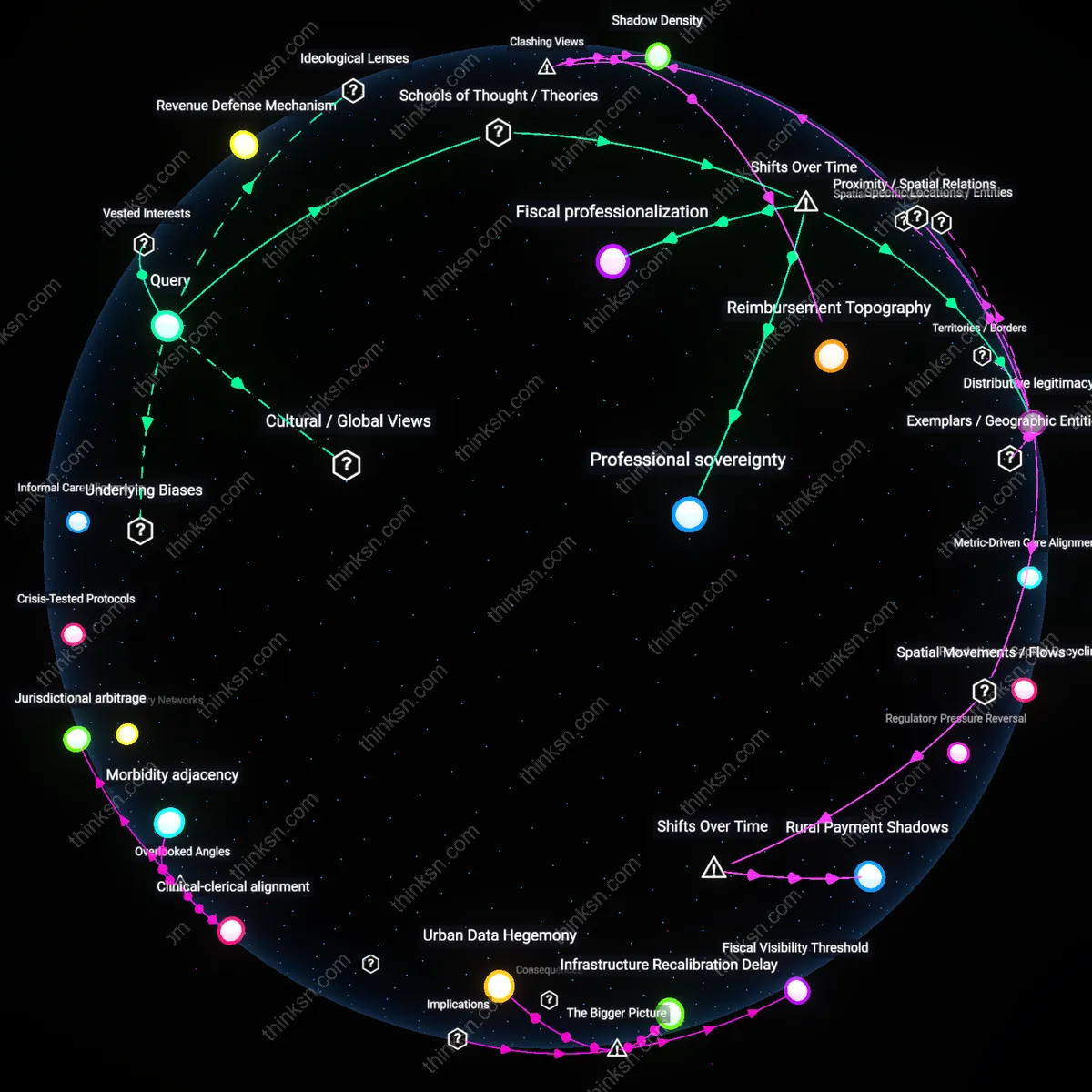
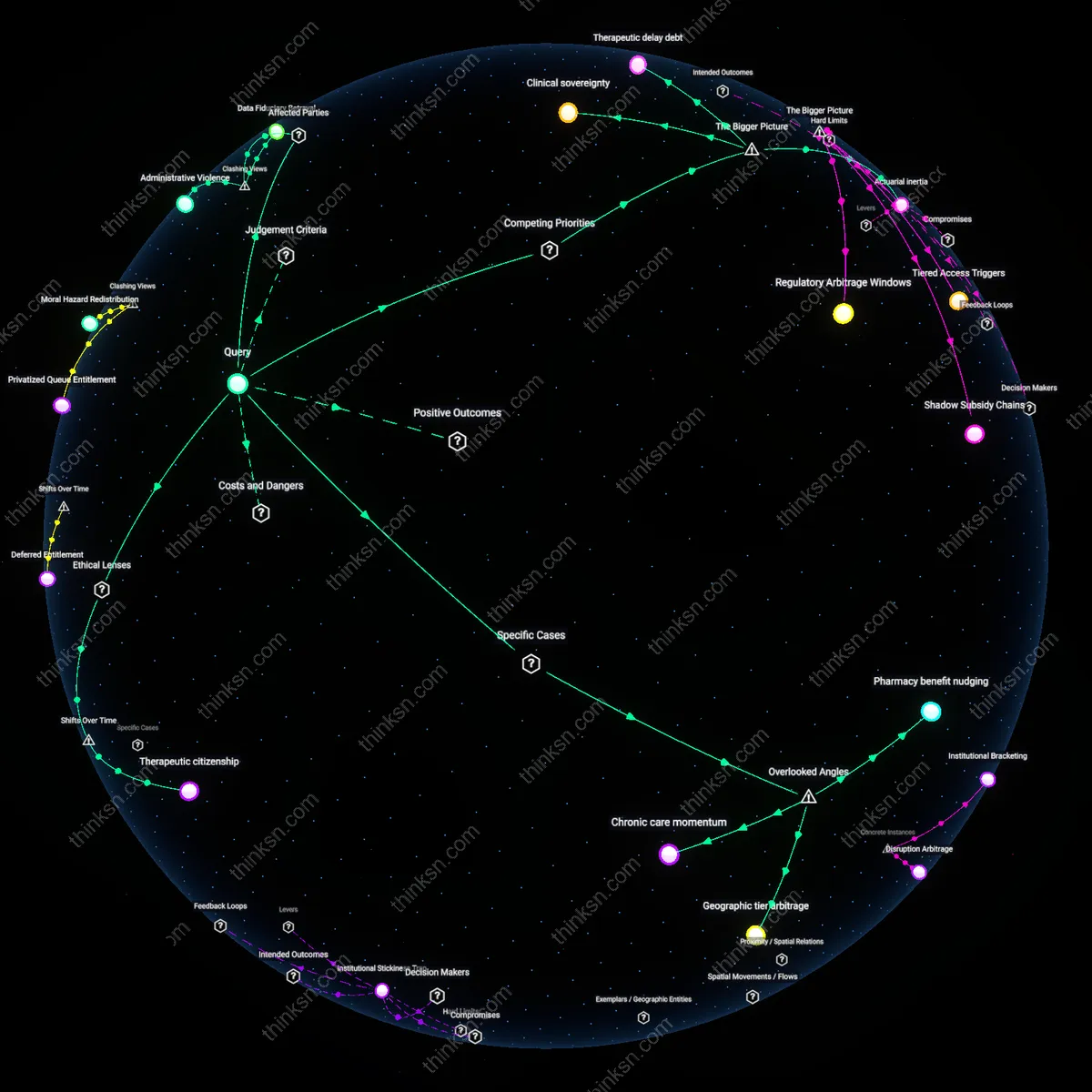
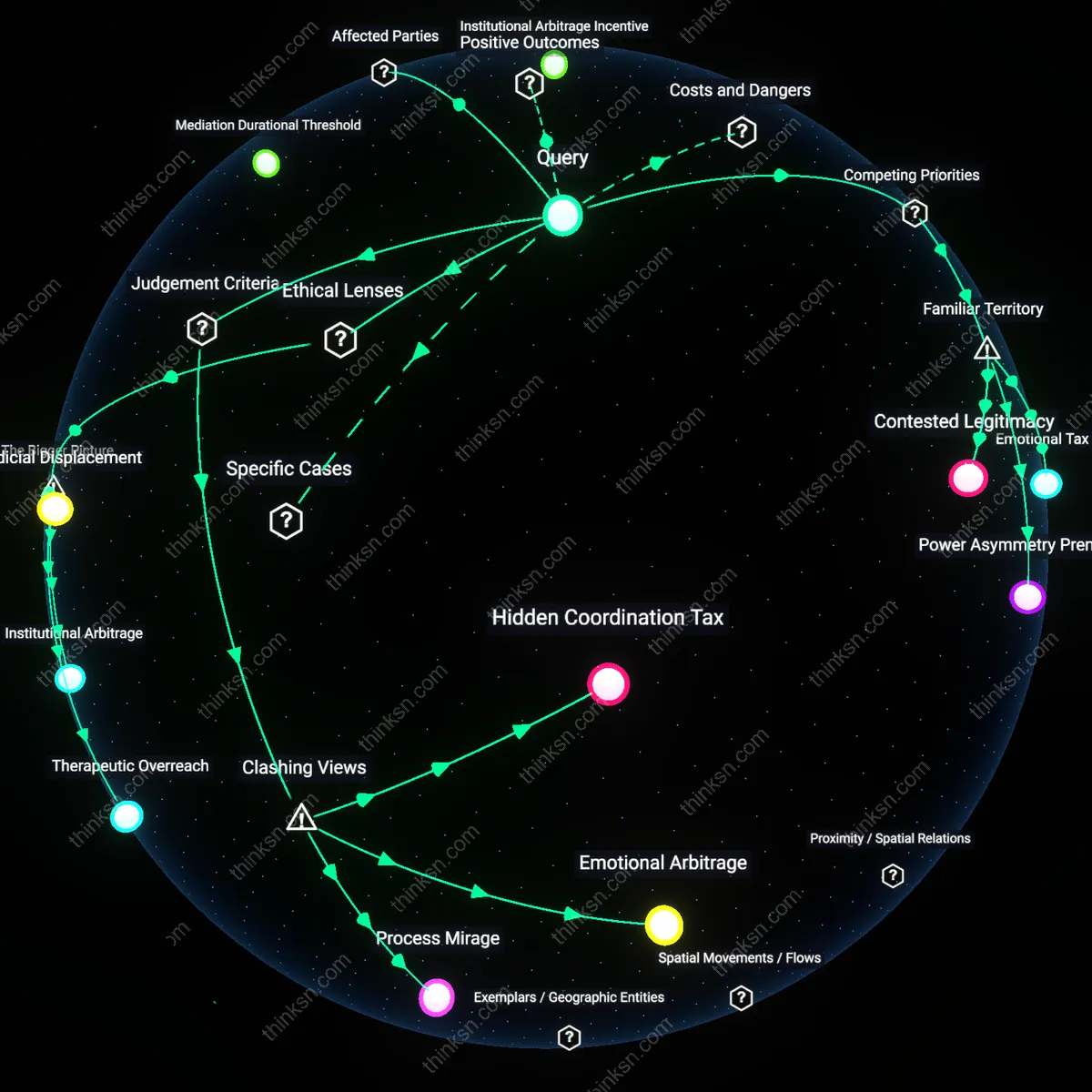
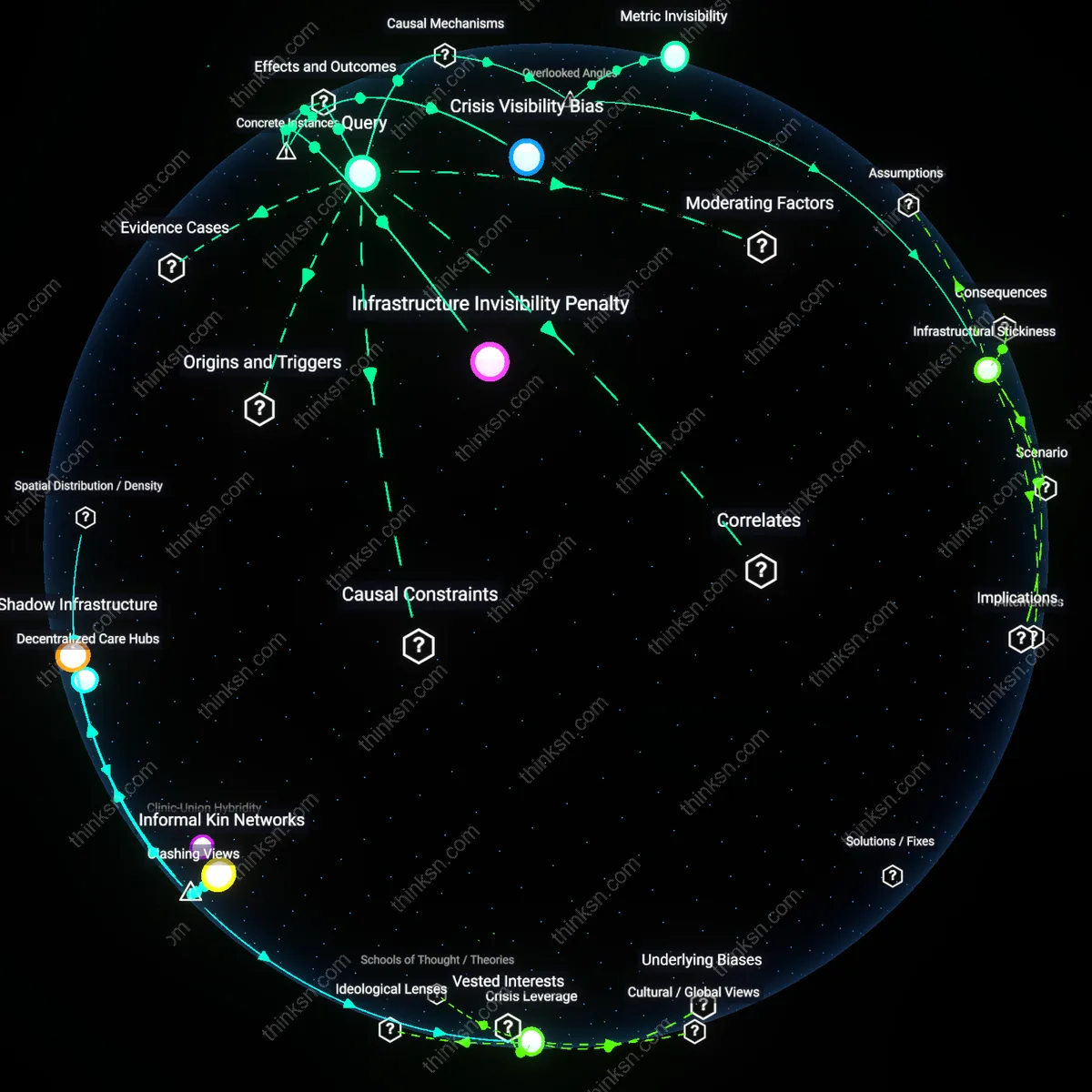
Analysis reveals 6 key thematic connections.
Key Findings
Infrastructural Stickiness
Mental-health funding favors crisis hotlines because they interface directly with existing emergency-response infrastructures designed for immediacy and containment, allowing institutions to offload liability without reconfiguring entrenched systems. The integration with 911 dispatch, police, and emergency medical protocols creates a path of least resistance for funding allocation—existing call centers can expand with minimal institutional friction, while ongoing community counseling requires new relational infrastructure, sustained staff continuity, and community trust-building that disrupt standardized bureaucratic rhythms. The overlooked dimension is how administrative inertia favors extending proven logistical templates over inventing new service logics, making crisis response the path-dependent default even when ill-suited for long-term prevention. This reveals that funding skew reflects structural immobility more than clinical priority.
Metric Invisibility
Crisis hotlines receive disproportionate funding because their outcomes are countable in real time—calls answered, de-escalations documented, hospitalizations averted—whereas the impacts of ongoing community counseling accrue slowly and diffusely across social networks, rendering them statistically invisible to performance-based budgeting systems. Federal and state grant evaluators rely on quantifiable KPIs that align with episodic intervention metrics, privileging immediacy and containment over relational continuity, which is harder to isolate and attribute. The overlooked dynamic is how evaluation frameworks, not clinical efficacy, determine resource flow—counseling’s preventive power is structurally unmeasurable, making it perpetually under-justified in funding competitions. This shifts accountability toward visibility, not impact.
Temporal Privatization
Ongoing community counseling is underfunded because its sustained time demands conflict with public budget cycles that prioritize short-term deliverables, while crisis hotlines deliver discrete, time-contained interventions that fit fiscal annualization. Community counseling requires longitudinal engagement that exceeds the political time horizon of elected officials and grant oversight bodies, who face incentives to showcase rapid results rather than nurture slow recovery. The non-obvious factor is how the privatization of time—where deep relational care is treated as an individualized, prolonged expense rather than a public good—is embedded in budgetary temporality, making crisis response the fiscally legible choice. This means relapse prevention is systematically disvalued because it cannot be compressed into a funding cycle.
Crisis Visibility Bias
In Los Angeles County, the 2020 approval of Measure J redirected $3.5 billion toward alternatives to incarceration, yet over 80% of mental health–related allocations funded mobile crisis units rather than outpatient clinics because crisis responses produce observable, media-friendly outcomes like deflections from arrest, which elected officials can showcase within electoral cycles; this prioritization reflects a systemic preference for interventions with immediate, visible success metrics over diffuse, long-term care infrastructure, reinforcing the illusion of progress while underfunding the relational continuity necessary to prevent relapse.
Reimbursement Pathway Distortion
In New York State, the expansion of Medicaid-reimbursable crisis services after the 2014 Mental Health Parity Act enabled providers like Bronx Lebanon Hospital to rapidly scale emergency mental health teams, but ongoing group therapy programs for mood disorders shrank because fee-for-service billing codes for preventive counseling remain restricted to licensed clinicians and capped in frequency, revealing how payment architecture — not clinical need — governs service availability, and locking systems into reactive patterns despite evidence that sustained contact reduces hospitalization rates.
Infrastructure Invisibility Penalty
Following Hurricane Maria in 2017, federal FEMA aid to Puerto Rico classified mental health crisis call centers as eligible emergency infrastructure, releasing $8 million for telehealth triage via the 800-200-APYA line, while community-based plazas like the Proyecto Matria in Guayama—offering daily psychosocial support by trained neighbors—received no comparable investment because they lacked formal clinical certification, demonstrating how disaster recovery frameworks codify legitimacy around technicalized, episodic care, thereby erasing culturally rooted continuity mechanisms that stabilize mental health across time.