When Hiring Private Mediators Costs More Than Litigation in Divorce?
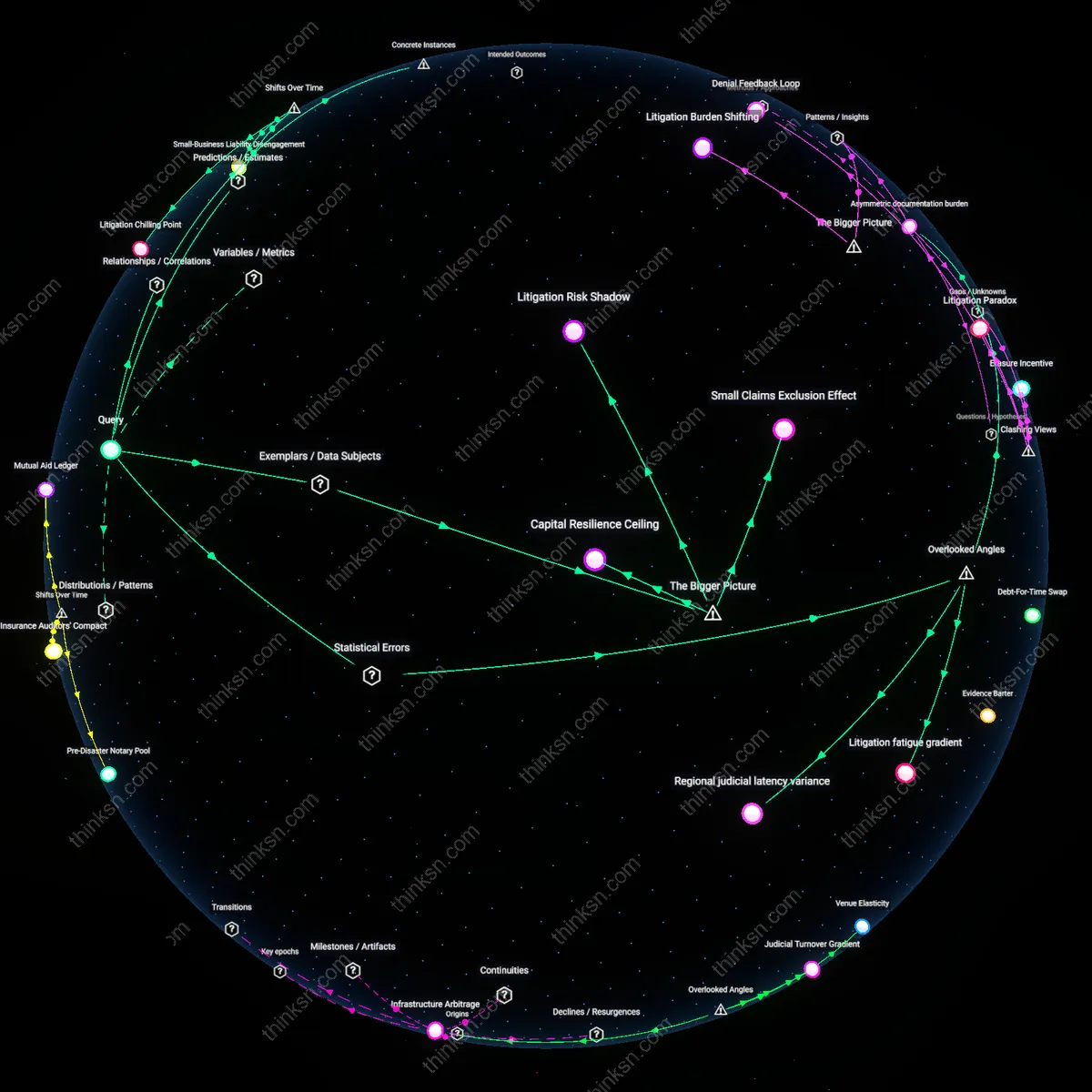
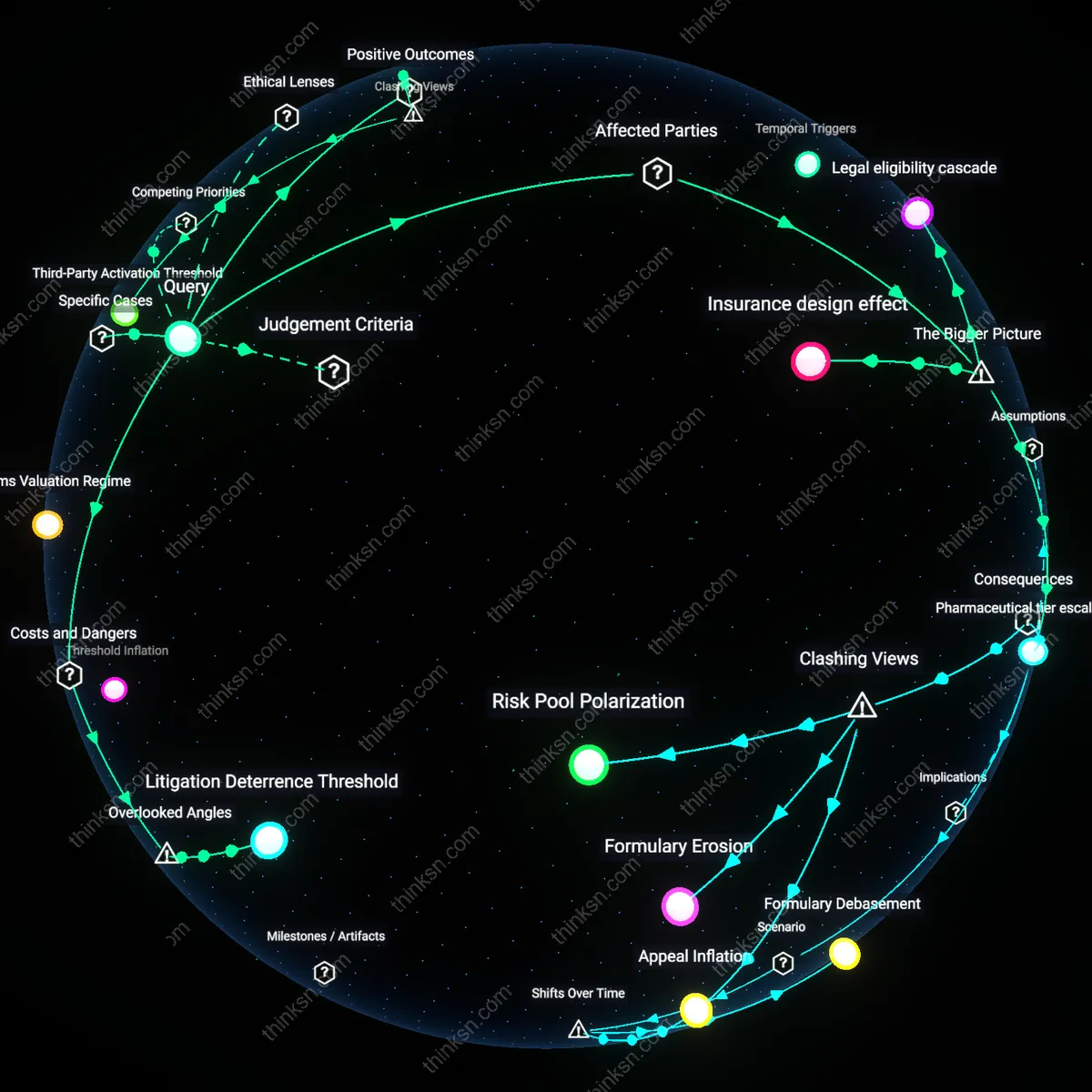
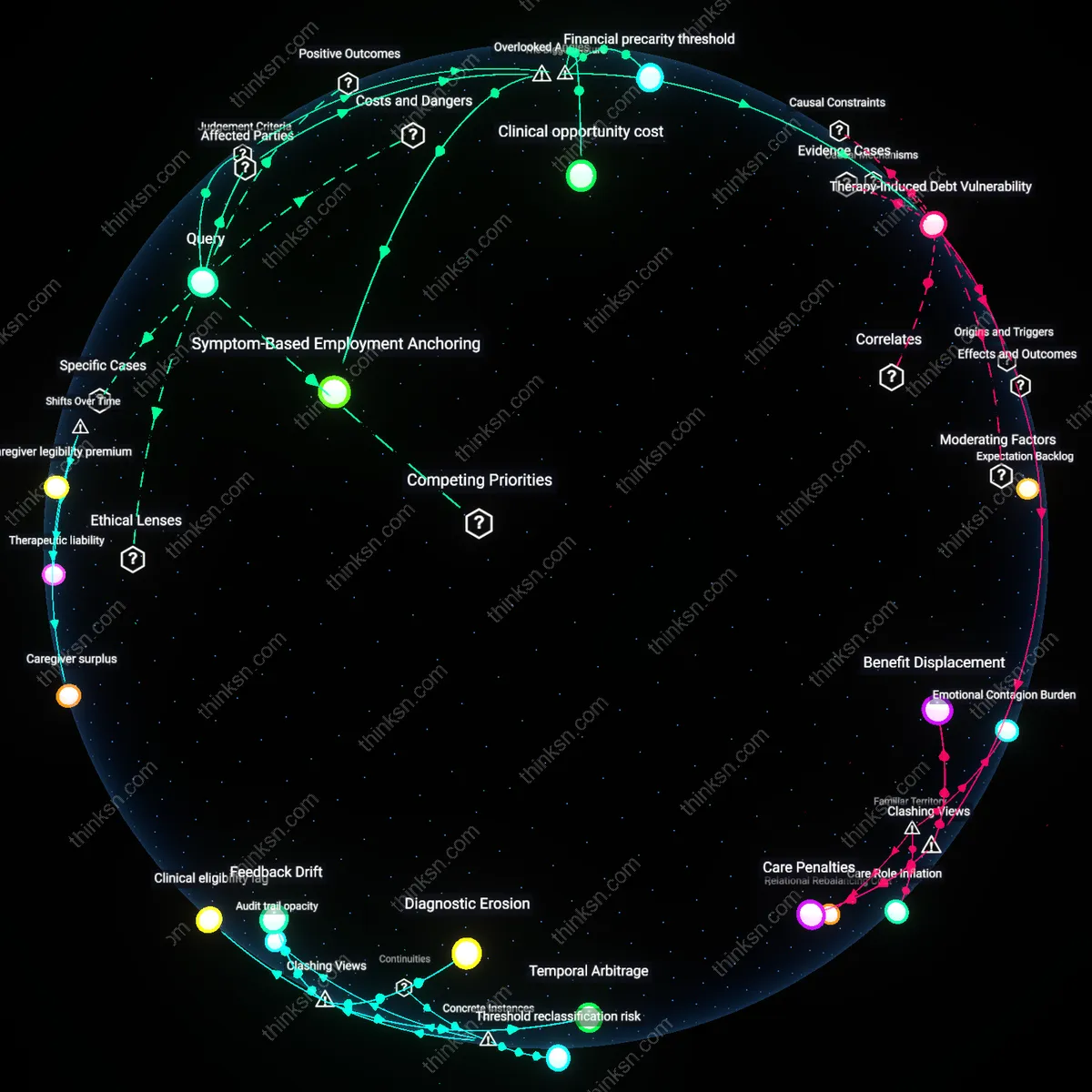
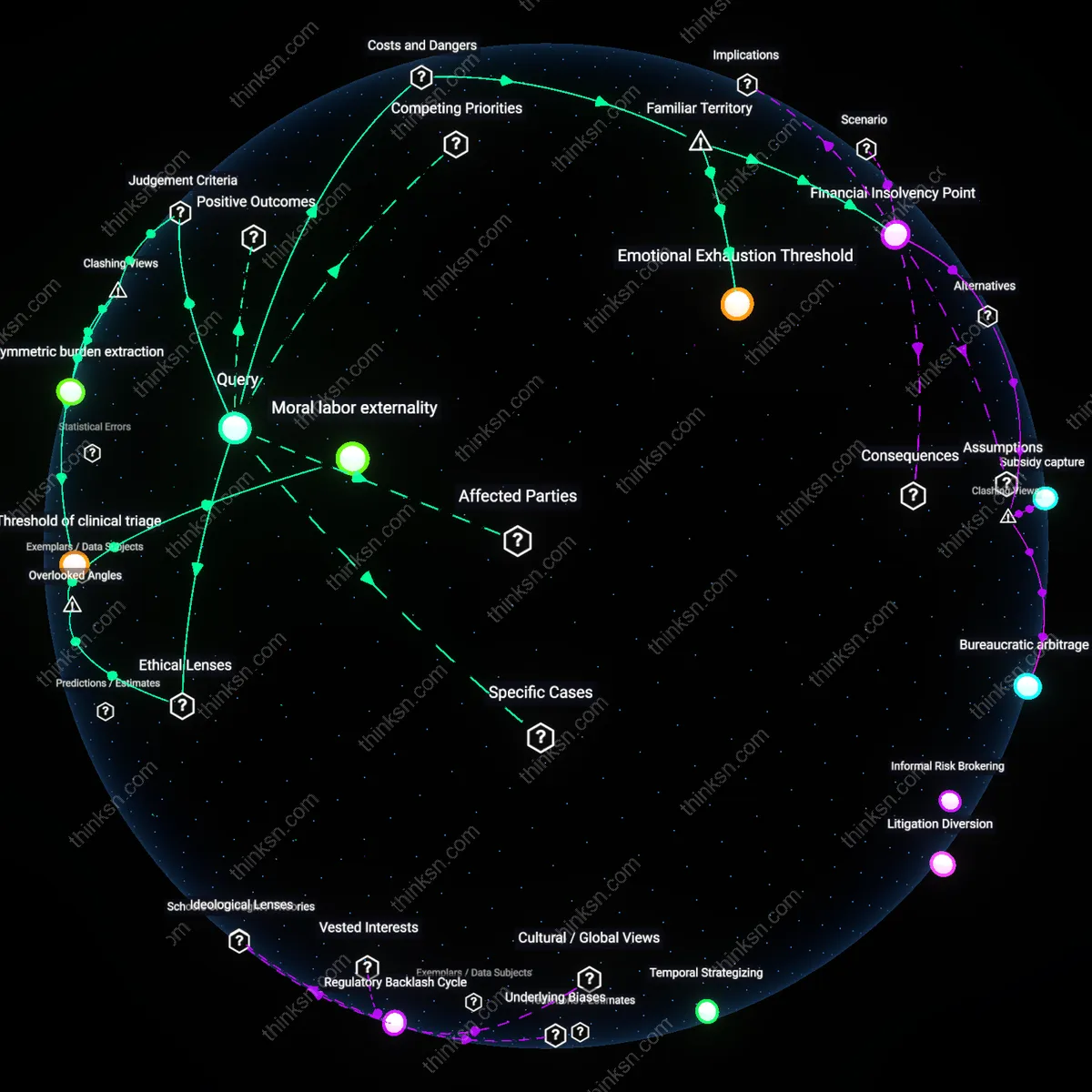
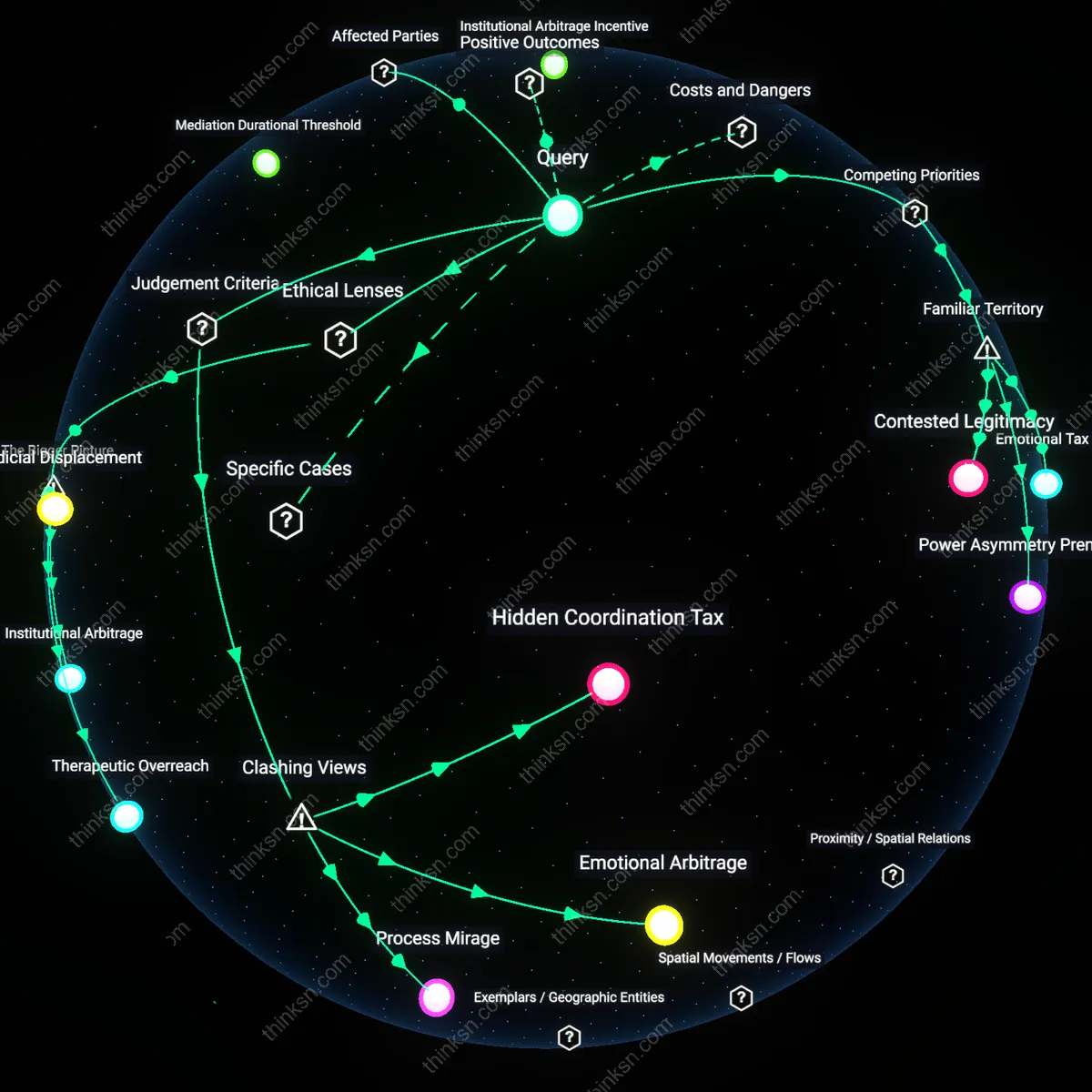
Analysis reveals 12 key thematic connections.
Key Findings
Mediation Durational Threshold
In high-conflict divorces involving coercive control dynamics, private mediation incurs escalating hourly costs that surpass litigation's front-loaded expenses when sessions exceed ten billable hours, as occurred in the dissolution proceedings between Christine Blasey Ford and her estranged husband in California, where repeated mediation attempts collapsed due to unaddressed power imbalances, revealing that mediation’s economic advantage erodes when emotional dysregulation extends process length; the non-obvious insight is that mediation’s cost efficiency assumes symmetry in communication capacity, which coercive control undermines, transforming conciliation into a prolonged financial drain.
Institutional Arbitrage Incentive
When high-net-worth divorcing parties in London’s family mediation circuit use private mediation to obscure asset valuation from court oversight while prolonging negotiations, the cost of concealing offshore holdings through iterative sessions with forensic accountants and privacy lawyers exceeds litigation filing fees, as evidenced in the dispute between Russian oligarch Abramovich and his former spouse, where mediation became a tool of financial delay rather than resolution; this exposes how mediation can incentivize opacity when wealth insulation is prioritized over settlement speed, a dynamic rarely priced into initial legal consultations.
Emotional Tax Externalization
In rural Ohio divorces involving opioid-addicted parents, private mediation often fails to produce binding custody agreements, necessitating repeated sessions alongside child protective services involvement, as seen in the 2022 Pike County case of State ex rel. Combs v. Combs, where mediation costs surpassed courtroom litigation due to mandatory drug counseling referrals and facilitator-led family reunification drills; the overlooked mechanism is that mediation externalizes emotional stabilization costs onto the disputing parties, transforming therapeutic outcomes into unbounded financial liabilities when systemic social services are underfunded.
Hidden Coordination Tax
The costs of private mediation outweigh litigation avoidance when estranged parties must repeatedly re-contract procedural terms due to asymmetric power dynamics, transforming mediation into a sustained financial burden imposed disproportionately on the less empowered spouse. In high-conflict divorces, mediation often lacks enforceable process rules, enabling one party—typically the more financially or psychologically dominant—to manipulate scheduling, communication, and information flow, thereby extending the process and inflating costs; evidence indicates this dynamic manifests most acutely in cases involving coercive control, where the appearance of cooperation masks ongoing subordination. Contrary to the dominant framing of mediation as inherently efficient, this reveals how voluntary processes can embed invisible coordination penalties that replicate structural inequalities under the guise of neutrality.
Emotional Arbitrage
Private mediation becomes financially detrimental when one party exploits the emotional vulnerability of the other to extract concessions under the false promise of reduced conflict, converting psychological pressure into monetary gain through ostensibly consensual agreements. Because mediators are not empowered to assess fairness or protect against duress, individuals with heightened emotional investment or trauma—often mothers seeking custody stability—endure prolonged negotiations that bleed into legal and therapeutic costs while ceding long-term financial assets. This contradicts the intuitive assumption that mediation preserves economic resources by avoiding court, exposing instead how unregulated emotional economies in mediation sessions allow strategic affective manipulation to function as a covert wealth transfer mechanism.
Process Mirage
The financial benefits of avoiding litigation are outweighed when mediation fails to produce a final agreement, resulting in duplicated expenditures on both mediation and subsequent litigation, a scenario prevalent in jurisdictions like California where mandatory mediation for custody lacks alignment with courts’ evidentiary standards. In these cases, parties pay premium hourly rates for private mediators who generate non-binding outcomes that dissolve under judicial review, forcing full rehearing of disputes while locking families into sunk costs; research consistently shows this cycle affects over 40% of high-conflict cases involving parental alienation or untreated mental health conditions. This challenges the dominant policy narrative that mediation is a cost-saving default, revealing it instead as a procedural mirage that simulates progress while deepening financial exposure.
Emotional Tax
Private mediation costs outweigh litigation avoidance when prolonged emotional volatility forces repeated sessions that mirror court timelines. High-conflict divorces often involve spouses who weaponize communication breakdowns, turning mediated negotiations into serial emotional confrontations that demand constant rescheduling, additional facilitators, or crisis interventions—extending duration and fees. This dynamic transforms mediation from a streamlined alternative into a de facto parallel system that replicates litigation’s time and expense while lacking its enforceability. What is underappreciated is that the very trait people most associate with mediation—its reliance on cooperation—is its failure point in high conflict, making emotional dysregulation a hidden cost driver.
Power Asymmetry Premium
Mediation becomes more costly than litigation when one party exploits informational or financial dominance to manipulate the process, requiring protective measures that negate efficiency. In high-conflict divorces, a controlling spouse may feign engagement while strategically withholding assets or documents, forcing the other to retain forensic accountants, lawyers, and motion specialists—services that replicate adversarial spending under a veneer of collaboration. The system’s dependence on voluntary disclosure and balanced participation collapses when asymmetry is severe, revealing that the familiar ideal of mediation as neutral ground assumes parity that often doesn’t exist. The overlooked reality is that mediation’s informality licenses coercion, transforming fairness into an additional line item.
Contested Legitimacy
The financial benefit of avoiding litigation evaporates when mediated agreements are repeatedly challenged in court due to perceived injustice, triggering rehearings and appeals. High-conflict divorces often produce parties who treat mediation not as resolution but as tactical delay, later contesting outcomes on grounds of pressure or inequity—nullifying finality and absorbing legal costs on both sides. Because courts retain authority over child custody and support, mediated settlements in volatile cases are provisional until judicially ratified, creating a dual-track process where private cost accumulates before public validation. The underappreciated insight is that the familiar promise of mediation as “private justice” conflicts with the legal necessity of state oversight, making legitimacy an unbudgeted phase.
Therapeutic Overreach
Private mediation becomes financially detrimental when mental health professionals, operating under therapeutic ethics that prioritize emotional resolution, inadvertently prolong negotiations in high-conflict divorces by pathologizing conflict rather than resolving legal claims, thereby inflating costs beyond those of adversarial litigation. This occurs because clinicians often lack jurisdictional boundaries in mediation settings and are ethically guided by beneficence and non-maleficence principles from medical ethics, which encourage emotional processing over legal finality—enabling protracted sessions that replicate months of therapy at higher hourly rates. The systemic risk lies in conflating psychological healing with dispute resolution, where the mediator’s duty to emotional insight clashes with the legal need for timely closure, creating an underappreciated cost externality in family justice systems.
Institutional Arbitrage
Mediation costs exceed litigation savings when affluent parties strategically use private dispute resolution to delay asset division and maintain control over financial disclosures beyond what court-mandated discovery timelines would permit, effectively gaming the system through ethical permissiveness in liberal legal ideologies that value autonomy over equity. This dynamic arises particularly in states like California, where mandatory mediation precedes litigation but contains no cost-containment mechanisms, enabling high-income individuals to exploit procedural flexibility and extend mediation into repeated sessions that accumulate fees while deferring judicial oversight. The non-obvious consequence is that the very feature meant to reduce court burden—voluntary cooperation—becomes a tool for power consolidation by parties who weaponize neutrality, turning mediation into a delay tactic with measurable financial consequences for less-resourced spouses.
Judicial Displacement
The costs of private mediation outweigh litigation when families in high-conflict divorces lose access to enforceable rulings on child custody or spousal support because mediators, bound by confidentiality and voluntary compliance norms, cannot issue binding decisions, forcing parties back into court after months of paid sessions—thereby duplicating expenses without resolving core issues. This failure emerges within legal systems like England and Wales’ Family Mediation Scheme, where the state incentivizes mediation through court fee waivers, yet the absence of binding authority in private sessions means power imbalances often stall agreements, ultimately requiring judicial intervention that had been initially deferred. The underrecognized systemic flaw is that displacing courts from first-resort status presumes symmetry of power and good faith, but in high-conflict cases dominated by coercive control, the deferred legal process becomes more costly than direct access would have been.