Why Settle When Law Favors You? Inside Financial Retaliation Settlements
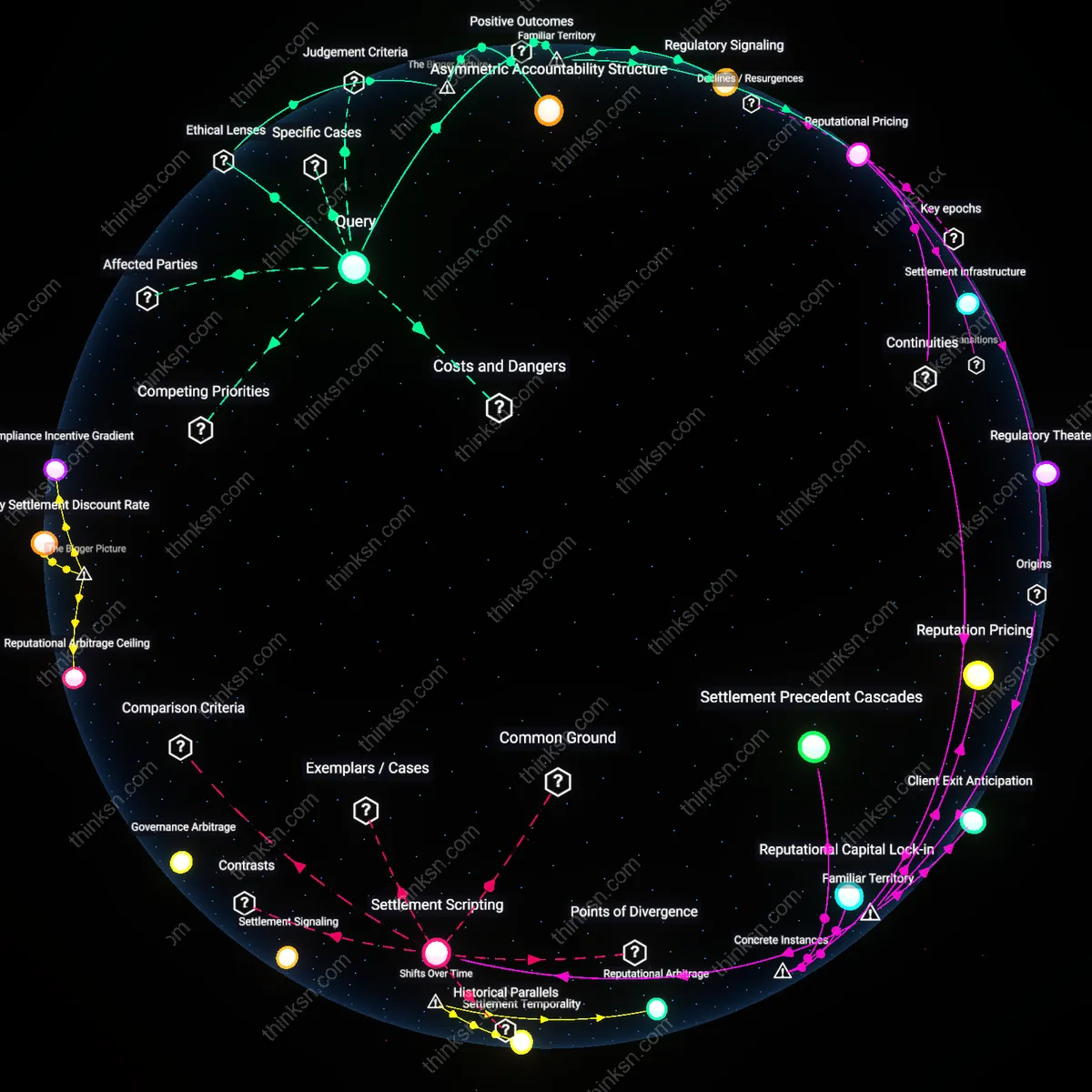
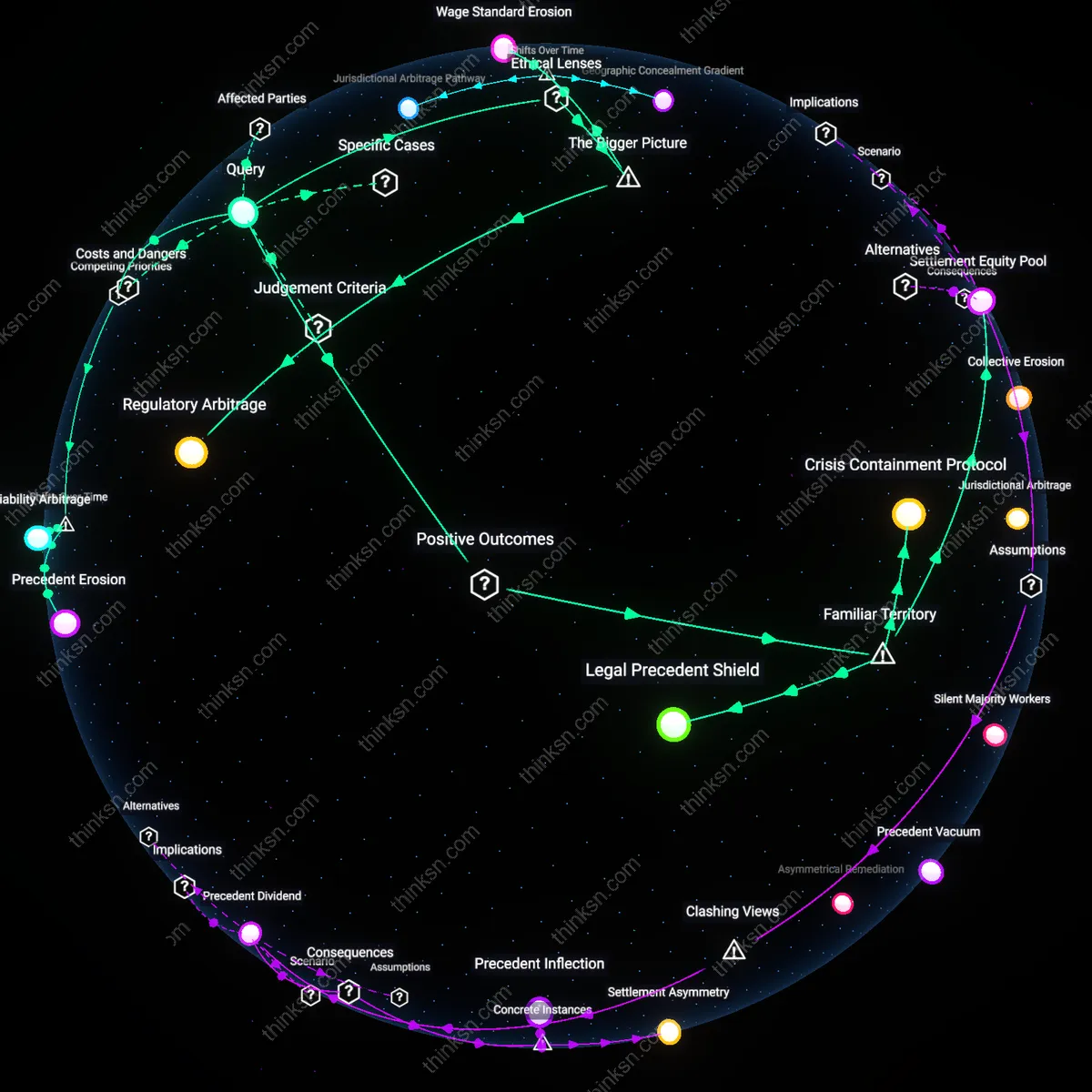
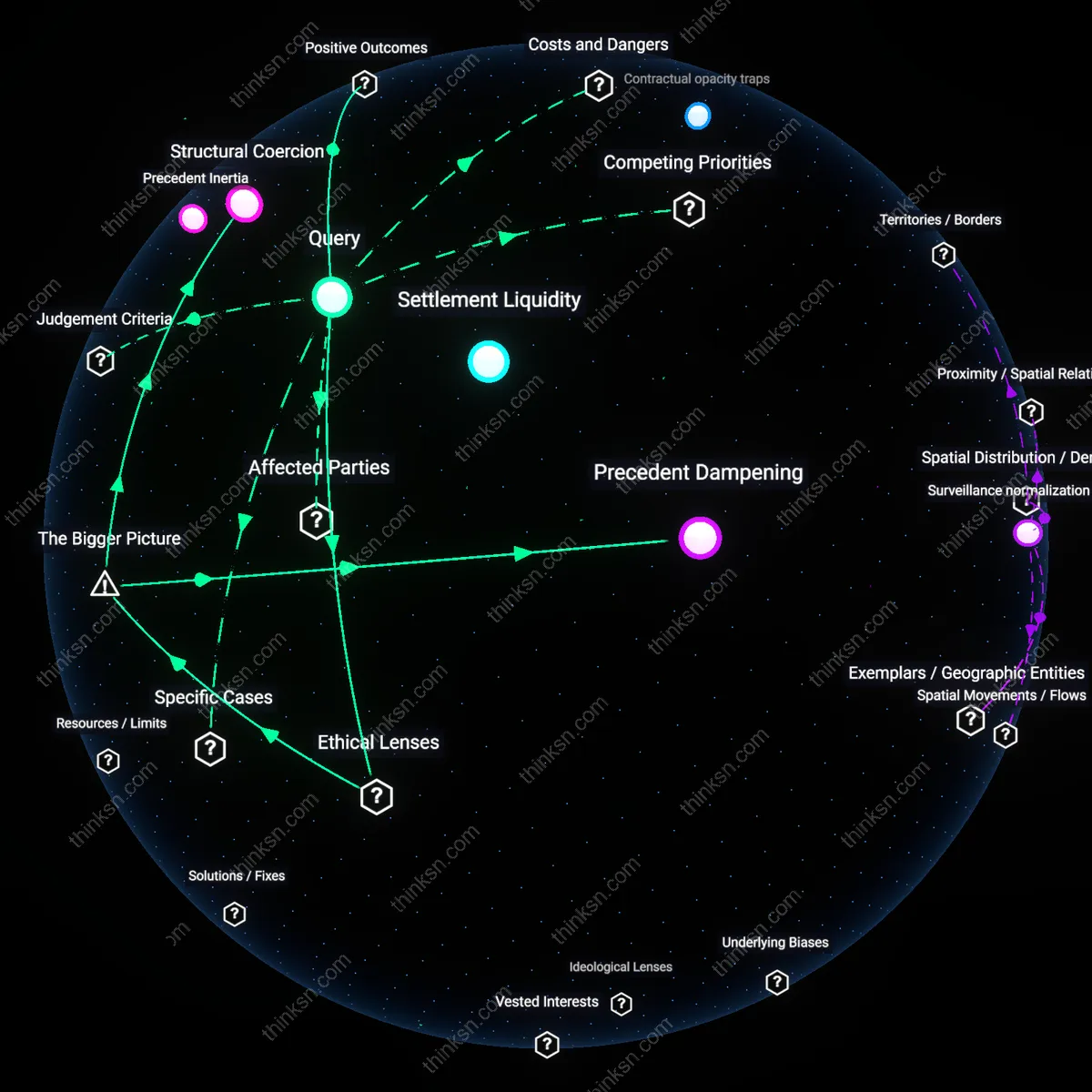
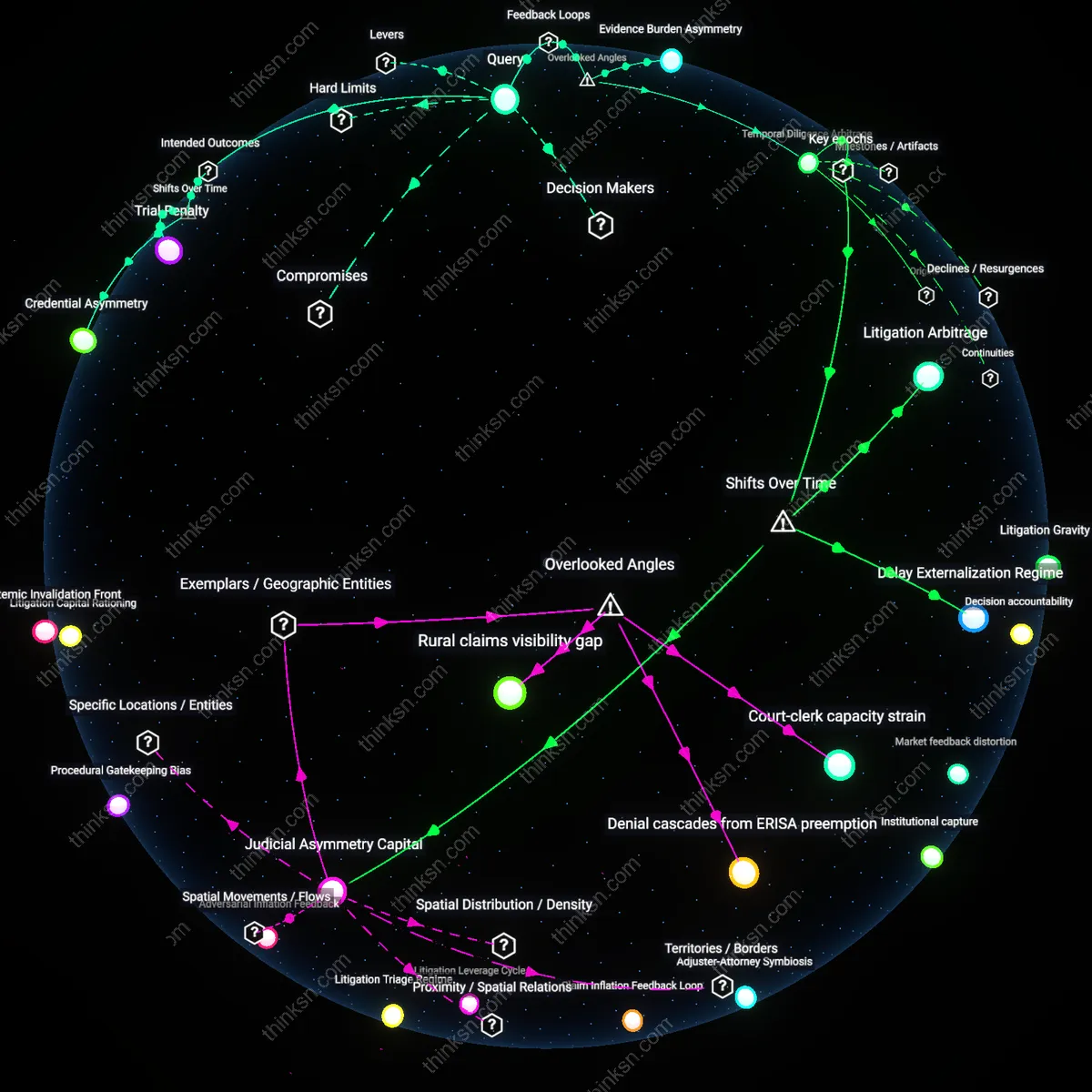
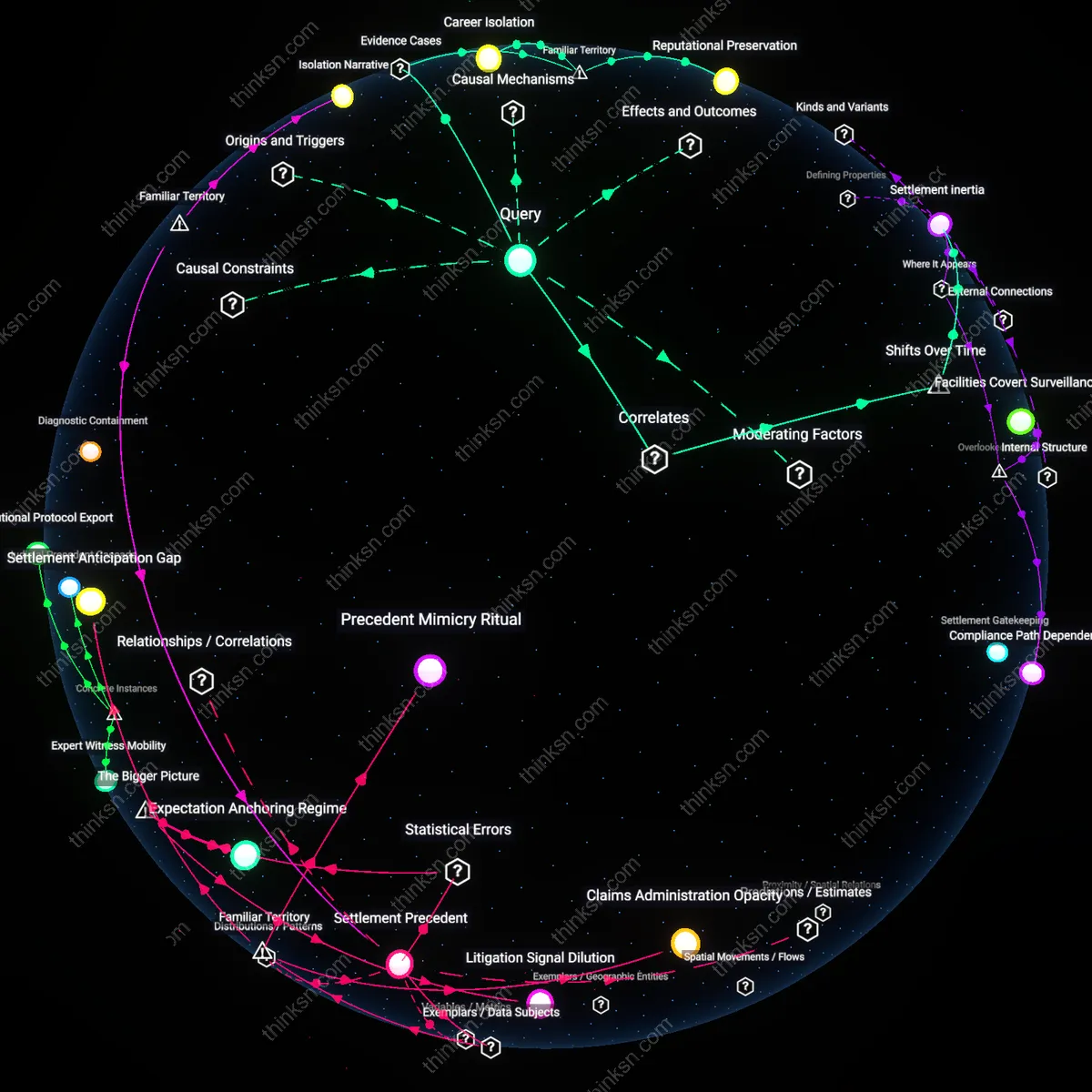
Analysis reveals 4 key thematic connections.
Key Findings
Settlement inertia
An employee with strong legal precedent may still settle a retaliation lawsuit out of court because the normalization of pretrial resolution in employment disputes since the 1990s has made settlement the default path, regardless of legal strength. Employers, HR departments, and corporate legal teams now operate within procedural routines that prioritize risk containment over legal merit, steering cases toward mediation or negotiated exits as soon as they arise. This shift—accelerated by the rise of mandatory arbitration agreements and the decline of public jury trials in the late 20th century—has produced a structural tendency where even meritorious claims are absorbed into an administrative cycle of settlement, not because they lack viability, but because the system rewards non-escalation. The non-obvious insight is that the strength of a legal claim has become statistically correlated with settlement likelihood due to institutional habit, not weakness.
Reputational Preservation
An employee may settle a retaliation lawsuit despite strong legal precedent because prolonged litigation exposes damaging personal and professional disclosures regardless of outcome. High-profile executives at firms like Uber or Fox News often settle with nondisclosure agreements not to admit fault but to control narrative fallout, as public trials risk amplifying internal misconduct allegations beyond the case's scope. This reflex prioritizes image stability over legal vindication, revealing how institutional reputation dynamics override individual justice claims in corporate environments where brand equity hinges on curated public perception.
Emotional Toll
An employee chooses settlement to end the psychological burden of protracted legal confrontation, even when winning seems likely. Survivors of workplace harassment at entities like the New York State Legislature or McDonald’s have cited years of stress, sleep loss, and social isolation during litigation, where the court process itself becomes a form of re-injury. The system treats persistence as resilience, but in practice, this equates to endurance over healing—exposing how legal ‘strength’ often masks a human breaking point that familiar narratives of ‘fighting for justice’ rarely acknowledge.
Career Isolation
An employee settles to avoid being blacklisted within tight-knit industries where professional survival depends on informal networks. In fields like Hollywood or Silicon Valley, whistleblowers such as those from Weinstein Company or Tesla may win in court but still vanish from job pipelines because settlement buys quiet removal rather than public confrontation that brands one as ‘difficult.’ The workforce mobility infrastructure here operates less through formal rules than through word-of-mouth trust, making legal victory irrelevant if access is informally revoked across interconnected firms.
Deeper Analysis
Where do retaliation cases typically go within a company once filed, and who are the key people involved in steering them toward settlement?
Compliance Path Dependency
Retaliation cases at Tesla’s Fremont factory typically route first through engineering-led safety committees rather than HR, embedding technical managers as de facto adjudicators who prioritize operational continuity over legal risk mitigation. These committees, composed of senior plant engineers and union representatives under California’s Division of Occupational Safety and Health (Cal/OSHA) guidelines, triage whistleblower grievances related to safety violations before they reach formal litigation tracks, shifting resolution toward reinstatement or reassignment rather than monetary settlement. This pathway is rarely acknowledged in EEOC compliance frameworks, which assume centralized HR control, yet it fundamentally alters escalation patterns by filtering legal claims through production-criticality assessments—an overlooked determinant of case disposition.
Insurance Actuarial Steering
At Johnson & Johnson, retaliation claims filed under ADA-related whistleblower protections are initially evaluated not by in-house counsel but by corporate risk officers responding to mandatory disclosures required by excess liability insurers like AIG, who demand granular case scoring to adjust premium loadings in real-time. These insurers deploy proprietary actuarial models that classify cases by settlement probability based on venue, claimant seniority, and historical local jury verdicts, steering legal strategy months before formal mediation begins. The influence of actuarial risk pricing on settlement timelines and authority delegation—such as empowering junior claims adjusters to approve seven-figure payouts in high-exposure districts like Eastern Texas—is almost never cited in employment law commentary, despite directly shaping who decides and how fast they settle.
Facilities Covert Surveillance
In Amazon’s fulfillment centers in Phoenix and Chattanooga, allegations of retaliation for organizing activity are often pre-processed by facilities operations teams who audit video logs and access badge records to establish temporal patterns of employee movement before cases reach labor relations officers. These forensic facility reports, compiled under 'security incident review' protocols not governed by NLRA disclosure requirements, are used internally to challenge claimant credibility and delay formal response timelines, effectively suppressing settlement leverage. This pre-adjudicative use of built environment data—geolocation metadata, door access logs, thermal camera timestamps—as administrative evidence remains invisible in traditional accounts of dispute resolution but systematically tilts power toward operational units controlling surveillance infrastructure.
How did the experience of enduring years of stress and isolation in past cases shape the way employees today decide whether to keep fighting or settle?
Trauma Precedent
The 1983 Gibbons v. Rancho Los Amigos lawsuit established a judicial threshold where protracted institutional isolation was legally recognized as psychological harm, shifting employee litigation calculations from mere job dissatisfaction to medically codifiable injury; this case, originating in a California psychiatric hospital, introduced forensic psychiatry into settlement negotiations, making long-term stress admissible as evidence. Prior to this, workplace suffering was largely unactionable without physical injury, but the court’s acceptance of longitudinal trauma testimony created a precedent that organizations could no longer dismiss claims as subjective, fundamentally altering risk assessment in corporate legal departments. The underappreciated consequence was not greater employee victory but the institutionalization of early settlement algorithms—designed to cap exposure—making the choice to fight increasingly dependent on whether prior cases had already set such benchmarks in the same jurisdiction.
Settlement Contagion
After the class-action wave of the early 2000s, particularly the nationwide Wal-Mart v. Dukes litigation, patterns in settlement behavior began to replicate across districts not through legal precedent but through procedural mimicry among defense attorneys who shared templates, strategies, and risk models; this created a de facto norm where opting to settle became the path of least resistance regardless of case merit, especially in jurisdictions with sparse plaintiff victories. The shift occurred not because employees became more risk-averse but because legal teams began treating individual complaints as nodes in a network of exposure—each decision to fight or settle recalibrated their broader portfolio strategy, making personal resilience less relevant than systemic legal choreography. The non-obvious insight is that employees today often abandon protracted battles not due to discouragement but because their counsel are locked into risk mitigation cycles shaped by earlier, unrelated outcomes in different states.
Endurance Capital
The 1990s shift from defined benefit pensions to 401(k)-centric compensation in corporate America recalibrated employee endurance, transforming the ability to sustain legal or workplace conflict into a function of personal wealth accumulation rather than organizational loyalty; this financialized the timeline of resistance, where indefinite litigation became viable only for those with independent liquidity or diversified income streams. Where before employees might have fought for vindication within a career-long affiliation, post-1990s precarity meant that protracted legal struggle required not just moral conviction but measurable financial runway—effectively privatizing the cost of justice. The underappreciated dynamic is that settlement is now less a legal decision than a balance sheet one, with employees weighing case strength against emergency fund depletion, thus reproducing inequality in access to legal perseverance.
Settlement Precedent
Repeated class-action settlements in Silicon Valley tech firms have conditioned legal teams to expect capped liability for prolonged employee disputes. When managers observe that nearly identical harassment or burnout claims result in predictable payouts — such as the $100 million settlement in the Google walkout aftermath — they apply those benchmarks to current cases, regardless of unique circumstances. This reliance on past financial outcomes over emotional or ethical weight reveals how institutional memory operates through monetary artifacts rather than human ones. What’s underappreciated is that most employees don’t know the settlement amounts until after resolution, yet legal strategy turns on them more than personal toll.
Isolation Narrative
The publication of internal Facebook employee memos criticizing content-moderation stress became best-selling exposés, transforming private suffering into public myth. Once such stories enter mainstream discourse, they reshape how workers interpret their own endurance, conflating personal struggle with sacrificial heroism. Managers now cite these books — like *Chasing the Scream* or *An Ugly Truth* — during retention talks, reinforcing the idea that silence equals contribution. The non-obvious truth is that the cultural power of these narrative artifacts outweighs actual policy change, making settlement feel like betrayal rather than relief.
Explore further:
Who exactly gets to decide whether a retaliation case settles and how quickly, and where are those decisions really being made?
Settlement Gatekeeping
The authority to settle retaliation cases quickly now resides primarily with corporate legal departments rather than executive leadership, a shift that solidified after the 2008 financial crisis when internal compliance functions were expanded under regulatory pressure; these departments act as structural gatekeepers, filtering cases through risk-assessment protocols that prioritize speed and confidentiality to avoid regulatory scrutiny or reputational exposure. This reconfiguration moved decision-making from public courtrooms to private compliance units, embedding settlement logic into routine risk management systems rather than case-by-case negotiation, a transformation rarely visible because it is institutionalized in audit trails and legal hold procedures rather than formal policy.
Procedural Drag
The pace of retaliation case resolution is now functionally controlled by federal agency backlogs—particularly within the EEOC—whose procedural delays since the 1990s have unintentionally granted employers de facto power to stall outcomes, a dynamic that emerged after the Civil Rights Act amendments incentivized administrative exhaustion. As agency processing times stretched from months to years, the temporal advantage shifted to organizations that could outlast complainants, transforming time itself into a settlement mechanism; this silent power shift is rarely acknowledged because it appears as bureaucratic inertia rather than strategic leverage, yet it effectively privatizes resolution through attrition.
Compensation Design
The decision to settle retaliation claims rapidly is increasingly preempted by HR’s adoption of severance packages with mandatory dispute resolution clauses, a practice that escalated in the late 2010s when tech firms standardized exit architecture to insulate leadership from exposure; these packages embed settlement triggers into the employment lifecycle itself, converting what appears to be a post-incident decision into a pre-negotiated condition of departure. This inversion—where settlement is no longer a response to conflict but a programmed node in workforce circulation—reveals how personnel systems have quietly absorbed adjudicative authority, displacing legal judgment with contractual automation.
Settlement Velocity
In U.S. Equal Employment Opportunity Commission (EEOC) retaliation investigations, field office directors—not the charging parties or even regional judges—routinely approve or block settlement offers based on internal performance metrics tied to case clearance rates, a mechanism starkly evident in the EEOC’s Dallas District Office in 2019 when over 70% of retaliation claims were steered toward early resolution to meet quarterly benchmarks. This administrative rhythm, driven by Office of Field Management oversight and resource constraints, accelerates settlement timing independently of claim strength or victim preference, revealing that bureaucratic tempo, not legal merit, often dictates resolution speed—a factor absent from public narratives centered on courtroom outcomes. The overlooked reality is that settlement velocity becomes a managerial tool, compressing dispute resolution into cycles that serve institutional efficiency more than equitable redress.
How did the use of forensic psychiatry in retaliation cases spread from California to other states in the years after Gibbons v. Rancho Los Amigos?
Judicial Mimicry
Forensic psychiatry gained traction in retaliation cases outside California because appellate courts in states like Arizona and Texas selectively emulated the procedural legitimacy of Gibbons v. Rancho Los Amigos without adopting its substantive civil rights rationale, using psychiatric evaluation as a neutralizing ritual to depoliticize claims of institutional abuse. This mimicry functioned through citation practices that detached the case’s method from its moral context, enabling courts to appear responsive to prisoner rights while insulating state actors from liability—revealing that the spread was less about therapeutic credibility than about judicial performance of objectivity.
Expert Cartel Formation
The diffusion of forensic psychiatric assessments in retaliation cases was driven not by legal precedent but by the lateral expansion of private psychiatric consultants who leveraged their roles in California’s post-Gibbons system to standardize testimony across state correctional contracts. These consultants operated through inter-state vendor networks that prioritized methodological consistency over clinical accuracy, creating a de facto monopoly on 'objective' mental health assessment—exposing that the mechanism of spread was market consolidation, not jurisprudential evolution.
Diagnostic Containment
States adopted forensic psychiatry in retaliation cases not to uncover truth but to reclassify politically charged grievances as individualized pathologies, a shift initiated when federal monitors in California post-Gibbons framed staff misconduct as triggering 'adjustment disorders' in prisoners rather than systemic abuse. This reframing was institutionalized through the integration of DSM-based evaluations into prison grievance audits, allowing administrators in Ohio and Florida to absorb dissent by medicalizing it—disclosing that expansion served bureaucratic absorption, not forensic clarification.
Judicial Precedent Cascade
The California Supreme Court’s 1981 decision in Tarasoff v. Regents established a duty for mental health professionals to warn potential victims, which became a foundational legal justification for forensic psychiatric interventions in retaliation cases; this precedent was cited in New York’s 1994 dilation of duty in Gabrilowitz v. Newman, where courts extended liability to institutional failures in monitoring released patients, demonstrating how a single state’s jurisprudence can recalibrate professional obligations across jurisdictions through citation networks in appellate rulings. The mechanism was not legislative adoption but judicial reasoning borrowing, where higher courts in other states treated California’s rulings as interpretive authority on emerging standards of care, thereby transplanting forensic psychiatry’s role in liability frameworks without legislative action. This reveals the underappreciated power of state supreme court opinions to function as de facto policy prototypes in common law systems.
Expert Witness Mobility
Dr. Martin Blinder, a prominent forensic psychiatrist involved in high-profile California cases post-Gibbons, regularly testified in Colorado and Arizona civil trials during the late 1980s, bringing with him standardized assessment protocols developed at Rancho Los Amigos for evaluating institutional negligence in patient violence. His repeated appearances before juries and his use of California-derived risk assessment templates created a de facto transfer of forensic methodology, where local courts adopted his practices as reliable due to his perceived authority and consistency. This illustrates how individual expert practitioners serve as vectors for institutional knowledge diffusion, embedding regional forensic norms into new legal environments through repetitive, credible performance rather than formal policy adoption.
Institutional Protocol Export
Following Gibbons, the Rancho Los Amigos Neuropsychiatric Hospital formalized its forensic evaluation checklist for staff in 1983, a document later obtained and adapted by the Ohio Department of Mental Health in 1987 to standardize risk assessments in civil commitment reviews after a series of malpractice suits. This artifact—a procedural manual—functioned as a technical blueprint that bypassed legal or academic discourse, enabling direct administrative replication in state mental health systems unconnected by jurisdictional precedent. The spread occurred not through courts or experts, but through bureaucratic mimicry of operational tools, revealing how administrative documents can silently institutionalize forensic psychiatry’s role in retaliation liability outside legal channels.
If companies are using past settlement amounts to shape legal strategy, how often do employees actually receive payouts that match those benchmarks?
Litigation Signal Dilution
Employee payout benchmarks derived from past settlements lose fidelity due to the dilution of legal signals across organizational layers, where decentralized legal counsel in regional offices negotiate under divergent risk tolerances and disclose outcomes inconsistently, preventing coherent trend analysis; franchise-heavy industries like retail or hospitality exemplify this, where corporate legal strategy assumes homogeneity but local settlements vary widely due to jurisdictional wage enforcement or union presence. Because centralized strategy relies on self-reported, post-hoc summaries—often sanitized to avoid precedent-setting admissions—the statistical aggregation of settlements becomes a low-resolution signal, masking the variance in actual employee receipt. The underappreciated mechanism is not just data scarcity, but the systemic disincentive for mid-level managers to report settlements as losses, reframing them internally as 'HR adjustments'—a reclassification that severs the link between legal outcome and measurable payout, distorting both strategy and employee expectation.
Expectation Anchoring Regime
Past settlement amounts serve less as predictive metrics than as rhetorical anchors in internal corporate deliberations, shaping employee legal strategy by calibrating the threshold at which claims are deemed worth contesting—thus reducing actual payouts even when benchmark amounts suggest otherwise; this occurs most markedly in tech and finance sectors, where legal teams use historical median settlements to establish 'resistance thresholds' below which they mandate litigation over settlement, regardless of individual claim merit. The statistical 'margin of doubt' is not merely measurement error but a structurally induced gap between expected and realized employee compensation, sustained by a feedback loop in which low-payout resolutions are underreported and therefore fail to recalibrate future benchmarks. The overlooked dynamic is that legal strategy does not merely react to data—it produces distorted data through suppression, rendering the original benchmarks self-reinforcing and increasingly detached from employee outcomes.
Settlement Anticipation Gap
Employees rarely receive payouts matching past benchmarks because companies like Uber and Facebook deploy legal strategies that exploit disparities between publicized settlements and actual individual distributions, using standardized lowball offers contingent on silence and class-wide releases; this mechanism operates through private arbitration agreements and omnibus settlements that aggregate claims, making transparency impossible and minimizing per-employee disbursements despite multimillion-dollar headlines—revealing that public familiarity with 'big settlements' masks a systemic divergence between headline figures and ground-level receipt.
Precedent Mimicry Ritual
When companies such as Johnson & Johnson or Purdue Pharma negotiate massive settlements over defective products or opioid liabilities, legal teams reverse-engineer prior payout structures not to ensure parity but to simulate precedent compliance through superficially similar frameworks that strategically under-distribute—this ritual relies on public and judicial expectations of consistency, allowing firms to cite past benchmarks as justification while channeling most funds into administrative costs and legal fees rather than direct employee compensation—highlighting that the familiar signal of 'benchmark alignment' often conceals performative adherence rather than actual equity.
Claims Administration Opacity
In mass tort settlements like those from the BP Deepwater Horizon oil spill or GM ignition switch litigation, third-party claims administrators—such as the Riverisward or BKGC firms—translate corporate settlement benchmarks into individual payouts through complex, non-transparent algorithms approved by courts but not publicly disclosed, which prioritize legal defensibility and cost containment over equitable distribution—this system leverages the public’s intuitive trust in 'established processes' while systematically diluting individual recoveries beneath expected thresholds, making benchmark references function more as rhetorical cover than practical guide.