Can Confidential Settlements Silence Worker Rights?
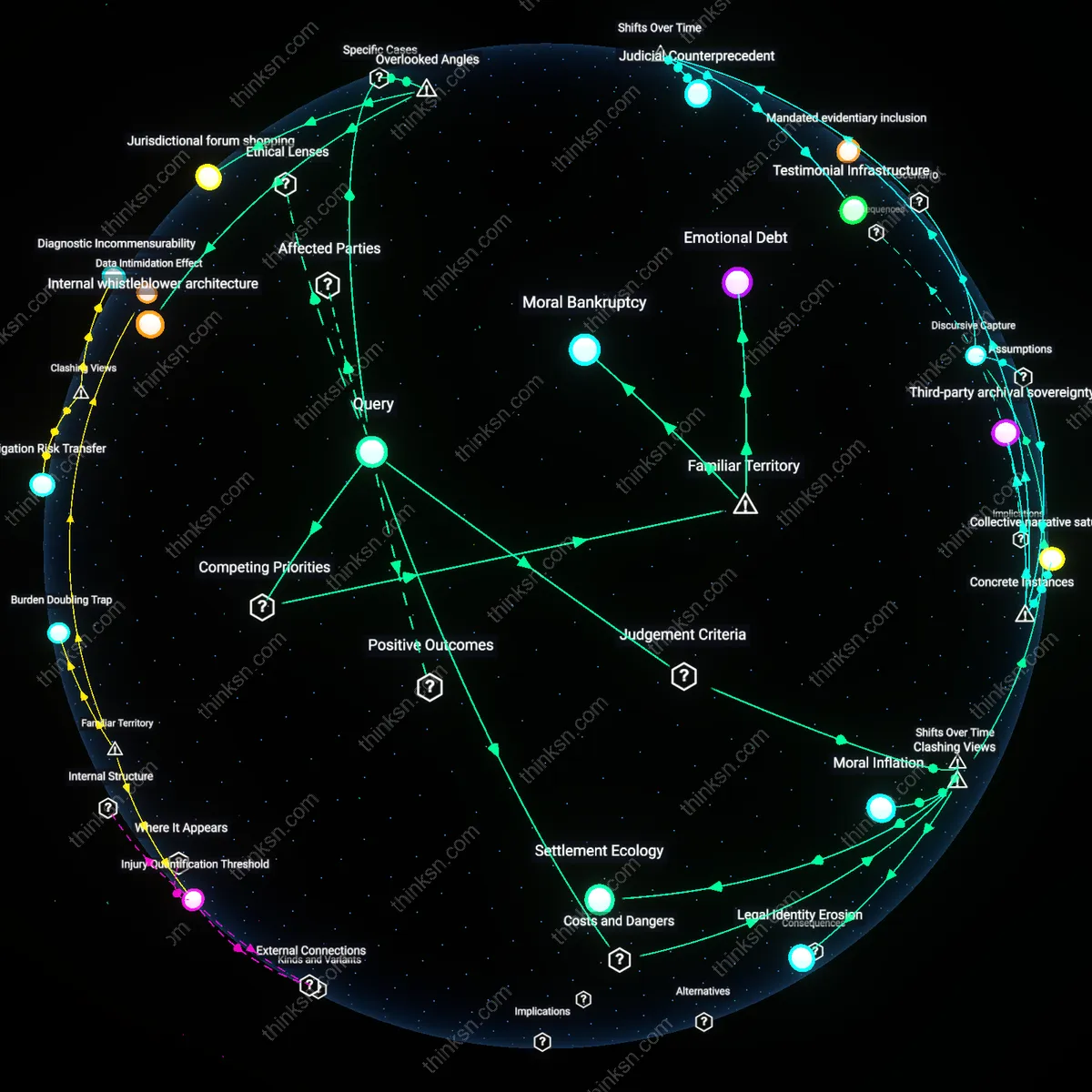
Analysis reveals 9 key thematic connections.
Key Findings
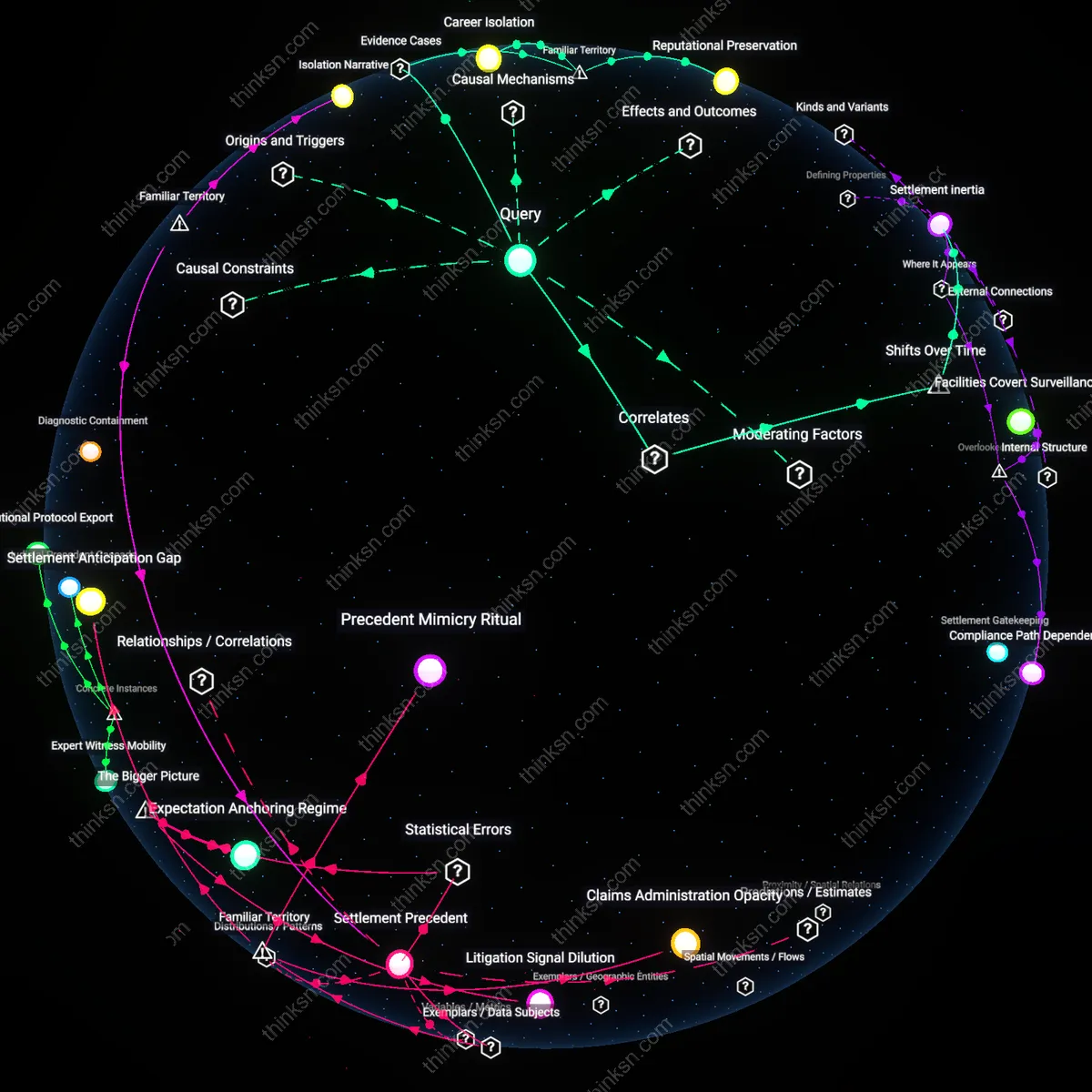
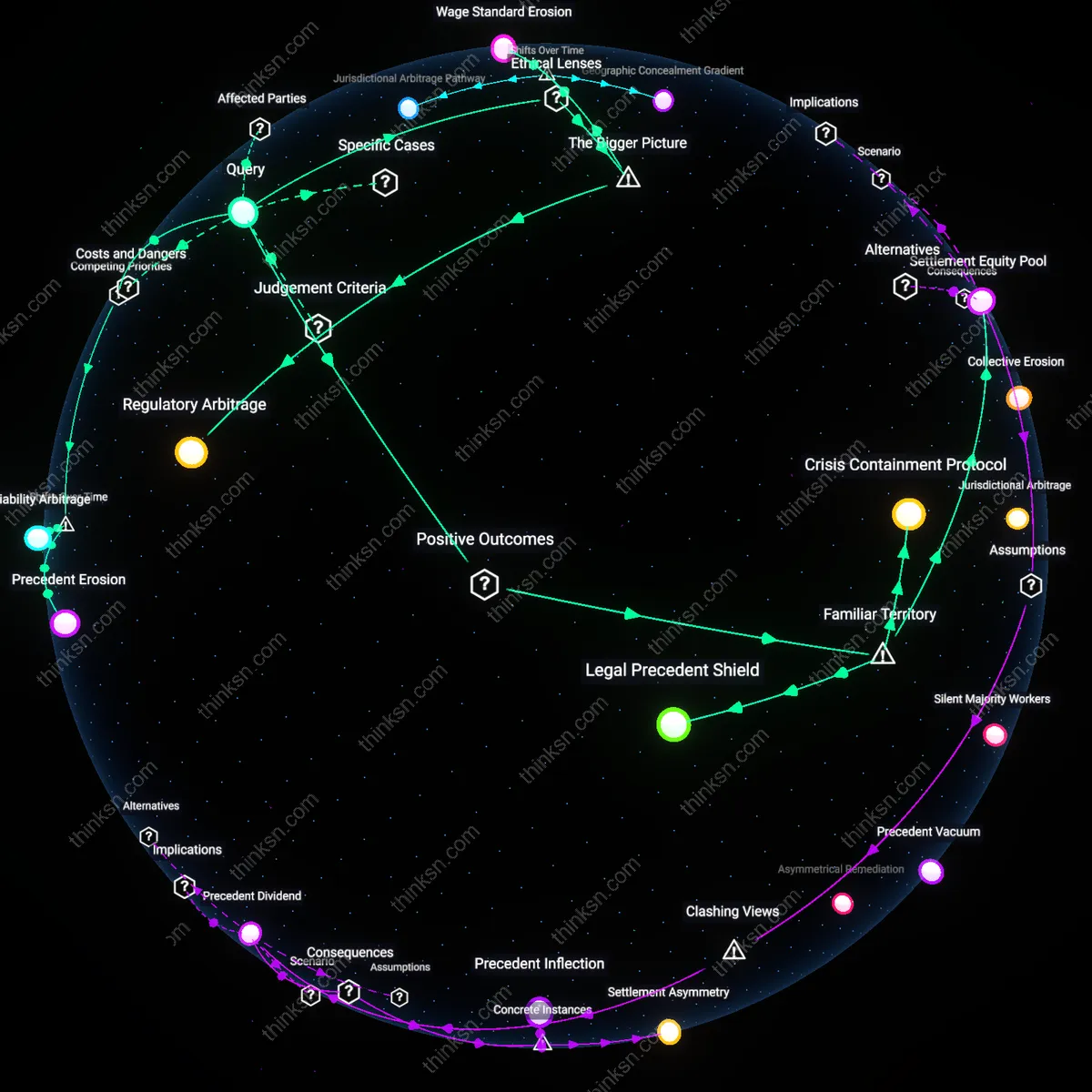
Legal Precedent Shield
Yes, a large company’s use of confidential settlements can morally protect broader economic stability by preventing uncontrolled legal domino effects in low-wage sectors. When firms settle worker disputes privately, they avoid setting court-established benchmarks that could trigger hundreds of similar claims across regional franchises or subcontractors, particularly in industries like retail or food service where labor costs are tightly managed; this containment preserves operational predictability not just for the corporation but for entire supply chains reliant on existing wage structures. The non-obvious benefit, often overlooked in moral outrage over secrecy, is that unrestricted precedent creation could destabilize thin-margin businesses in regions already vulnerable to shutdowns or automation shifts.
Settlement Equity Pool
Yes, confidential settlements can morally redistribute compensation faster and more equitably than public litigation by bypassing congested court systems that systematically delay justice for low-wage workers. In states like California or Texas, where labor backlogs can stall cases for years, sealed agreements allow immediate payouts funded by centralized corporate risk pools, often exceeding what class-action outcomes yield after legal fees and appeals; this mechanism prioritizes material redress over symbolic transparency. The underappreciated reality is that workers frequently prefer swift, guaranteed compensation over public victories that may never translate to personal benefit.
Crisis Containment Protocol
Yes, confidential settlements serve as a moral safeguard when public exposure would endanger worker safety or trigger retaliatory closures in economically fragile communities. In manufacturing plants or rural call centers, the revelation of systemic labor violations can lead to rapid shutdowns by risk-averse parent companies, as seen in towns dependent on single-employer economies; sealed resolutions allow continued operation while improving conditions incrementally behind compliance oversight. The rarely acknowledged dynamic is that exposure isn’t always emancipatory—sometimes silence preserves livelihoods.
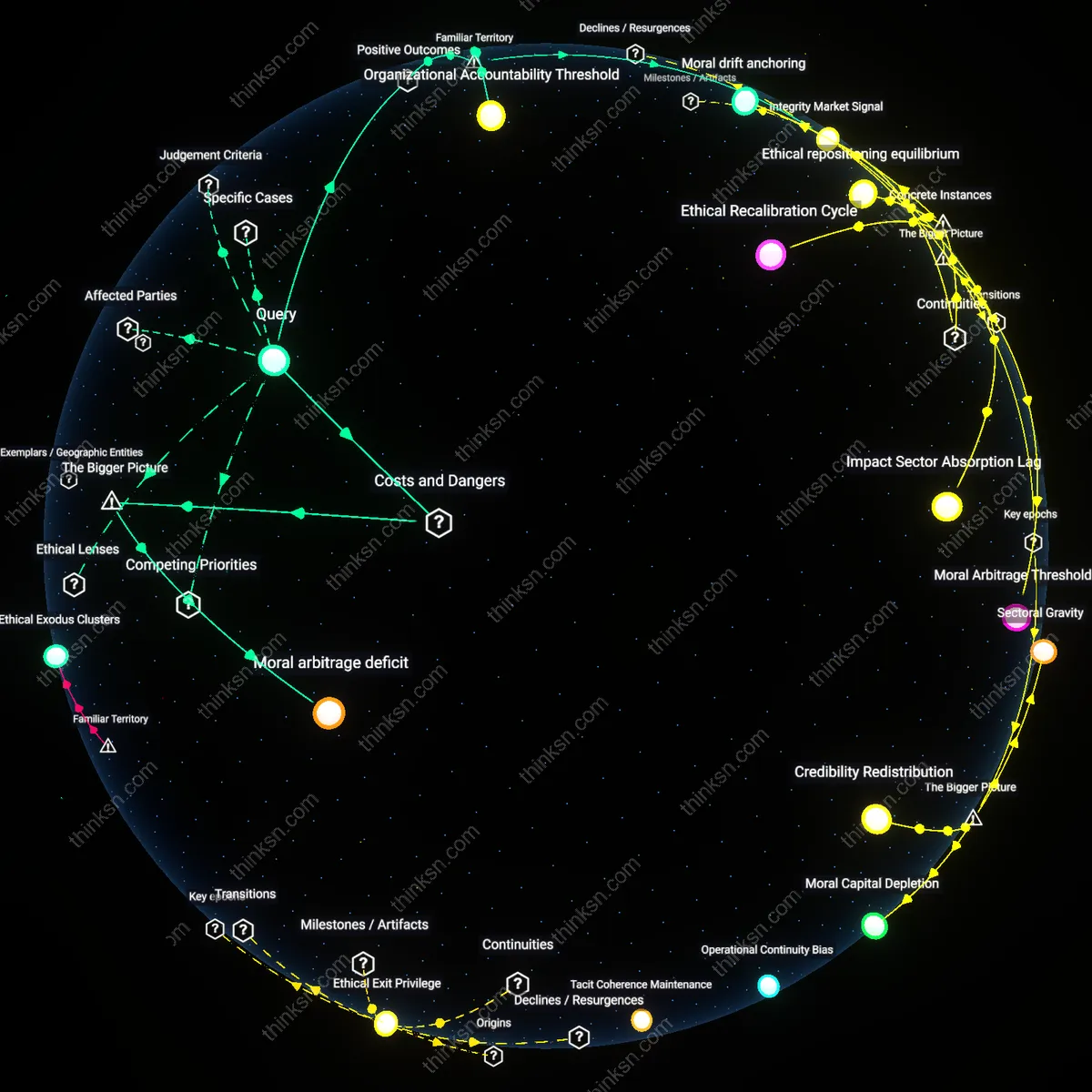
Precedent Erosion
Confidential settlements morally compromise collective legal advancement by silencing systemic grievances, which intensifies after the 1980s shift from regulatory labor protections to privatized dispute resolution. As OSHA enforcement weakened and union density declined post-Reagan, corporations leveraged secrecy clauses not just to avoid liability but to hollow out the development of worker-rights jurisprudence, particularly in meatpacking and retail sectors. This mechanism transforms individual settlements into structural tools that prevent pattern recognition across cases, making it non-obvious that such privacy agreements function less as conflict resolution than as precedent suppression.
Liability Arbitrage
Large companies justify confidential settlements by framing them as efficient dispute containment, a rationale that gained legitimacy during the 1990s corporate compliance boom when shareholder value became the dominant governance ethic. Unlike earlier eras when reputational risk deterred secrecy, post-Enron risk management frameworks began treating legal transparency as optional if fiduciary duties were met, allowing firms like Walmart and McDonald’s to treat precedent avoidance as a calculable cost of doing business. This shift reveals how moral justification is outsourced to actuarial logic, where systemic wage suppression becomes defensible if each instance is isolated and untraceable.
Normative Drift
The acceptability of using confidentiality to block legal evolution emerged gradually after the 2008 financial crisis, when public trust in institutions eroded and regulatory capture normalized non-prosecution across industries. As gig economy platforms scaled in the 2010s, they adopted broad confidentiality not merely defensively but as a design feature to forestall classification of workers as employees, marking a transition from ad-hoc secrecy to systemic norm displacement. The non-obvious consequence is that what was once a tactical legal maneuver has become an architectonic practice, replacing precedent-building with iterative behind-closed-doors adjudication that silently resets baseline worker expectations.
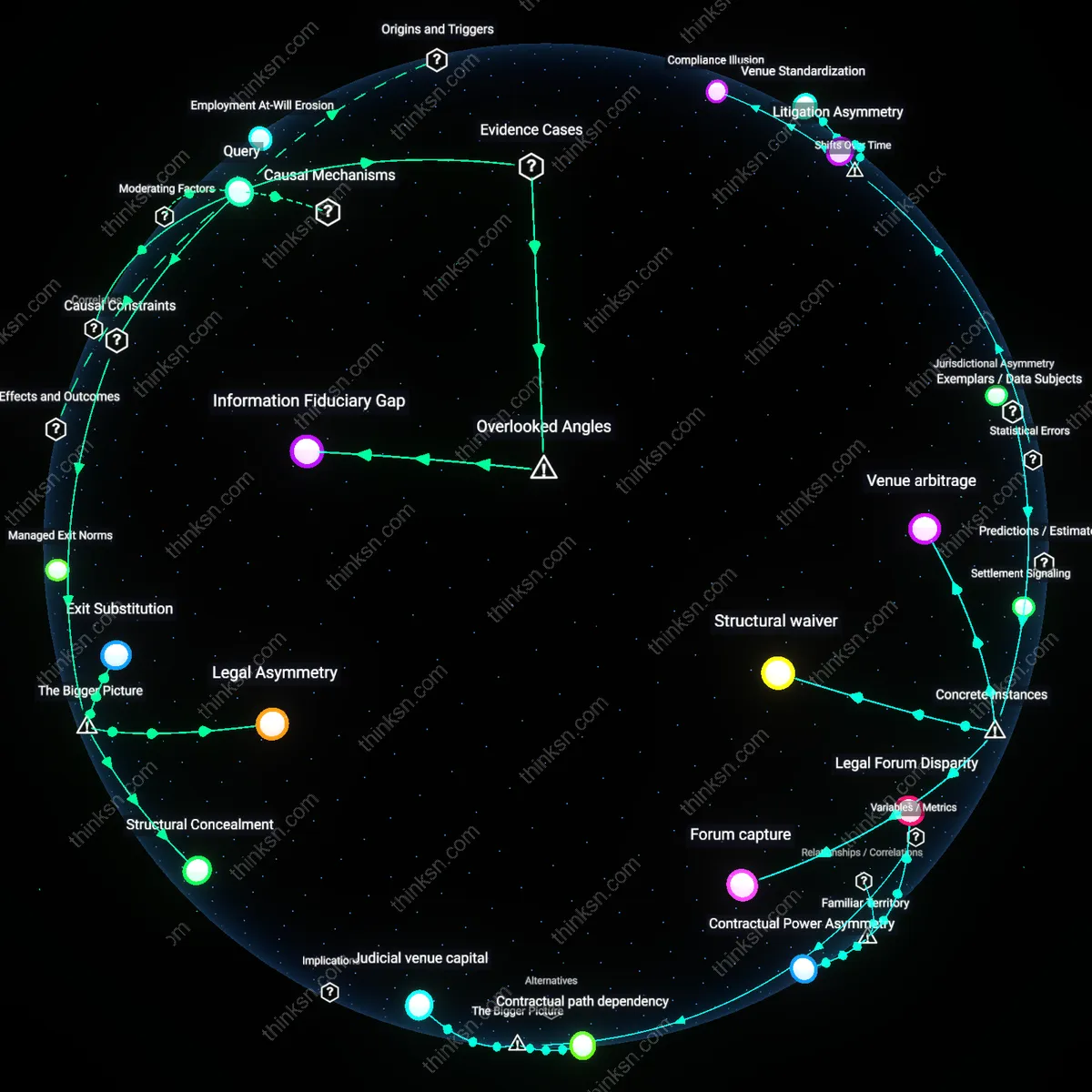
Legal Precedent Suppression
Yes, because corporate use of confidential settlements strategically neutralizes judicial recognition of labor harms, thereby preventing the accumulation of case law that could empower future worker claims under common law traditions; this operates through repeat-player advantage in private dispute resolution, where firms leverage asymmetrical resources to erase public accountability—what makes this system function is the institutional tolerance for secrecy in civil compromise, which quietly entrenches power imbalances under the guise of efficiency, a dynamic rarely scrutinized in labor ethics discourse.
Regulatory Arbitrage
Yes, insofar as companies exploit fragmented labor enforcement by shifting disputes from public regulatory arenas—where rulings could trigger OSHA or DOL investigations—into private contractual settlements, thereby avoiding precedents that might prompt systemic oversight; this is made possible by the weakening of federal labor agencies since the 1980s, which has created a permissive environment for extrajudicial resolution of wage theft, an outcome driven more by bureaucratic attrition than deliberate corporate malice.
Wage Standard Erosion
Yes, because widespread use of confidential settlements indirectly normalizes substandard wage practices by preventing the visibility of violations, which undermines the moral baseline required for collective bargaining and union organizing under Rawlsian fairness principles; this occurs through a feedback loop between hidden outcomes in employment litigation and employers’ recalibration of acceptable risk in wage compliance, a process sustained by the invisibility of aggregated harm in low-wage sectors.