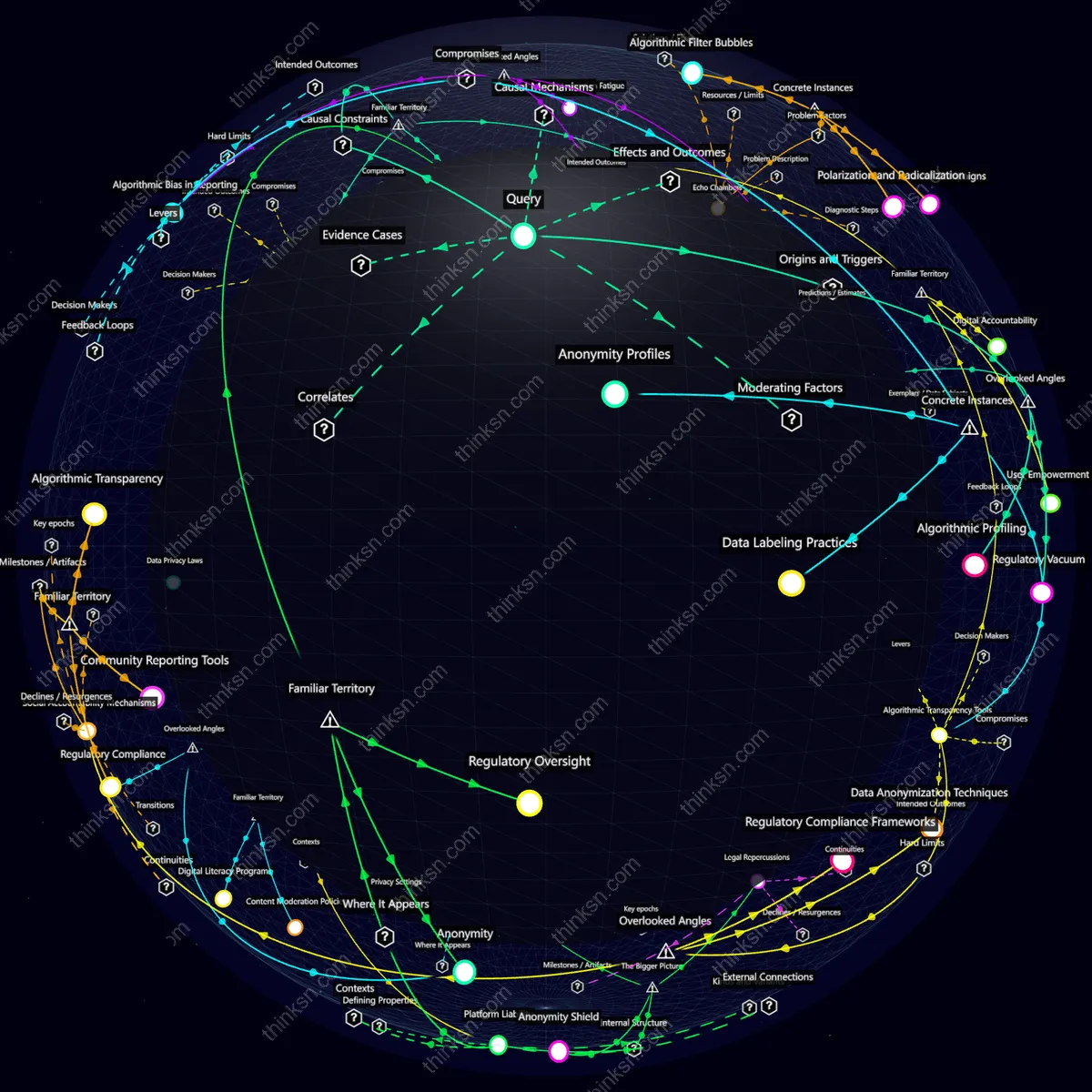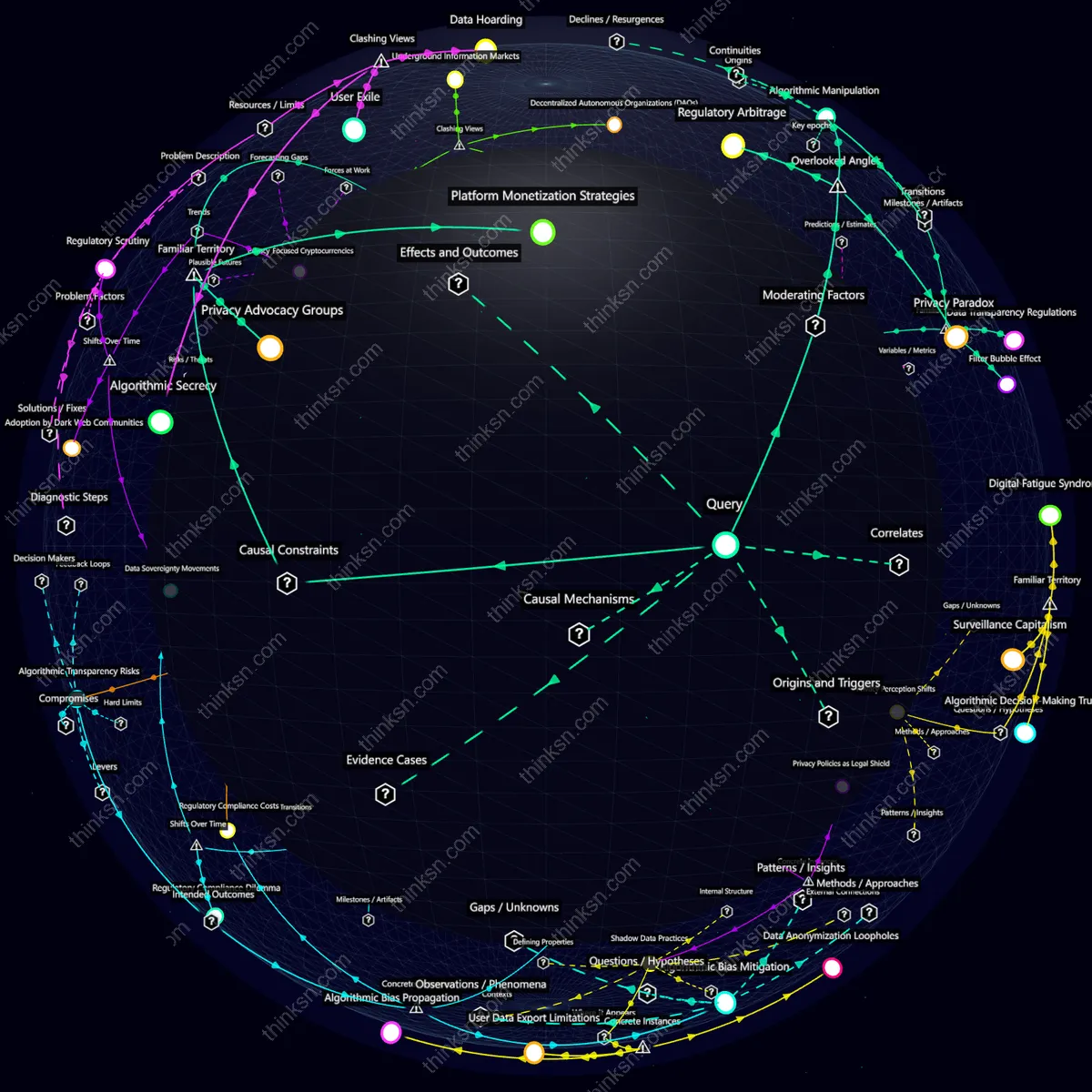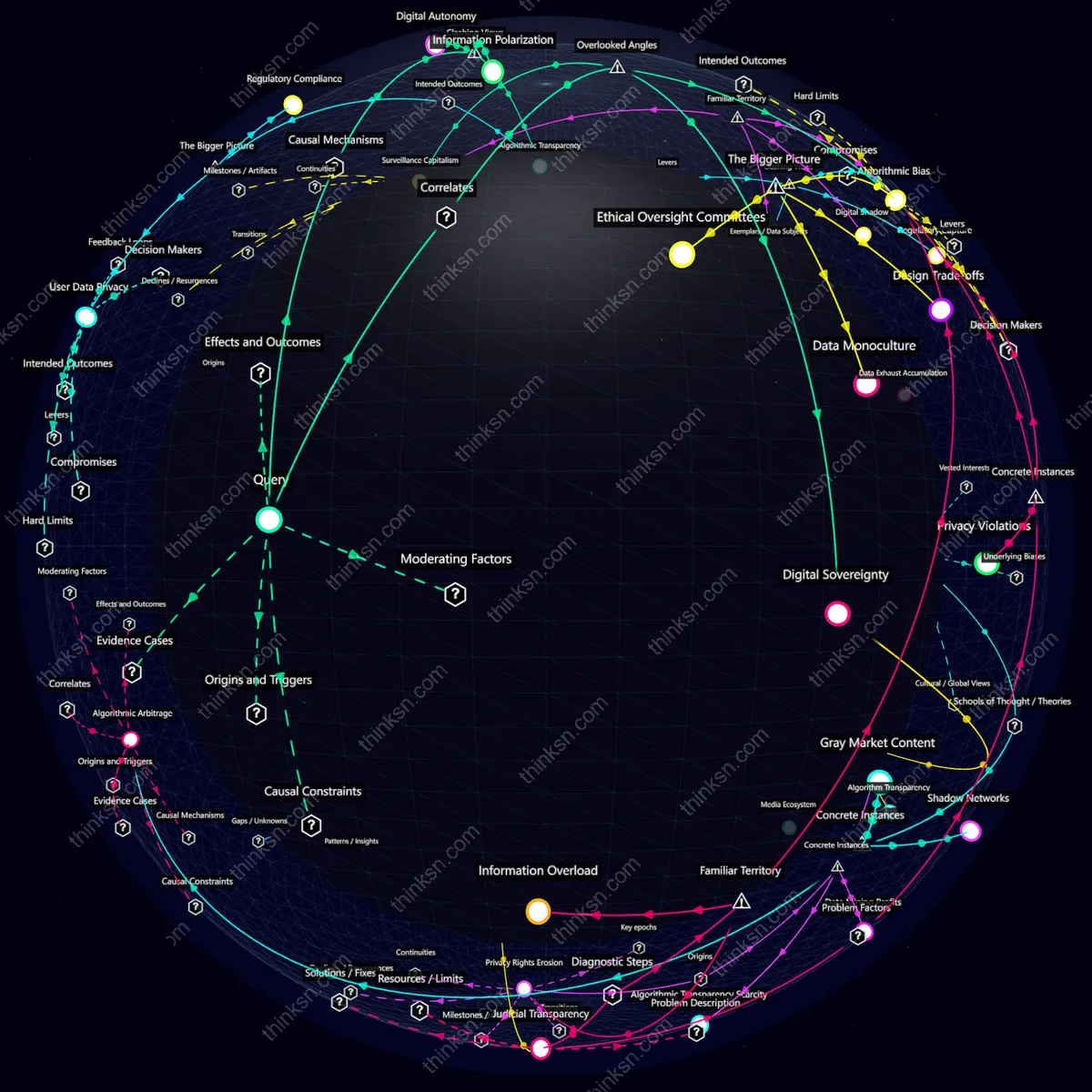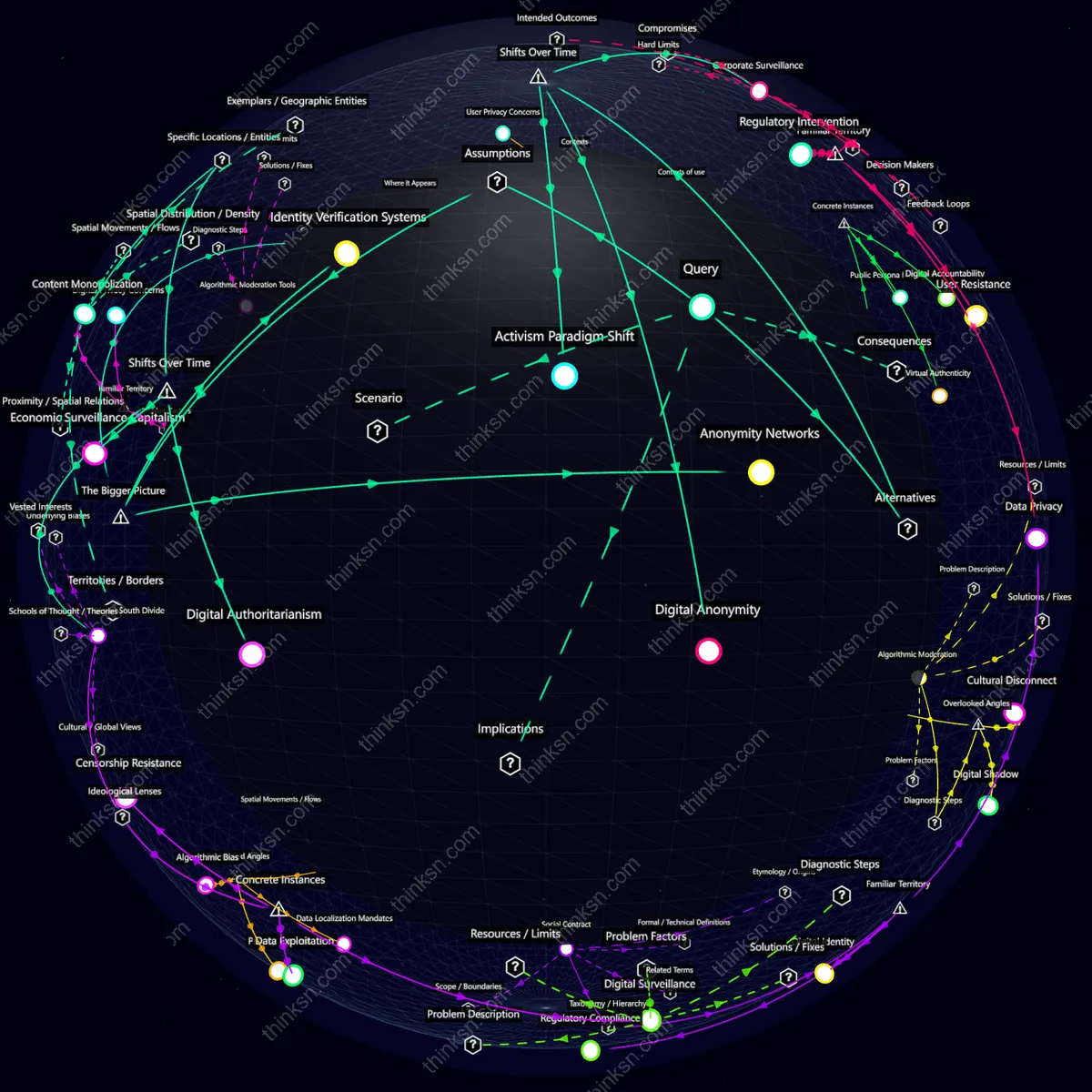
Social Media vs Anonymity Tech Challenges
Analysis reveals 6 key thematic connections.
Key Findings
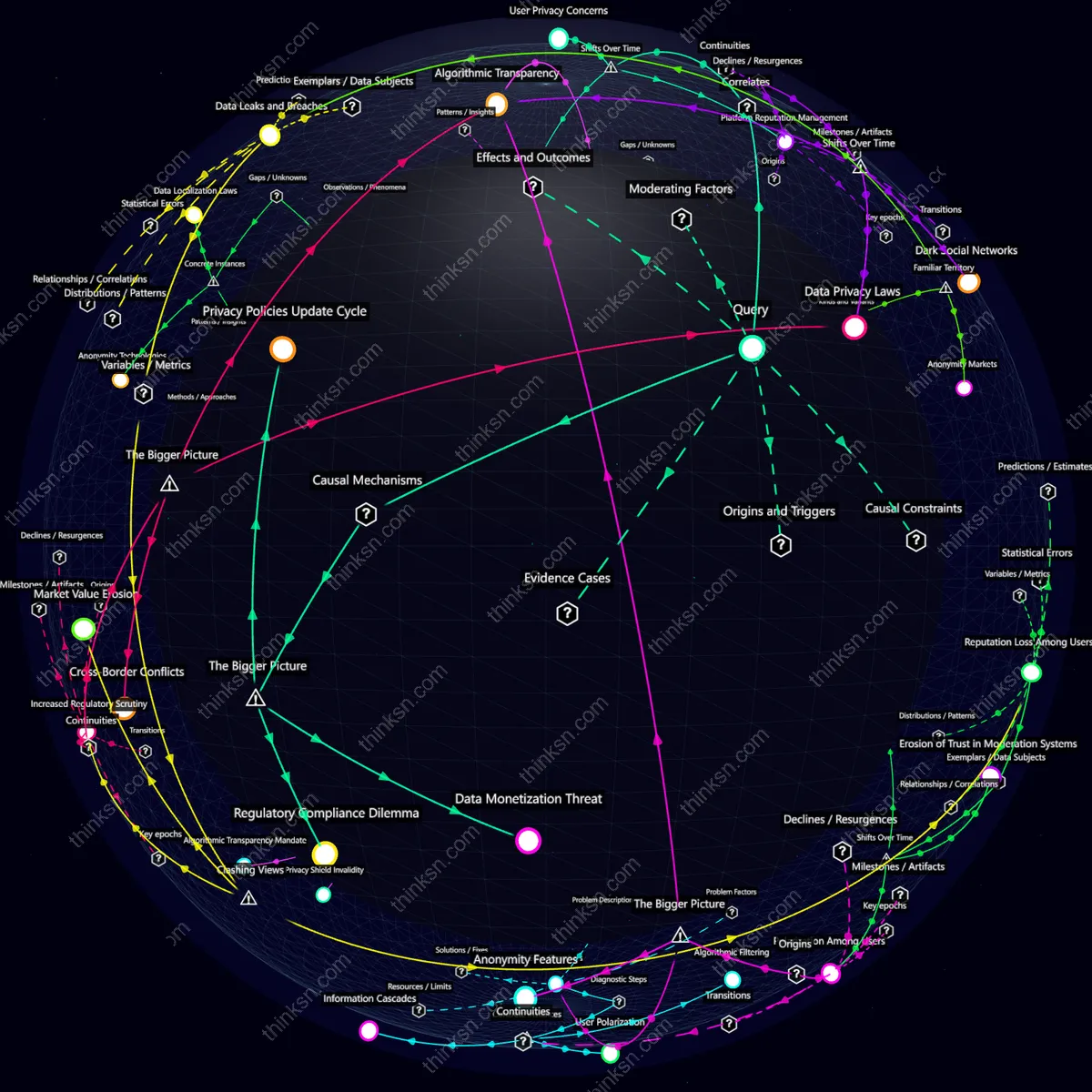
Privacy Policies Update Cycle
Social media companies frequently update their privacy policies in response to new anonymity technologies, often leading to a cycle of policy adjustments and user confusion. This constant flux can weaken trust in these platforms as users struggle to keep up with changes, potentially driving them towards less regulated alternatives.
Data Monetization Threat
The shift toward greater anonymity challenges social media companies' core business model based on data monetization. As user identities become harder to trace, advertisers may lose interest in platforms that struggle to deliver targeted ads effectively, threatening the financial stability of these companies.
Regulatory Compliance Dilemma
New anonymity technologies prompt social media firms to navigate a complex landscape of regulatory compliance. While striving to adhere to privacy laws like GDPR, they risk alienating users who value transparency and may face legal repercussions if their measures fail to prevent misuse or abuse of the platform.
User Privacy Concerns
As social media platforms grapple with new technologies prioritizing anonymity, user privacy concerns intensify. This shift often leads companies to implement stricter data protection measures, but paradoxically, these efforts can also create a false sense of security among users who may then disclose more personal information under the guise of increased privacy.
Regulatory Challenges
The rise in anonymity-enhancing technologies challenges existing regulatory frameworks, prompting governments to introduce new laws that social media companies must navigate. These regulations, while intended to protect users, can also stifle innovation and force platforms into a reactive mode of operation where they focus more on compliance than user experience or engagement.
Platform Reputation Management
Social media companies face an uphill battle in managing their reputation as they adopt technologies that emphasize anonymity. While these changes might attract users seeking privacy, the same measures can alienate others who prefer transparent interactions. This dual challenge requires companies to balance between two opposing user groups, potentially leading to a fragmented user base and diluted brand identity.
Deeper Analysis
What emerging regulatory challenges do social media companies face as they navigate technologies that prioritize user anonymity over transparency?
Data Privacy Legislation
As social media companies prioritize user anonymity over transparency, they increasingly face conflicting demands from data privacy legislation worldwide. This creates a regulatory patchwork where compliance in one jurisdiction may lead to legal challenges elsewhere, forcing firms into complex and costly global strategies.
Dark Web Interactions
The rise of anonymous platforms on social media has led to an uptick in illicit activities such as the sale of illegal goods and services. This forces regulators to balance the need for user privacy with public safety concerns, leading to potential overreach or underregulation that could endanger users.
Algorithmic Transparency
Regulatory pressure to increase algorithmic transparency poses a significant challenge for social media companies emphasizing anonymity. This tension can result in companies designing opaque algorithms that are difficult even for regulators to understand, thereby undermining the very goals of regulatory oversight and user protection.
Explore further:
- What emerging insights can be gained from examining how data privacy legislation intersects with social media companies' responses to technologies prioritizing anonymity over transparency?
- What are the structural components and relationships involved in social media companies' interactions with the dark web as a response to technological advancements prioritizing anonymity?
How has platform reputation management evolved in response to new technologies prioritizing anonymity over transparency, and what mechanisms have social media companies implemented to address these challenges over time?
Data Privacy Laws
As social media companies face stricter data privacy laws like GDPR and CCPA, they must navigate the delicate balance between compliance and user engagement. This shift forces platforms to prioritize transparency while also accommodating users' growing desire for anonymity, leading to a resurgence of platform reputation management strategies that integrate both ethical considerations and legal mandates.
Dark Social Networks
The emergence of dark social networks has challenged traditional platform reputation management by fostering communities where absolute anonymity is the norm. These platforms thrive on obscurity, making it difficult for companies to apply standard reputation strategies. As a result, social media giants are forced to innovate and develop new mechanisms that respect user privacy while still maintaining accountability, marking a significant shift in how reputation is managed online.
Algorithmic Transparency
The push towards algorithmic transparency has seen platforms like Facebook and Twitter facing increased scrutiny for their opaque recommendation systems. This pressure led to the implementation of features such as 'Why am I seeing this?' explanations, aiming to restore trust by bridging the gap between user expectations of privacy and the need for visibility in reputation management. However, these efforts often face backlash from users who prioritize complete anonymity over partial transparency.
What emerging insights can be gained from examining how data privacy legislation intersects with social media companies' responses to technologies prioritizing anonymity over transparency?
Privacy Shield Framework
The collapse of the EU-US Privacy Shield due to legal challenges highlighted how data privacy legislation can be undermined by international trade-offs and conflicting national interests, leaving companies in a precarious position between regulatory compliance and operational feasibility.
Anonymity Technologies
Emerging anonymity technologies like Tor face heightened scrutiny under stringent data privacy laws, creating tension where tech developers must navigate legal landscapes that often prioritize transparency over user anonymity, risking innovation stymieing or driving such tools underground.
Data Localization Laws
Countries implementing strict data localization laws force social media companies to store user data domestically, increasing costs and operational complexities. This can lead to fragmented global service offerings and potential legal conflicts as companies struggle to balance local regulations with their core business models.
What are the structural components and relationships involved in social media companies' interactions with the dark web as a response to technological advancements prioritizing anonymity?
Anonymity Markets
The emergence of anonymity markets on the dark web has transformed traditional black markets, making illicit goods more accessible than ever before. Social media firms are compelled to navigate complex legal landscapes while addressing public safety concerns, often at odds with privacy advocates who argue for user autonomy.
Data Leaks and Breaches
Dark web interactions have exacerbated the risk of data leaks and breaches for social media companies. These incidents not only erode consumer trust but also necessitate expensive security measures, creating a cycle where firms must continually adapt to new threats while managing public scrutiny and potential regulatory actions.
In what ways can social media companies adapt the Privacy Shield Framework to address emerging challenges from technologies that emphasize anonymity over transparency?
Data Localization Policies
Data localization policies can undermine the cross-border data transfer mechanisms of the Privacy Shield Framework by imposing stringent local storage requirements that conflict with social media companies' global operations, potentially isolating users and creating legal compliance challenges.
Anonymity Tools
Emerging anonymity tools challenge the Privacy Shield Framework's emphasis on transparency, as these technologies enable users to bypass tracking mechanisms, complicating compliance efforts for social media companies by increasing operational complexity and reducing visibility into user data flows.
Regulatory Arbitrage
Social media companies may exploit regulatory gaps between different privacy frameworks, engaging in regulatory arbitrage that undermines the effectiveness of the Privacy Shield Framework. This behavior can lead to a race to the bottom in terms of protective standards and create ethical dilemmas for firms.
What are the measurable impacts on social media companies when data leaks and breaches occur due to technologies prioritizing anonymity over transparency, and how do these incidents stress-test their system's resilience and trade-offs between security and user privacy?
Reputation Loss Among Users
Data leaks can erode user trust rapidly as personal information becomes public. For social media companies, this means a swift loss of followers or active users who feel their privacy has been violated, leading to a chain reaction where users not directly affected also lose confidence in the platform's security measures.
Increased Regulatory Scrutiny
Following significant data breaches, social media companies face heightened regulatory scrutiny and potential legal action. This can lead to increased operational costs as firms must comply with stricter data protection regulations, often at odds with maintaining user-friendly services that prioritize ease of use over stringent security protocols.
Market Value Erosion
Data breaches can cause a significant drop in stock prices and market valuation for social media companies. Investors may pull back due to perceived long-term risks, affecting the company's ability to fund future growth initiatives or maintain current operational standards without financial strain.
Explore further:
- What are the measurable impacts on user reputation within social media platforms when they implement technologies that prioritize anonymity over transparency, and how do these changes stress-test their systems for potential failures or trade-offs?
- How has increased regulatory scrutiny evolved in response to social media companies' challenges with new technologies prioritizing anonymity over transparency, and what mechanisms have driven this evolution?
What are the measurable impacts on user reputation within social media platforms when they implement technologies that prioritize anonymity over transparency, and how do these changes stress-test their systems for potential failures or trade-offs?
Decreased Platform Moderation
As social media platforms prioritize anonymity over transparency, the decrease in platform moderation leads to a surge in toxic behavior and misinformation. This shift not only undermines user reputation but also creates an environment where bad actors thrive, exploiting the lack of oversight.
Polarization Among Users
The implementation of anonymity tools exacerbates polarization among users by allowing individuals to hide behind masks, leading to more extreme and divisive discourse. This dynamic deteriorates community cohesion and trust, as users feel increasingly alienated from diverse perspectives and constructive dialogue.
Erosion of Trust in Moderation Systems
When platforms emphasize anonymity, the credibility of moderation systems is often questioned due to perceived bias or inconsistency. This erosion of trust can lead to a backlash against the platform's efforts to maintain order, as users become skeptical and less cooperative with reporting mechanisms.
Explore further:
- What are the emerging insights and diverse viewpoints on how decreased platform moderation affects social media companies' response to new technologies prioritizing anonymity over transparency?
- How has polarization among users evolved in response to social media companies' strategies addressing new technologies that prioritize anonymity over transparency, and what mechanisms are driving this evolution?
How has increased regulatory scrutiny evolved in response to social media companies' challenges with new technologies prioritizing anonymity over transparency, and what mechanisms have driven this evolution?
Data Privacy Laws
As social media platforms increasingly prioritize user anonymity over transparency, data privacy laws evolve to mandate stricter oversight and accountability measures. This shift places an unprecedented burden on smaller startups lacking the resources to comply with complex regulations, potentially stifling innovation.
Algorithmic Transparency
The push for algorithmic transparency in social media companies is driven by increased regulatory scrutiny, aiming to uncover biases and misinformation spread through opaque algorithms. However, this focus can inadvertently expose proprietary business models, creating a delicate balance between regulation and corporate secrecy.
Cross-Border Conflicts
Increased regulatory scrutiny has led to cross-border conflicts as different countries adopt varying standards for data protection and content moderation, complicating global operations for social media companies. This fragmented approach can create legal loopholes that tech giants exploit while smaller players struggle with compliance.
What are the emerging insights and diverse viewpoints on how decreased platform moderation affects social media companies' response to new technologies prioritizing anonymity over transparency?
Social Polarization
Decreased platform moderation amplifies social polarization as unchecked inflammatory content spreads faster and wider. This fosters echo chambers where users only encounter like-minded views, deepening divides and making constructive dialogue nearly impossible.
Anonymity Paradox
With decreased moderation, the anonymity prioritized by new technologies paradoxically undermines user trust and safety online. While some benefit from enhanced privacy, others face increased harassment and misinformation, creating a toxic environment that discourages engagement and participation.
Regulatory Backlash
The lack of stringent platform moderation often triggers regulatory backlash as governments react to public outcry over misuse of social media. This can lead to sudden policy changes that disrupt business models, force companies to invest heavily in compliance, or both, risking innovation and growth.
How has polarization among users evolved in response to social media companies' strategies addressing new technologies that prioritize anonymity over transparency, and what mechanisms are driving this evolution?
Echo Chambers
Social media algorithms designed to prioritize user engagement often create echo chambers that reinforce pre-existing beliefs and attitudes, exacerbating polarization among users. This mechanism can lead to a fragmented society where individuals are less likely to encounter opposing viewpoints, fostering radicalization and reducing social cohesion.
Anonymity Features
The implementation of anonymity features by tech companies has inadvertently allowed for the proliferation of hate speech and misinformation, which further polarizes user communities. While intended to protect free speech, these features enable users to engage in behavior that would be less likely if their identities were transparent, thereby undermining social harmony.
Algorithmic Transparency
Lack of transparency in algorithmic operations used by social media platforms can lead to mistrust among users and exacerbate polarization. When algorithms are opaque, it becomes difficult for users to understand how content is curated, leading to suspicion about the motives behind content moderation, which in turn fuels conspiracy theories and division.
What is the regulatory backlash faced by social media companies when they fail to address new technologies that prioritize anonymity over transparency?
Privacy Shield Invalidity
The invalidation of Privacy Shield by the European Court of Justice in 2020 reframed global attention towards regulatory scrutiny, pushing social media companies to face severe backlash for failing to uphold transparency and accountability over user data protection.
Algorithmic Transparency Mandate
As governments introduce mandates requiring algorithmic transparency from tech giants, social media platforms struggle to balance operational efficiency with compliance, leading to heightened regulatory scrutiny that can undermine their core business models.
Data Localization Policies
The implementation of strict data localization policies by various countries forces social media companies into a delicate balancing act between local regulations and global ambitions, increasing the risk of fragmented governance and operational inefficiencies.
What are the measurable impacts on social media platforms when echo chambers fueled by anonymity-resistant technologies lead to systemic failures in information dissemination and user engagement?
Algorithmic Filtering
Algorithmic filtering in social media amplifies echo chambers by prioritizing content that reinforces users' existing beliefs, leading to systemic failures where diverse viewpoints are marginalized and engagement declines as users become entrenched in their own bubbles.
User Polarization
Prolonged exposure to echo chambers intensifies user polarization, transforming moderate users into extreme advocates of a narrow ideology. This shift not only fractures communities but also undermines the platform's ability to foster constructive dialogue and maintain social cohesion.
Information Cascades
Echo chambers exacerbate information cascades by creating feedback loops where misinformation spreads rapidly among like-minded users, making it difficult for fact-checking mechanisms to intervene before widespread adoption and belief.