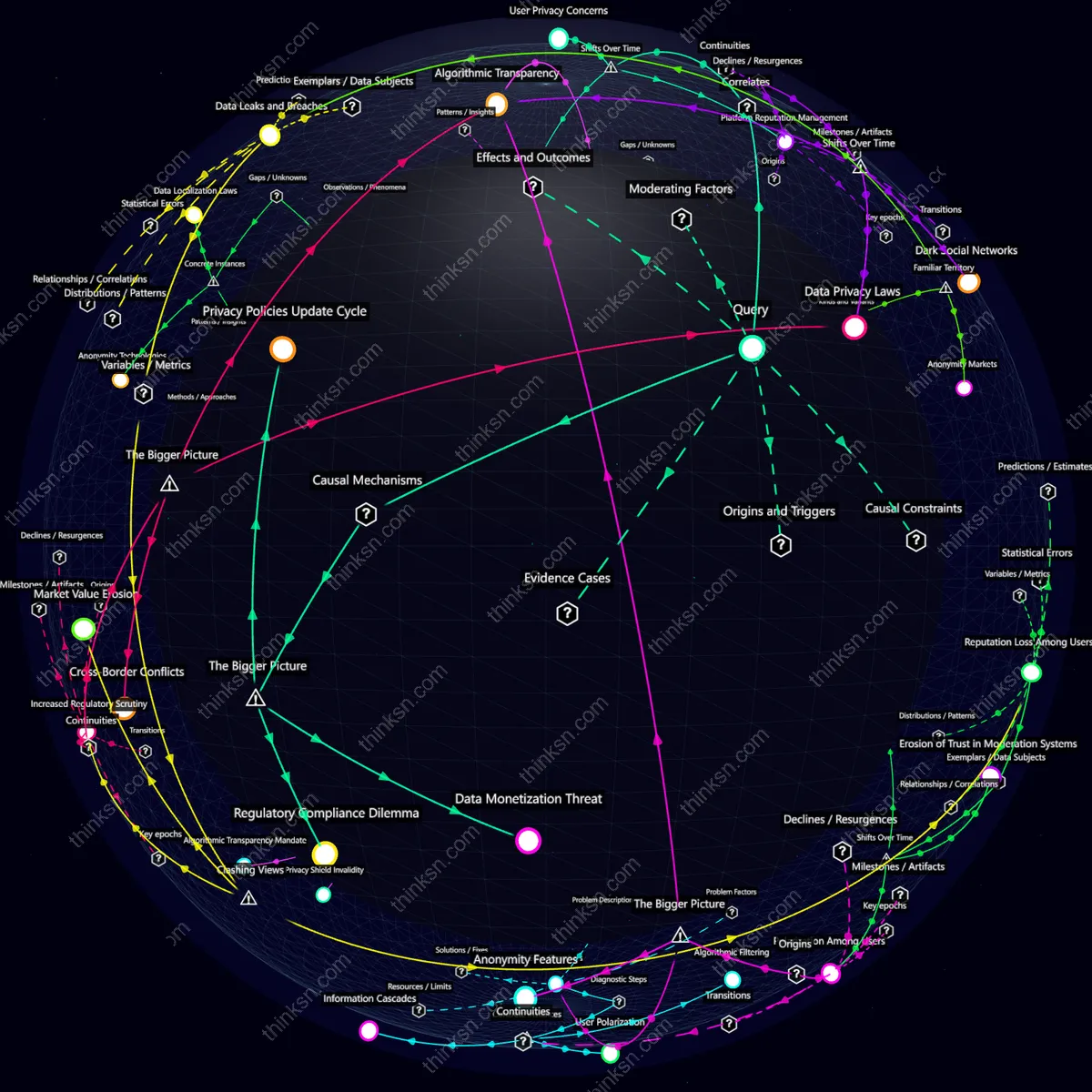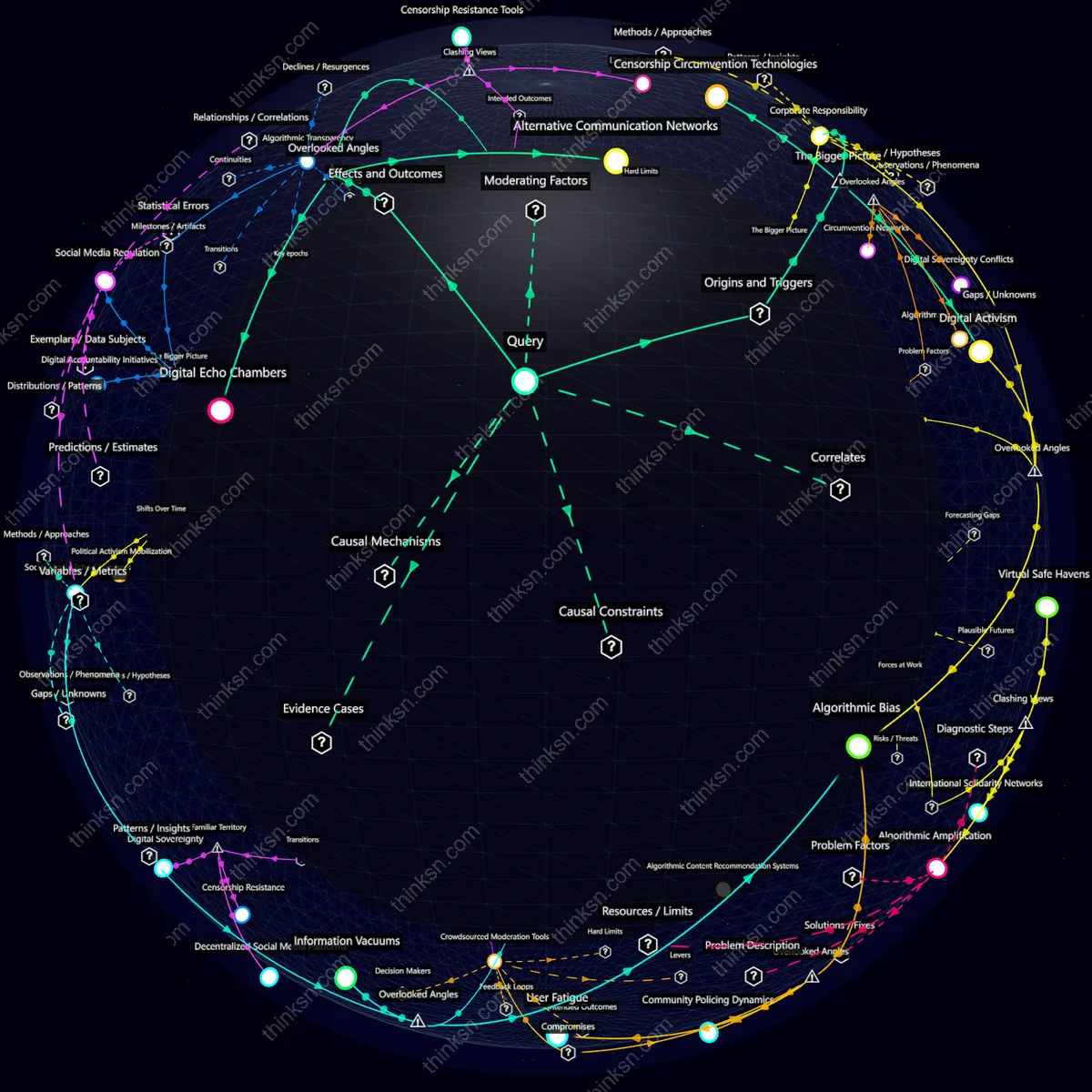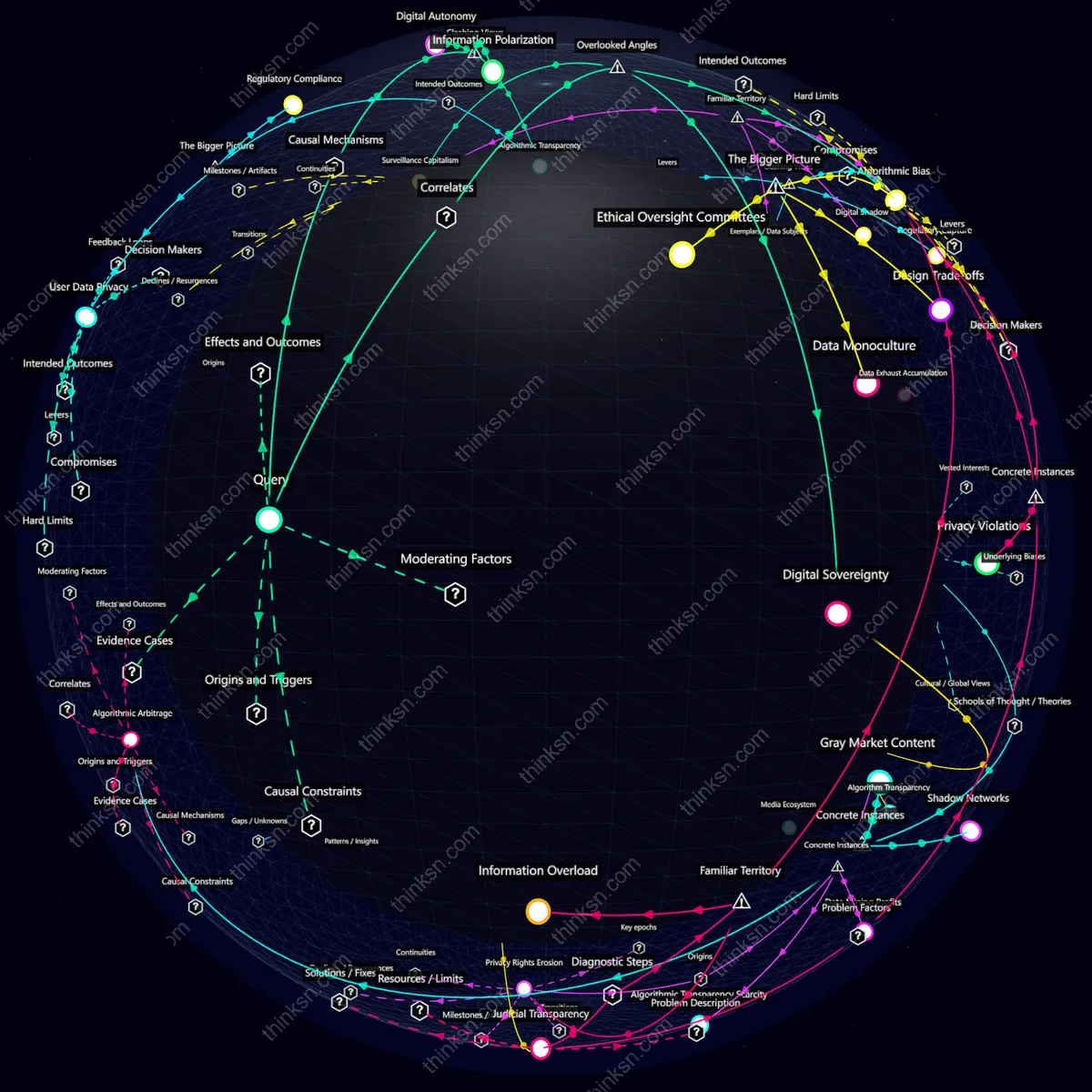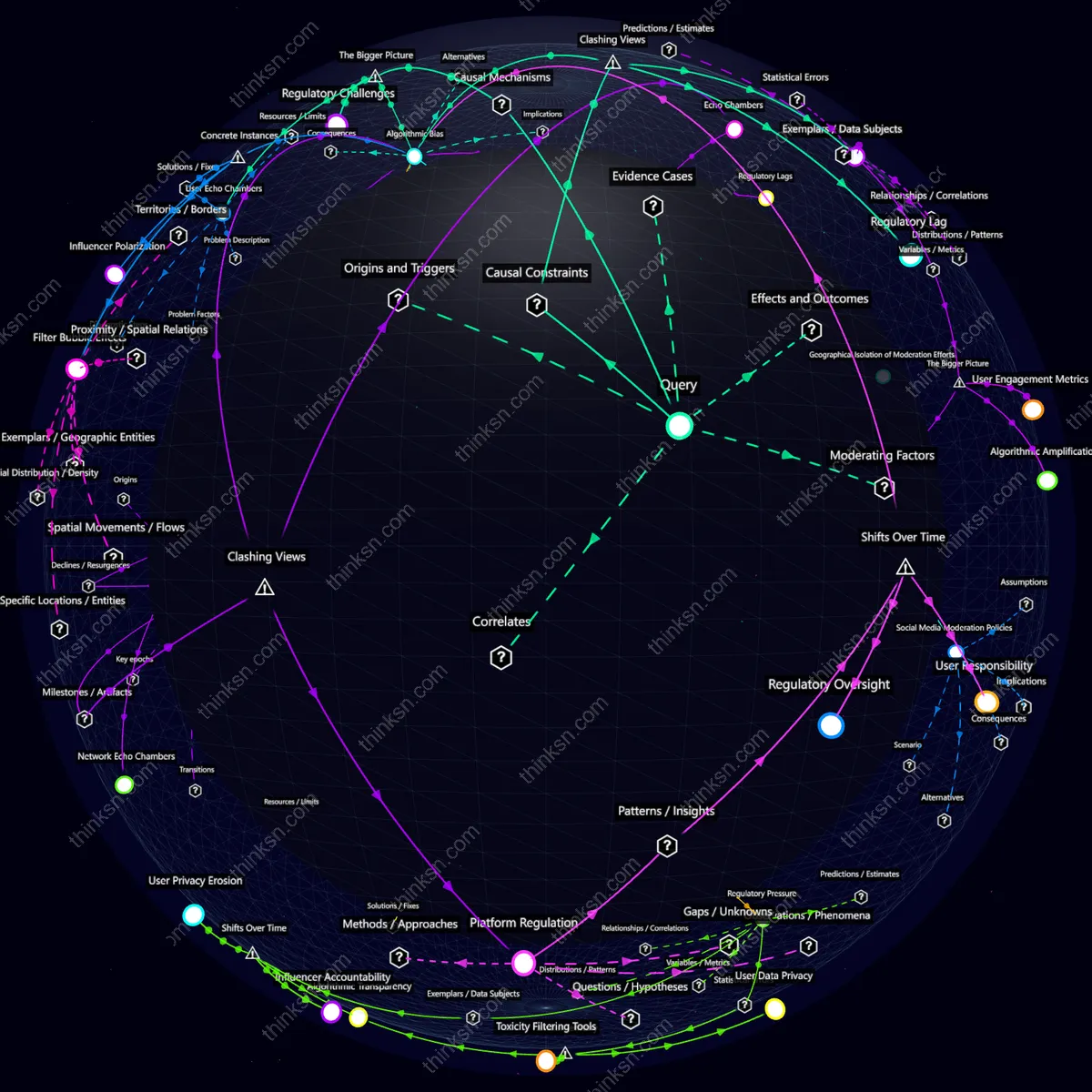
The Impact of Anonymous Posting on Social Media Identity
Analysis reveals 6 key thematic connections.
Key Findings
Digital Shadow
Anonymity on social media platforms creates a digital shadow where user behavior becomes fragmented and unpredictable. While users might feel freer to express themselves without societal judgment, this can lead to increased polarization and the spread of misinformation as individuals adopt extreme personas in anonymous settings.
Regulatory Vacuum
The lack of robust regulation around anonymity on social media platforms creates a regulatory vacuum. This absence allows for an increase in harmful behaviors such as cyberbullying, harassment, and the trafficking of illegal goods or services, highlighting a fragile dependency between legal frameworks and online safety.
Algorithmic Profiling
Despite anonymity, sophisticated algorithms can profile users based on indirect data points like IP addresses, device information, and behavioral patterns. This hidden dimension complicates the notion of privacy, as even anonymous users may be subject to targeted advertising or surveillance, impacting their perceived freedom and authenticity online.
Online Harassment
Anonymity on social media platforms emboldens trolls and harassers to target users with impunity, leading to a chilling effect where victims self-censor or abandon these spaces for fear of escalating abuse. This dynamic undermines the intended community-building purpose of social networks.
Echo Chambers
The anonymity provided by social media platforms can exacerbate the creation and reinforcement of echo chambers, as users hide behind pseudonyms to express extreme views without facing real-world consequences or diverse perspectives. This fragmentation limits constructive dialogue and societal progress.
Regulatory Challenges
Anonymity on social media complicates efforts by governments and regulatory bodies to enforce laws against hate speech, misinformation, and cybercrime due to the difficulty in identifying users behind pseudonymous accounts. This legal grey area creates a fertile ground for malicious actors.
Deeper Analysis
What strategies can social media platforms implement to mitigate online harassment caused by anonymity and what are the potential impacts on user behavior and platform ecosystems?
Digital Shadow
As social media platforms implement stricter measures against anonymous harassment, users' digital shadows expand. This includes a trail of data points that reveal past behavior and identity, potentially chilling free expression but also creating new opportunities for misuse by authoritarian regimes to stifle dissent.
Community Moderation Fatigue
Increased reliance on community members to report and moderate harassment can lead to 'moderation fatigue,' where active users become overwhelmed or desensitized, undermining the effectiveness of anti-harassment efforts and fostering a toxic environment where bystanders are less likely to intervene.
Algorithmic Bias in Reporting
Efforts to combat anonymous harassment through algorithmic detection may inadvertently amplify existing social biases. For example, algorithms might overflag certain demographic groups due to historical data imbalances, leading to a disproportionate impact on marginalized communities and eroding trust in platform fairness.
Explore further:
- What are the measurable impacts on social media platforms when users' digital shadows become more pronounced due to decreased anonymity, and how do these changes stress-test the platform's ecosystem?
- What strategies can be formulated to mitigate algorithmic bias in reporting when addressing anonymity on social media platforms and its impact on user behavior and platform ecosystems?
What are the measurable impacts on social media platforms when echo chambers, facilitated by anonymity, lead to systemic failures in information exchange and user engagement?
Misinformation Campaigns
Anonymity in echo chambers allows actors to launch targeted misinformation campaigns, manipulating public opinion with minimal accountability. This distorts users' understanding of reality and undermines democratic processes.
Polarization and Radicalization
Echo chambers foster a toxic environment where extreme views are amplified and normalized, leading to increased polarization and radicalization among user communities. This can result in real-world conflicts or violence triggered by online discourse.
Algorithmic Filter Bubbles
Social media algorithms that prioritize engagement often trap users within filter bubbles, reinforcing echo chambers. This creates a feedback loop where platforms profit from increased usage but contribute to societal fragmentation and disinformation spread.
What are the measurable impacts on social media platforms when users' digital shadows become more pronounced due to decreased anonymity, and how do these changes stress-test the platform's ecosystem?
Surveillance Capitalism
As users' digital shadows grow larger due to decreased anonymity, social media platforms increasingly rely on surveillance capitalism to monetize this data. This shift stresses the ecosystem by forcing users into a cycle of constant self-disclosure and commodification, undermining privacy and autonomy while enhancing corporate control over personal information.
Algorithmic Bias
The expansion of digital shadows leads social media algorithms to profile users more comprehensively, often entrenching algorithmic bias. Platforms may inadvertently amplify existing societal prejudices, such as racism or sexism, by serving tailored content that reflects and reinforces stereotypes, thereby harming marginalized communities and distorting public discourse.
Echo Chambers
With users' digital shadows more pronounced, social media algorithms exacerbate echo chamber effects by curating personalized feeds. This can lead to extreme polarization, where individuals are exposed only to content that confirms their existing beliefs, making it harder for diverse opinions and constructive dialogue to emerge.
What strategies can be formulated to mitigate algorithmic bias in reporting when addressing anonymity on social media platforms and its impact on user behavior and platform ecosystems?
Data Labeling Practices
Biased data labeling practices can skew algorithmic reporting on social media, leading to skewed user behavior and a fragmented platform ecosystem. For instance, platforms may prioritize speed over accuracy in content moderation, inadvertently amplifying harmful narratives.
Anonymity Profiles
The design trade-off between protecting user anonymity and preventing abuse often results in algorithms that either overly restrict speech or fail to detect malicious activity. This can lead to a paradoxical situation where the very feature meant to protect users' privacy inadvertently enables harassment.
Algorithmic Transparency Tools
Efforts to increase transparency through algorithmic tools may reveal complex biases, causing public outcry and regulatory scrutiny that platforms are ill-prepared for. For example, Facebook's early attempts at transparency showed stark gender-based differences in ad targeting, leading to legal challenges.
What strategies can be formulated using algorithmic transparency tools to mitigate negative effects of anonymity on social media user behavior and platform ecosystems?
Data Anonymization Techniques
The implementation of data anonymization techniques through Algorithmic Transparency Tools can significantly reduce the risk of personally identifiable information exposure. However, over-reliance on these tools may paradoxically increase users' sense of security, leading to more reckless online behavior and potential misuse of anonymous platforms for harmful activities.
Regulatory Compliance Frameworks
Algorithmic Transparency Tools are essential in helping social media companies adhere to regulatory compliance frameworks aimed at protecting user privacy. Yet, such tools can create complex legal grey areas, as the precise definition and enforcement of transparency requirements may vary across jurisdictions, leading to inconsistent practices and potential loopholes for exploitation.
Social Accountability Mechanisms
The deployment of Algorithmic Transparency Tools can empower users through social accountability mechanisms by making platform policies more accessible. However, these tools might also inadvertently reinforce existing power imbalances if not designed inclusively, leading to a perception among marginalized groups that their voices are being ignored or tokenized.
Digital Accountability
Algorithmic transparency tools can foster digital accountability by making the decision-making processes of social media platforms more visible to users. However, this increased visibility could also expose sensitive internal operations and data management practices, leading to potential backlash from both users and stakeholders who might feel their privacy is compromised.
User Empowerment
By enabling users to understand how algorithms influence content curation and interactions, these tools can empower individuals to make more informed choices online. Yet, this empowerment comes with the risk of creating a divide between those who are tech-savvy enough to use transparency tools effectively and those who remain unaware or unable to navigate them.
Regulatory Challenges
Algorithmic transparency tools pose significant challenges for regulators attempting to enforce existing laws due to the rapid evolution of technology. As platforms adapt these tools, regulatory frameworks may struggle to keep up, potentially leading to legal grey areas and vulnerabilities in protection against harmful content.
Explore further:
- How has the evolution of social accountability mechanisms on social media platforms influenced user behavior and platform ecosystems over time?
- What regulatory strategies can be formulated to address the challenges posed by anonymity on social media platforms and how might these interventions shape user behavior and platform ecosystems?
How has the evolution of social accountability mechanisms on social media platforms influenced user behavior and platform ecosystems over time?
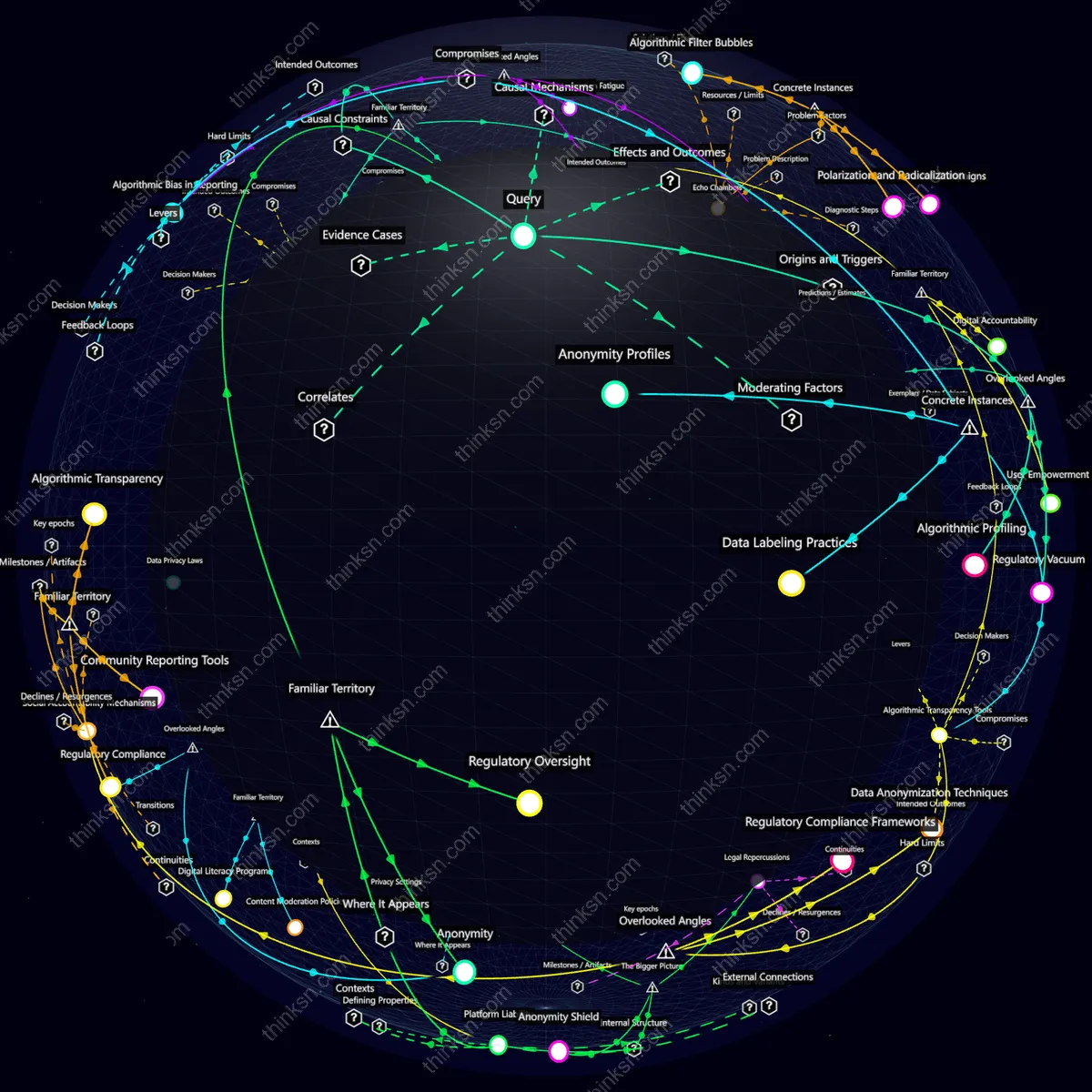
Algorithmic Transparency
As social media platforms introduce more algorithmic transparency to enhance user trust, they risk over-simplifying complex decision-making processes that can lead users to misinterpret the nuanced ways content is curated and amplified. This could undermine rather than strengthen accountability.
Community Reporting Tools
The deployment of community reporting tools on social media platforms has empowered users to flag inappropriate content, but it also creates a dependency on user vigilance that can be overwhelming for the average internet user, leading to fatigue and decreased effectiveness over time.
Regulatory Compliance
Stricter regulatory compliance mandates force social media companies to implement stricter policies around harmful or misleading content. However, this often results in a 'whack-a-mole' effect where new forms of manipulation emerge faster than platforms can adapt, creating an arms race between regulators and platform operators.
What regulatory strategies can be formulated to address the challenges posed by anonymity on social media platforms and how might these interventions shape user behavior and platform ecosystems?
Data Privacy Laws
As data privacy laws tighten to address anonymity on social media platforms, companies like Facebook face escalating compliance costs. This can lead to reduced innovation and user experience as resources are diverted towards legal adherence rather than product development.
Cybersecurity Threats
Increased regulatory scrutiny aimed at curbing anonymous activities may inadvertently exacerbate cybersecurity threats by driving such behavior underground, making it harder for law enforcement to monitor and mitigate risks. This can create a cat-and-mouse game between regulators and malicious actors.
Platform Liability
Regulatory moves to hold social media platforms liable for user-generated content may shift the balance of power towards large corporations at the expense of smaller startups or innovative new entrants, who lack the legal resources to comply with stringent regulations. This could stifle competition and diversity in the market.
What is the relationship between platform liability and user behavior on social media platforms regarding anonymity?
Anonymity Shield
The anonymity shield empowers users to engage in behavior that would normally be inhibited by social norms and legal constraints. This can embolden individuals to spread misinformation or cyberbullying, but it also provides a protective layer for whistleblowers and activists seeking to expose corruption without fear of retribution.
User Accountability
Platform liability often results in increased user accountability measures as social media companies implement stricter moderation policies. This shift can lead to a chilling effect on free speech, where users self-censor due to fear of repercussions, while also encouraging platforms to invest more heavily in AI-driven content monitoring technologies.
Legal Repercussions
As governments and legal systems grapple with the complexities introduced by platform liability, they often impose stricter regulations on social media companies. This can create a delicate balance between protecting users' rights and ensuring platforms are not liable for harmful content posted anonymously, leading to complex negotiations over data privacy laws and freedom of expression.
Online Harassment
Platform Liability increases as social media companies struggle to combat online harassment. This pressure compels firms like Twitter and Facebook to implement strict moderation policies, often leading to unintended censorship of legitimate speech and fostering a culture of self-censorship among users.
Anonymity
The tension between platform liability and user anonymity is starkly evident. Companies are caught between the demands for accountability and the allure of free expression, leading to complex moderation practices such as requiring real-name verification on platforms like Reddit’s r/AMA (Ask Me Anything) subreddit.
Regulatory Oversight
Government bodies worldwide impose stringent regulations on social media companies to mitigate platform liability. For instance, the EU's General Data Protection Regulation (GDPR) and the California Consumer Privacy Act (CCPA) force platforms like Google and Instagram to adopt robust data protection measures, impacting user privacy and behavior.
Explore further:
- What is the relationship between user accountability and behavior on social media platforms, and how does this impact the platform ecosystem?
- How do legal repercussions evolve over time in response to anonymity on social media platforms, and what are their impacts on user behavior and platform ecosystems?
What is the relationship between user accountability and behavior on social media platforms, and how does this impact the platform ecosystem?
Privacy Settings
As users adjust their privacy settings in response to increased accountability measures, they often face a trade-off between personal data protection and the visibility needed for social interactions. This can lead to unintended consequences where overly restrictive settings limit engagement and community building on platforms.
Content Moderation Policies
Stricter user accountability through content moderation policies forces platforms to balance between policing harmful behavior and stifling free speech. This often results in a complex interplay of automated systems and human moderators, creating fragile dependencies that can be easily disrupted by emerging trends or political pressures.
Digital Literacy Programs
Efforts to enhance digital literacy among users aim to improve accountability but risk falling short if they do not address the systemic issues driving irresponsible behavior. For instance, while educating users about misinformation is crucial, it may not prevent manipulation by sophisticated actors using psychological tactics.
Algorithmic Bias
The interplay between user accountability and algorithmic bias can lead to a vicious cycle where biased algorithms encourage irresponsible behavior, thereby undermining efforts to hold users accountable. Platform operators must carefully balance transparency and fairness in their moderation systems to avoid exacerbating this issue.
Anonymity
While anonymity on social media platforms can protect users from real-world repercussions, it significantly weakens user accountability by allowing individuals to spread misinformation or engage in harmful behavior without facing consequences. This dynamic often leads to a degradation of community standards and trust within the platform ecosystem.
Regulatory Compliance
The enforcement of regulatory compliance on social media platforms heavily depends on user accountability, but this can be fragile due to varying legal frameworks across jurisdictions. Stricter regulations may improve accountability but also pose risks such as chilling free speech or overburdening small platforms with disproportionate oversight costs.