The Impact of Personal Brand Building on Influencer Ad Revenue Models
Analysis reveals 6 key thematic connections.
Key Findings
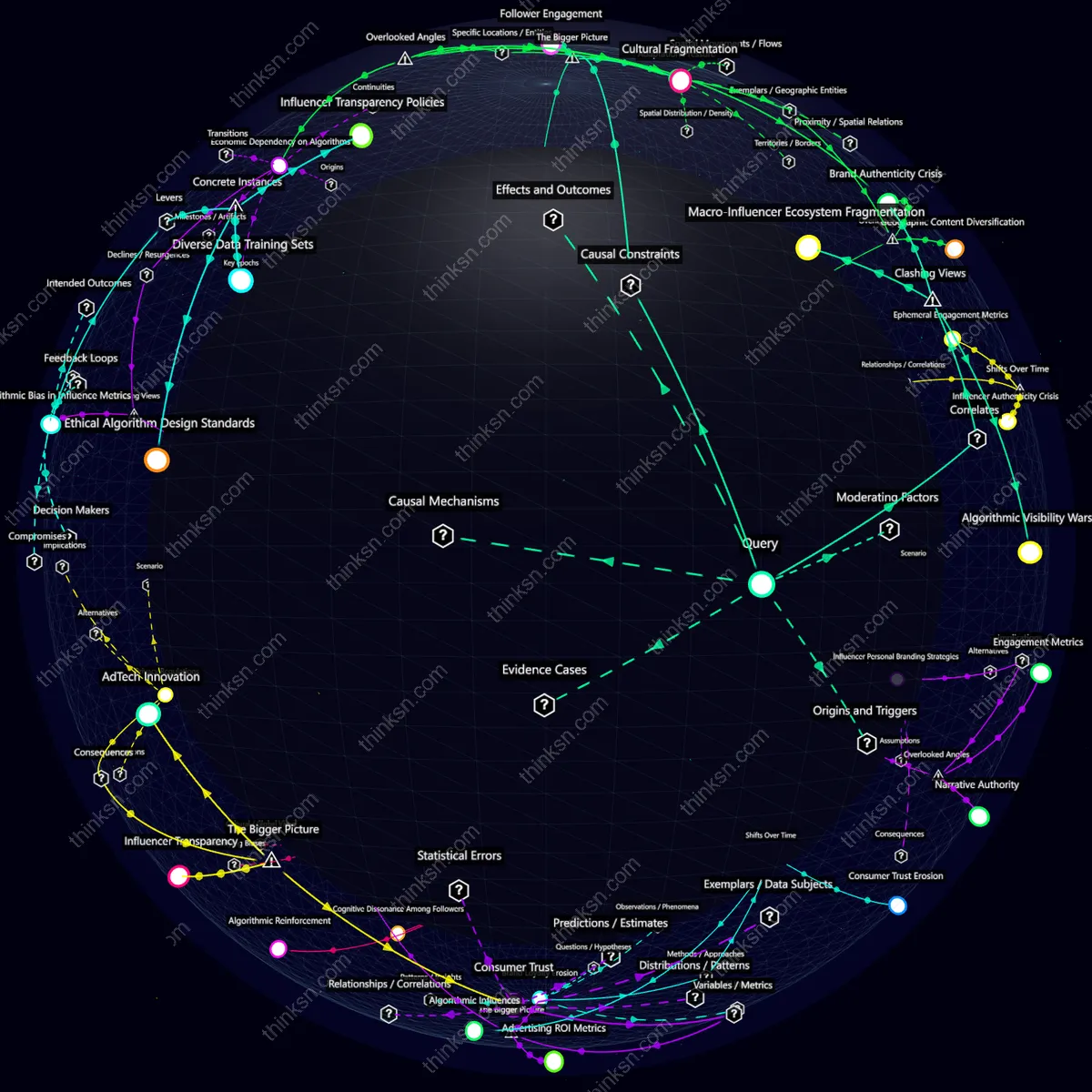
Brand Authenticity Crisis
The shift towards personal branding by influencers can lead to a crisis of brand authenticity as followers may feel deceived if influencer personas diverge from reality, eroding trust and reducing long-term ad revenue potential.
Algorithmic Visibility Wars
As personal brands vie for visibility on social media platforms, the competition intensifies algorithmic challenges, leading to a focus on short-term engagement metrics over sustained brand loyalty, which can undermine stable revenue streams.
Macro-Influencer Ecosystem Fragmentation
The shift towards personal branding exacerbates fragmentation within influencer ecosystems, with macro-influencers becoming micro-niches that attract highly targeted but smaller audiences, complicating traditional ad revenue models and making large-scale monetization harder.
Influencer Autonomy
As influencers increasingly focus on building personal brands rather than promoting products directly, they gain greater autonomy over their content and messaging. This shift can lead to more authentic engagement with followers but also introduces the risk of reduced ad revenue due to less frequent product placements.
Adaptation Pressure
Brands face increasing pressure to adapt their marketing strategies in response to influencer culture shifts, potentially leading to innovative partnership models. However, this adaptation can be constrained by traditional ad revenue metrics that prioritize direct sales outcomes over long-term brand building.
Follower Engagement
Influencers who successfully pivot towards personal brand building see increased engagement from followers seeking more value beyond product endorsements. This shift challenges the conventional wisdom of high engagement equating to high ad revenue, forcing a reevaluation of monetization strategies.
Deeper Analysis
What is the architectural mapping of adaptation pressure in influencer culture as it transitions from product promotion to personal brand building, and how are these components geographically distributed?
Cultural Fragmentation
As influencer culture transitions from promoting products to building personal brands, cultural fragmentation intensifies. Influencers often tailor their content to niche audiences in specific geographic areas like Seoul's K-pop fanbases or Silicon Valley tech communities, creating isolated echo chambers that undermine broader societal cohesion and collective action.
Brand Authenticity Crisis
The pressure to adapt from product promotion to personal brand building often leads to a crisis of authenticity. Influencers may exaggerate their online personas or adopt multiple identities across different platforms, leading to a disconnect between public perception and reality, especially in highly competitive cities like New York and Los Angeles.
Economic Dependency on Algorithms
Influencer adaptation pressure compels reliance on social media algorithms for visibility. This dependency can lead to unpredictable income volatility and the need to constantly innovate content forms, particularly affecting smaller geographic markets where diverse economic support is limited. For example, influencers in rural China face unique challenges due to varying internet access and cultural expectations.
Algorithmic Visibility Challenges
Influencers face increased competition for algorithmic visibility as they transition from product-driven content to personal brand building. This pressure can exacerbate the reliance on trending hashtags or controversial topics, undermining creative independence and long-term audience relationships.
Geographic Content Diversification
Influencers adapting their strategies across different geographic regions encounter unique cultural expectations and market demands. Navigating these differences without losing authenticity can be challenging, leading to fragmented personal brand identities that dilute global appeal.
Explore further:
- How has the shift in influencer culture from product promotion to personal brand building influenced economic dependency on algorithms over time?
- What are the measurable impacts on ad revenue models when influencer culture faces algorithmic visibility challenges due to a shift from product promotion to personal brand building?
How has the shift in influencer culture from product promotion to personal brand building influenced economic dependency on algorithms over time?
Algorithmic Bias in Influence Metrics
As influencer culture pivots towards personal branding, the reliance on algorithmic influence metrics intensifies. However, these metrics often perpetuate biases such as overvaluing engagement from niche audiences, leading to a skewed perception of an influencer's reach and impact. This dependency can entrench inequalities within the ecosystem.
Data Monetization Ecosystem
The shift in influencer culture towards personal brand building amplifies economic dependencies on algorithms that control data monetization platforms. As influencers increasingly rely on these platforms for income, they become vulnerable to sudden changes in platform policies or algorithm updates, potentially leading to significant financial instability.
Explore further:
- What strategic interventions can be formulated to mitigate algorithmic bias in influence metrics as influencers shift from product promotion to personal brand building, and how might these changes impact ad revenue models?
- What is the architectural mapping of the data monetization ecosystem as it relates to influencer culture's shift from product promotion to personal brand building?
What are the measurable impacts on ad revenue models when influencer culture faces algorithmic visibility challenges due to a shift from product promotion to personal brand building?
Influencer Authenticity Crisis
As influencer culture shifts towards personal brand building, the reliance on organic engagement metrics diminishes algorithmic visibility. This shift can lead to a crisis of authenticity as followers may perceive sponsored content as less genuine, reducing trust and engagement. Advertisers face the risk of over-investing in campaigns that fail to resonate with audiences due to perceived inauthenticity.
Ephemeral Engagement Metrics
The transition from product promotion to personal brand building requires influencers to rely on ephemeral engagement metrics such as likes and comments, which are highly volatile. This shift can lead to unpredictable ad revenue models, where sudden drops in engagement may signal a broader trend of audience fatigue or algorithmic changes that prioritize newer content. Advertisers must navigate these fluctuations carefully to avoid financial losses.
What strategic interventions can be formulated to mitigate algorithmic bias in influence metrics as influencers shift from product promotion to personal brand building, and how might these changes impact ad revenue models?
Influencer Transparency Policies
Platforms implementing transparency policies for influencers can mitigate algorithmic bias by requiring detailed disclosures on sponsored content. However, this may lead to a backlash from creators who fear losing their authenticity and audience engagement.
Ethical Algorithm Design Standards
Establishing ethical standards for designing algorithms that measure influence can help reduce biases but could also stifle innovation if overly restrictive. Companies like Twitter have faced criticism for not adapting quickly enough to new forms of content creation and audience engagement.
Diverse Data Training Sets
Using diverse data sets to train algorithms that assess influence metrics can improve accuracy but may introduce complexity in understanding varied cultural contexts. For instance, an algorithm trained primarily on Western social media norms might misinterpret or underestimate the impact of content from non-Western platforms.
What is the architectural mapping of the data monetization ecosystem as it relates to influencer culture's shift from product promotion to personal brand building?
Influencer Personal Branding Strategies
The shift from product promotion to personal brand building by influencers significantly alters the data monetization ecosystem. Influencers now leverage first-party data to craft narratives that enhance their unique value proposition, potentially fragmenting user attention and diluting traditional marketing strategies. This shift underscores a critical dependency on continuous engagement metrics as influencers' economic success hinges on maintaining an engaged audience.
Digital Marketing Analytics
The evolution of influencer culture toward personal branding amplifies the importance of digital marketing analytics within the data monetization ecosystem. Platforms and advertisers increasingly rely on sophisticated algorithms to track engagement, sentiment, and conversion rates. However, this heightened focus on quantifiable metrics can lead to a commoditization of personal brands, where influencers are valued more for their performance in analytics than their creativity or authenticity.
Privacy Regulations
As the data monetization ecosystem integrates influencer personal branding strategies, privacy regulations become a pivotal factor. Stricter GDPR-like laws may restrict how platforms and brands can use first-party data, potentially stifling innovation in personalized marketing efforts. This regulatory landscape creates a fragile balance between legal compliance and maximizing economic returns from user-generated content.
Explore further:
- What strategic moves can influencers make to adapt their personal branding strategies from product promotion to personal brand building, and how might these changes impact ad revenue models in a hypothetical scenario where traditional advertising loses effectiveness?
- What are the potential impacts on ad revenue models if influencer culture shifts towards prioritizing personal brand building over product promotion, considering evolving privacy regulations?
What strategic moves can influencers make to adapt their personal branding strategies from product promotion to personal brand building, and how might these changes impact ad revenue models in a hypothetical scenario where traditional advertising loses effectiveness?
Narrative Authority
Influencers who shift from product promotion to building a personal brand through storytelling gain narrative authority over their audience. This can deepen emotional connections and loyalty but also risks alienating followers if the narratives become too self-centered or inauthentic, leading to a backlash that could damage long-term revenue potential.
Engagement Metrics
Moving from product-centric posts to personal brand building often emphasizes engagement metrics over direct sales. This shift can highlight the importance of community and dialogue but also reveals a fragile dependency on algorithms like those used by Instagram or TikTok, which could change without warning, suddenly diminishing an influencer's reach.
Sponsorship Diversity
Influencers diversifying their personal brand may attract a broader range of sponsorships beyond just product placements. While this can stabilize revenue and tap into niche markets or new industries, it also exposes them to the risk of associating with brands that might face scandals or downturns, tarnishing their own image.
What are the potential impacts on ad revenue models if influencer culture shifts towards prioritizing personal brand building over product promotion, considering evolving privacy regulations?
Influencer Transparency
As privacy regulations tighten and influencers shift towards personal brand building, transparency requirements increase. Influencers may face legal scrutiny for ambiguous endorsements, leading to stricter disclosure practices that could alienate audiences accustomed to more subtle product integration.
AdTech Innovation
Privacy regulations push adtech companies to innovate new tracking methods compliant with data protection laws. However, these innovations may not fully compensate for the loss of organic reach and engagement from influencers who now prioritize personal narratives over sponsored content, potentially undermining traditional ad revenue models.
Consumer Trust
Influencers' pivot towards personal brand building enhances consumer trust by aligning with privacy regulations. However, this shift could also expose brands to higher scrutiny and risk if their product promotions appear insincere or intrusive in a more cautious influencer landscape.
How has the shift towards sponsorship diversity in influencer culture impacted ad revenue models over time, and what trends can be anticipated for future revenue streams?
Micro-Influencer Ecosystem
The shift towards sponsorship diversity has significantly boosted the micro-influencer ecosystem by democratizing access and opportunities. However, this fragmentation introduces challenges such as inconsistent revenue streams and heightened competition for brands looking to maintain engagement consistency.
Algorithmic Bias Mitigation
As influencer marketing moves towards sponsorship diversity, there's a growing need to address algorithmic biases in social media platforms. While this fosters more inclusive representation, it also complicates content discovery and amplification for diverse voices.
Brand Authenticity Expectations
Increasing sponsorship diversity raises audience expectations for brand authenticity and relevance, pushing companies to deepen their understanding of niche markets. This trend can lead to over-saturation in emerging niches and pressure on brands to continuously innovate and adapt.
How does a decline in consumer trust due to influencer culture shifting from product promotion to personal brand building impact ad revenue models quantitatively?
Influencer Authenticity Perceptions
As influencers shift focus from product promotion to personal brand building, consumer perceptions of authenticity erode. This can lead to a cycle where brands are increasingly seen as opportunistic rather than genuine partners in consumers' lives, undermining the foundational trust necessary for effective advertising.
Advertising ROI Metrics
A decline in consumer trust due to influencer behavior shifts means that traditional metrics like click-through rates and conversion rates become less reliable indicators of ad effectiveness. Brands now face a challenge where higher engagement doesn't necessarily translate into sales, complicating efforts to measure the true return on investment for advertising dollars.
Brand Loyalty Erosion
When consumers lose trust in influencers as credible sources about products, this extends to broader brand skepticism. Brands that heavily rely on influencer endorsements may see a significant drop in long-term loyalty metrics such as repeat purchase rates and positive word-of-mouth referrals.
Explore further:
How do changes in influencer authenticity perceptions impact their ability to build a personal brand and subsequently affect ad revenue models?
Cognitive Dissonance Among Followers
When influencers are perceived as inauthentic due to frequent sponsored posts, their followers experience cognitive dissonance between the influencer's image and reality. This can lead to a mass exodus of disillusioned fans, shrinking the influencer’s reach and ultimately reducing ad revenue. The risk lies in the fragile nature of this relationship; once trust is broken, it becomes challenging to regain.
Micro-Influencer Ecosystem
The rise of micro-influencers as an alternative to larger, perceived inauthentic influencers highlights a shift towards niche communities and smaller platforms. This ecosystem thrives on authenticity but faces challenges like lower visibility and limited monetization options compared to mainstream influencers. The trade-off is the need for creators to maintain unique content and engagement strategies that resonate deeply with their audience.
Algorithmic Reinforcement
Social media algorithms can amplify perceptions of influencer authenticity or inauthenticity based on follower interaction data. This creates a feedback loop where highly engaging but possibly insincere content gets more visibility, potentially harming the platform's credibility and user trust. The unintended consequence is that genuine influencers may struggle to be seen amid noise, affecting their ability to build a personal brand and generate revenue.
In what ways might brand loyalty erosion impact ad revenue models as influencers shift towards building personal brands rather than promoting products?
Influencer Autonomy
As influencers increasingly prioritize personal branding over product promotion, their autonomy grows but brand loyalty erosion accelerates. This shift can lead to a fragmented consumer experience and undermine long-term revenue models for advertisers.
Consumer Trust Erosion
When consumers perceive influencer endorsements as inauthentic due to rapid brand hopping, trust in both influencers and brands declines. This erosion of trust complicates the monetization strategies of companies that rely on consistent brand messaging and loyalty.
Algorithmic Influences
Social media algorithms favoring content diversity over repetitive brand promotion can accelerate brand loyalty erosion. This shift benefits platforms by keeping users engaged but penalizes brands heavily dependent on influencer-led marketing, leading to volatile ad revenue models.