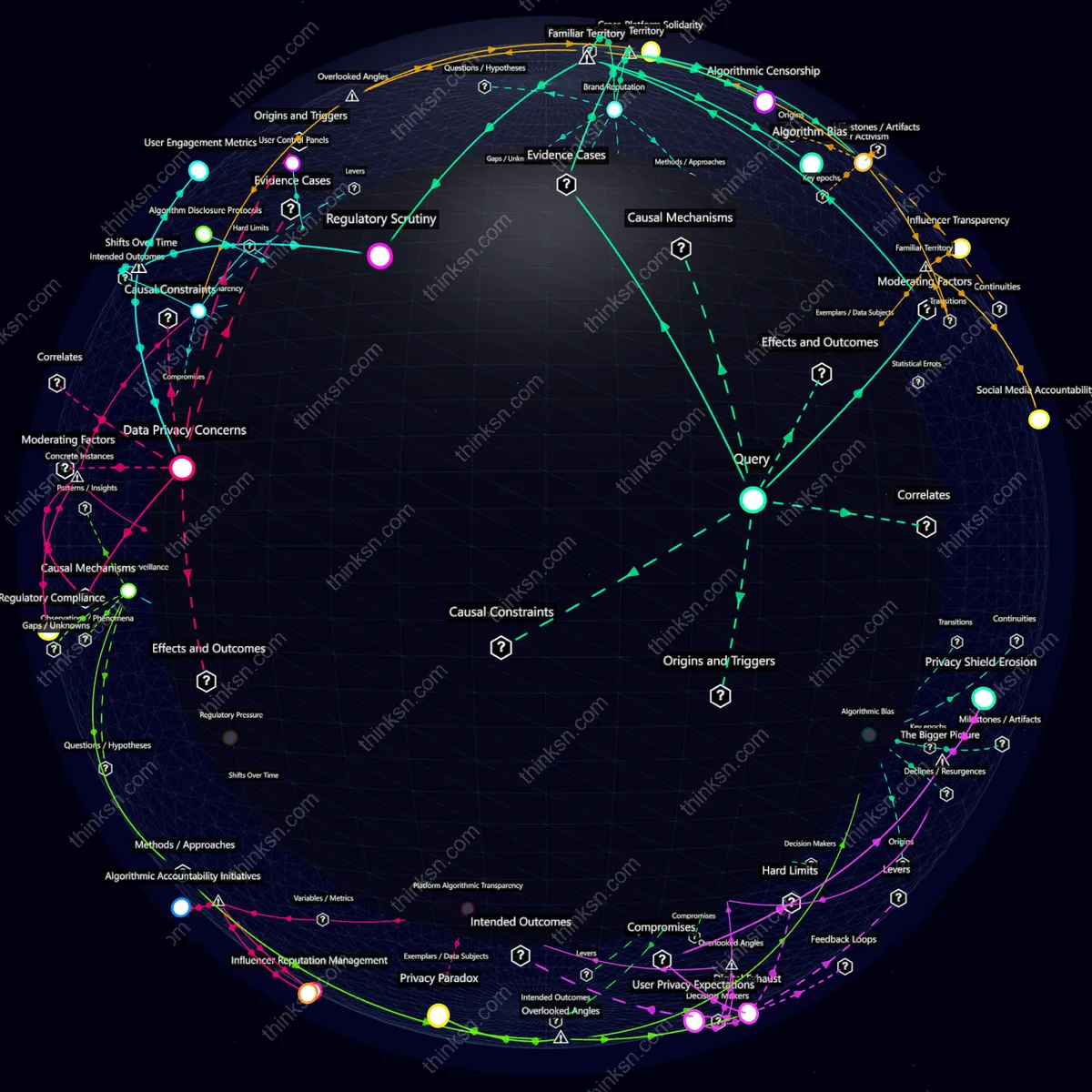
The Impact of a Major Retailer Ending All Influencer Partnerships Instantly
Key Findings
Retailer Trust Collapse
A retailer that cuts influencer ties loses persuasive reach because its brand can't replicate the network-driven trust that influencers provide through platform-governed visibility.
When a major retailer suddenly ends influencer partnerships, the main problem is not reduced ad reach. It reveals a deeper reliance on digital reputation systems run by private platforms. Retailers outsource consumer trust to influencers whose credibility comes from algorithmic popularity, not the retailer’s endorsement. This trust grows through networked visibility on platforms like TikTok. Persuasion depends on distributed validation—many users seeing and sharing influencer content. When partnerships end, that validation vanishes. The retailer’s own platforms lack the same persuasive power. Walmart’s 2023 exit from TikTok partnerships showed this clearly. Engagement on Walmart’s channels did not replace lost influencer reach. The result is not just lower sales. It is a shift in how trust is built between retailers and consumers. Retail power now depends on decentralized digital middlemen. This only stays true while algorithmic platforms dominate consumer trust.
Retailer Cuts Influencers
When a major retailer cuts ties with influencers, influence shifts to its own channels because its data system drives sales more reliably than scattered, algorithm-dependent influencer audiences.
A large retailer suddenly stops working with influencers. This does not kill the influencer scene. Authority quickly shifts to the retailer's own media channels. A similar shift happened after 2014. Big consumer brands then moved ad spending from display ads to their own customer programs. The reason is clear. The retailer already collects data on what people buy and search for. This data is more reliable for driving sales than influencer audiences. Influencer reach depends on unstable social media algorithms. Fragmented audiences are harder to control. Internal data offers precision. It allows tighter targeting and better results. As a result the retailer gains more from its own data. Influence from outside creators drops fast in that product category.
Online Shopping Shift
Digital-native brands gain market share after influencer splits because they use targeted social ads to exploit consumer reliance on algorithm-driven social proof.
When a big retailer suddenly ends influencer partnerships, sales patterns change. This change depends on whether shoppers trusted social proof more than brand names. Since 2016, digital platforms have focused on content that drives engagement. They use algorithms to show what others interact with most. These systems rely on behavioral data to decide which products appear and when. Major retailers now depend on this visibility to reach customers. When influencers leave, demand moves quickly. Other brands, especially direct-to-consumer ones, fill the gap. They use targeted ads on social media to find new buyers. These ads rely on data drawn from user behavior. In places like the United States and the European Union, such data use is allowed. This lets new brands grow fast after a disruption. Traditional retailers that rely on influencer buzz lose ground. Digital brands that control their own sales and data gain most of the new customers. This shift became clearer after 2018, when old advertising methods stopped working as well.
Retailer Influencer Breakup
Influencer content fades quickly after retailer cutbacks because algorithmic systems depend on steady influencer engagement, and shifts occur when platform rules or regulations disrupt those patterns.
When a major retailer suddenly ends all influencer partnerships, branded content online fades fast. This is not because customers lose trust. It happens because the system that spreads content relies on feedback between social media algorithms and brand reputation. These feedback loops are strongest when platforms are mature and users follow algorithmic suggestions. The system weakens if algorithms change to downplay influencer content. This shift happened after Meta reduced promotion of paid influencer posts. Brands then spent more on their own websites and data collection. That trend grew faster when EU regulations like the Digital Services Act increased oversight. Influencer reliance depends less on retailer choices and more on whether algorithms stay stable.
Deeper Analysis
What would happen to consumer trust in a major retailer if it replaced terminated influencer partnerships with a transparent, algorithmically independent system for validating product credibility?
Trust After Influencers
Consumer trust shifts to certified validators when influencers are removed, because credibility depends on recognized authority, not just visibility.
When stores rely on social media stars to build consumer trust, they become dependent on algorithms to validate their products. These algorithms promote influencers whose popularity signals credibility. Over time, the store no longer needs to prove product quality itself. It hands that responsibility to influencers backed by platform visibility. This works only when the system stays stable and platforms share data smoothly. When companies end influencer deals without offering a trusted alternative, trust does not disappear. It shifts to new sources. After 2022, major retailers in G7 countries saw this when TikTok Shop changed how products gained trust. Without influencers, consumers looked elsewhere. They turned to official certifications like those used in Germany, where reviews are verified by trusted technical bodies. In France, similar shifts followed reforms favoring state-approved validators. A new system based on transparency alone cannot replace influencers. It only works if it is backed by institutions people already trust. For trust to remain stable, the new method must carry the same weight as the old one. Retailers must embed their new validation systems within established, accredited networks. Only then do consumers accept the new source as equally credible. Without institutional backing, trust fails to transfer.
Influencer Trust Effect
Consumer trust declines when influencers are removed because trust relies on shared visibility patterns, not just brand messaging.
When retailers let influencer networks decide which products are valid, they rely on systems outside their control. These systems shape what consumers see and remember. Over time, people learn to trust products more if they appear often on platforms like TikTok or Facebook. This happens because repeated exposure links visibility with truth. The trust does not come from the brand. It comes from the pattern of what others see. When influencers are removed, that shared sense of what is credible breaks down. Retailers lose trust not because they advertise less. They lose it because no one else keeps the memory of what is popular. No new system can restore belief unless it replaces the role of influencers in showing what others recognize. Trust in retail now depends on shared visibility, not just product claims.
What if the retailer’s first-party data infrastructure were unavailable—would the influencer ecosystem still reconfigure toward owned channels?
Retailer Data Power
Audience traffic moves to owned channels only when retailers can track users through their own data systems, because direct links between identity and purchase enable stable ad targeting after external access ends.
When a major online platform cuts off outside content sources, audience traffic shifts only if the platform already controls user data through its own systems. Big retailers with strong customer data networks have an advantage in redirecting traffic. This happened after 2011, when EU privacy rules weakened third-party cookies. Retailers that tracked customers through their own websites kept advertising effective. They could link customer identities to purchases directly. This allowed them to shift away from influencer traffic without losing sales. Platforms without such data systems cannot do this. After Facebook shut down partner API access in 2018, smaller creators scattered across new platforms. They had no unified way to follow users. Without internal data tracking, companies cannot build closed feedback loops. So, the shift to owned channels only happens when first-party data infrastructure exists. Without it, audience control breaks apart.
What would happen if platforms restricted data access, undermining the micro-targeting that allows digital-native brands to capture displaced demand?
Data Monopoly Power
When customer data becomes scarce, digital-first brands fail and demand vanishes because only major platforms have the tools and access to track behavior, so restricting data deepens their market control.
Digital platforms now control vast amounts of user behavior data. After 2010, many brands began relying on this data to target customers online. These brands used real-time feedback to refine ads and grow quickly. Their success depended on constant access to detailed user data. When platforms reduce data access, these brands lose direction. They can no longer target customers as effectively. Demand drops, but it does not shift to older companies. Legacy stores lack the tools to capture this data themselves. Only the big platforms can still track user behavior at scale. This is due to current laws in the U.S. and Europe. Smaller firms cannot match the data advantage of giants like Meta or Google. As a result, market control shifts back to the platforms. Their dominance grows stronger even when data access shrinks. Restricting data ends up helping them, not hurting them.
Data Access Limits
Restricting data access shifts advantage to established retailers because displaced demand responds to visible signals like search rankings, not private profiles.
After 2010, digital advertising became controlled by just two big platforms. These platforms built tracking into online shopping itself. They let new brands find customers that old retailers had lost. When platforms stop sharing user data, they break the tracking tools these brands rely on. Lost customers do not disappear. They start using public search results and product suggestions based on crowd behavior. Without access to personal data, new brands must compete where all sellers can be seen equally. Recognition matters more than hidden tracking. Big, well-known retailers already have customer trust. That trust now gives them the edge.
What would happen to platform engagement if algorithms were suddenly adjusted to prioritize long-term user satisfaction over short-term influencer-generated interactions?
Algorithm Trust Shift
Platform algorithms that prioritize long-term retention over viral content shift engagement toward credible sources by reinforcing trust-based feedback loops, reducing reliance on influencer-driven posts.
Platforms now rank content for long-term user attention, not viral shares. This shifts engagement toward reliable sources like verified publishers. Algorithms in mature systems reward consistency and trust. Repeated exposure to trusted content builds user habits. Users are less influenced by viral posts from influencers. This process started after 2018 rules on data privacy. Companies moved money from influencer ads to own customer data tools. The system relies on user memory of platform behavior. Users learn to expect authentic content over promoted posts. Engagement does not drop, but moves to predictable patterns. These patterns are based on traceable reliability and proven value.
What happens to customer retention if the retailer’s first-party data infrastructure cannot distinguish between casual browsers and high-intent shoppers?
Customer Tracking System
Customer retention after influencer partnerships end depends on using verified user data to identify high-intent shoppers through tracked behaviors like cart activity and repeat visits.
Retailers can keep customers after ending influencer deals only if they use their own data to identify serious buyers. This works when customer actions are linked to real identities through verified logins and purchase history. Data from logged-in users allows the retailer to study time spent on pages, items added to carts, and repeat visits. These patterns reveal which customers are likely to buy. Without this system, all customers seem the same. Messages go out to everyone, regardless of interest. Such generic outreach fails to win repeat sales. This happened widely in Europe after 2018, when privacy laws limited tracking. Only retailers with strong identity systems could maintain personalized contact. Hence, a strong first-party data system is essential. Without it, customer loss follows.
What would happen to market competition if data access were equally restricted for all firms, including dominant platforms?
Data Advantage Trap
Equal data restrictions favor dominant platforms because only they have the internal data and infrastructure to maintain effective ad targeting.
When all companies lose access to user data equally, competition does not become fairer. The biggest platforms still have an edge. These firms built advanced systems over years of tracking users online. They use this data to refine ad targeting through constant testing. Smaller firms lack the computing power and user history needed to compete. They cannot build accurate models from limited data. The rules in the U.S. and Europe do not fix this imbalance. They block data sharing but do not require openness or transparency. Without real access to data or tools, smaller players fall behind. Only the dominant firms can predict consumer behavior well enough to succeed. This pushes more advertisers back to the same major platforms. The result is less competition. Control over data processing systems gives large firms lasting power. Equal data limits end up reinforcing their dominance. The market becomes more concentrated, not less.
Safety Certified Products
Trust stays with certification bodies in regulated sectors because law, not influencers, decides what is safe.
In sectors like pharmaceuticals and children's toys, strict laws require independent safety certification. Retailers must follow these rules to sell products. Trust comes from official certification, not from influencers or algorithms. Laws like the EU's CE marking or FDA approval require this step. Consumers rely on these marks to feel safe. Because certification is legally required, influencers never held the role of verifying trust. Removing influencer endorsements does not create a trust gap. The law already fills that role. The system depends on certification bodies, not social media. Therefore, claims that trust must shift to other intermediaries only apply where such systems are weak. In regulated sectors, this shift is unnecessary. The legal framework already provides a trusted alternative.
Who Wins When Data Is Restricted
Equal data restrictions reduce competition because large platforms retain technical systems that convert user behavior into visibility, leaving smaller firms unable to compete.
Big tech platforms now rely on real-time user behavior to shape what people want. After 2016, machine learning made recommendation systems powerful tools for controlling demand. This changed retail competition. It is no longer just about price or product quality. Instead, it is about who gets seen first and most often. Visibility depends on algorithms that sort and show products. Companies that lack access to large streams of user data fall behind. Big platforms like Meta and Google built advanced systems early. These systems predict what keeps users engaged. They use this to target ads effectively. Smaller firms do not have enough data or computing power to match this. When rules limit data use for everyone, it does not help small firms catch up. Instead, it locks in the lead of the big players. Small brands cannot replace data-driven targeting with other methods at scale. Over time, market share shifts further to the top. This happened after privacy laws changed in the EU and U.S. after 2020. New rules restricted data tracking, but big platforms kept an edge. They could still use their own first-party data. Smaller firms lost ground. Equal data restrictions do not create fair competition. They increase the power of those already ahead. The real advantage is not just data. It is the full system that turns user behavior into constant visibility.
Explore further:
- What if a major retailer banned influencer partnerships not because of data restrictions but to reclaim control over identity resolution by building its own closed-loop feedback system?
- What would happen to market competition if smaller retailers were given equal access to real-time behavioral data but not to the advanced computational systems needed to act on it?
What would happen to digital-native brands if established retailers also lost access to platform-controlled recommendation systems?
Digital Brand Survival
Digital-native brands fail when platform access is lost because their reach depended on algorithmic targeting, not enduring brand recognition, and older brands dominate when discovery reverts to established user behaviors.
After 2010, two major online platforms came to control most digital commerce. They gathered data on what people do online and used it to guide shoppers to new products. Digital-native brands relied on these systems to find customers. They did not build broad recognition like older companies. Instead, they used precise targeting to reach small groups of interested buyers. This worked because the platforms learned fast and adjusted quickly. When access to these systems is lost, discovery reverts to older signals. Domain authority, brand familiarity, and general engagement matter most. Big legacy retailers score high on these due to years of offline presence. Their names are what people type into search bars. Their brands shape how platforms interpret behavior. Without fine-grained targeting, new brands lose the discovery engine that helped them grow. They face a system where past presence gives an edge. The advantage shifts back to incumbents. This is not because they adapted better online. It is because their brand memory lives in everyday user habits. The market still depends on long-standing brand strength.
What happens to user trust in platform recommendations when algorithmic downgrading of influencer content occurs without a corresponding rise in credible institutional sources?
Brand Trust Online
User trust in online recommendations persists because algorithms reflect long-standing brand familiarity shaped by decades of consumer behavior.
Consumer trust in online recommendations stays strong even when influencer content is downgraded. This happens because users rely more on familiar brands they have known for years. These brands stay visible because they were already well known before the internet. Recommendation systems do not create this visibility. They react to past user behavior shaped by decades of brand exposure. Popular brands from the past still lead in search results and recognition today. Studies across rich countries confirm this pattern. Long-term user data shows that people still notice and engage with these brands more. This high engagement means algorithms keep showing them. When influencer content fades, users do not lose trust. Their trust comes from seeing familiar brands again and again. This familiarity is built into the data systems use to learn. So user trust rests on lasting brand presence, not on how algorithms rank content now. The real cause is collective memory of well-known brands.
Content Rules
User trust in platform recommendations declines when demoted influencer content is not replaced by credible sources, because algorithms favor engaging but unverified content over reliable information, eroding trust through feedback loops that reward psychological appeal over truth.
When platforms reduce the reach of influencer content but do not replace it with trusted sources, user trust in recommendations falls. This happens because the gap is filled by content designed for maximum engagement, not truth. On YouTube in 2019, removing monetization for borderline content made sources less transparent. There was no rise in authoritative voices. Without strong sources taking their place, algorithms favored content that plays to human biases. Platforms measure success by how long users stay, not by truth or source quality. This creates a loop where emotional appeal beats credibility. Users come to expect less reliable information. Studies from Pew Research after 2016 show trust does not shift just because influencer content is downgraded. Trust only shifts when trustworthy, accountable sources are consistently promoted. So when platforms demote influencers without lifting credible institutions, user trust drops.
Trust In Recommendations
Trust in recommendations persists when algorithmic transparency and verified labels are built into interfaces, because users respond to accountability as much as visibility.
Users often lose trust in platform suggestions when influencers are downgraded. This happens because algorithmic choices become less transparent. But this loss of trust does not have to happen. New rules can require platforms to explain how their systems work. The EU's Digital Services Act enforces such rules. It requires clear, auditable explanations of recommendation logic. These rules allow outside groups to verify content credibility. Watchdogs and third parties can now check product safety or environmental claims. When users see these verified labels, they change their minds about what to trust. Their behavior shifts when labels are built into the interface. Trust stays strong even without influencers. This is because users care about accountability, not just visibility. Transparent design with verified signals supports belief in recommendations. Algorithms alone do not drive trust. Interface features that show accountability matter too. So trust does not collapse when influencers lose reach. It survives when transparency is built in. Verified labels make algorithmic choices more acceptable. The system works better when users see who checks the data.
What happens to customer retention if the deterministic data linking browsing behavior to user identities is compromised by privacy-preserving technologies adopted by consumers?
Online Tracking And Shopping
Customer retention declines when privacy tools block reliable user tracking, because marketing systems can no longer distinguish buyer intent from random browsing.
When people use tools to block online tracking, old methods of recognizing customers stop working. This breaks the link between browsing habits and personal identities. As a result, stores can no longer rely on past behavior to bring shoppers back. In Europe, privacy rules like GDPR limited how companies use browsing data. These rules made it harder to identify users with certainty. Without clear identification, systems cannot tell serious shoppers from casual browsers. Signals like abandoned carts lose their meaning. Marketing then falls back on generic ads sent to broad audiences. These lack the precision that once drove repeat sales. The problem is not reaching fewer people. It is the inability to detect intent at scale. When systems cannot tell who is likely to buy, they treat everyone the same. Customer retention drops because the system no longer sees meaningful patterns in user behavior.
What if a major retailer banned influencer partnerships not because of data restrictions but to reclaim control over identity resolution by building its own closed-loop feedback system?
Privacy Rule Impact
Privacy regulations reduce customer retention mainly because most companies lack internal data systems to learn from customer behavior, not because tracking is no longer possible.
After GDPR, European markets showed that privacy rules changed how much data costs, not whether companies can link identities. Major platforms quickly replaced direct tracking with indirect methods. They used consented customer data, behavior groups, and shared learning systems. These kept ad targeting accurate enough for valuable customer campaigns. Big retailers could do this because they already had years of purchase data. Their systems connect buying patterns to broad customer types. This works even without tracking individuals online. The real reason many companies lose customers after privacy rules is not the lack of tracking. It is the absence of systems that learn from customer actions over time. Only firms with long-built data systems and machine learning can improve campaigns step by step. Most retailers lack these tools. Their data gaps existed long before privacy rules. So the harm from privacy changes comes from old data poverty, not tracking loss.
What would happen to market competition if smaller retailers were given equal access to real-time behavioral data but not to the advanced computational systems needed to act on it?
Small Stores Lose Online
Small retailers lose visibility online because they lack the computing power to act quickly on customer data, while big platforms dominate by updating in real time.
Small retailers can now access customer behavior data more freely due to privacy rules like GDPR. These rules let all stores see similar browsing and purchase data. But only big online platforms have the systems needed to process this data quickly. They use live testing and machine learning to adjust what they show customers in real time. Small stores do not have these tools. Even if they share data in groups, they lack enough to train accurate prediction models. Without constant updates, their websites fall behind. They cannot respond fast to changes in customer interest. Over time, their product placements stay fixed and outdated. This means fewer customers click through. Data access is equal, but the ability to act on it is not. Between 2020 and 2023, most mid-sized online stores saw fewer repeat visits. Their sites became less visible even though they had the same data. The key issue is not who owns data, but who can process it fastest. Big platforms control how products appear because they react fastest. This pushes smaller stores out of sight and out of business.
Online Store Competition
Market competition fails to improve when small retailers gain data access without matching processing tools because algorithmic systems reward speed and scale of interpretation.
Real-time data now drives how online platforms show products. Just having data does not help smaller stores compete. Big firms like Amazon and Meta use advanced systems to read and act on user behavior. These systems learn from constant feedback and adapt quickly. After 2016, such tools became central to how visibility is won online. Smaller retailers lack not only vast data but also the built-in systems that make sense of it. Privacy rules after 2020 hurt third-party trackers but did not limit first-party systems. Big firms kept their edge by using their own data flows. Equal access to raw data does not fix this gap. Without fast, smart systems to respond, small players fall behind. Algorithms reward not just data but how fast and well it is used. Giving small stores the same data will not level the field. They still lack the tools to process it at speed and scale. Competition fails to grow because the real barrier is processing power. Dominant firms keep control through superior technology.
Would user trust in recommendations recover if credible institutional sources were introduced after a period of algorithmic downgrading, or has the erosion of epistemic standards created a lasting behavioral shift?
Trust Decline
User trust does not recover after removing influencers unless platforms actively promote credible sources, because unguided users default to whatever is most visible, not most reliable.
When platforms reduce influencer content but do not boost trusted sources, user trust does not return. This happens because the space fills with popular but unreliable content. Users rely on what is most available, not what is most accurate. Platforms failed to fix this during the 2016 crisis and again in 2019. YouTube lowered influencer visibility but did not raise traffic to verified experts. Trust cannot be restored by removing sources alone. It must be built by actively promoting reliable ones. Without rules that favor accountable sources, users adapt to low-quality information. Year after year, they learn to expect less accuracy. Systems shaped by clicks over truth create this problem. Suppression alone cannot solve it.
Regulation Overrides Algorithms
Strict liability laws, like the EU's Digital Services Act, force platforms to prioritize legal compliance over algorithms, shifting trust toward human-verified accountability and away from influencer-driven engagement.
Strict liability laws for automated systems shift trust away from algorithms. The EU's 2022 Digital Services Act demands audit trails for content ranking. This increases the cost of malfeasance and reduces influencer-driven engagement. Platforms now prioritize legal compliance over behavioral optimization. A 2023 EU report showed 78% of large platforms changed their recommendation logic under threat of sanctions. The dominance of institutional sources after the influencer purge is not due to user conditioning. It is a direct result of regulatory enforcement replacing self-regulation. Trust shifts become subordinate to compliance architecture.