30% Cut: Platform Cost or Indie Developer Barrier?
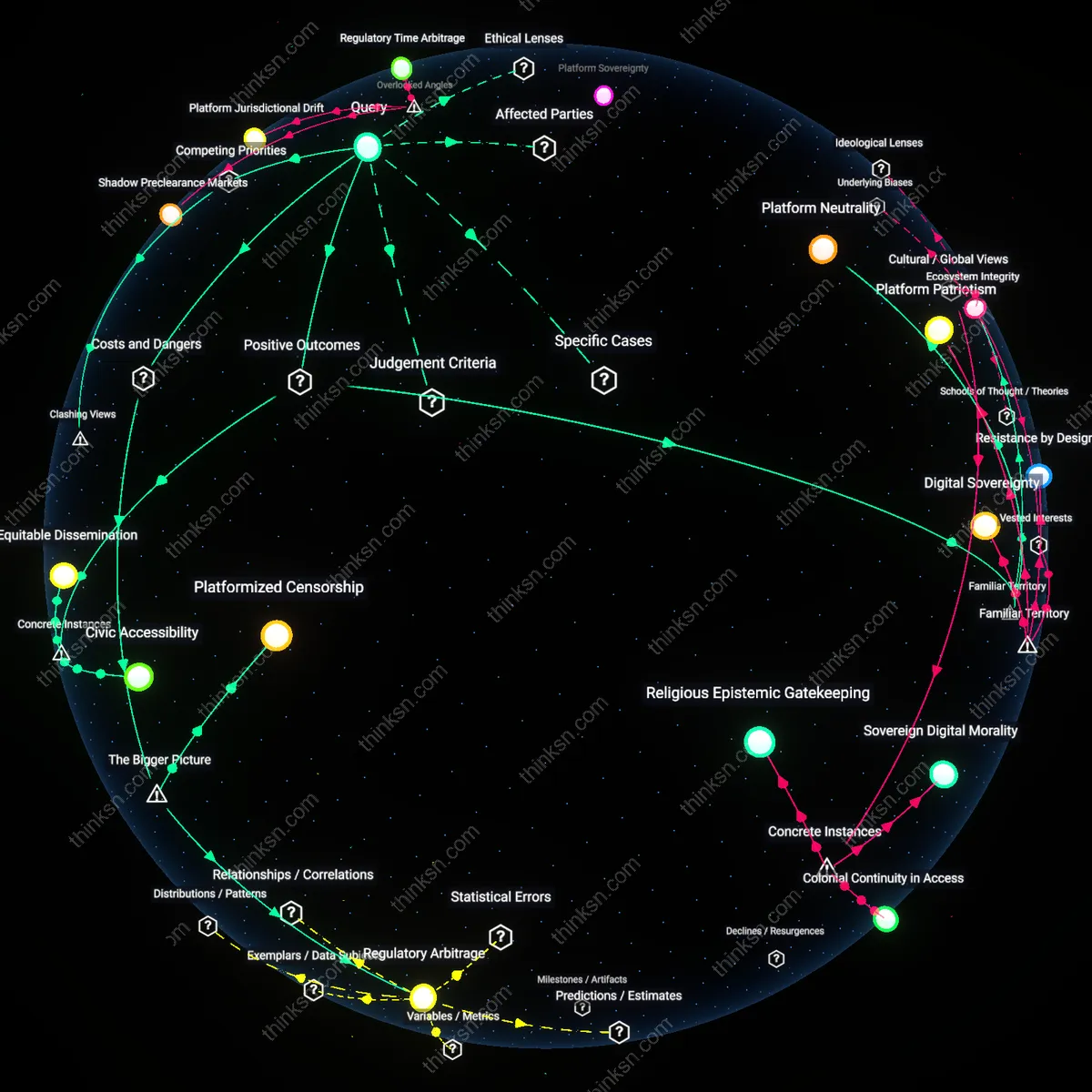
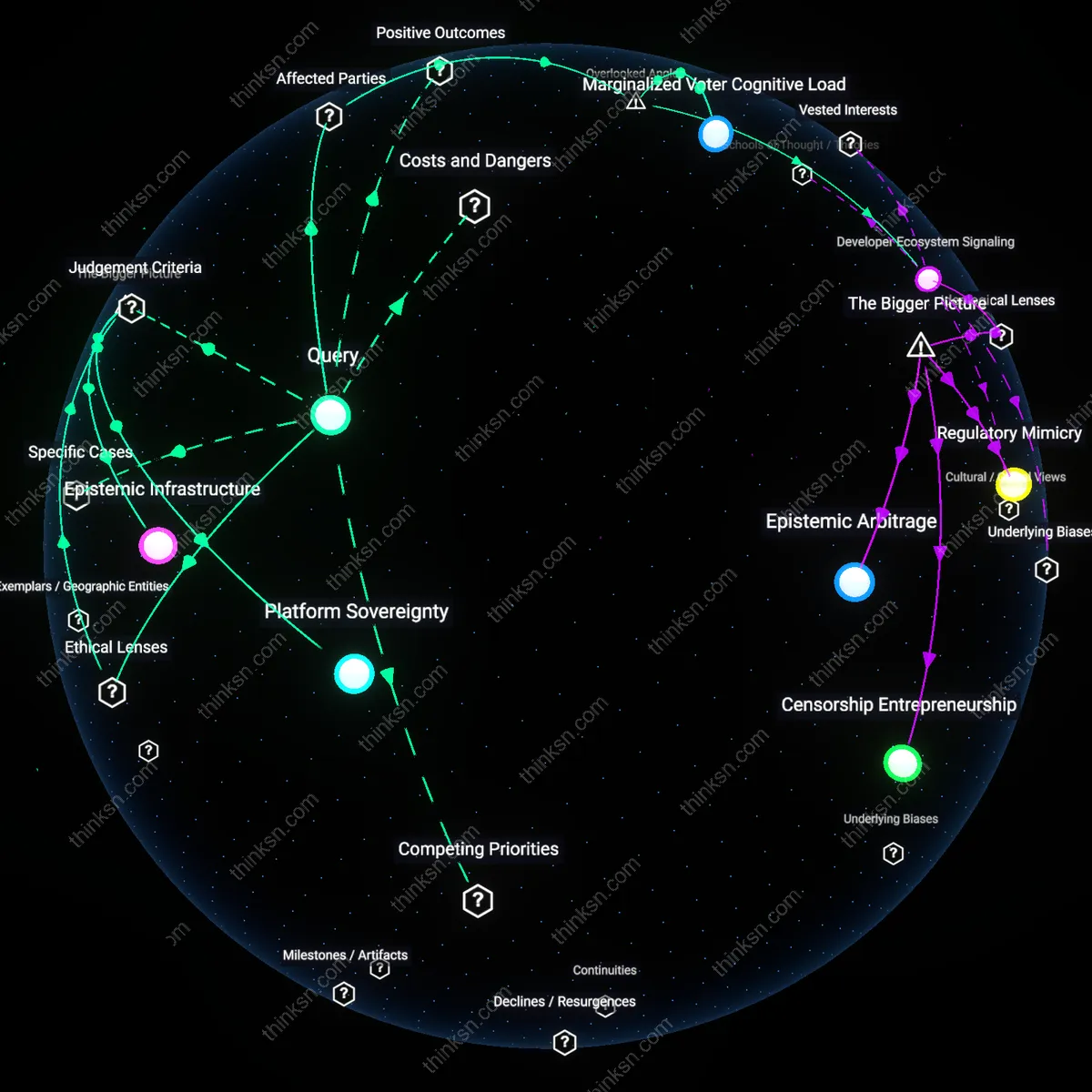
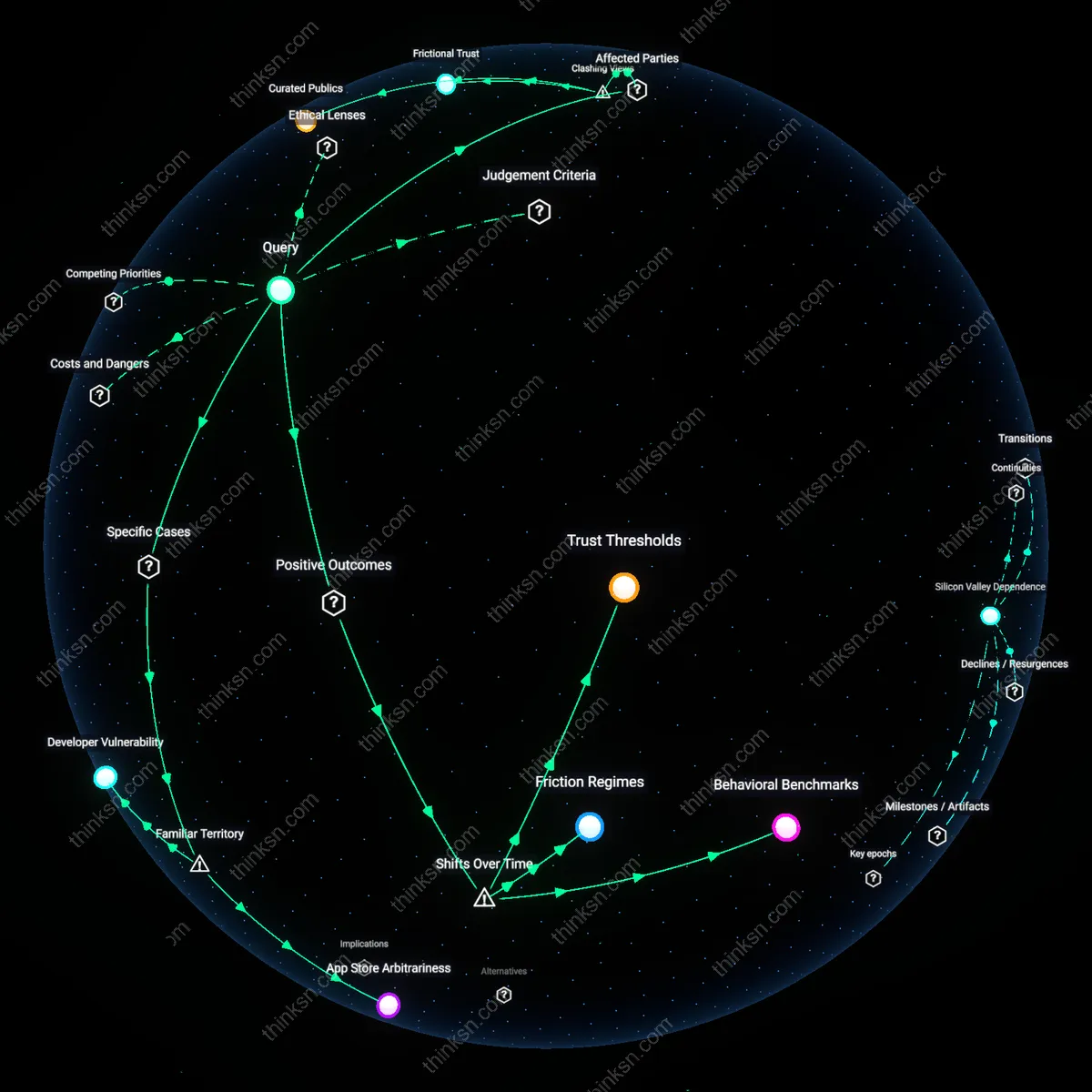
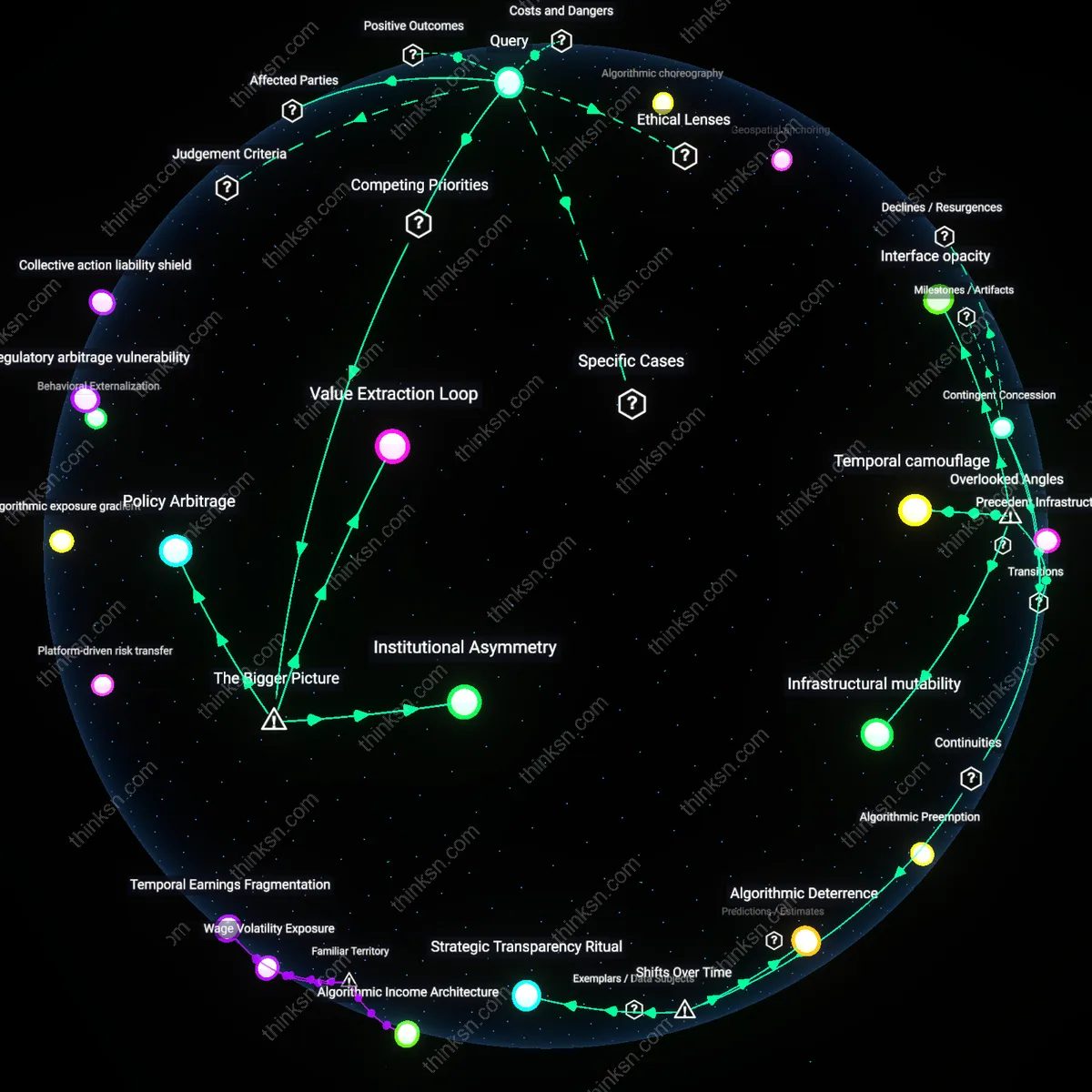
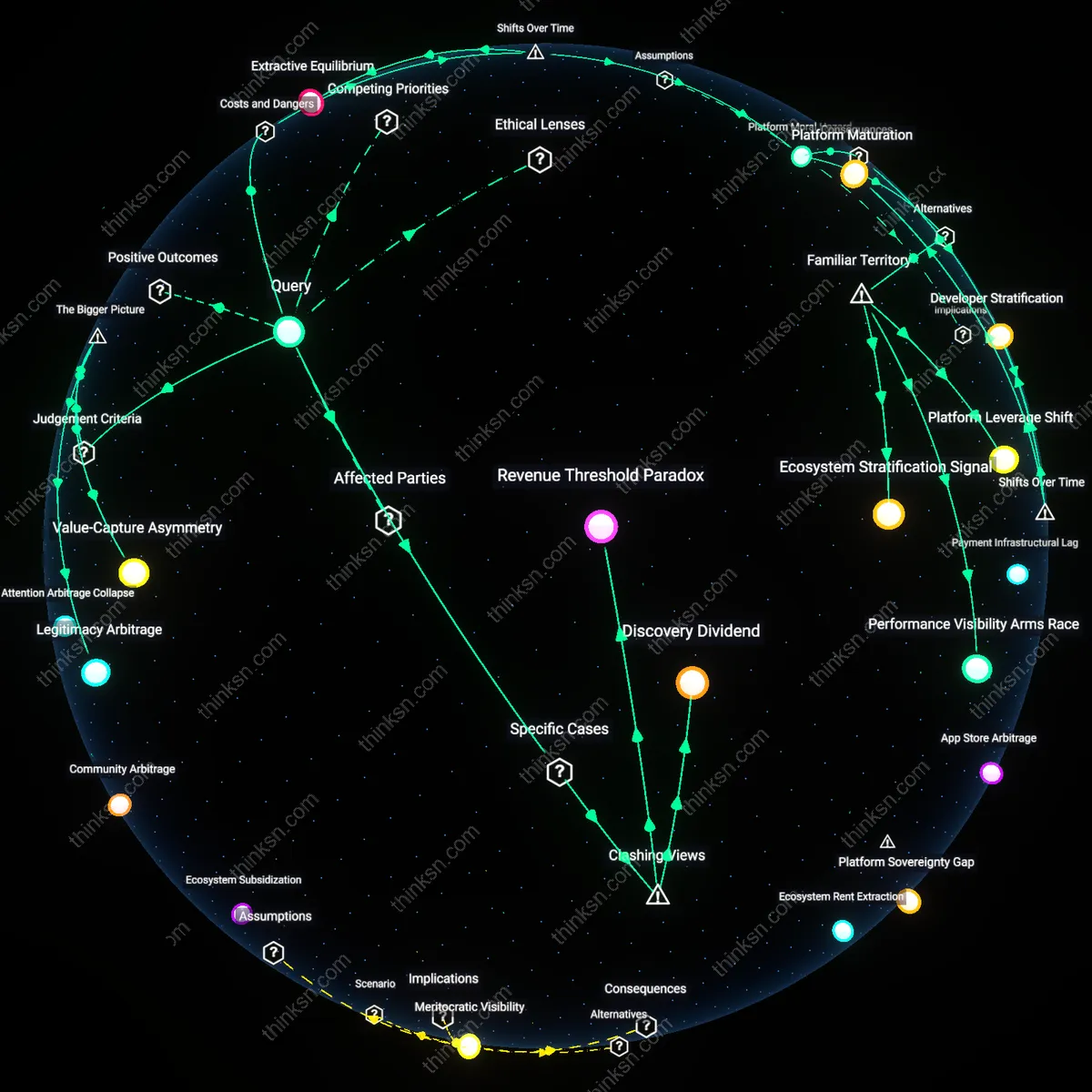
Analysis reveals 7 key thematic connections.
Key Findings
Value-Capture Asymmetry
Yes, because the 30% commission disproportionately extracts value from indie developers while shifting the burden of platform stability onto them, despite their minimal contribution to systemic risk. App stores like Apple’s enforce this rate uniformly, but indie apps generate negligible infrastructure load compared to scaled enterprise platforms—yet pay the same marginal cost, creating a regressive pricing structure. This mechanism reflects a broader trend in digital platform governance where pricing models obscure cross-subsidization flows, masking how dominant firms leverage market control to transfer operational risks onto smaller actors. The non-obvious insight is that maintenance cost justification serves as a rhetorical alibi rather than a cost-accounting reality, enabling rent extraction under the guise of fairness.
Innovation Threshold Distortion
No, because the 30% fee acts as a systemic throttling mechanism that raises the minimum viable product threshold, effectively excluding capital-constrained innovators from sustainable experimentation. Unlike major studios, indie developers operate near zero margins, where a third of revenue forecloses reinvestment in updates, marketing, or server costs—conditions exacerbated by algorithmic discoverability biases in stores like Google Play. This dynamic is sustained by closed ecosystems that monopolize distribution while externalizing developmental risk onto individual creators, privileging safety over diversity in the app economy. The underappreciated consequence is that platform 'stability' is achieved not through neutral maintenance costs, but by deliberately narrowing the range of viable entrants, thus suppressing disruptive innovation.
Legitimacy Arbitrage
Yes, but only inasmuch as regulatory permissiveness allows dominant platforms to conflate technical maintenance with institutional legitimacy, thereby justifying revenue extraction as a proxy for trust and security. Apple and Google position their commissions as funding essential curation, anti-fraud, and privacy safeguards—services that indie developers benefit from but did not help design or audit. This justification holds only because antitrust enforcement remains fragmented globally, enabling firms to claim cost-recovery while resisting transparency demands. The overlooked dynamic is that platforms weaponize public interest rationale to avoid competitive pressure, turning infrastructure governance into a legitimacy rent—where compliance becomes a monetized gatekeeping function rather than a shared civic good.
Extractive Equilibrium
The 30% revenue share became entrenched as a normalized cost of market access only after app stores transitioned from curated gatekeepers to essential infrastructure, locking indie developers into a system where the cost of survival reproduces the very dependency that undermines their autonomy. Prior to the mid-2010s, when alternative distribution channels were still viable, platform fees were justified as compensation for discovery and trust; but once Apple and Google solidified monopolistic control, the fee shifted from incentive to extraction, operating through a winner-take-all marketplace that systematically devalues small-scale innovation. The non-obvious reality is that the maintenance justification no longer functions as a cost-recovery mechanism but as a structural toll—one that stabilizes platform dominance by making exit too risky, even as it erodes the developer base it claims to support.
Platform Moral Hazard
After the 2020 antitrust hearings, dominant platforms intensified enforcement of the 30% rule not to cover rising costs but to insulate their business models from regulatory scrutiny, creating a perverse incentive where platform stability depends on extracting value from the most vulnerable developers rather than lowering barriers. Where once the fee was justified by active curation and infrastructure investment, it now functions as a performative compliance mechanism—platforms maintain strict revenue enforcement to signal neutrality and justify their tax-like authority, even as indie developers face declining margins and app delistings. The critical yet unacknowledged turn is that the platform now risks developer collapse not through neglect, but through excessive adherence to rules that prioritize systemic defensibility over ecosystem health.
Revenue Threshold Paradox
Yes, platform maintenance costs justify the the 30% fee because most indie developers fail to reach the revenue threshold where the fee meaningfully impedes reinvestment, as seen in the case of small iOS developers earning under $100,000 annually—Apple’s App Store ecosystem relies on volume over individual success, and the maintenance of review systems, security, and infrastructure disproportionately benefits high-traffic apps, meaning the fee structure functions as a risk-adjusted cost absorption mechanism rather than a uniform barrier; this reframes the 30% fee not as extractive but as a distributed cost buffer that sustains ecosystem scalability, challenging the intuitive narrative that the fee inherently stifles indies by revealing that for the majority who never scale, the fee is functionally nominal rather than oppressive.
Discovery Dividend
No, the 30% revenue share is unjustifiable because it disproportionately funds algorithmic curation and visibility systems—like the App Store’sToday tab and search indexing—that overwhelmingly favor established studios such as Supercell or King, as evidenced by Sensor Tower data showing 78% of top-grossing indie games in 2021 paid the fee without gaining measurable discoverability; this reveals the fee as a regressive toll on obscurity, where maintenance costs morph into centralized gatekeeping investments that do not trickle down to small developers, contradicting the claim that all payers receive proportional infrastructural benefit—the real service purchased is not neutrality but exclusionary visibility, exposing a pay-to-play dynamic masked as platform upkeep.