How Will Twitters Verification Changes Affect Influencer Credibility?
Analysis reveals 6 key thematic connections.
Key Findings
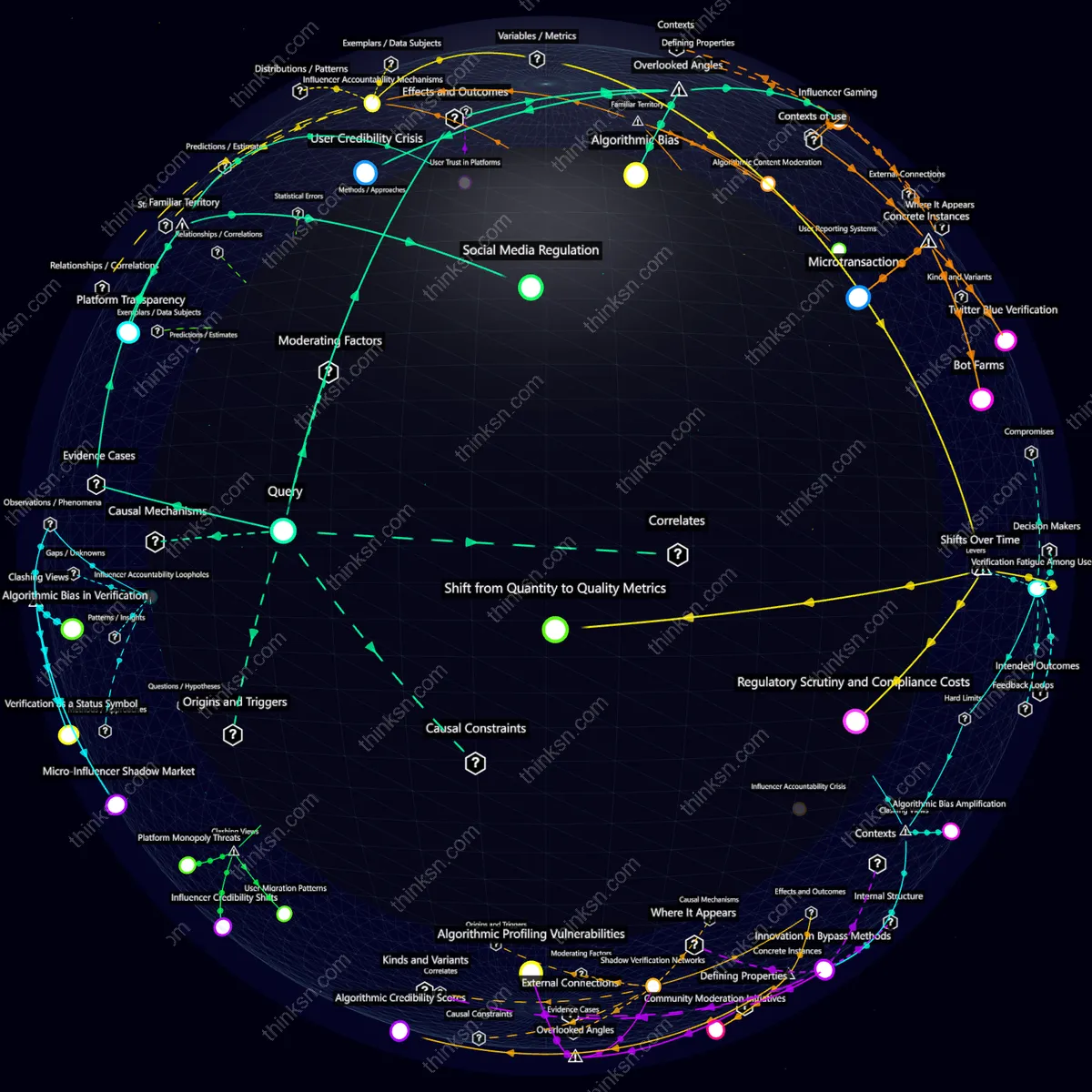
Algorithmic Bias
Revising Twitter's verification process can inadvertently introduce algorithmic biases that disproportionately affect certain demographics or political viewpoints. As the platform tweaks its algorithms to detect misuse by influencers, it risks reinforcing existing social and digital inequalities, undermining broader goals of inclusivity.
User Credibility Crisis
A sudden shift in verification criteria could lead to a credibility crisis among users who feel their voices are being silenced or devalued. This erosion can extend beyond Twitter, affecting real-world trust and engagement across social media platforms, as users become wary of engaging with any form of online certification.
Influencer Gaming
As verification standards tighten in response to misuse by influencers, a new class of digital strategists may emerge who specialize in gaming the system. These experts could create complex strategies that exploit loopholes or manipulate public perception to regain and maintain verified status, leading to an arms race between platform security measures and influencer ingenuity.
User Trust in Platforms
Twitter's revision of its verification process could undermine user trust if perceived as an arbitrary change, leading to a decline in credibility for verified accounts. Influencers may lose their influence over followers who doubt the authenticity and integrity of the platform’s new standards.
Platform Transparency
A lack of transparency during the revision process could exacerbate user skepticism about Twitter's intentions, particularly if changes are seen as favoring certain types of influencers or content. This can lead to a broader perception that the platform prioritizes commercial interests over user welfare.
Social Media Regulation
The need for regulatory intervention may arise if users and stakeholders believe Twitter's revision is insufficient to address influencer misuse, potentially leading to external oversight that could restrict the platform’s operational flexibility and innovation.
Deeper Analysis
What are the structural components and relationships within Twitter's verification process that could be exploited by influencers, and how might revisions to these elements impact account credibility?
Twitter Blue Verification
Influencers gaming the Twitter Blue verification process often exploit loopholes by creating highly engaging content and amassing rapid follower growth, distorting true account credibility metrics. This can lead to a dilution of genuine verified accounts' perceived authority and trustworthiness.
Bot Farms
The surge in bot farms dedicated to artificially inflating follower counts for influencer gaming exposes the fragility of Twitter's verification algorithm, leading to potential misuse that undermines legitimate user trust and platform integrity. This has triggered stricter policies but also created a cat-and-mouse game with sophisticated bots.
Microtransactions
Influencers increasingly use microtransaction schemes to artificially inflate engagement metrics like likes and retweets, manipulating verification criteria. This not only exploits Twitter's economic model but also risks devaluing real user contributions, leading to a skewed perception of influencer credibility.
How might changes in Twitter's verification process affect user trust in platforms, considering emerging trends and diverse perspectives on influencer behavior?
Influencer Authenticity Crisis
Changes in Twitter's verification process may lead to an influencer authenticity crisis, where users question the legitimacy of verified accounts. This can undermine user trust and foster skepticism about platform credibility, especially if high-profile influencers lose their blue checkmarks or new verification criteria are seen as biased.
Algorithmic Bias Perception
Altering Twitter's verification process might shift public perception towards algorithmic bias in moderation practices. If changes disproportionately affect marginalized voices or amplify existing biases, users may feel that the platform is rigged against certain groups, further eroding trust and leading to a decline in active participation among these communities.
Community Moderation Overload
Redefining verification criteria could place an undue burden on community moderators tasked with upholding new standards. This overload might lead to inconsistent enforcement and user frustration, particularly when moderation decisions are seen as arbitrary or unfair. Such situations can create a sense of platform unpredictability, damaging long-term trust.
Explore further:
- What are the potential measurable impacts on influencer authenticity and user trust if Twitter implements stricter verification criteria to mitigate misuse by influencers?
- What strategies can be implemented to prevent community moderation overload when Twitter revises its verification process due to influencer misuse?
What strategies can be implemented to prevent community moderation overload when Twitter revises its verification process due to influencer misuse?
Influencer Accountability Mechanisms
Implementing strict accountability measures for verified influencers can reduce the burden on community moderators by shifting responsibility towards content creators. However, overly restrictive policies may alienate legitimate voices and stifle free expression, potentially leading to a backlash from users who feel unfairly targeted.
Algorithmic Content Moderation
Relying more heavily on AI-driven moderation tools can help manage the influx of flagged content but risks undermining human oversight. This could lead to errors in judgment and a loss of nuanced understanding, exacerbating tensions between automated systems and user expectations for fair treatment.
User Reporting Systems
Enhancing reporting mechanisms allows users to flag suspicious activities directly, easing the workload on moderators but also increasing the risk of misuse. False reports can flood the system, overwhelming moderation teams and causing delays in legitimate content reviews, thereby defeating the purpose of streamlined oversight.
Algorithmic Transparency
Increased algorithmic transparency in moderation systems can shift user behavior towards more cautious engagement but may also expose complex decision-making processes, leading to public scrutiny and potential backlash against Twitter's verification process revisions.
User-Generated Guidelines
Empowering users to contribute to the creation of community guidelines could reduce moderation overload by leveraging collective wisdom, yet it risks diluting accountability if unclear or inconsistent standards emerge among diverse user groups.
Explore further:
- What are the potential measurable impacts on influencer accountability mechanisms if Twitter revises its verification process, and how might this affect the overall credibility of verified accounts?
- How would user-generated guidelines impact the credibility and functionality of verified accounts on Twitter if influencers misuse verification?
What are the potential measurable impacts on influencer accountability mechanisms if Twitter revises its verification process, and how might this affect the overall credibility of verified accounts?
Verification Fatigue Among Users
Twitter's revised verification process may lead to user fatigue as individuals become skeptical of the authenticity and value of verified accounts, potentially undermining the credibility of influencers who rely on verification for their authority. This can result in a decline in engagement metrics like follower counts and interaction rates, as users increasingly prioritize content quality over account credentials.
Regulatory Scrutiny and Compliance Costs
As Twitter tightens its verification process, it may attract more regulatory scrutiny, compelling influencers to adhere to stricter guidelines and compliance measures. This could lead to increased operational costs for influencer marketing agencies, who might have to invest in legal expertise and data management systems to ensure they stay ahead of evolving regulations, thus impacting the overall efficiency and profitability of their operations.
Shift from Quantity to Quality Metrics
A revised verification process may prompt a shift towards prioritizing qualitative over quantitative metrics when assessing influencer performance. Influencers might see a reduced focus on follower counts and engagement rates, with more emphasis placed on the depth of audience interactions and the authenticity of content. This could lead to a reevaluation of KPIs within marketing campaigns, potentially benefiting influencers who consistently produce high-quality, niche content over those with larger but less engaged followings.
How would user-generated guidelines impact the credibility and functionality of verified accounts on Twitter if influencers misuse verification?
Content Moderation Challenges
User-generated guidelines can strain Twitter's content moderation efforts by creating a fragmented standard for acceptable behavior. As users interpret and enforce these guidelines differently, it may lead to inconsistent application of rules and increased disputes over who has the authority to dictate community norms.
Influencer Accountability Loopholes
The reliance on user-generated guidelines could inadvertently shield influencers from accountability when they misuse verified status. This creates a loophole where verified accounts might exploit vague guidelines, undermining their credibility and the trust users place in them as authoritative figures.
What strategies can Twitter implement to mitigate verification fatigue among users if it revises its verification process due to influencer misuse?
User Engagement Decline
Twitter's shift towards stricter verification criteria could lead users to feel their contributions are undervalued, prompting a decline in active engagement. This disengagement might be exacerbated among younger demographics who view social media as an essential platform for self-expression and community building.
Algorithmic Bias Amplification
The introduction of more rigorous verification processes may unintentionally amplify existing algorithmic biases, disproportionately affecting underrepresented voices. This could create a feedback loop where marginalized communities feel further alienated from the platform's core functions and features.
Innovation in Bypass Methods
As users become increasingly frustrated with stringent verification requirements, there might be an uptick in innovative yet unethical methods to circumvent these checks. This could range from fraudulent identities being more prevalent on the platform to a rise in bot activity designed to mimic human behavior and pass verification.
Explore further:
- How might a decline in user engagement affect the credibility of verified accounts on Twitter if the verification process is revised due to influencer misuse?
- How might innovation in bypass methods affect the static mapping of components, categories, relationships, and spatial distribution within Twitter's verification process ecosystem if it is revised due to influencer misuse?
What are the emerging insights and hidden assumptions about influencer accountability in the context of Twitter's verification process, and how might these affect the credibility of verified accounts?
Algorithmic Bias in Verification
Twitter's algorithm-driven verification process can inadvertently perpetuate biases against marginalized voices, leading to a skewed representation of verified accounts that disproportionately favors mainstream narratives and overlooks critical perspectives.
Micro-Influencer Shadow Market
A burgeoning underground market facilitates the buying and selling of fake verifications for micro-influencers, undermining Twitter's credibility mechanism and eroding public trust in genuine influencer validation processes.
Verification as a Status Symbol
The increasing commodification of verification status amplifies social inequality on the platform, where verified accounts are treated with undue favor, reinforcing power dynamics and overshadowing content quality over authentic engagement metrics.
How might a decline in user engagement affect the credibility of verified accounts on Twitter if the verification process is revised due to influencer misuse?
Influencer Accountability Crisis
As user engagement declines, Twitter's revision of the verification process may exacerbate an accountability crisis for influencers who rely on verified status to maintain their influence. This can lead to a paradox where less credible accounts flourish while genuine influencers face scrutiny, diminishing overall platform credibility.
Algorithmic Bias in Content Moderation
Declining user engagement can push Twitter to over-rely on automated systems for content moderation, leading to algorithmic bias that disproportionately targets verified accounts of marginalized communities. This not only undermines the credibility of these voices but also alienates diverse user bases, further diminishing platform trust.
Rise in Alternative Social Platforms
A decline in engagement may accelerate the migration of users to alternative platforms that offer more engaging or less controversial moderation practices. This exodus can erode Twitter's market share and credibility among its core user base, making it harder for verified accounts to maintain their influence.
How might innovation in bypass methods affect the static mapping of components, categories, relationships, and spatial distribution within Twitter's verification process ecosystem if it is revised due to influencer misuse?
Shadow Verification Networks
Innovation in bypass methods could spur the emergence of shadow verification networks that mimic Twitter's official processes but operate outside regulatory scrutiny, complicating efforts to track and mitigate influencer misuse. This dual-use technology might attract both ethical hackers aiming for transparency and malicious actors seeking to exploit loopholes.
Algorithmic Profiling Vulnerabilities
As bypass methods evolve, they can expose new vulnerabilities in algorithmic profiling that Twitter uses to verify accounts, leading to a cat-and-mouse game where the system must continuously adapt to emerging threats. This dynamic may inadvertently prioritize rapid patching over thorough validation, leaving residual risks unaddressed and systemic weaknesses unresolved.
What quantitative impact might a rise in alternative social platforms have on the credibility and usage rates of verified accounts if Twitter revises its verification process due to influencer misuse?
User Migration Patterns
As Twitter revises its verification process due to influencer misuse, users may migrate en masse to alternative platforms like Mastodon or Clubhouse. This could create a fragmented social media landscape where credibility and usage rates of verified accounts on different platforms diverge, potentially undermining the value of traditional verification badges.
Platform Monopoly Threats
The rise of alternative social platforms poses significant threats to Twitter's market dominance. Should these new platforms capture a substantial user base, it could trigger regulatory scrutiny over monopolistic practices, forcing further changes that might dilute the effectiveness and integrity of verified accounts on all major platforms.
Influencer Credibility Shifts
Alternative social platforms may redefine what constitutes influencer credibility beyond traditional follower counts or verification badges. This shift could lead to a splintering of online communities, where influencers' influence is measured differently across various ecosystems, challenging the uniformity and global reach of Twitter's verified accounts.
How might shadow verification networks evolve in response to Twitter's revised verification process, and what are the potential causal mechanisms and impacts on account credibility over time?
Community Moderation Initiatives
As Twitter tightens its verification process, shadow networks may foster community-led moderation initiatives that circumvent official channels. These informal systems can quickly evolve into echo chambers, where credibility is determined by ideological alignment rather than fact-based assessments.
Algorithmic Credibility Scores
Emerging from decentralized verification practices, shadow networks might develop algorithmic tools to rank account credibility based on engagement patterns and content accuracy. These algorithms could inadvertently amplify polarizing narratives, prioritizing sensationalism over nuanced discourse.