Is Virtual Reality in Marketing Heading for a Bubble?
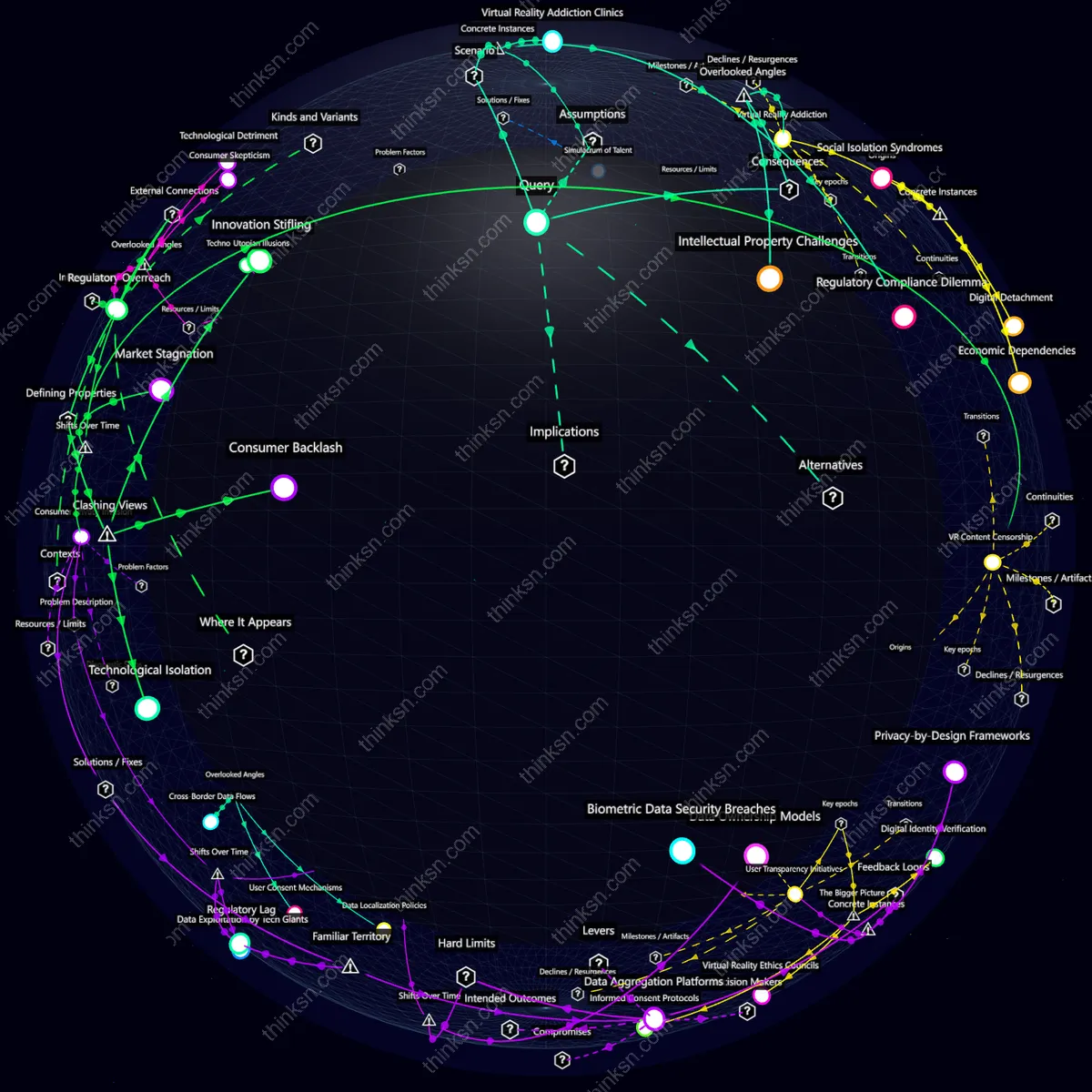
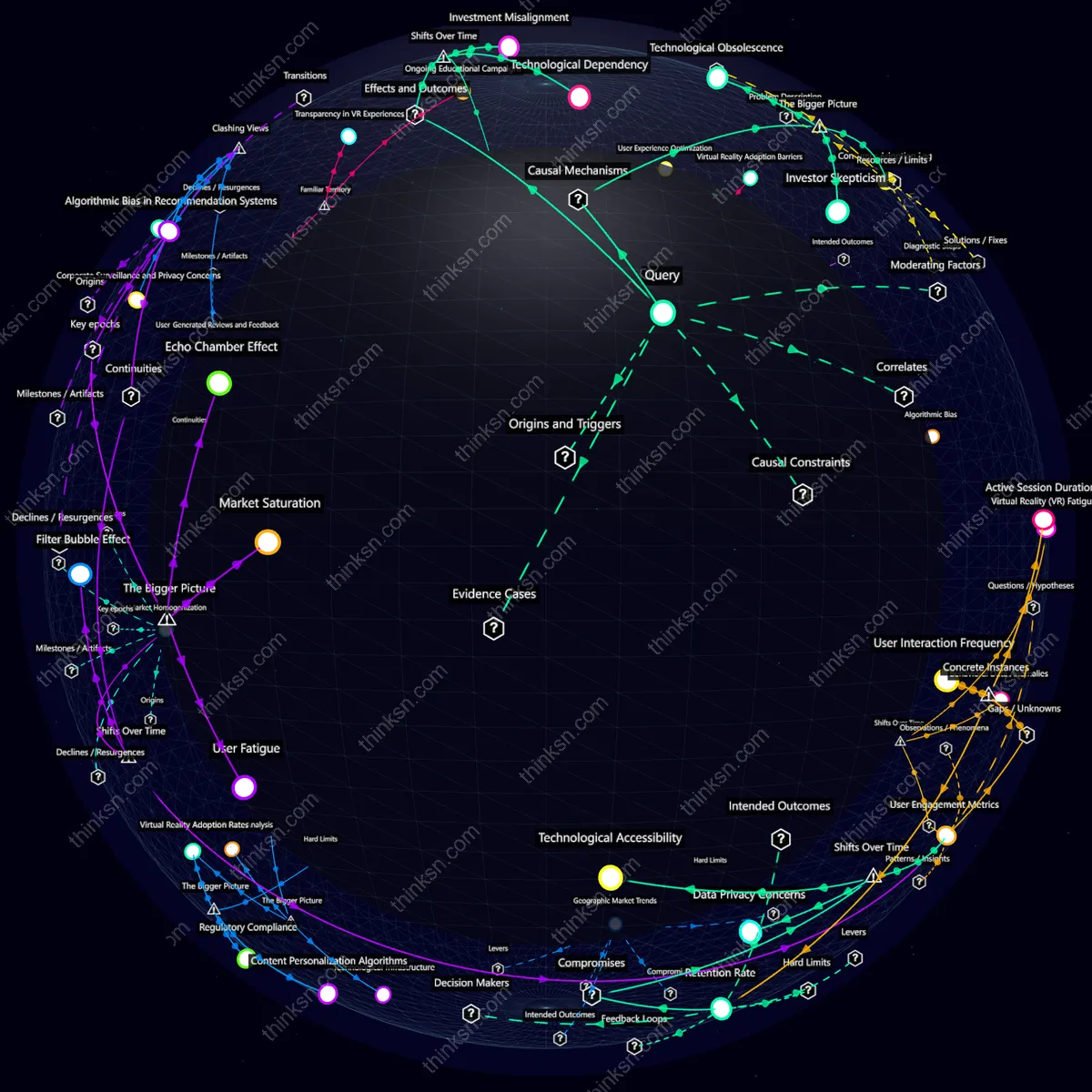
Analysis reveals 6 key thematic connections.
Key Findings
Investor Skepticism
As the VR marketing sector rapidly expands, investor skepticism grows due to escalating costs and unproven returns. This leads some investors to withdraw funds, potentially starving promising startups of essential capital at critical growth stages.
Consumer Adoption Lag
Despite aggressive marketing campaigns, consumer adoption of VR platforms lags behind expectations. The gap between hype and reality widens, with many consumers questioning the utility and necessity of expensive VR technologies for everyday use.
Technological Obsolescence
The rapid pace of technological advancement in VR means that early adopters could quickly become obsolete as newer, more advanced platforms emerge. This shortens the shelf life of investments and increases the risk of stranded assets for companies heavily invested in outdated technology.
Investment Misalignment
As marketing firms rush into VR platforms without thorough ROI analysis, investment misalignment becomes rampant. Early adopters may face significant expenses and poor returns, leading to a bubble that could burst suddenly due to market oversaturation and underperformance.
Consumer Skepticism
The rapid uptake of VR in marketing without clear demonstration of value can lead to consumer skepticism towards both the technology and brands using it. This skepticism could delay widespread adoption, undermining the potential long-term benefits for companies that invested early.
Technological Dependency
Companies relying heavily on VR platforms risk becoming technologically dependent on a single solution without diversification. Should the technology falter or new alternatives emerge, these firms could face substantial operational disruptions and financial losses.
Deeper Analysis
What strategies can marketers employ to mitigate consumer skepticism and ensure sustainable returns on investment in VR platforms?
Transparency in VR Experiences
Marketers who prioritize transparency by openly sharing the technical limitations and capabilities of their VR platforms can reduce consumer skepticism, but may also face challenges if they overshare or reveal too much about proprietary technology, potentially undermining competitive advantage.
User-Generated Reviews and Feedback
Encouraging users to share their experiences and feedback on VR platforms can build a community of trust that mitigates skepticism, but the reliance on user-generated content means marketers must manage negative reviews carefully to prevent damage to brand reputation.
Ongoing Educational Campaigns
Educational campaigns explaining the benefits and potential uses of VR technology can gradually build consumer confidence over time, yet require sustained investment and may face diminishing returns if consumers perceive these efforts as insincere or overly promotional.
Virtual Reality Adoption Barriers
As VR platforms face growing skepticism from consumers wary of privacy risks and uncomfortable experiences, marketers must navigate the delicate balance between immersive content and user safety. Overemphasis on rapid adoption through aggressive marketing can lead to a backlash if users encounter technical issues or ethical concerns, undermining long-term trust and engagement.
Digital Transparency
In an era of heightened consumer awareness about data privacy and security, digital transparency becomes a critical factor in combating skepticism towards VR platforms. While full disclosure is essential for building trust, it can also expose vulnerabilities that may be exploited by malicious actors or competitors, creating a paradox where openness invites risk.
User Experience Optimization
The quest to enhance user experience through sophisticated AI and personalized content in VR platforms risks alienating users who value simplicity and control. Over-automation can lead to unintended consequences such as reduced engagement if users feel they have lost agency over their virtual interactions, highlighting the need for a balanced approach that respects user preferences while advancing technological frontiers.
Explore further:
- How might user-generated reviews and feedback evolve over time as VR platforms are rapidly adopted in marketing, potentially affecting investment sustainability?
- What strategies can be formulated to enhance digital transparency in VR platform marketing initiatives to prevent an unsustainable bubble due to high expenses and low returns on investment?
How might user-generated reviews and feedback evolve over time as VR platforms are rapidly adopted in marketing, potentially affecting investment sustainability?
Algorithmic Bias in Recommendation Systems
As VR platforms rely more on user-generated reviews for content recommendations, algorithmic bias may skew visibility towards certain creators or types of content, undermining diversity and new talent. This could stifle innovation and create echo chambers that limit market growth.
Corporate Surveillance and Privacy Concerns
With the rise of user-generated reviews in VR marketing, companies are increasingly collecting detailed behavioral data from users. This raises significant privacy concerns and risks eroding consumer trust if mishandled, leading to potential backlash against overly intrusive monitoring practices.
The Emergence of AI-Generated Fakes
As VR adoption grows, the ease with which AI can generate convincing but false reviews poses a significant threat. This could undermine the credibility of user-generated feedback and necessitate new verification mechanisms to maintain trust in authentic reviews.
What strategies can be formulated to enhance digital transparency in VR platform marketing initiatives to prevent an unsustainable bubble due to high expenses and low returns on investment?
Transparency Metrics
Implementing transparency metrics forces VR platform marketers to disclose financial and user engagement data, which can enhance trust but also expose weaknesses that competitors may exploit. This pressure necessitates a design trade-off between revealing beneficial stats and concealing underperforming ones.
User Privacy Settings
Enhancing digital transparency through robust privacy settings can empower users to control their data, yet it introduces complexity in user interfaces that might deter new users. This creates a design trade-off where simplifying the experience could lead to reduced adoption but easier navigation of privacy controls.
Algorithmic Bias
Increased transparency into VR platform algorithms can highlight biases and inaccuracies, pushing developers towards more equitable practices. However, this effort often requires significant resources that could otherwise be allocated to improving user engagement or reducing operational costs, creating a design trade-off between ethical considerations and economic sustainability.
How might algorithmic bias in recommendation systems contribute to an unsustainable bubble in VR platform adoption within marketing, considering its evolution over time?
Echo Chamber Effect
Algorithmic bias in recommendation systems amplifies the echo chamber effect within VR platforms, driving users into isolated bubbles of content that reinforce pre-existing interests and biases. This creates a fragile dependency on narrow, homogenized experiences which can lead to rapid market saturation as diverse user needs go unmet.
Market Saturation
As recommendation algorithms entrench specific VR marketing niches through biased suggestions, they paradoxically contribute to market saturation by limiting the exposure of innovative but less mainstream content. This systemic trigger can accelerate a cycle where only established, safe bets receive user engagement, starving emerging segments and stifling long-term platform growth.
User Fatigue
Over time, the repetitive nature of biased recommendations leads to user fatigue in VR marketing platforms, diminishing the appeal of once-popular experiences. This dynamic can undermine sustained adoption by creating an unsustainable bubble where initial excitement is followed by a rapid decline in engagement and user retention.
Filter Bubble Effect
Algorithmic bias within recommendation systems can exacerbate the filter bubble effect, leading users to consume exclusively VR content that aligns with their pre-existing interests. This siloing of information hampers innovation and discourages exploration of diverse VR applications, potentially stifling market growth by creating an echo chamber of user engagement.
User Engagement Metrics
Overreliance on user engagement metrics in recommendation systems can distort the perception of a vibrant VR platform ecosystem. Platforms may prioritize content that generates immediate but unsustainable high engagement, such as addictive games or social interactions, at the expense of long-term value propositions like educational experiences or productivity tools.
Market Homogenization
Algorithmic bias can contribute to market homogenization by favoring established VR content creators and large platforms over innovative smaller players. This concentration of power and influence can create an unsustainable bubble, where the perceived success of a few dominant players masks underlying issues like innovation stagnation and user disengagement among niche communities.
Explore further:
- How might user engagement metrics reveal hidden assumptions about the sustainability of VR platform investments in marketing, and what emerging insights could this provide regarding potential market bubbles?
- How might market homogenization due to rapid VR platform adoption in marketing evolve over time, potentially leading to an unsustainable bubble?
How might user engagement metrics reveal hidden assumptions about the sustainability of VR platform investments in marketing, and what emerging insights could this provide regarding potential market bubbles?
Virtual Reality (VR) Fatigue
Increased user engagement metrics in VR platforms may mask the onset of VR fatigue among users, where prolonged immersion leads to physical discomfort and reduced enthusiasm. This hidden assumption about sustainable interest could mislead marketers into overestimating market potential, risking investment in a saturated or declining market.
Behavioral Data Anomalies
Rapid shifts in user engagement metrics might indicate anomalies due to algorithmic changes rather than genuine user preferences. For instance, sudden spikes could be from short-term promotions or bugs, leading investors and marketers to misinterpret temporary trends as sustained growth drivers.
Cultural Relevance Dynamics
User engagement metrics can fluctuate dramatically based on cultural shifts and external events. A platform's initial spike in user interest due to a viral trend might not translate to long-term sustainability, highlighting the risk of investing heavily without considering broader cultural dynamics that sustain or undermine interest.
Active Session Duration
Shorter active session durations can mislead investors into overestimating user engagement and platform sustainability in VR. This metric alone may hide the reality of users' declining interest or technical issues, risking significant investment in a market bubble.
Retention Rate
High retention rates in VR platforms might obscure underlying user fatigue due to repetitive content. When coupled with rapid technological advancements, this can lead to unsustainable business models and financial instability for companies heavily reliant on these metrics.
User Interaction Frequency
Frequent but shallow interactions (e.g., brief, non-repetitive visits) may indicate a lack of deep engagement or user dissatisfaction. This can be misleading to marketers who might overvalue the sustainability of VR investments based on interaction frequency alone.
Explore further:
- How do cultural relevance dynamics impact the sustainability and spatial distribution of VR platform investments in marketing?
- What strategies can be formulated to improve retention rates in VR marketing platforms to prevent an unsustainable bubble due to significant expenses and poor returns on investment?
How do cultural relevance dynamics impact the sustainability and spatial distribution of VR platform investments in marketing?
Cultural Consumption Patterns
The shift towards virtual reality (VR) platforms in marketing is heavily influenced by evolving cultural consumption patterns. As younger demographics increasingly value immersive and interactive experiences, the demand for culturally relevant VR content surges, driving investment into technologies that cater to these preferences. However, this also creates a risk of alienating older consumers who may not be as tech-savvy or interested in such formats.
Geographic Market Trends
The spatial distribution of VR platform investments is intricately tied to geographic market trends where cultural relevance dynamics vary. Cities with diverse populations and a strong presence of technology-driven industries attract more investment due to their capacity to generate and sustain culturally relevant content. Conversely, regions lagging in technological adoption or lacking cultural diversity risk being sidelined despite potentially rich historical or artistic contexts that could make them ideal for unique VR experiences.
Technological Adaptation Speed
The pace at which different cultures adopt and adapt to VR technology significantly impacts the sustainability of investments in marketing platforms. Regions with rapid technological adaptation can quickly leverage VR innovations, leading to a boom in culturally relevant content that attracts substantial investment. However, if this adoption is uneven or slow, it could result in overinvestment in underutilized technologies, creating an economic bubble prone to collapse as demand fails to materialize.
Explore further:
- What strategies can marketers use to align VR platform investments with current cultural consumption patterns to avoid an unsustainable bubble and ensure sustainable returns?
- What geographic market trends could lead to a shift in investment strategies for VR platforms in marketing, and how might these shifts help mitigate the risk of an unsustainable bubble?
What strategies can be formulated to improve retention rates in VR marketing platforms to prevent an unsustainable bubble due to significant expenses and poor returns on investment?
User Engagement Metrics
Highly tailored user engagement metrics can enhance retention rates by providing granular insights into VR platform usage. However, over-reliance on these metrics might lead to an optimized but shallow experience that fails to foster genuine long-term interest.
Data Privacy Concerns
Stricter data privacy regulations and user concerns can significantly impact retention rates by limiting the ability of VR platforms to gather detailed behavioral data needed for targeted marketing and personalization strategies. This paradoxically forces companies to innovate in less intrusive, yet effective engagement methods.
Technological Accessibility
Improving technological accessibility to reduce costs can increase initial user acquisition but may lead to higher attrition rates if the technology becomes outdated too quickly or does not offer ongoing value. Balancing innovation speed with market readiness is crucial to sustain high retention rates.
What strategies can marketers use to align VR platform investments with current cultural consumption patterns to avoid an unsustainable bubble and ensure sustainable returns?
Virtual Reality Adoption Rates
Rising VR adoption rates can distort cultural consumption patterns by shifting focus from traditional media to immersive experiences. This shift could exacerbate income disparity as higher-end hardware remains unaffordable for many, potentially creating a bubble if the market does not sustain widespread adoption.
Content Personalization Algorithms
Advanced content personalization algorithms in VR platforms can both enhance user engagement and create echo chambers that limit cultural diversity. This could lead to unintended consequences such as reduced innovation and homogenized consumer behavior, making it difficult for marketers to predict shifts in consumption patterns.
Regulatory Compliance
Stringent regulatory compliance can act as a double-edged sword, protecting users from privacy violations but also stifling the creative freedom needed to innovate within VR platforms. This delicate balance impacts how marketers align investments with cultural trends, often requiring careful navigation of legal and ethical boundaries.
Cultural Trends Analysis
Marketers relying heavily on cultural trends analysis for VR platform investments risk misalignment with consumer behavior if they fail to account for the long-term sustainability of these trends. Overreliance on short-lived fads can lead to premature investment decisions, undermining efforts to secure sustainable returns.
Technological Infrastructure
The development and maintenance of robust technological infrastructure are crucial but often overlooked aspects when aligning VR platform investments with cultural consumption patterns. Without adequate support systems in place, even the most innovative platforms may struggle to attract and retain users, leading to unsustainable growth and eventual market failure.