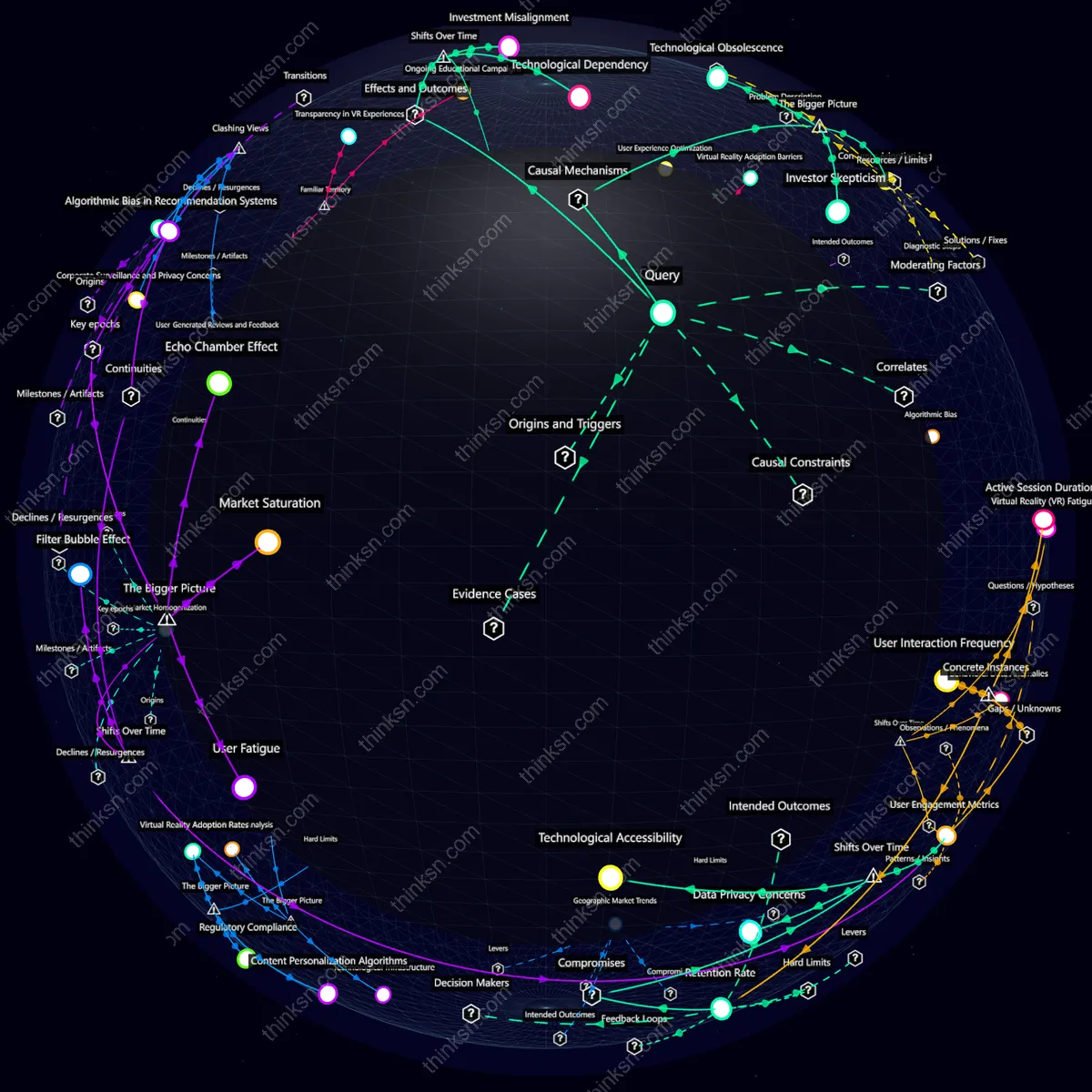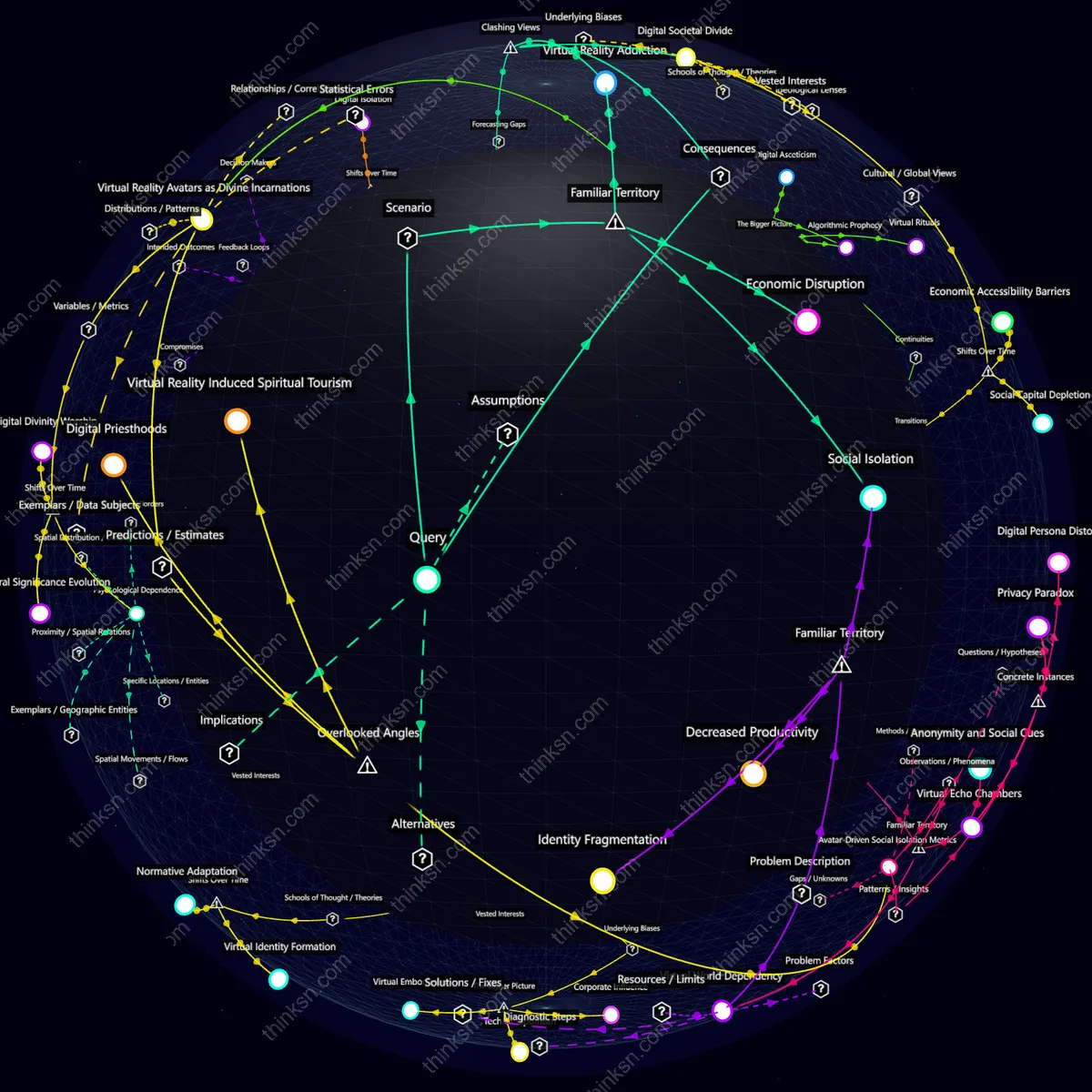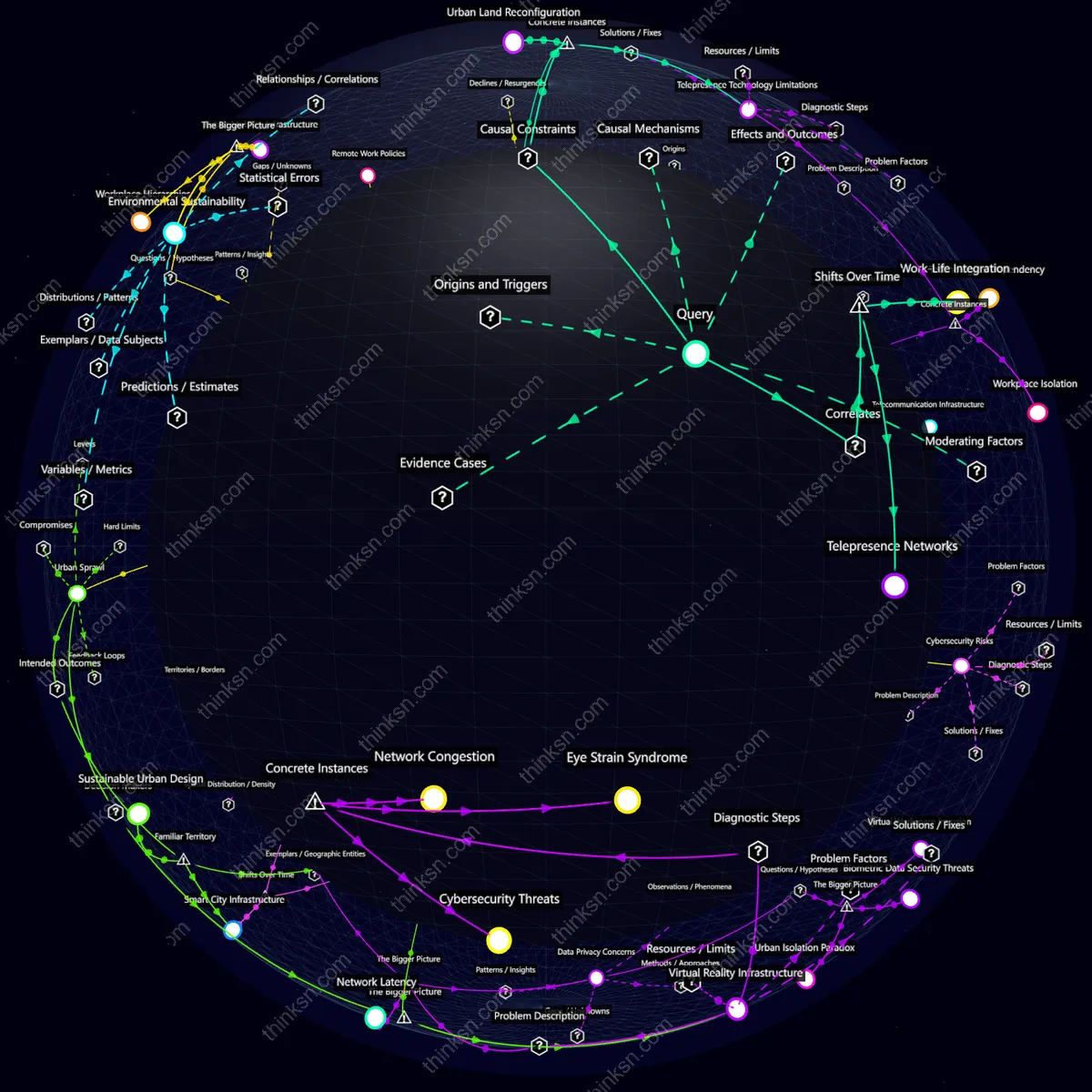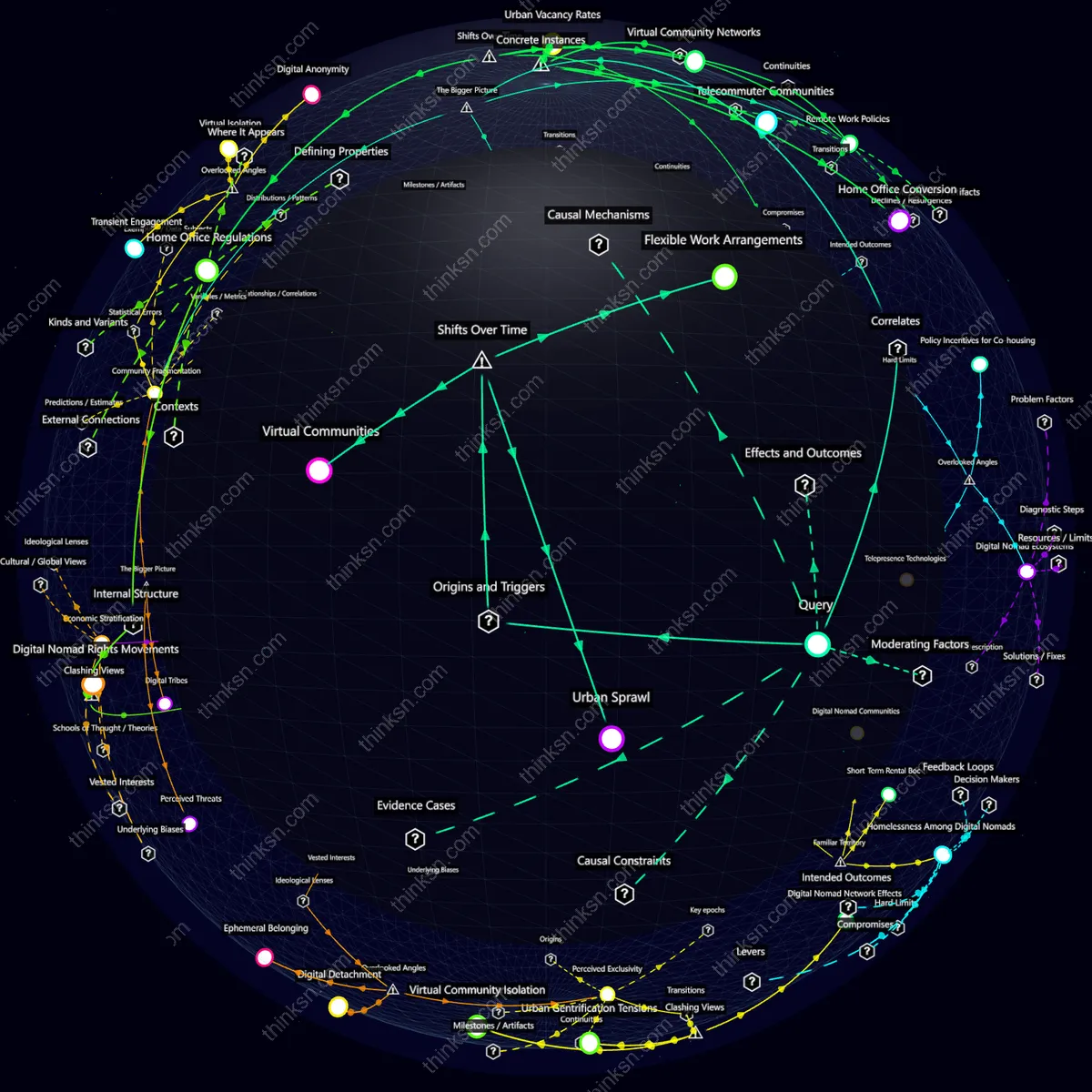
VR Real Estate Speculation: The Future of Elitism?
Analysis reveals 5 key thematic connections.
Key Findings
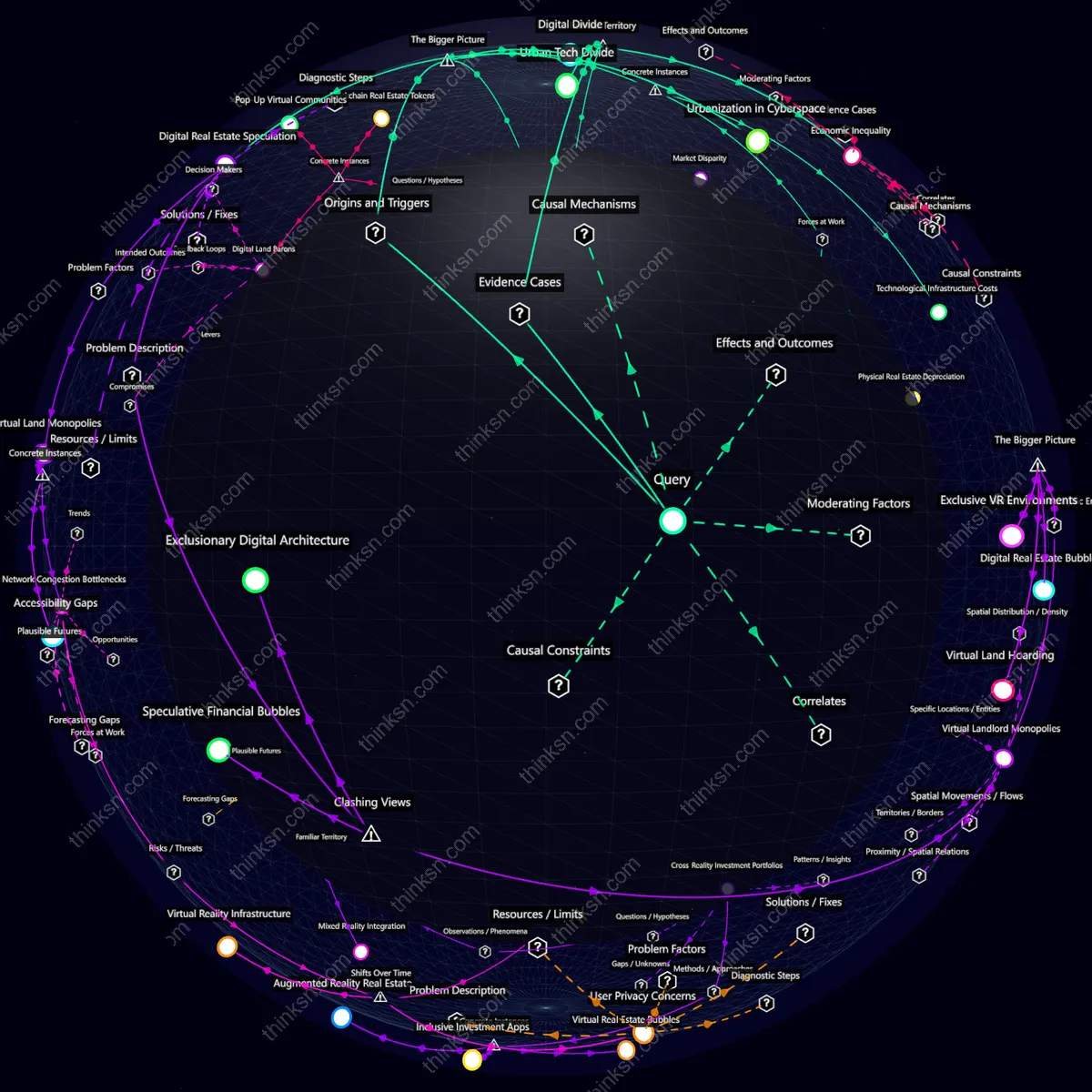
Virtual Real Estate Speculation
As VR spaces become more integrated into daily life for work and leisure, speculative investment in virtual land and properties could mirror historical trends in the physical world. This shift would likely see tech-savvy investors driving up costs through speculative purchases, making VR environments increasingly expensive and exclusive.
Digital Divide
The mass adoption of VR technologies exacerbates existing socio-economic disparities, as high costs prevent many from accessing these spaces. This digital divide could deepen inequalities, further marginalizing those unable to afford premium virtual real estate or cutting-edge equipment required for seamless VR experiences.
Urbanization in Cyberspace
As more individuals seek out virtual communities and commercial opportunities within VR environments, urban-like dynamics emerge. This digital urbanization could lead to overcrowded virtual districts with inflated prices, mirroring real-world issues of gentrification and accessibility challenges.
Urban Tech Divide
The rise of VR spaces could deepen existing urban tech divides. Wealthier neighborhoods may attract more investment in high-end VR infrastructure, while economically disadvantaged areas might lag behind, creating a new form of digital segregation that limits access to opportunities and resources within these virtual realms.
Economic Inequality
Exclusivity in premium VR spaces could reinforce economic inequality. Wealthy individuals or corporations might control the most sought-after virtual territories, pricing out smaller players and stifling innovation from diverse communities who cannot afford access to these high-demand digital real estates.
Deeper Analysis
What are the emerging insights and diverse perspectives on how virtual real estate speculation might impact accessibility and affordability in VR spaces?
Digital Land Barons
The rise of digital land barons in virtual worlds exacerbates inequality by concentrating wealth among a few speculators, who then control access to prime VR locations, limiting opportunities for new entrants and stifling innovation within these spaces.
Pop-Up Virtual Communities
Temporary pop-up virtual communities can emerge swiftly in response to hot speculative trends but often disappear abruptly when market conditions change, leaving behind a trail of abandoned or underutilized digital properties and disillusioned residents.
Blockchain Real Estate Tokens
The introduction of blockchain real estate tokens in virtual environments promises unprecedented transparency and liquidity but also introduces complex legal and regulatory challenges that could create barriers to entry for less tech-savvy or financially capable participants.
Market Disparity
Virtual Real Estate speculation exacerbates market disparity by creating a digital divide where early adopters can purchase prime locations at bargain prices, making it increasingly difficult for latecomers to enter the virtual real estate market due to rapidly escalating values.
Regulatory Vacuum
The absence of clear regulations in virtual spaces allows speculative activities to flourish unchecked, leading developers and tech companies to prioritize short-term profits over long-term user accessibility and affordability, inadvertently stifling innovation for more equitable VR ecosystems.
Inflationary Pressure
Speculative behavior inflates the perceived value of virtual real estate, compelling businesses to allocate larger budgets just to secure a competitive edge in prime digital territories, which can push smaller entities out of the market and limit diversity within VR communities.
How might inflationary pressure evolve as a result of increased mass use of VR spaces, and what are its impacts on real estate accessibility?
Digital Real Estate Speculation
The rise of virtual spaces for work, leisure, and social interaction is driving up demand for premium digital land plots. Investors are buying up these territories, expecting rapid appreciation similar to traditional real estate bubbles. This speculation can lead to inflationary pressures in VR space rentals and sales, making them less accessible to non-investors.
Technological Infrastructure Costs
As the mass adoption of VR technologies accelerates, the demand for high-speed internet, server capacity, and advanced computing hardware increases. These infrastructural demands drive up costs, which are often passed on to consumers through higher subscription fees or usage charges. This can exacerbate inflationary pressures in both digital and physical realms, affecting overall affordability.
Virtual Real Estate Speculation
As VR spaces become mass-market commodities, the rise of virtual real estate speculation amplifies inflationary pressure. Investors rush to buy prime locations in popular virtual worlds, driving up prices and creating speculative bubbles that mirror historical patterns in physical property markets. This trend could exacerbate economic disparities between tech-savvy early adopters and less-affluent users unable to afford premium digital assets.
Digital Infrastructure Costs
Increased use of VR spaces strains existing digital infrastructure, leading to higher operational costs for data centers and network providers. These expenses are often passed on to consumers through increased subscription fees or reduced service quality, further inflating the cost of accessing these virtual environments. This creates a vicious cycle where rising inflationary pressure in digital spaces discourages broader adoption and innovation, potentially stalling technological progress.
Physical Real Estate Depreciation
The growing allure of VR spaces could lead to decreased demand for physical real estate, particularly in commercial sectors. This shift results in lower rental and property values in certain urban areas, creating a paradox where digital inflationary pressure undermines the value of traditional assets. However, this scenario also poses risks such as over-investment in unproven virtual technologies versus sustainable development of tangible infrastructure.
Explore further:
- What are the potential systemic failures and measurable strains on digital infrastructure if mass adoption of VR spaces leads to speculative real estate trends, making them expensive and inaccessible?
- How do digital infrastructure costs contribute to the spatial distribution and accessibility of VR spaces, potentially influencing real estate trends?
What are the potential systemic failures and measurable strains on digital infrastructure if mass adoption of VR spaces leads to speculative real estate trends, making them expensive and inaccessible?
Virtual Landlord Monopolies
As digital spaces become more valuable, a few powerful entities could corner the market on prime virtual land, stifling innovation and access for smaller players. This centralization can lead to systemic risks where a single point of failure or mismanagement impacts vast swathes of users.
Speculative Financial Bubbles
The rise in speculative investment in digital real estate could create financial bubbles, similar to those seen with cryptocurrencies. When these bubbles burst, the sudden devaluation can destabilize economies that rely on VR spaces for income and innovation, leading to widespread economic downturns.
Exclusionary Digital Architecture
High real estate costs in virtual worlds could drive out marginalized groups, reinforcing existing social inequalities. This exclusion not only limits diversity but also hampers the evolution of digital communities by narrowing the range of perspectives and ideas that shape these spaces.
Virtual Land Monopolies
As virtual land becomes more expensive and exclusive due to speculation, tech giants like Meta could exploit their early mover advantage to corner the market, stifling innovation by small developers and startups who can't afford premium real estate in VR spaces.
Network Congestion Bottlenecks
Speculative trends pushing up demand for prime digital real estate may lead to overloading of network infrastructure. For instance, when large numbers of users simultaneously access high-demand virtual locations, it can cause lag and degradation in user experience, potentially driving away less tech-savvy or economically disadvantaged users.
Accessibility Gaps
With VR real estate becoming increasingly unaffordable, marginalized communities might be excluded from these digital spaces. For example, a local community center trying to offer VR-based educational programs faces insurmountable costs due to speculative pricing, widening the digital divide and limiting access to new technologies.
Explore further:
- What is the spatial distribution and territorial boundaries of virtual landlord monopolies in VR spaces, and how do they contribute to speculative real estate trends making VR spaces expensive and inaccessible?
- How might network congestion bottlenecks evolve as a result of increased VR space usage and what impacts could this have on speculative real estate trends over time?
What is the spatial distribution and territorial boundaries of virtual landlord monopolies in VR spaces, and how do they contribute to speculative real estate trends making VR spaces expensive and inaccessible?
Digital Real Estate Bubbles
Virtual landlord monopolies exacerbate digital real estate bubbles by inflating the perceived value of virtual plots through artificial scarcity and exclusive access, making these spaces expensive and unattainable for many users. This speculative trend drives a cycle where early adopters benefit disproportionately from rising values, while newcomers face high entry barriers, creating an unsustainable economic bubble.
Virtual Land Hoarding
Land hoarding in VR spaces by virtual landlords distorts the market's natural dynamics, concentrating ownership and access to prime areas among a few entities. This practice can lead to underutilization of resources and stifled innovation as smaller developers struggle with high costs and limited opportunities for expansion within these monopolized territories.
Exclusive VR Environments
The creation of exclusive virtual environments by dominant virtual landlords can alienate potential users, pushing them towards less popular alternatives or discouraging entry into the market altogether. This exclusivity not only limits diversity and creativity but also undermines the foundational principles of open access that are critical for fostering a vibrant and inclusive VR community.
How might network congestion bottlenecks evolve as a result of increased VR space usage and what impacts could this have on speculative real estate trends over time?
Virtual Reality Infrastructure
As VR space usage grows exponentially, the demand for high-bandwidth, low-latency networks intensifies, exacerbating network congestion bottlenecks. This strain can lead to user experience degradation and increased operational costs for service providers trying to maintain quality.
Real Estate Speculation
Network congestion in VR spaces may deter investors from high-demand areas, leading to speculative real estate trends that favor regions with superior infrastructure. This could result in a widening gap between well-connected and poorly connected virtual neighborhoods, impacting both property values and user migration patterns.
User Privacy Concerns
Increased congestion bottlenecks in VR environments can expose users to higher risks of data breaches as service providers implement less secure measures to manage traffic spikes. This could erode trust and lead to regulatory scrutiny, impacting the entire speculative real estate market built on these virtual platforms.
Explore further:
- What are the key components and categories involved in real estate speculation triggered by mass VR space usage, and how do they relate spatially within urban environments?
- What are the potential privacy risks and trade-offs associated with the mass adoption of VR spaces, and how might these issues impact user accessibility and affordability over time?
What are the key components and categories involved in real estate speculation triggered by mass VR space usage, and how do they relate spatially within urban environments?
Tech Entrepreneur Ecosystem
The emergence of a tech entrepreneur ecosystem around VR spaces intensifies real estate speculation, as these entrepreneurs seek prime locations for their businesses and residences. However, this concentration also risks creating bubbles that could burst if the technology's commercial viability falters.
Urban Land Value Inequality
Real estate speculation fueled by VR usage exacerbates urban land value inequality, as high-tech districts see astronomical property price hikes while other areas stagnate or decline. This disparity can lead to social unrest and increased economic segregation within cities.
Virtual Reality Enclave
The creation of VR enclaves within urban centers shifts the focus from physical property value to virtual land rights, potentially leading to speculative bubbles in digital real estate that outpace traditional market trends.
Tech-Driven Urban Redevelopment
Tech companies' aggressive investment in mixed-use spaces triggers rapid gentrification and displacement of long-term residents, as virtual reality usage drives up demand for prime urban locations for both digital and physical amenities.
Cross-Reality Investment Portfolios
Investors diversify portfolios by speculating on dual real estate markets—physical properties linked to VR hubs and direct investments in virtual lands within popular VR platforms, complicating traditional valuation models with unpredictable cross-reality correlations.
What emerging trends in cross-reality investment portfolios could influence speculative real estate markets and accessibility in VR spaces?
Virtual Real Estate Speculation
The rise of virtual real estate speculation within cross-reality investment portfolios is redefining traditional notions of property ownership and value, as investors rush to claim prime locations in VR worlds. This surge can lead to speculative bubbles similar to those seen in physical real estate markets, but with the added challenge of unclear legal frameworks governing virtual assets.
Mixed Reality Integration
The seamless integration of mixed reality (MR) technologies is blurring the lines between virtual and physical investment opportunities. As MR headsets become more prevalent, investors are increasingly looking to leverage these platforms for dual-purpose investments that enhance both VR spaces and real-world properties. However, this dependency on hardware adoption rates and technological advancements introduces significant risk.
Virtual Real Estate Bubbles
The emergence of virtual real estate bubbles in platforms like Decentraland and The Sandbox can distort investment behavior, leading to speculative overvaluation that may collapse suddenly when new tech or market trends emerge. This highlights the fragility of cross-reality investments tied to VR spaces.
Inclusive Investment Apps
Platforms like Republic and SuperRare have democratized access to investment opportunities, but in the context of cross-reality portfolios, this could exacerbate inequality if only tech-savvy users effectively navigate complex virtual property investments. Such apps risk deepening digital divides within speculative real estate markets.
Augmented Reality Real Estate
The blending of AR technology with real-world investment properties creates new opportunities for investors to visualize and sell augmented reality experiences tied to physical spaces, but this also introduces legal and regulatory challenges that could hinder adoption or lead to misuse. This exemplifies the fragile dependency on clear guidelines in emerging cross-reality markets.