Entertainment Industry Faces VR Reality: When Immersion Blurs Life and Simulation
Analysis reveals 5 key thematic connections.
Key Findings
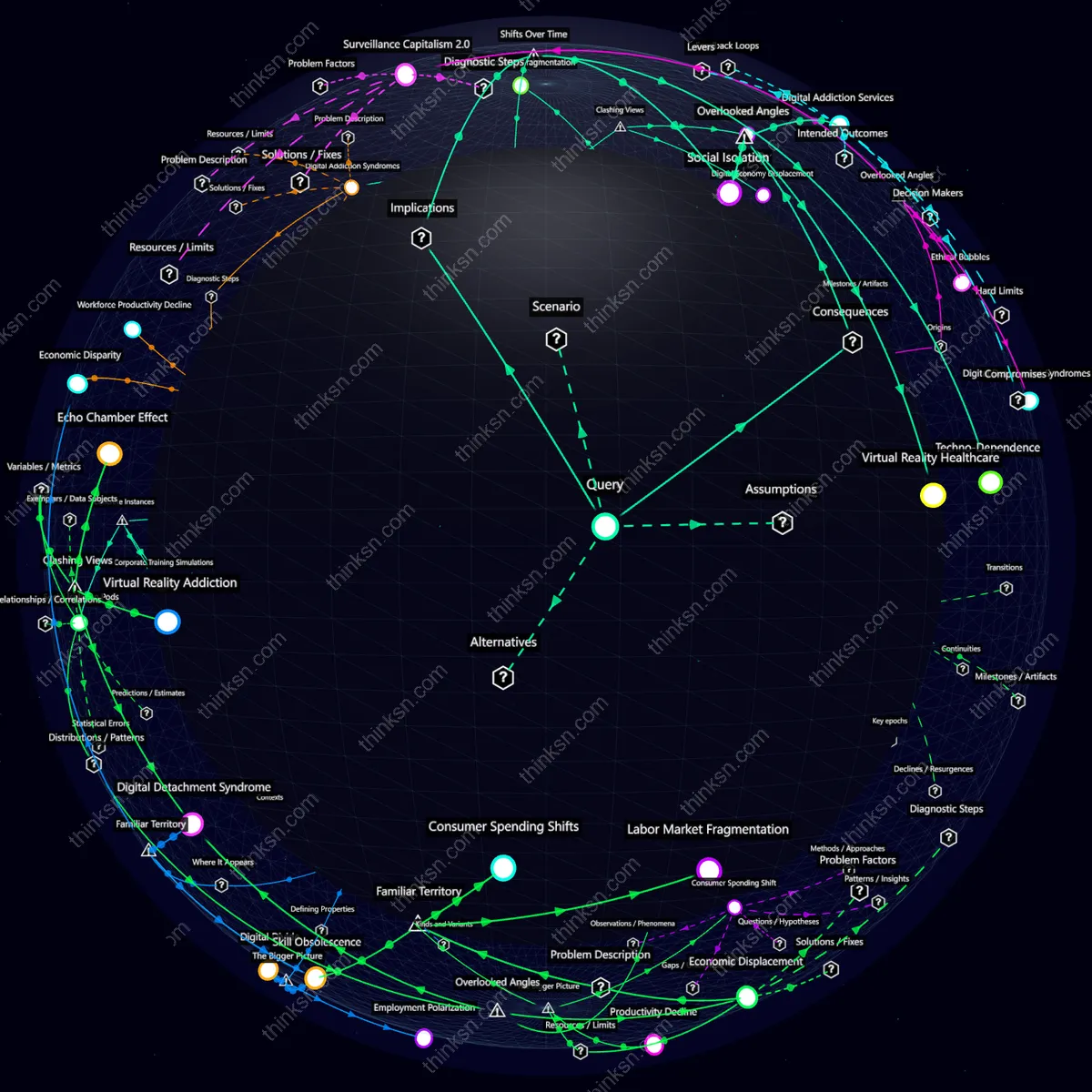
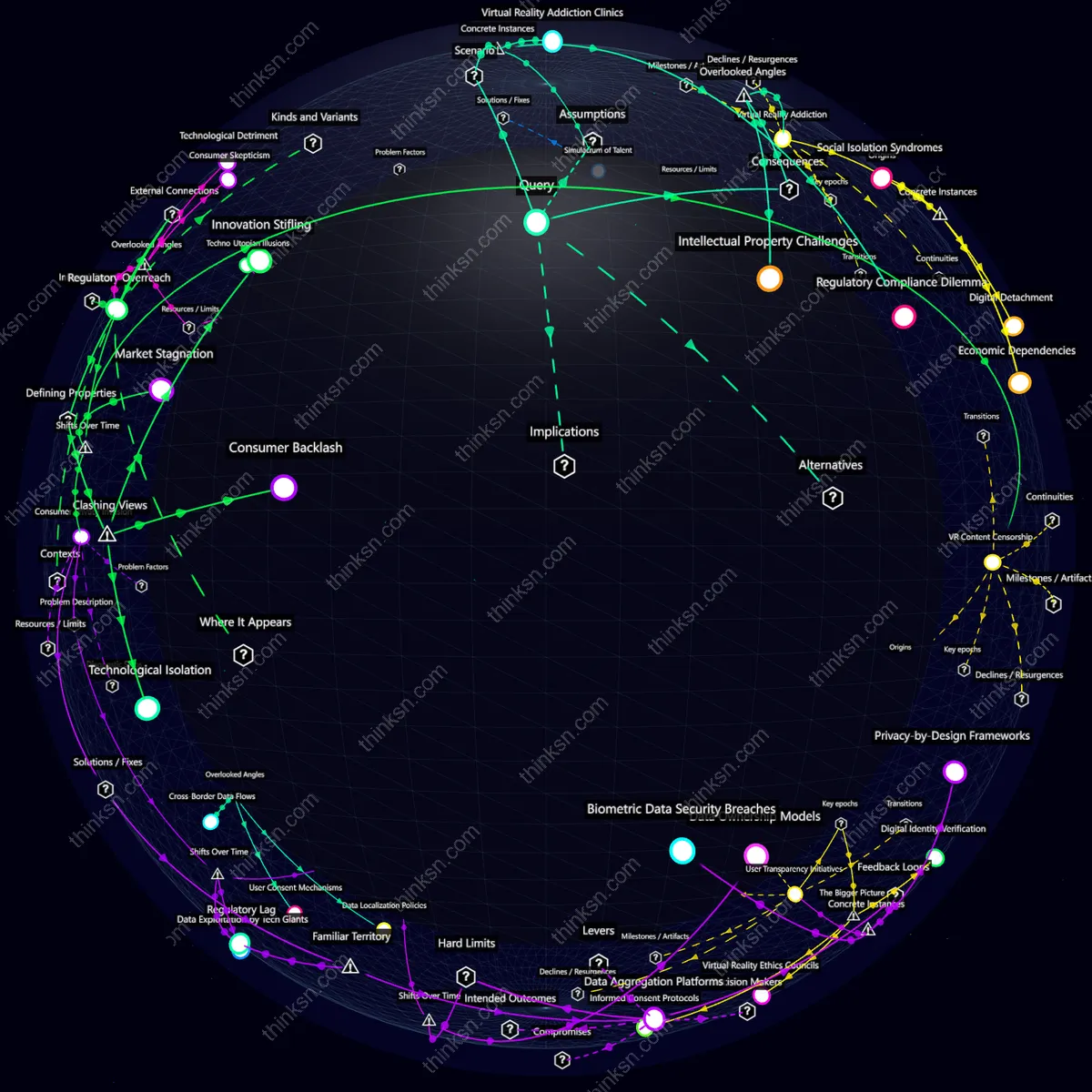
Virtual Reality Addiction Clinics
As immersive VR blurs the line with reality, entertainment companies must address rising addiction rates. Virtual Reality Addiction Clinics emerge to treat users who cannot differentiate between virtual and real worlds, creating a new healthcare challenge intertwined with technological advancement.
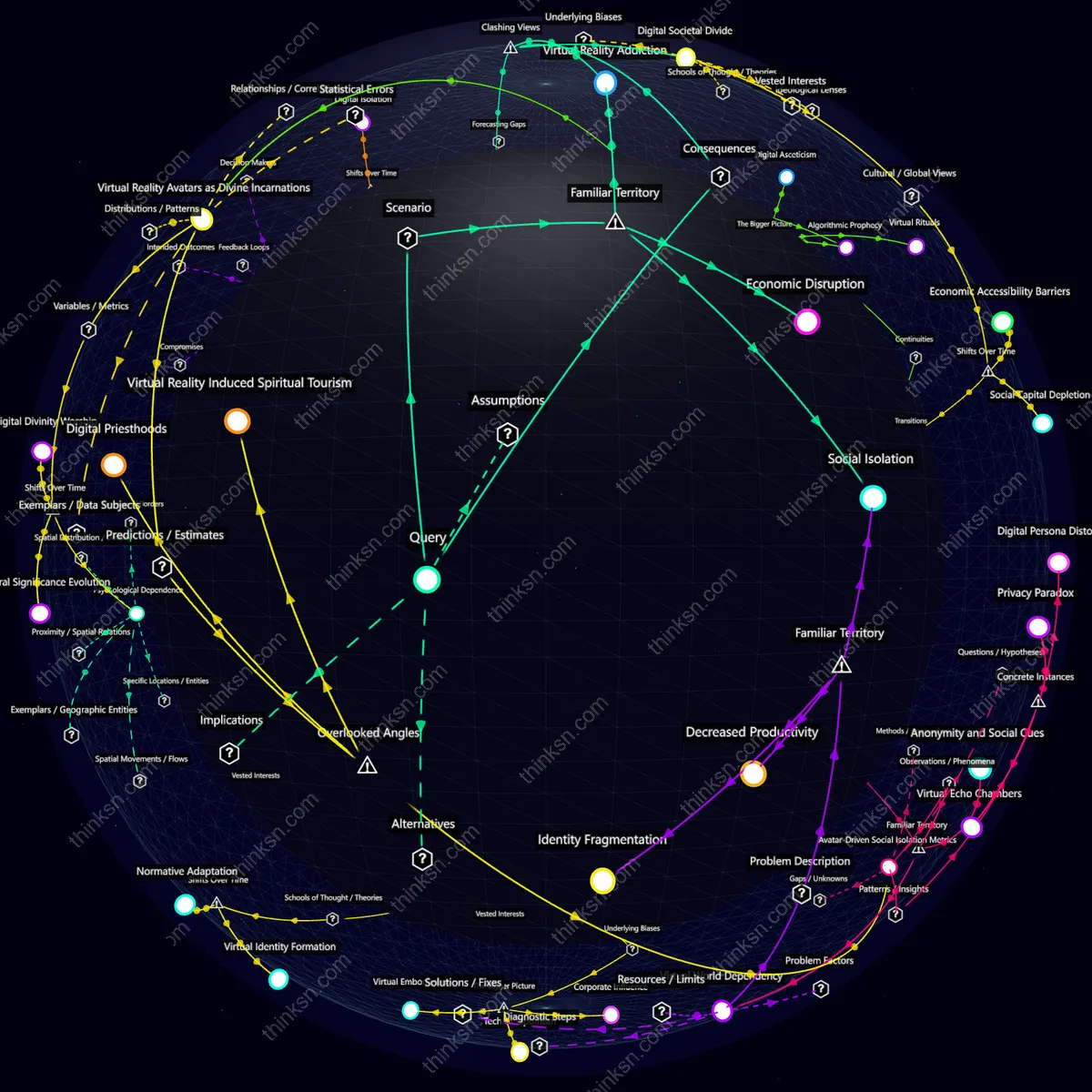
Simulacrum of Talent
The entertainment industry faces an existential crisis as virtual stars become indistinguishable from human actors. This simulacrum of talent challenges traditional notions of celebrity, leading to debates over digital rights and the authenticity of creative contributions in a hyper-realistic VR environment.
Regulatory Compliance Dilemma
With immersive VR blurring reality, governments impose strict regulations on content creation and user engagement. Entertainment companies must navigate complex compliance issues, risking innovation or facing legal penalties if they push the boundaries too far in pursuit of more realistic experiences.
Virtual Reality Addiction
The blurring of reality with highly immersive VR could lead to severe addiction issues among users. Entertainment companies might face ethical dilemmas and legal pressures as they navigate the balance between maximizing user engagement and safeguarding mental health, potentially leading to stricter regulations and oversight.
Intellectual Property Challenges
As virtual worlds become increasingly realistic, traditional notions of intellectual property rights could be challenged. Creators might struggle with defining ownership over experiences that are indistinguishable from reality, leading to disputes over who owns the content within these immersive environments and how profits should be shared.
Deeper Analysis
In a highly immersive VR world that blurs reality, how would the concept of 'Simulacrum of Talent' impact the entertainment industry's value system and what measurable systemic strains might arise from this shift?
Virtual Cognition Bottleneck
As VR worlds become more immersive, the 'Simulacrum of Talent' concept could strain users' cognitive processing, leading to a bottleneck where virtual achievements overshadow real-world abilities. This shift might lead to a generation less adept at practical skills, as they rely on simulated successes.
Authenticity Crisis
In the entertainment industry, the 'Simulacrum of Talent' could trigger an authenticity crisis where virtual accomplishments are valued over genuine creative expression. This might degrade the intrinsic value of artistic works and dilute the public's appreciation for authentic talent.
Competitive Parity Erosion
The rise of 'Simulacrum of Talent' could create a competitive parity erosion, where success in VR worlds leads to an uneven playing field outside these environments. This disparity might exacerbate social inequalities and challenge traditional notions of meritocracy.
Explore further:
- How might an authenticity crisis in virtual reality entertainment lead to systemic failures and measurable strains within the industry?
- How might competitive parity erosion impact the entertainment industry's strategic response to highly immersive VR technology that challenges traditional boundaries between virtual and real experiences?
How might virtual reality addiction evolve as highly immersive VR technologies become more prevalent in the entertainment industry, and what mechanisms could lead to this evolution over time?
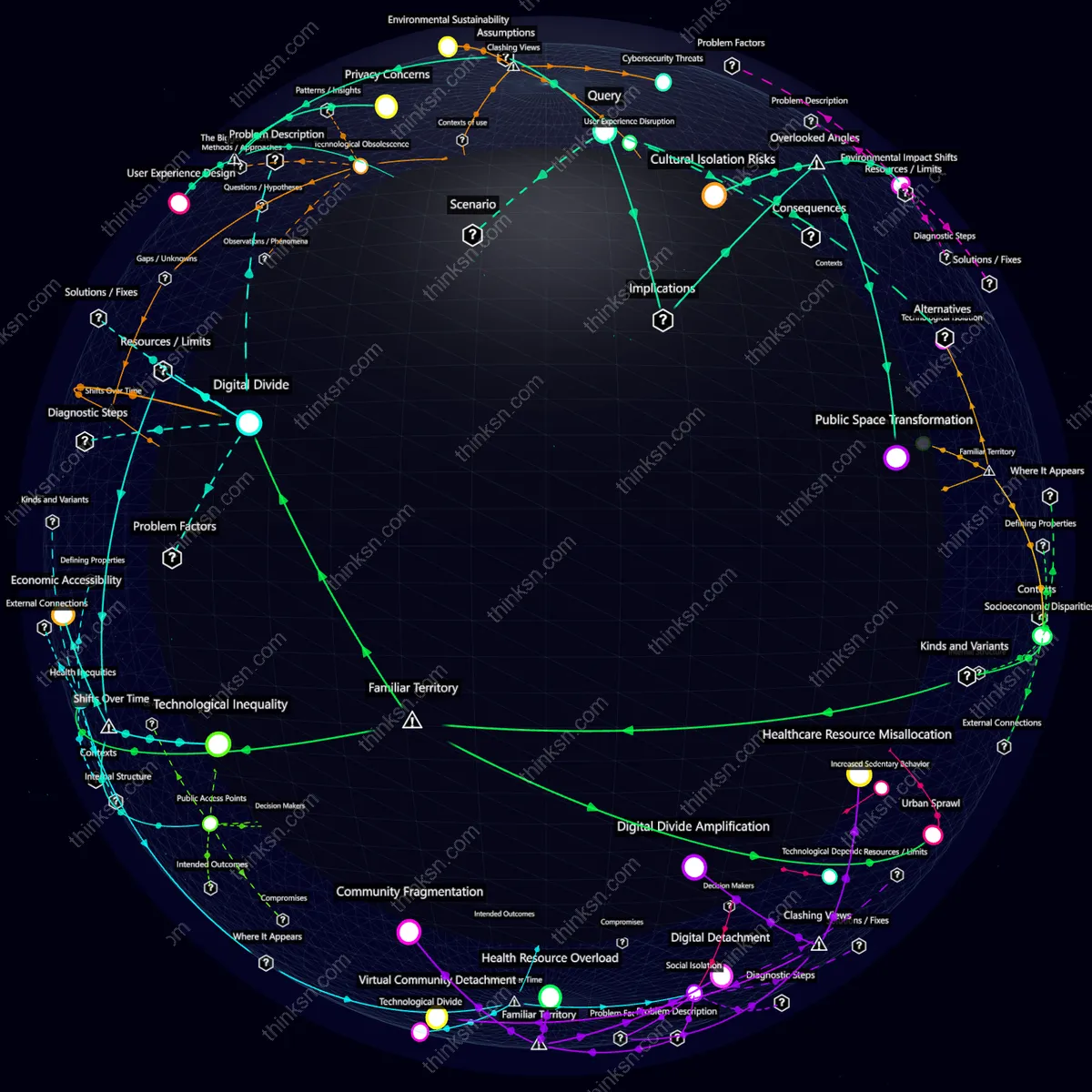
Digital Detachment
As VR technologies evolve to offer increasingly realistic experiences, users might develop a profound digital detachment from the physical world. This can lead to neglect of personal hygiene, social interactions, and even mental health issues as individuals prioritize virtual escapades over real-life responsibilities.
Economic Dependencies
The entertainment industry's shift towards highly immersive VR could create economic dependencies where major companies rely heavily on users' addiction to maintain profits. This dependency can make it difficult for these firms to address the negative impacts of VR addiction, as curtailing addictive features would harm their business model.
Social Isolation Syndromes
Highly immersive VR environments might exacerbate social isolation syndromes by making real-life interactions seem less engaging or rewarding. This could lead to a vicious cycle where individuals retreat further into the digital realm, isolating them from societal norms and support systems that are crucial for mental well-being.
How might an authenticity crisis in virtual reality entertainment lead to systemic failures and measurable strains within the industry?
Virtual Identity Fraud
The rise of virtual identity fraud in VR entertainment exacerbates the authenticity crisis by eroding user trust and engagement. As users struggle to distinguish between genuine and fabricated experiences, platforms face systemic failures due to increased security breaches and declining revenue from disillusioned consumers.
Simulacrum Dependency
The dependency on simulacra in virtual reality entertainment leads to a paradox where the distinction between real and simulated becomes blurred. This can result in users becoming disengaged with real-world experiences, leading to measurable strains as social interaction skills atrophy due to over-reliance on VR environments.
Techno-Utopian Illusions
Promises of technological utopias in virtual reality entertainment often overshadow the harsh realities of systemic issues such as accessibility and digital divide. As users increasingly expect perfect authenticity, the failure to meet these unrealistic expectations can lead to significant backlash against VR technology from both consumers and regulators.
Consumer Skepticism
As virtual reality entertainment increasingly faces an authenticity crisis due to fake reviews and misleading advertisements, consumers become skeptical of all VR content. This skepticism can undermine trust in genuine high-quality experiences, leading to a vicious cycle where fewer people are willing to invest time or money into the industry.
Regulatory Overreach
In response to widespread concerns about authenticity in virtual reality entertainment, governments may introduce overly restrictive regulations that stifle innovation and creativity. This regulatory overreach could disproportionately affect small developers and startups, who lack the resources to navigate complex legal frameworks, thereby concentrating market power among larger corporations.
Technological Detriment
The quest for solutions to the authenticity crisis in VR entertainment may lead to an excessive focus on technical verification methods at the expense of artistic and experiential innovation. This technological determinism can result in a homogenization of content, where unique storytelling and immersive experiences are sacrificed for the sake of ensuring verifiable authenticity.
How might regulatory overreach impact the development and adoption of highly immersive VR technology in the entertainment industry?
Innovation Stifling
Regulatory overreach can stifle innovation in highly immersive VR technology by imposing burdensome compliance requirements that slow down product development cycles. This may lead to a competitive disadvantage for local companies compared to international counterparts operating under less stringent regulations, undermining domestic technological advancement.
Consumer Backlash
Excessive regulation of VR technology might provoke consumer backlash due to perceived infringement on personal freedoms and overzealous surveillance. This could result in a significant shift towards unregulated or black market alternatives, leading to security risks and loss of control for both consumers and regulators.
Technological Isolation
Overly restrictive regulations can isolate domestic VR technology from global innovation networks, as stringent compliance requirements may discourage international collaboration. This isolation could limit the flow of cutting-edge ideas and technologies into the local market, ultimately hindering the adoption and development of highly immersive VR systems.
VR Content Censorship
Regulatory overreach in VR technology can lead to excessive content censorship, stifling creativity and innovation by limiting the types of immersive experiences developers can create. This could result in a homogenized market where only safe, bland content is produced, deterring risk-taking necessary for groundbreaking advancements.
Market Stagnation
Overly restrictive regulations may lead to market stagnation by discouraging investment and innovation in VR technology. This could cause a significant lag in the adoption of highly immersive VR products due to high compliance costs, preventing smaller companies from entering the market and stifling competition.
Consumer Privacy Invasion
Excessive regulatory oversight can paradoxically lead to an invasion of consumer privacy as regulators may overreach by requiring invasive data collection methods or overly broad surveillance measures. This could alienate consumers, leading to a backlash against the technology and undermining trust in VR platforms.
Explore further:
- How might VR content censorship evolve in response to increasingly immersive VR technology within the entertainment industry?
- In a scenario where highly immersive VR blurs reality, how would consumer privacy be systematically strained and what are the measurable impacts on trade-offs between entertainment value and personal data security?
In a scenario where highly immersive VR blurs reality, how would consumer privacy be systematically strained and what are the measurable impacts on trade-offs between entertainment value and personal data security?
Virtual Reality Surveillance
As immersive VR environments become more lifelike, companies increasingly track user behavior to optimize engagement and personalization. This surveillance can blur the lines between public and private life, leading users to unknowingly share sensitive data in virtual spaces.
Data Exploitation by Tech Giants
Tech giants leverage the vast amounts of behavioral data collected through VR platforms to refine their algorithms for targeted advertising. This exploitation often prioritizes profit over privacy, resulting in users facing intrusive ads and subtle manipulation that diminishes trust in technology.
Regulatory Lag
Current regulations struggle to keep pace with the rapid advancements in VR technology, leaving consumers vulnerable to new forms of data breaches and misuse. This regulatory gap allows for unchecked surveillance and data collection, further eroding privacy as companies exploit legal ambiguities.
Data Aggregation Platforms
As immersive VR experiences grow in popularity, data aggregation platforms become the linchpin for collecting vast amounts of personal information. These entities track user behavior within virtual environments with near-perfect fidelity, enabling detailed behavioral profiling that can be exploited by marketers or sold to third parties without explicit consent from users.
Explore further:
- What are the potential systemic failures and measurable strains on privacy and security if virtual reality surveillance becomes a standard practice in highly immersive VR environments that blur the line with reality?
- What strategies should data aggregation platforms adopt to manage user privacy and data security in a highly immersive VR environment that blurs the line with reality?
What strategies should data aggregation platforms adopt to manage user privacy and data security in a highly immersive VR environment that blurs the line with reality?
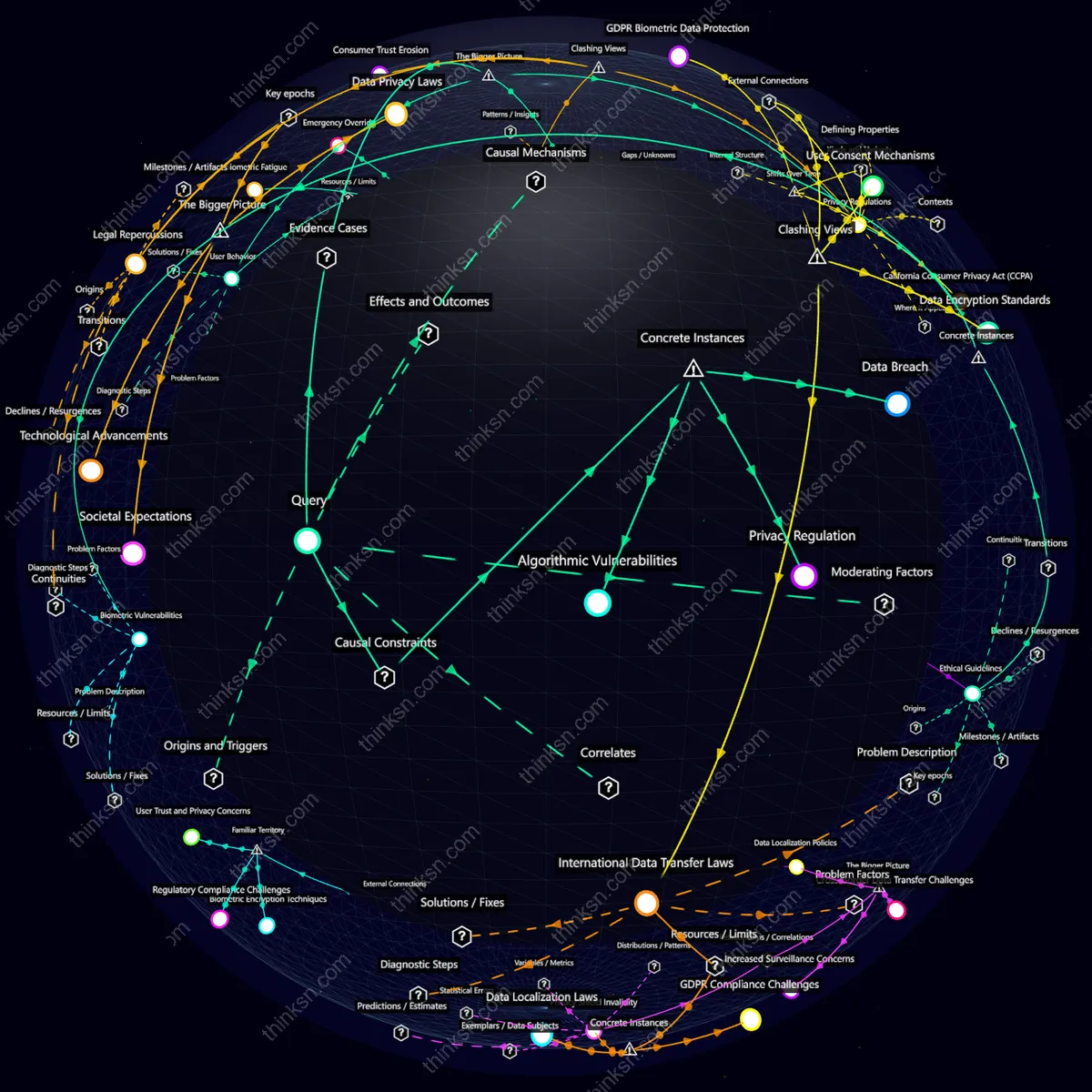
Privacy Shield
As VR environments demand more granular data for immersion, Privacy Shield frameworks struggle to keep pace with evolving user expectations and regulatory demands. Striking a balance between personalization and privacy becomes increasingly complex, risking legal penalties and public backlash if mishandled.
Data Ownership Models
The shift towards users owning their data in VR ecosystems challenges traditional business models of Data Aggregation Platforms, leading to fragmented integration efforts. This transition can foster innovation but also creates barriers due to differing legal interpretations and implementation complexities across jurisdictions.
Privacy-by-Design Frameworks
Adopting strict Privacy-by-Design frameworks forces data aggregation platforms to integrate privacy measures from the outset, reducing risks but potentially complicating development processes and delaying market entry.
Biometric Data Security Breaches
High-profile biometric data security breaches at companies like Clearview AI highlight the severe consequences of inadequate safeguards for sensitive information in immersive VR environments, underscoring the need for robust encryption and access controls.
User Transparency Initiatives
Initiatives aimed at enhancing user transparency can significantly improve trust but may also inadvertently expose underlying data vulnerabilities or operational inefficiencies to scrutiny from regulators and users alike.
Explore further:
- How might the implementation of Privacy Shield regulations impact the development and adoption of highly immersive VR technology in the entertainment industry?
- How might user transparency initiatives evolve in response to highly immersive VR technology that challenges the distinction between virtual and real experiences over time?
How might the implementation of Privacy Shield regulations impact the development and adoption of highly immersive VR technology in the entertainment industry?
Data Localization Policies
The implementation of Privacy Shield's data localization policies can compel VR technology companies to invest heavily in local data centers, increasing operational costs and potentially limiting the cross-border sharing of immersive content. This could create a fragmented market where smaller startups struggle to compete against larger entities with more resources.
User Consent Mechanisms
Privacy Shield's stringent user consent mechanisms may introduce significant friction in VR experiences, requiring users to navigate complex privacy agreements before engaging with immersive content. This could deter casual users and reduce the spontaneity of VR entertainment, impacting adoption rates among less tech-savvy demographics.
Cross-Border Data Flows
The strict regulation of cross-border data flows under Privacy Shield can impede real-time collaboration between international teams developing VR technologies. This may slow down innovation cycles and hinder the integration of diverse cultural perspectives in immersive content creation, leading to a less dynamic and inclusive industry.
How might user transparency initiatives evolve in response to highly immersive VR technology that challenges the distinction between virtual and real experiences over time?
Digital Identity Verification
As VR becomes more immersive, digital identity verification evolves to ensure users are aware of their virtual presence's impact on reality. However, this introduces risks such as heightened surveillance and breaches of personal data privacy.
Virtual Reality Ethics Councils
Emerging VR ethics councils become crucial in setting guidelines for user transparency initiatives, but they face the challenge of balancing innovation with ethical oversight, potentially stifling technological advancement if overly restrictive.
Informed Consent Protocols
Informed consent protocols must adapt to address the psychological and physical risks associated with highly immersive VR. This adaptation could lead to a more cautious approach by users, impacting the adoption rate of new technologies.