AI Assistants: Impact on Human Autonomy and Decision-Making
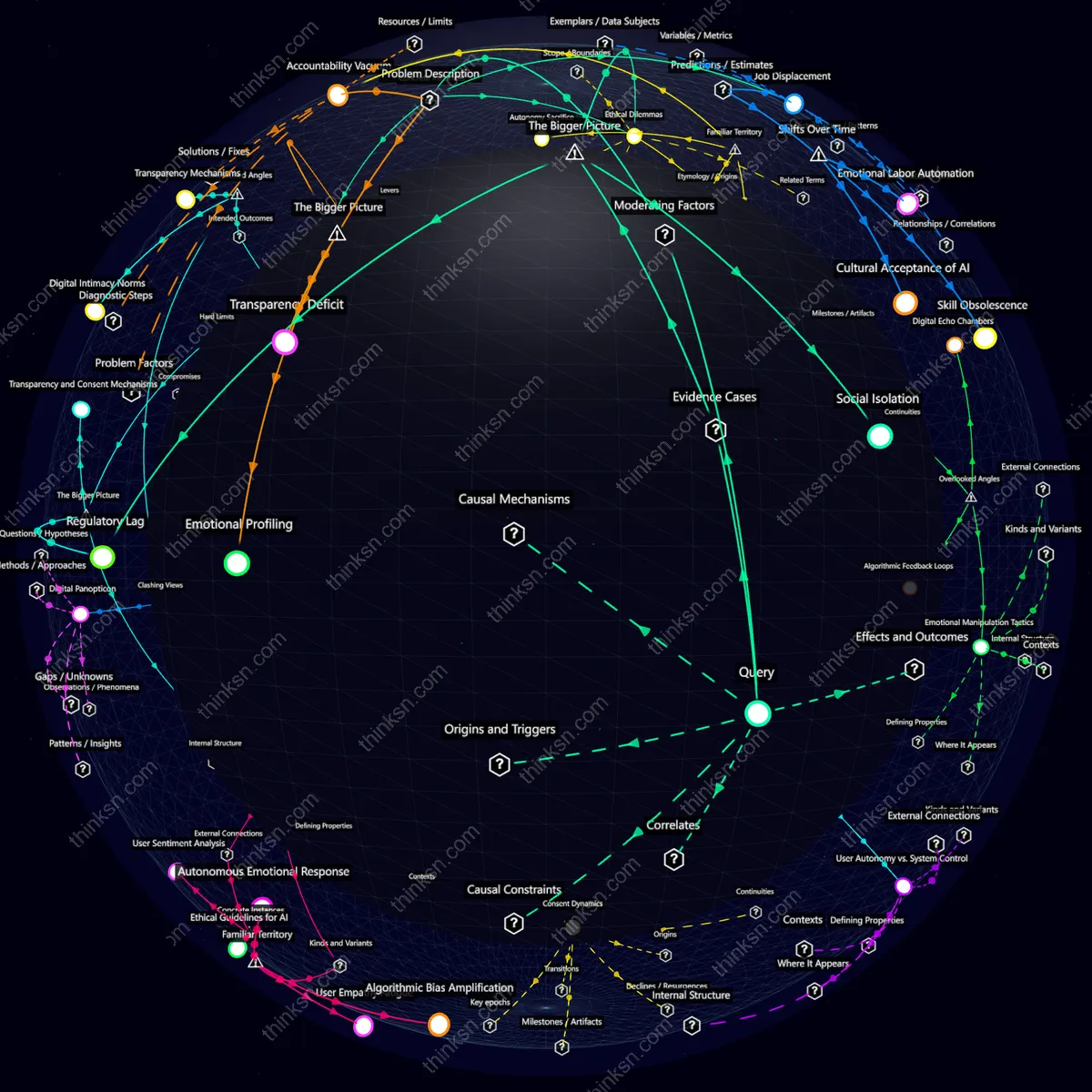
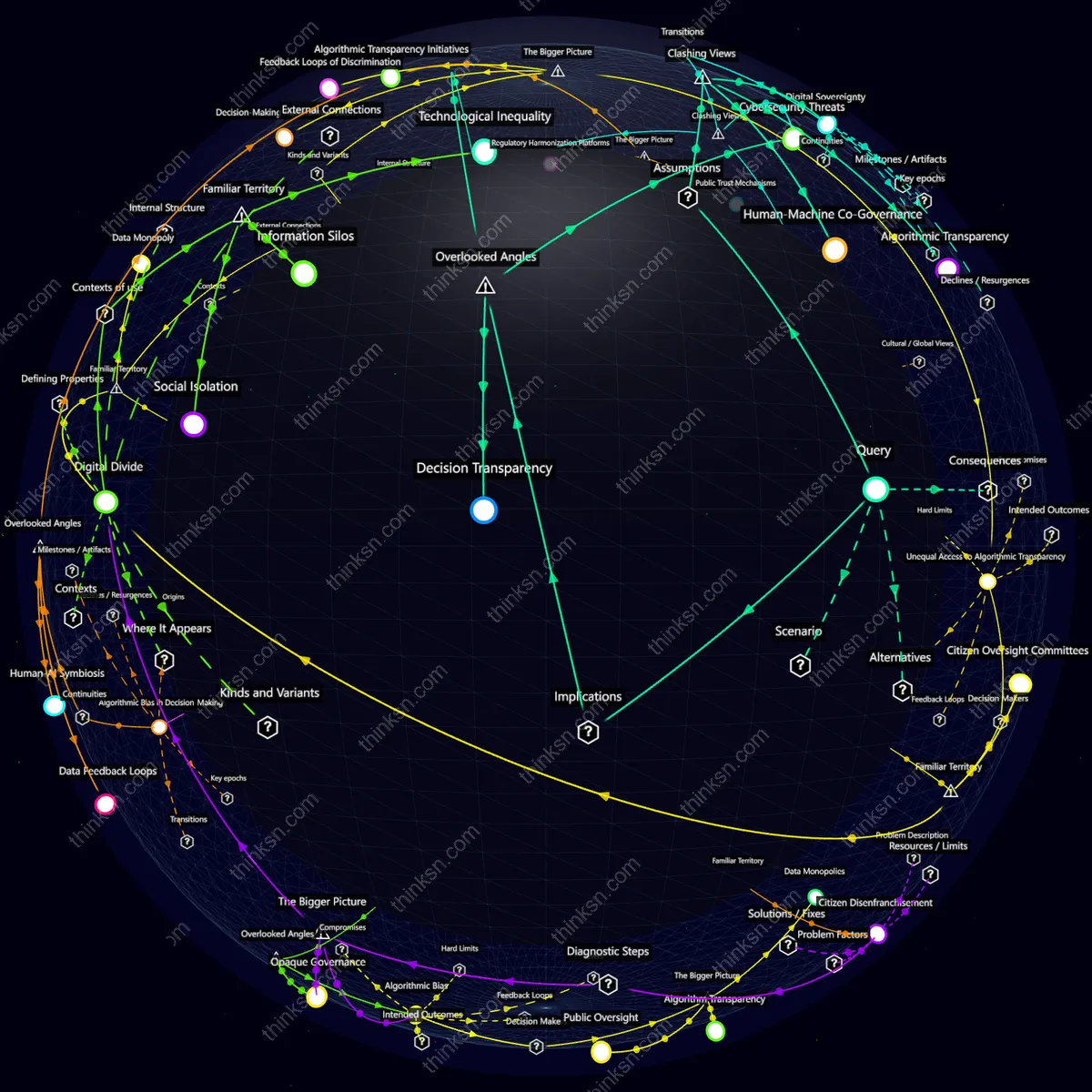
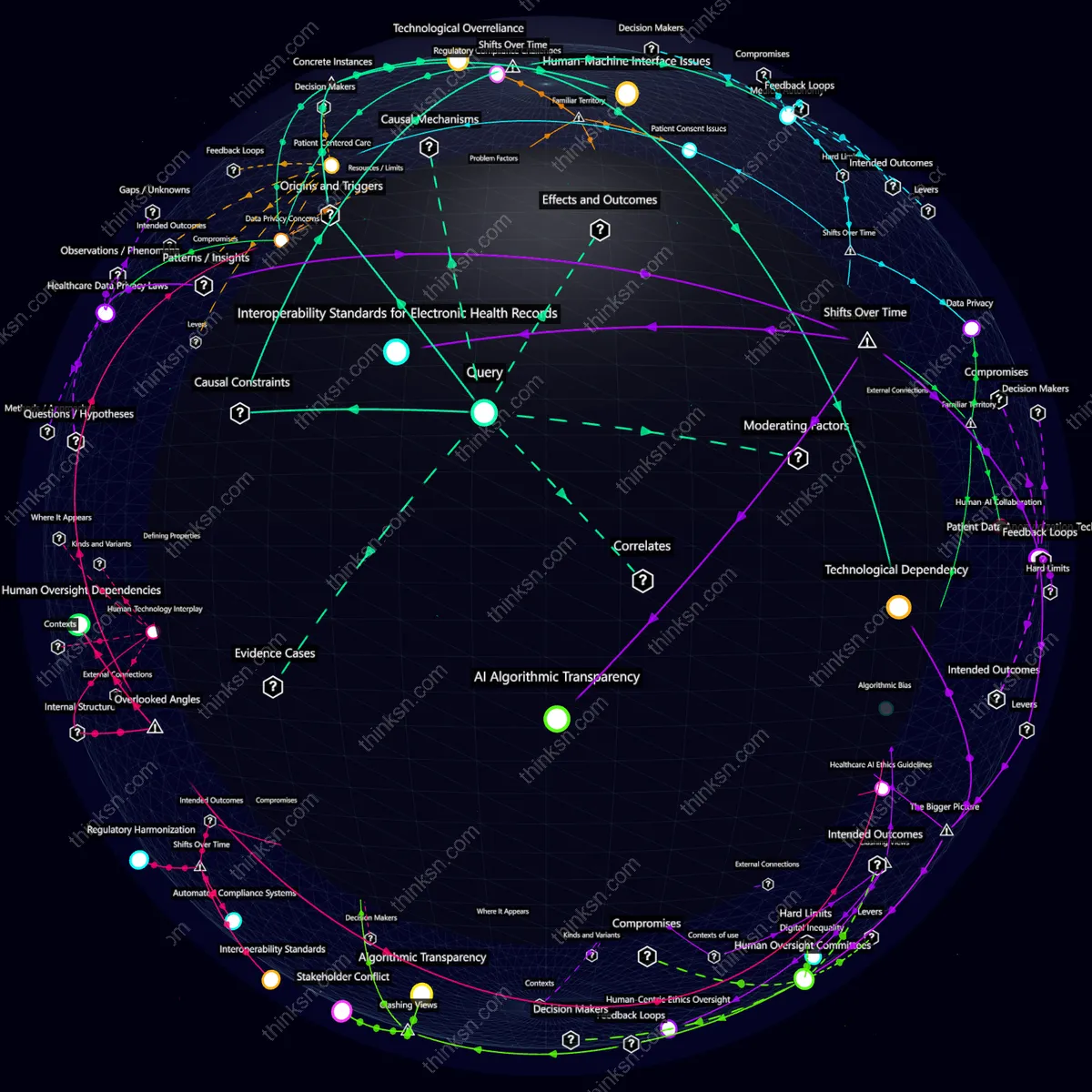
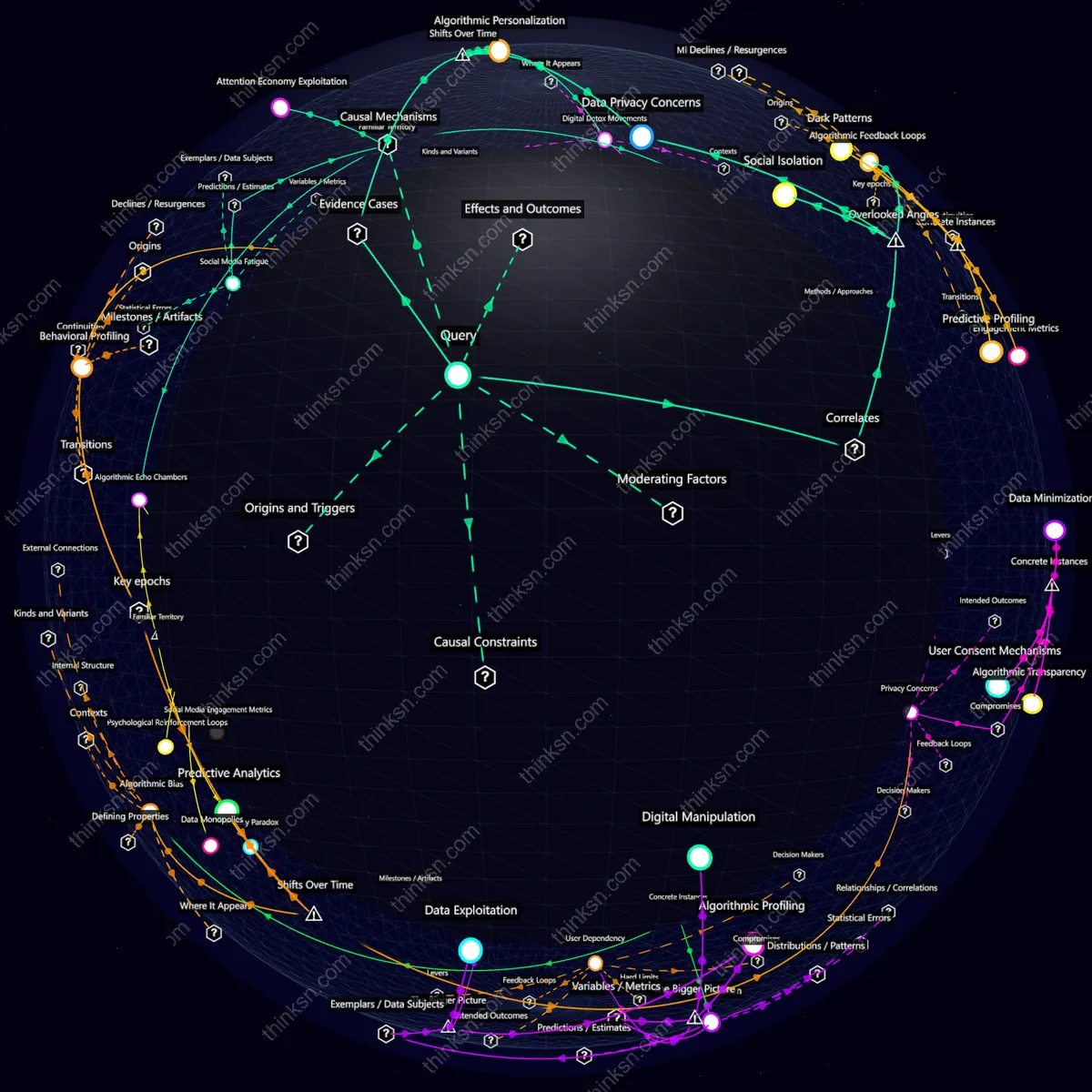
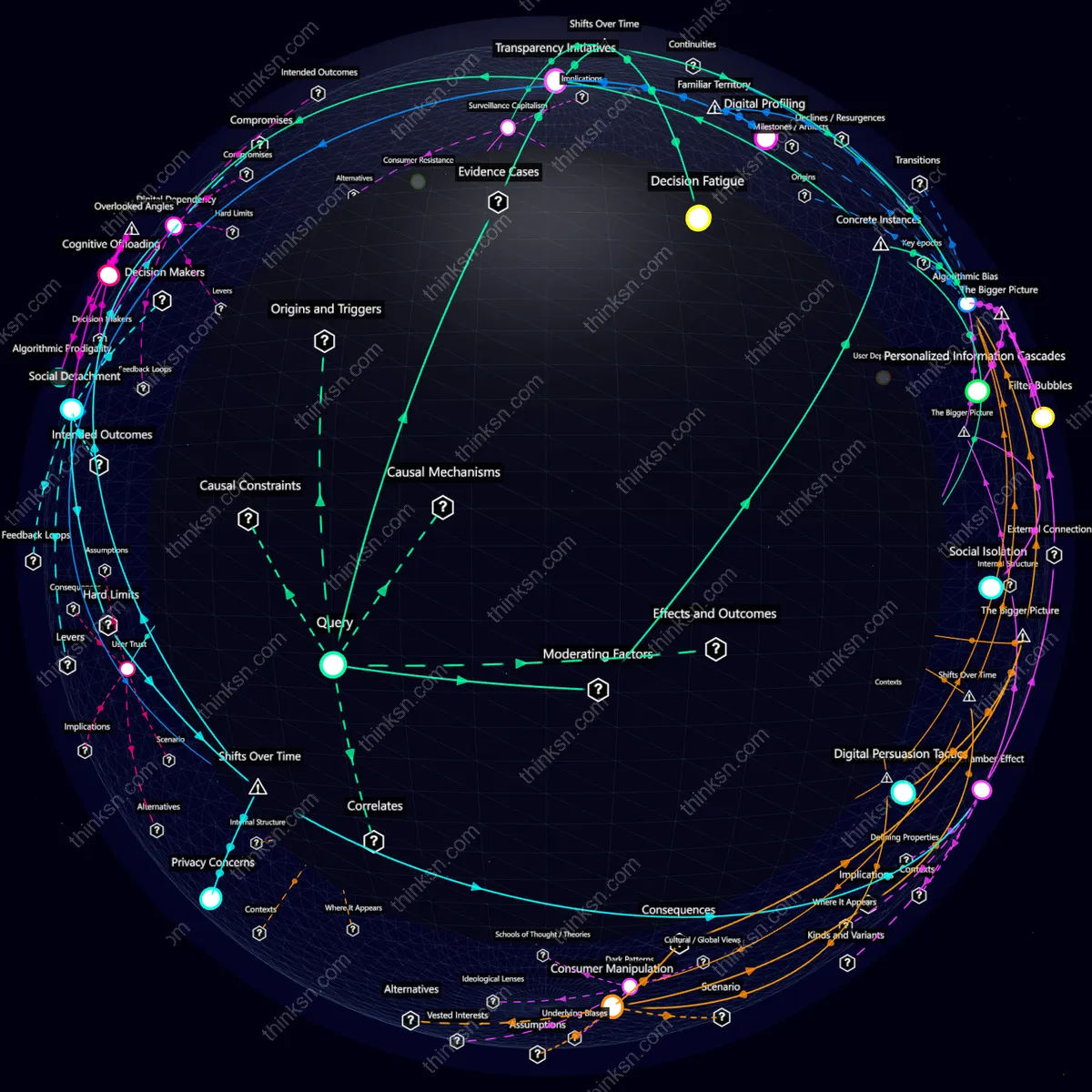
Analysis reveals 5 key thematic connections.
Key Findings
Algorithmic Bias
AI-powered assistants may inadvertently perpetuate algorithmic biases when making decisions for users, potentially reinforcing pre-existing social inequalities by disproportionately serving certain demographic groups while neglecting others.
Digital Dependency
Over-reliance on AI-driven personal assistants can erode human decision-making skills and autonomy, leading to a scenario where individuals struggle to make independent choices in the absence of digital guidance.
Privacy Erosion
The data-intensive nature of AI-powered assistants often necessitates extensive user surveillance for personalized recommendations, raising significant privacy concerns and creating dependencies on tech companies that collect vast amounts of personal information.
Decision Fatigue
AI-powered personal assistants can exacerbate decision fatigue by offering too many options for everyday tasks and decisions, leading users to feel overwhelmed and less autonomous in making choices. This over-reliance on technology can undermine individual decision-making capabilities, particularly when the AI's suggestions become inflexible or one-size-fits-all.
Surveillance Capitalism
The data collection practices of AI personal assistants facilitate surveillance capitalism, where companies exploit user data to manipulate consumer decisions and behaviors. This raises ethical concerns about privacy invasion and the erosion of human autonomy as decision-making becomes increasingly influenced by profit-driven algorithms rather than individual preferences.
Deeper Analysis
What are potential strategies and workflows to mitigate digital dependency caused by AI-powered personal assistants in decision-making processes, and how might these interventions affect human autonomy and agency?
Algorithmic Prodigality
The over-reliance on AI-powered personal assistants can lead individuals to indulge in 'algorithmic prodigality', where they make decisions based solely on recommendations without considering their own values and preferences, thus diminishing human autonomy. This behavior is often driven by the ease and convenience of digital solutions, yet it risks eroding personal decision-making skills over time.
Social Detachment
The pervasive use of AI assistants in daily decision-making can foster a sense of social detachment among users, as they increasingly rely on machines rather than human interaction for advice and support. This isolation can lead to weakened interpersonal communication skills and trust issues when real-life scenarios require direct human engagement.
Cognitive Offloading
Users may develop a habit of cognitive offloading, where critical thinking tasks are outsourced to AI personal assistants due to their perceived infallibility. This dependency can create fragile ecosystems where the sudden unavailability or malfunctioning of these systems leads to significant confusion and inefficiency in daily life.
What are potential strategic moves and hypothetical scenarios for mitigating the risks of surveillance capitalism when integrating AI-powered personal assistants in decision-making processes?
Digital Autonomy
The pervasive use of AI-powered personal assistants in decision-making exacerbates the digital autonomy divide. While affluent users may access privacy-preserving AI tools, less privileged individuals are often left with surveillance-driven services that exploit their data for profit, deepening socio-economic disparities and eroding trust in technology.
Algorithmic Transparency
As AI assistants become integral to personal and business decisions, the demand for algorithmic transparency rises. However, tech giants often resist such demands due to competitive advantages derived from opaque algorithms, leading to a regulatory impasse that undermines public confidence in AI decision-making processes.
Consumer Resistance
Growing awareness of surveillance capitalism drives consumer resistance through privacy-focused startups and grassroots movements. This shift can disrupt market dynamics but also risks alienating mainstream users who prioritize convenience over privacy, creating a fragmented tech ecosystem that struggles with interoperability and user trust.
What are potential strategies to mitigate social detachment caused by AI-powered personal assistants in decision-making processes?
Digital Dependency
The increasing reliance on AI-powered personal assistants for decision-making can lead individuals to overlook the importance of human interaction and community support, fostering a digital dependency that isolates users from real-world social networks. This dependence may result in reduced empathy and social skills when engaging with others outside the digital realm.
Echo Chamber Effect
AI personal assistants often tailor information to match user preferences, creating echo chambers where individuals receive only reinforced opinions and ideas. Over time, this can exacerbate social detachment by limiting exposure to diverse perspectives and reducing opportunities for constructive dialogue across different social groups.
Privacy Concerns
The extensive use of AI personal assistants raises significant privacy concerns as these tools collect vast amounts of user data. Individuals may become wary of sharing their thoughts or engaging in open conversations due to fear of surveillance, leading to a chilling effect on social interactions and further detachment from society.
How is algorithmic transparency incorporated into the architecture of AI-powered personal assistants, and how might this impact decision-making autonomy across different geographic regions?
Regulatory Compliance
Incorporating regulatory compliance into AI-powered personal assistants significantly increases transparency but also poses a risk of stifling innovation due to overly restrictive guidelines. Companies must navigate complex legal frameworks, leading to fragmented and region-specific implementations that may undermine global standardization efforts.
User Trust
Algorithmic transparency can build user trust by providing insights into decision-making processes but also risks alienating users who find explanations too technical or overwhelming. This delicate balance affects the overall acceptance and utility of AI personal assistants across diverse cultural and linguistic contexts.
Cultural Sensitivity
Tailoring algorithmic transparency to align with local norms and values is crucial for cross-cultural efficacy but can introduce biases and inconsistencies. Personal assistants that adapt their communication styles based on geographic regions may inadvertently reinforce existing societal divides, complicating efforts towards global inclusivity.
How does the architectural structure of AI-powered personal assistants contribute to the echo chamber effect in terms of information filtering and decision-making processes?
Algorithmic Bias
AI personal assistants rely heavily on algorithms that filter information based on user preferences and past behaviors. This can lead to a self-reinforcing loop where the assistant only presents content aligned with existing beliefs, amplifying algorithmic bias and trapping users in echo chambers of their own making.
Personalized Advertising
By serving personalized ads based on extensive user profiling, AI assistants contribute to a feedback loop that reinforces consumer biases. This not only enhances the echo chamber effect but also undermines diverse information exposure, leading to narrower viewpoints and potentially harmful decision-making.
Social Isolation
Users increasingly rely on AI-powered personal assistants for all their informational needs, which can lead to social isolation as these tools limit interaction with a broader range of perspectives. This isolation deepens the echo chamber effect, making it harder for individuals to critically evaluate information outside their comfort zones.
Filter Bubbles
AI-driven personal assistants are instrumental in creating filter bubbles, which isolate individuals from conflicting or challenging ideas. This not only reinforces pre-existing beliefs but also undermines the democratic process by silencing dissenting voices and reducing public discourse diversity.
Personalized Information Cascades
The use of personalized information cascades in AI assistants can create a feedback loop where users' past interactions dictate future recommendations, leading to an escalating cycle of confirmation bias that distorts reality perception and hinders critical thinking skills among users.
Explore further:
- How has algorithmic bias in AI-powered personal assistants evolved over time and what are its implications for human autonomy and agency in decision-making?
- In what ways might AI-powered personal assistants, through targeted advertising, shape consumer behavior and decision-making processes in unexpected or potentially intrusive manners?
How has algorithmic bias in AI-powered personal assistants evolved over time and what are its implications for human autonomy and agency in decision-making?
Digital Profiling
As AI-powered personal assistants increasingly rely on digital profiling for personalized services, the accuracy and ethical implications of such profiling have become a focal point. The reliance on incomplete or biased data can reinforce stereotypes and limit opportunities for marginalized groups, undermining human autonomy in decision-making.
Echo Chamber Effects
The use of AI assistants to curate information creates echo chambers where users are exposed only to viewpoints similar to their own. This phenomenon can distort perceptions and limit exposure to diverse perspectives, potentially leading to polarized views and reduced critical thinking among individuals.
Transparency Initiatives
In response to concerns over algorithmic bias, transparency initiatives have gained traction as a means to ensure accountability. However, the complexity of AI algorithms often renders them opaque even to developers, making it challenging to implement effective transparency measures and leading to public skepticism about the true nature of personal assistant functionalities.
In what ways might AI-powered personal assistants, through targeted advertising, shape consumer behavior and decision-making processes in unexpected or potentially intrusive manners?
Privacy Erosion
AI-driven personalized advertising often necessitates extensive data collection and analysis, eroding user privacy. As consumers unknowingly share more personal details, the line between targeted ads and invasive surveillance blurs, leading to a fragile balance where small changes in policy or consumer behavior can dramatically impact trust and market dynamics.
Algorithmic Bias
Personalized advertising algorithms may inadvertently perpetuate existing societal biases by reinforcing stereotypes and limiting exposure to diverse viewpoints. This not only skews consumer behavior but also restricts the potential for broader social change, highlighting a subtle yet profound trade-off between convenience and equitable representation in digital markets.
Consumer Manipulation
Advanced AI personal assistants can subtly manipulate user decision-making by exploiting psychological triggers such as scarcity or urgency. This can lead to impulsive purchases or choices that do not align with long-term goals, creating a dependency on constant stimulation from ads and potentially undermining the autonomy of consumers.
What are potential hypothetical scenarios where AI-powered personal assistants could manipulate consumer decisions, and what strategic interventions can be formulated to mitigate these risks while preserving human autonomy in decision-making processes?
Digital Persuasion Tactics
AI-powered personal assistants use subtle nudges and micro-targeting techniques to shape consumer choices, often exploiting psychological vulnerabilities. This can lead to a loss of autonomy as individuals may become overly reliant on the assistant's recommendations without critically evaluating alternatives.
Privacy Erosion
Continuous data collection by AI assistants enables deep profiling and personalization, but at the cost of consumer privacy. As these systems learn more about individual preferences, the line between helpful guidance and intrusive surveillance blurs, potentially leading to resistance from consumers concerned about their personal information.
Algorithmic Bias
AI algorithms may inadvertently or intentionally perpetuate biases based on historical data, influencing consumer decisions in ways that favor certain groups over others. This can exacerbate social inequalities and undermine the fairness of market dynamics, raising ethical concerns about responsibility and accountability.
Dark Patterns
AI-powered personal assistants can subtly employ dark patterns—manipulative user interface designs—to nudge consumers into unwanted purchases or subscriptions. This not only exploits cognitive biases but also undermines trust in technology, creating a fragile dependency on AI that could exacerbate mental health issues like anxiety and depression.
Explore further:
- What is the architectural structure and geographic distribution of data collection and management by AI-powered personal assistants, and how might this contribute to privacy erosion?
- In what ways do dark patterns used by AI-powered personal assistants challenge human autonomy and agency in decision-making processes, from a perspectival viewpoint?
What is the architectural structure and geographic distribution of data collection and management by AI-powered personal assistants, and how might this contribute to privacy erosion?
Data Localization Policies
As AI-powered personal assistants centralize user data in foreign servers, conflicting data localization policies risk exposing users' sensitive information to jurisdictions with weaker privacy laws, exacerbating privacy erosion despite regulatory efforts.
User Data Monetization
Personal assistant services often leverage user data for targeted advertising, creating a financial incentive for extensive data collection that goes beyond necessary functionality. This monetization strategy not only undermines trust but also incentivizes invasive data practices, significantly contributing to privacy erosion.
Data Centralization
AI-powered personal assistants often rely on centralized data hubs, where vast amounts of user information are stored and processed. This centralization not only simplifies management but also amplifies the risk of a single point of failure or breach, leading to significant privacy erosion as sensitive data becomes an attractive target for malicious actors.
User Dependency
As users increasingly rely on AI personal assistants for daily tasks, they often grant these tools extensive permissions without fully understanding the implications. This dependency can create a subtle yet powerful shift in user behavior towards convenience over privacy, inadvertently enabling more invasive data collection practices that erode individual autonomy and control.
Global Surveillance Networks
The geographic distribution of AI-powered personal assistant services often aligns with global surveillance networks, leading to a situation where collected user data can be accessed or shared across borders without clear oversight. This interconnectedness not only facilitates the spread of private information but also complicates accountability and regulatory enforcement, severely undermining privacy protections.