Will VR Immersion Replace Real-Life Societal Connections?
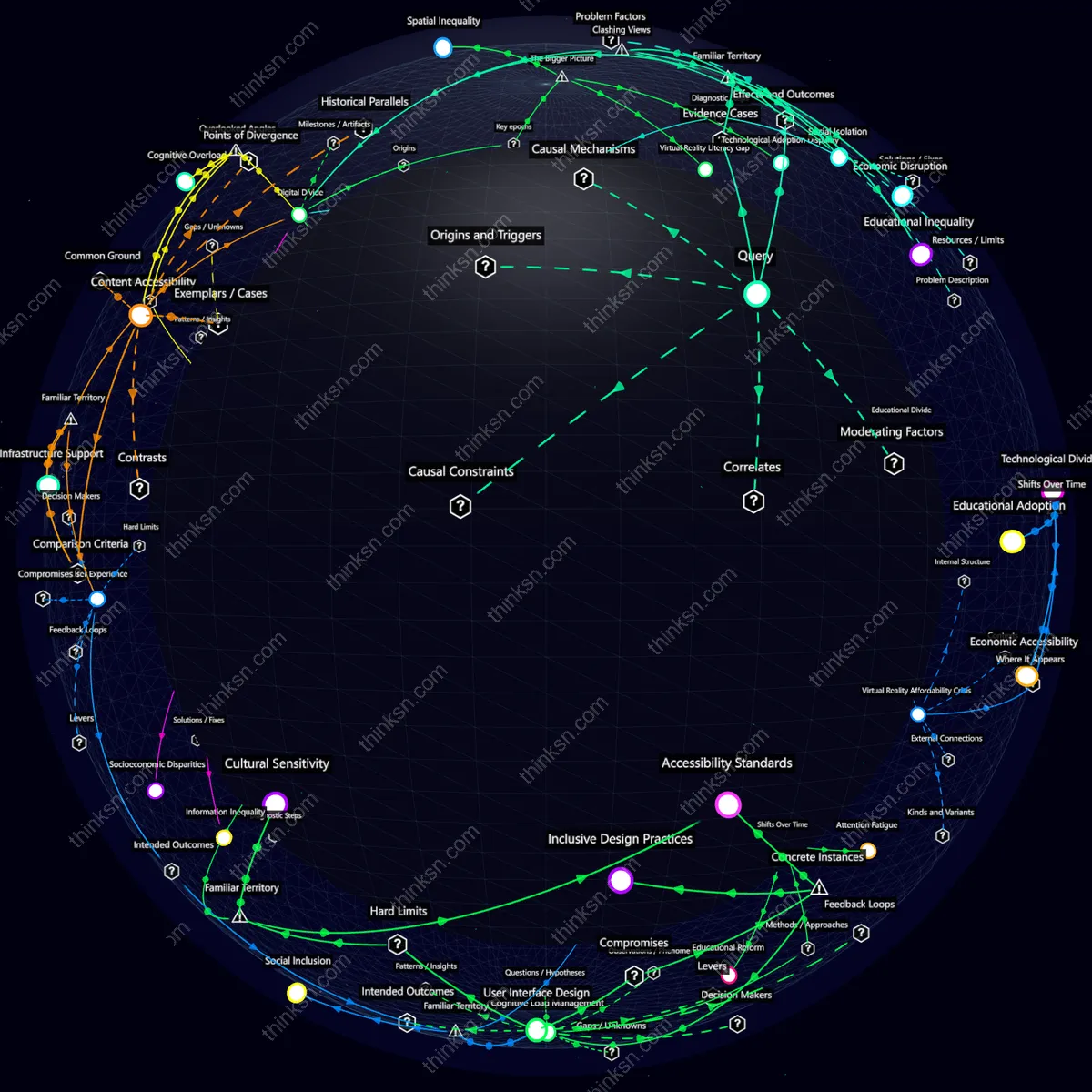
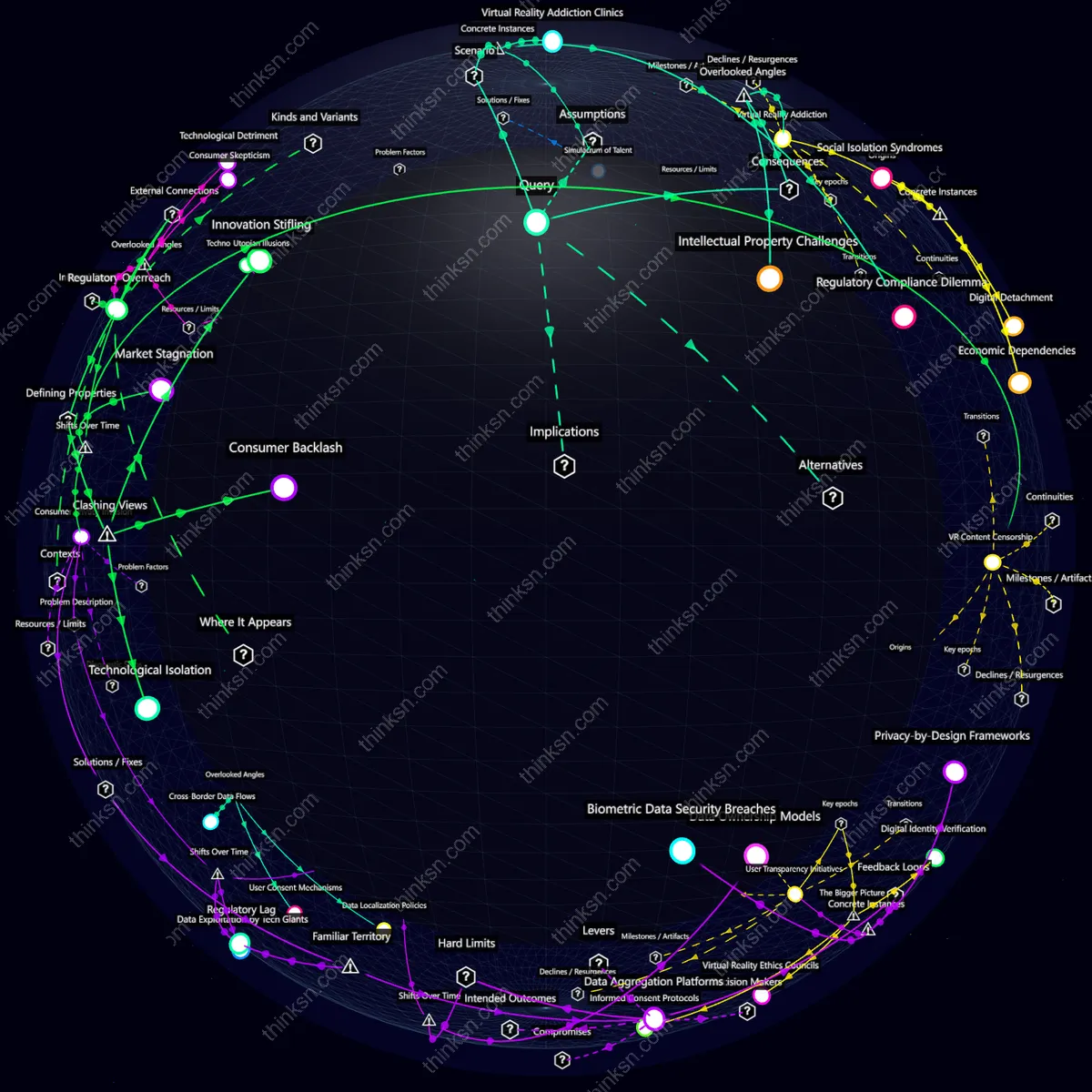
Analysis reveals 5 key thematic connections.
Key Findings
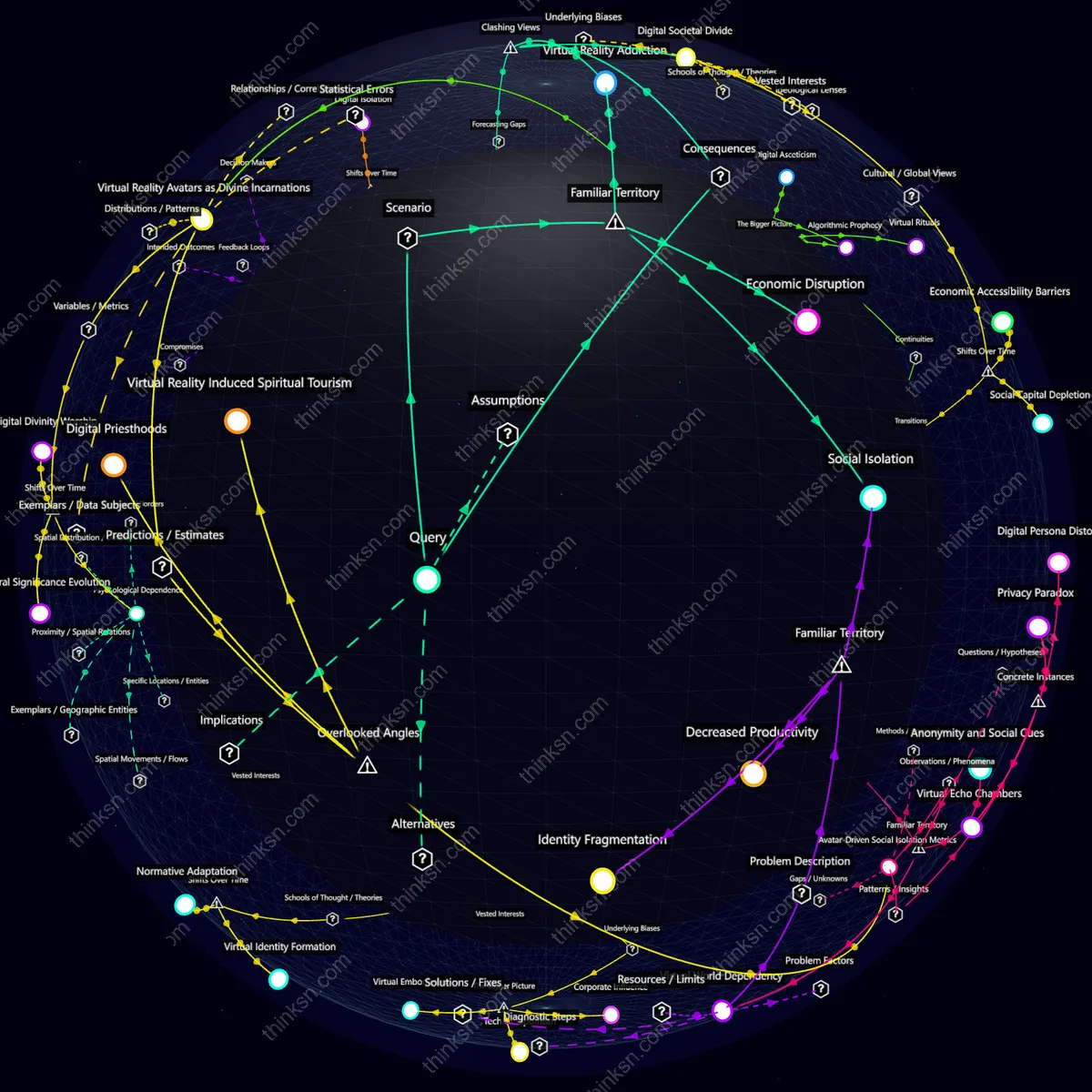
Social Isolation
As VR worlds become more immersive, individuals may prioritize virtual interactions over real-life connections, leading to a decline in face-to-face social skills and increased feelings of loneliness. This shift can exacerbate existing mental health issues, as the hyper-real nature of VR can create an unattainable standard for real-world relationships.
Virtual Reality Addiction
The allure of immersive VR experiences can lead to addiction among users who find solace in digital worlds. This dependency may result in severe neglect of personal responsibilities and physical health, as individuals become detached from the reality they once cherished, highlighting a stark contrast between virtual fulfillment and real-world consequences.
Economic Disruption
A significant portion of society engaging in VR worlds could disrupt traditional economies by reducing spending on goods and services. This shift would strain industries reliant on human interaction, such as hospitality and entertainment, leading to job losses and economic instability as businesses struggle to adapt to a new virtual reality-centric market.
Social Detachment Syndrome
As VR worlds become more immersive and replace real-life interactions, individuals may develop Social Detachment Syndrome, a condition where the vividness of virtual environments leads to a detachment from reality. This syndrome can cause severe social isolation, as users lose the ability to navigate and appreciate non-virtual interpersonal relationships.
Digital Societal Divide
The increasing reliance on VR worlds could create a Digital Societal Divide between those who are adept at navigating virtual environments and those who prefer or can only manage real-world interactions. This divide may intensify social inequalities, as access to advanced VR technology is not universal, leading to marginalized groups feeling further isolated from the mainstream.
Deeper Analysis
How might the evolution of immersive VR technology contribute to the development and prevalence of Social Detachment Syndrome over time?
Immersive Virtual Reality (VR) Technology
As VR technology evolves, it offers unparalleled immersion and escapism, potentially detaching individuals from real-world social interactions. This can lead to a paradox where the very technology designed for human connection fuels disconnection, as users become more engaged in virtual worlds than with tangible relationships.
Digital Isolation
The rise of digital isolation through immersive VR creates a feedback loop that amplifies feelings of social detachment. While VR promises to bridge geographical distances and enhance social experiences, the quality and depth of these interactions may be superficial compared to in-person engagements, leading to increased loneliness and disconnection from genuine human bonds.
Virtual Social Networks
Virtual social networks built within immersive VR environments can create a sense of community that substitutes for real-world relationships. However, this substitution might foster a generation increasingly comfortable with digital interactions, potentially undermining the skills and importance placed on face-to-face communication in traditional societies.
How might the digital societal divide exacerbate social isolation for individuals who opt to immerse themselves in VR worlds instead of real-life interactions?
Techno-Religious Paradigms
In some cultures, the adoption of VR technology is seen as a form of religious practice, blurring lines between spiritual experiences and digital immersion. This can exacerbate the digital societal divide by privileging those already comfortable with advanced technologies while alienating others who see such practices as antithetical to traditional values.
Social Capital Depletion
Individuals relying heavily on VR for social interaction may face a gradual erosion of real-world social capital, making them more isolated when they attempt to engage in physical communities. This creates a vicious cycle where the digital divide deepens as reliance on virtual spaces increases.
Economic Accessibility Barriers
The cost and complexity of VR hardware can further isolate lower-income populations, leading to uneven social dynamics both online and offline. As immersive technologies become more prevalent in education and employment, those unable to access them risk being left behind economically.
How might techno-religious paradigms evolve in response to the immersive nature of VR worlds, potentially influencing social isolation and human interaction over time?
Virtual Rituals
As VR worlds become more immersive, techno-religious paradigms shift towards virtual rituals that simulate traditional religious experiences. This creates a paradox where spiritual connection is enhanced through digital proxies, yet social isolation deepens as physical congregations dwindle and the sacred becomes privatized.
Algorithmic Prophecy
Techno-religious paradigms incorporate algorithmic prophecy, leveraging big data to predict trends in human behavior and societal shifts. This leads to a scenario where religious teachings are increasingly derived from technological insights, potentially eroding traditional doctrines while enhancing the authority of tech-driven predictions.
Digital Asceticism
In response to VR's immersive nature, some techno-religious groups embrace digital asceticism, rejecting virtual environments in favor of tangible, real-world experiences. This movement highlights a critical tension between spiritual authenticity and technological immersion, challenging the notion that digital realms are inherently sacred.
Virtual Reality Avatars as Divine Incarnations
As VR worlds become more immersive, religious figures and adherents may adopt virtual avatars to perform rituals or preach. This evolution could lead to a new form of worship centered around digital experiences, potentially isolating traditional worshippers who prefer physical gatherings.
Transhumanist Rites of Passage
Incorporating VR into rites of passage could redefine coming-of-age rituals, integrating virtual challenges that mirror real-world dilemmas. This shift may create new social hierarchies based on digital prowess and immersion levels, exacerbating existing inequalities and alienating those unable to participate fully.
Explore further:
What are the potential measurable impacts on social isolation when virtual reality avatars are perceived as divine incarnations in immersive VR worlds?
Digital Divinity Worship
The perception of VR avatars as divine beings can shift traditional worship patterns from physical temples to digital realms, altering social dynamics and creating new forms of spiritual community. However, this transformation may exacerbate social isolation among those who cannot access or afford such immersive experiences.
Psychological Dependence
Virtual reality avatars perceived as divine entities can foster intense emotional connections that might lead to psychological dependence on these digital environments for mental well-being. This reliance could isolate individuals from real-world social interactions, leading to a decline in face-to-face community engagement and support.
Cultural Significance Evolution
As VR avatars become increasingly seen as divine incarnations, their cultural significance can evolve from mere entertainment to spiritual guidance. This shift may lead to the creation of new religious practices within virtual spaces, potentially isolating adherents who prioritize these digital rituals over conventional social activities.
Digital Priesthoods
The emergence of digital priesthoods within immersive VR worlds could create new social hierarchies, where individuals perceived to have divine avatars wield significant influence over community norms and behaviors. This can lead to both spiritual enlightenment and ideological manipulation, as the line between sacred guidance and coercive control blurs.
Virtual Reality Induced Spiritual Tourism
As virtual reality avatars are increasingly viewed as divine incarnations, there may be a surge in virtual reality-induced spiritual tourism. This phenomenon could lead to cultural homogenization as diverse spiritual practices and traditions are simplified or commodified for mass consumption within VR environments.
Avatar-Driven Social Isolation Metrics
The perception of avatars as divine entities might paradoxically exacerbate social isolation by creating echo chambers where only those who believe in the avatar's divinity engage meaningfully. This could be measured through reduced interaction with non-believers and a decline in cross-cultural understanding within VR communities.
Explore further:
- What components and categories contribute to psychological dependence in virtual reality environments, and how are they geographically distributed?
- What are emerging metrics for assessing social isolation caused by avatar-driven interactions in VR worlds, and how might these differ from traditional measures of social isolation?
What are emerging metrics for assessing social isolation caused by avatar-driven interactions in VR worlds, and how might these differ from traditional measures of social isolation?
Digital Persona Authenticity
The shift towards assessing social isolation through digital persona authenticity highlights the risk that users might develop unhealthy relationships with their avatars, potentially leading to a disconnection from real-world identities and social interactions. This blurring of boundaries between virtual and reality can exacerbate feelings of isolation when users rely more on avatar-driven engagements than face-to-face communication.
Virtual World Dependency
The emergence of metrics for assessing social isolation in VR worlds reveals a growing dependency on these digital environments, where traditional measures fail to capture the complexity and depth of virtual relationships. This dependency can lead to paradoxical outcomes, such as increased loneliness despite being surrounded by avatars, due to the lack of genuine emotional connections.
Anonymity and Social Cues
The reliance on anonymity in avatar-driven social interactions raises concerns about the loss of non-verbal cues critical for understanding human emotions and intentions. This can distort perceptions of social connectedness, making it difficult to gauge genuine support or empathy, thereby isolating individuals even within a bustling virtual community.
Digital Persona Distortion
The creation of a digital persona in VR can lead users to overestimate their social connections and underestimate isolation, as the avatar's interactions do not capture the depth or quality of real-world relationships. This distortion can exacerbate feelings of loneliness when transitioning between virtual and physical worlds.
Privacy Paradox
While avatars offer a layer of anonymity that can encourage social engagement in VR, this same feature may lead to oversharing personal information among strangers, exposing users to privacy risks and potentially isolating them from their offline social circles due to concerns over digital footprints.
Virtual Echo Chambers
VR environments often cater to niche interests, creating echo chambers where users interact predominantly with similar avatars, limiting exposure to diverse viewpoints. This can reinforce isolation by narrowing social networks and reducing opportunities for broadening one's perspective on the world.
What components and categories contribute to the authenticity of digital personas in VR worlds, affecting social interactions?
Identity Verification Protocols
Strong identity verification protocols in VR worlds can enhance digital persona authenticity but may also limit user freedom by mandating constant surveillance and data sharing, risking privacy and fostering a culture of mistrust.
Social Norms and Etiquette
Emerging social norms in VR spaces dictate how users present themselves online, influencing the perceived authenticity of digital personas. However, rigid adherence to these norms can stifle individual expression and creativity, leading to a homogenized virtual community.
Virtual Economy Transactions
The integration of virtual economies within VR worlds complicates digital persona authenticity, as users may adopt multiple identities for different transactional needs. This dual-use of personas can blur lines between reality and fiction, making it harder to discern genuine interactions from those driven by economic incentives.
Explore further:
- What are potential implications for identity verification protocols if VR worlds become so immersive that they replace real-life interactions, and how might these changes be perceived from different cultural perspectives?
- In what ways might social norms and etiquette evolve in VR worlds compared to real-life interactions, and how could this divergence affect users' perceptions of reality and social engagement?
What are the measurable indicators and potential failures in social behavior that arise from virtual world dependency, leading to social isolation?
Social Isolation
Virtual world dependency can deepen social isolation as users prioritize digital interactions over face-to-face connections. This shift often results in diminished real-world social skills and reduced empathy, making it increasingly difficult for individuals to form meaningful offline relationships.
Decreased Productivity
Excessive engagement with virtual worlds can lead to a significant decrease in productivity at work or school as users struggle to maintain focus on tasks that do not offer the same level of immediate gratification and social interaction found online. This can result in career stagnation or academic failure.
Identity Fragmentation
The multi-faceted nature of virtual worlds, where personas are often customizable to an extreme degree, may lead to identity fragmentation as individuals struggle to reconcile their digital selves with their offline identities. This can cause confusion and a sense of disconnection from one's true self.
In what ways might social norms and etiquette evolve in VR worlds compared to real-life interactions, and how could this divergence affect users' perceptions of reality and social engagement?
Virtual Identity Formation
As users create avatars in VR worlds, they may adopt social norms and etiquettes that diverge from real-life interactions. This can lead to a fragmented sense of self where individuals might behave more boldly or differently online than off, leading to potential social disconnects when transitioning between digital and physical spaces.
Normative Adaptation
In VR environments, established social norms may be adapted or entirely new ones formed due to the unique challenges and affordances of virtual interaction. For instance, virtual handshakes might become a standard greeting, replacing real-life equivalents with implications for physical touch deprivation in daily life.
Virtual Embodiment
As users in VR worlds embody avatars that can transcend real-world physical constraints, virtual embodiment may lead to the development of new social norms and etiquette. However, this shift could also exacerbate identity issues and body dysmorphia as individuals seek validation through their virtual appearance rather than real-life traits.
Techno-Optimism
The belief that VR technology inherently improves human interaction by removing social barriers can blind stakeholders to the negative aspects of social norms evolving in these environments. This techno-optimism may neglect the psychological toll on users who experience a disconnect between their virtual and real-life identities, leading to feelings of alienation or disconnection from reality.
Corporate Influence
Tech companies developing VR platforms have significant influence over how social norms evolve in these worlds. By setting rules and offering incentives for certain behaviors, they can shape user interactions to benefit their business models, such as increasing screen time or engagement with advertisements. This corporate control raises concerns about the erosion of genuine social connections and the prioritization of profit over personal well-being.