VR Dominance: The Future of Social Interaction and Education Leaves Non-Adopters Behind?
Analysis reveals 4 key thematic connections.
Key Findings
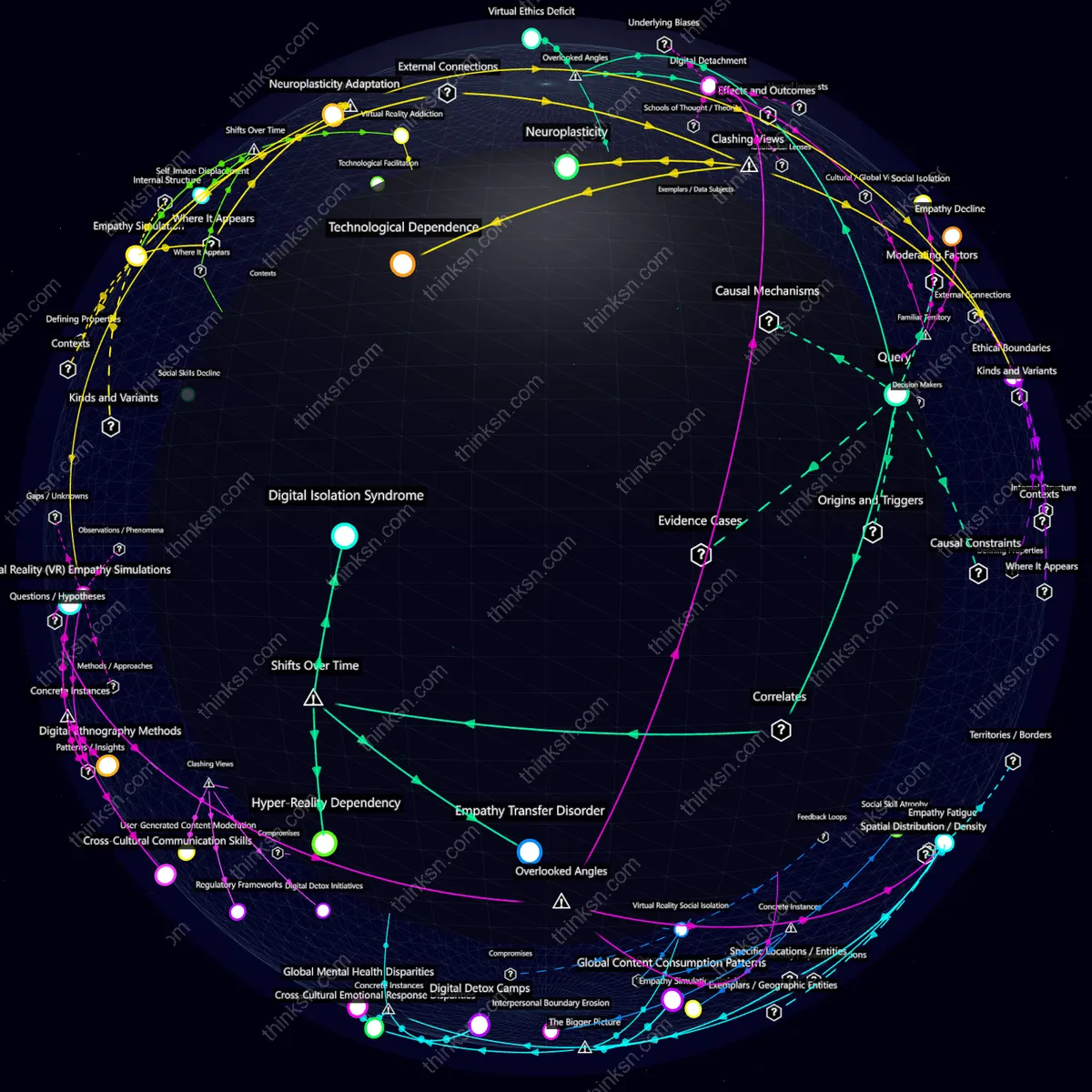
Digital Divide
The adoption of virtual reality as the primary platform for social interaction and education will exacerbate the digital divide. Those unable to afford VR technology may face educational disparities, leading to a two-tiered society where skills and opportunities are unevenly distributed.
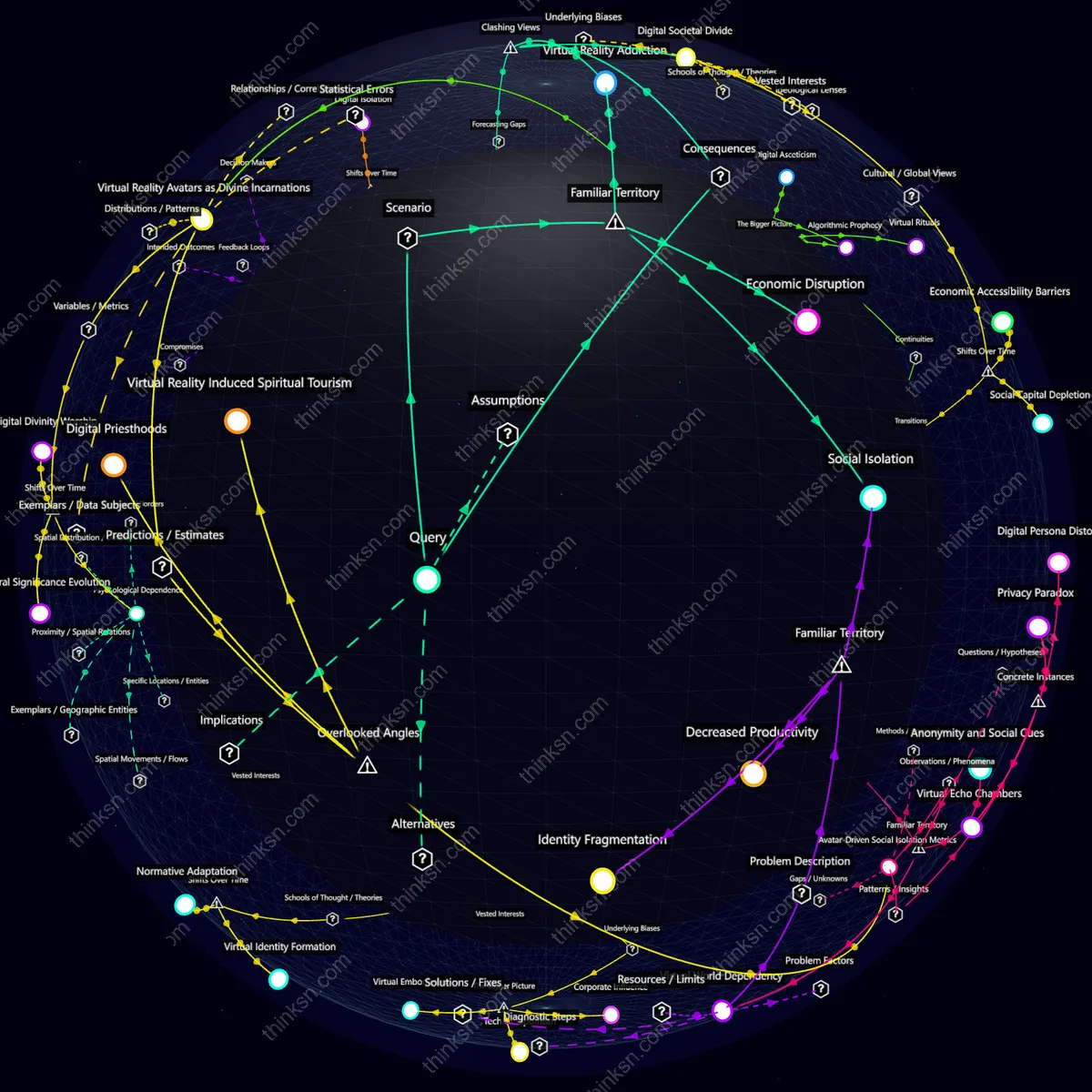
Social Isolation
While VR platforms promise immersive experiences, they could also lead to heightened social isolation among non-adopters. This group might feel increasingly disconnected from the mainstream, lacking access to key educational resources and social networks within a virtual reality framework.
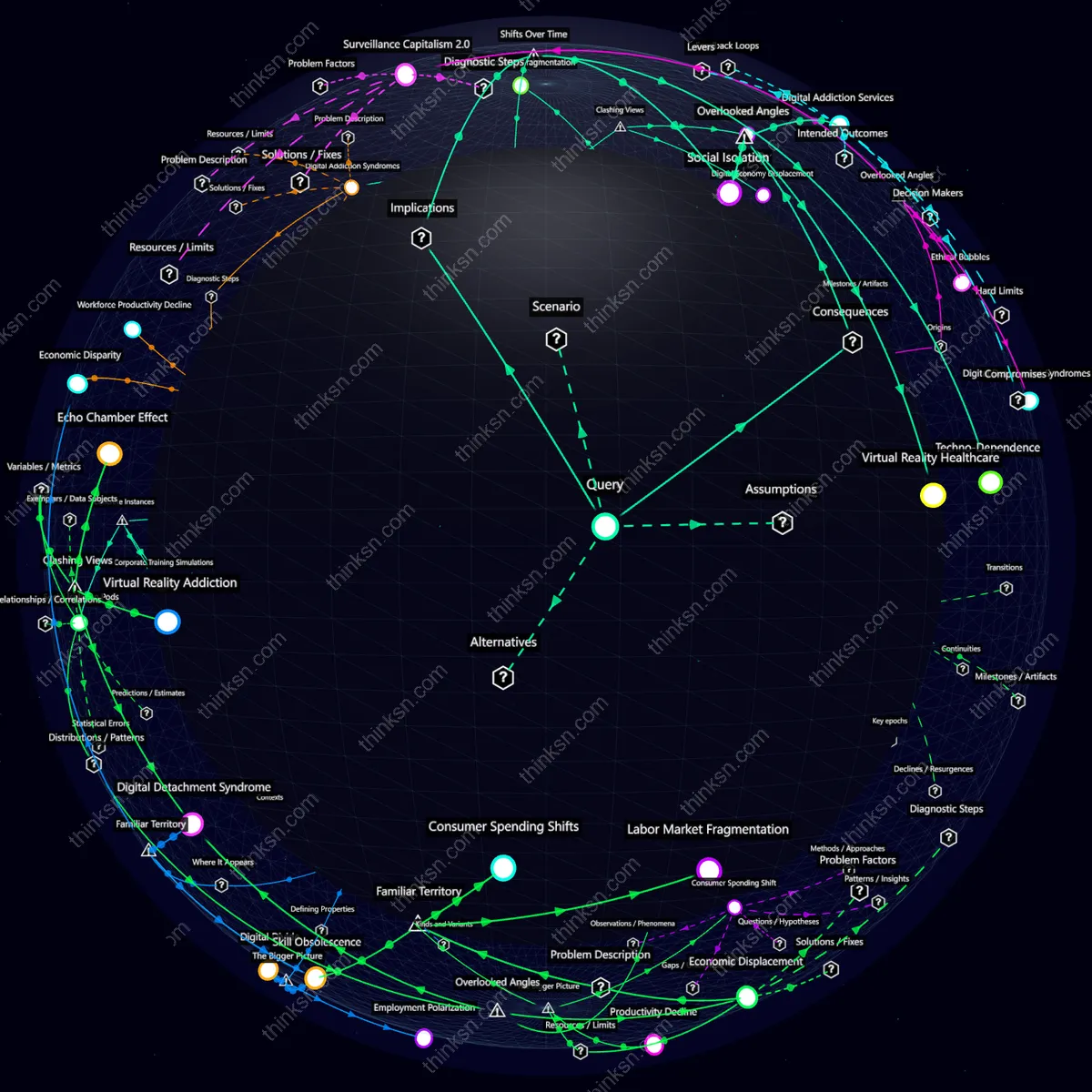
Economic Disruption
The shift towards VR platforms may disrupt existing economic systems, particularly affecting industries such as travel and entertainment that rely on physical interaction. This could lead to job losses in these sectors while creating new opportunities in tech support and content creation for virtual environments.
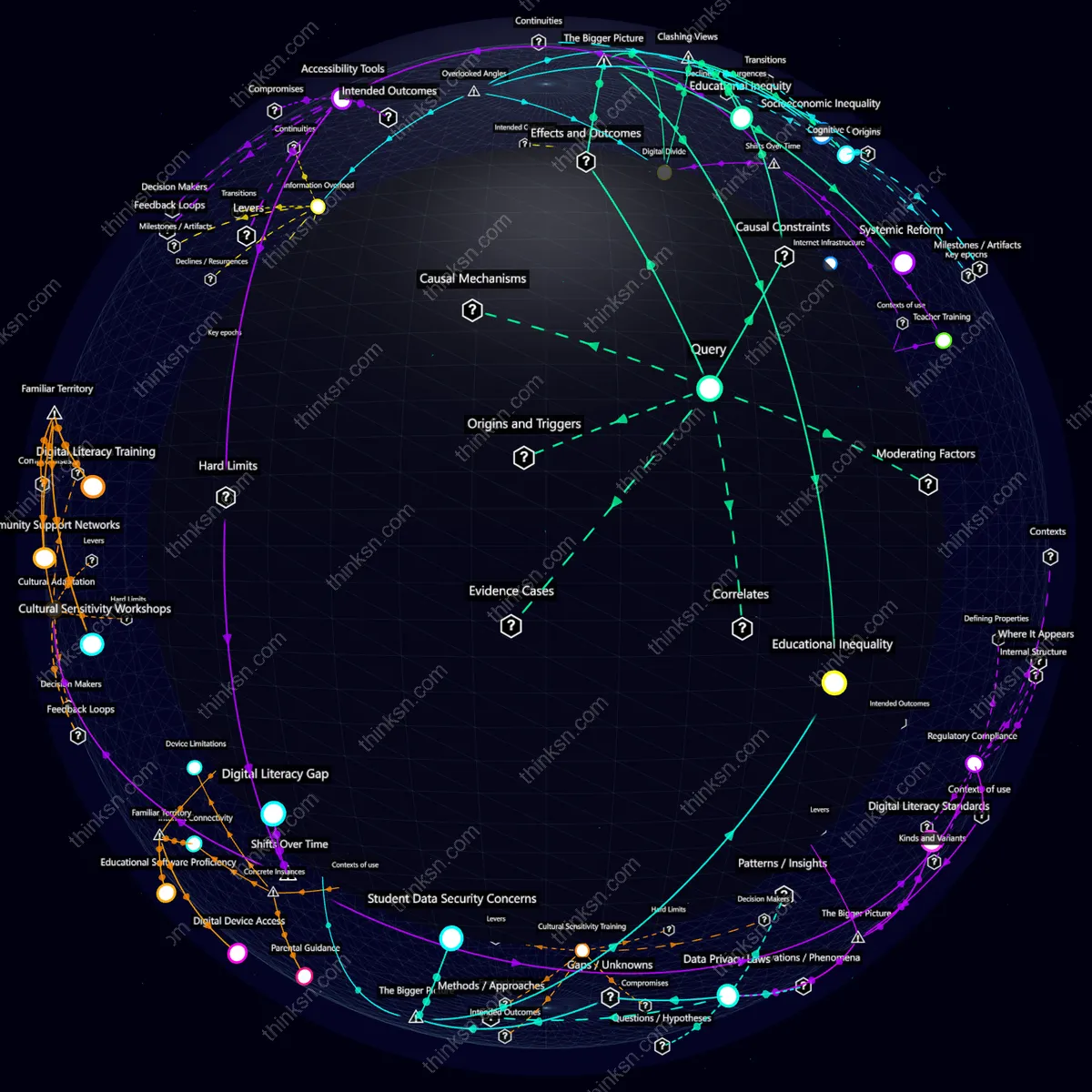
Educational Inequality
Virtual reality's dominance in education creates a fragile dependency on technology for learning. Schools and institutions that cannot provide VR access face severe educational inequality, impacting student outcomes and societal mobility, as seen in the widening achievement gap between well-funded urban schools and under-resourced rural ones.
Deeper Analysis
How will the digital divide evolve over time as virtual reality becomes a primary platform for social interaction and education, potentially creating disparities between adopters and non-adopters?
Technological Adoption Disparity
As virtual reality becomes a primary platform for social interaction and education, disparities in technological adoption will exacerbate the digital divide. Early adopters benefit from enhanced learning and networking opportunities, while non-adopters may fall further behind, facing significant barriers to entry such as cost and accessibility issues.
Virtual Reality Literacy Gap
The emergence of VR as a dominant medium will create a new literacy gap between those who are adept at using virtual environments for learning and social interaction versus those who struggle with the technology. This gap could lead to educational and professional disadvantages, particularly in sectors that increasingly rely on VR platforms.
Spatial Inequality
Virtual reality adoption may intensify spatial inequality by concentrating opportunities in regions with robust technological infrastructure and economic resources. Non-adopting areas might experience a decline in their relevance within the global network, leading to further isolation and economic stagnation.
What are the potential stress points and systemic failures that could arise from social isolation due to a divide between adopters and non-adopters of virtual reality as the primary platform for social interaction and education?
Digital Divide
The digital divide exacerbates social isolation by creating a chasm between early adopters of VR technology for education and social interaction, and those who remain disconnected. As the gap widens, non-adopters face increased stress due to feelings of exclusion and inadequacy, while adopters may become overly reliant on virtual environments, further detaching them from real-world interactions.
Educational Inequity
Educational inequity deepens when VR becomes the primary platform for learning. Non-adopters miss out on interactive and immersive educational experiences, leading to a widening achievement gap that can have long-term consequences on career opportunities and social mobility. This systemic failure reinforces existing inequalities and isolates those without access from critical knowledge networks.
Cultural Fragmentation
As VR adoption grows, cultural fragmentation occurs as communities form exclusively within virtual spaces, disconnected from traditional societal bonds. Non-adopters are left behind in physical reality, experiencing a sense of alienation and disconnection from evolving social norms and values, while adopters may struggle to reconcile their dual existence between the digital and real worlds.
Explore further:
- What are the emerging patterns and hidden assumptions regarding educational inequity when virtual reality becomes a primary platform for education, potentially widening the gap between adopters and non-adopters?
- What are the structural components and categories that lead to cultural fragmentation when virtual reality becomes the primary platform for social interaction and education, causing a divide between adopters and non-adopters?
What are the emerging patterns and hidden assumptions regarding educational inequity when virtual reality becomes a primary platform for education, potentially widening the gap between adopters and non-adopters?
Digital Divide
As virtual reality (VR) transforms educational delivery, the digital divide widens, creating a new class of education haves and have-nots. Schools with limited funding struggle to provide VR access, leaving students behind in a technologically advanced learning environment.
Cognitive Overload
The immersive nature of VR can lead to cognitive overload for some users, especially those less familiar with technology or lacking robust support systems. This could disproportionately affect underprivileged students who already face educational disadvantages, exacerbating existing inequities.
Content Accessibility
Ensuring that all students have access to high-quality VR content tailored to their learning needs presents a significant challenge. Without adequate regulation or oversight, content disparities could lead to unequal educational outcomes, further marginalizing disadvantaged learners.
What are the structural components and categories that lead to cultural fragmentation when virtual reality becomes the primary platform for social interaction and education, causing a divide between adopters and non-adopters?
Digital Inequality
As virtual reality becomes the main platform for social interaction and education, digital inequality widens, creating a divide between those who can afford cutting-edge technology and those left behind with outdated or no access. This disparity is not just about hardware but also includes unequal access to high-speed internet and specialized software, leading to segregated online communities that mirror and exacerbate offline socio-economic divides.
Identity Formation
Virtual reality platforms can drastically reshape identity formation among younger users, who may develop a sense of self primarily within these digital environments. This creates a dissonance between the personas cultivated in VR and real-world identities, potentially leading to social isolation for those unable to participate or lacking the skills to navigate such virtual worlds effectively.
Educational Divide
The rise of VR as an educational tool intensifies the educational divide, with schools in affluent regions having more resources to integrate advanced technologies compared to underfunded institutions. This disparity not only affects immediate learning outcomes but also long-term opportunities for personal and professional development, creating a new generation of haves and have-nots based on technological access.
What are the differences in content accessibility between virtual reality adopters and non-adopters in a society where VR is the primary platform for social interaction and education?
Digital Divide
As virtual reality becomes the primary platform for social interaction and education, the digital divide widens, exacerbating inequality between VR adopters and non-adopters. Those without access to VR hardware face significant barriers in educational opportunities and social connectivity, leading to a decline in their overall quality of life.
User Experience
The user experience for content accessibility varies drastically between virtual reality adopters and non-adopters. Adopters enjoy immersive, engaging experiences that enhance learning and interaction, while non-adopters struggle with outdated interfaces and limited access to interactive educational materials, potentially leading to disengagement and decreased motivation in both social and academic settings.
Infrastructure Support
The reliance on virtual reality for essential activities places immense pressure on digital infrastructure. Inadequate support from internet service providers and hardware manufacturers can lead to frequent disruptions, affecting the accessibility of VR content for adopters while completely excluding non-adopters who lack alternative platforms. This creates a fragile dependency on continuous technological advancement.
How will digital inequality evolve over time as virtual reality becomes a primary platform for social interaction and education, potentially leading to a divide between adopters and non-adopters?
Virtual Reality Accessibility Gap
As VR technologies advance, the gap between those who can afford cutting-edge hardware and software widens. This disparity risks exacerbating social and educational divides, where non-adopters may fall behind in skills development and networking opportunities.
Digital Literacy Mismatch
The shift towards VR platforms for education and social interaction exposes a significant digital literacy gap between generations and socio-economic groups. Younger populations who have grown up with digital tools are better equipped to adapt, leaving older individuals at risk of further marginalization.
Virtual Reality Affordability Crisis
The high cost of VR technology creates a crisis where only affluent communities can afford the latest devices. This economic barrier not only limits access but also perpetuates existing inequalities in education and employment opportunities, deepening societal stratification.
What strategies can be formulated to ensure equitable user experiences for both adopters and non-adopters in a society where virtual reality is the primary platform for social interaction and education?
Digital Literacy
Enhancing digital literacy ensures that all users can navigate virtual reality platforms effectively. However, this creates a dependency on continuous education and training for non-adopters, who may face barriers such as lack of access to resources or time constraints.
Social Inclusion
Virtual Reality (VR) fosters social inclusion by connecting people across geographical boundaries. Yet, the exclusion of those without VR access can deepen societal divides and marginalize non-adopters in both social interaction and education settings.
User Interface Design
Effective UI design is crucial for ensuring an intuitive user experience in VR environments. However, overly simplistic designs may cater to the lowest common denominator, potentially neglecting advanced users who demand more sophisticated features and interactions.
Explore further:
- What are the emerging insights and diverse perspectives on how digital literacy differences might exacerbate or mitigate social divides between adopters and non-adopters in a future where virtual reality is the primary platform for social interaction and education?
- What strategies can be formulated to ensure equitable user interface design in virtual reality platforms to prevent a societal divide between adopters and non-adopters?
What are the key components and categories that contribute to a Virtual Reality Affordability Crisis, and how do they spatially distribute across society?
Technological Divide
The widening gap between early adopters of VR technology and the general public due to high costs exacerbates social inequalities. As tech giants like Meta focus on premium headset development, middle-income families are left behind, deepening digital disparities across urban and rural areas.
Economic Accessibility
As VR hardware becomes more affordable over time through innovations in manufacturing processes and increased competition, it paradoxically leads to a new class of economic challenges. Lower prices encourage broader adoption but also create intense pressure on smaller developers who struggle to compete with major players like Sony and Valve, leading to market consolidation.
Educational Adoption
VR's potential in education is hindered by its high cost, limiting access primarily to affluent schools. This disparity not only affects learning outcomes but also perpetuates a cycle of educational inequality where VR literacy becomes a privilege rather than a fundamental skill, reinforcing class divisions.
What strategies can be formulated to ensure equitable user interface design in virtual reality platforms to prevent a societal divide between adopters and non-adopters?
Accessibility Standards
Adhering to strict accessibility standards in VR UI design can significantly reduce barriers for users with disabilities, yet it may also limit creative freedom and increase development costs. Striking a balance requires careful consideration of both user needs and financial constraints.
Cultural Sensitivity
Designing interfaces that respect diverse cultural backgrounds enhances inclusivity but risks alienating users if not done thoughtfully. A misstep in cultural representation can lead to backlash, damaging brand reputation and user trust.
Technological Adoption Gap
Efforts to bridge the technological adoption gap through equitable UI design might inadvertently create a dependency on continuous technological upgrades for all users, potentially exacerbating economic disparities if not managed carefully.
Cognitive Load Management
Designing VR UIs that manage cognitive load effectively can enhance user experience by reducing mental strain during interactions. Yet, simplifying the interface to reduce complexity might necessitate compromises on functionality or information density, impacting users' ability to perform complex tasks efficiently.
Inclusive Design Practices
Implementing inclusive design practices in VR UIs requires considering diverse user needs and experiences, which can lead to innovative solutions that cater to a broader audience. However, this approach often demands significant time and resources for research and iterative testing, potentially slowing down the product development cycle.
Explore further:
- What are the potential systemic failures and measurable strains that could arise from a technological adoption gap in virtual reality for social interaction and education, particularly focusing on the divide between adopters and non-adopters?
- What emerging insights can be discovered about cognitive load management when considering the potential societal impacts of virtual reality as a primary platform for social interaction and education, particularly in relation to the divide between adopters and non-adopters?
What are the potential systemic failures and measurable strains that could arise from a technological adoption gap in virtual reality for social interaction and education, particularly focusing on the divide between adopters and non-adopters?
Digital Divide
The digital divide exacerbates the technological adoption gap in virtual reality, deepening social inequalities as early adopters gain advantages in education and networking while non-adopters fall further behind. Schools integrating VR technology risk alienating students from lower-income backgrounds who lack access at home.
Information Inequality
Information inequality widens when a technological adoption gap exists, as those not adopting VR miss out on interactive educational content and social connections that foster understanding and empathy. This imbalance can lead to isolated knowledge silos within communities and perpetuate misinformation among the less informed.
Socioeconomic Disparities
Socioeconomic disparities intensify due to varying levels of VR adoption, where wealthier individuals benefit from enhanced educational opportunities and social networks through advanced technology. Meanwhile, those in lower-income brackets struggle with outdated or no access, widening the gap between classes and limiting upward mobility.
What emerging insights can be discovered about cognitive load management when considering the potential societal impacts of virtual reality as a primary platform for social interaction and education, particularly in relation to the divide between adopters and non-adopters?
Digital Inequality
As virtual reality becomes the primary platform for social interaction and education, digital inequality exacerbates cognitive load disparities between adopters and non-adopters. Non-adopters face higher real-world cognitive burdens due to lack of VR tools, while adopters may over-rely on technology, risking reduced critical thinking skills outside the VR environment.
Attention Fatigue
In virtual reality environments designed for prolonged social interaction and learning, users experience heightened attention fatigue. This leads to decreased focus and retention rates, especially among younger adopters who may not recognize early signs of cognitive overload due to the immersive nature of VR technology.
Educational Reform
The shift towards virtual reality in education necessitates radical educational reform to manage rising cognitive loads. Schools must integrate mental health support and digital literacy programs, but these reforms are slow-moving compared to technological adoption rates, leaving many students vulnerable to stress-induced learning disabilities.