Visibility infrastructure
The shift to centralized remote policies began in 2020 within U.S.-based tech firms during the pandemic-induced work-from-home mandate, where HR and management teams in Silicon Valley companies like Google and Salesforce implemented unified digital monitoring platforms to standardize performance tracking across dispersed employees. This systemic move replaced localized, relationship-based assessments with algorithmic dashboards that quantified activity, privileging measurable outputs over experiential contributions, which redefined how satellite employees demonstrated competence. The non-obvious consequence was the emergence of an organizational architecture that made visibility itself a precondition of value, shifting power from informal networks to data-generating behaviors.
Evaluation arbitrage
Centralized remote policies first crystallized in 2021 within European multinational corporations, particularly in German-headquartered industrial firms with satellite offices in Eastern Europe, where corporate centers adopted uniform KPIs to assess geographically distant teams. This systemic alignment enabled headquarters to compare productivity metrics across regions, creating pressure on satellite employees to conform to standardized performance templates that often disregarded local market complexities. The underappreciated dynamic is that value became contingent not on contextual problem-solving but on optimizing for centrally defined indicators, incentivizing strategic self-presentation over authentic contribution—a shift driven by the decoupling of oversight from physical presence.
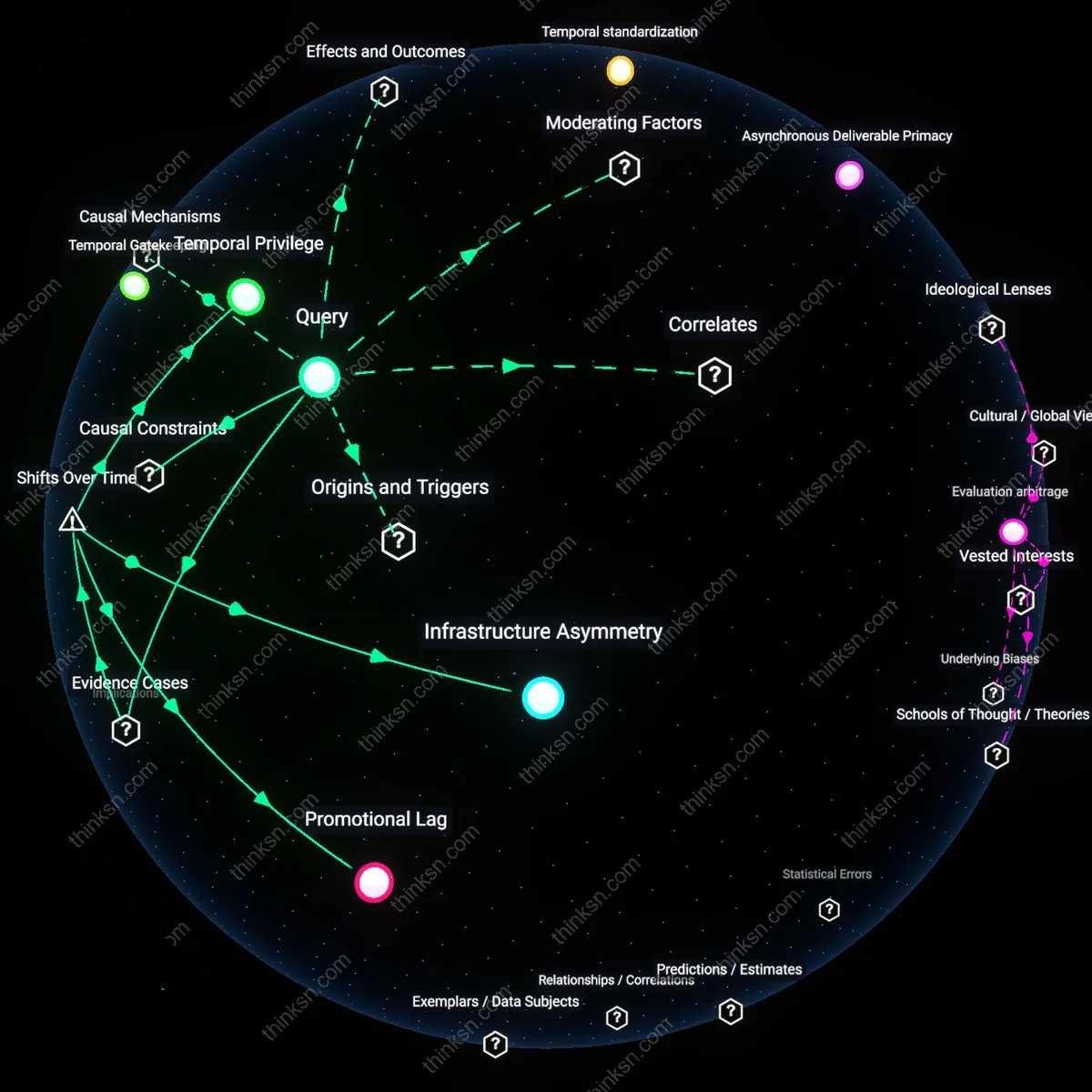
Temporal standardization
The centralization of remote work policies originated in 2022 within Indian IT services firms like Infosys and TCS, where global client demands prompted the imposition of synchronous communication windows across offshore development teams, aligning them with U.S. or U.K. business hours regardless of local time zones. This systemic coordination mechanism transformed employee value into a function of responsiveness and real-time availability, privileging adherence to centralized temporal rhythms over autonomy or deep work. The overlooked effect is that proof of value shifted from project outcomes to performative availability, embedding a new form of temporal compliance that reinforced center-periphery hierarchies in knowledge work.
Attention Infrastructure
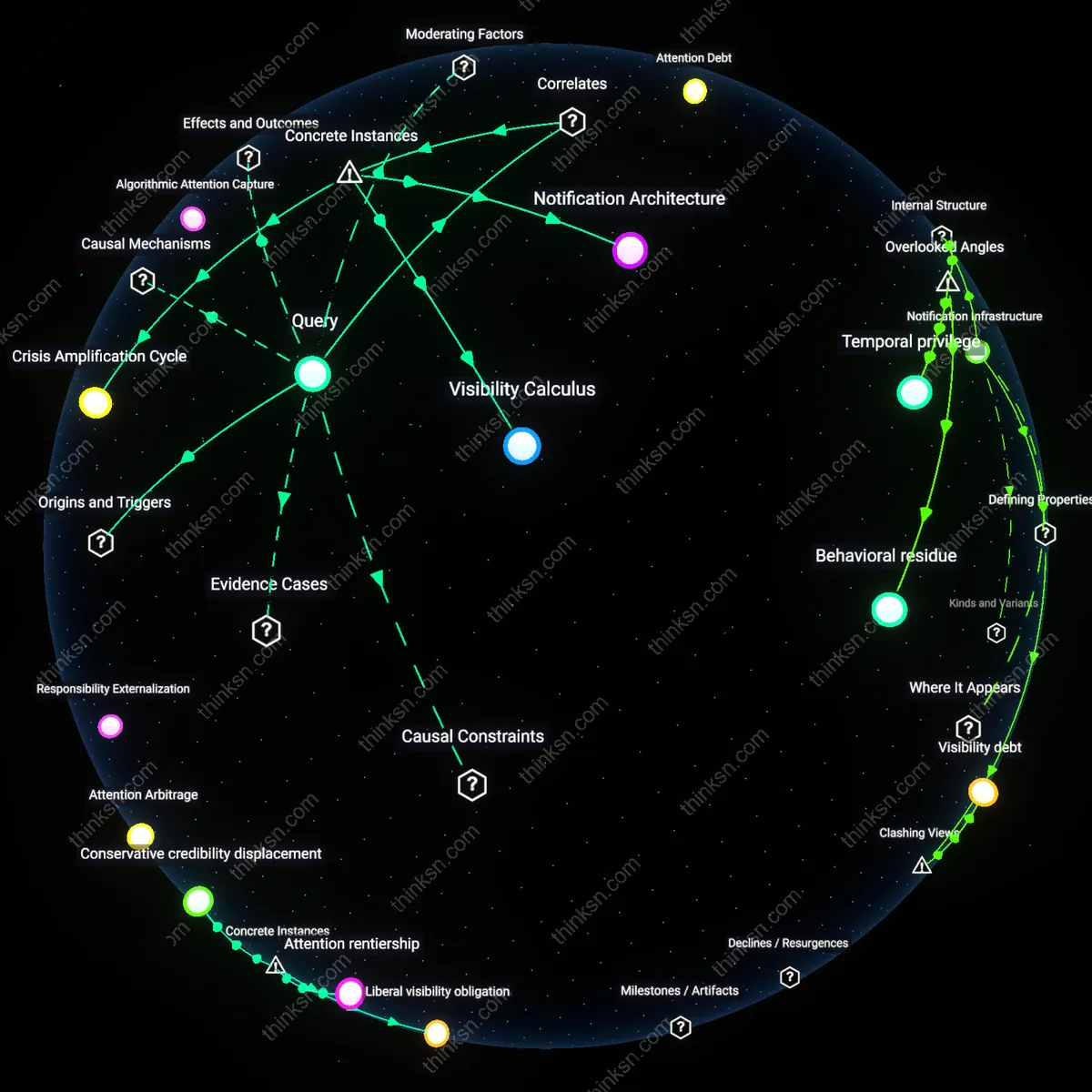
Centralized remote policies gradually shifted satellite employees’ value-proofing from output-based demonstrations to sustained visibility within digital attention economies. Satellite workers now compete not by what they produce but by how consistently they appear in coordination rituals—status updates, camera-on meetings, reactive messaging—where managerial perception is tethered to presence rather than outcome, operating through the architecture of tools like Slack, Teams, and Asana that log activity but not impact. This mechanism matters because it replaces objective contribution with proximity to digital oversight channels, a shift rarely acknowledged in productivity discourse, which assumes tools neutrally mediate work when they actually govern what counts as work—an overlooked infrastructure shaping value attribution.
Temporal Privilege
The institutionalization of core-hour mandates in centralized remote policies quietly redefined value-proofing among satellite employees as a function of time-zone alignment rather than task relevance. Employees in overlapping time zones with HQ gained unacknowledged advantages in impromptu decision access, mentorship visibility, and crisis responsiveness—systems that reward temporal adjacency over capability or output. This dynamic distorts meritocratic assumptions in remote work analyses, which typically treat time as a neutral backdrop, not a structuring hierarchy—revealing that temporal privilege, not just connectivity, determines whose labor becomes legible to centralized evaluators.
Visibility Labor
Centralized remote policies made satellite employees prove value by increasing their output visibility. As corporate hubs standardized digital reporting and scheduling tools, peripheral workers had to constantly log activities, attend check-in rituals, and pre-emptively share updates—not to complete tasks, but to simulate presence. This shifted performance from outcome-based assessment to continuous legibility within hub-centric workflows, privileging those who mastered bureaucratic performativity over silent productivity. The non-obvious cost is that familiar notions of 'being seen' at work evolved from physical proximity to algorithmic detectability, making visibility itself a workload.
Trust Deflation
Remote policies eroded the assumed trust in satellite employees, forcing them to validate contribution through quantified adherence rather than relational credibility. With headquarters favoring centralized monitoring platforms—time trackers, keystroke analytics, automated progress dashboards—geographically distant workers became subject to systems designed to offset managerial discomfort with absence. What seems like a neutral tool rollout actually reversed decades of localized autonomy, replacing judgment based on seniority or peer endorsement with real-time compliance metrics. The overlooked shift is that common trust dynamics, once rooted in personal familiarity, became structurally disassembled into auditable fragments.
Proximity Capital
Satellite employees lost value-proving advantages once tied to on-site leadership, as centralized remote policies elevated those already near decision-makers. Even in distributed settings, hybrid models recentered power around innovation narratives, agenda-setting access, and informal networking—prerogatives retained by co-located teams near HQ. Remote workers, despite equivalent output, faced diminished influence in performance reviews shaped by unrecorded interactions and 'culture fit' assumptions. The underappreciated cycle is how proximity, though physically obsolete, was conceptually resurrected as capital through digital rituals that mirror old office hierarchies.
Audit Trail Institutionalization
The rollout of mandatory digital timesheet systems at IBM’s Remote Workforce Initiative in 2017 forced satellite employees to log task-level activities, shifting value demonstration from visibility-based presence to quantifiable output records; this system replaced informal check-ins with algorithmically monitored productivity metrics, embedding an expectation that remote workers produce machine-readable proof of labor. The significance lies not in time tracking itself, but in how this artifact standardized evidentiary norms—making sporadic high-impact contributions less legible than consistent, documented effort. This reveals the underappreciated mechanism by which bureaucratic tools, not managerial philosophy, cemented new value-proving regimes.
Asynchronous Deliverable Primacy
GitLab’s public remote work handbook, updated in 2019 to mandate that all project updates be submitted via merge requests and issue logs, redefined employee contributions as artifacts retrievable outside real-time interaction, privileging written, version-controlled deliverables over verbal participation in meetings; this policy made visibility contingent on producing traceable digital outputs rather than appearing in synchronous forums. The non-obvious consequence is that value became detached from responsiveness and anchored to the density and clarity of asynchronous documentation—shifting power toward employees skilled in codifying work, regardless of time zone. This illustrates how platform-mediated workflows silently recalibrated performance signaling.
Visibility Debt
When Automattic began requiring all employee-initiated projects to be proposed in its internal P2 blogging system starting in 2015, satellite staff discovered that even successful outcomes were overlooked if they lacked a documented narrative trail, creating a new liability for those who acted before publishing; this artifact-based evaluation system imposed what engineers began informally calling 'visibility debt'—the accruing disadvantage of having done unpublicized work. The crucial insight is that centralized remote policies did not merely alter communication channels but introduced temporal asymmetries, where proving value required retroactive justification. This exposes how documentation mandates generate performative precarity even among high-performing outliers.