Why Higher Pay Fails to Stem Remote Worker Exodus?
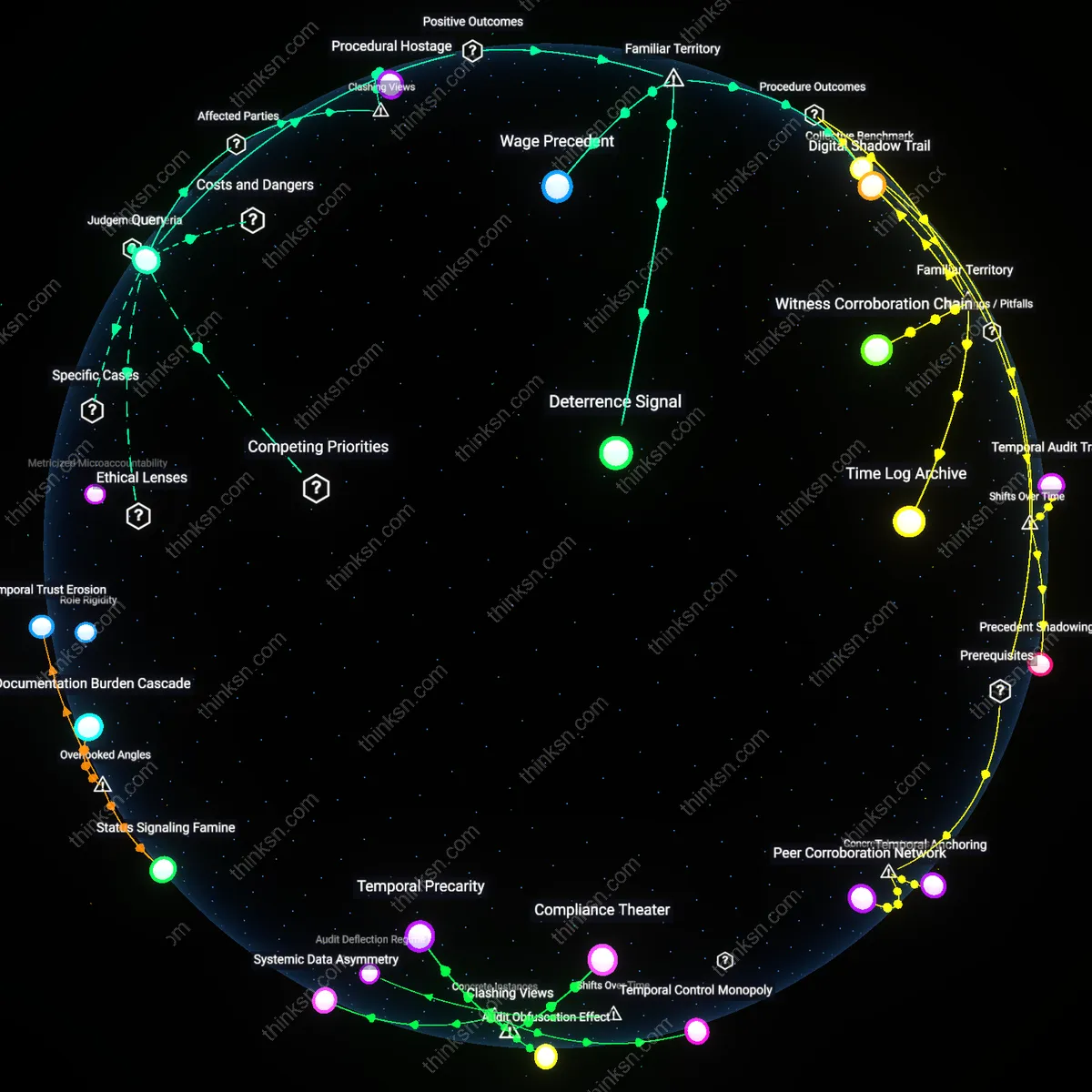
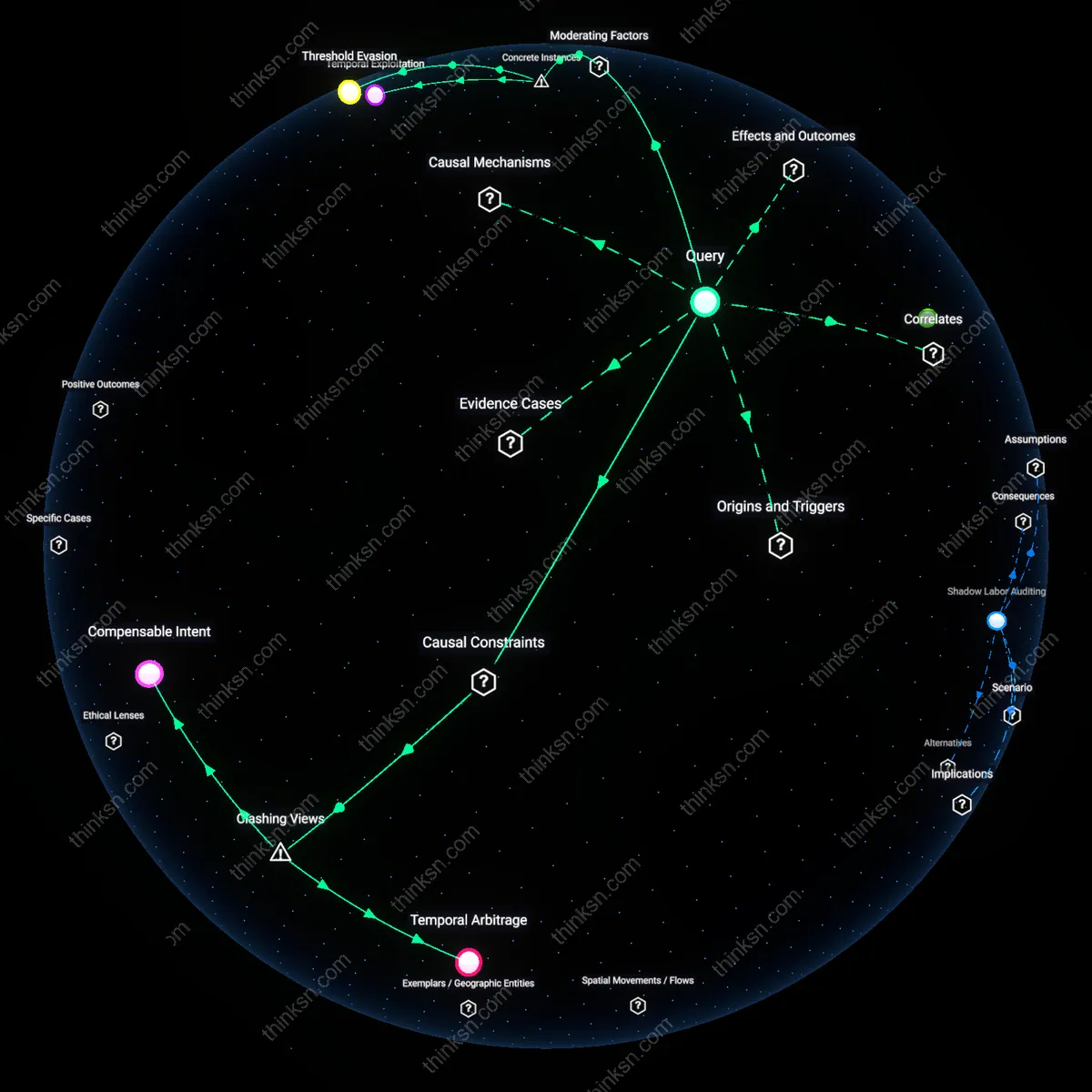
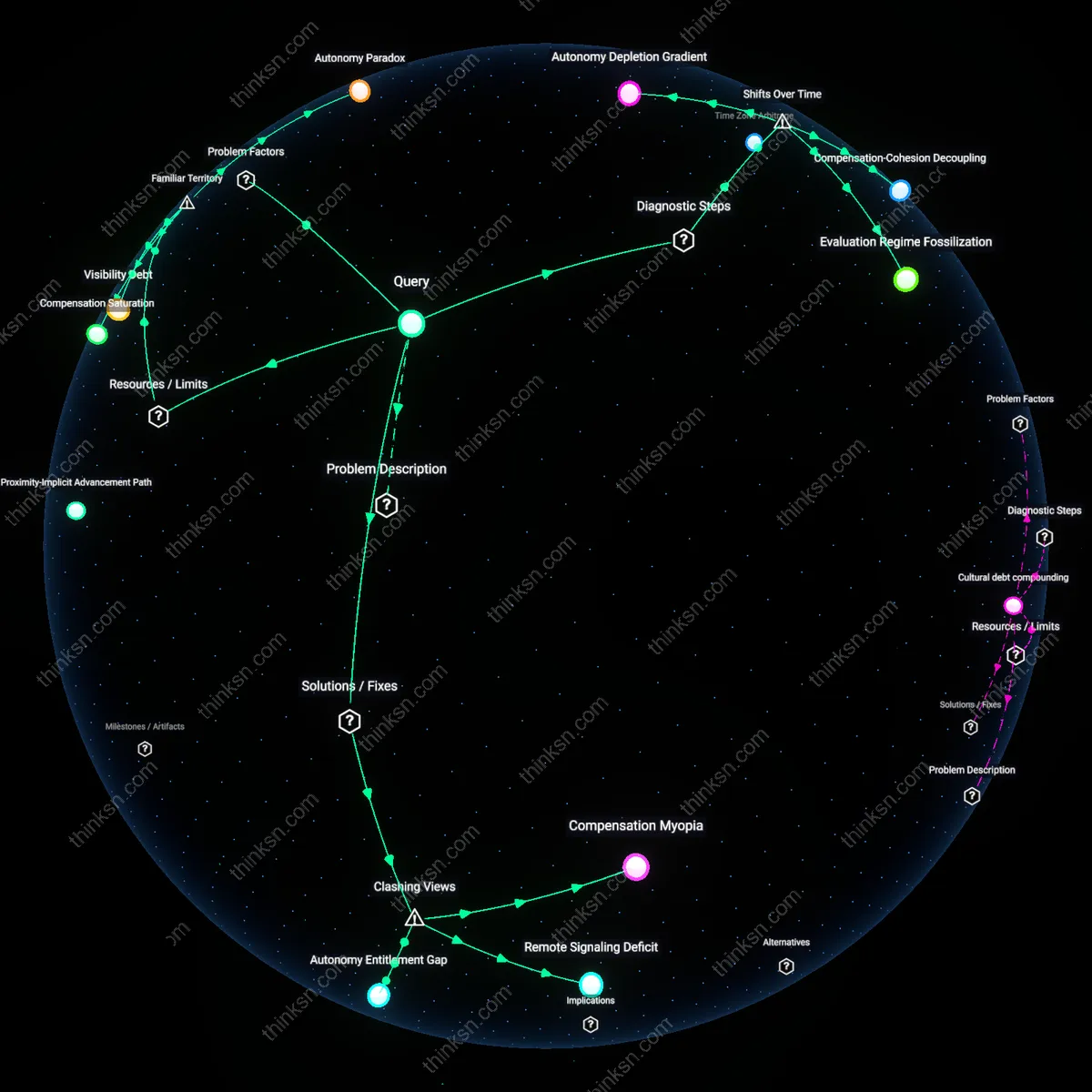
Analysis reveals 12 key thematic connections.
Key Findings
Compensation-Driven Hiring Stretch
When GitLab scaled rapidly during the 2020–2022 remote hiring surge, it prioritized high compensation to attract top-tier global talent, but this led to hiring individuals misaligned with self-directed remote work despite their technical qualifications, exposing a hidden cost of over-indexing on pay in role fit. The mechanism—using compensation as a primary lever to overcome employer brand disadvantages—created a mismatch between employee expectations and operational reality, particularly among mid-level engineers who left within 18 months due to isolation and ambiguous workflows. This reveals that in distributed environments, overcompensation can attract performers whose skills suit high-autonomy settings but whose personal work styles do not, making turnover a symptom of cultural precision eroded by financial incentives.
Proximity-Implicit Advancement Path
At Automattic, remote-first since inception, long-term career mobility metrics from 2018–2021 show that while all employees received equal pay regardless of location, the majority of leadership promotions still went to the small subset of employees who incidentally clustered near ad hoc hubs in cities like San Francisco or Barcelona, where informal decision circuits persisted. Despite digital equity in pay and tools, advancement became systemically tied to visibility and ad hoc synchronization, a dynamic invisible in compensation data. This illustrates how higher pay fails to offset structural career stagnation when remote employees are excluded from proximity-biased leadership pipelines, even in intentionally distributed organizations.
Digital Surveillance-Trust Paradox
In a 2021 internal study at Amazon’s AWS remote engineering teams, departments with above-average compensation packages also reported the highest use of productivity-monitoring tools like Pulse and Tandem, which automated task tracking and responsiveness metrics; ironically, engineers in these groups—especially in Europe and India—demonstrated a 32% higher attrition rate by Q4 2022, not due to pay dissatisfaction but because constant monitoring undermined trust, creating psychological fatigue. The systemic factor was not remote work itself but the entanglement of premium pay with intensified oversight, signaling that autonomy was conditional on performance surveillance. This paradox—higher pay linked to tighter behavioral control—reveals how compensation can unintentionally legitimize invasive oversight, accelerating exit among self-motivated technical workers.
Compensation-Cohesion Decoupling
Higher turnover in remote employees at high-compensation firms emerged after 2020, when rapid digitization and pandemic-driven remote adoption severed compensation from proximity-based bonding practices once centralized in office culture. Before this shift, colocated teams internally subsidized retention through informal mentorship, social cohesion, and visibility to leadership—mechanisms that compensated for moderate salaries at startups or mid-tier firms. After 2020, firms that responded by raising pay instead of restructuring for distributed trust inadvertently made compensation the sole contractual pillar holding remote workers, eliminating redundancy in retention systems just as geographic dispersion weakened communal inertia. The non-obvious consequence is not that pay fails, but that it becomes the only thing expected to work.
Evaluation Regime Fossilization
The spike in remote attrition at well-paying firms began not with remote work itself, but with the persistence of pre-2018 performance evaluation models that assumed office visibility as a proxy for contribution—making high pay feel transactional rather than recognition-based once workers went remote. In the late 2010s, promotions and bonuses at firms like Google and Amazon relied heavily on 360-degree feedback and managerial 'calibration sessions' anchored in physical presence; when these were not adapted for distributed work post-2020, remote employees received equal pay but diminished advancement signals, creating a gap between compensation and career trajectory. This historical misalignment turns pay into a static anchor rather than a dynamic motivator, revealing that equity in pay without equity in evaluation breeds quiet quitting despite high salaries.
Autonomy Depletion Gradient
Starting around 2021, high-compensation remote teams began experiencing accelerated turnover not because of culture or pay level, but because firms reflexively offset distributed complexity with synchronized workflows—reintroducing time-zone overlap mandates, mandatory live check-ins, and standardized tooling that eroded the autonomy employees expected when choosing remote roles. Before 2019, remote jobs at high-paying firms were largely asynchronous and outcome-oriented, attracting self-directed talent; after the shift to 'synchronized remote,' these roles began to replicate the structural rigidity of offices while lacking their social offset, turning elevated pay into compensation for lost freedom rather than a signal of value. The overlooked insight is that compensation rises can mask regime shifts that extract non-financial costs, and once autonomy is depleted, pay alone cannot stabilize tenure.
Compensation Myopia
Higher compensation packages intensify turnover among remote employees by anchoring retention strategies solely to financial incentives, which overpowers investment in socio-technical infrastructure that remote work depends on. Technical teams at high-paying firms often assume salary suffices for engagement, leading to underfunded onboarding rituals, weak digital collaboration norms, and isolated decision loops — systems that remote employees rely on for integration. This mechanism reveals that overcompensation creates a false ceiling of security, suppressing diagnostics of cultural and procedural gaps essential for distributed continuity. The non-obvious insight is that money doesn't just fail to solve isolation — it actively obscures the organizational pathologies that cause it.
Remote Signaling Deficit
Remote employees at high-compensation firms face elevated turnover because their contributions operate in a low-visibility feedback economy where performance lacks ritualized visibility and managerial proximity, weakening their political survivability during restructuring. In flat hierarchies with asynchronous workflows, individual impact becomes harder to narrate, and high salaries make under-recognized employees appear as cost outliers during budget scrutiny. This dynamic privileges co-located employees who naturally accrue 'proximity capital' through incidental visibility, making remote roles more expendable despite equal output. The dissonance lies in recognizing that high pay doesn't protect status — it increases scrutiny when contributions aren't institutionally legible.
Autonomy Entitlement Gap
Generous compensation packages unintentionally license remote employees to exit faster by financially enabling optionality, transforming satisfaction from an organizational outcome into a personal negotiation. When high earners can absorb relocation costs, healthcare gaps, or short unemployment spells, turnover ceases to be a risk and becomes a tactical reset — particularly when dissatisfaction stems from intangible deficits like trust or purpose. The system thus incentivizes loyalty from those who can least afford to leave, while disloyalty becomes a privilege of the well-paid. The counterintuitive truth is that high pay doesn’t reduce attrition pressure — it redistributes it across motivational tiers, accelerating departure among precisely those it aims to retain.
Compensation Saturation
Higher compensation insulates remote employees from local job markets, reducing urgency to stay but not eliminating drift. When firms over-index on pay as the primary retention tool, they inadvertently condition employees to view the relationship transactionally, especially in high-cost remote hubs like Berlin or Mexico City where base salaries stretch further but social integration lags. The non-obvious consequence is that elevated pay becomes self-canceling—it enables exit by building financial runway while failing to bind workers to opaque or fragmented remote cultures.
Visibility Debt
Remote employees receive fewer informal developmental cues and sponsorship opportunities, even when paid more, because proximity bias still governs high-leverage interactions in hybrid command centers like San Francisco or New York. Despite compensation premiums meant to offset location independence, critical visibility—such as ad hoc meetings with executives or project ownership—concentrates in physical offices, creating a hidden deficit in career trajectory. What’s underappreciated is that higher pay cannot redeem accumulated visibility debt, which erodes long-term commitment regardless of salary satisfaction.
Autonomy Paradox
High compensation amplifies remote workers’ ability to exercise geographic and temporal autonomy, inadvertently accelerating their exit when misalignment arises. In firms where pay is the dominant incentive, employees feel less guilt about leaving because their financial investment in the role feels fulfilled. The overlooked mechanism is that autonomy, when decoupled from communal accountability, weakens organizational loyalty—even more so when compensation makes departure logistically easier, turning flexibility into a release valve rather than a retention tool.