Why Paid Sick Leave Laws Fail Low-Wage Workers?
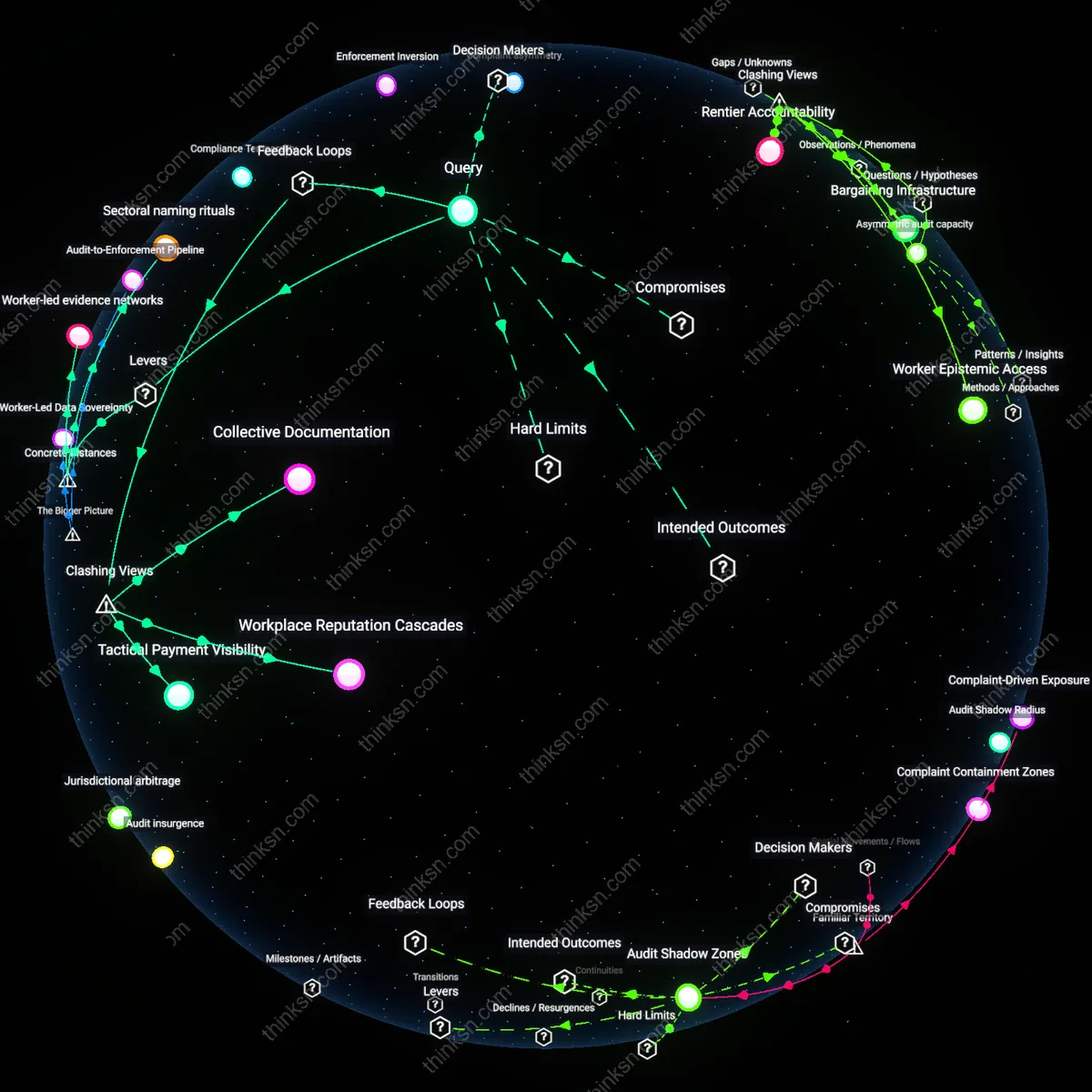
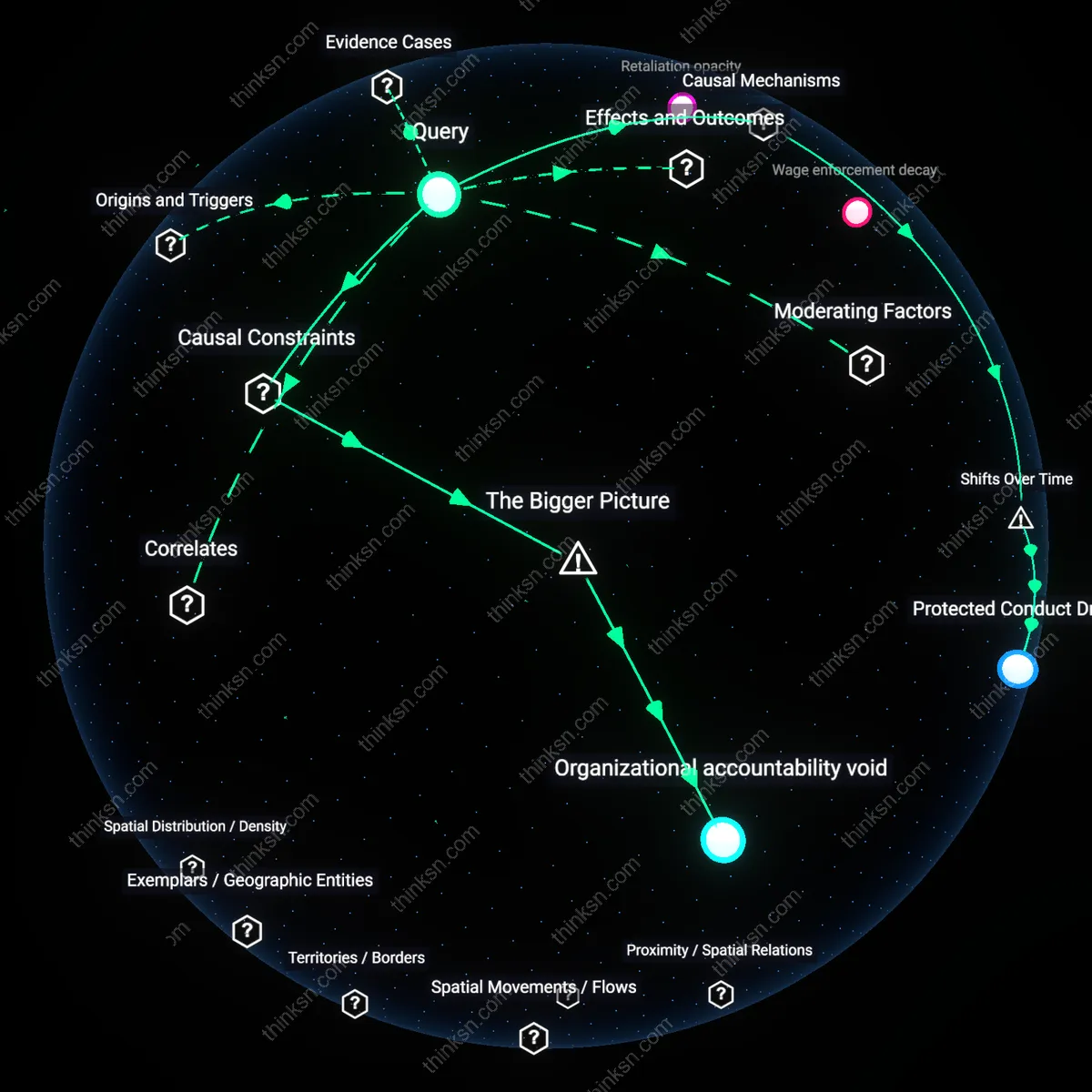
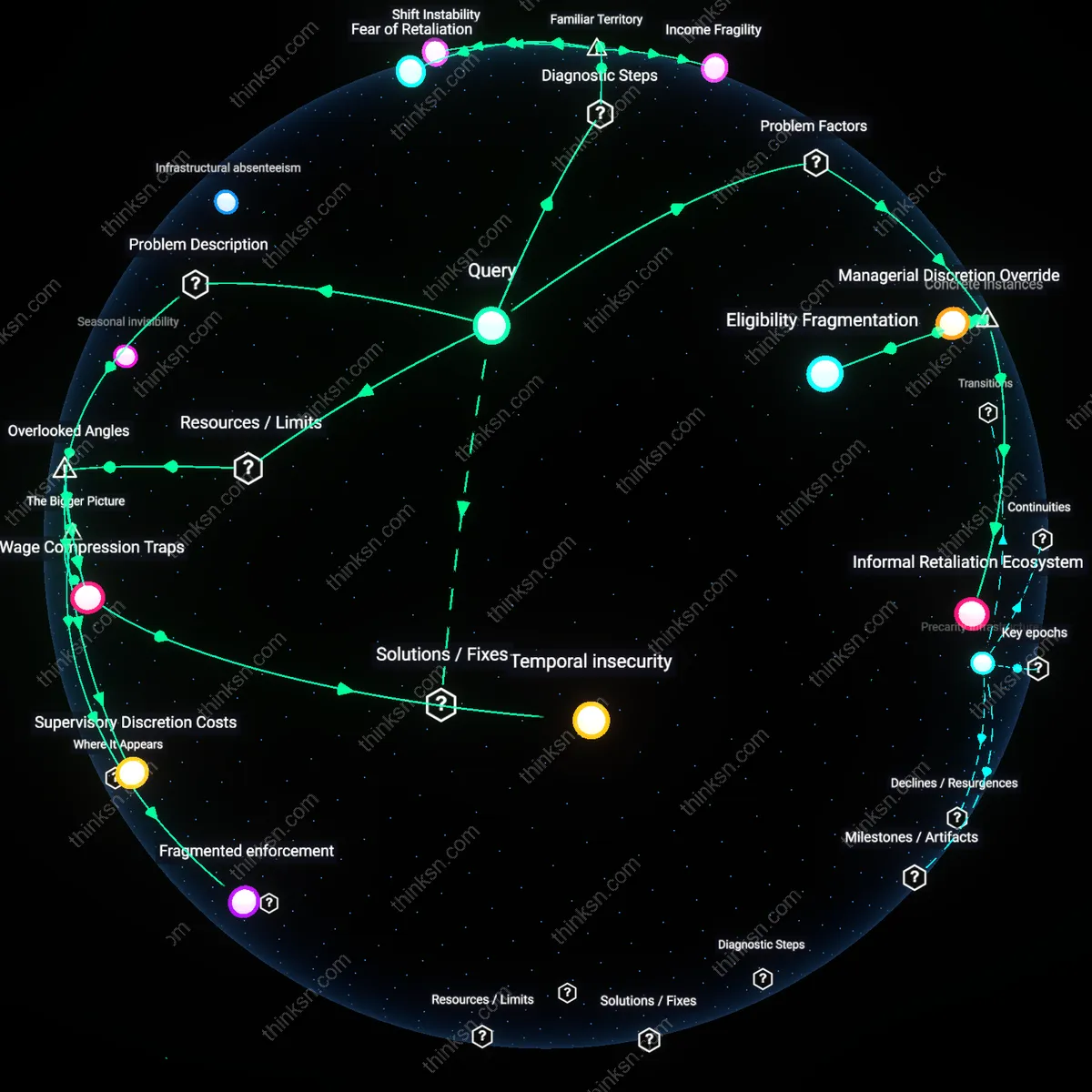
Analysis reveals 11 key thematic connections.
Key Findings
Supervisory deterrence
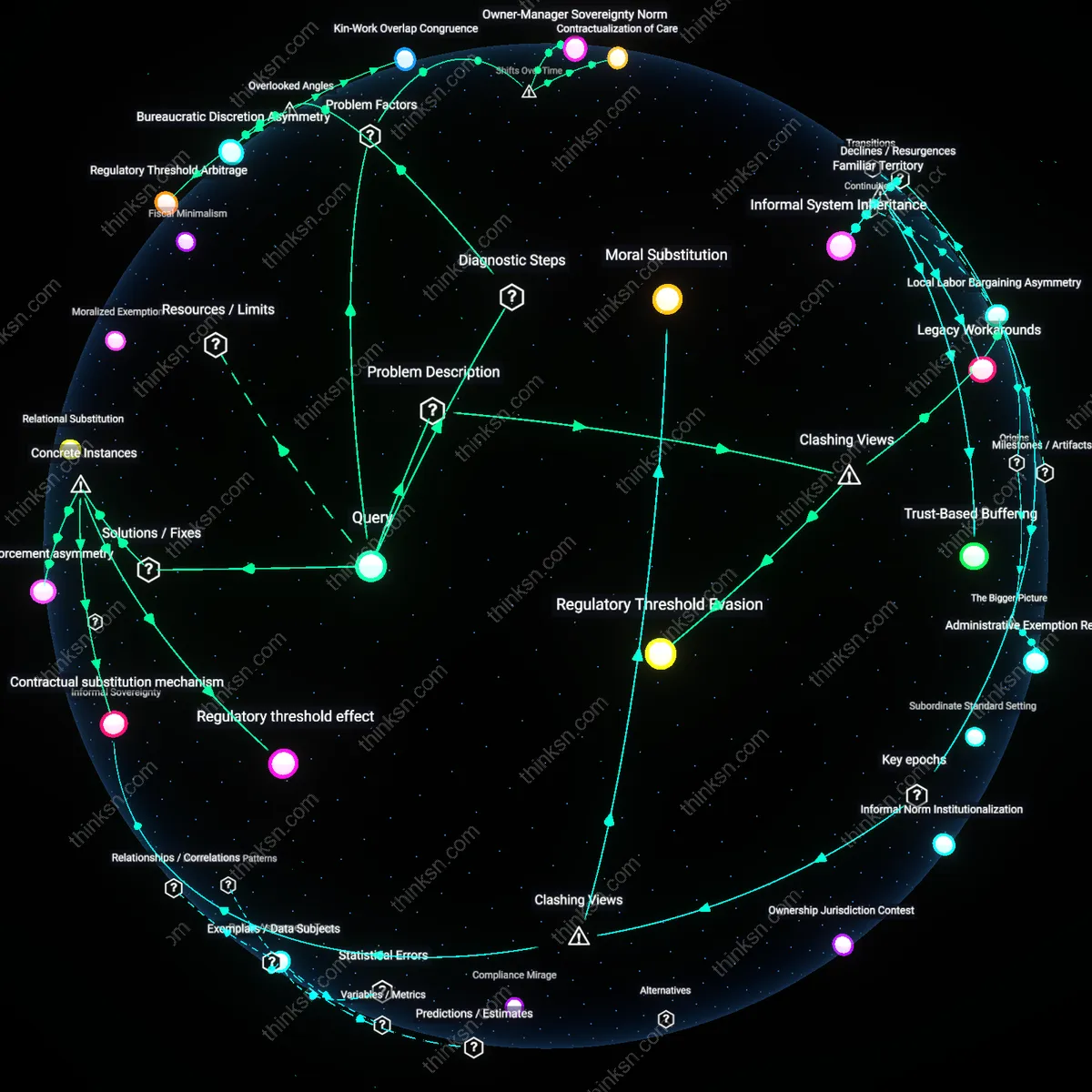
Managers in high-turnover service sectors actively discourage paid sick leave use through informal threats and scheduling penalties, even in states with legal protections. Frontline supervisors, evaluated on operational continuity and cost control, exert subtle pressure by assigning less favorable shifts or withholding overtime after leave requests, exploiting workers’ economic precarity. This creates a workplace climate where statutory rights are functionally inaccessible despite formal availability, revealing how compliance-enforcement gaps are locally reproduced by mid-level actors with misaligned incentives. The non-obvious insight is that legal coverage does not override immediate social control by proximate authority figures embedded in lean labor management systems.
Temporal insecurity
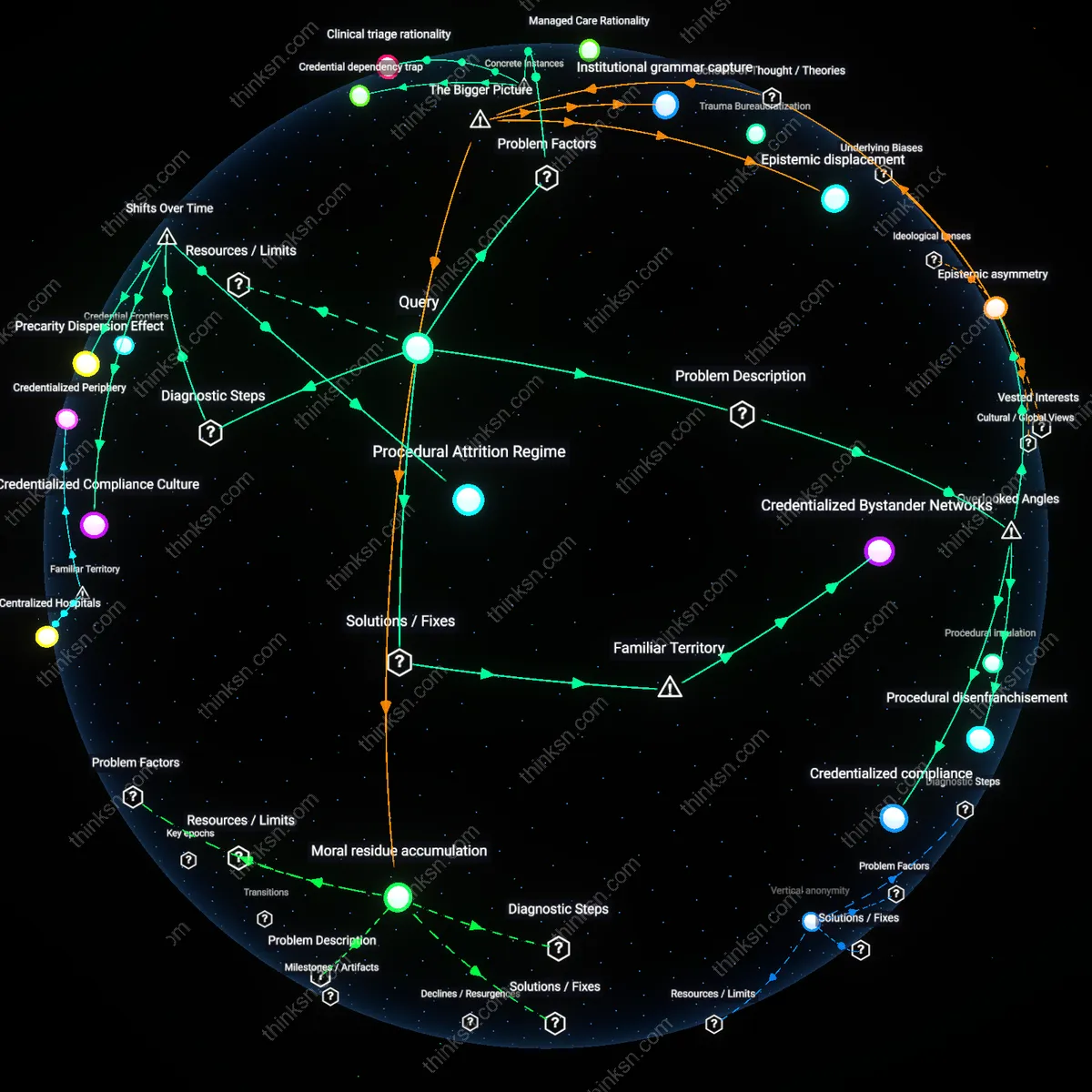
Low-wage workers under just-in-time scheduling cannot predict their shifts far enough in advance to plan sick leave use, nullifying the practical value of statutory entitlements. Employers in retail and hospitality deploy algorithmic scheduling tools that generate volatile weekly rosters, making workers reluctant to report illness due to fear of being replaced during unassigned times. This mismatch between inflexible health needs and maximally fluid work timing renders sick leave rights temporally inaccessible, not legally denied. The underappreciated dynamic is that time itself becomes a mechanism of exclusion, decoupling rights from usable opportunity even when laws are otherwise enforced.
Fragmented enforcement
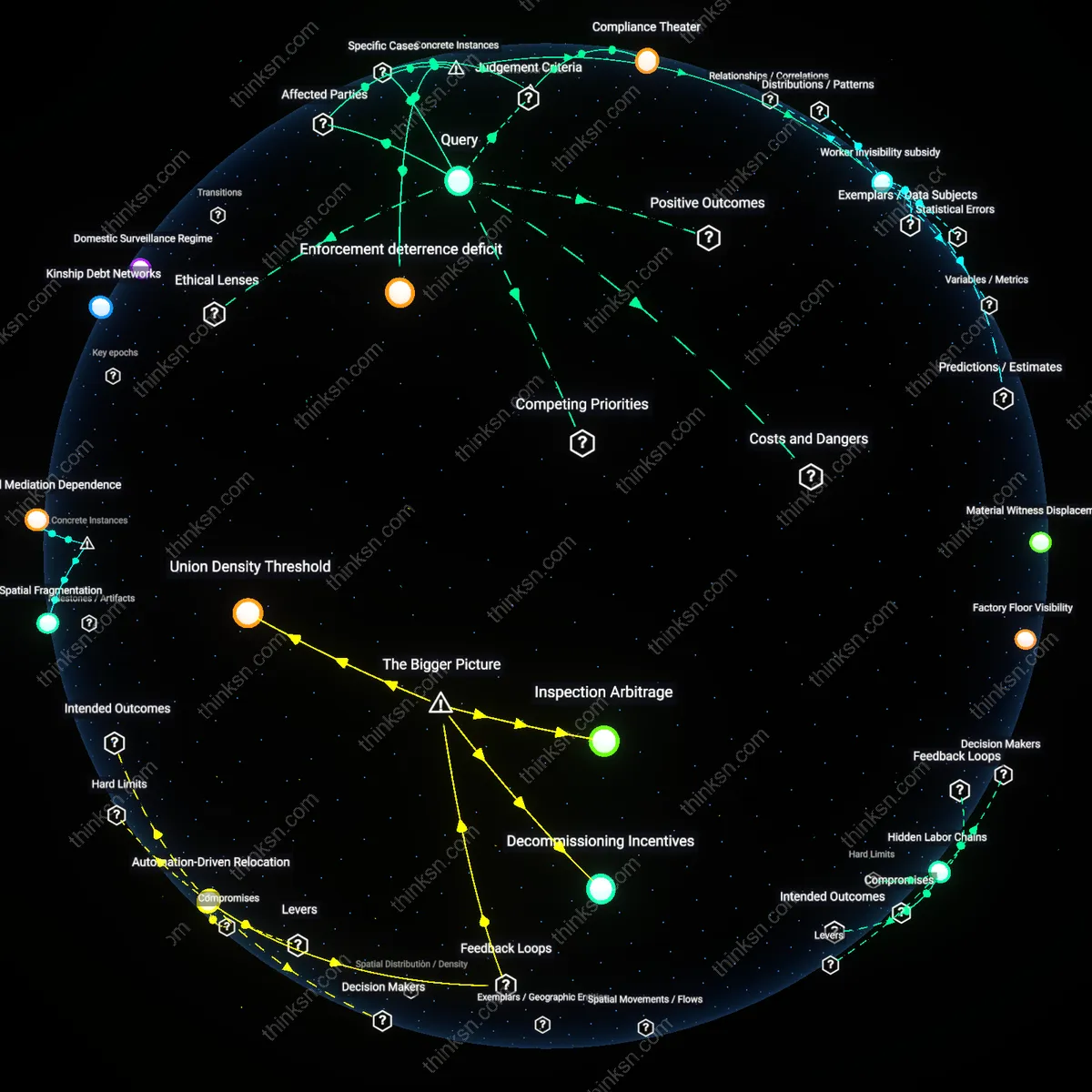
State labor agencies lack targeted monitoring capacity to detect implicit employer coercion around sick leave, relying instead on reactive complaints that low-wage workers rarely file due to retaliation fears. Regulatory frameworks are structured around formal violations—like denial on paper—while informal workplace norms suppressing leave use fall into investigative blind spots. This creates a permissible zone where legal compliance is technically maintained but functionally undermined, sustained by the misalignment between enforcement design and the reality of relational workplace power. The overlooked factor is that decentralized, complaint-driven systems reward invisibility in rights violations, privileging observable breaches over systemic discouragement.
Managerial Discretion Override
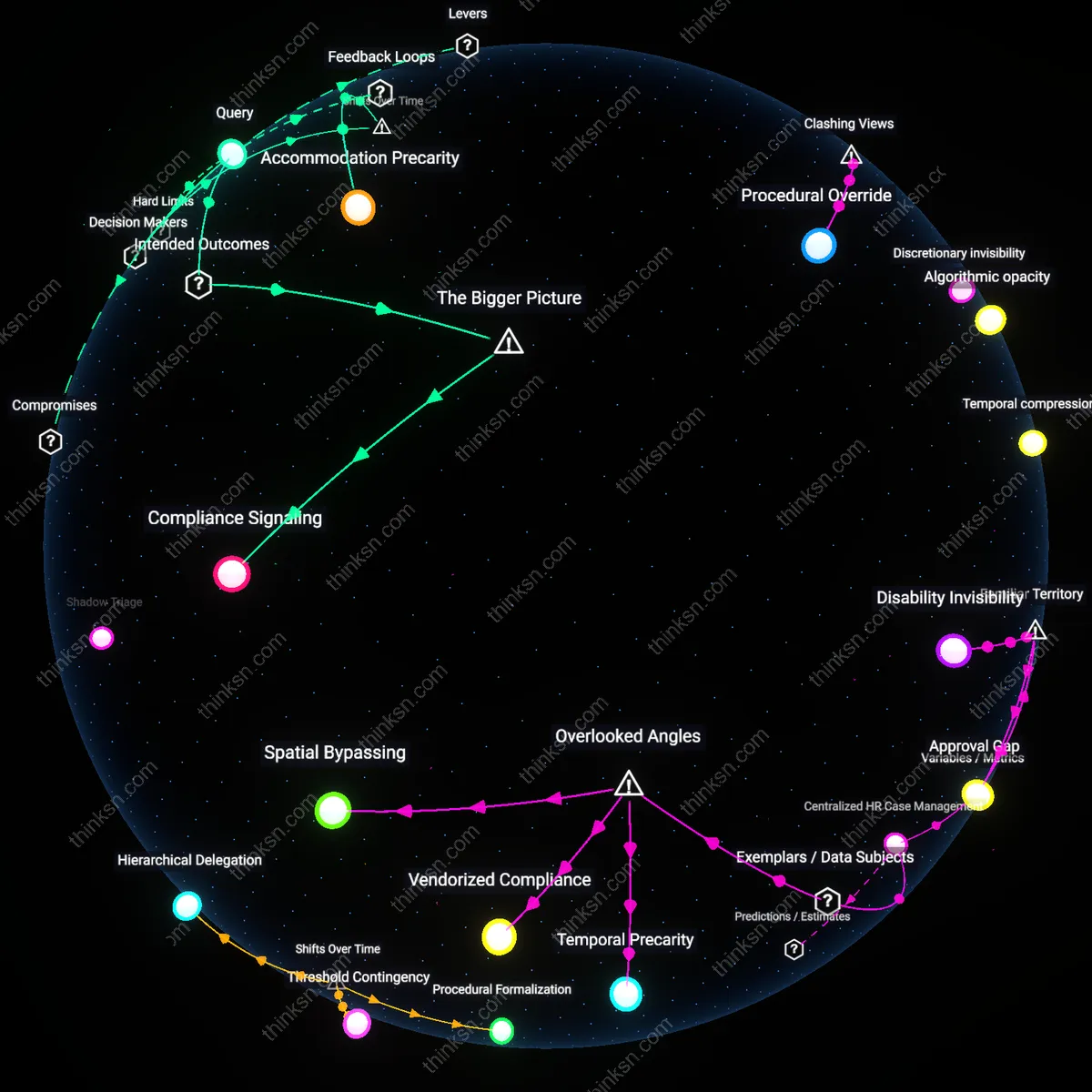
Managers at a large retail chain in California routinely deny scheduled sick leave requests by low-wage workers despite the state's Healthy Workplaces, Healthy Families Act, because store-level supervisors hold final scheduling authority and prioritize staffing coverage over compliance, revealing how delegated operational control can nullify statutory entitlements when frontline enforcers have misaligned incentives.
Informal Retaliation Ecosystem
In 2022, kitchen staff at multiple Jimmy John’s franchises in Illinois avoided using legally protected sick leave due to whispered threats of reduced shifts and blacklisting by crew managers, a pattern documented by the Investigative Reporting Workshop, exposing how informal, reputation-based penalties in tightly clustered job markets deter claims even when legal recourse exists.
Eligibility Fragmentation
Rideshare drivers in New York City, though covered by the state’s paid sick leave law since 2018, often fail to accrue usable hours because the policy counts only trip time—not wait time—toward eligibility, a technical exclusion that structurally disqualifies a majority of low-income platform workers as determined by the Workers Compensation Research Institute, illustrating how seemingly neutral administrative definitions can create systemic exclusion.
Fear of Retaliation
Supervisors discourage sick leave use through implicit threats and retaliatory behavior, even in states with legal protections. Managers in high-turnover sectors like retail and food service often penalize workers who take leave by reducing hours, delaying promotions, or fostering hostile work environments, mechanisms that operate beneath legal scrutiny yet remain widely recognized by workers. Though statutory rights exist, enforcement depends on individual complaints, creating a power asymmetry where workers perceive reporting retaliation as riskier than enduring illness at work. The non-obvious insight is that the law’s visibility amplifies fear—knowing one has a right makes asserting it feel more confrontational, not less.
Shift Instability
Erratic scheduling systems prevent workers from planning leave use, even when benefits are legally guaranteed. In gig platforms and hourly service jobs, unpredictable shifts and on-call assignments make it difficult to qualify for or coordinate paid leave, which often requires advance notice or fixed work patterns. This dynamic is familiar to workers who experience last-minute shift changes but is rarely linked to leave underutilization in policy discussions, which assume stable employment rhythms. The underappreciated point is that inflexible leave structures clash with deliberately unstable labor models, rendering protections functionally inaccessible despite formal availability.
Income Fragility
Workers forgo sick leave to avoid income loss because their wages barely cover immediate expenses, even when leave is technically paid. In occupations like home health or cleaning services, hourly pay is so low that any reduction—real or anticipated—triggers material crisis, leading employees to work through illness as a survival strategy. This response is rooted in a financial reality where liquidity constraints override statutory assurances, a tradeoff widely understood in low-wage communities but overlooked in legal compliance metrics. The non-obvious insight is that ‘paid’ leave remains symbolically and practically insufficient when future payments feel uncertain against present needs.
Supervisory Discretion Costs
Managers in high-turnover retail and food service sectors actively discourage the use of paid sick leave to maintain labor supply elasticity, even in states with strong statutory entitlements. Because compliance monitoring focuses on employers rather than front-line supervisors, and because wage penalties for absenteeism are often enforced informally through reduced hours or scheduling retaliation, workers internalize that taking leave risks de facto punishment. This dynamic reveals how compliance architectures that ignore middle-tier enforcement discretion fail to bind on the shop floor, rendering legal entitlements practically inaccessible despite formal coverage.
Wage Compression Traps
Low-wage workers on fixed monthly budgets—such as those covering rent, transportation, and childcare—avoid using paid sick leave because even full-wage replacement disrupts cumulative hourly earnings needed to meet fixed obligations. Due to staggered pay cycles and delayed disbursement of benefits, the timing misalignment between when illness occurs and when compensated days are issued creates temporary cash shortfalls that workers cannot absorb. This exposes how benefit systems designed around wage parity ignore temporal liquidity gaps, making paid leave functionally inaccessible despite nominal eligibility.