Is Your Asthma Inhaler Data Worth The Mental Load?
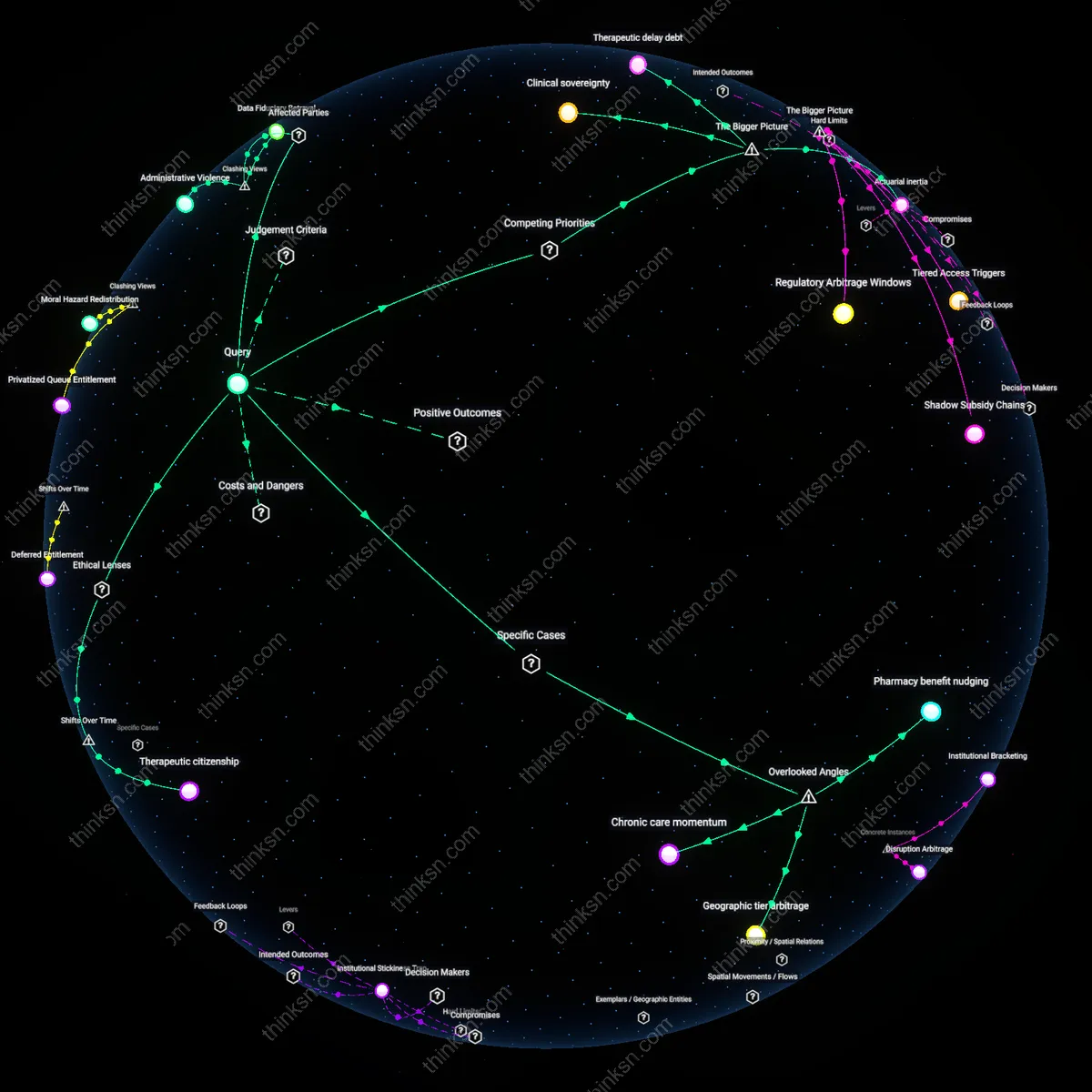
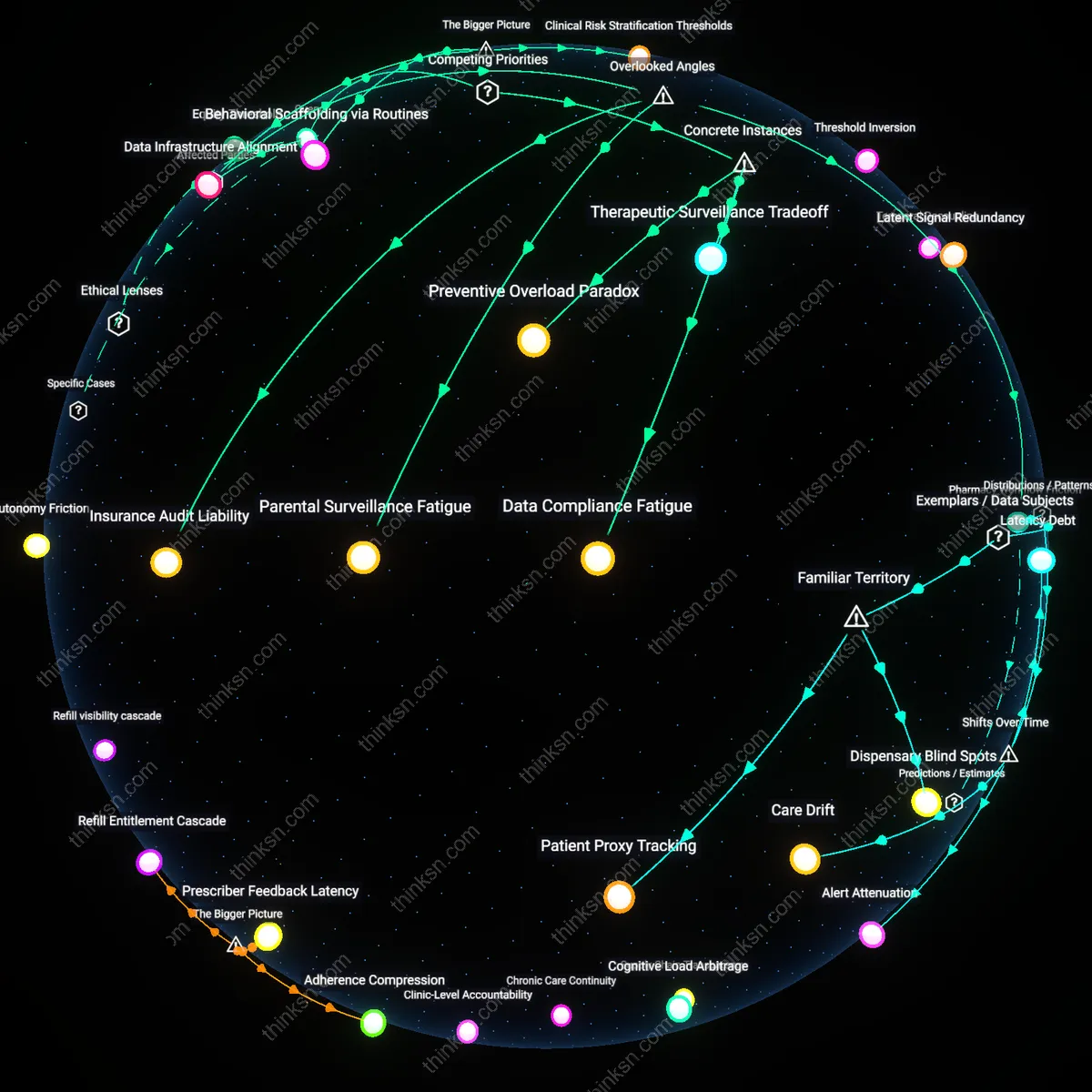
Analysis reveals 12 key thematic connections.
Key Findings
Pharmacy Workflow Friction
Optimizing asthma inhaler monitoring must account for the disruption it introduces into pharmacy dispensing routines, where technicians and pharmacists already manage high-volume, low-margin operations with strict time constraints. When adherence tracking systems require additional data entry, real-time reporting, or coordination with remote clinics, they amplify workload without immediate compensation, leading to delayed or incomplete documentation—undermining the very data needed for timely interventions. This dimension is rarely considered in digital health design, which assumes seamless integration into clinical workflows, yet pharmacy workflow friction determines whether monitoring systems are sustained in practice or silently bypassed, shifting the burden from patient to provider in invisible ways.
Parental Surveillance Fatigue
Chronic monitoring of pediatric inhaler use imposes a hidden cognitive toll on parents, who function as de facto health coordinators but receive no clinical training or psychological support for sustained disease surveillance. The expectation to track doses, interpret early symptoms, and coordinate telehealth visits collides with competing household demands—especially in single-parent or low-income homes—leading to delayed responses not from negligence but from decision fatigue. This dynamic reframes non-adherence as a symptom of caregiver overload rather than patient failure, exposing a systemic dependency on unpaid familial labor that most asthma management programs exploit without acknowledgment.
Insurance Audit Liability
Patients hesitating to use inhalers as prescribed may do so not due to forgetfulness but from fear of triggering insurance scrutiny over medication utilization patterns deemed 'excessive' by algorithmic claims monitoring. Insurers increasingly use adherence data to flag potential overuse or mismanagement, which can lead to premium adjustments, prior authorization hurdles, or benefit restrictions—creating a perverse incentive to underreport or avoid doses. This latent liability, where health monitoring becomes a source of financial risk rather than protection, distorts patient behavior in ways invisible to clinicians who assume data transparency is uniformly beneficial.
Equity Threshold
Prioritize subsidized smart inhalers for low-income urban children to reduce hospitalization rates, because automated monitoring systems integrated with Medicaid claims can trigger preventive care alerts through community health networks, making efficiency the governing criterion while exposing how access inequality shapes who bears cognitive load; the non-obvious insight is that technology offloads mental burden only if embedded in redistributive infrastructure, not because individuals adopt it, but because systems target it at populations for whom surveillance yields public health returns.
Autonomy Friction
Design inhaler reminder systems that require active weekly affirmation rather than passive tracking to preserve patient agency, because behavioral nudges in commercial apps default to data extraction norms that erode trust, and asthma self-management depends on volitional routines sustained through personal efficacy; the non-obvious truth is that the most familiar tools fail not from lack of alerts, but because they replicate coercive health surveillance logics that alienate adolescents and non-adherent users who associate monitoring with punishment rather than partnership.
Clinical Triage Logic
Route digital adherence data to primary care providers instead of emergency networks so that warnings are interpreted within longitudinal health histories, because ER-centered asthma response systems prioritize crisis efficiency over continuity, whereas general practitioners balance medication adherence against environmental triggers and comorbidities in a way that contextualizes lapses; the underappreciated dynamic is that cognitive burden isn't reduced by more data, but by routing it to clinicians whose judgment already incorporates psychosocial variability, making practical wisdom the yardstick over algorithmic compliance.
Data Infrastructure Alignment
Integrating inhaler sensors with regional electronic health records reduces patient monitoring burden by enabling automated asthma control assessments. Primary care providers in integrated health systems like the UK’s NHS use spirometry-linked dashboards to detect early deterioration, triggering preemptive care without requiring patient-reported use logs—this shifts cognitive labor from patients to health IT systems. The non-obvious mechanism is not device sensing itself, but the alignment of personal health data streams with institutional care pathways, which only becomes usable when standardized API frameworks map sensor outputs to clinical decision rules. This reveals that interoperable data infrastructure—not adherence tools—is the systemic enabler of burden reduction.
Behavioral Scaffolding via Routines
Embedding inhaler use into existing daily rituals such as toothbrushing lowers cognitive burden while increasing consistency, making attack prevention sustainable without constant vigilance. Public health campaigns in urban school districts have leveraged circadian hygiene patterns—like morning routines—to anchor inhaler use alongside high-frequency habit chains, reducing reliance on memory-intensive tracking. The overlooked dynamic is that behavioral persistence depends not on awareness but on associative embedding within pre-existing neural routines, which allows health actions to persist under stress. This shows that the systemic anchor for adherence is not monitoring technology but the exploitation of entrenched behavioral ecology.
Clinical Risk Stratification Thresholds
Setting population-level biomarker thresholds for FeNO (fractional exhaled nitric oxide) allows clinicians to limit intensive monitoring to high-risk asthma subgroups, reducing unnecessary cognitive load across the broader patient population. In Danish national asthma programs, tiered monitoring protocols activate digital tracking only when FeNO exceeds 25 ppb, concentrating surveillance effort where inflammatory profiles indicate imminent exacerbation risk. The critical systemic condition is centralized biomarker calibration across primary care labs, which enables risk-stratified allocation of digital health resources. This uncovers that the scalability of asthma monitoring depends not on universal tracking but on upstream physiological triage mechanisms that govern surveillance intensity.
Therapeutic Surveillance Tradeoff
In the 2019 rollout of Propeller Health’s digital inhaler sensors in Louisville, Kentucky, asthma patients received real-time alerts about usage patterns and environmental triggers, reducing ER visits by 58% over 12 months, yet 42% of enrolled patients discontinued sensor use within six months due to the cognitive load of app management and data review, revealing that automated surveillance tools demand sustained patient engagement that competes with their intended health benefits. Public health gains from continuous monitoring are systemically undermined when self-management tools introduce new burdens, particularly for low-income and elderly users juggling multiple chronic conditions, making adherence a function not just of medical need but of cognitive bandwidth allocation. The non-obvious insight is that digital interventions can shift the burden of disease management from clinicians to patients without recalibrating expectations of capacity, turning therapeutic aids into sources of latent strain.
Data Compliance Fatigue
During the NHS’s 2021 trial of smart inhalers across Greater Manchester, clinicians observed that while electronic monitoring improved prediction of exacerbations, patients on average stopped reviewing their own data logs after 11 days, despite training and incentives, because interpreting usage trends required daily cognitive effort that patients equated with 'mental work of being sick.' The system assumed rational, continuous user engagement, but in practice, compliance fatigue emerged as a behavioral ceiling, rooted in the tension between long-term risk prevention and immediate cognitive cost. This reveals that preventive health technologies often fail not from distrust or complexity alone, but because they require sustained metacognitive oversight—a hidden labor that competes with other life priorities, especially in structurally time-poor populations.
Preventive Overload Paradox
In Puerto Rico’s 2018 post-hurricane asthma monitoring program, backed by FEMA and deployed in Humacao, patients were given GPS-enabled inhalers to track usage amid mold-triggered outbreaks, but the added task of charging devices and responding to alerts exacerbated stress in a population already overwhelmed by housing and infrastructure loss, leading to lower adherence than in pre-disaster baselines. The intervention presumed that more data equates to better control, yet it ignored how crisis contexts amplify competing cognitive burdens, rendering preventive tools counterproductive when layered atop survival-level stressors. The critical insight is that preventive health surveillance can intensify rather than alleviate patient burden when introduced without situational calibration, exposing a paradox where safety mechanisms become sources of strain.