Is Civil Disobedience for Electoral Reform Backfiring on Democracy?
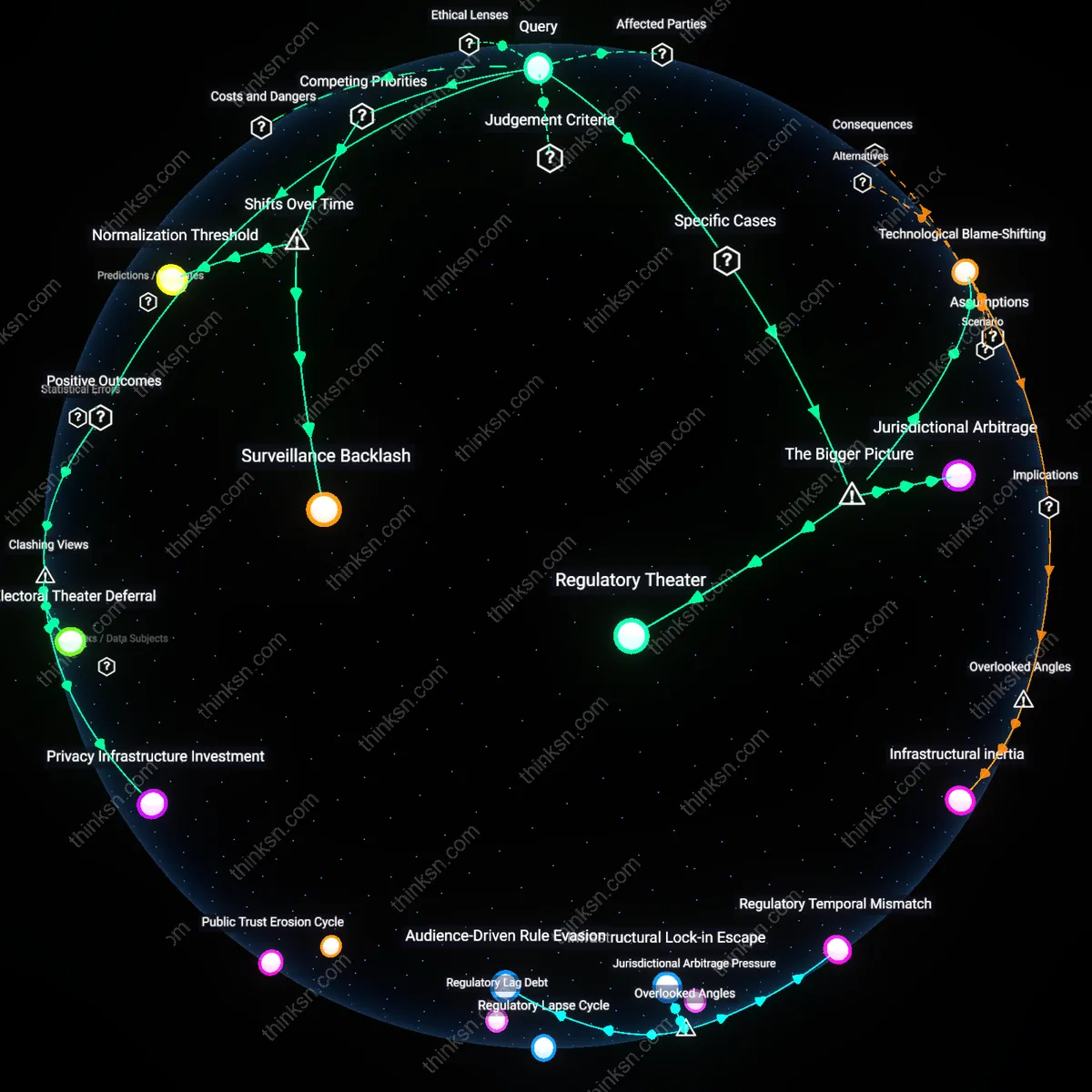
Analysis reveals 6 key thematic connections.
Key Findings
Electoral Backlash Formation
Supporting civil disobedience for electoral reform is rational because it activates marginalized coalitions excluded by post-2010 voter ID laws, whose mobilization reveals suppressed demand for systemic change; this mechanism operates through the erosion of procedural legitimacy in state-level election administration, particularly in swing counties where demographic shifts have altered voter composition, making civil pressure a corrective to institutional capture—what is underappreciated is that such actions do not merely react to current dysfunction but reconstruct a pre-1965 moral claim on suffrage access, retroactively redefining compliance as complicity.
Partisan Entrenchment Feedback
Supporting civil disobedience for electoral reform is irrational because it triggers strategic overreaction from state legislatures that codified gerrymandering post-Shelby County v. Holder (2013), who now frame reform activism as existential threats to their political survival; this dynamic strengthens asymmetric institutional responses like Georgia’s 2021 SB1 and Florida’s 2023 election police units, revealing how civil disruption—once a lever of consensus repair—has become a signal for counter-reform entrenchment, a shift accelerated after 2016 when procedural grievances were absorbed into affective polarization.
Reform Legitimacy Drain
Supporting civil disobedience for electoral reform is conditionally rational only when it occurs within interregional networks like the 2020–2022 Poor People’s Campaign, which decouple reform from party-aligned urban centers and instead root it in multisectoral Southern coalitions; this reflects a reversal from the post-1993 Motor Voter Act era, where institutional channels absorbed dissent, to a post-2020 reality where federal inaction forces civil society to simulate state capacity, exposing a legitimacy deficit in both major parties’ treatment of electoral justice as tactical, not constitutional.
Institutional erosion
Supporting civil disobedience for electoral reform risks normalizing the subversion of electoral legitimacy, as seen in the 2021 U.S. Capitol riot, where claims of electoral fraud following peaceful reform debates escalated into violent insurrection, revealing how even well-intentioned civil disruption can be co-opted to justify broader rejection of electoral outcomes. The event demonstrated that when protest blurs into coercion, it weakens the perceived neutrality of electoral institutions, enabling partisan actors to frame reform efforts as existential threats rather than procedural improvements. This shift undermines democratic stability not through intent but through the leakage of tactical legitimacy into extremist narratives, a mechanism often overlooked in liberal defenses of civil disobedience. The key insight is that civil disobedience, once detached from institutional trust, fuels feedback loops of delegitimization that are indifferent to original intent.
Weaponization asymmetry
In Nigeria’s 2019 post-election protests, demands for electoral reform through mass civil disobedience enabled the ruling APC to reframe opposition activism as destabilizing insubordination, justifying expanded surveillance and crackdowns on dissent under the guise of preserving order. Because the state controlled both security apparatuses and narrative infrastructure, the same tactics used by reformers to pressure change were mirrored back as evidence of partisan subterfuge, disproportionately disadvantaging opposition actors who lacked institutional protection. This asymmetry—where ruling parties absorb and redirect the legitimacy costs of repression—is rarely accounted for in normative theories of civil disobedience, which assume a more balanced political field. The case reveals that in polarized systems, reform-driven disobedience often functions as a pretext for entrenching executive power rather than enabling fairness.
Precedent capture
During Hong Kong’s 2014 Umbrella Movement, calls for democratic reform through sustained civil disobedience led to long-term legal and procedural backlash, including Beijing’s imposition of stricter interpretation powers over Hong Kong’s Basic Law and eventual national security crackdowns, illustrating how reformist actions can be retroactively reconceptualized as secessionist threats. The movement’s tactical visibility and extralegal nature provided authoritarian actors with a durable justification to redefine civic participation as systemic risk, embedding countermeasures into institutional design. This precedent capture—where exceptional responses to civil disobedience become normalized governance tools—is particularly dangerous because it operates not through immediate repression but through the slow institutionalization of emergency logic. The underappreciated consequence is that even nonviolent reforms can trigger permanent risk-amplifying structures under the sign of stability.