Do Private Long-Term Care Policies Undermine Collective Elder Support?
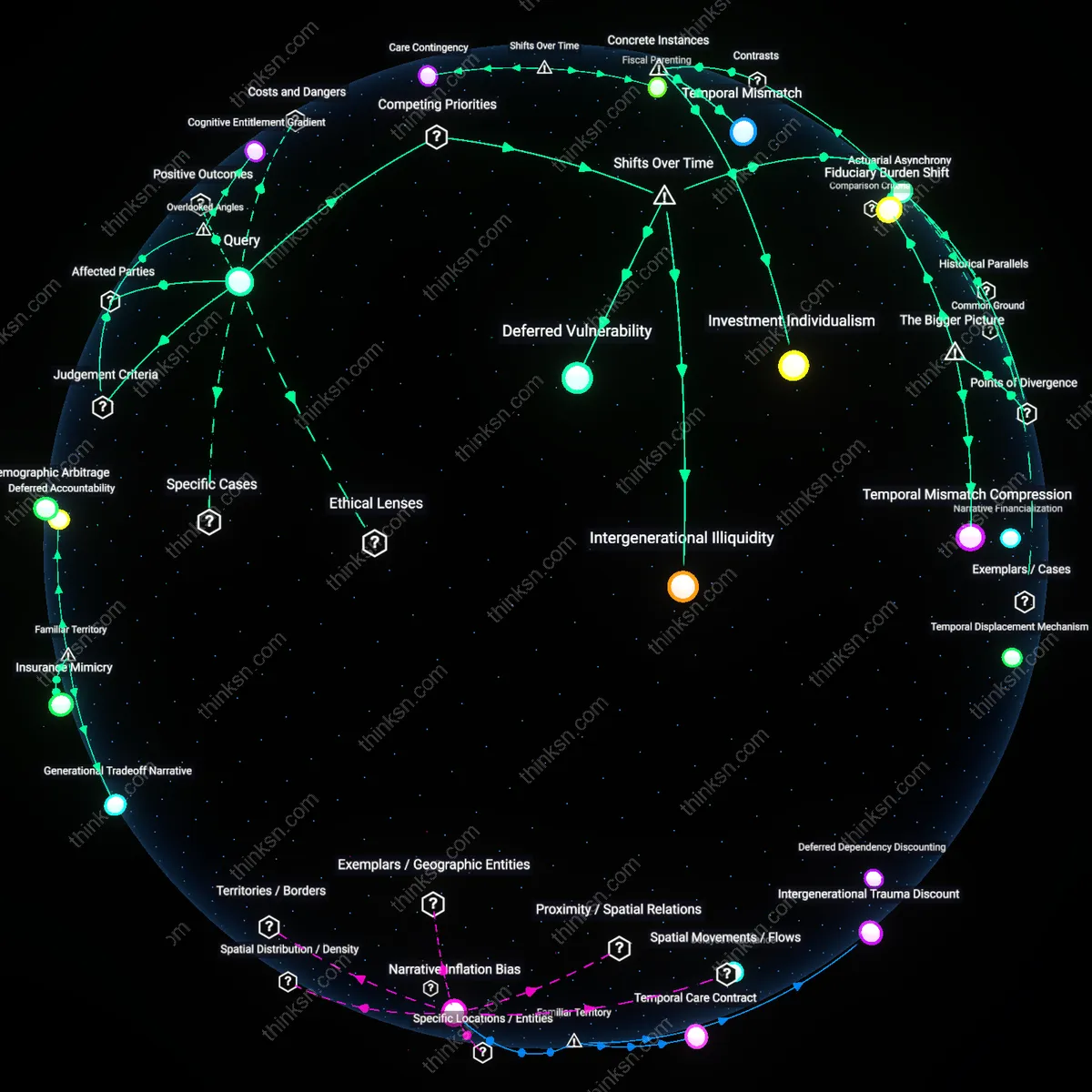
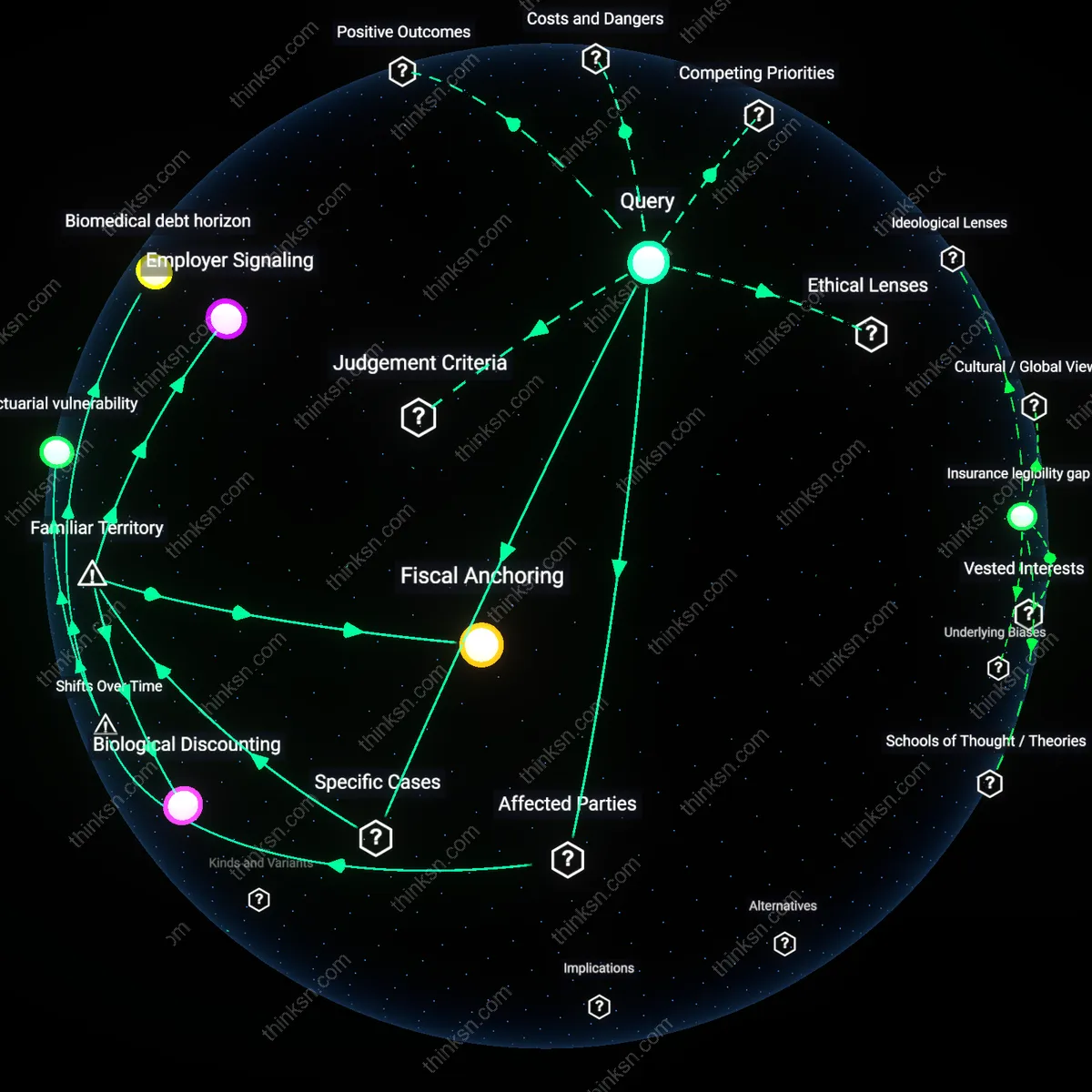
Analysis reveals 6 key thematic connections.
Key Findings
Generational Contract Erosion
Dependence on private long-term-care insurance signals a retreat from intergenerational solidarity, positioning elderly care as a personal financial burden rather than a collective duty. This shift privileges middle-to-upper-income families who can pre-fund care, while distancing younger working-age adults from direct familial obligations, thereby institutionalizing generational disengagement through market mechanisms. The non-obvious outcome is not increased individual autonomy, but the quiet dismantling of the implicit social compact where younger generations supported elders in expectation of future reciprocation—now replaced by actuarial logic indifferent to kinship.
State Abdication Performance
Reliance on private long-term-care insurance reflects not active preference for privatization but a strategic theater of state withdrawal, where governments frame care as beyond public responsibility while preserving fiscal stability. Public institutions, including Medicare and state health budgets, avoid structural reform by allowing private insurance to absorb the visibility of care costs, even as most enrollees remain underinsured or drop policies due to rising premiums. The dissonance lies in interpreting private insurance as 'choice' when it functions primarily as a deflection tactic, masking systemic underinvestment rather than solving it.
Middle-Class Risk Illusion
Private long-term-care insurance dependence reveals a widespread miscalculation among the solvent middle class, who mistake market solutions for stable risk pooling, unaware that insurers systematically reshape eligibility and pricing to avoid high-cost cases. Actuarial models and underwriting practices in states like California and Florida increasingly exclude precisely those with chronic conditions or familial predispositions—groups most likely to need care—thereby transferring the burden back onto families despite the appearance of financial planning. The non-intuitive reality is that privatization doesn’t distribute risk but reconcentrates it within households, exposing the myth of self-reliance in aging.
Fiscalized Risk
Dependence on private long-term-care insurance transfers the financial burden of aging from collective institutions to individuals, exposing them to catastrophic personal costs when care needs exceed coverage. This shift reflects a societal retreat from pooled risk models—like socialized care systems—toward market mechanisms that profit from uncertainty while offloading systemic liabilities onto households; insurers benefit from risk segmentation, but this fragments solidarity and incentivizes underinsurance. The non-obvious consequence is that fiscalization disguises the rising social cost of care as an individual planning failure, obscuring how market solutions amplify inequality under the guise of choice.
Actuarial Injustice
Private long-term-care insurance reinforces a normative framework where access to care is mediated by underwriting practices that exclude the neediest based on health history, age, or income—individuals who are statistically most likely to require long-term support. This transforms care from a social entitlement into a privilege priced and projected through actuarial science, enabling capital markets to extract value while displacing moral responsibility. The broader systemic effect is the quiet legitimization of care deserts, where entire demographics are priced out not by lack of need but by design of risk-based pricing models that mimic, yet remain insulated from, public accountability.
Intergenerational Squeeze
When private insurance dominates long-term care financing, it presumes intergenerational wealth transfers from middle-aged savers to elderly parents, many of whom lack sufficient premiums or asset bases to secure coverage—forcing families into informal care economies that disproportionately burden women and low-income earners. This dynamic is amplified by stagnant wage growth and rising education and housing costs, which limit pre-emptive savings, making insurance purchases unaffordable just as demographic pressure increases. The underappreciated outcome is a slow collapse of familial resilience, where the illusion of private responsibility masks a growing deficit in care capacity that no individual contract can resolve.