Climate Claims in Journals and Blogs: What Cautious Citizens Need to Know?
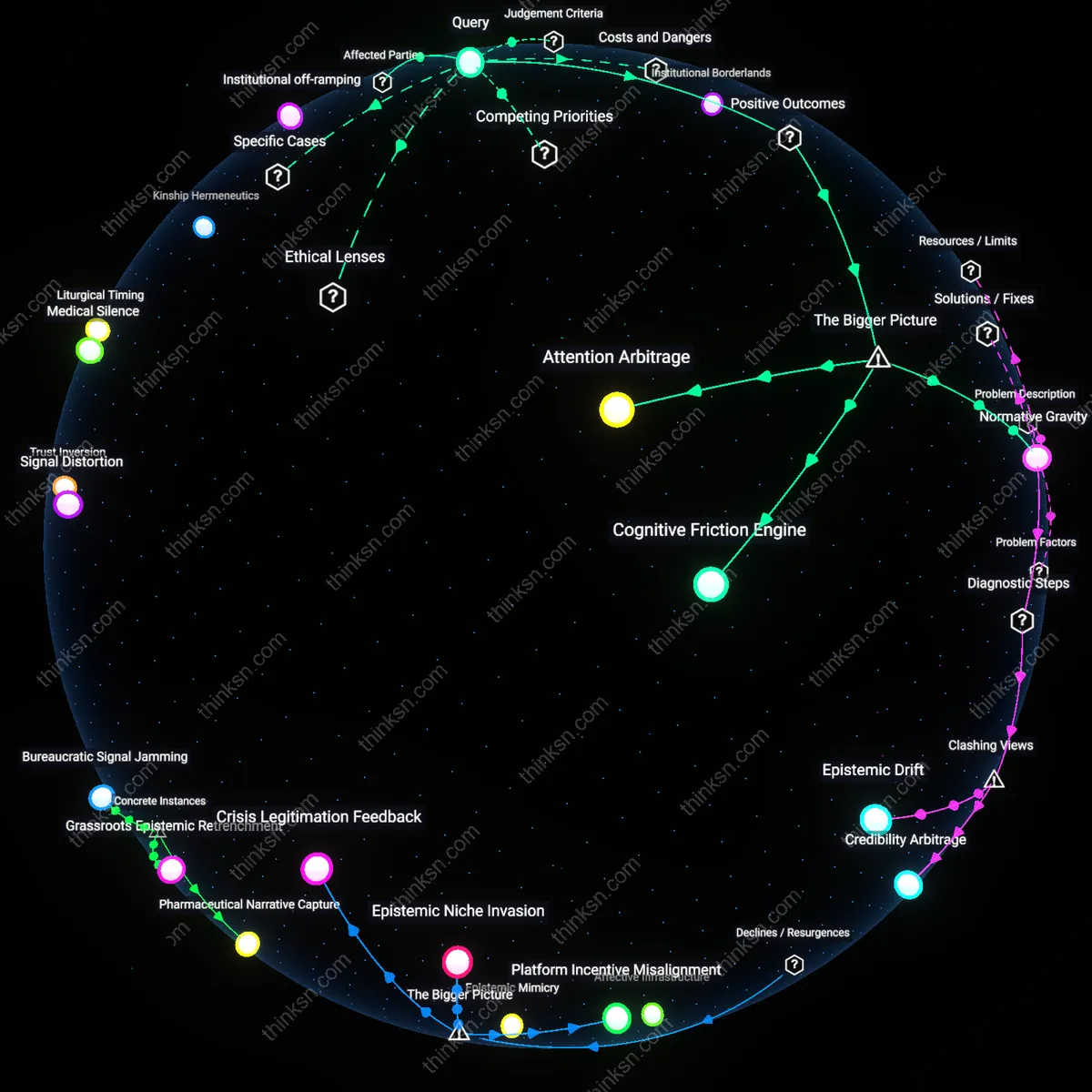
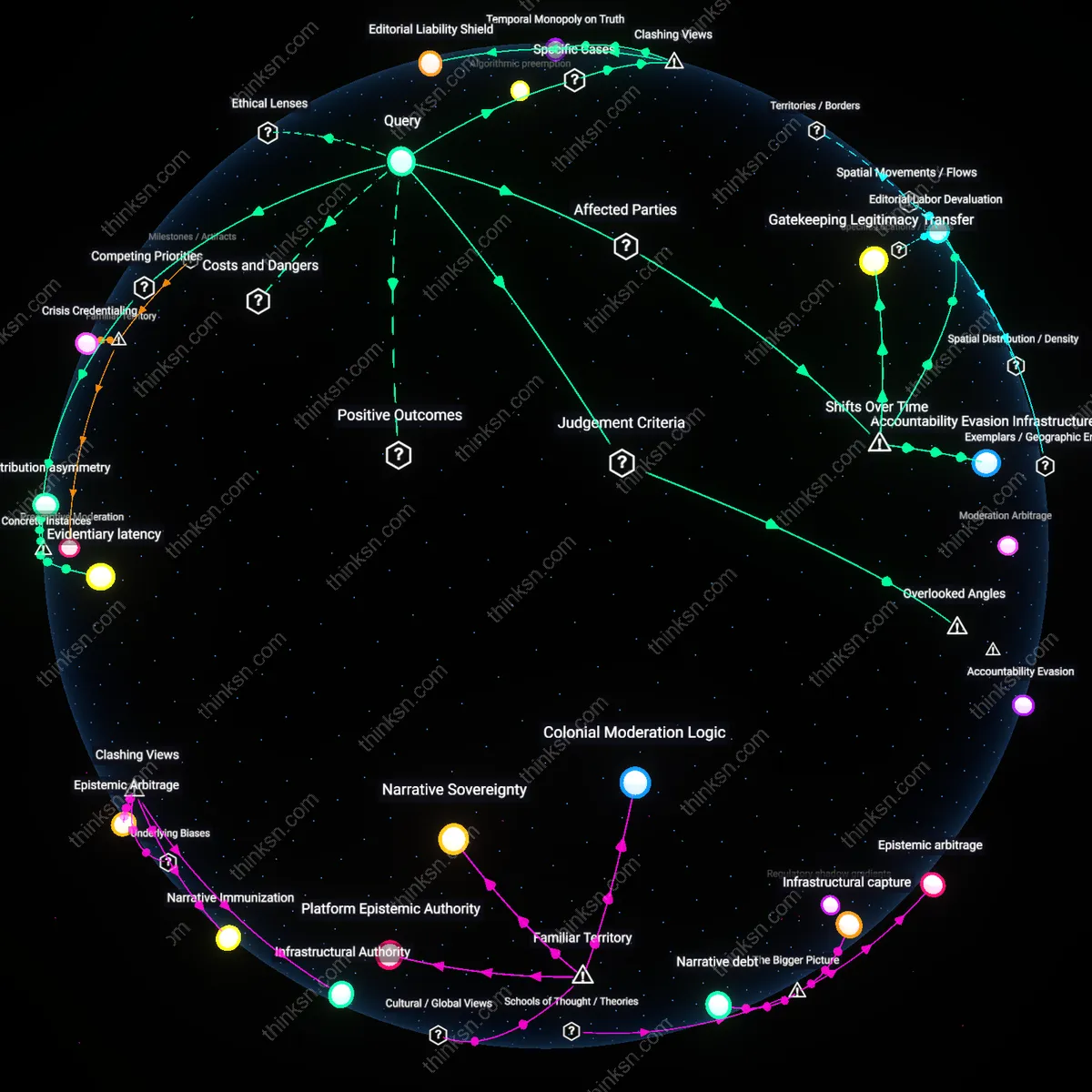
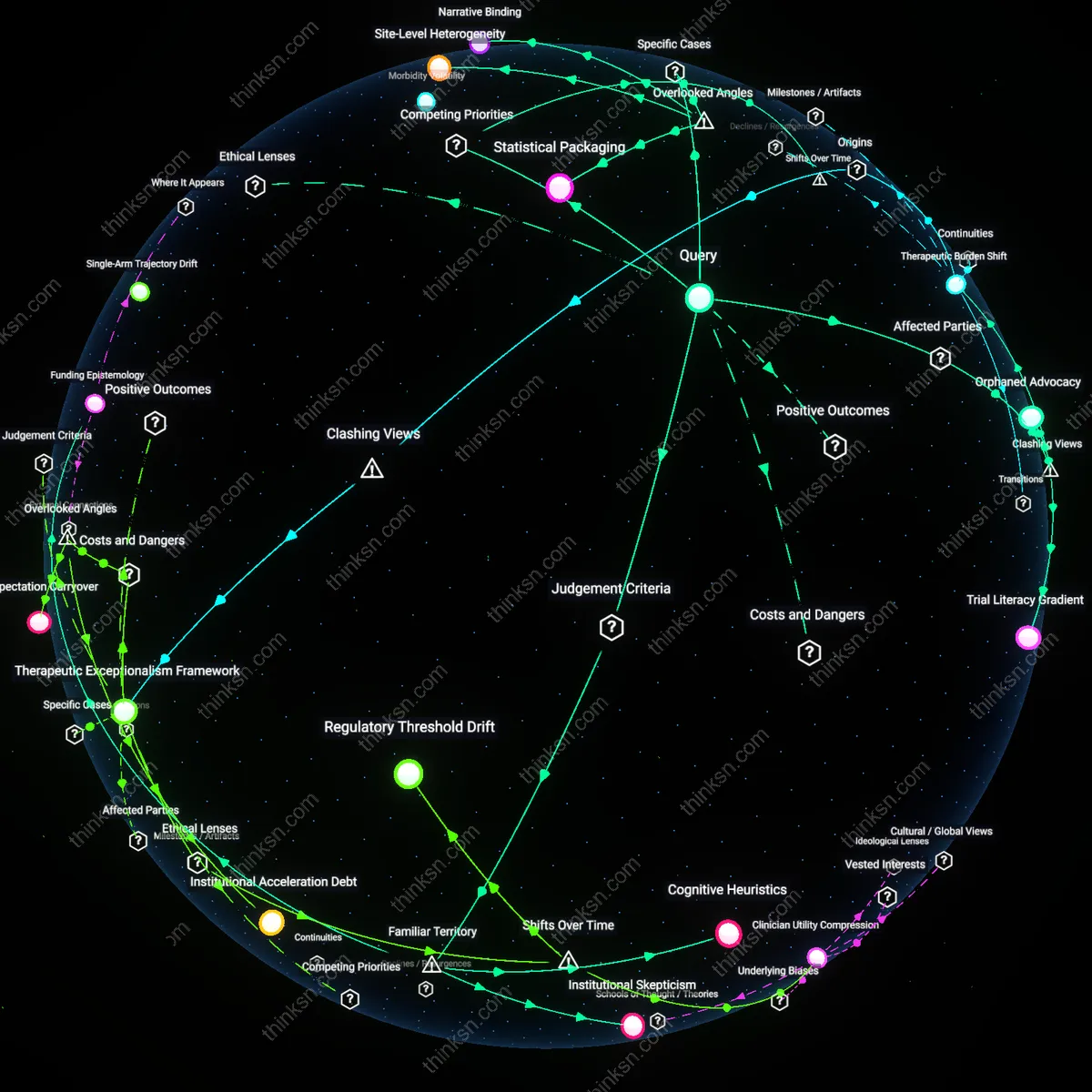
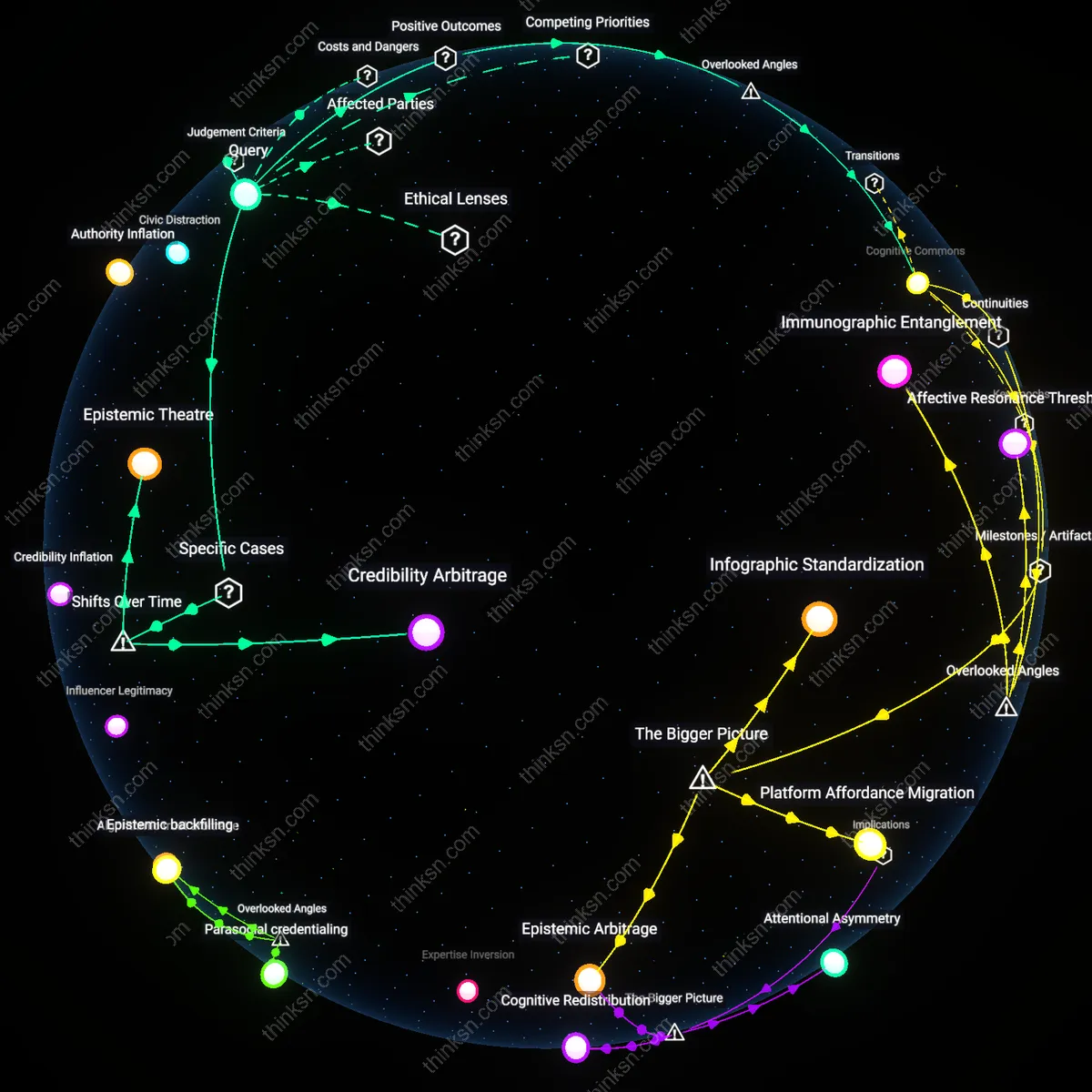
Analysis reveals 9 key thematic connections.
Key Findings
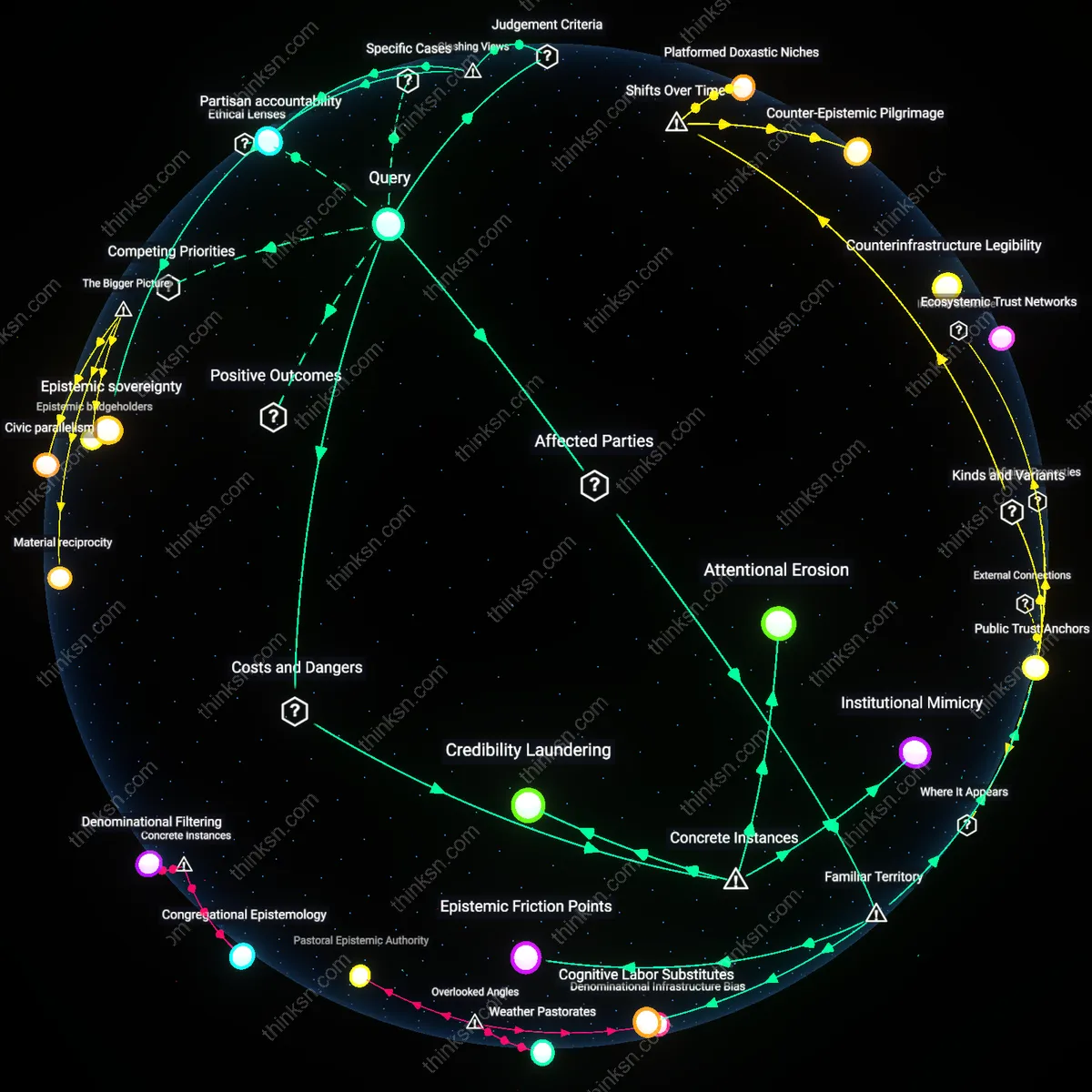
Public Trust Anchors
A cautious citizen must prioritize peer-reviewed journals over partisan blogs because scientific credibility anchors public trust in climate action. Journals enforce methodological transparency through editorial standards, peer review, and institutional accountability—systems backed by universities, funding agencies, and professional norms. Unlike blogs, where ideological alignment often dictates narrative framing, journals expose methods to scrutiny, reducing the risk of misinformation spreading through authoritative mimicry. The underappreciated reality is that most people rely not on direct understanding of climate data, but on trust in institutions they recognize as neutral—even as that trust erodes.
Cognitive Labor Substitutes
A cautious citizen has a responsibility to treat partisan blogs as cognitive labor substitutes that reflect, rather than resolve, the public’s need for accessible climate narratives. These blogs thrive by replacing complex methodology with moral clarity, offering audiences a sense of informed engagement without analytical burden. Their influence grows not because they challenge science directly, but because they fulfill an emotional and identity-based need for certainty in uncertain debates. The non-obvious insight is that people don’t distrust science because they reject expertise—they consume blogs because they feel standard science communication fails to validate their lived experience or values.
Epistemic Friction Points
A cautious citizen must recognize that the conflict between peer-reviewed claims and blog assertions creates epistemic friction points where public understanding stalls or fractures. These points emerge in spaces like school boards, local media, and social networks, where decisions are shaped by who is perceived as transparent, not who follows scientific norms. Scientists assume methodology speaks for itself, but citizens encounter it through filters of language, credibility cues, and social endorsement. The overlooked reality is that transparency doesn’t guarantee uptake—especially when institutional rigor feels distant compared to the immediacy of a compelling blog narrative.
Epistemic sovereignty
A cautious citizen has no responsibility to verify methodological transparency in either venue because epistemic authority is institutionally reserved—peer-reviewed journals delegate technical scrutiny to credentialed gatekeepers, while partisan blogs operate as rhetorical arenas where argumentative coherence, not replicability, governs acceptance; the citizen’s role is one of reception, not adjudication, and the asymmetry between these systems renders individual vigilance irrelevant to the production of scientific legitimacy. This reveals that lay responsibility is structurally displaced by specialized regimes of validation, making personal scrutiny a symbolic act rather than a functional input into knowledge reliability.
Partisan accountability
A cautious citizen bears greater responsibility to interrogate methodological transparency in peer-reviewed journals than in partisan blogs because the perceived neutrality of scientific venues masks embedded normative choices in modeling, data selection, and funding influences—unlike overtly partisan blogs, which signal their bias openly, journals present consensus as apolitical, thereby obscuring how climate mitigation pathways align with economic or geopolitical interests; thus, the citizen must act as a counterweight to institutionalized objectivity, where methodological opacity is dangerous precisely because it is trusted. This invertible duty shows that accountability is most urgent where credibility is assumed, not contested.
Cognitive triage
The cautious citizen’s responsibility is not to assess methodological transparency at all but to navigate epistemic scarcity by outsourcing evaluation to aligned epistemic communities—those who share their values and interpretive frameworks—because comprehensive methodological scrutiny exceeds bounded cognitive capacity, and thus the citizen rationally allocates trust based on group affiliation rather than technical verification; this practical heuristics-based judgment reveals that responsibility is distributed and socially mediated, not individualized, and that transparency serves identity-congruent acceptance more than rational verification in high-conflict domains like climate policy.
Credibility Laundering
A cautious citizen’s failure to distinguish methodological transparency in peer-reviewed climate claims from those in partisan blogs enables credibility laundering, as seen when the Heartland Institute cited selectively extracted phrases from IPCC papers in its 2017 NIPCC report to fabricate scientific legitimacy. The mechanism involves repackaging marginal or misrepresented academic findings within a false equivalence framework, exploiting public deference to the form—if not the substance—of peer review. This dynamic operates through epistemic infrastructure asymmetry, where the perceived authority of scientific discourse is hijacked by non-peer-reviewed actors to destabilize climate consensus without engaging its evidentiary standards, thereby incurring systemic cost in public policy delay.
Attentional Erosion
When a cautious citizen treats methodological transparency equivalently across journals like Nature Climate Change and partisan platforms such as Breitbart’s environmental section, it accelerates attentional erosion, exemplified by the 2019 coverage of the Amazon rainforest fires where peer-reviewed carbon flux studies were drowned out by ideologically framed narratives about land-use sovereignty. The mechanism operates through media ecosystem saturation, where equal cognitive weight assigned to asymmetrically rigorous claims fragments public understanding and overwhelms deliberative capacity. This is analytically significant because it reveals how vigilance misallocated across sources degrades not just accuracy but the temporal bandwidth for effective response, a danger rarely attributed to individual interpretive habits.
Institutional Mimicry
A cautious citizen’s inability to detect methodological obfuscation in climate claims allows institutional mimicry to thrive, as demonstrated by the Global Warming Policy Foundation’s Policy Cost Unit producing pseudo-analytical reports with journal-like formatting while bypassing peer review entirely. The mechanism leverages design isomorphism—mimicking the visual and lexical structure of academic work—to exploit citizen heuristics that associate rigor with form, inserting partisan conclusions into policy debates as if they were empirically vetted. This operates through institutional trust arbitrage, where the cost is not misinformation per se but the slow corrosion of epistemic gatekeeping, a risk obscured by focus on intent rather than structural exploitation.