Refuse Overtime Pay, Risk Reputation? Balancing Acts in Gig Economy
Analysis reveals 10 key thematic connections.
Key Findings
Contractor precarity
Denying overtime pay to contractors amplifies their economic vulnerability, especially as gig work has shifted from supplementary to primary income since the 2010s. Once viewed as side gigs, platforms like Uber, DoorDash, and Upwork now sustain entire households—making withheld pay a direct threat to housing, health, and debt stability for a growing demographic of full-time digital laborers. The non-obvious consequence is that reputational risk no longer stays confined to niche worker forums but spreads through crisis-income networks, where collective coping strategies amplify awareness of non-payment, thereby converting financial risk into broader social liability.
Platform accountability deferral
In the early 2000s, client non-payment risks were absorbed by intermediaries such as staffing agencies or unions, but the rise of decentralized gig platforms after 2015 has systematically transferred that accountability to individual contractors. This shift has normalized payment disputes as personal entrepreneurial risk rather than institutional failure, masking the systemic erosion of wage expectations. The underappreciated outcome is that reputational harm is no longer automatic—bad actors can persist by leveraging platform design that obscures payer identities and fragments labor feedback loops.
Reputation velocity
Since 2020, worker-led social media ecosystems—such as #PayMeTwitter and Reddit’s r/gigworkers—have drastically accelerated the transmission of payment grievances, transforming what was once localized word-of-mouth into real-time, searchable public records. Employers who deny overtime now face near-instant exposure to audience segments that include future contractors, regulators, and even traditional media, collapsing the historical delay between action and reputational consequence. The overlooked dynamic is that financial risk is no longer calculable in isolated transactional terms but must account for exponential exposure trajectories shaped by digital narrative cascades.
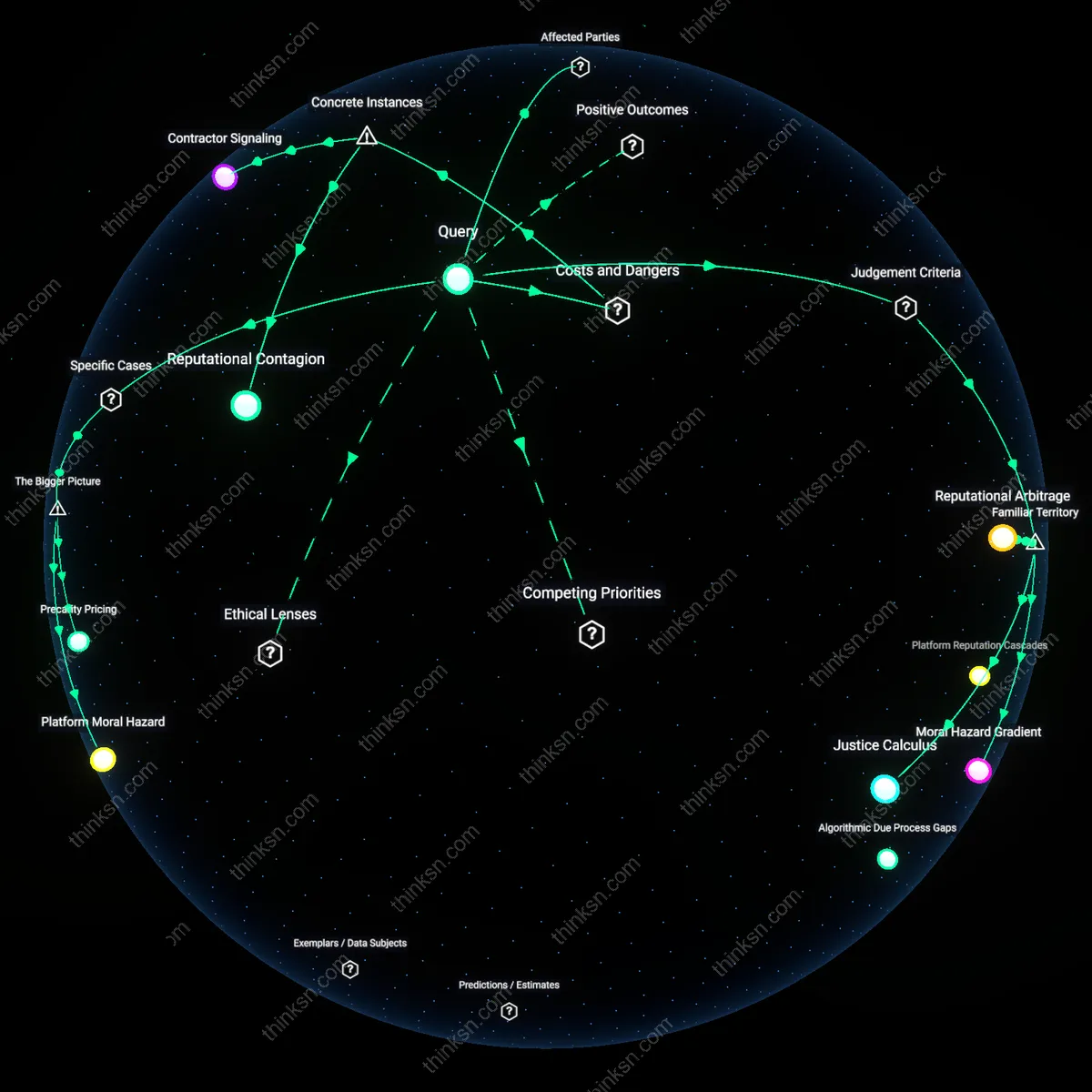
Reputational Arbitrage
One should assess the contractor’s network visibility to calibrate the risk of reputational spillover. In gig platforms like Upwork or Fiverr, a denied payment becomes not just a bilateral dispute but a review, a flagged profile, or a signal within algorithmically moderated trust economies; the harm scales with how transparently the contractor’s performance is scored and how tightly those scores bind future work access. This mechanism is underappreciated because most see reputation as a personal asset rather than a transferable currency that circulates through platform design.
Moral Hazard Gradient
One must compare the likelihood of future disputes to the immediate cost savings, recognizing that withholding pay creates a precedent that alters contractor behavior across relationships. In decentralized gig markets like TaskRabbit or DoorDash, where audits are rare and enforcement is weak, the perception of unfairness propagates not through formal channels but through community norms among workers who share warnings via Reddit or Signal groups. The insidious effect here is not bad PR but the gradual erosion of cooperative norms that gig efficiency presumes.
Justice Calculus
One ought to measure the fairness of payment denial against prevailing norms of desert and effort, because in publicly mediated gig ecosystems—such as freelance writing platforms where peer review is common—moral judgments spread faster than financial data. The denial of overtime pay triggers a narrative of exploitation that activates identity-based criticism (e.g., “another greedy client”), which spreads through moral entrepreneurs like labor advocates on Twitter. The overlooked truth is that in contexts where legitimacy is crowd-sourced, financial calculations are embedded within ethical scripts that override pure cost-benefit logic.
Reputational Contagion
In 2020, Instacart shoppers organized a wave of negative social media campaigns after the company failed to introduce guaranteed pay for order deliveries, exposing how contractor grievances in the gig economy can rapidly amplify through networked communities to damage brand equity. The mechanism was not formal legal liability but decentralized digital word-of-mouth among low-status workers who shared personal stories of financial shortfall, which gained traction among consumer advocacy groups and amplifying outlets like TikTok and Reddit. This reveals that reputational risk in gig platforms operates less through traditional customer service metrics and more through embeddedness in online subcultures that track ethical labor practices — a dynamic often ignored in CFO-level risk modeling focused on compliance rather than cultural capital.
Contractor Signaling
In 2019, Amazon Flex drivers in Los Angeles began coordinating via end-to-end encrypted messaging apps to share real-time updates on delivery-hour pay rates and regional payout shortfalls, eventually enabling collective refusal to accept low-value routes and pressuring Amazon to adjust compensation algorithms. This informal signaling network turned individual financial decisions into a distributed signal of contractor consensus, revealing that even ostensibly isolated independent workers can develop low-tech, high-efficiency coordination structures that function as market-moving pressure mechanisms. The underappreciated danger is that non-financial reputational signals among gig workers act as early warning systems that can preemptively alter platform economics without external regulation.
Platform Moral Hazard
On Uber and similar ride-hailing platforms, the company avoids classifying drivers as employees to reduce overtime liabilities, but the resulting erosion of pay transparency shifts reputational risk onto individual riders—who are pressured to 'make up the difference' through in-app tips. This creates a hidden cost-shifting mechanism where the platform’s financial gain is sustained by moral appeals to end users, not contractor relations alone. The non-obvious insight is that reputation harm isn’t borne by the payer (Uber), but is distributed across ridership through nudges, allowing the principal (Uber) to insulate itself via design. Systemic enablers include algorithmic tip prompts and ambiguous pay rationales presented to riders.
Precarity Pricing
In Nairobi’s informal tech freelancing hubs, where foreign clients hire remotely through Toptal-style networks, local contractors absorb payment delays as routine due to weak legal recourse, effectively subsidizing client risk through wage precarity. Here, financial risk to the client is near-zero because jurisdictional fragmentation prevents enforcement, while reputational harm is geographically diluted—Western clients rarely witness backlash in their home markets. This exposes how global arbitrage in gig labor depends not on skill differentials but on asymmetric exposure to consequence, where location determines whether a 'bad payer' label sticks. The systemic condition is jurisdictional mismatch between payer accountability and contractor vulnerability.