Should Alzheimers Patients Pay High Costs for Uncertain Benefits?
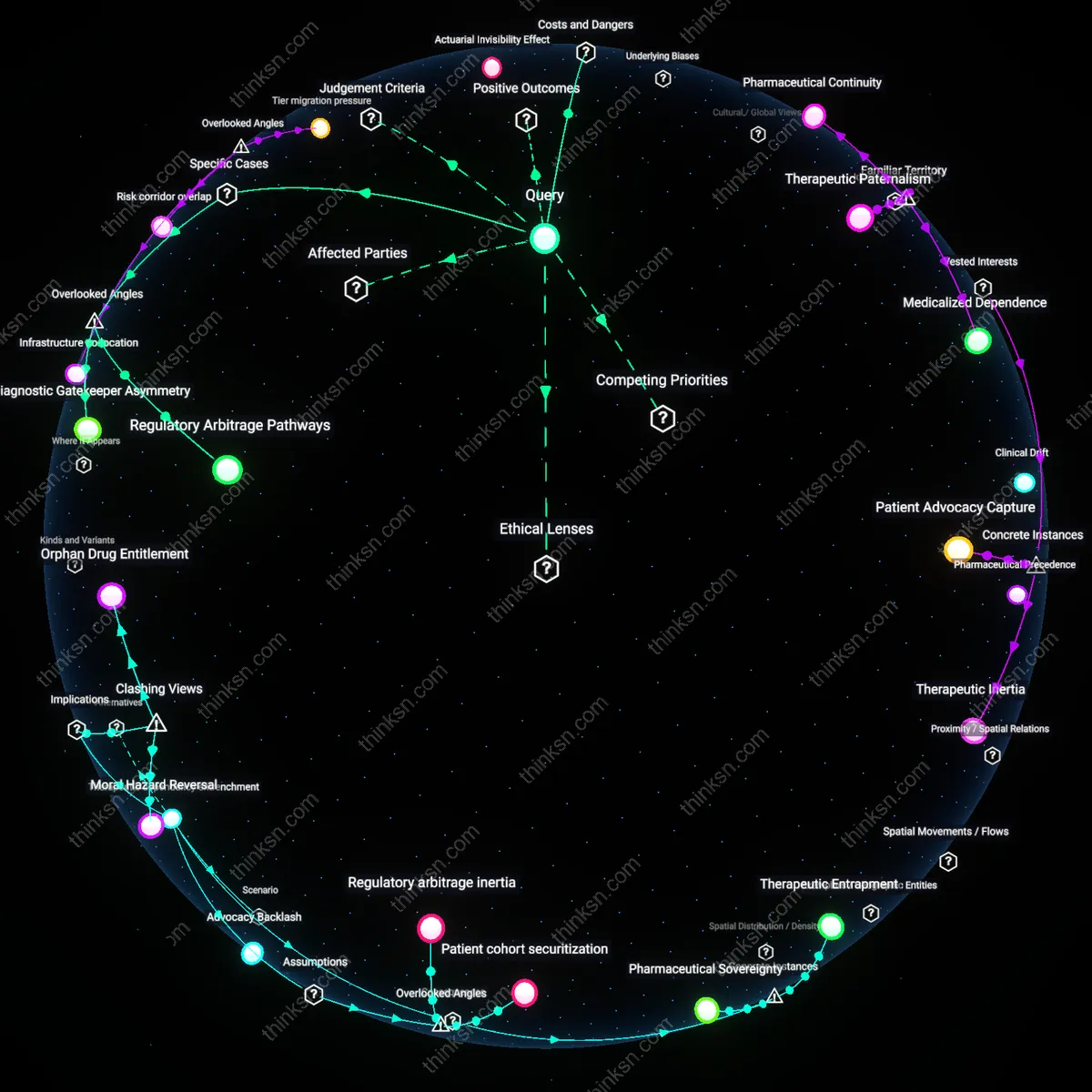
Analysis reveals 6 key thematic connections.
Key Findings
Intergenerational Care Redistribution
Patients should prioritize the drug’s potential to shift caregiving labor from younger family members to professional systems, thereby preserving household economic productivity—because early use can delay entry into high-dependency care stages, reducing the need for informal care by working-age relatives, a dynamic rarely priced into cost-benefit analyses but critical in demographically aging societies where caregiver scarcity is becoming structural rather than personal.
Clinical Trial Infrastructure Spillover
Patients should weigh the drug’s cost against its role in sustaining specialized neurology networks that emerge during clinical trials, because regions that participated in pivotal trials for the drug now host rare disease assessment centers and trained biomarker interpretation teams—resources that outlast the drug itself and elevate population-level diagnostic accuracy for all neurodegenerative conditions, an infrastructure dividend invisible in individual treatment calculus.
Regulatory Signaling Momentum
Patients should consider their adoption as part of a collective signaling mechanism to regulatory and payer institutions that cognitive stabilization at any stage has value, because early uptake—even modest—alters the risk calculation for future investment in Alzheimer’s pipelines by proving willingness-to-pay for incremental gains, thereby accelerating the development of next-generation therapies that require demonstrated market responsiveness to survive funding transitions.
Therapeutic Inflation
Patients now weigh marginal cognitive gains against steep costs because drug approval standards shifted after 2017, when the FDA began accepting surrogate biomarkers like amyloid reduction instead of clinical outcomes—enabling Biogen’s Aduhelm to enter the market despite failed efficacy trials; this regulatory pivot, driven by Alzheimer’s advocacy groups and accelerated pathways, redefined ‘benefit’ to include biological plausibility over functional improvement, making cost-effectiveness analysis both technically possible and normatively destabilized in Medicare reimbursement debates.
Caregiver Burden Drought
Families increasingly treat modest cognitive effects as meaningful because the erosion of state-funded long-term care since the 1980s has shifted care responsibilities onto households, especially women in middle-income brackets; as Medicaid waivers reduced access to residential support, a drug like Lecanemab—despite its high cost and IV requirements—appears to delay institutionalization, making time itself a proxy for value that recalibrates benefit not through cognition but through postponed crisis, a shift most acute in suburban caregiver networks after 2020, when pandemic-era isolation intensified perceived dependency risks.
Clinical Trial Horizon
Patients defer to physician-researchers affiliated with academic medical centers because the modern Alzheimer’s drug development pipeline, post-2000, collapsed prevention and treatment trials into a single high-stakes trajectory, where early diagnosis via PET scans or CSF biomarkers now determines eligibility for drugs framed as disease-modifying; this therapeutic gatekeeping, centered in NIH-funded consortia like the Alzheimer’s Disease Neuroimaging Initiative, produces a temporal illusion—patients believe they are acting early, but in fact accept compressed benefit windows, exchanging uncertain longevity for narrow, monitored access, a dynamic codified in label expansions after 2023.