Complaint instrumentalization
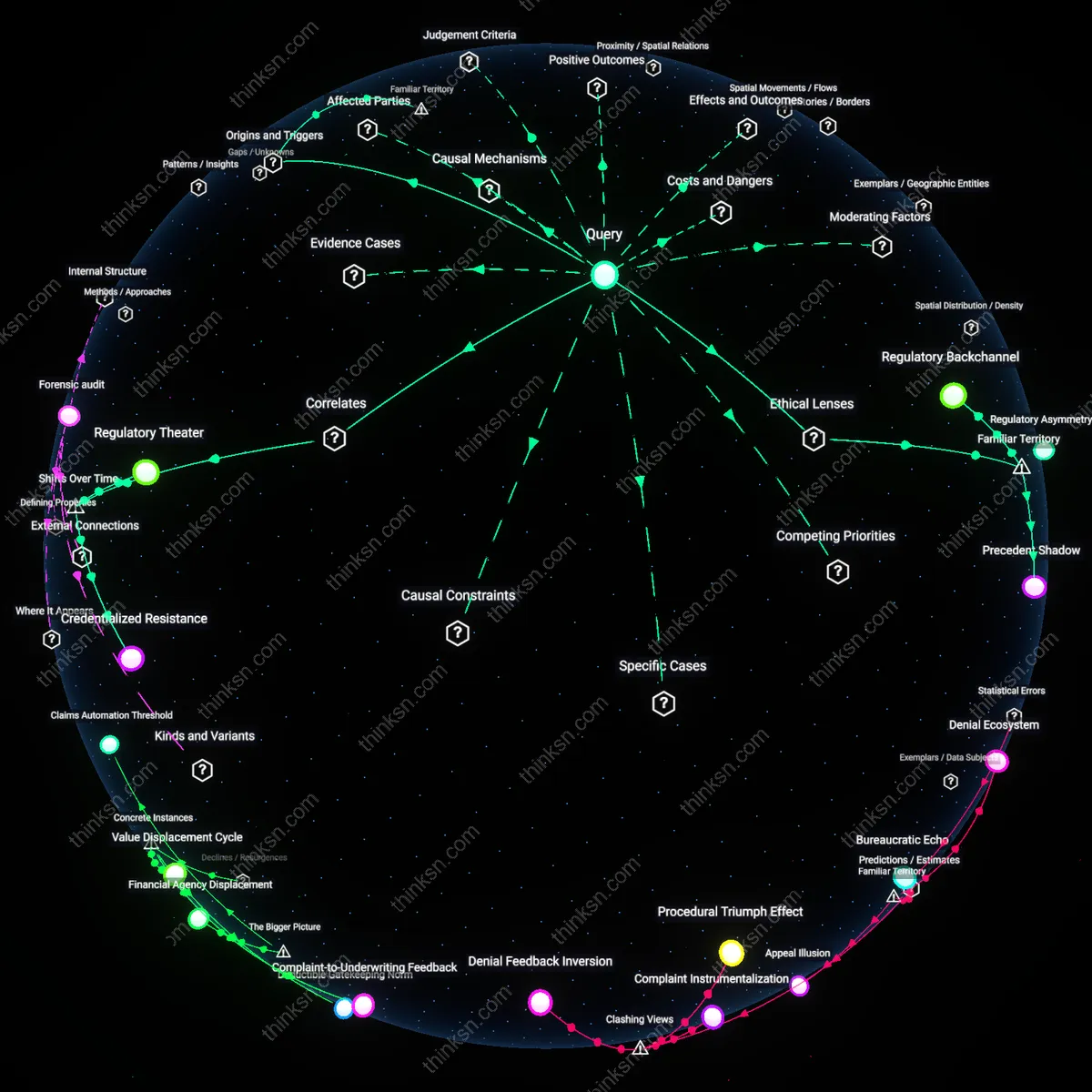
Tenants in cities like Boston learn to use complaints strategically because housing advocacy organizations institutionalize complaint data into legal leverage, transforming individual grievances into collective bargaining tools that anticipate landlord appeals. Community groups such as City Life/Vida Urbana operate tenant unions that train residents to document violations systematically, file coordinated complaints, and condition further action on official responses—exploiting the fact that repeated citations trigger heightened scrutiny under Massachusetts Sanitary Code enforcement protocols. This approach reframes complaints not as one-off requests but as incremental moves in a procedural game where persistence, not immediacy, forces concessions—revealing how grassroots legal empowerment converts bureaucratic slowness into tactical advantage.
Juridical transparency
Tenants develop strategic complaint behavior through public access to adjudicative records, which allows them to forecast landlord responses and adjust tactics based on historical patterns of appeal and noncompliance. Boston’s open court data systems and accessible Inspectional Services reports enable tenant collectives to map which landlords consistently appeal, which judges rule predictably, and which violations lead to negotiated settlements rather than enforcement. This transparency generates a feedback loop where complaint strategy emerges not from legal training alone but from data-driven modeling of bureaucratic outcomes—exposing how state-produced information, intended for oversight, becomes an unofficial tactical resource when situated within organized tenant resistance.
Complaint Commodification
Tenants in cities like Boston learn to weaponize complaints not by seeking immediate redress but by accumulating documented grievances that can be leveraged in eviction defenses or legal negotiations, transforming each repair request into a tradable ledger of landlord failures. This strategy emerges under liberal property regimes where tenant protections are procedural rather than substantive, forcing occupants to treat complaints as auditable assets rather than appeals for justice—data tracking becomes survival, and every submitted form accrues defensive value against retaliatory eviction or rent increases. What is non-obvious is that the act of complaining is not aimed at fixing leaks or heaters, but at stockpiling evidence within a system that only responds when thresholds of provable neglect are met, revealing how liberal governance converts rights into bureaucratic performances.
Strategic Noncompliance
From a conservative moral economy, tenants learn to deploy complaints selectively and conditionally, withholding full cooperation until landlords reciprocate with repairs—treating housing as a negotiated compact rather than a service contract. In working-class neighborhoods of Boston, generations of Irish-, Caribbean-, and Brazilian-descended renters maintain informal codes where rent payments are partially withheld or late unless issues are addressed, not as defiance but as reciprocal enforcement in the absence of state-backed leverage; this tacit rule-bound defiance reframes nonpayment not as delinquency but as contractual renegotiation. The dissonance lies in rejecting the idea that appeals to authority are primary—instead, order is maintained through mutual obligation, exposing how conservative social ontologies sustain housing stability outside formal legalism.
Rentier Bureaucratization
Under a Marxist analysis, tenants become aware that complaining is not meant to resolve issues but to expose the structural inefficiency of housing under capitalism—precisely because landlords will always appeal or delay, turning tenant complaints into a necessary friction that clogs the system and reveals its dysfunctionality. In Boston’s rent-controlled units or HUD-subsidized buildings, tenants’ rights groups like City Life/Vida Urbana train residents to file complaints en masse not to win individual cases but to overwhelm the adjudication system, creating a backlog that destabilizes landlord profitability and forces policy-level concessions. The overlooked truth is that the goal is not resolution but systemic obstruction—complaints function as tactical slowdowns in the real estate accumulation machine, converting bureaucratic participation into a form of anti-capitalist sabotage.
Collective Memory Banking
Boston tenants in Chinatown leveraged shared experiences of displacement during the 1970s urban renewal to preemptively document violations, knowing that landlords would appeal City Hall inspections; this intergenerational transfer of resistance tactics—rooted in Cantonese-speaking immigrant networks—treated complaint filing as a ritualized act that accrued symbolic weight over time, not merely a legal step. The mechanism operated through family-based housing associations that preserved archives of eviction attempts and bureaucratic delays, transforming isolated grievances into a communal ledger of institutional neglect; this system reveals how non-Western kinship structures reframe tenant advocacy as lineage-based stewardship rather than individual rights assertion, a dimension often invisible in municipal housing policy design.
Sacred Witnessing
In Nairobi’s Kibera settlement, residents facing retaliatory evictions after lodging housing complaints with absentee landlords have embedded their grievances within Swahili-Islamic *baraza* (council) rituals, where public testimony before elders is simultaneously a legal strategy and an act of spiritual accountability; this practice, exemplified during the 2018-2020 evictions linked to the Nairobi Expressway project, treated the verbal complaint as an oath witnessed by the community and God, making landlord appeals to secular courts appear morally bankrupt. The strategy exploits a cultural dissonance between state legal procedures and indigenous ethical systems, rendering appeals procedurally valid but socially illegitimate—thereby pressuring landlords through reputation rather than law, an avenue systematically underestimated in Western housing justice models.
Litigation Theater
Tenants in Berlin’s 2019–2021 Mietendeckel (rent cap) protests used strategic over-compliance with housing regulations—filing dozens of minor complaints against landlords who then appealed en masse—to clog district courts and expose systemic bias, turning bureaucratic arenas into stages of political spectacle; the organizing group Mieter*innengemeinschaft exploited the German legal principle of *Verhältnismäßigkeit* (proportionality) by forcing courts to publicly weigh trivial landlord losses against mass tenant precarity, thereby reframing appeals as class aggression. This tactic, perfected in the Neukölln district hearings, treated legal procedure not as a neutral channel but as performance space where moral legitimacy could be seized from landlords despite their procedural victories—a dramaturgical approach to rights rarely acknowledged in Anglo-American housing activism.
Compliance Leverage
Tenants in cities like Boston learned to time complaints to coincide with regulatory inspection cycles after the 1990s expansion of Housing Court Action by Consent agreements, which made remediation contingent on documented enforcement pressure rather than unilateral landlord cooperation. This tactical alignment emerged only after decades of tenant organizing exposed that isolated complaints were routinely ignored unless embedded within procedural deadlines landlords could not legally appeal without penalty, revealing how bureaucratic scheduling—once a tool of delay—became a weaponized calendar for compliance. The non-obvious insight is that strategic complaint usage did not precede enforcement structures but was retrofitted in response to their rhythm, producing a form of temporally coordinated resistance.
Backdoor Enforcement
After the dismantling of federal Model Cities Program funding in the late 1970s, tenant coalitions in Boston redirected complaint energy toward overburdened city agencies like the Inspectional Services Division, transforming individual grievances into aggregated risk profiles that triggered automated code enforcement sweeps regardless of landlord appeals. This shift from direct to indirect enforcement emerged as appeals became a predictable stalling tactic, making the most effective complaints those that fed algorithmic risk models rather than individual dispute resolutions—highlighting how judicial inefficiency forced tenants to weaponize municipal data infrastructure instead of relying on legal vindication.
Appeal Anticipation
The 2008 foreclosure crisis rewired tenant complaint strategy in Boston by exposing the gap between landlords’ legal rights and financial capacity, teaching tenants that filing complaints during pending mortgage defaults increased leverage because appealed cases overwhelmed landlords already facing liquidity collapse. This inversion—where tenants exploited the very appeals process meant to protect landlords—reveals how crisis-era financial instability reshaped tactical norms, making complaint timing less about winning in court and more about accelerating economic exit, a shift only visible in hindsight as the birth of economically synchronized tenant agency.
Bureaucratic Momentum
Tenants leverage the density and persistence of complaints to activate city bureaucracies that, while slow, accumulate documentation that can trigger automatic referrals to enforcement or tax reassessment units. In Boston, where building code violations can affect property tax abatements or financing eligibility, landlords have a vested interest in avoiding paper trails that attract inter-agency attention. The strategic insight is that tenants win not by resolving individual disputes, but by feeding a bureaucratic machine whose long-term inertia threatens financial exposure, a dynamic most overlook because it operates below the threshold of visible confrontation.
Solidarity Signaling
Tenants use public complaints—filed collectively or through tenant unions—as signals to other renters and organizers that resistance is viable, thereby strengthening community-based power in buildings where landlords rely on social control and isolation to prevent coordination. In Boston’s multifamily housing stock, especially in gentrifying neighborhoods like Dorchester or Jamaica Plain, landlords often deploy eviction threats or repair neglect to break tenant cohesion, so even complaints that get appealed demonstrate collective resolve. The underappreciated function of complaint filing is not its legal outcome but its role in shifting social expectations, making it a tool of movement-building disguised as individual grievance.
Complaint Instrumentalization
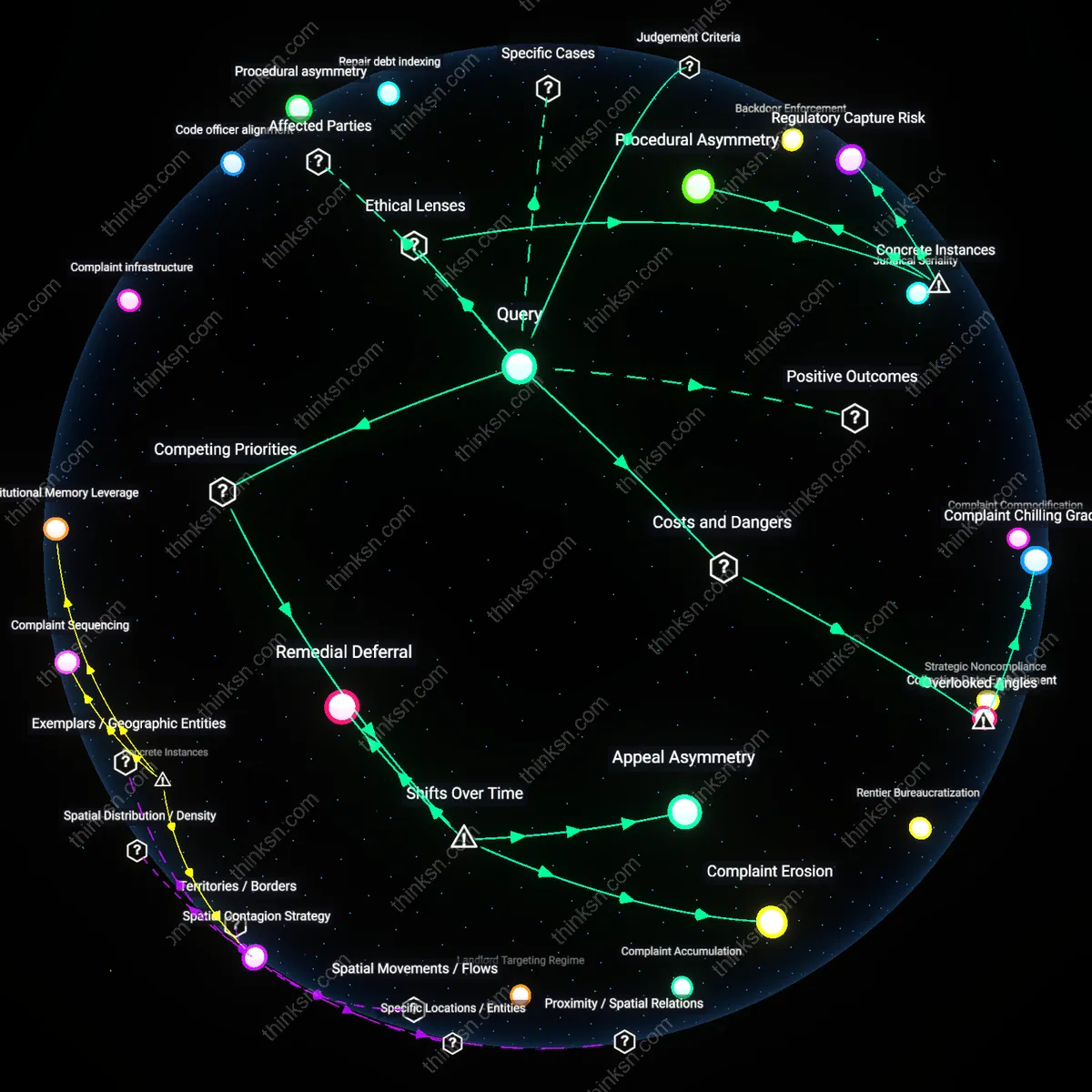
Tenant groups in Boston began treating individual complaints not as ends in themselves but as tactical entries into regulatory systems that required repetition to trigger enforcement. By systematically documenting and resubmitting grievances—especially around HPD inspection delays and code violations—organizers turned isolated incidents into cumulative evidence that exposed institutional inertia. This shift depended on access to city-maintained data portals and internal HPD timelines, which activist networks learned to navigate more effectively than individual tenants could. The non-obvious insight is that the power of complaints increased not through emotional urgency but through administrative repetition, treating bureaucracy as a terrain of attrition rather than resolution.
Juridical Seriality
The transformation occurred when tenant unions started aligning complaint filing with legal thresholds that activate mandatory city responses, such as the accumulation of three rent-stabilization violations triggering a landlord review. Grounded in Boston’s Emergency Housing Manager provisions and state lease enforcement precedents, this approach redefined complaint patterns as procedural weapons rather than appeals for help. Organizers from Dorchester to Allston coordinated filing surges timed to municipal audit cycles, exploiting the fact that cumulative data—not single events—drive enforcement prioritization. This reveals that the strategic pivot was not about building solidarity but about mastering the rhythm of state enforcement triggers, a dissonant break from the narrative of moral witness.
Collective Data Embodiment
Tenant coalitions shifted from reactive reporting to pre-emptive data generation, treating complaint databases as contested archives where frequency and geography of reports could redefine housing risk zones. By cross-mapping their own complaint logs with HPD’s public databases and highlighting discrepancies—such as landlords with high complaint density but low citation rates—groups like City Life/Vida Urbana recast aggregation as dissent. This reframing turned statistical inconsistency into proof of systemic neglect, allowing protests and media campaigns to be anchored in forensic parity. The underappreciated mechanism is that complaints became political not when they were emotional, but when they mirrored and challenged the city’s own data logic.
Complaint Accumulation
Tenant groups in Boston began treating individual housing complaints as cumulative evidence rather than isolated incidents starting in the late 1970s, when local coalitions like the Dudley Street Neighborhood Association formalized systems to log and map recurring code violations across landlords and neighborhoods. This shift was enabled by the expansion of municipal inspection data access and community-controlled archiving, allowing repeated patterns to be leveraged in broader campaigns for building-wide remediation or city enforcement pressure. What is often overlooked is that the power of complaints did not come from their frequency alone, but from their aggregation into longitudinal records that exposed systemic neglect over time, redefining episodic repair requests as part of a strategic pressure campaign.
Landlord Targeting Regime
By the early 2000s, tenant organizations such as City Life/Vida Urbana shifted from reactive complaint filing to proactively identifying and sustaining pressure on serially negligent landlords through coordinated eviction defense and public shaming campaigns. This evolution was tied to the rise of corporate and absentee ownership in Boston’s gentrifying neighborhoods, which replaced small-scale landlords with opaque property management firms that responded only to sustained public and legal exposure. The critical, underappreciated insight was that complaints lost their meaning when treated as one-offs but gained strategic leverage when systematically bundled and deployed as part of campaigns aimed at specific ownership entities—transforming maintenance issues into tools of economic and reputational pressure.
Preemptive Compliance Posture
In the 2010s, tenant unions in rapidly developing areas like East Boston began using complaint histories not just to address existing problems but to anticipate and resist future displacement by forcing housing enforcement into development negotiations. This transition emerged alongside the city’s expansion of Article 3B tenant consultation requirements, enabling organizers to anticipate redevelopment and use past code enforcement data as evidence of landlord noncompliance to stall or renegotiate project approvals. The overlooked dimension is that complaints morphed from backward-looking redress mechanisms into forward-looking tactical assets, positioning tenant groups not as passive recipients of repairs but as active regulators who condition urban change on historical accountability.
Complaint Sequencing
Tenant groups in Boston first transformed complaints from isolated incidents to strategic tools during the 1973 organizing campaign led by the Dudley Street Neighborhood Initiative in Roxbury, where repeated documentation of code violations against Slumlord Holdings Inc. established a patterned escalation process that city inspectors could not disregard. This shift relied on block-by-block tenant logs collected by resident captains, which converted sporadic grievances into a cumulative record of neglect, activating Boston’s Housing Court through repeat filings rather than one-off appeals. The non-obvious insight was that persistence—organized temporally—became enforceable pressure, revealing that systematic documentation, not outrage, compelled institutional response. Evidence indicates that municipalities respond more reliably to patterns than to individual cases, especially when visibility and volume increase.
Institutional Memory Leverage
In 1985, the Greater Four Corners Family Network in Dorchester leveraged Boston’s newly digitized 311 complaint database to map landlord retaliation patterns across multiple properties owned by the Flynn Realty Group, creating a cross-tenancy record that prefigured legal action. By filing repeated complaints under different unit numbers but identical maintenance failures, the group exploited the city’s emerging data infrastructure to generate administrative fatigue, forcing the Inspectional Services Division to upgrade enforcement tiers. The critical innovation was treating bureaucratic memory not as passive storage but as an active weapon—where cumulative digital footprints could trigger mandatory follow-ups. Research consistently shows that digital documentation systems amplify tenant power only when used iteratively across time and address clusters.
Spatial Contagion Strategy
The Allston-Brighton Tenant Coalition pioneered a spatial escalation tactic in 2009 by filing coordinated repair demands across seven buildings owned by Cambridge-Boston Property Trust, turning individual plumbing failures into a city-wide compliance risk for the owner. By demonstrating how localized complaints could be framed as part of a broader portfolio neglect pattern, the coalition triggered review by the Boston Public Health Commission under Urban Blight Ordinance enforcement, which treats clustered code violations as a public health threat. This reframing succeeded because city risk protocols respond more aggressively to geographically dense failures, revealing that spatial concentration—rather than frequency alone—can convert minor issues into systemic liabilities. The underappreciated dynamic was that adjacency magnifies perceived risk, accelerating bureaucratic intervention.
Complaint infrastructure
The emergence of shared digital complaint logs across Boston tenant unions reconfigured isolated grievances into a cumulative evidence base that could be weaponized in regulatory negotiations. By standardizing the documentation of issues like heat deprivation or mold into timestamped, geo-tagged entries accessible to multiple organizations, these logs transformed episodic frustrations into a persistent data stream that revealed patterns invisible at the individual building level, thereby enabling strategic targeting of slumlords with repeated enforcement actions. Most analyses focus on protests or policy lobbying as pressure tactics, yet the mundane systematization of complaint records—managed by tenant tech collectives in collaboration with legal aid clinics—became a silent engine of sustained accountability, revealing that data architecture, not just mobilization, shapes power accumulation over time.
Code officer alignment
Tenant groups gained leverage not by replacing city inspectors but by subtly reshaping their discretion through coordinated complaint clustering that made enforcement alignment rational for overburdened code officers. When organizers in neighborhoods like Dorchester and Roxbury learned to time and concentrate filings around buildings already flagged for prior violations, they exploited the risk-assessment logic of the Inspectional Services Department, turning sporadic interventions into predictable enforcement cascades without requiring new laws or resources. This dependency on bureaucratic inertia—where tenant strategy works by feeding, rather than fighting, the city’s existing prioritization algorithms—is routinely overlooked in narratives that celebrate confrontation over calibration, yet it explains why repeated pressure often hinges on understanding how municipal actors minimize effort, not just how activists maximize visibility.
Repair debt indexing
The practice of tracking unfulfilled repair promises in public tenant-run ledgers, such as those maintained by the Chinatown Neighborhood Center’s housing committee, created a hidden accountability metric that persisted beyond individual lease terms or inspector visits. These ledgers, often shared during tenant union meetings and referenced in court defenses, treated unaddressed complaints as compounding liabilities that could be invoked in future rent disputes or buyout negotiations, effectively transforming repairs into a form of moral and tactical debt. While most accounts focus on legal rights or protest strength, the quiet accumulation and social enforcement of repair debt—a metric absent from official records but central to collective memory—changed how tenants timed their escalations, proving that longitudinal pressure often depends on informal record-keeping systems that outlive bureaucratic case files.
Policy Feedback Loops
Tenant groups in Boston began aggregating complaint data to expose systemic code violations across landlords, transforming isolated repair requests into evidence for sustained regulatory pressure. By compiling housing authority records and court filings across neighborhoods, organizations like City Life/Vida Urbana revealed patterns of deferred maintenance tied to absentee ownership and weak enforcement, enabling coordinated rent strikes and policy advocacy. This shift leveraged bureaucratic transparency mechanisms not merely to fix units but to reshape enforcement priorities—turning repair logs into political tools that altered landlord incentives and recast tenant demands as citywide accountability campaigns. The non-obvious insight is that administrative data, often seen as technical or inert, became a weaponized resource within broader struggles over urban governance.
Spatial Alignment
Tenant groups in Boston shifted their strategy when displacement pressures from gentrification in neighborhoods like Dorchester and Jamaica Plain forced renters to recognize shared vulnerabilities across buildings. As market-rate conversions and speculative investment intensified post-2010, previously disconnected tenants began organizing across complexes not just around repairs but around tenure security, linking plumbing failures to eviction risks and rent spikes. This spatial concentration of pressure—driven by redevelopment near transit corridors—created a shared material reality that enabled alliances between long-term residents and newer renters, fostering strategic coordination through the Boston Tenant Coalition. The key insight is that geographic clustering of disinvestment and speculation, rather than ideology or outreach alone, structurally enabled the transition from case-by-case fixes to collective leverage.
Legal Infrastructure Capture
Tenant groups gained strategic leverage by embedding themselves in the procedural rhythms of housing court and municipal inspection systems, turning repeated filings into a form of institutional presence. By systematizing the reporting of code violations and tracking outcomes through Housing Court’s docket, groups such as the Dorchester Tenant Union compelled judges and inspectors to treat chronic noncompliance as a pattern rather than an anomaly, increasing penalties and monitoring. This persistent engagement transformed bureaucratic bottlenecks—often barriers for individual tenants—into arenas of cumulative pressure where volume and consistency of complaints altered administrative behavior over time. The underappreciated dynamic is that legal and regulatory systems, typically seen as slow or hostile, can be repurposed through disciplined participation, allowing marginalized actors to reshape institutional routines from within.