Does Best Interest Shield Abused Parents in Custody Battles?
Analysis reveals 6 key thematic connections.
Key Findings
Legitimized Ambiguity
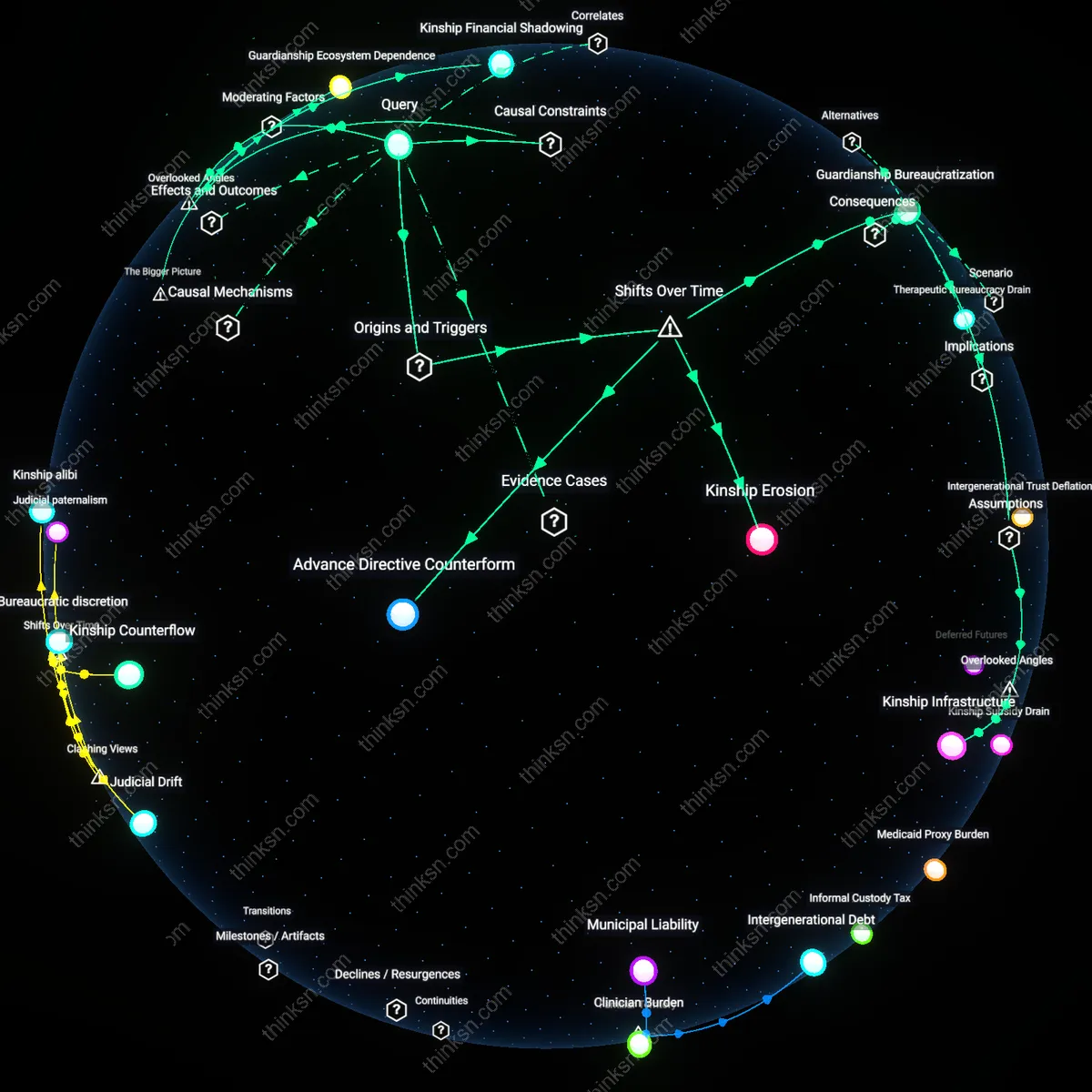
No, the 'best interest of the child' standard does not safeguard emotionally abused spouses because the post-2010 expansion of parental rights advocacy, particularly in conservative state courts, has recast emotional abuse allegations as potentially alienating behaviors by the custodial parent, thereby shifting judicial focus from victim protection to 'parental alienation' defenses. Following high-profile appellate rulings in states like Texas and Florida after 2012, family law increasingly treats allegations of emotional abuse as possible signs of a child’s disrupted relationship with the accused parent—especially when the accusing spouse is the primary caregiver. This reframing turns the abused spouse’s protective actions into legal liabilities, where seeking to limit contact out of documented concern is interpreted as obstruction, exposing them to custody loss; the resulting condition is a jurisprudence of ambiguity that legitimizes ongoing risk by favoring procedural neutrality over substantive safety.
Judicial Discretion Gap
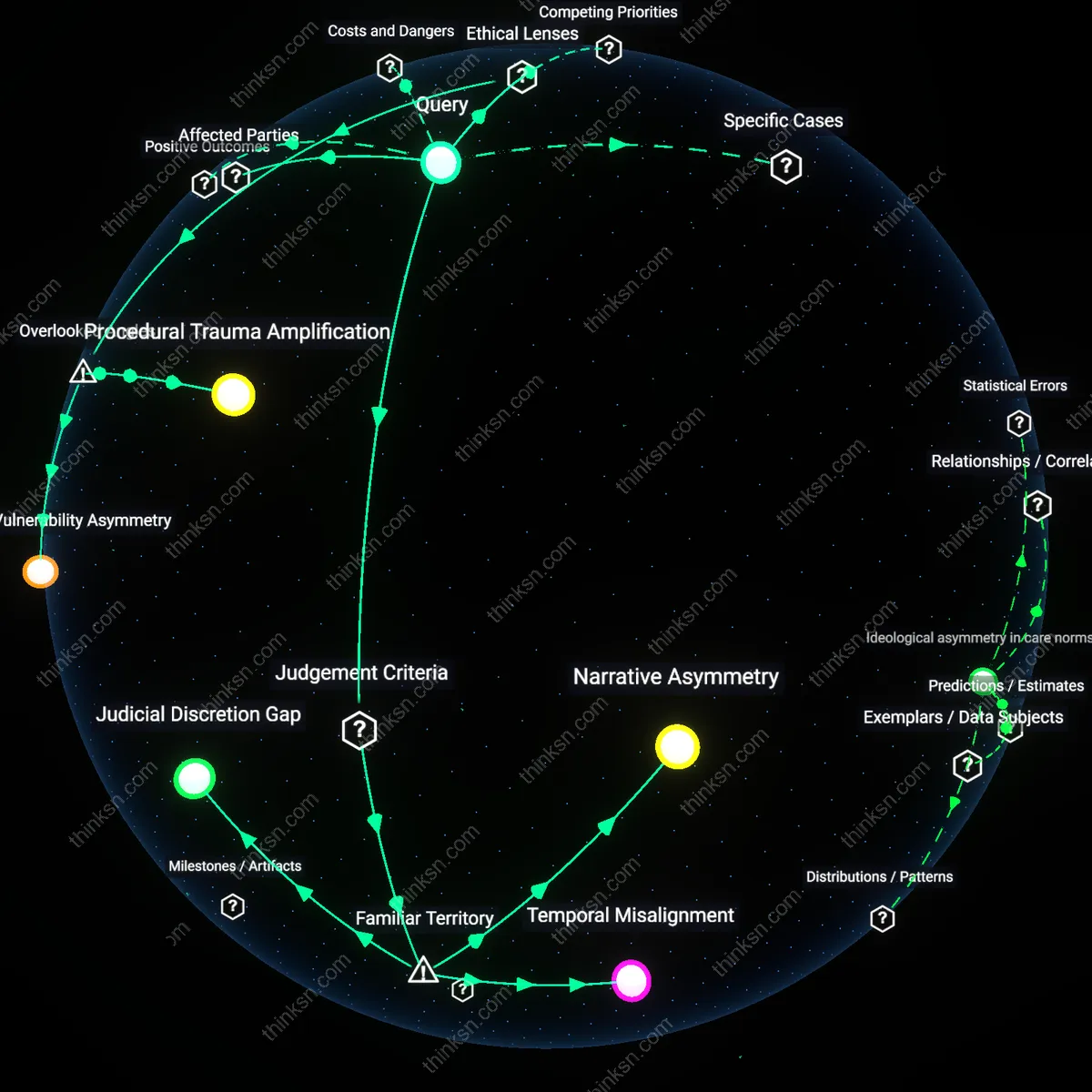
No, because family court judges often prioritize reconciliation and minimal intervention over victim protection, even with documented emotional abuse, due to institutional norms favoring family unity and constrained by inconsistent evidentiary standards for non-physical harm; this creates a systemic blind spot where the 'best interest of the child' is interpreted through stability rather than safety, undermining spouses who report coercive control. The mechanism lies in how bench decisions are shaped less by clinical evidence of psychological harm and more by default assumptions about parental roles, making judicial discretion a liability when abuse is invisible to traditional legal metrics.
Narrative Asymmetry
No, because the 'best interest of the child' framework amplifies the testimonial disadvantage of abuse survivors when opposing a perpetrator skilled in manipulative presentation, as credibility assessments in court often conflate emotional distress with instability; this dynamic plays out in custody hearings where the abuser leverages performative normalcy to cast the victim as reactive or alienating, distorting the standard toward behavioral optics rather than documented patterns. The underappreciated reality is that emotional abuse often weaponizes the very behaviors the system misreads as dysfunction—hypervigilance, boundary-setting, or resistance to gaslighting—flipping victimhood into apparent disruption.
Temporal Misalignment
No, because the 'best interest of the child' standard operates on an immediate-time horizon focused on current living conditions, failing to account for the cumulative developmental risk posed by prolonged exposure to emotionally abusive dynamics, even when they are documented; family courts assess harm at decision points rather than projecting trajectory, allowing abusers who maintain surface-level functionality to retain influence while the injured spouse is penalized for insisting on long-term protections. This short-termism is structurally embedded in periodic review cycles and resource-limited evaluations, making prevention of future harm organizationally invisible.
Procedural Trauma Amplification
No, the 'best interest of the child' standard intensifies the vulnerability of emotionally abused spouses by structuring custody evaluations around neutral-seeming procedural norms that systematically reproduce the psychological dynamics of abuse. Family courts demand measurable, third-party-verified evidence of emotional harm, a burden disproportionately difficult for victims of coercive control to meet, especially when abusers manipulate documentation (e.g., via recorded arguments instigated by the abuser). This procedural rigidity converts the legal process itself into a recursive replica of the original abuse—where gaslighting, credibility undercutting, and emotional exhaustion recur under the guise of neutrality—thus harming the victim anew. The non-obvious factor is not the inadequacy of evidence, but how legal procedures, despite being ethically framed by utilitarian child welfare doctrines, become instrumental in reenacting abuse through administrative design.
Temporal Vulnerability Asymmetry
No, the standard undermines abused spouses by compressing decisions into timeframes that favor the strategic aggressor, exploiting a temporal asymmetry in post-separation legal exposure. Abusers, often more financially and cognitively resourced post-disclosure, exploit discovery delays, motion filings, and court continuances to extend the period of coercive entanglement, while the abused spouse—typically experiencing acute psychological depletion and economic strain—faces escalating stakes with diminishing capacity to respond. The 'best interest' analysis, though ethically grounded in liberal care ethics, is administered through a procedural timeline that does not account for this differential erosion of agency over time. The rarely acknowledged mechanism is not bias in judgment, but the weaponization of legal duration itself—a silent variable that converts procedural temporality into a vector of renewed control.