Are Labs Profiting from Expanded Newborn Screening?
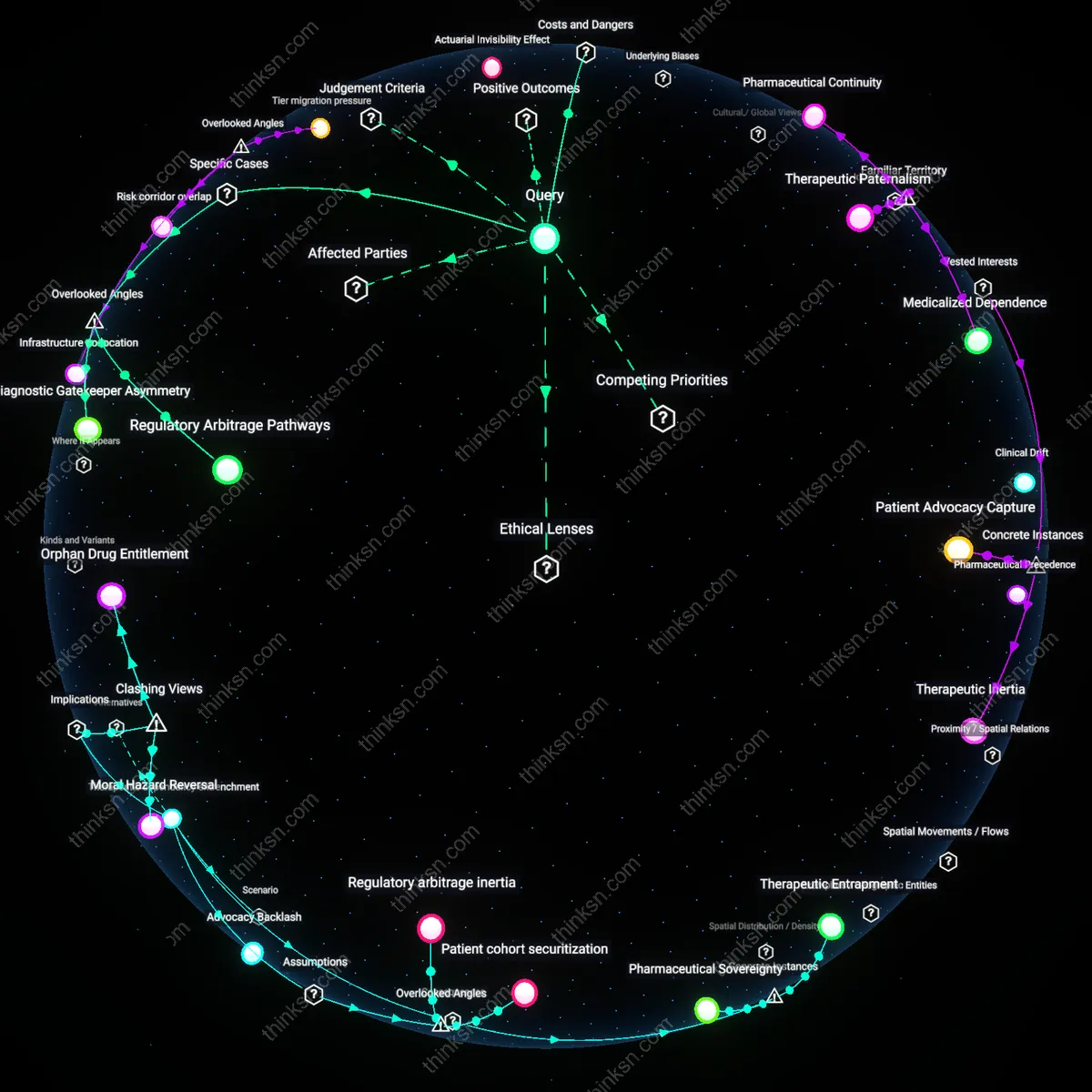
Analysis reveals 11 key thematic connections.
Key Findings
Revenue-Led Public Health
Newborn metabolic screening expansion is often driven by laboratory reimbursement structures rather than demonstrated disease burden reduction. State public health laboratories contract with private entities or operate under cost-recovery mandates, creating institutional incentives to increase test volume; the addition of rare but billable conditions sustains operational budgets, particularly in underfunded systems. This financial feedback loop embeds fiscal necessity within clinical justification, making it institutionally rational to adopt tests with marginal population benefit. The non-obvious insight is that public health infrastructure fragility transforms revenue generation into a de facto criterion for program expansion, masking economic drivers within medical legitimacy.
Diagnostic Citizenship
The broadening of newborn screening panels functions as a mechanism of inclusion into a biomedical social contract, where early diagnosis confers access to treatment, disability services, and state recognition. Public and professional advocacy groups, often funded by biotech firms, frame expanded screening as a moral imperative for equity—especially for conditions affecting small, highly organized communities. This reframing positions refusal to expand panels as a form of systemic neglect, thereby pressuring policymakers to adopt tests even when clinical utility is unproven. The dissonance lies in how patient advocacy, typically seen as countering commercial influence, can instead accelerate market expansion by moralizing diagnostic inclusion.
Revenue-Driven Test Proliferation
The expansion of Texas' newborn screening panel to over 50 conditions by 2007 was directly accelerated after PerkinElmer, a private diagnostics company, lobbied state health officials while standing to benefit from increased testing volume, revealing a feedback loop between public health mandates and industrial profit. PerkinElmer held contracts to process Texas’ screening specimens and had a vested interest in expanding the number of assays performed per infant, creating a structural incentive to promote broader panels regardless of clinical necessity. This case demonstrates how laboratory revenue needs can shape ostensibly preventive health policy through private-sector influence embedded in public infrastructure, an underappreciated mechanism of mission drift in public health programs.
False Positive Cascade
In Illinois, the 2008 mandatory expansion of newborn screening to include Severe Combined Immunodeficiency (SCID) led to a surge in false positives due to premature implementation before confirmatory protocols were standardized, overwhelming pediatric immunology clinics and triggering parental distress over misdiagnoses. The Illinois Department of Public Health adopted SCID screening following federal recommendations without sufficient local validation of test accuracy, revealing how screening expansions often bypass phased risk assessment when framed as universal good. This case exposes the systemic danger of treating test availability as equivalent to clinical readiness, resulting in iatrogenic harm masked as prevention.
Regulatory Arbitrage via Panel Expansion
The addition of lysosomal storage disorders to New York’s newborn screening panel in 2014 coincided with the pending FDA approval of enzyme replacement therapies developed by Genzyme, a Sanofi subsidiary, enabling the company to leverage state mandates as a de facto market entry strategy. By aligning panel expansions with the commercial launch timelines of high-cost treatments, laboratories and pharmaceutical firms effectively used public screening infrastructure to guarantee patient identification and treatment uptake. This interplay reveals how screening programs can be co-opted for regulatory arbitrage, where public health systems absorb diagnostic risk while private entities capture therapeutic reward—an asymmetry rarely accounted for in benefit-cost evaluations.
Diagnostic Overreach
The expansion of newborn screening panels since the 1990s has been driven by clinical laboratories’ strategic alignment with biotechnology innovations, shifting from state-run public health mandates toward market-responsive diagnostic servicing. As tandem mass spectrometry enabled multiplex detection of rare disorders, commercial labs leveraged this technical capacity not primarily based on cost-effectiveness or morbidity reduction but through preemptive positioning in pediatric diagnostics—a domain where reimbursement rates and specimen volume ensure steady revenue. This shift from epidemiological prioritization to technological opportunism, institutionalized after the 2005 ACHDNC recommendations, institutionalized a feedback loop where screening expansion precedes clinical validation, revealing that the residual medicalization of infancy now operates through infrastructures of anticipatory diagnosis rather than demonstrated need.
Public Health Capture
Since the transition from infectious to chronic disease paradigms in the 1970s, public health governance has progressively incorporated private laboratory interests into standard-setting bodies, transforming newborn screening from a clinically bounded intervention into a policy instrument shaped by regulatory accommodation. As state laboratories outsourced complex metabolic assays to private contractors beginning in the 1990s, decision-making authority subtly migrated toward firms influencing the Recommended Uniform Screening Panel via expert committees, where diagnostic feasibility often outweighs population-level benefit analysis. This quiet integration of revenue-dependent actors into public health rulemaking reflects a broader neoliberal shift wherein state functions are maintained only insofar as they are compatible with market logics—producing a form of regulatory governance captured not through corruption but through structural interdependence.
Preventive Alibi
The post-2000 expansion of metabolic screening has functioned as a technocratic alibi for systemic failures in pediatric care, substituting broad diagnostic ascertainment for structural investments in follow-up treatment and health equity—most evident in the uneven implementation of screening for conditions like SCID across Medicaid-participating states. Rooted in the 1980s rise of preventive medicine as a political ideal, this shift reframes public health success as early detection rather than improved outcomes, allowing policymakers to cite screening rate increases while underfunding confirmatory care. The residual effect is a performative prevention regime where the symbolic gesture of expanded panels displaces accountability for therapeutic access, rendering screening not a clinical tool but a ritual of state responsibility.
Revenue-dependent screening mandates
Newborn screening expansions in states like New York are driven by mandated laboratory testing contracts that financially reward broad panels regardless of clinical utility, creating a structural incentive for public health labs to advocate for inclusion of rare disorders without rigorous benefit analysis. State public health laboratories, which operate under performance metrics tied to test volume and revenue generation, align with biotech firms to expand panels using analytically sensitive but clinically unvalidated markers—such as elevated 17-hydroxyprogesterone for congenital adrenal hyperplasia—enabling sustained funding streams under the guise of preventive care. This dynamic reveals how public health infrastructure, when dependent on fee-for-service revenue models, can convert medical uncertainty into expansive testing regimes, prioritizing financial sustainability over evidence-based implementation.
Biotech-laboratory lobbying nexus
PerkinElmer and other diagnostic firms have directly funded advocacy coalitions and state-level lobbying efforts that push for mandatory inclusion of disorders detectable only by proprietary tandem mass spectrometry platforms, effectively shaping newborn screening policy to expand their market penetration. In Texas, the addition of severe combined immunodeficiency (SCID) and lysosomal storage disorders followed intensive engagement by laboratory equipment vendors who provided both the technology and the policy framework, blurring the line between public health advancement and commercial interest. This demonstrates how private diagnostics firms, through strategic alignment with state lab directors, exploit regulatory gaps to institutionalize testing protocols that lock in long-term equipment and reagent sales, making market expansion a hidden determinant of public health criteria.
Secondary testing revenue cascades
The inclusion of conditions like maple syrup urine disease in expanded panels generates high volumes of false-positive results due to low population prevalence and borderline biochemical thresholds, which in turn triggers costly downstream confirmatory testing and specialist referrals that constitute a major revenue stream for academic medical centers operating newborn screening follow-up clinics. In the Midwest Regional Newborn Screening Program, elevated rates of referrals for elevated leucine levels—many resolving spontaneously—correlate with increased billing under Medicaid fee-for-service structures, creating a financial feedback loop where screening expansion justifies clinic expansion. This exposes a systemic perversity in which clinical ambiguity is monetized through therapeutic escalation, and where public health legitimacy enables the medicalization of uncertain findings for institutional financial gain.