How to Balance Career Demands and Complex Care Planning for Elders?
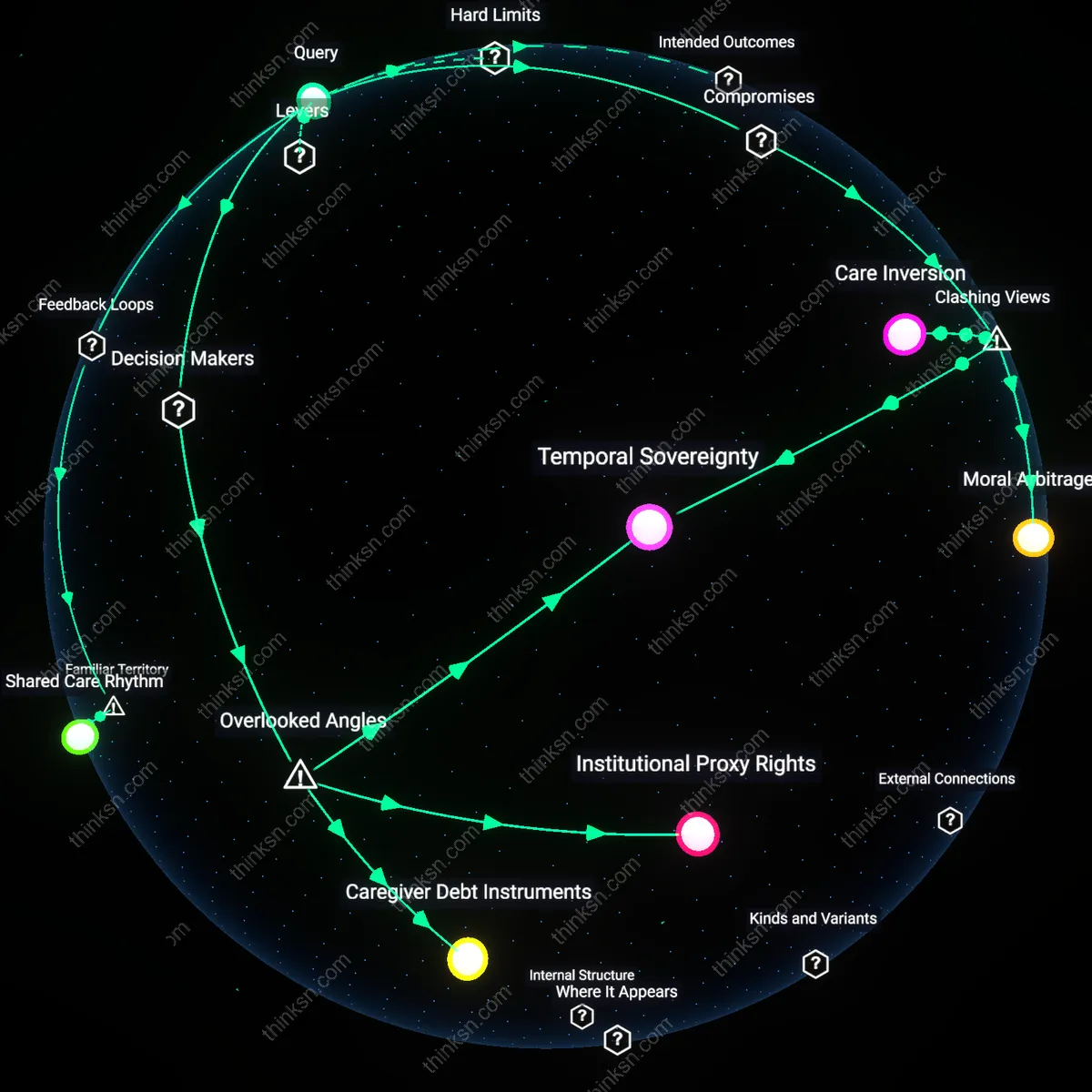
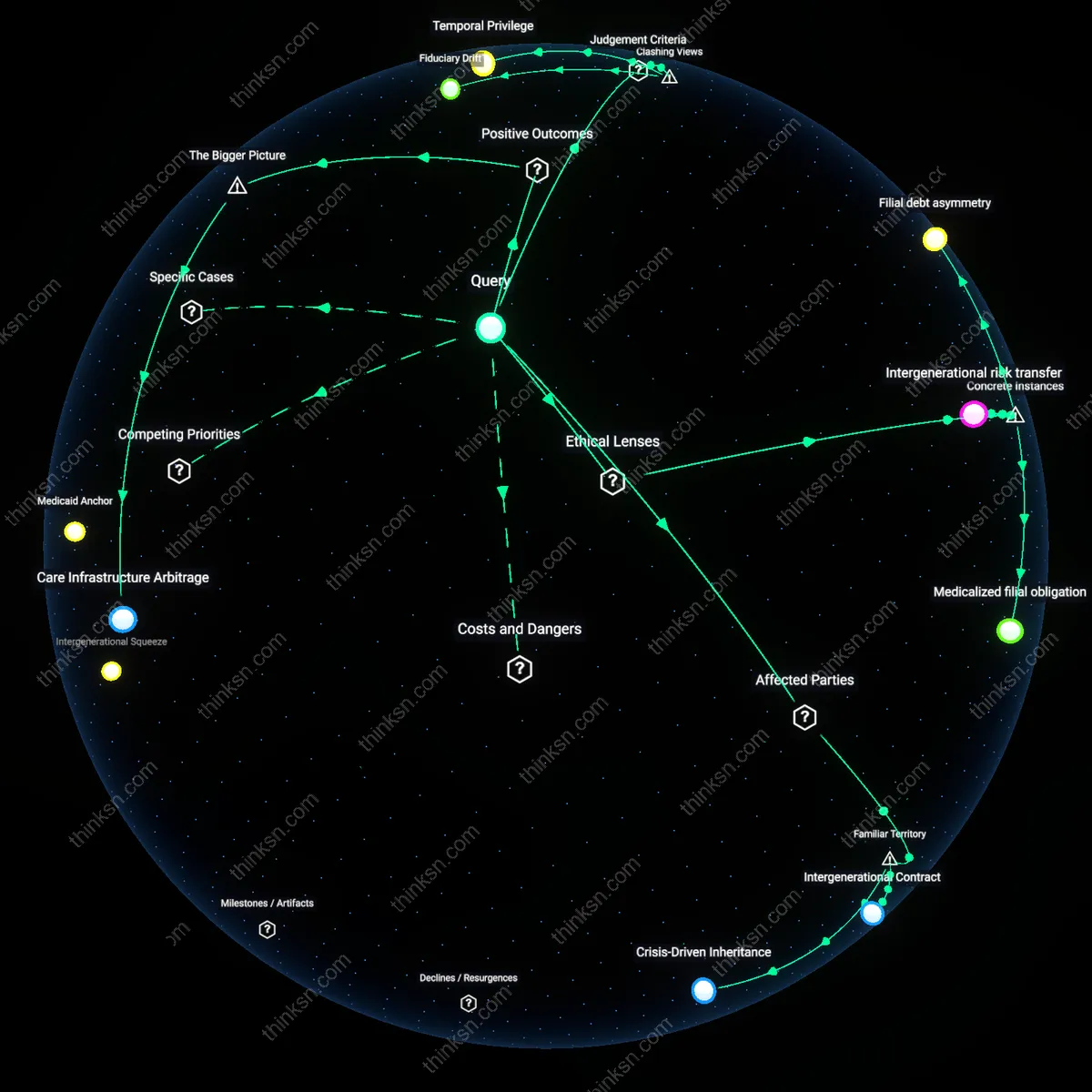
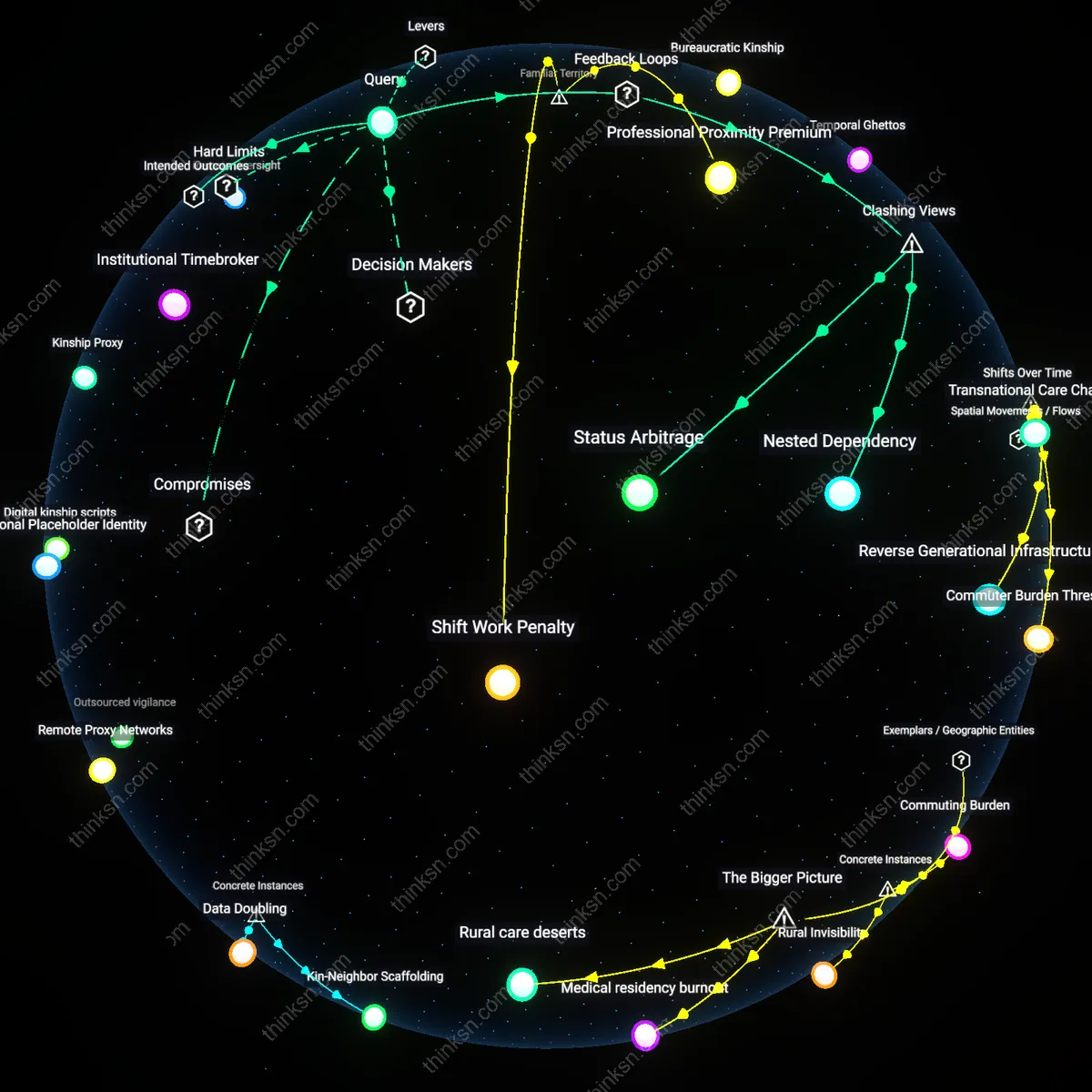
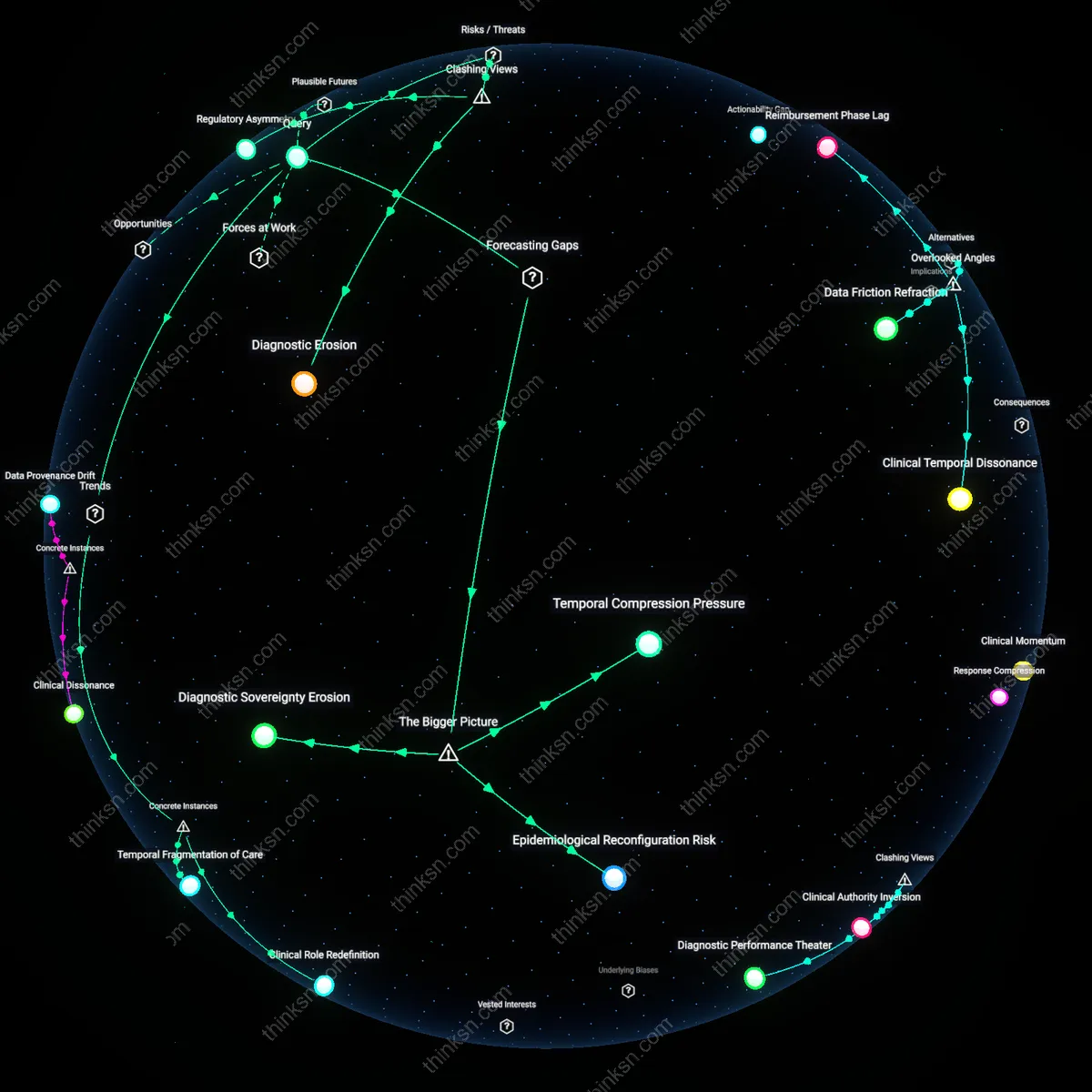
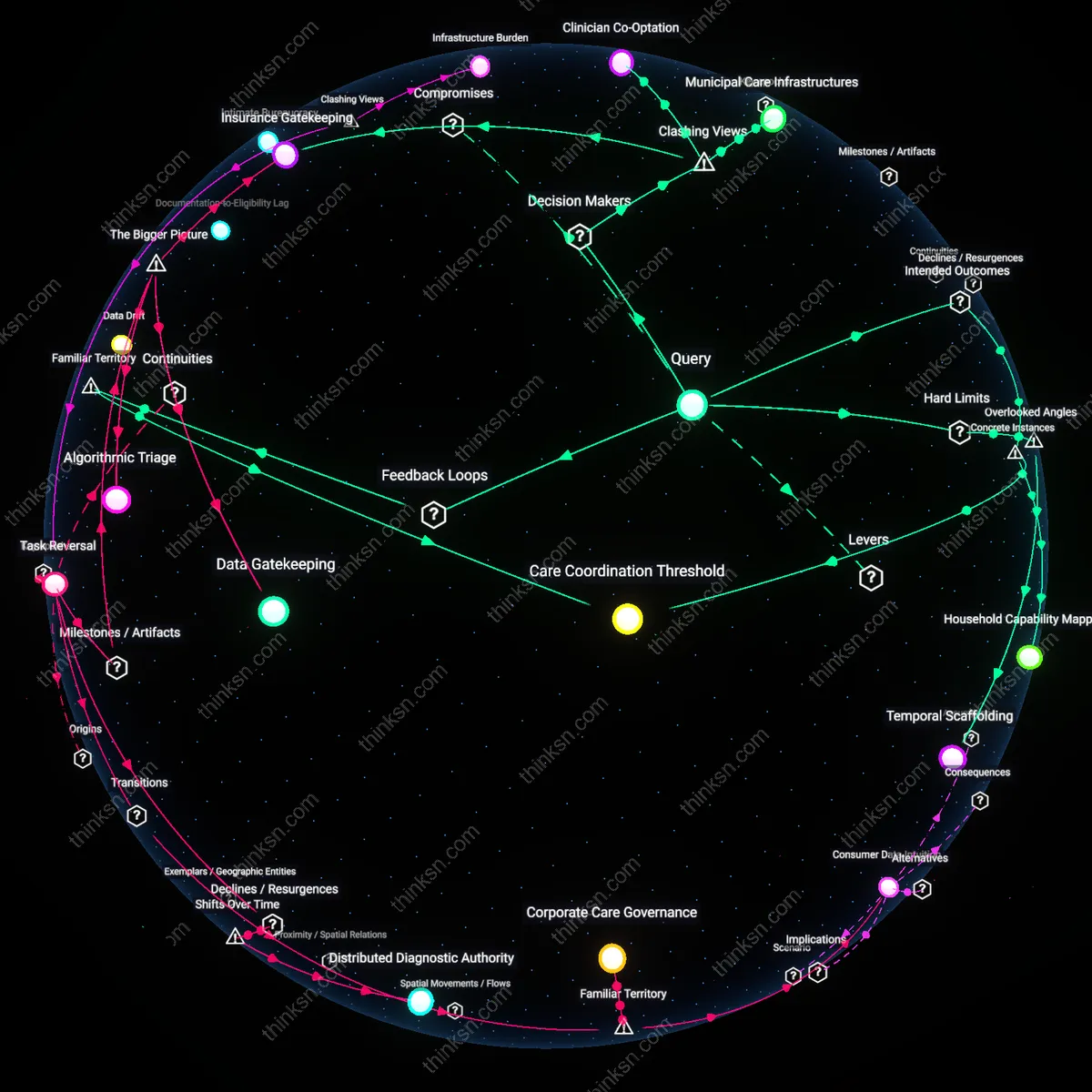
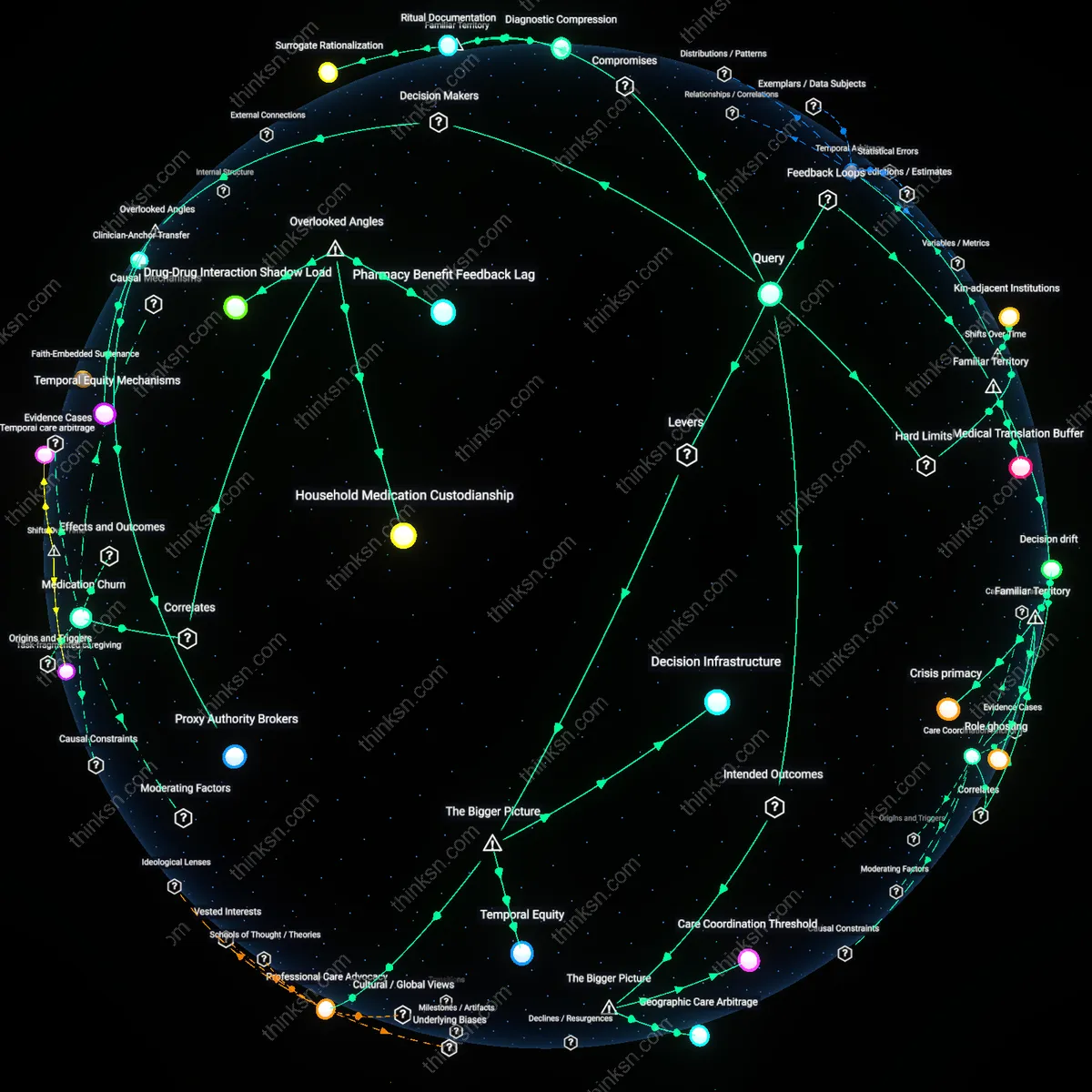
Analysis reveals 16 key thematic connections.
Key Findings
Mediated Responsibility
Adult children must delegate day-to-day monitoring to clinically supervised community health workers embedded in local senior centers to meet hard limits of time and geographic distance; this mechanism emerged after the 2014 Medicaid Community First Choice Option expansion, which incentivized states to shift long-term care from institutions to home- and community-based services, thus institutionalizing a new division of labor where professional lay networks absorb observational burden while family retains strategic oversight—revealing how federal financing adjustments reconfigured familial duty into a tiered responsibility model where proximity is no longer a prerequisite for accountability.
Temporal Arbitrage
Effective care planning now depends on synchronizing parental healthcare transitions with predictable Medicare reimbursement cycles, particularly leveraging the shift from fee-for-service to value-based models post-2016 Medicare Access and CHIP Reauthorization Act (MACRA); adult children who time care reviews around annual wellness visits and risk adjustment recalibrations can exploit systemic pause points when providers are most responsive to care plan updates—exposing how regulatory temporalities have created a new form of decision leverage where administrative rhythms, not just medical urgency, govern family intervention efficacy.
Kin-adjacent Institutions
Families now outsource anticipatory guidance to geriatric care managers employed by private concierge medicine practices that operate outside traditional insurance, a workaround necessitated by the erosion of employer-sponsored elder care support post-2000s and the stagnation of public elder infrastructure; these hybrid clinical-bureaucratic roles, paid directly by adult children, institutionalize emotional labor and documentation management once handled internally, marking how the retreat of corporate and state care intermediaries has birthed a new class of surrogate kin whose legitimacy derives from procedural fidelity rather than affective bonds.
Decision Infrastructure
Standardizing digital care-planning templates within state Medicaid programs enables adult children to extract and act on critical care decisions without requiring prolonged meeting participation. This lever works because interoperable documentation—such as structured discharge checklists in New York’s Article 18 nursing facilities—shifts cognitive labor from real-time negotiation to asynchronous review, reducing the need for career-disruptive attendance; evidence indicates such templates improve adherence to care plans by aligning stakeholder expectations. The non-obvious implication is that bureaucratic form design, not empathy or coordination alone, governs decision accessibility for time-constrained adult caregivers.
Professional Care Advocacy
Hiring geriatric care managers accredited by the National Academy of Certified Elder Law Attorneys transforms familial care meetings into professionally mediated transactions, reducing adult children’s required presence to essential veto points. This functions within private-pay elder care ecosystems—such as those emerging in suburban California—where licensed advocates absorb clinical jargon, map agency incentives, and pre-structure decisions, thereby compressing hours of familial deliberation into targeted actions. The underappreciated dynamic is that professional intermediaries act as cognitive proxies, not just facilitators, decoupling sound decision-making from personal time investment in systems where medical and legal authority are asymmetrically distributed.
Temporal Equity
Institutionalizing evening and weekend care-planning hours in federally qualified health centers creates access parity for adult children employed in hourly, inflexible work sectors, such as healthcare or logistics. This shift is made viable by HRSA staffing flexibility grants that subsidize off-hour clinical coordination, inserting caregiver availability into the scheduling logic of systems historically aligned with provider, not recipient, calendars. The overlooked consequence is that care decisions improve not through better information but through better temporal alignment—revealing that decision quality is constrained less by understanding than by presence, and presence is governed by labor market rigidity.
Care Coordination Anchor
Designate one family member as the primary care liaison to centralize communication with medical teams, thereby reducing redundant discussions and scheduling conflicts across siblings. This person attends all clinical meetings, synthesizes updates, and distributes summaries using shared digital tools, creating a feedback-stable node that absorbs variability in others’ availability due to work demands. Because this role formalizes information flow through a single, accountable actor, it interrupts the reinforcing loop where miscommunication breeds repeated clarification calls, which further fragment time and erode decision confidence—making sustained, high-quality input possible even amid career pressures. The non-obvious insight, against the backdrop of collective family responsibility, is that decentralization feels fairer but destabilizes decision systems under time strain.
Medical Translation Buffer
Engage a geriatric care manager—often a licensed nurse or social worker in private practice in metropolitan areas like Chicago or Portland—to interpret clinical recommendations before family meetings. This professional decodes medical jargon into comparative scenarios (e.g., home care vs. assisted living trajectories), inserting a cognitive buffer that breaks the reinforcing loop where confusion triggers emotional reactivity, prompting rushed choices that later require reversal. Because the buffer converts uncertainty into structured trade-offs, adult children in high-demand jobs can engage efficiently during limited windows without accumulating judgment debt. Though families typically assume medicine speaks for itself, the non-obvious reality is that interpretation is a separate expertise—one that, when externalized, preserves both professional commitments and deliberative integrity.
Proxy Authority Brokers
Formalize decision-making representation through legal but socially uncommon roles like proxy authority brokers who are neither family nor clinicians but are trained in geriatric care navigation and designated via durable power of attorney. These brokers—often eldercare attorneys, certified geriatric care managers, or trained nonprofit advocates—intercede in family dynamics by absorbing time-intensive coordination, translating medical recommendations into actionable trade-offs, and maintaining continuity across fragmented systems; their power lies in being institutionally sanctioned yet relationally neutral, reducing decision fatigue among adult children. This role is overlooked because most care-planning models assume either familial responsibility or clinical direction, ignoring a legally viable third actor who can operationalize decisions without emotional or logistical overload—changing the standard assumption that quality care planning requires direct family involvement.
Temporal Equity Mechanisms
Institutionalize 'time equity' in health system referrals by mandating that geriatric care coordination programs allocate time-adjusted support based on the geographic and employment constraints of adult children, not just clinical urgency. Health systems and Area Agencies on Aging can embed time-poverty assessments into care planning intake, triggering tailored support such as employer-coordinated leave windows, asynchronous telehealth consultations with decision aids, or weekend-capable geriatric assessment clinics. This mechanism is underappreciated because standard models treat time as a personal constraint to be managed individually, not a distributable resource that institutions can rebalance—shifting the frame from family burden to systemic time justice.
Care Plan Liquidity
Design care plans as modular, transferable digital assets—akin to financial instruments—so adult children can 'trade' or delegate specific decision rights (e.g., medication review, housing transition) to trusted third parties via secure platforms integrated with health records. Platforms like shared EHR portals or blockchain-verified care contracts enable discrete delegation without full guardianship, allowing high-skill decisions to be offloaded efficiently. This liquidity is overlooked because care plans are typically seen as static, person-bound documents rather than dynamic instruments that can be apportioned—revealing a hidden dependency on indivisibility in family-based care governance that unnecessarily concentrates decision load.
Surrogate Rationalization
Prioritize delegating decision-making to a single trusted family member to reduce coordination delays. This person consolidates medical input, financial constraints, and sibling preferences into actionable plans under tight timelines, operating through existing familial trust hierarchies rather than formal care protocols. The non-obvious tradeoff is that speed emerges not from better information but from suppressing dissenting views, creating an illusion of consensus that feels familiar because families often default to a 'natural' decision-maker during crises.
Ritual Documentation
Schedule structured updates during routine family gatherings like holidays or birthdays to align care goals without requiring additional time. These moments leverage pre-existing emotional rhythms and shared expectations about familial duty, embedding planning into events already seen as sacred or obligatory. The underappreciated reality is that these rituals sacrifice adaptive responsiveness—decisions crystallize around calendar anchors, not clinical urgency—yet feel effective because they mirror the culturally expected image of 'family coming together in times of need.'
Diagnostic Compression
Rely on primary care physicians to summarize parental health status in actionable tiers—such as 'independent,' 'assisted,' '24-hour'—so adult children can make rapid placement decisions without parsing complex medical records. This works through the physician’s dual role as gatekeeper and interpreter, translating clinical nuance into categories that map to familiar senior housing options. The compromise, rarely acknowledged, is that diagnostic precision is sacrificed to fit time-constrained choices into a vocabulary already embedded in public awareness through media and marketing of elder care brands.
Care Coordination Threshold
Adult children should prioritize establishing a shared digital care plan with defined roles and medical directives because doing so transforms sporadic, emotionally charged interventions into structured family-wide accountability. This step works by aligning dispersed family members around a single source of truth, reducing redundant communication and decision latency, particularly during health crises. The mechanism operates through existing digital platforms (e.g., shared cloud folders, password-secured apps) that make asynchronous updates visible and trackable, effectively lowering the activation energy for participation. What is non-obvious is that the pivotal barrier isn't lack of time or will, but the absence of a coordination threshold—once crossed, minor ongoing input from busy stakeholders sustains continuity, making crisis-driven decision-making less likely.
Geographic Care Arbitrage
Relocating aging parents to regions with integrated geriatric ecosystems—such as certain metropolitan areas with high-density specialists, home-health networks, and Medicaid-managed long-term care programs—reduces the decision burden on distant children by outsourcing navigational complexity to local systems. This shift works because proximity-based service density allows parents to be embedded in care pathways that auto-resolve common contingencies (e.g., rehab after hospitalization) without familial intervention. The mechanism depends on regional policy infrastructure and public-private care integration, which act as force multipliers for limited family attention. The overlooked dynamic is that distance isn't just a logistical deficit—it's an opportunity to exploit jurisdictional advantages, making geography a silent moderator of care quality.